Trademark License Agreement for a Software Product in Word Processing Program in Education
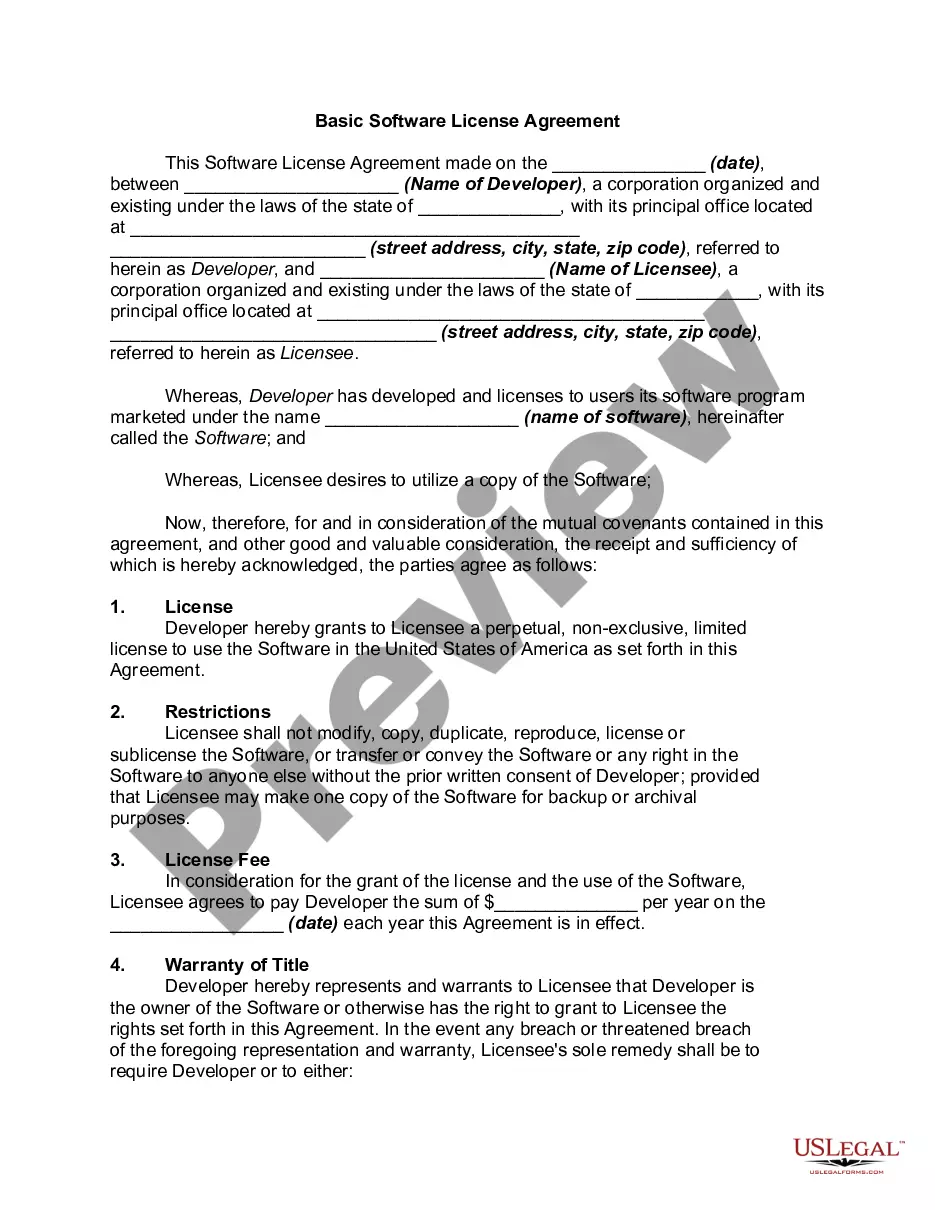
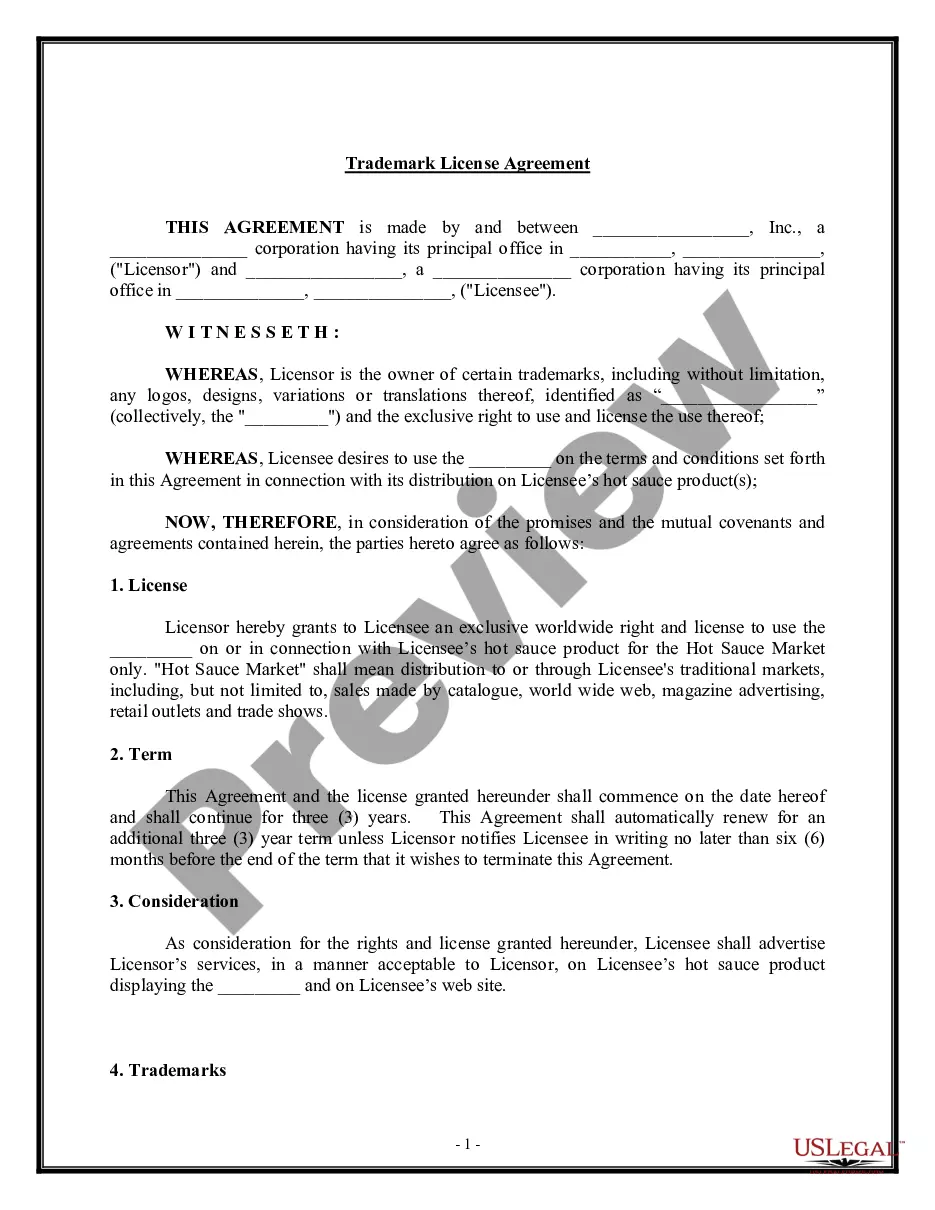
What is this form?
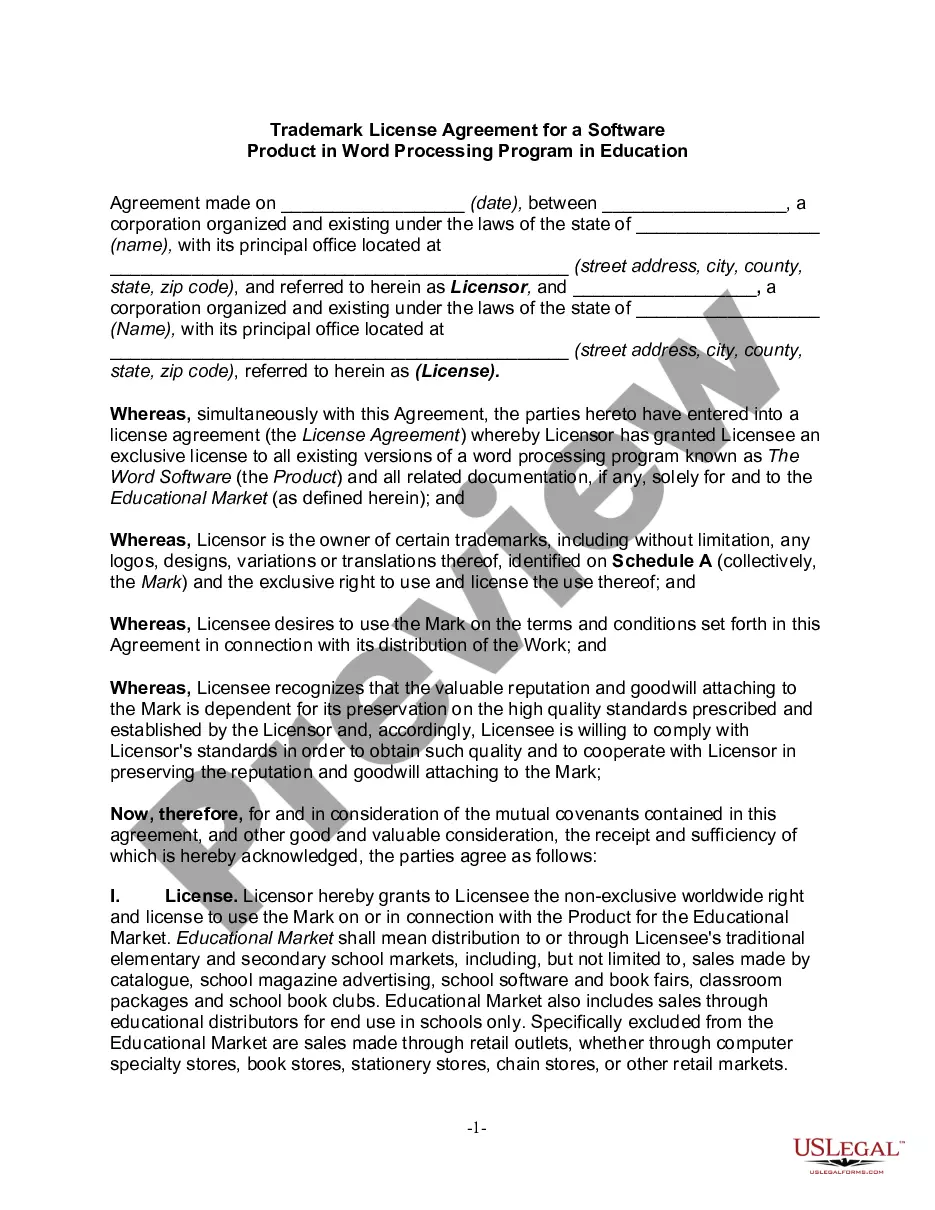
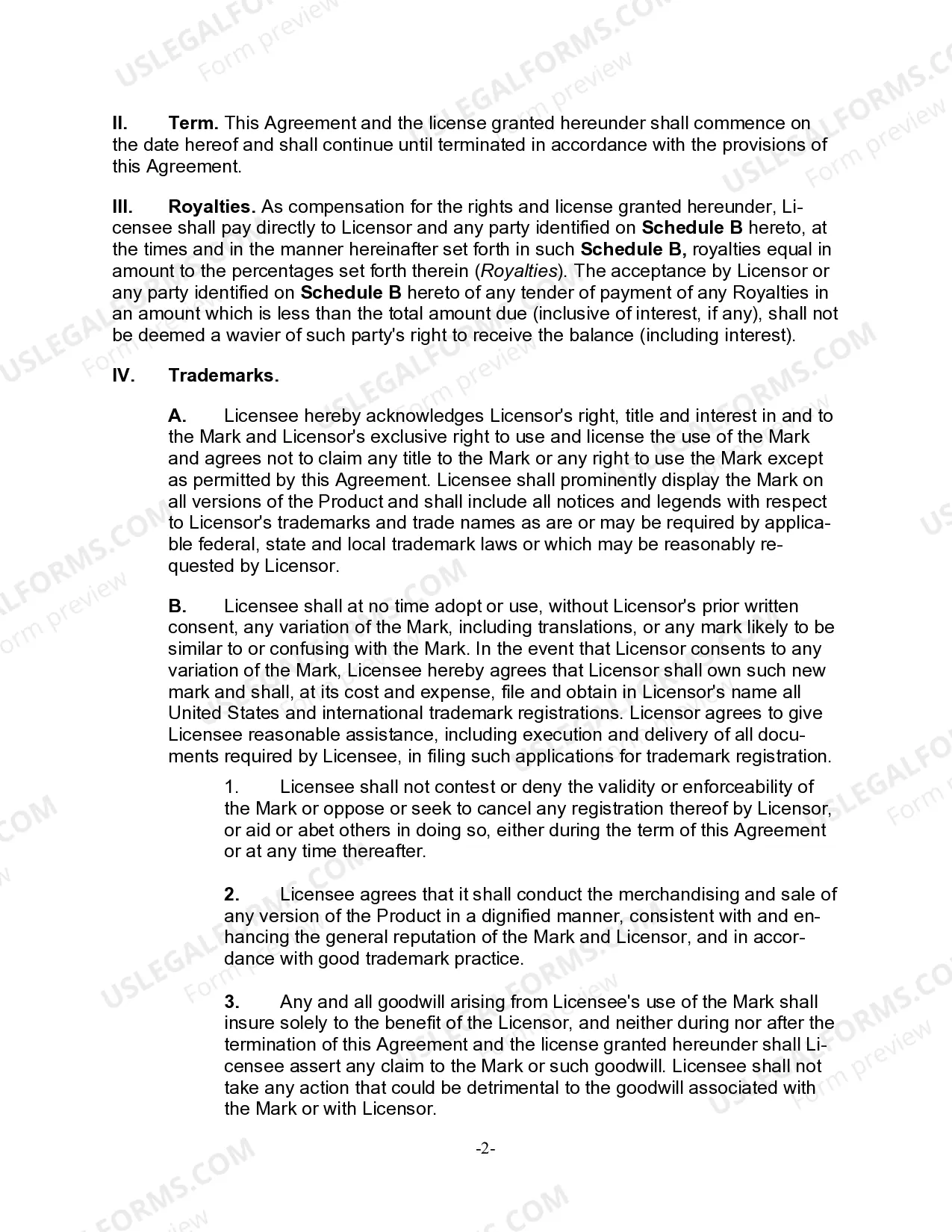
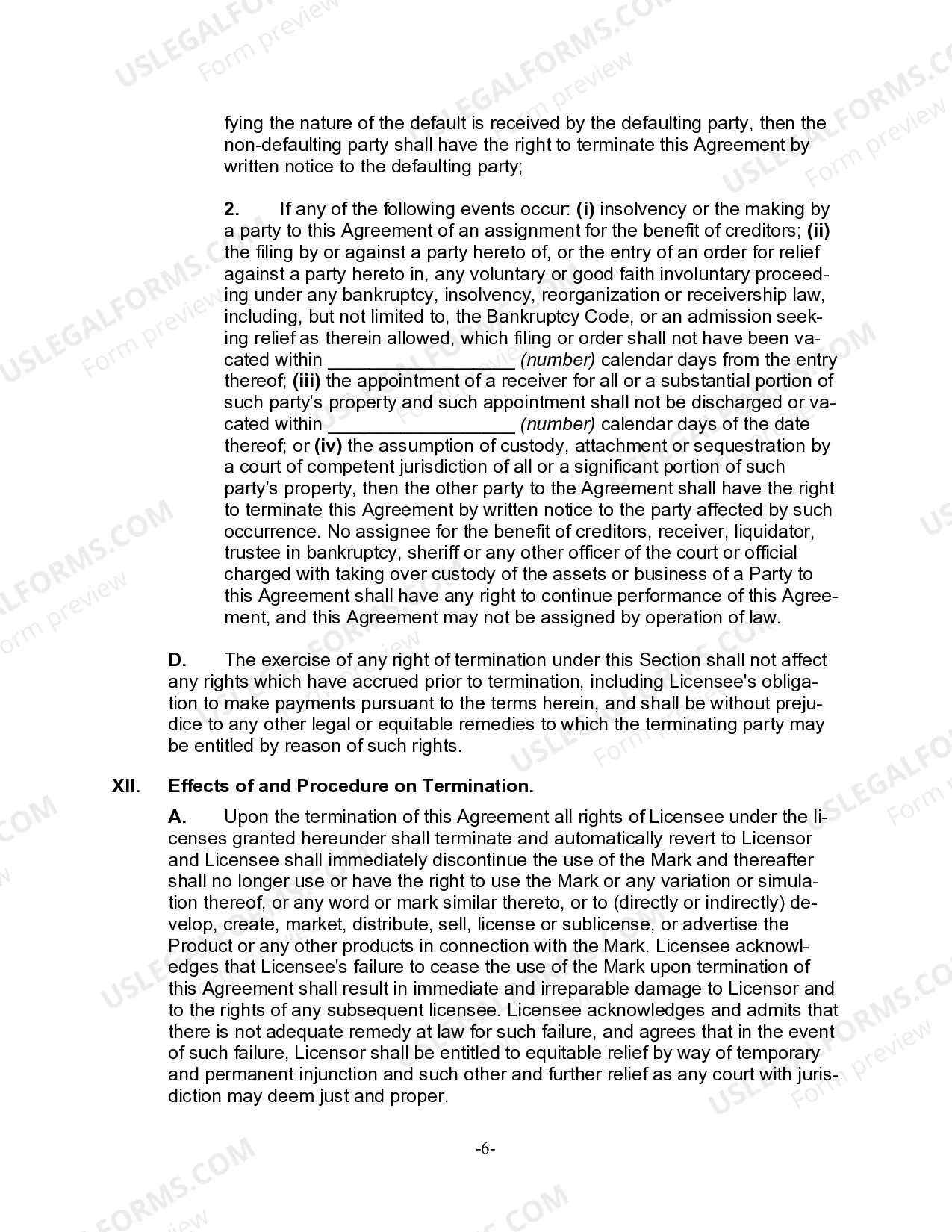
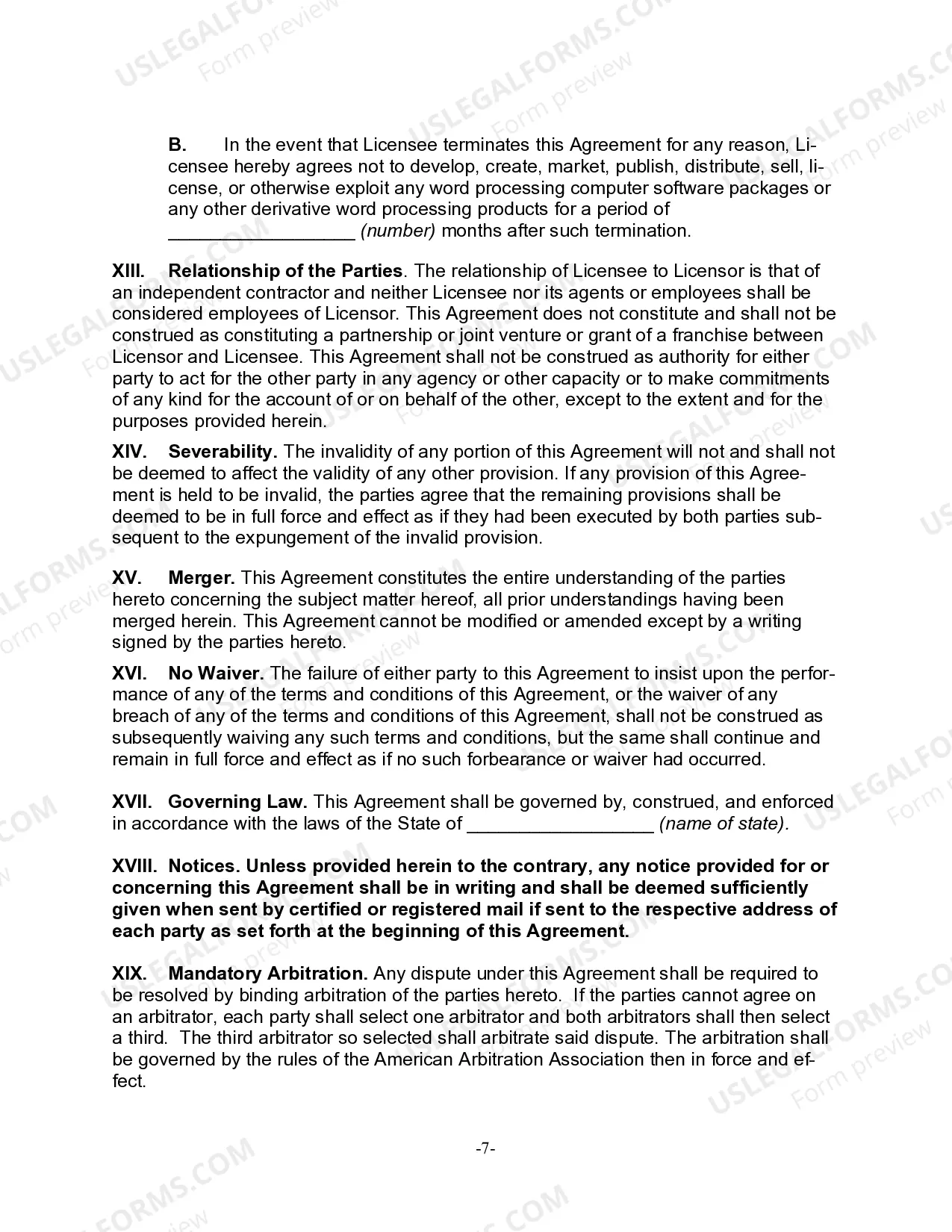
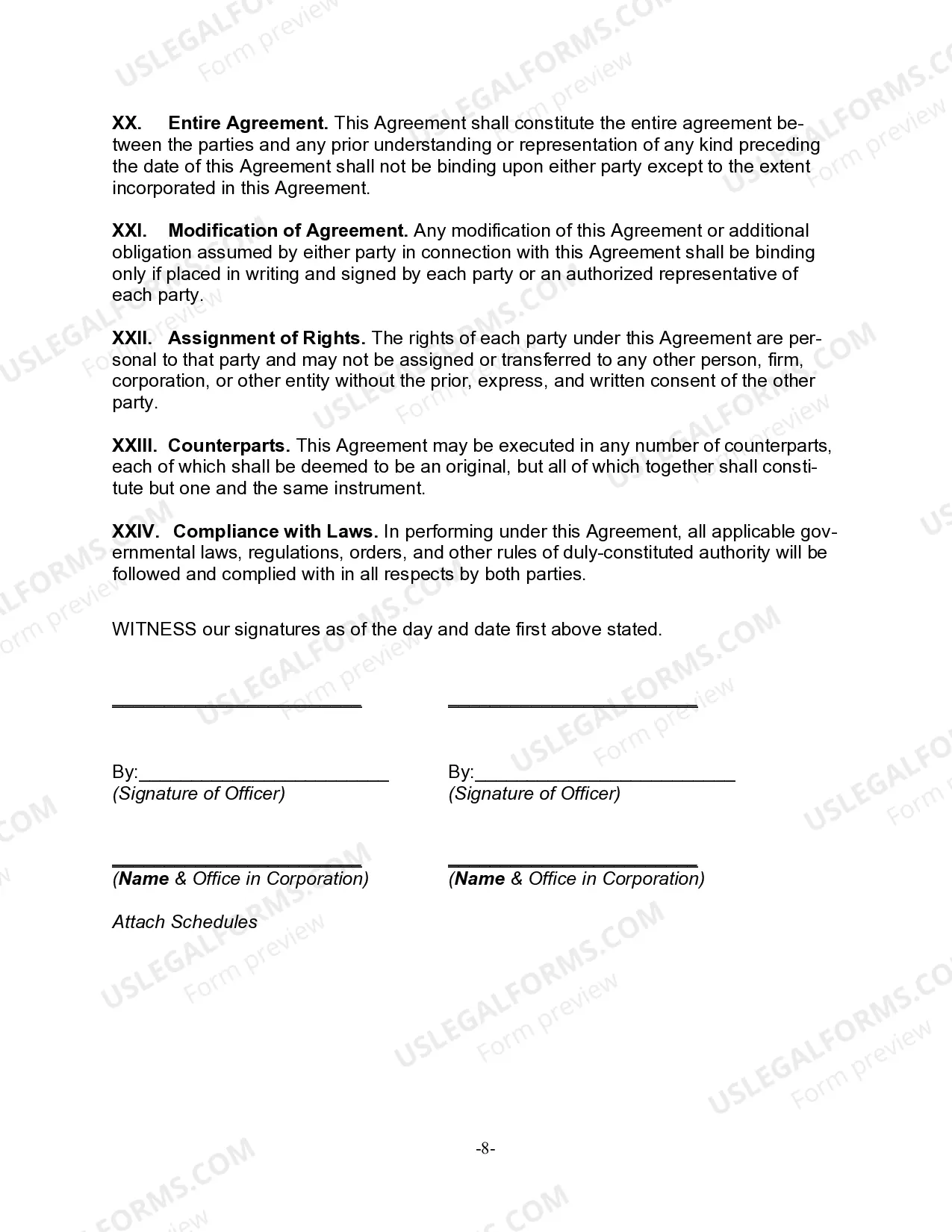
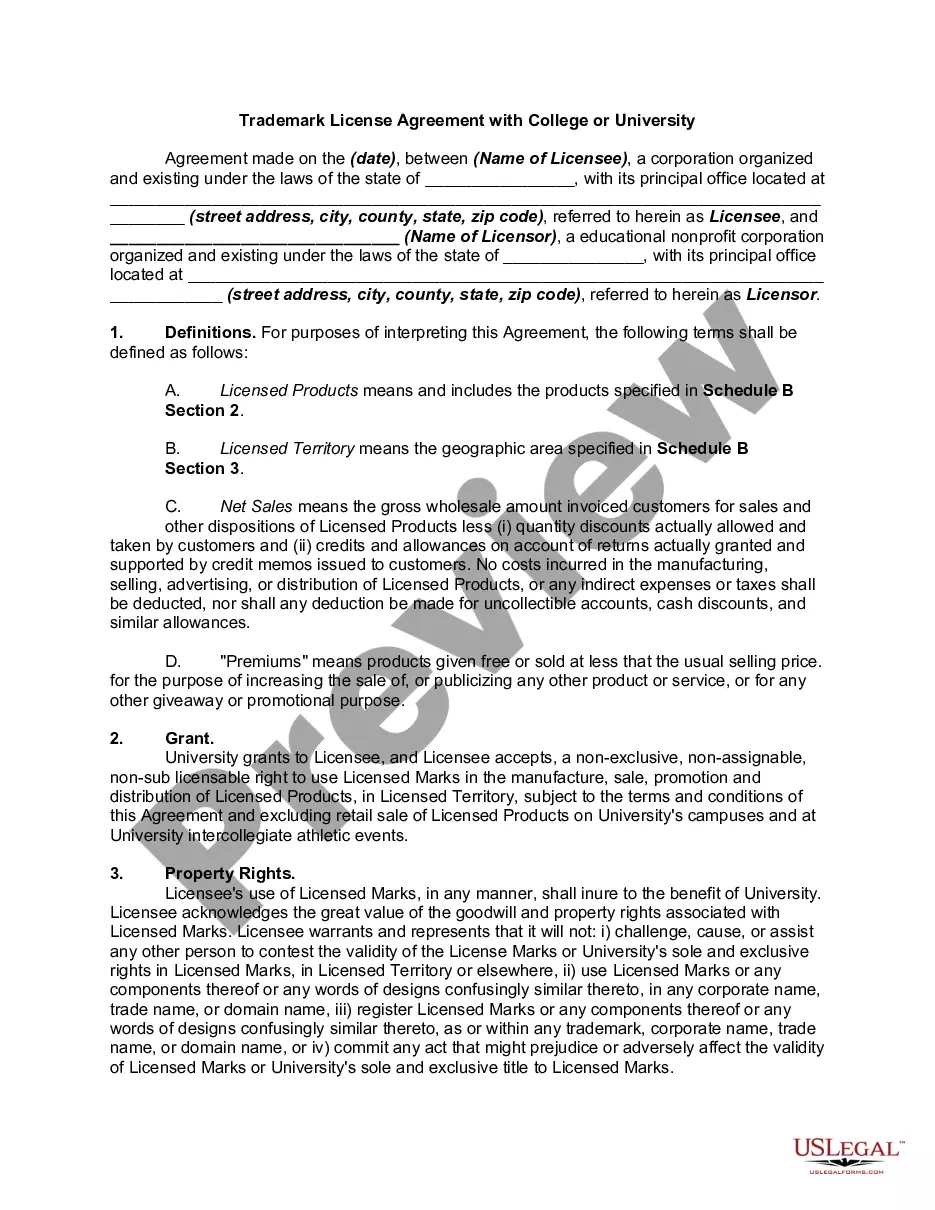
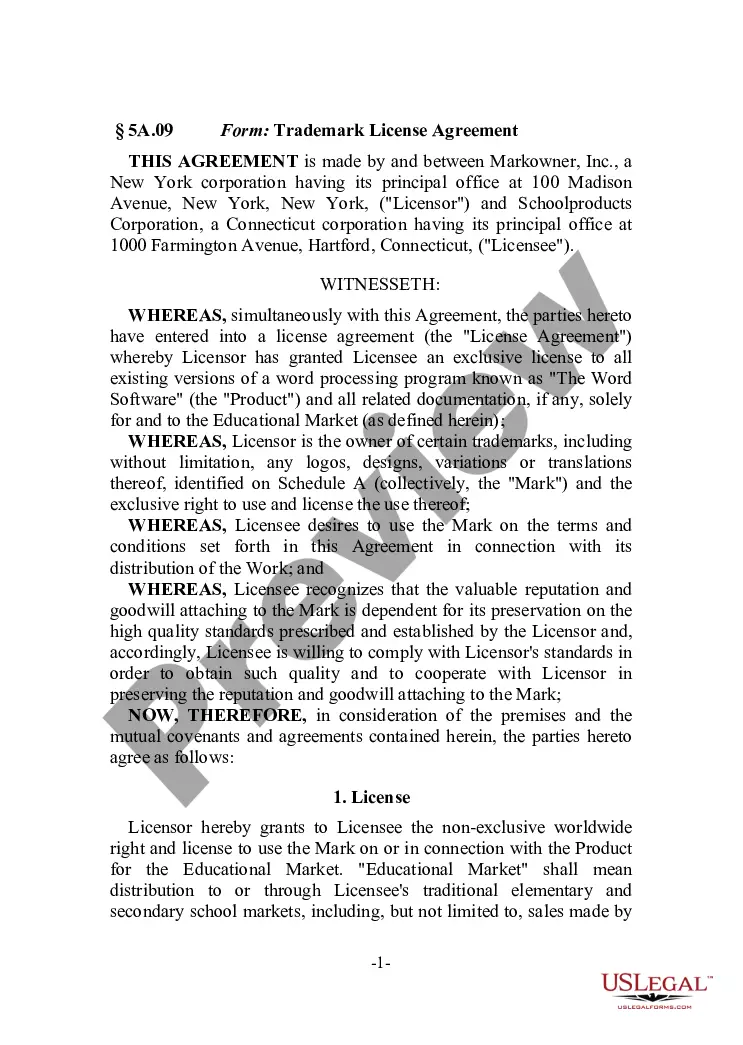
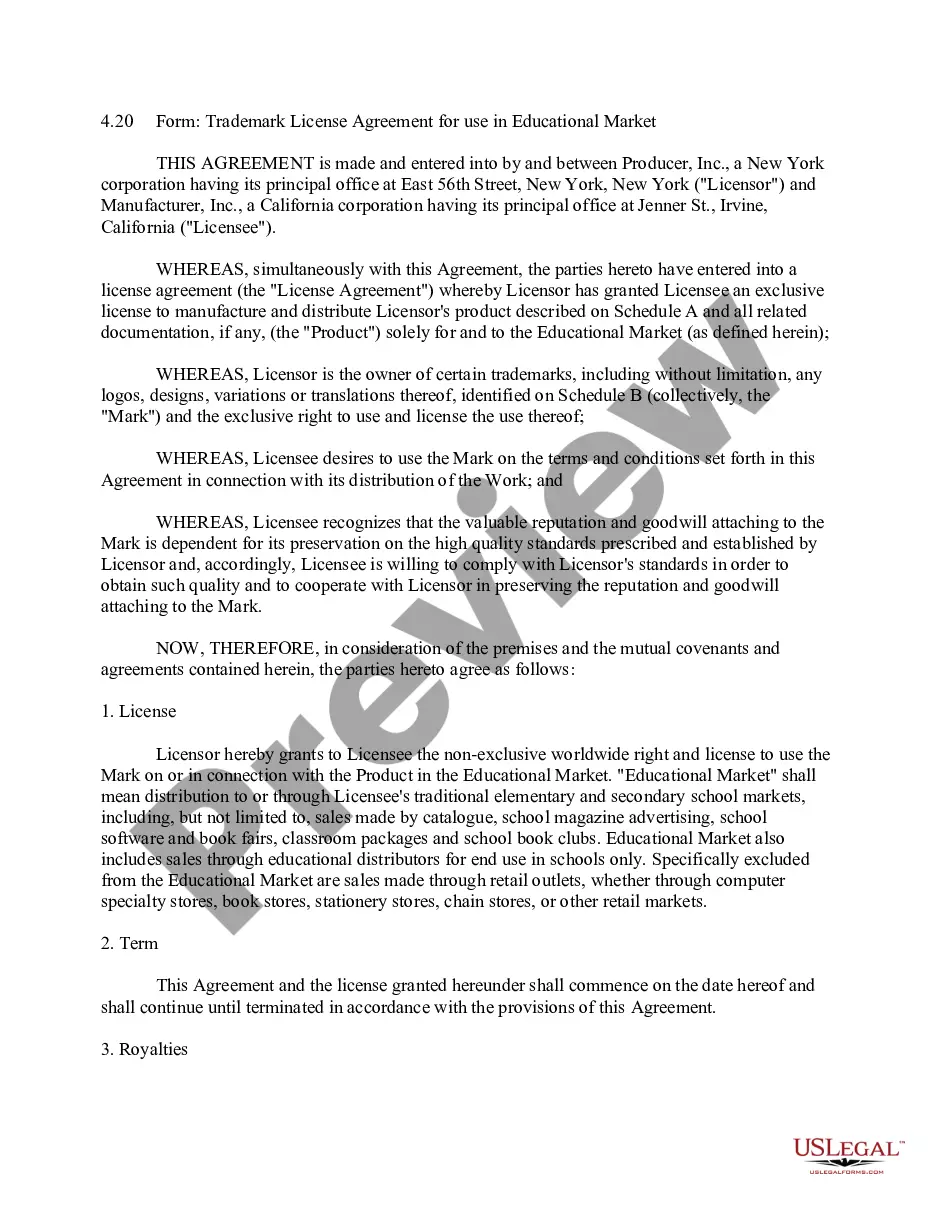
The Trademark License Agreement for a Software Product in Word Processing Program in Education is a legal document that outlines the terms under which one party, known as the Licensee, is allowed to use the trademark of another party, referred to as the Licensor. This form is specifically designed for software products intended for the educational market. It establishes rights, responsibilities, and quality standards to protect the integrity of the trademark and ensure that the software adheres to the agreed-upon standards. This form differs from other license agreements due to its specific focus on educational software and trademarks associated with it.
Main sections of this form
- License Grant: Details the non-exclusive worldwide rights to use the trademark for the specified product.
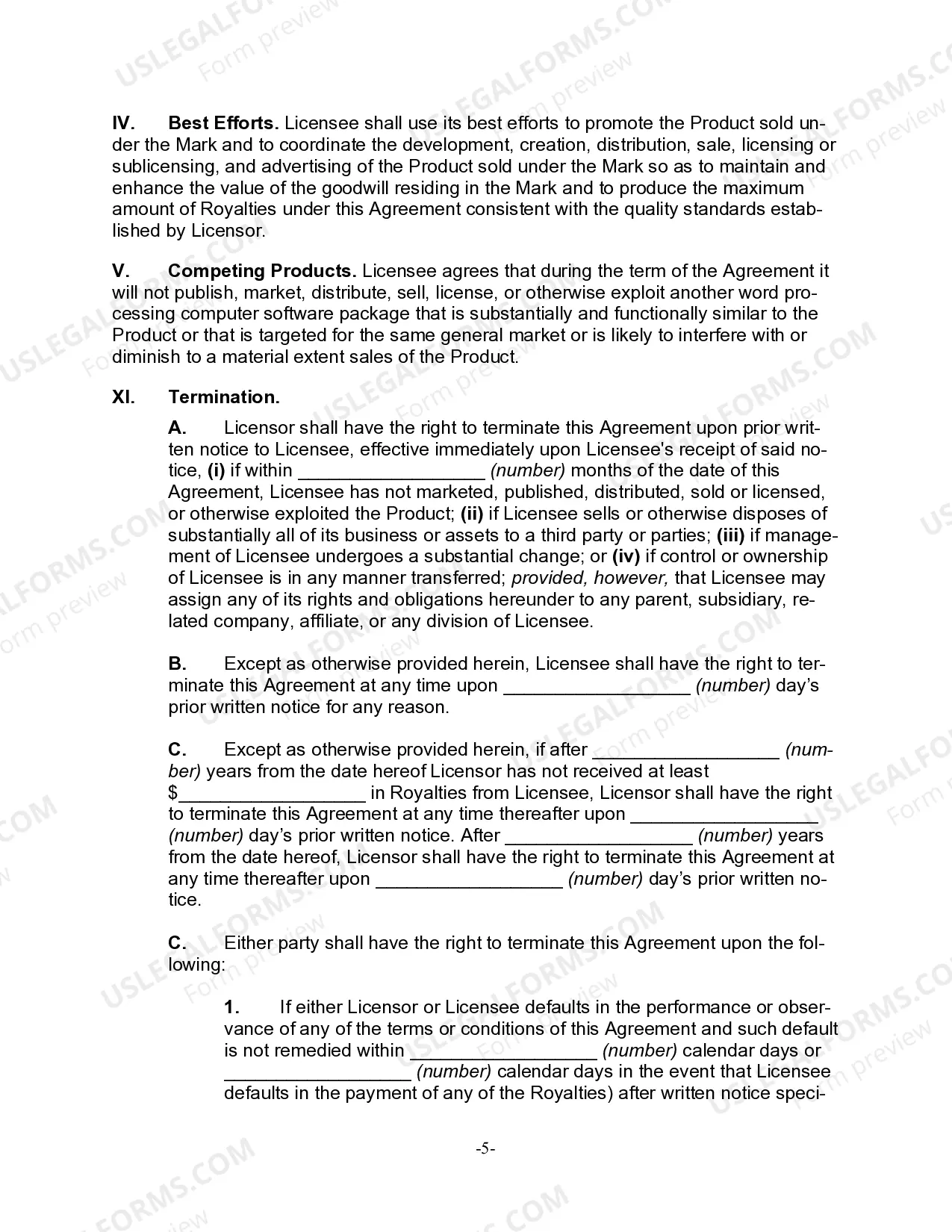
- Term: Specifies the duration of the agreement and conditions for termination.
- Royalties: Outlines payment obligations for using the trademark.
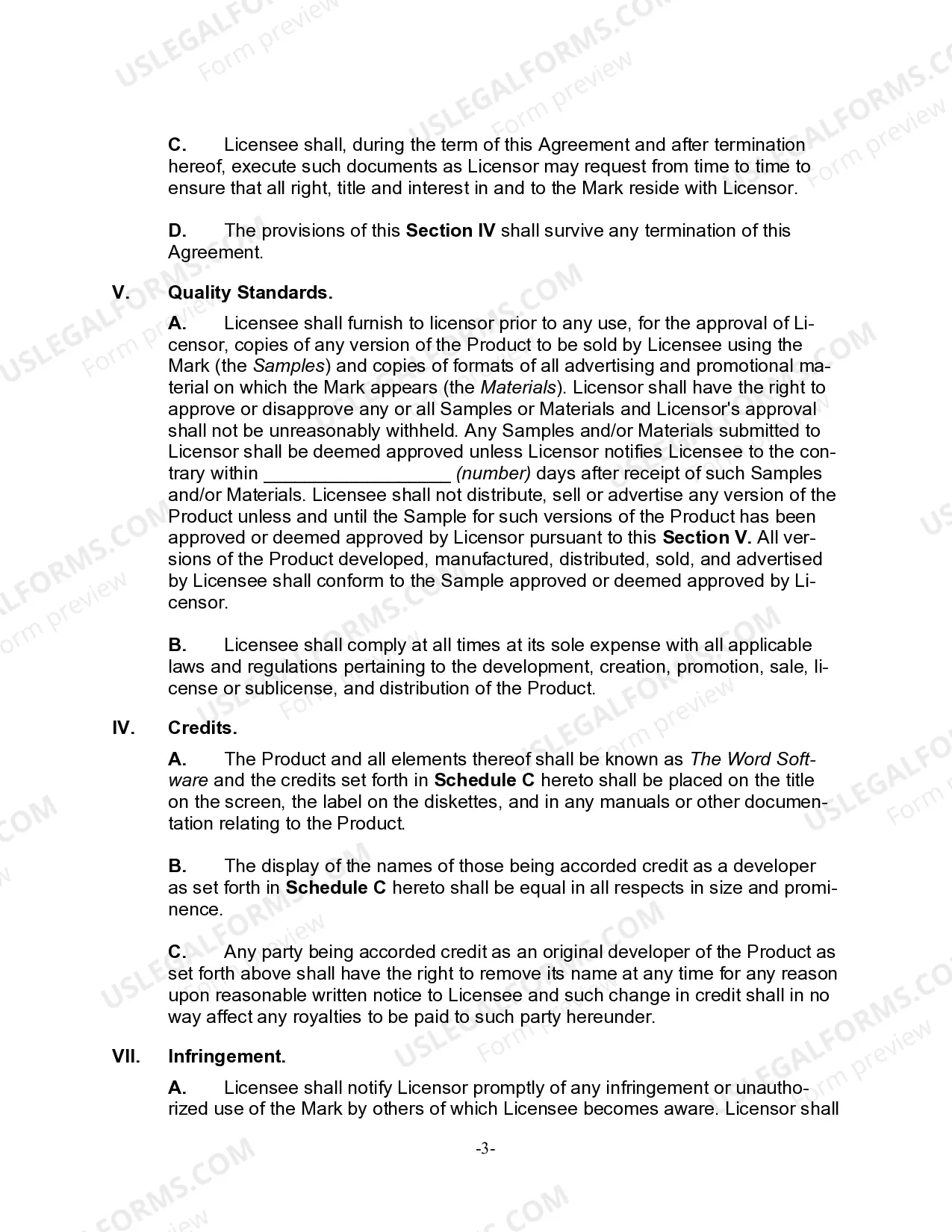
- Quality Standards: Establishes the requirement for approval of product versions and related marketing materials.
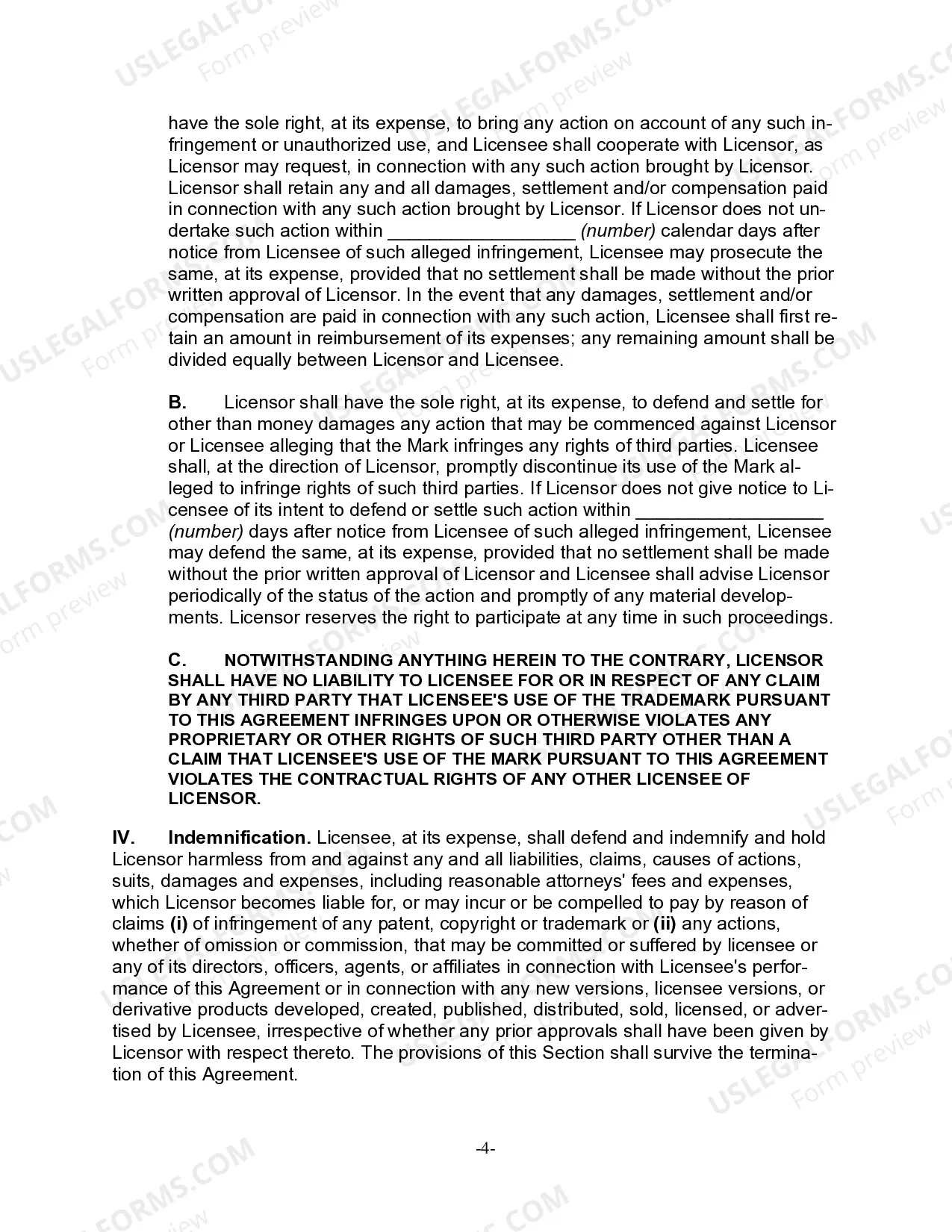
- Infringement: Procedures for addressing unauthorized use of the trademark.
- Indemnification: Specifies responsibilities for legal claims related to the trademark use.
Situations where this form applies
This form should be used when a business or corporation wishes to distribute a software product designed specifically for the educational market under a trademark owned by another entity. It is particularly important when the software's branding will impact its marketability and reputation, ensuring that all parties agree to uphold the quality standards of the trademark.
Who this form is for
- Licensors looking to grant trademark rights to their software products in the educational sector.
- Licensees (software companies) aiming to use a trademark to enhance their product's marketability in schools.
- Corporations specializing in educational technology products that wish to maintain legal compliance in trademark use.
How to prepare this document
- Identify the parties involved: Fill in the names, addresses, and state of incorporation for both the Licensor and Licensee.
- Specify the trademark: List the trademarks being licensed and include any specific conditions or restrictions.
- Enter the royalty payment details: Provide the agreed percentages and payment schedule as stated in Schedule B.
- Attach necessary schedules: Include any additional schedules referenced in the agreement, such as details regarding credits and approval processes.
- Sign and date the agreement: Ensure that both parties' authorized representatives sign the document to validate the agreement.
Notarization requirements for this form
In most cases, this form does not require notarization. However, some jurisdictions or signing circumstances might. US Legal Forms offers online notarization powered by Notarize, accessible 24/7 for a quick, remote process.
Get your form ready online
Our built-in tools help you complete, sign, share, and store your documents in one place.
Make edits, fill in missing information, and update formatting in US Legal Forms—just like you would in MS Word.
Download a copy, print it, send it by email, or mail it via USPS—whatever works best for your next step.
Sign and collect signatures with our SignNow integration. Send to multiple recipients, set reminders, and more. Go Premium to unlock E-Sign.
If this form requires notarization, complete it online through a secure video call—no need to meet a notary in person or wait for an appointment.
We protect your documents and personal data by following strict security and privacy standards.

Make edits, fill in missing information, and update formatting in US Legal Forms—just like you would in MS Word.

Download a copy, print it, send it by email, or mail it via USPS—whatever works best for your next step.

Sign and collect signatures with our SignNow integration. Send to multiple recipients, set reminders, and more. Go Premium to unlock E-Sign.

If this form requires notarization, complete it online through a secure video call—no need to meet a notary in person or wait for an appointment.

We protect your documents and personal data by following strict security and privacy standards.
Avoid these common issues
- Failing to clearly define the educational market to avoid misuse of the trademark.
- Neglecting to obtain Licensor's approval for advertising materials before use.
- Overlooking the royalty payment schedule and amounts, leading to potential disputes.
- Not specifying a termination clause or timeline, causing ambiguity in contract enforcement.
Why complete this form online
- Convenient access to a professionally drafted agreement that meets legal standards.
- Editability allows users to customize sections easily while maintaining legal compliance.
- Efficient completion, reducing time spent on drafting from scratch.
- Reliable templates ensure all necessary legal language and clauses are included for protection.
Key terms explained
- Licensor: The party that owns the trademark and grants rights to another party.
- Licensee: The party that receives permission to use the trademark.
- Royalties: Payments made to the Licensor based on the Licensee's use of the trademark.
- Educational Market: Refers to the target audience for the software, specifically in schools.
Looking for another form?
Form popularity
FAQ
A trademark licensing agreement is a legal contract between a trademark owner and another party that have agreed to use the trademark on preapproved terms decided between the contracting parties.
What is a Licensing Agreement? A licensing agreement is a contract between two parties (the licensor and licensee) in which the licensor grants the licensee the right to use the brand name, trademark, patented technology, or ability to produce and sell goods owned by the licensor.
Download a template for a licensing agreement. Choose your role as the licensor or licensee. Define the license(s) in the agreement. Decide whether the license is exclusive or not. Settle the matter of fees and payment schedule. Add a renewal date and rules.
A licensing agreement is a legal contract between two parties, known as the licensor and the licensee. In a typical licensing agreement, the licensor grants the licensee the right to produce and sell goods, apply a brand name or trademark, or use patented technology owned by the licensor.
A software license agreement typically has broad-form confidentiality provisions that also provide that certain items fall into the bucket of one or the other party (e.g., the software for a licensor, certain data for a licensee, etc.).
An example of a licensing agreement is a contract between the copyright holders of software and another company, allowing the latter to use the computer software for their daily business operations.
Setting up Your Licensing Agreement. Granting the License. Limiting Your Liability. Adding Boilerplate Clauses. Finalizing the Licensing Agreement.
Trademark licensing is the process by which a registered trademark owner, called a licensor or proprietor, allows another party, called a licensee, to make and distribute specific products or services under the licensor's trademark agreement. Trademark licensing is a type of merchandise agreement.