Agreement Between Board Member and Close Corporation
What is this form?
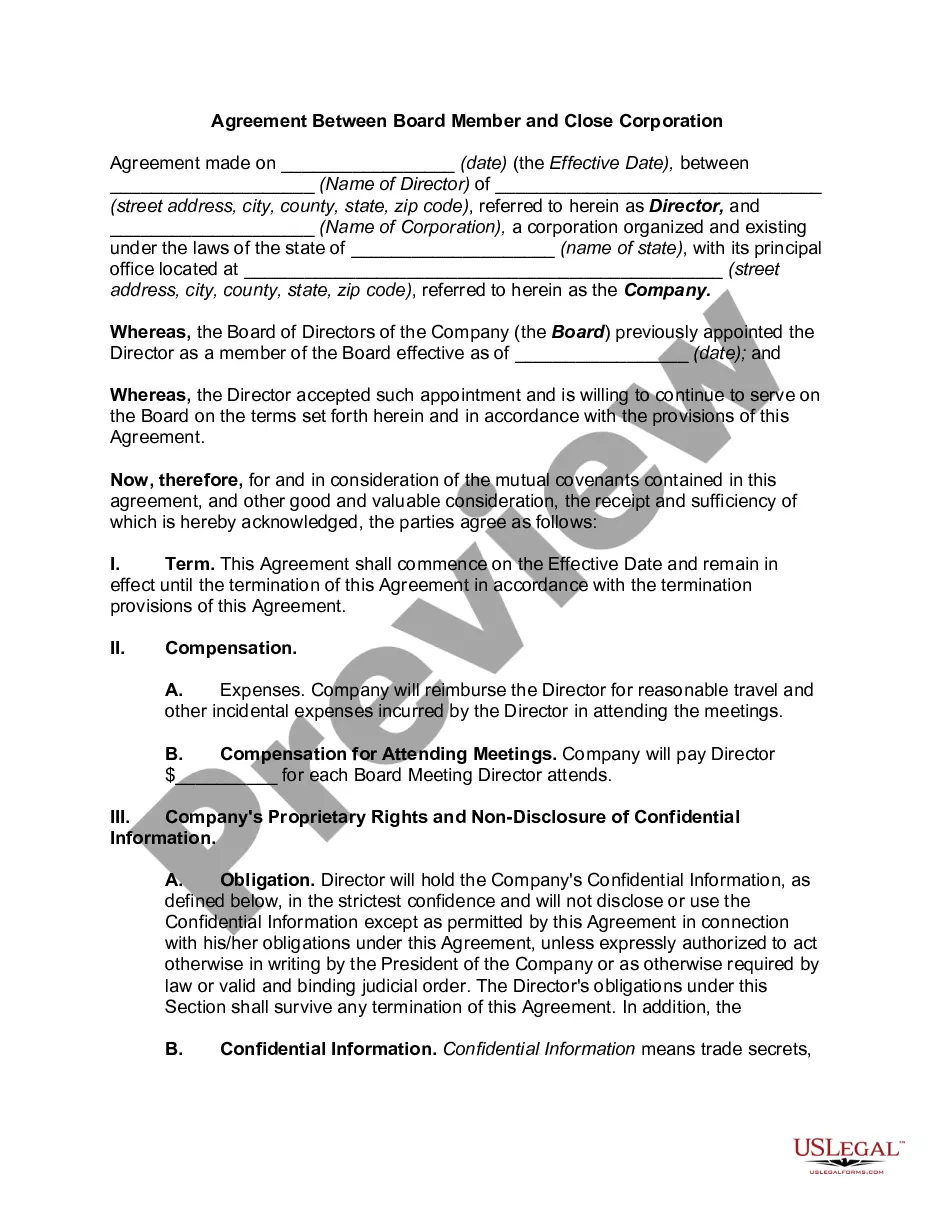
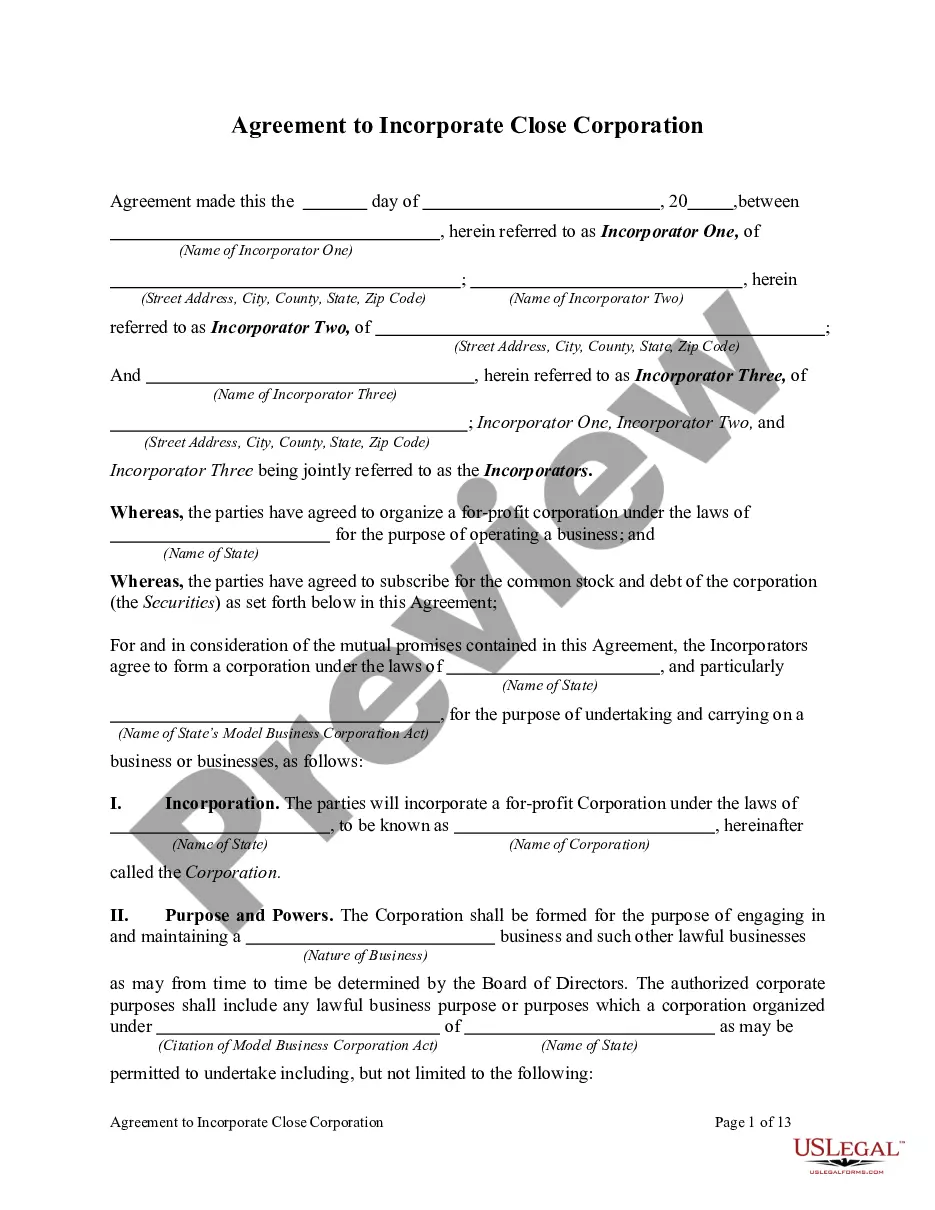
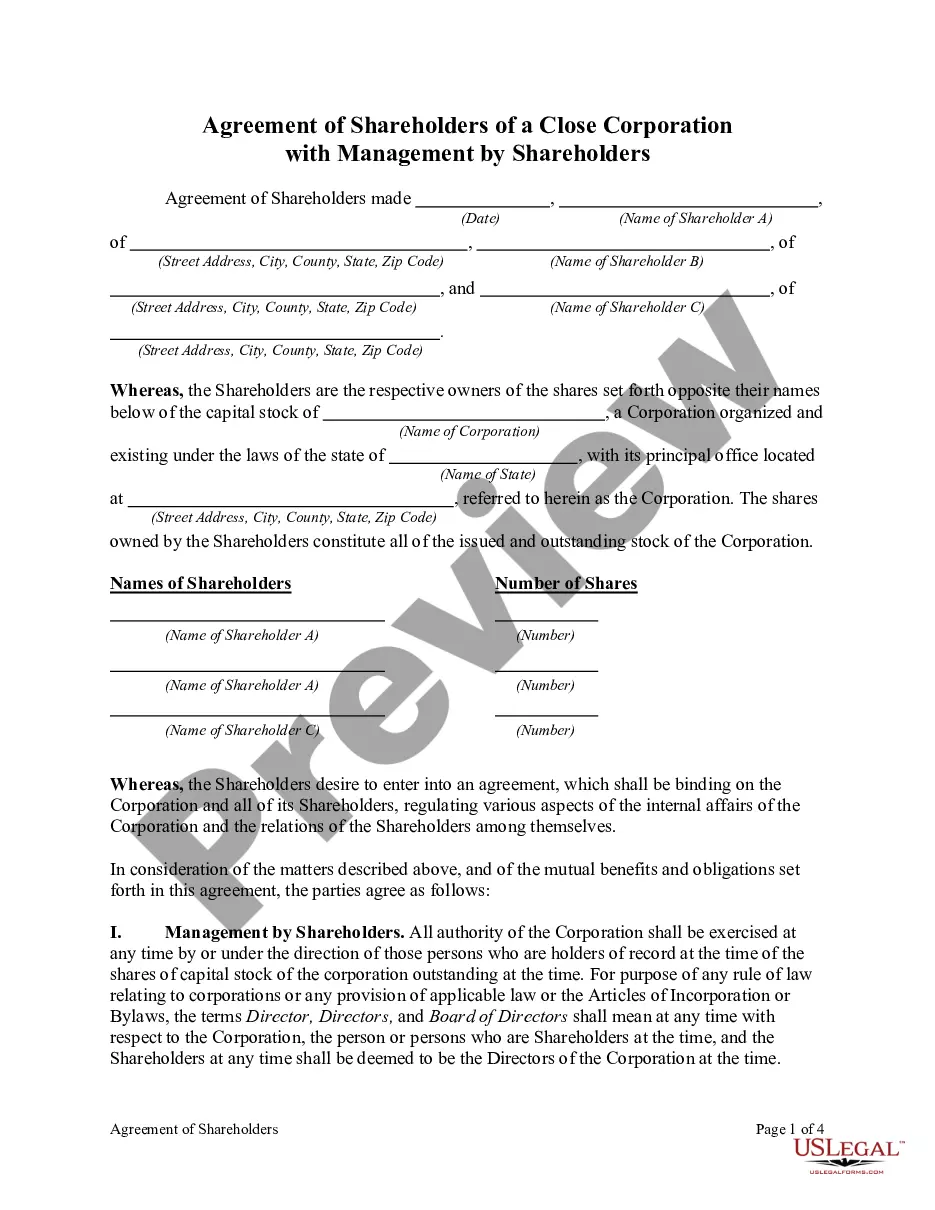
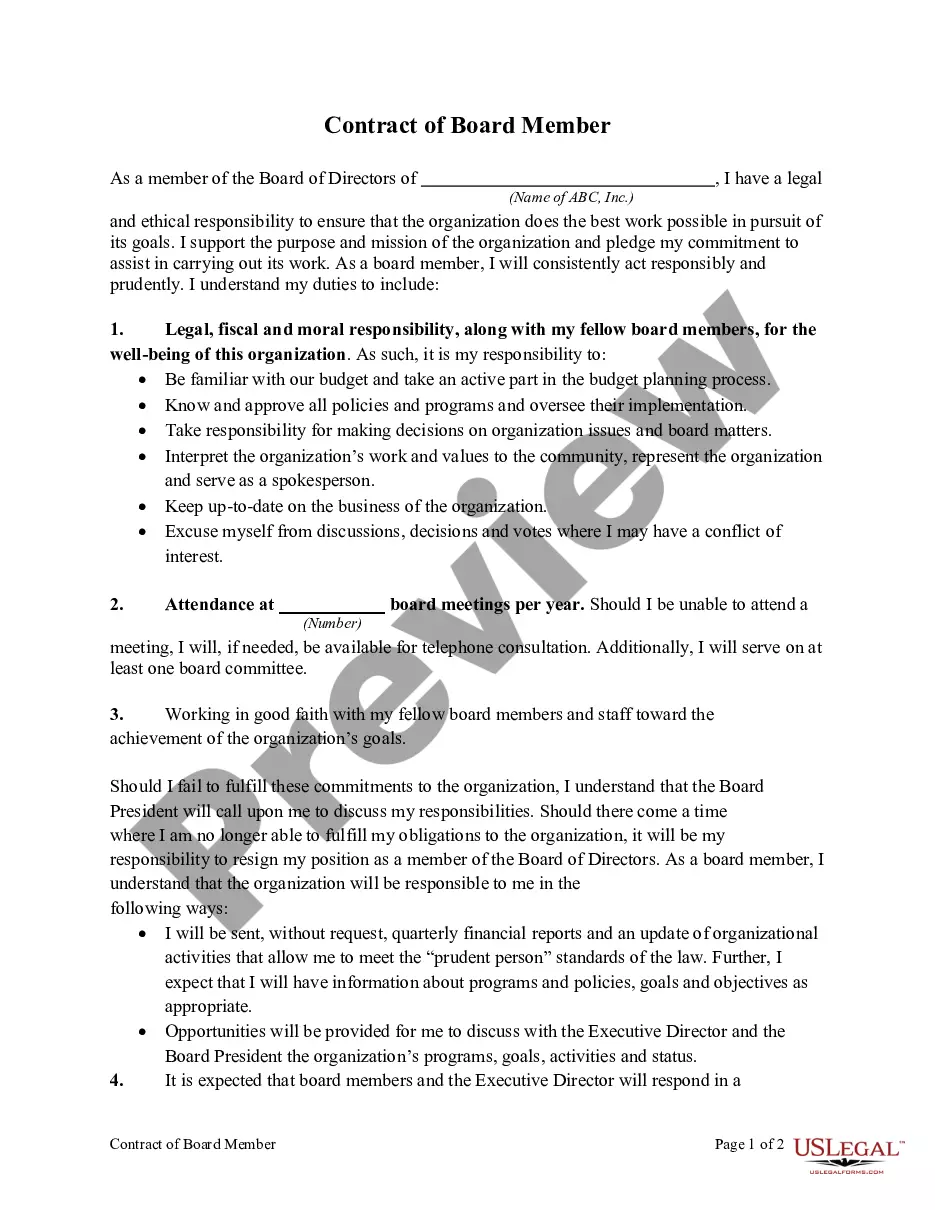
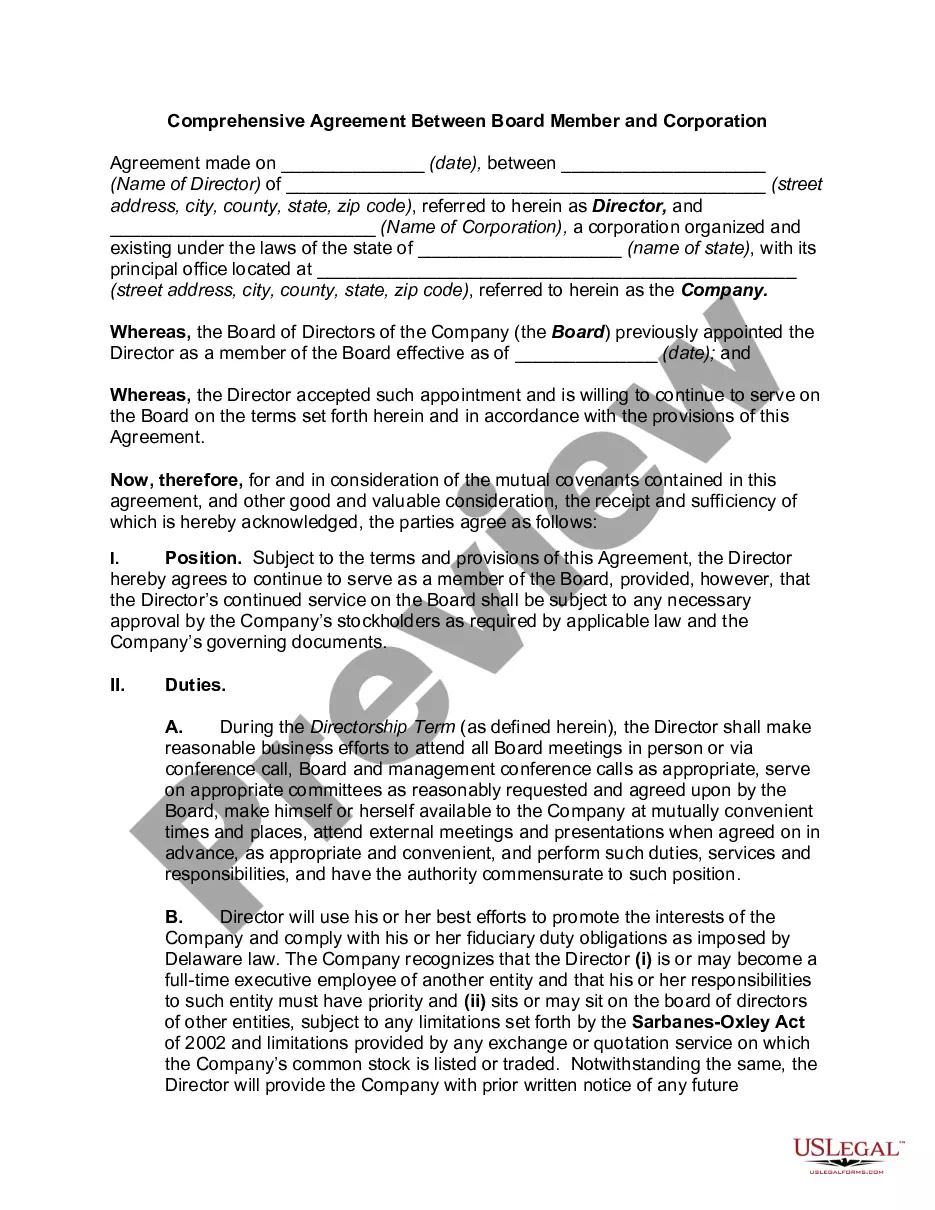
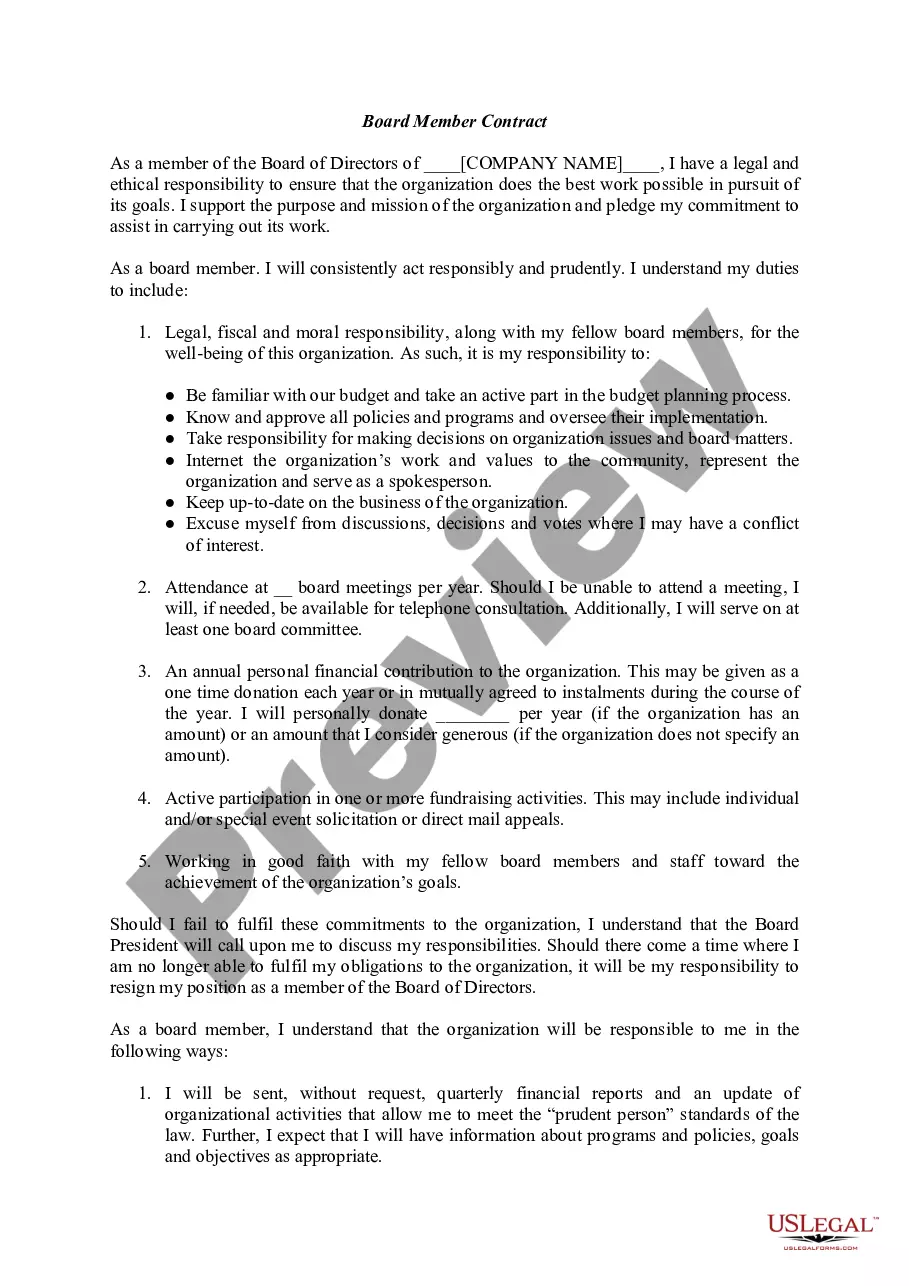
The Agreement Between Board Member and Close Corporation is a legal document that establishes the terms of service between a board member and a close corporation. This agreement clearly defines the rights, obligations, and responsibilities of both parties. It is specifically designed for close corporations, which are typically small businesses with limited shareholders that are not publicly traded. This agreement is distinct from other corporate agreements as it emphasizes confidentiality, the non-disclosure of sensitive information, and the nature of the directorâs engagement as an independent contractor.
Key components of this form
- Effective date and identification of the director and corporation
- Terms of compensation and reimbursement for expenses
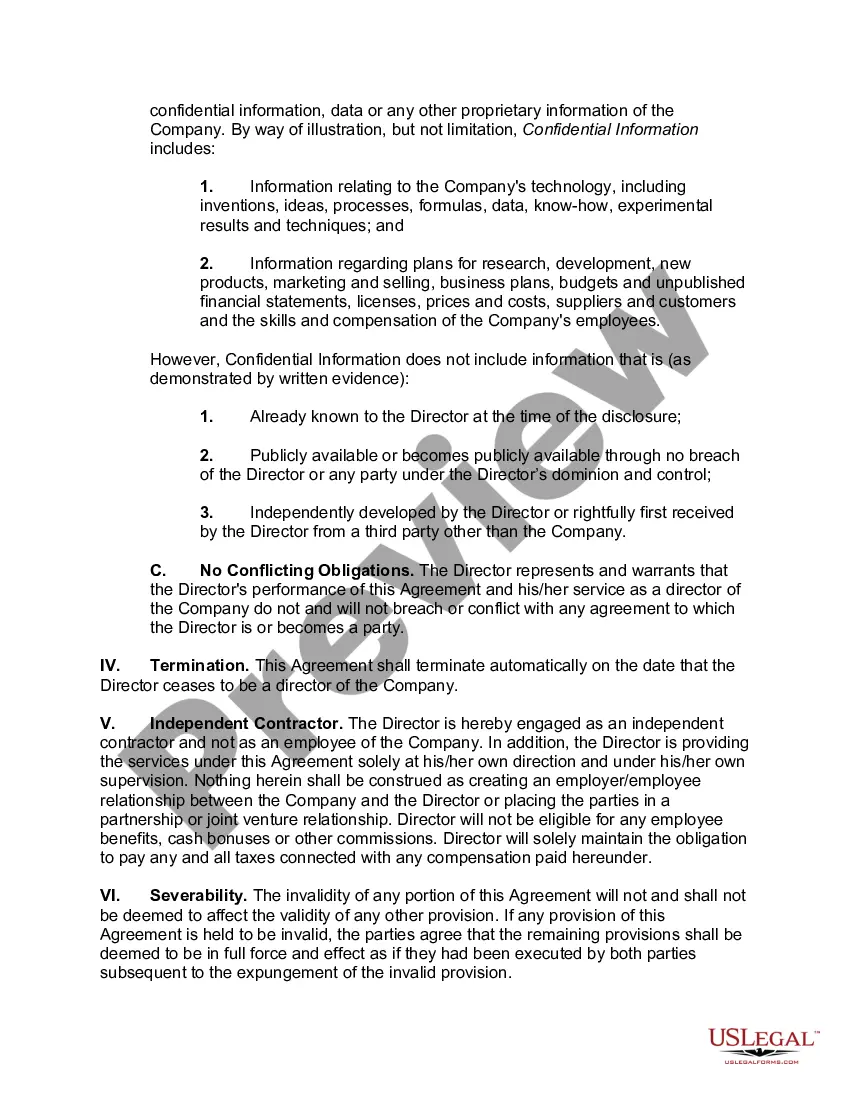
- Confidentiality obligations regarding proprietary information
- Termination conditions of the agreement
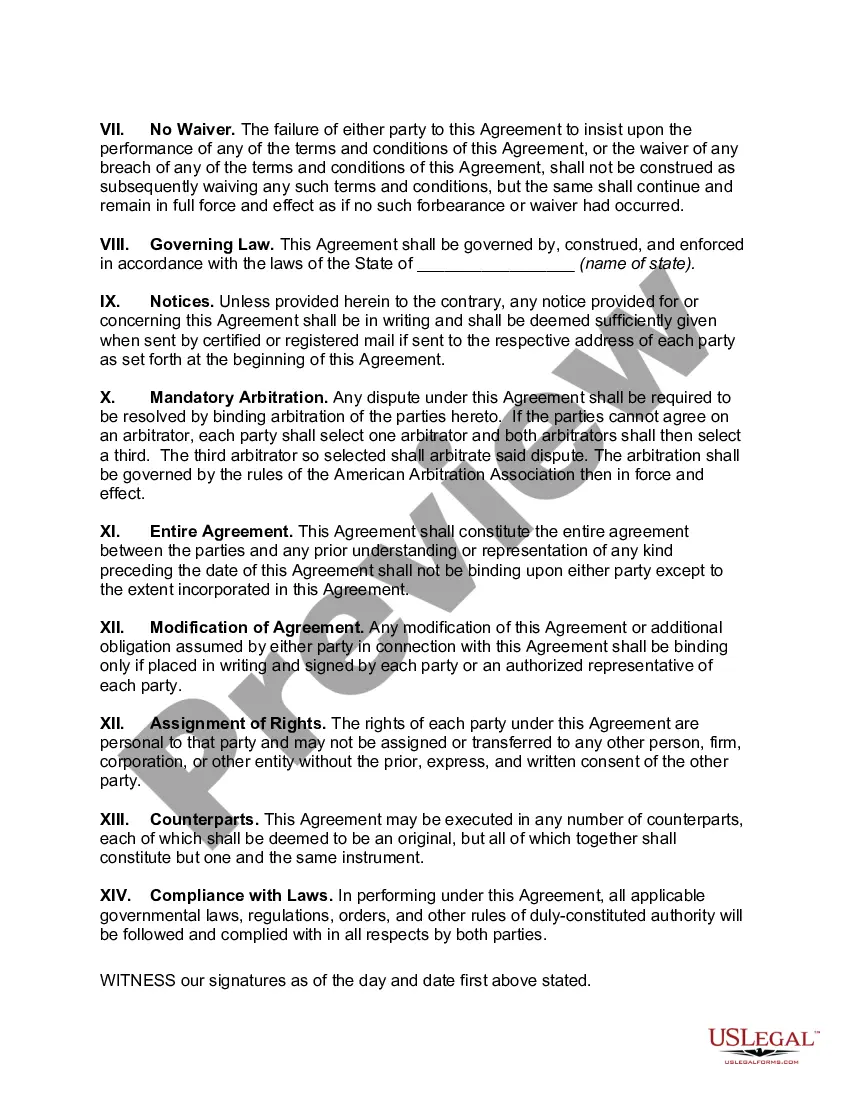
- Legal framework and governing law provisions
- Dispute resolution through mandatory arbitration

When this form is needed
This form should be used when a board member is appointed to a close corporation and both parties want to outline their expectations and responsibilities. It is particularly useful in situations where confidentiality of company information is paramount and helps ensure clarity in the relationship between the board member and the corporation. Use this agreement to formalize the director's role, compensation, and obligations, especially in closely-held businesses.
Who needs this form
- Close corporations looking to define the relationship with their board members
- Board members who want clarity regarding their rights and responsibilities
- Corporations needing to formalize compensation and expenses for their directors
- Directors in need of a legal framework for confidentiality agreements
How to complete this form
- Identify and enter the names and addresses of both the director and the corporation.
- Specify the effective date of the agreement.
- Outline the compensation structure, including any reimbursement for expenses.
- Detail the confidentiality obligations that the director must adhere to.
- Include termination conditions and any necessary governing law information.
- Ensure both parties sign the agreement to validate it.
Does this form need to be notarized?
This form does not typically require notarization unless specified by local law. It is advisable to check state-specific requirements to ensure compliance. If necessary, US Legal Forms offers integrated online notarization for convenience and security.
Get your form ready online
Our built-in tools help you complete, sign, share, and store your documents in one place.
Make edits, fill in missing information, and update formatting in US Legal Forms—just like you would in MS Word.
Download a copy, print it, send it by email, or mail it via USPS—whatever works best for your next step.
Sign and collect signatures with our SignNow integration. Send to multiple recipients, set reminders, and more. Go Premium to unlock E-Sign.
If this form requires notarization, complete it online through a secure video call—no need to meet a notary in person or wait for an appointment.
We protect your documents and personal data by following strict security and privacy standards.

Make edits, fill in missing information, and update formatting in US Legal Forms—just like you would in MS Word.

Download a copy, print it, send it by email, or mail it via USPS—whatever works best for your next step.

Sign and collect signatures with our SignNow integration. Send to multiple recipients, set reminders, and more. Go Premium to unlock E-Sign.

If this form requires notarization, complete it online through a secure video call—no need to meet a notary in person or wait for an appointment.

We protect your documents and personal data by following strict security and privacy standards.
Common mistakes to avoid
- Failing to clearly define the scope of confidentiality obligations.
- Not specifying compensation and reimbursement terms adequately.
- Missing signatures or dates, rendering the agreement unenforceable.
- Not reviewing state-specific laws before finalizing the document.
Why use this form online
- Easy access to professionally drafted templates by licensed attorneys.
- Convenient download and editing options to tailor the agreement to specific needs.
- Time-saving ability to complete and store documents securely online.
- Assurance of compliance with legal standards across different jurisdictions.
Looking for another form?
Form popularity
FAQ
In essence, a close corporation is a corporation whose shareholders and directors are entitled to operate much like a partnership.Typically, shareholders must agree unanimously to close corporation status, and a written shareholders' agreement governing the affairs of the corporation must be drafted.
Generally speaking, a close corporation cannot have more than a particular number of shareholders--between 30 and 35 is the limit in most states. A close corporation cannot make a public offering of its stock.
Close corporation (CC) A CC is similar to a private company. It is a legal entity with its own legal personality and perpetual succession and must register as a taxpayer in its own right. A CC has no share capital and therefore no shareholders. The owners of a CC are the members of the CC.
It is a structure which may not be available to every qualifying corporation. It costs more to organize a close corporation in most circumstances. Close corporations are governed by a shareholders' agreement and bylaws.
Fewer formalities. The most obvious advantage of a close corporation is fewer rules to follow. Limited liability. In general, shareholders of a close corporation are not personally liable for the business's debt. More shareholder control. More freedom.
THE ENTITY A Close Corporation is registered in terms of the Close Corporations Act 69 of 1984. A Close Corporation has members and a Company has shareholders and directors. The Close Corporation has its own estate seperate from its members.
A Close Corporation has members. It can have only one member or it can have up to ten, and no more than ten, members. The members of a Close Corporation can be either a natural person, or a Trust.
The easiest definition of a close corporation is one that is held by a limited number of shareholders and is not publicly traded. The company is run by the shareholders and is generally exempt from many requirements of other corporations, including having a board of directors and holding annual meetings.
Can a close corporation or a company be a member of a close corporation? No, only a natural person or a inter vivos trust/testamentary trust can become a member.