Sample Letter for Request to Serve Summons Upon Defendants
What this document covers
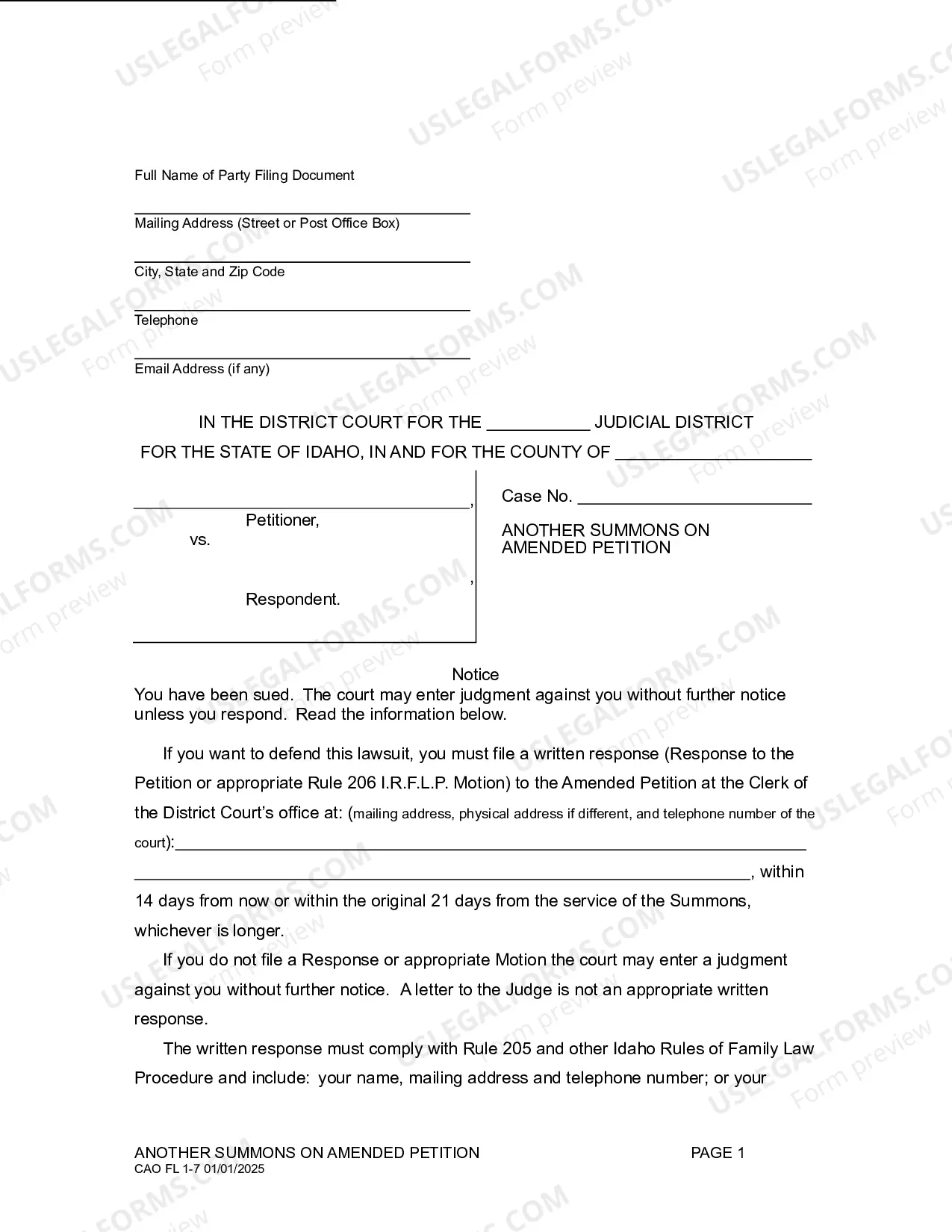
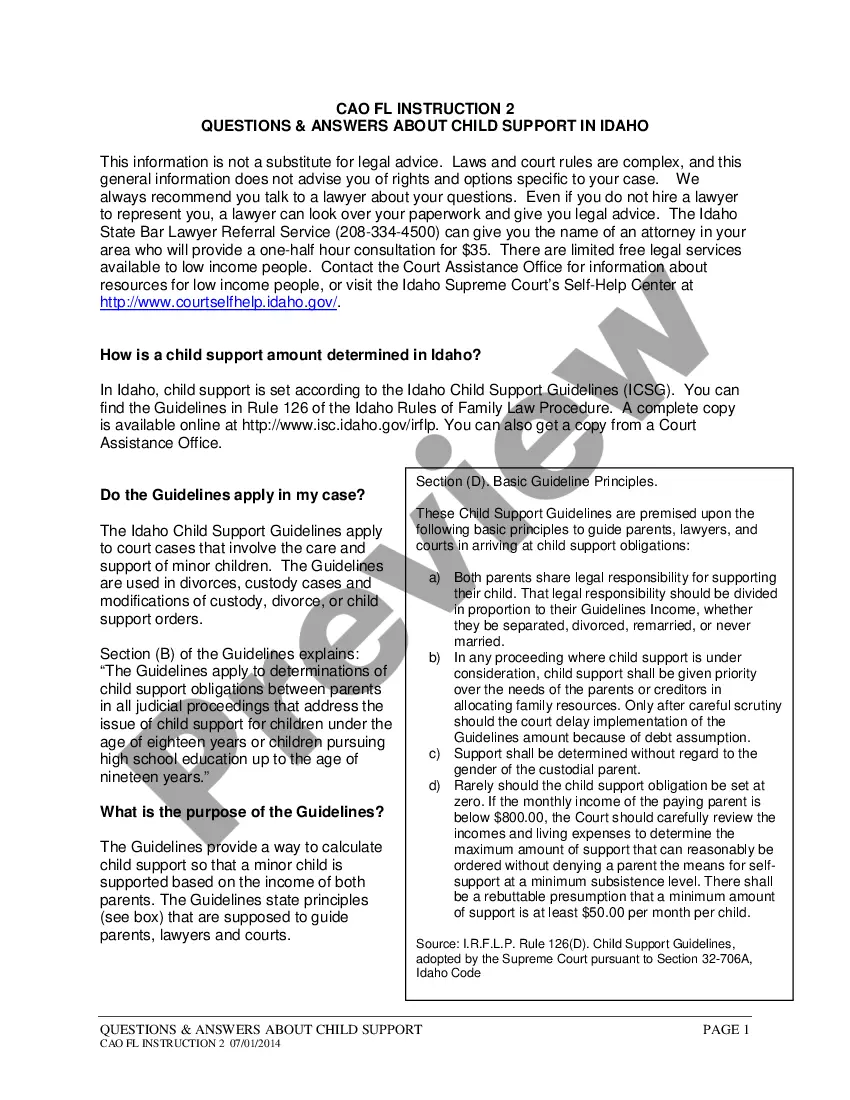
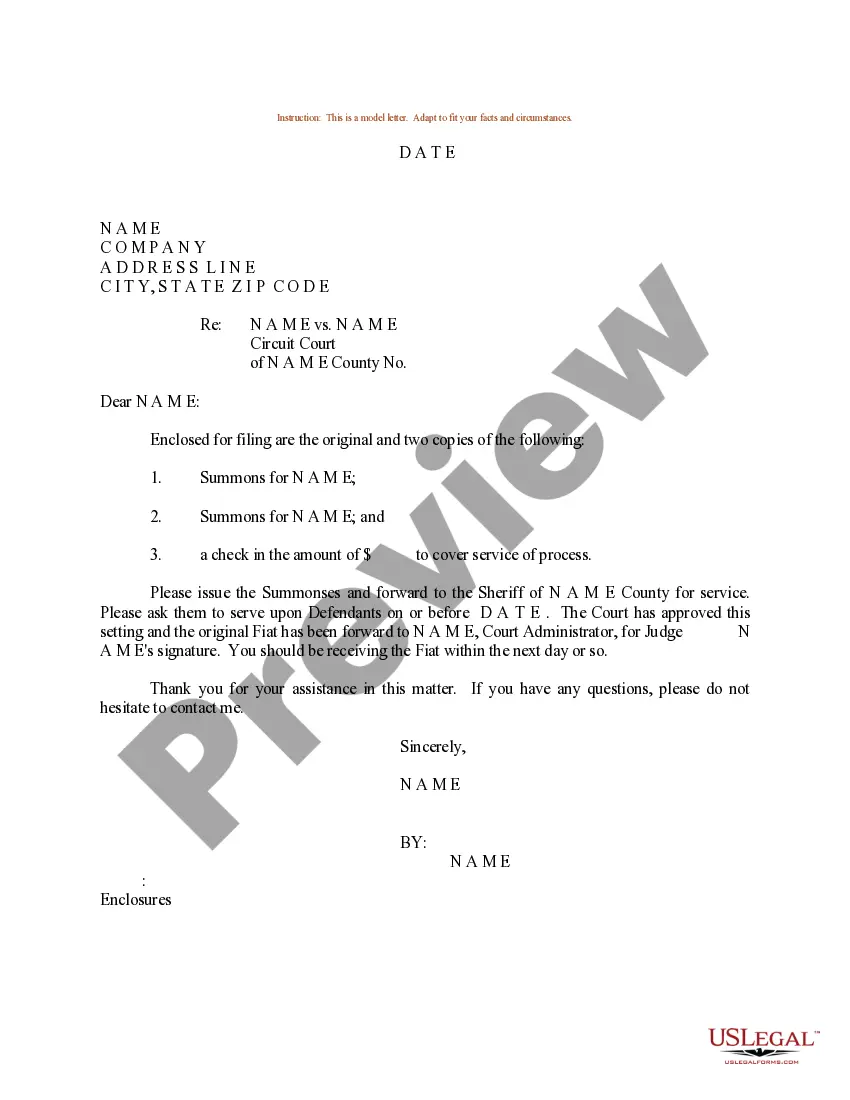
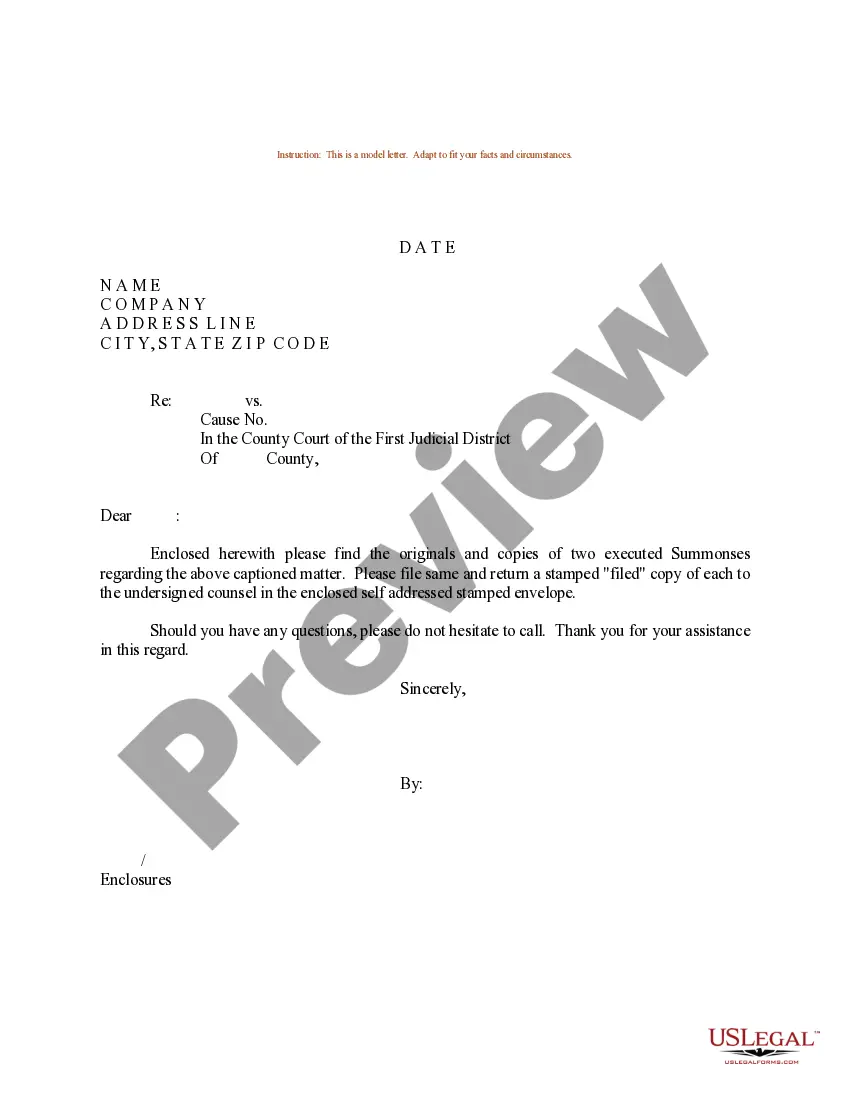
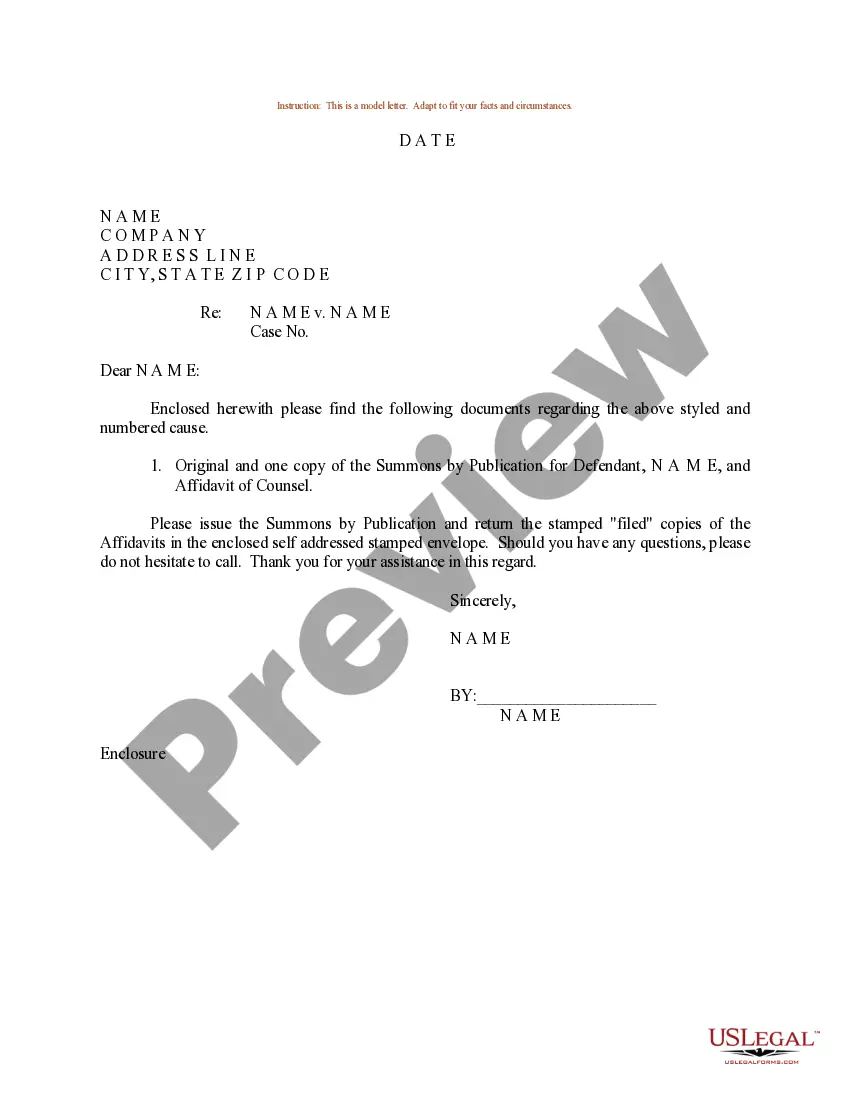
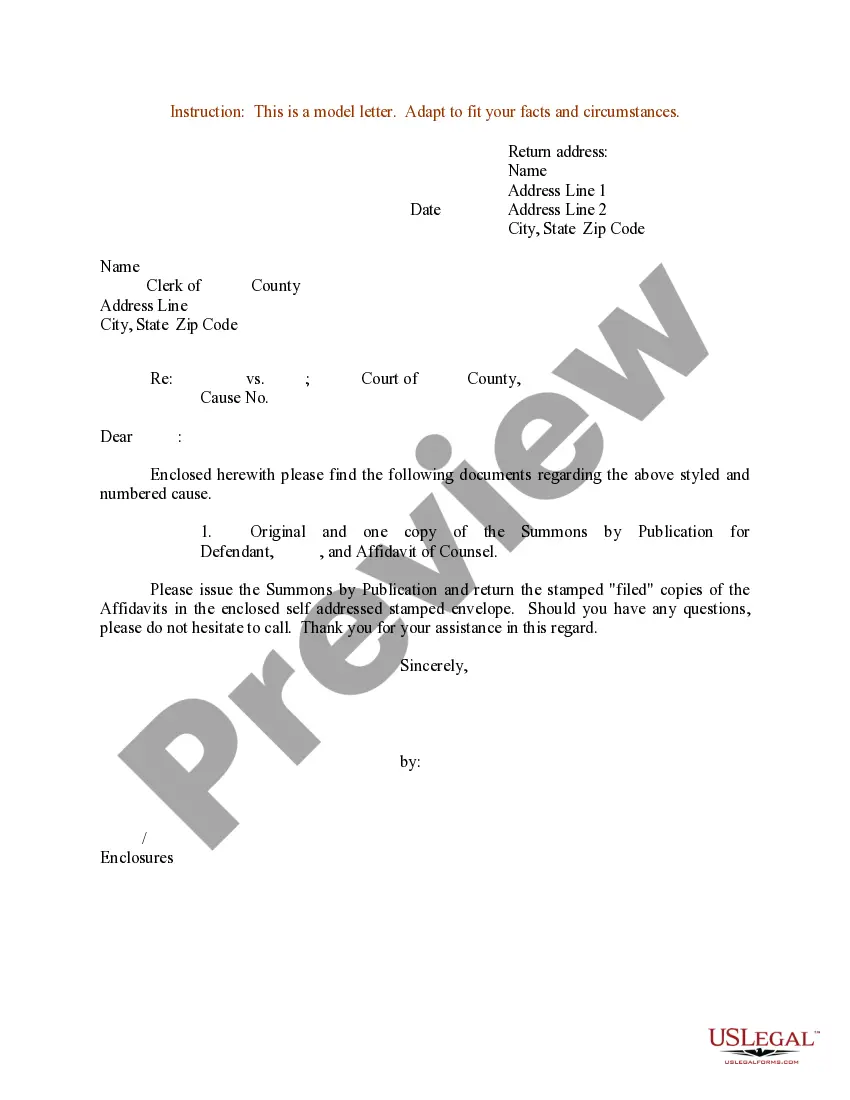
This form is a Sample Letter for Request to Serve Summons Upon Defendants. It serves as a template for individuals or attorneys to formally request the issuance of summonses from the court. This letter differs from other legal notices by specifically focusing on the request for summonses and detailing the necessary actions to be taken by law enforcement for service to defendants. It is a crucial step in starting legal proceedings against another party.
Key components of this form
- Date: The date on which the letter is being written.
- Sender's information: Name, company, and address of the individual or attorney requesting the summonses.
- Case details: The names of the parties involved in the case and the court's name.
- Request section: A clear request for the issuance of summonses and instructions for service by the sheriff.
- Deadline: A specified date by which the defendants should be served.
- Reference to court approval: Mention that the request is approved by the court and the appropriate documents have been submitted.
Situations where this form applies
Who this form is for
- Individuals or attorneys filing a lawsuit who need to serve summonses to the defendants.
- Plaintiffs in civil cases who have already received court approval for their case.
- Legal professionals seeking a template to streamline the process of serving summonses.
How to prepare this document
- Identify the date and write it at the top of the letter.
- Fill in your name, your companyâs name, and your address details.
- Enter the names of the parties involved in the legal case and the appropriate court name.
- Clearly state your request for the issuance of summonses and any instructions for the sheriff.
- Add any applicable deadlines for the service of summonses on the defendants.
- Include a note about court approval and reference any supporting documents submitted to the court.
Does this form need to be notarized?
This form does not typically require notarization unless specified by local law. However, it is advisable to check state-specific requirements to ensure compliance with legal standards in your jurisdiction.
Get your form ready online
Our built-in tools help you complete, sign, share, and store your documents in one place.
Make edits, fill in missing information, and update formatting in US Legal Forms—just like you would in MS Word.
Download a copy, print it, send it by email, or mail it via USPS—whatever works best for your next step.
Sign and collect signatures with our SignNow integration. Send to multiple recipients, set reminders, and more. Go Premium to unlock E-Sign.
If this form requires notarization, complete it online through a secure video call—no need to meet a notary in person or wait for an appointment.
We protect your documents and personal data by following strict security and privacy standards.

Make edits, fill in missing information, and update formatting in US Legal Forms—just like you would in MS Word.

Download a copy, print it, send it by email, or mail it via USPS—whatever works best for your next step.

Sign and collect signatures with our SignNow integration. Send to multiple recipients, set reminders, and more. Go Premium to unlock E-Sign.

If this form requires notarization, complete it online through a secure video call—no need to meet a notary in person or wait for an appointment.

We protect your documents and personal data by following strict security and privacy standards.
Typical mistakes to avoid
- Failing to include the correct case details, which may delay processing.
- Not specifying a clear deadline for service, potentially leading to issues with court timelines.
- Omitting your contact information, making it difficult for authorities to reach you if needed.
Why complete this form online
- Convenience of downloading and editing the form to meet your specific needs.
- Access to legal templates drafted by licensed attorneys, ensuring compliance with legal standards.
- Time-saving process by having the form ready for immediate use in your legal proceedings.
Legal use & context
- This form is legally recognized for initiating the service of summonses upon defendants in civil cases.
- Using this letter correctly can facilitate a smoother legal process and ensure defendants are properly notified of the lawsuit.
- Ensure that you understand local laws regarding service of process to maximize enforceability of your summonses.
Quick recap
- The Sample Letter for Request to Serve Summons Upon Defendants is an essential document in the early stages of litigation.
- Completing the form accurately can prevent delays in serving legal documents to defendants.
- Always verify your state's specific requirements related to service of summonses for optimal results.
Looking for another form?
Form popularity
FAQ
In law, serve means to make legal delivery of a notice or process. For example, copy of the complaint was served on the defendant. It can also mean to present a person with a notice or process as required by law. For example, the defendant was served with process.
Service of papers means a defendant is being notified of a legal action taken against them in court by a plaintiff. The actual papers being served are the initial complaint filed with the court, along with a summons to appear in court to respond.
If a server calls you at all hours of the day from a non-local number trying to scare you, it's a scammer. A server may explain that there could be bad consequences to not receiving the papers. This is merely a statement of fact and not an attempt to frighten you.
That's a long way to say yes, real process servers do sometimes call before they come attempt to serve you. One last thought: professional process servers call the people they're trying to serve because it works. Most people respond well to somebody trying to help them by delivering legal documents.
Process servers will call you, but they won't threaten you over the phone. A process server is always paid by the party hiring them to deliver legal documents. Whether it's a divorce, child support, or debt collection case, the party being served will never pay the server directly.
Generally, process servers make at least three attempts to serve somebody. These attempts are normally made at different times of day and on different days to maximize our chance of serving the papers.
Process servers do not usually call ahead of time since this gives people time to avoid being served court papers. A process server will never ask for any money. They do not collect money owed for divorce cases, child support, or any other legal reason (especially via a wire transfer).
WHAT DOES IT MEAN TO "SERVE PAPERS"? Serving papers on another person is an official handing over of documents. Papers must be "served" on any other person who is involved in the law suit or who the law requires get the papers.
There are multiple reasons for being served papers. You could be getting a subpoena to testify in court. You might also have access to documents that could be considered evidence. You may not be thrilled by either of those options, but they're usually preferable to getting sued.