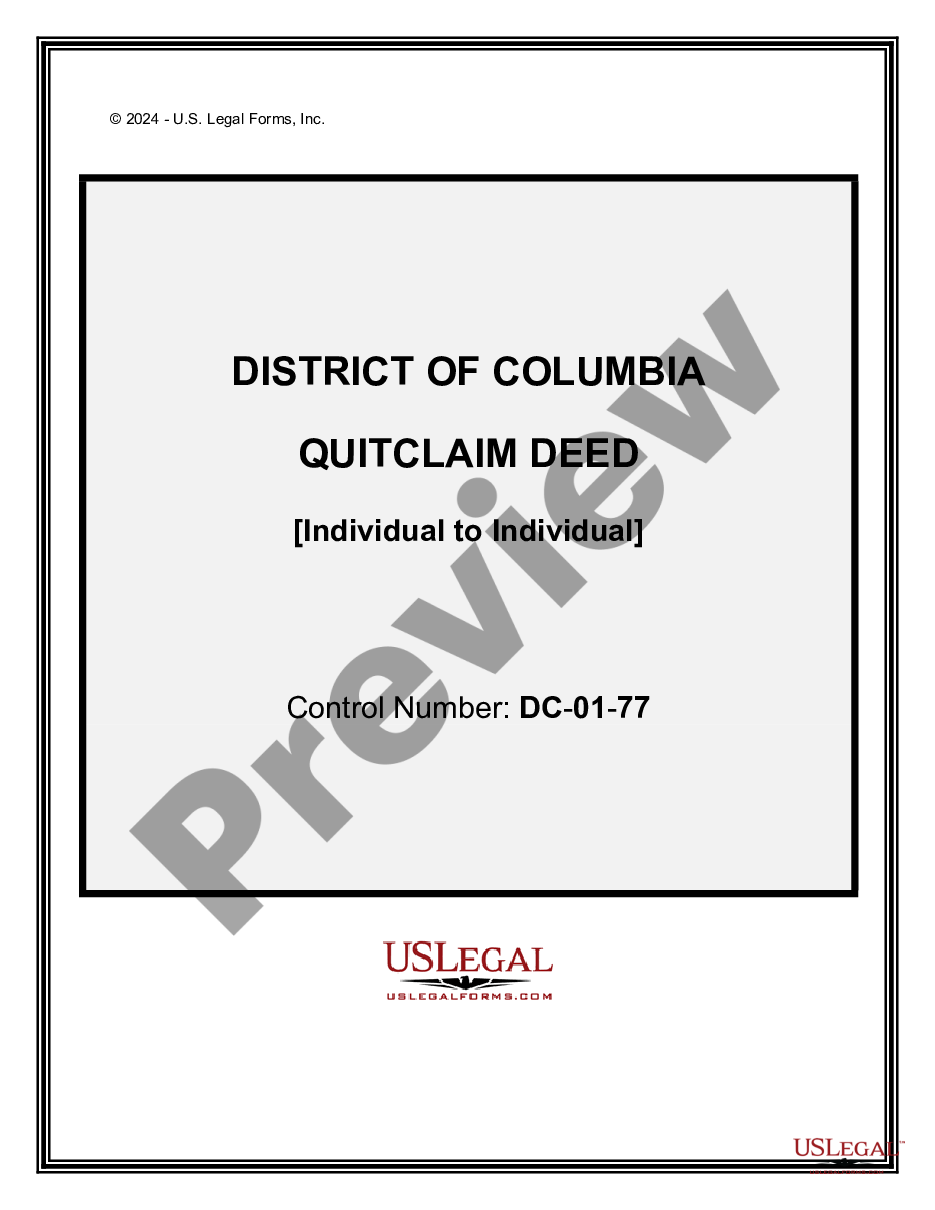
District of Columbia Quitclaim Deed - Individual to Individual
Overview of this form
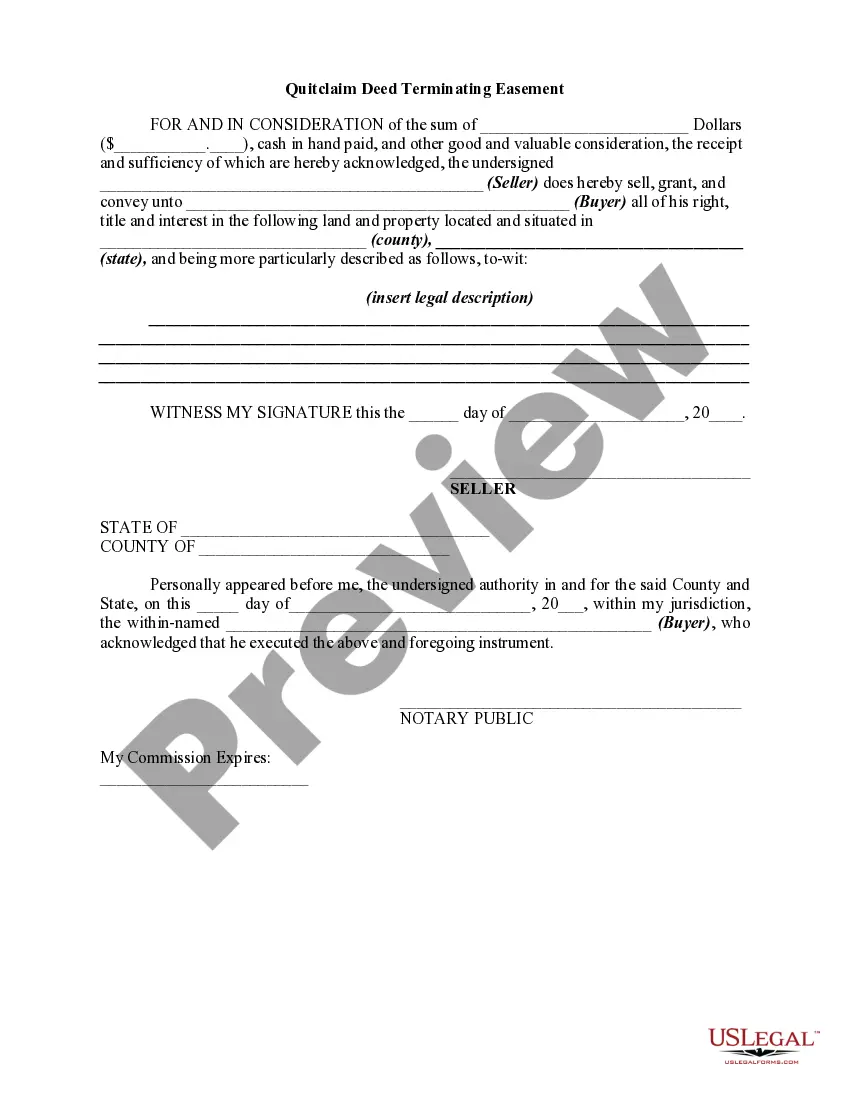
The Quitclaim Deed - Individual to Individual is a legal document used to transfer property rights from one individual (the Grantor) to another individual (the Grantee) without any warranties or guarantees regarding the property's title. This form differs from a warranty deed, which offers more protection to the Grantee. The Quitclaim Deed simply conveys whatever interest the Grantor has in the property, if any, making it a straightforward choice for transferring property between individuals.
Main sections of this form
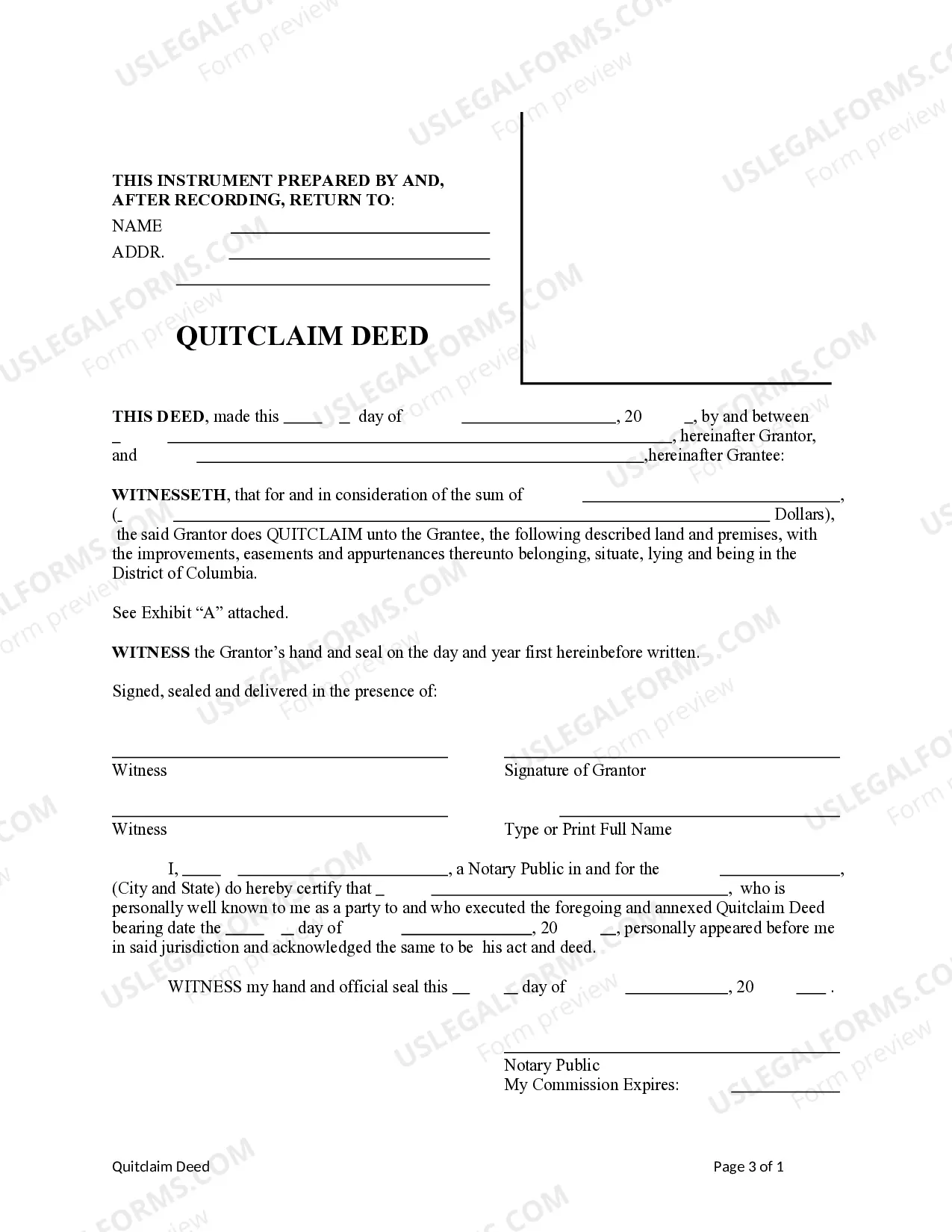
- Identification of the Grantor and Grantee, including full names and addresses.
- A complete legal description of the property being transferred.
- Statement of the consideration or payment given for the property.
- Signature of the Grantor, signifying the transfer of property rights.
- Space for notarization, if required by local laws.





When this form is needed
This Quitclaim Deed is commonly used in situations such as transferring property between family members, resolving disputes over property ownership, or when the Grantor does not wish to make any warranties regarding the property's title. It is an ideal solution for informal property transfers, such as gifts or sales between friends or relatives.
Who should use this form
This form is suitable for:
- Individuals transferring ownership of real property to another individual.
- Family members looking to transfer property within the family.
- Homeowners resolving ownership disputes without needing a warranty deed.
- Anyone wishing to relinquish rights to a property with minimal formality.
Completing this form step by step
- Identify the parties involved: Enter the full names and addresses of the Grantor and Grantee.
- Specify the property: Include a complete legal description of the property being transferred.
- State the consideration: Indicate any payment or consideration involved in the property transfer.
- Sign the document: The Grantor must sign the Quitclaim Deed in the presence of a witness or notary, if required.
- Record the deed: Submit the completed and signed form to the appropriate local recording office to finalize the transfer.
Notarization requirements for this form
This form does not typically require notarization unless specified by local law. However, having the Quitclaim Deed notarized can help strengthen its legal validity and ensure the transaction is recognized by third parties.
Get your form ready online
Our built-in tools help you complete, sign, share, and store your documents in one place.
Make edits, fill in missing information, and update formatting in US Legal Forms—just like you would in MS Word.
Download a copy, print it, send it by email, or mail it via USPS—whatever works best for your next step.
Sign and collect signatures with our SignNow integration. Send to multiple recipients, set reminders, and more. Go Premium to unlock E-Sign.
If this form requires notarization, complete it online through a secure video call—no need to meet a notary in person or wait for an appointment.
We protect your documents and personal data by following strict security and privacy standards.

Make edits, fill in missing information, and update formatting in US Legal Forms—just like you would in MS Word.

Download a copy, print it, send it by email, or mail it via USPS—whatever works best for your next step.

Sign and collect signatures with our SignNow integration. Send to multiple recipients, set reminders, and more. Go Premium to unlock E-Sign.

If this form requires notarization, complete it online through a secure video call—no need to meet a notary in person or wait for an appointment.

We protect your documents and personal data by following strict security and privacy standards.
Typical mistakes to avoid
- Failing to include a complete legal description of the property, which can lead to disputes.
- Not obtaining the Grantor's signature in front of a witness or notary if required by local laws.
- Neglecting to record the deed, which is necessary to validate the transfer of ownership.
- Assuming the form is legally valid without checking compliance with state-specific regulations.
Benefits of completing this form online
- Convenience: Easily complete the Quitclaim Deed from your own home.
- Editability: Make changes and fill out the form digitally before printing.
- Compliance: The form is designed to meet state statutory requirements.
- Accessibility: Downloadable instant access to legal documents when you need them.
Legal use & context
- A Quitclaim Deed is best for informal transfers and should not be used when buyers need protection against possible title issues.
- The form allows for the quick transfer of property but carries more risk compared to warranty deeds.
- It is advisable to consult with a legal professional if the property value is substantial or if any complications arise.
Quick recap
- A Quitclaim Deed transfers property ownership without warranties of title.
- It is designed for simple transactions between trusted parties.
- Ensure compliance with state-specific requirements where applicable.
Looking for another form?
Form popularity
FAQ
Several factors can void a District of Columbia Quitclaim Deed - Individual to Individual, including fraud, lack of capacity, or non-compliance with state laws. If the deed is improperly executed or lacks the necessary signatures, it could also be deemed void. Working with a legal professional can help prevent these issues and ensure that the deed remains valid.
The primary danger of a District of Columbia Quitclaim Deed - Individual to Individual is that it offers no protection against claims from third parties. If someone else claims an interest in the property, you may find yourself in a difficult situation. Additionally, if there are hidden title problems, you could face significant financial repercussions down the line.
One notable issue with a District of Columbia Quitclaim Deed - Individual to Individual is that it does not guarantee clear title to the property. This means that if there are existing liens or debts associated with the property, these could still affect the new owner. Furthermore, since the deed essentially transfers ownership without warranties, it can lead to complications in disputes.
In the context of a District of Columbia Quitclaim Deed - Individual to Individual, a spouse typically relinquishes their rights to the property once they sign the deed. However, the specific details can depend on marital property laws. It's crucial to consult a legal professional to fully understand the implications and ensure both parties are aware of their rights.
Yes, you can transfer a deed without an attorney by using a District of Columbia Quitclaim Deed - Individual to Individual. Many individuals choose to handle this process independently, especially when the property transfer is simple. However, even though it is possible, it is wise to use reputable services like uslegalforms for assistance. They provide clear instructions and the required forms, making the process easier to navigate.
The transfer process for a house using a District of Columbia Quitclaim Deed - Individual to Individual may take several weeks on average. After you complete the deed and file it, the local office will need time to process and record it. While this is generally straightforward, factors like backlog at the recording office can influence timing. Always ensure you have all necessary documentation ready to avoid unnecessary delays.
The time it takes to transfer a deed from one person to another can vary but is typically a few weeks. After completing the District of Columbia Quitclaim Deed - Individual to Individual, you must file it with the local land records office. The recording may take a few days, and any additional steps required can add to the total time. Planning and understanding local requirements can help speed up the entire process.
Yes, you can prepare a quitclaim deed yourself using a District of Columbia Quitclaim Deed - Individual to Individual. Provided you have the right forms and understand the steps, you can save time and costs associated with hiring a lawyer. However, it’s critical to ensure that the document is accurate and complete. Consider platforms like uslegalforms, which guide you through the process and provide the necessary documentation.
Transferring property from one person to another through a District of Columbia Quitclaim Deed - Individual to Individual usually takes a few weeks. After completing the necessary paperwork and submitting it to the county recorder’s office, the actual recording of the deed can take several days. Delays may occur due to processing times, but with proper organization, the transfer can be relatively swift. It’s important to check local requirements to ensure everything is in order.
The fastest way to transfer a deed is by using a District of Columbia Quitclaim Deed - Individual to Individual. This legal document allows you to transfer ownership of property quickly between individuals without complex requirements. By ensuring that the deed is properly filled out and filed, you can expedite the process significantly. You may also consider online platforms like uslegalforms to streamline this task.