Sample Letter for Response to Telephone Inquiry for Product Literature
What this document covers
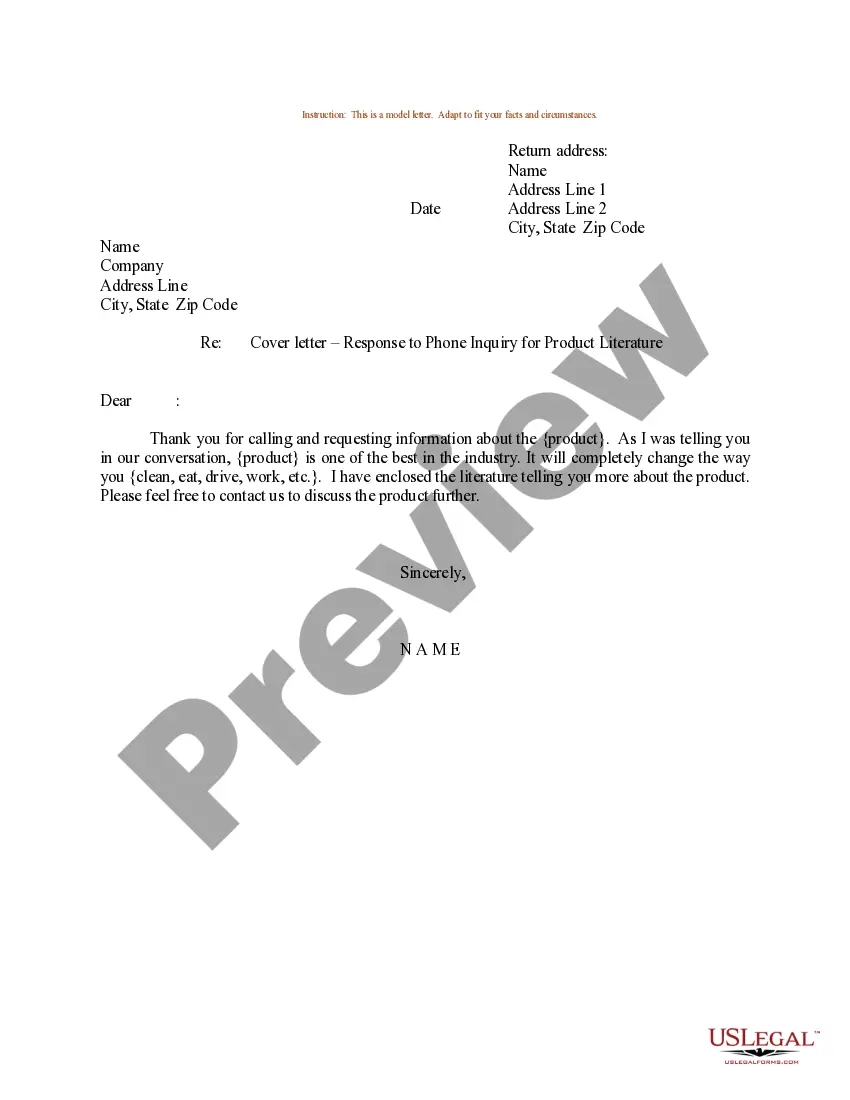
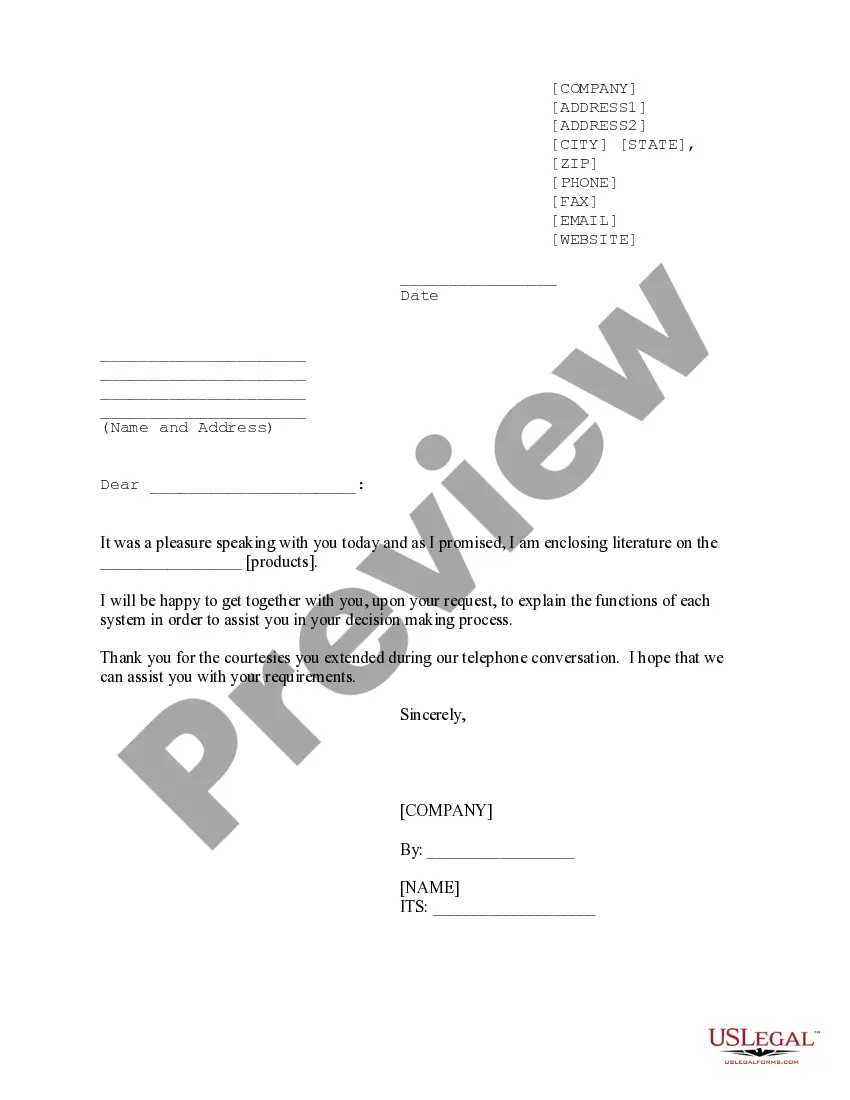
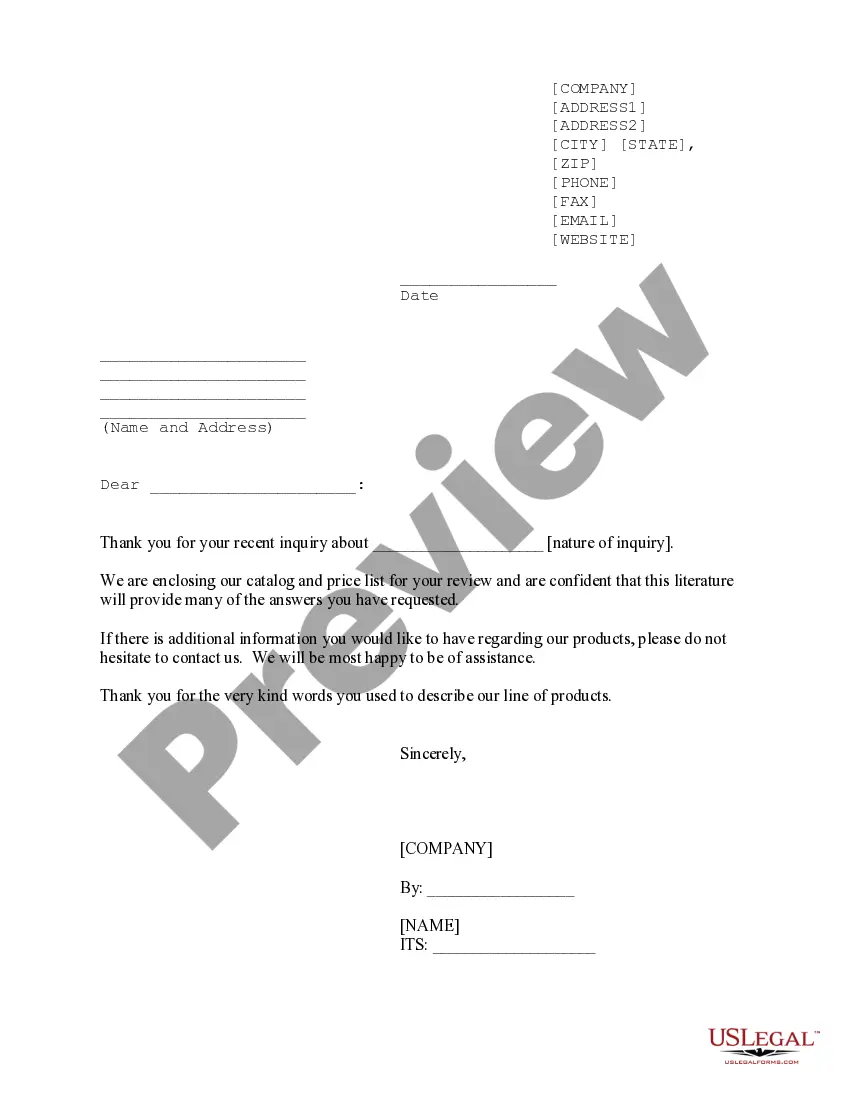
This Sample Letter for Response to Telephone Inquiry for Product Literature is a template designed to assist businesses in formally responding to customer inquiries about product information. This letter helps convey professionalism and ensures that potential customers receive accurate and detailed information about the products they are interested in. Unlike other communication methods, this template allows for a structured, documented response that can be easily tailored to individual inquiries.
Form components explained
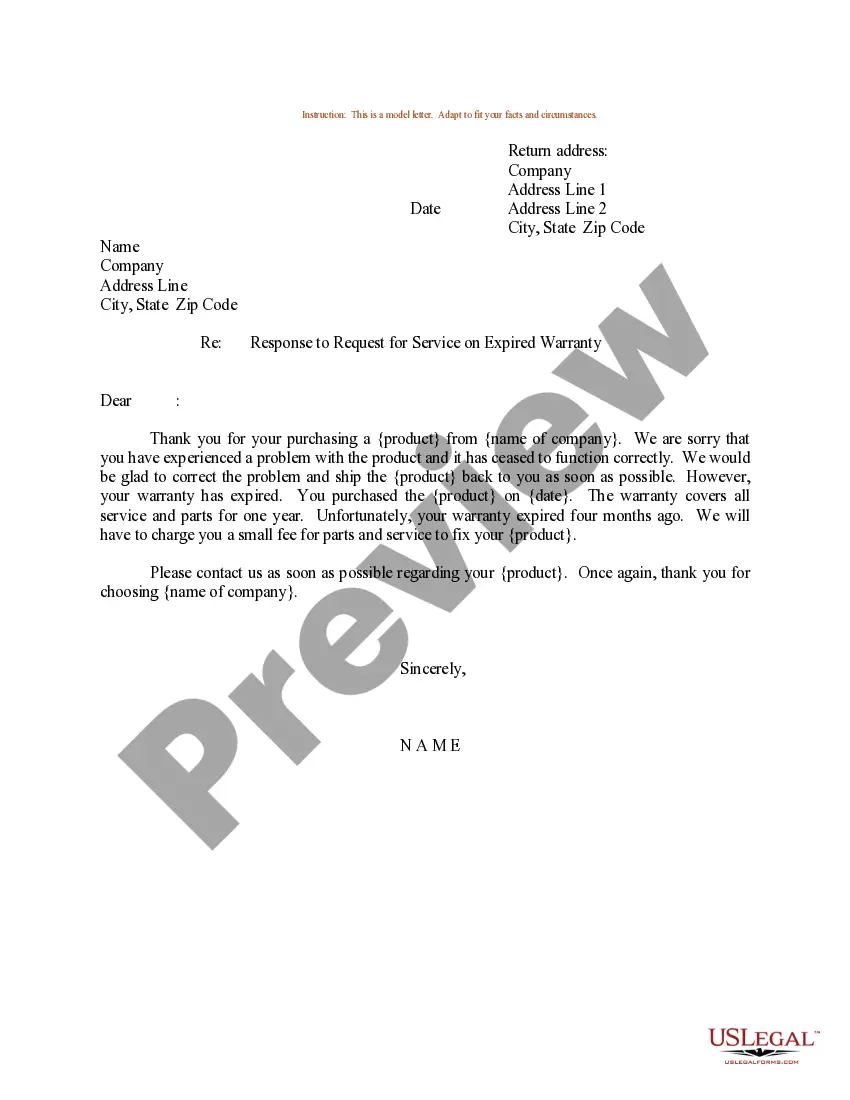
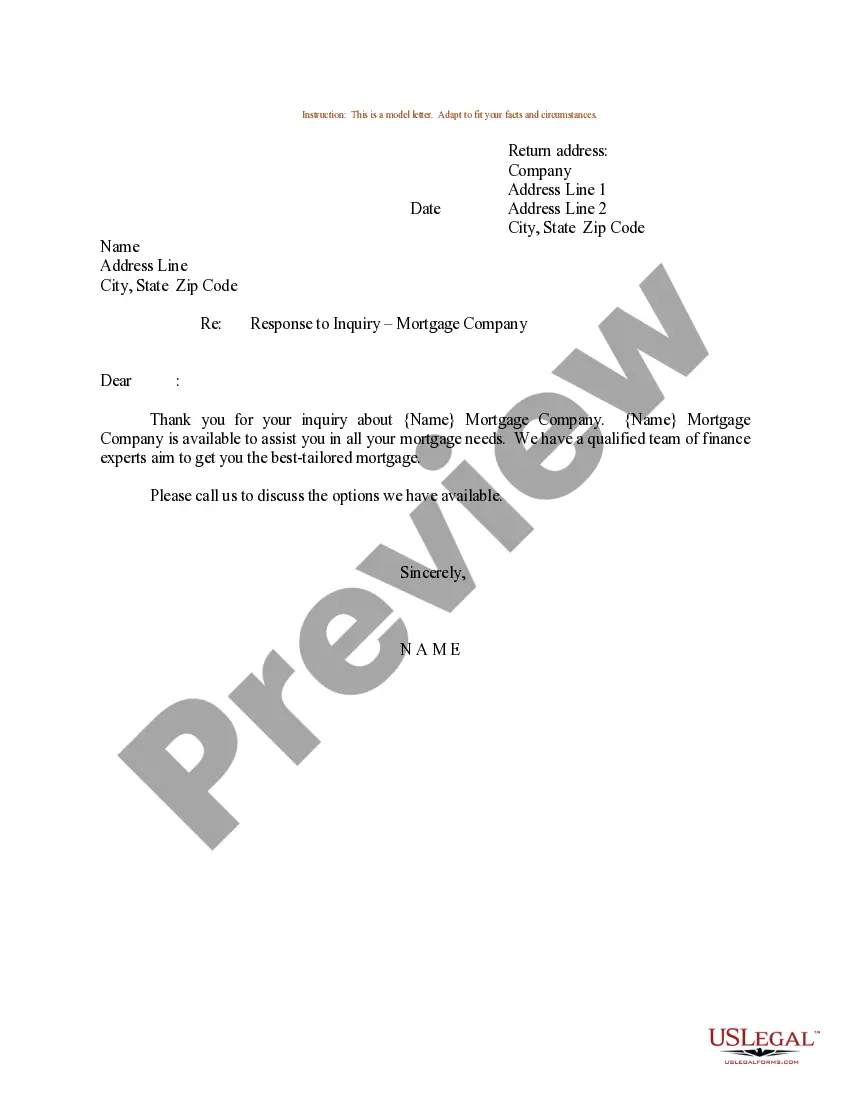
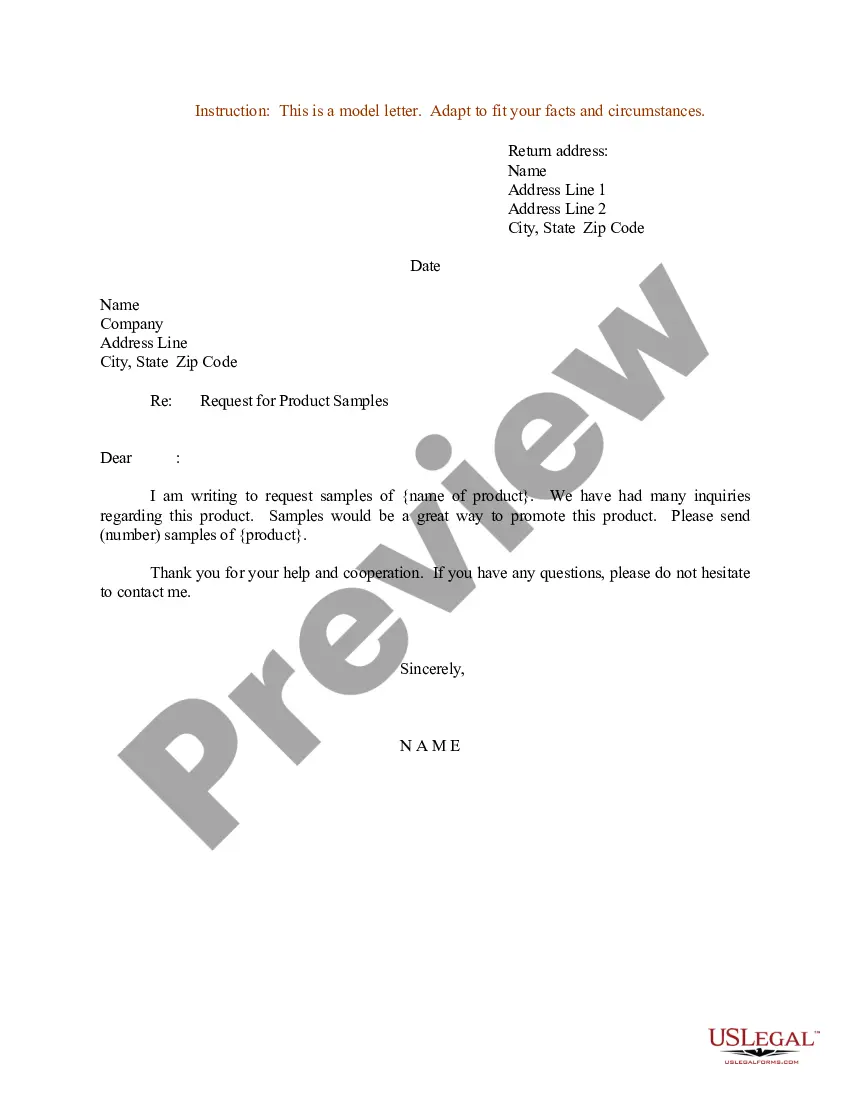
- Return address: Includes the sender's name and address for easy identification.
- Date: The date of the correspondence for record-keeping purposes.
- Recipient's address: Space to enter the name and address of the person or business being addressed.
- Subject line: Clearly states the purpose of the letter and directs attention to the content.
- Closing statement: Provides a courteous conclusion and invites further inquiries.
When to use this form
This form should be used when a business receives a telephone inquiry for product literature and wants to provide a formal response. It is particularly helpful in maintaining a professional tone in business communication, ensuring that potential customers receive the information they need to make informed purchasing decisions.
Who needs this form
- Businesses that receive inquiries about their products from potential customers.
- Sales and customer service representatives looking to respond to inquiries in a consistent manner.
- Marketing teams that want to follow up on initial customer interactions with formal documentation.
Steps to complete this form
- Enter your return address in the designated space at the top of the letter.
- Add the date of writing the letter below your address.
- Fill in the recipient's address with the details of the person or organization you are addressing.
- Specify the subject of the letter to indicate the purpose of your communication.
- Close the letter with your signature and printed name to personalize the response.
Is notarization required?
This form usually doesn’t need to be notarized. However, local laws or specific transactions may require it. Our online notarization service, powered by Notarize, lets you complete it remotely through a secure video session, available 24/7.
Get your form ready online
Our built-in tools help you complete, sign, share, and store your documents in one place.
Make edits, fill in missing information, and update formatting in US Legal Forms—just like you would in MS Word.
Download a copy, print it, send it by email, or mail it via USPS—whatever works best for your next step.
Sign and collect signatures with our SignNow integration. Send to multiple recipients, set reminders, and more. Go Premium to unlock E-Sign.
If this form requires notarization, complete it online through a secure video call—no need to meet a notary in person or wait for an appointment.
We protect your documents and personal data by following strict security and privacy standards.

Make edits, fill in missing information, and update formatting in US Legal Forms—just like you would in MS Word.

Download a copy, print it, send it by email, or mail it via USPS—whatever works best for your next step.

Sign and collect signatures with our SignNow integration. Send to multiple recipients, set reminders, and more. Go Premium to unlock E-Sign.

If this form requires notarization, complete it online through a secure video call—no need to meet a notary in person or wait for an appointment.

We protect your documents and personal data by following strict security and privacy standards.
Avoid these common issues
- Failing to include the recipient's address correctly.
- Leaving out the date of the letter.
- Not specifying the subject, which may confuse the recipient.
- Using an informal tone instead of maintaining professionalism.
Why complete this form online
- Easy to download and customize to fit your specific business needs.
- Saves time with a ready-made format, allowing for quick responses to inquiries.
- Ensures a professional appearance in all communications, enhancing your business reputation.
Legal use & context
- This letter serves as documentation of communication with prospective customers, which may be important for record-keeping and compliance.
- Responses to inquiries are generally not legally binding unless specified or agreed upon in subsequent communication.
Quick recap
- The Sample Letter for Response to Telephone Inquiry for Product Literature is a useful tool for businesses responding to customer inquiries.
- Using this template helps maintain professionalism in business communications.
- Ensure accuracy when filling out the letter to avoid common mistakes.
Looking for another form?
Form popularity
FAQ
Subject line. Include a subject line so readers can immediately identify the contents of the lettereven before perusing the text. Introduction. Organization overview. Need or problem statement. Project description. Other funding sources. Fit with the funder's focus. Clear closing.
Thank you for your inquiry regarding our product or service. Thank you for your interest in our product or service. We would like to thank you for your letter inquiring about our product. We truly appreciate your letter asking for information about our service.
Thank you for your inquiry regarding our product or service. Thank you for your interest in our product or service. We would like to thank you for your letter inquiring about our product. We truly appreciate your letter asking for information about our service.
Be clear and direct in your email replies, and avoid being ambiguous. That means, you should know what you want to say; and say it with the shortest possible words. Make your replies one-to-one. Keep it Short, Simple and Sweet (KISSS).
When writing the response, you can refer to the query date and then acknowledging your misconduct. Go straight to the point. Do not add unnecessary information to the query response and also assure whoever you are responding to that you will not repeat that conduct again.
Very simply sating, I am writing in response to your letter from June 13th is a perfect opening for a response letter. If you aren't the original person that the recipient wrote the letter to, state where you got the letter from.
A response letter provides the answers or information requested in a letter of inquiry. The objective is to satisfy the reader with an action that fulfills their request. If you have neither the information requested nor the authority to reply, forward the inquiry on to the correct person.
You should quickly respond to customers' request or queries because it shows that you value them. Mention the client's request. Tell the reader how you handled his/her request. Explain the procedure of ordering. End on a positive note.
Listen to the customer's experience in its entirety. apologize. focus on the solution. don't rush the customer. find complaints before they find you.