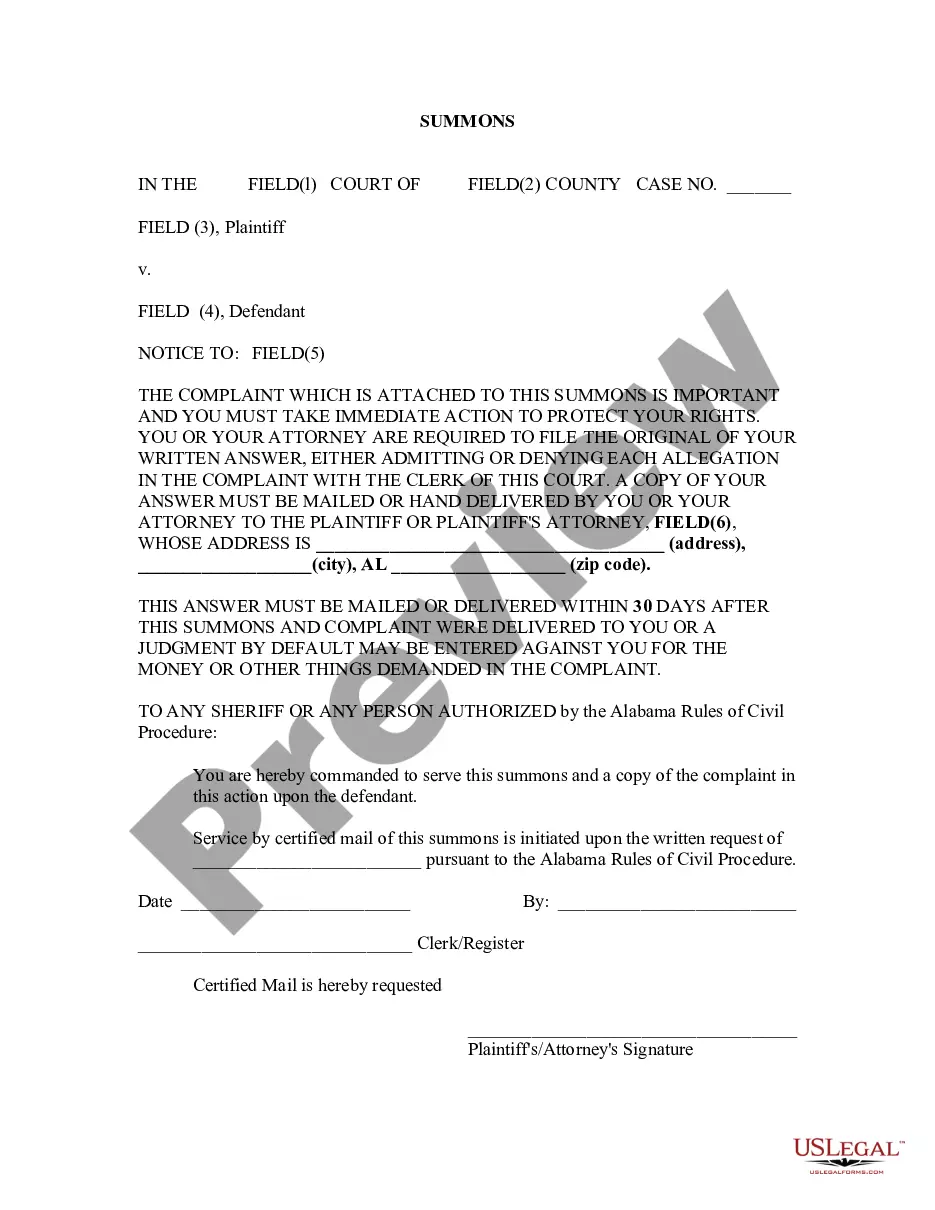
Release of Lien for Child Support
Understanding this form
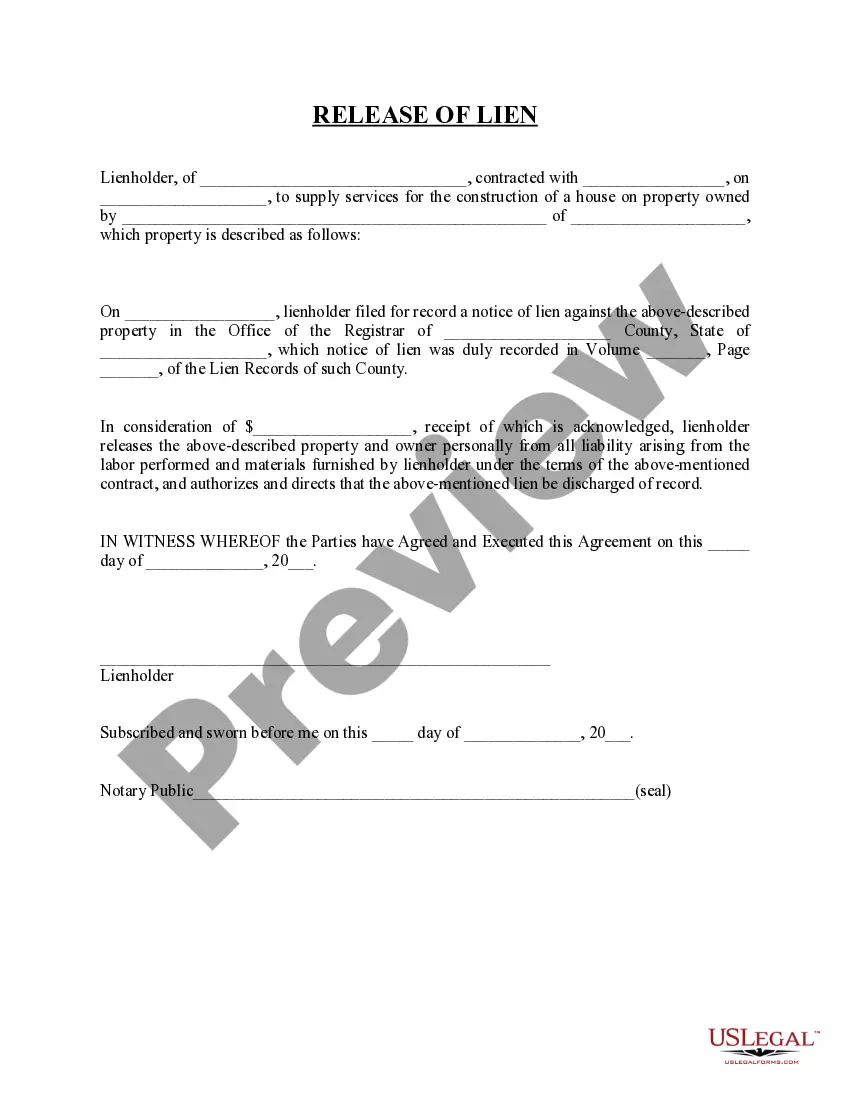
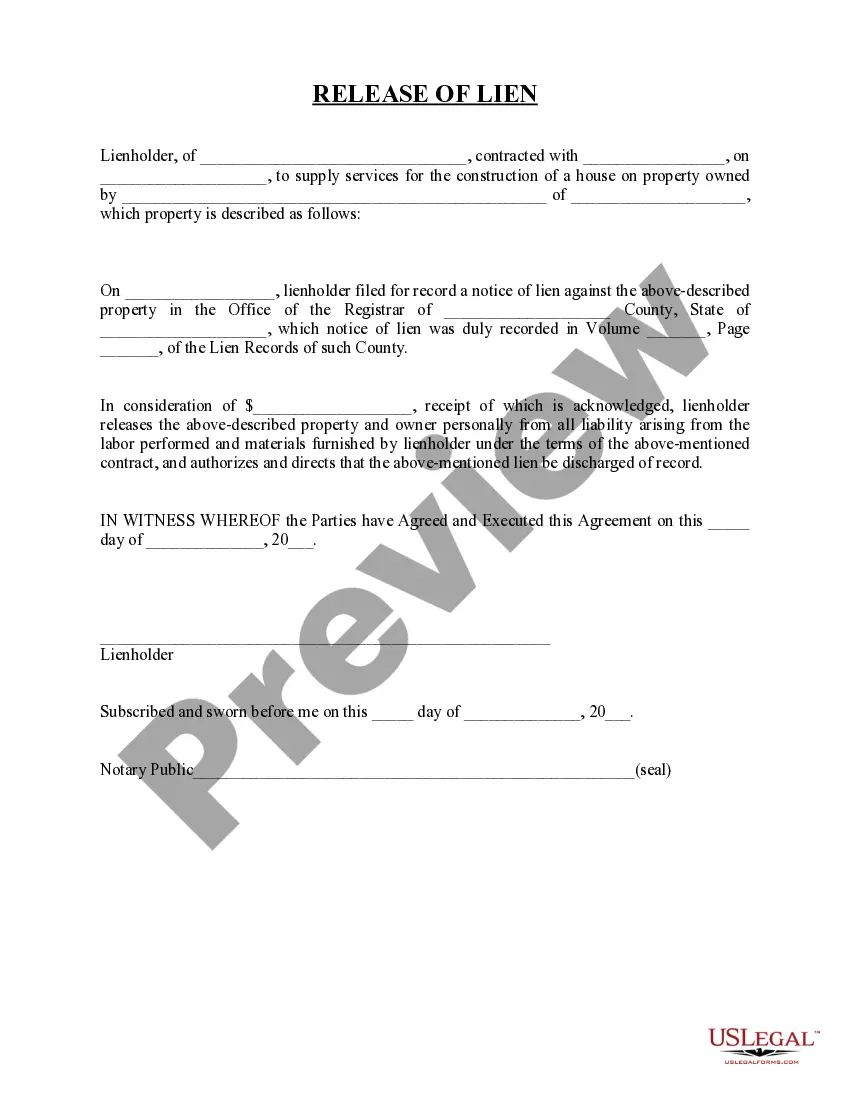
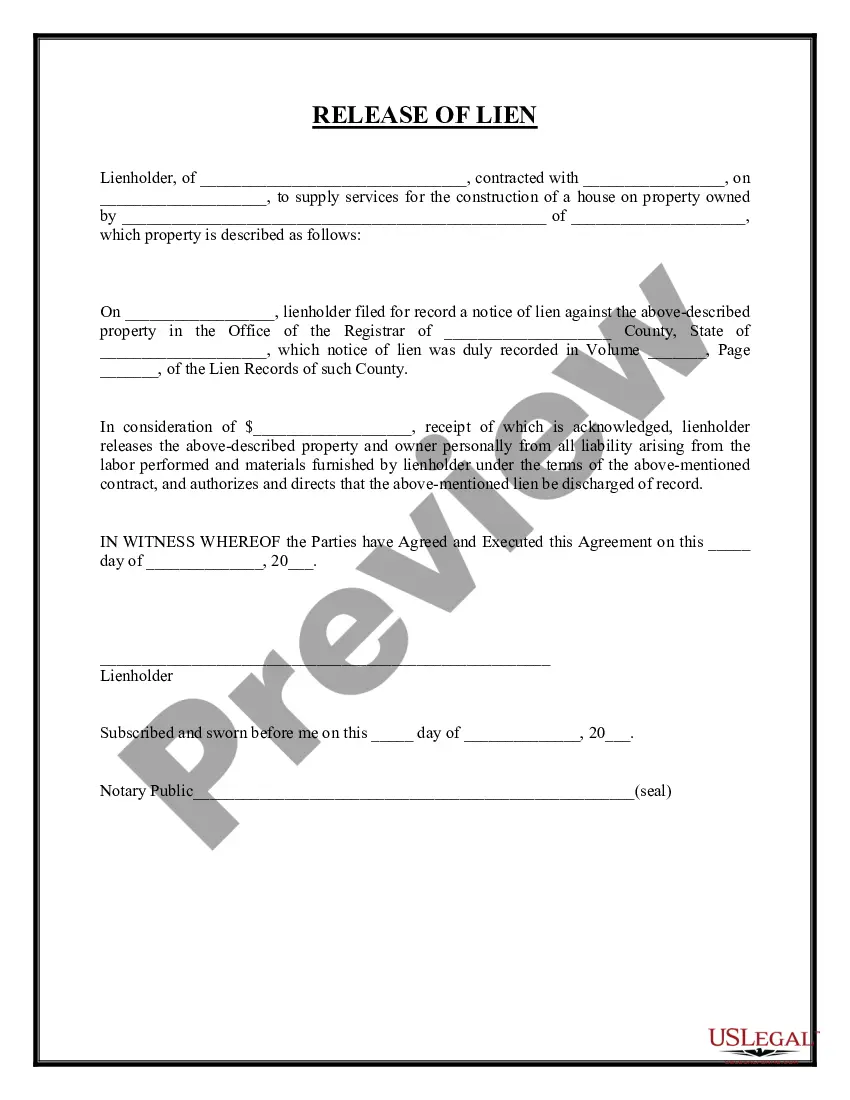
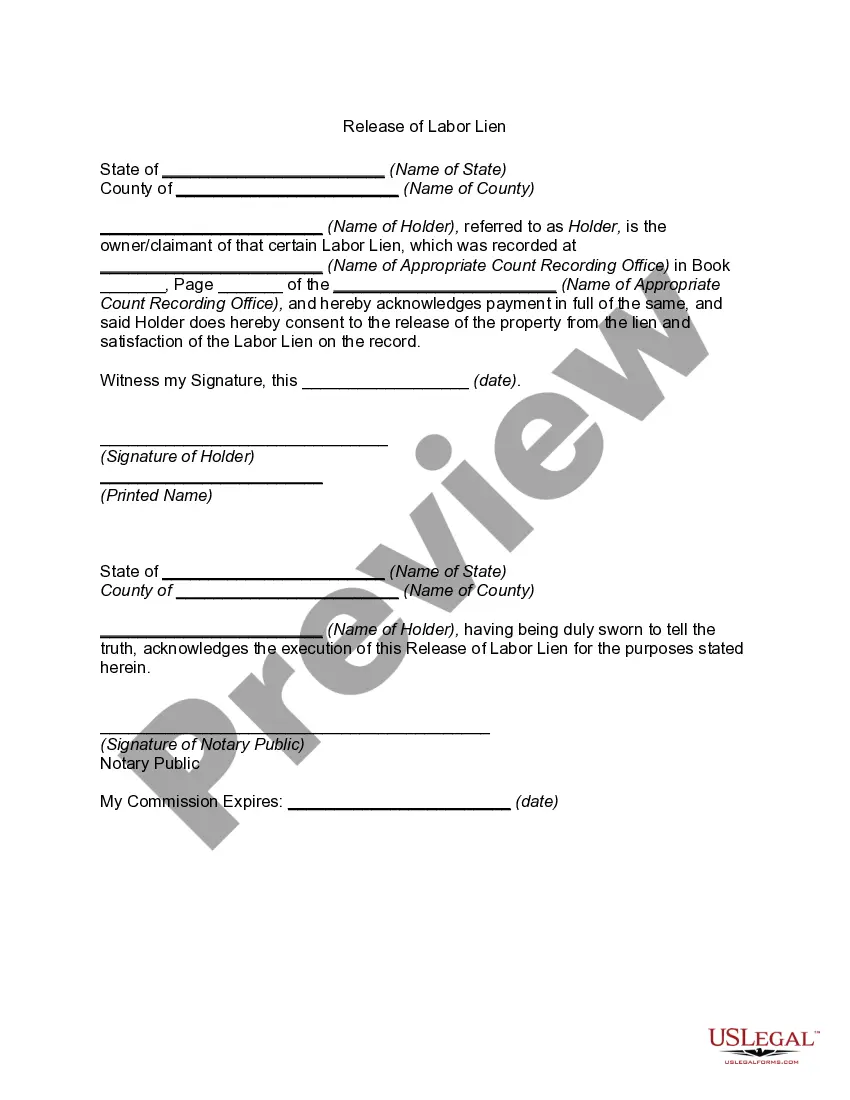
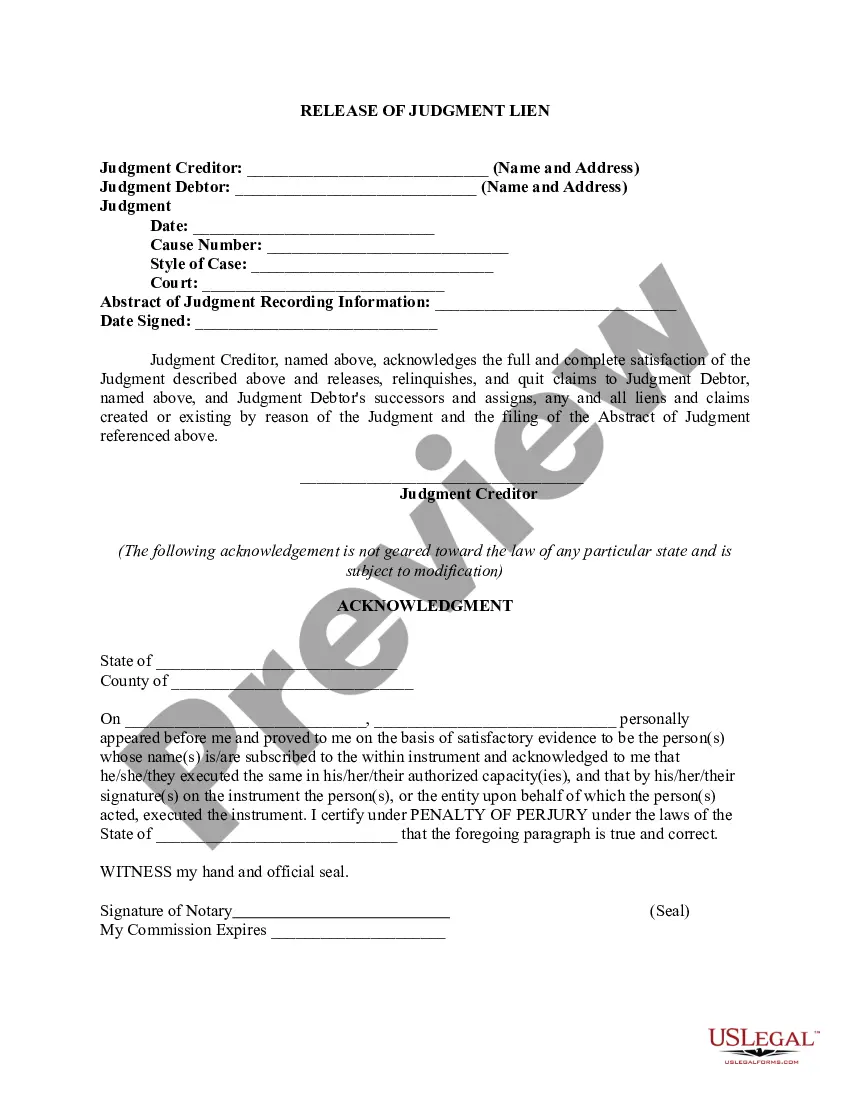
The Release of Lien for Child Support is a legal document used to formally release a lien placed on a property regarding unpaid child support. By completing this form, the lienholder discharges any claims against the property and the owner, ensuring that the owner is no longer liable for the associated financial obligations. This form is crucial in clearing any legal encumbrance related to child support payments, distinguishing it from other lien release forms that may pertain to different types of debts or obligations.
Main sections of this form
- Identification of the lienholder and the property owner.
- Details of the contract under which the lien was originally placed.
- Statement of consideration received for releasing the lien.
- Specific legal description of the property involved.
- Signature lines for the lienholder and required notary acknowledgment.
Situations where this form applies
This form should be used when a lien on a property related to unpaid child support needs to be released. Scenarios may include when the child support has been fully paid, when a settlement has been reached, or when a court order mandates the release. This form provides clarity and legal security for property transactions following the resolution of child support issues.
Who can use this document
- Lienholders who have placed a lien on a property for unpaid child support.
- Property owners seeking to clear their title and remove any encumbrances related to child support liens.
- Attorneys representing clients in family law matters involving child support liens.
Steps to complete this form
- Identify the lienholder and provide their contact information.
- Enter the name of the property owner and the details of the property being released.
- Specify the contract details that led to the original lien.
- Document the consideration received for releasing the lien.
- Sign the form in the presence of a notary public, ensuring proper acknowledgment.
Is notarization required?
Yes, this form must be notarized to be legally valid. The notary public will verify the identities of the parties involved and witness their signatures, ensuring the authenticity of the document. US Legal Forms offers integrated online notarization services, providing secure video calls and legal equivalence without requiring our users to leave their homes.
Get your form ready online
Our built-in tools help you complete, sign, share, and store your documents in one place.
Make edits, fill in missing information, and update formatting in US Legal Forms—just like you would in MS Word.
Download a copy, print it, send it by email, or mail it via USPS—whatever works best for your next step.
Sign and collect signatures with our SignNow integration. Send to multiple recipients, set reminders, and more. Go Premium to unlock E-Sign.
If this form requires notarization, complete it online through a secure video call—no need to meet a notary in person or wait for an appointment.
We protect your documents and personal data by following strict security and privacy standards.

Make edits, fill in missing information, and update formatting in US Legal Forms—just like you would in MS Word.

Download a copy, print it, send it by email, or mail it via USPS—whatever works best for your next step.

Sign and collect signatures with our SignNow integration. Send to multiple recipients, set reminders, and more. Go Premium to unlock E-Sign.

If this form requires notarization, complete it online through a secure video call—no need to meet a notary in person or wait for an appointment.

We protect your documents and personal data by following strict security and privacy standards.
Common mistakes to avoid
- Failing to properly identify the property description.
- Not including sufficient details about the original contract.
- Omitting signatures or missing the notary acknowledgment.
- Using incorrect or outdated form versions.
Why use this form online
- Immediate access to downloadable legal forms without the need for in-person visits.
- Edit and customize the form as necessary before finalizing.
- Reliability of documents drafted by licensed attorneys.
- Time-saving and efficient completion of legal documents.
Key takeaways
- The Release of Lien for Child Support releases claims against a property relating to child support obligations.
- It is essential for clearing property titles once financial responsibilities are fulfilled.
- Proper completion and notarization of the form ensure its legal enforceability.
- Understanding local laws can aid in effective use of this form.
Looking for another form?
Form popularity
FAQ
For that reason, Texas law has a series of remedies designed to help obligee parents collect support and punish delinquent obligors.A lesser-known, but very effective remedy in Texas is called a child support lien, which enables obligees to attach a claim for money to an obligor's property.
Under Texas law, the statute of limitations for seeking back child support when a court order is already in place is ten years from the child's 18th birthday. If a claim isn't filed by the deadline, then any recovery for back child support in Texas may be denied.
--Child Support Lien Notice or Abstract of Judgment filed on or after September 1, 2009: Expires 10 years after filing (re-filing prior to expiration creates a new lien with priority relating back to the first filing) TEX.
Child support back pay cannot be totally forgiven or waived, but there are a few situations that can help you handle it. Double-check the amount the court states you are in arrears.Back pay does accrue interest but, in some cases, you may not have to pay all of it. You can request a manageable payment schedule.
The Child Support Division must give authorization to the State of Indiana to release the lien. Once the Child Support Division notifies the State that the lien should be released, the State will mail the vehicle title or lien release to the first or second lien holder, or to the owner of the vehicle.
When you lose your job the legal obligation to pay child support does not stop it will not go away. If there are arrears of payment of child support the amount of the arrears is not waived. Becoming a bankrupt does not extinguish the arrears the debt survives the bankruptcy.
A custodial parent can waive or forgive all arrears owed to him or her directly. Use the Account Summary from the SCU to determine what arrears are owed to the parent, and what arrears are owed to the state (if the custodial parent ever received Public Assistance).
For certain outstanding debts -- including past-due child support and unpaid student loans -- the IRS can withhold some or all of your unpaid stimulus payment issued as a Recovery Rebate Credit when you file your taxes.
Although child support payments are owed to the custodial parent, the child is the beneficiary of these payments. Child support itself cannot be waived or modified except by agreement of the parties in writing and approval by the court.