Legal Services Agreement - Retainer
Overview of this form
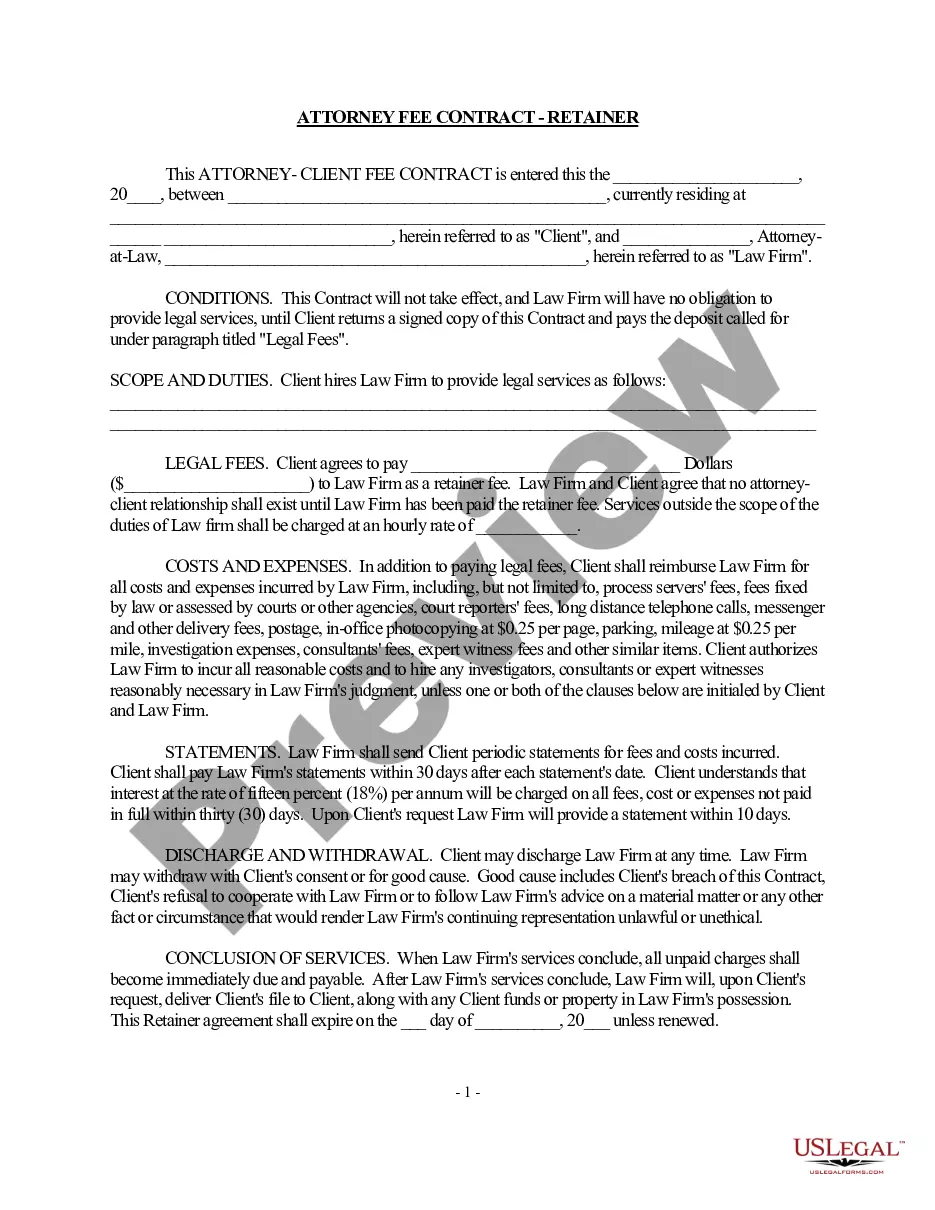
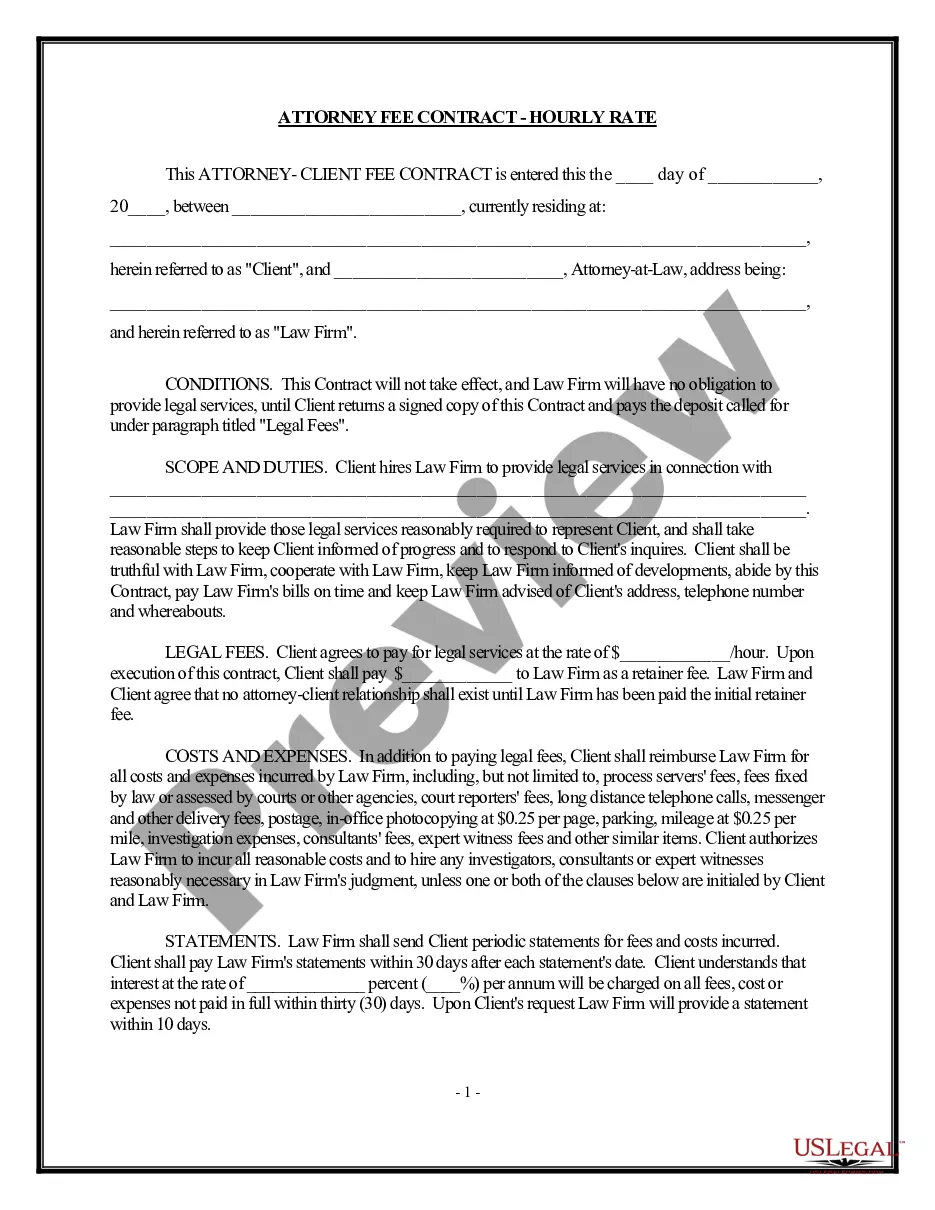
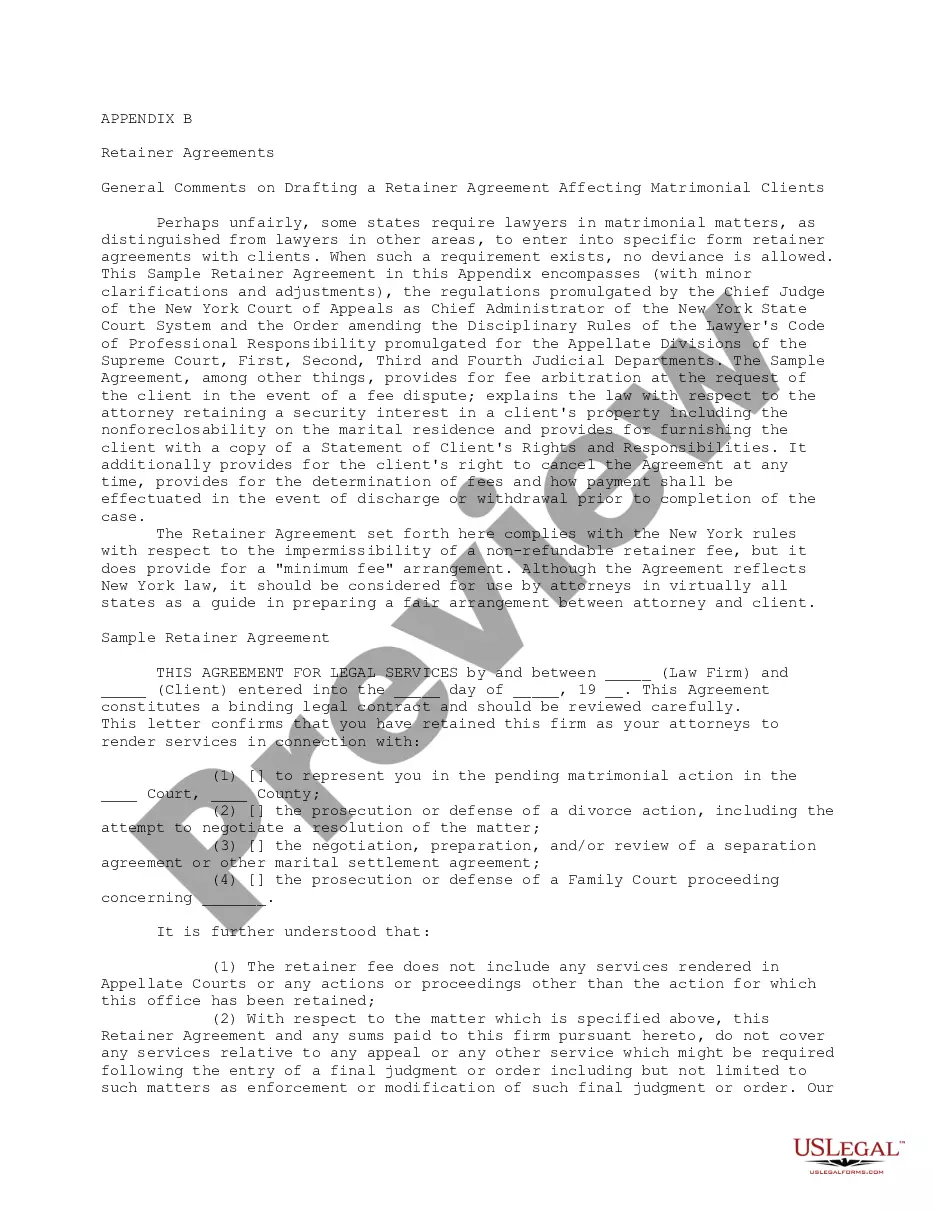
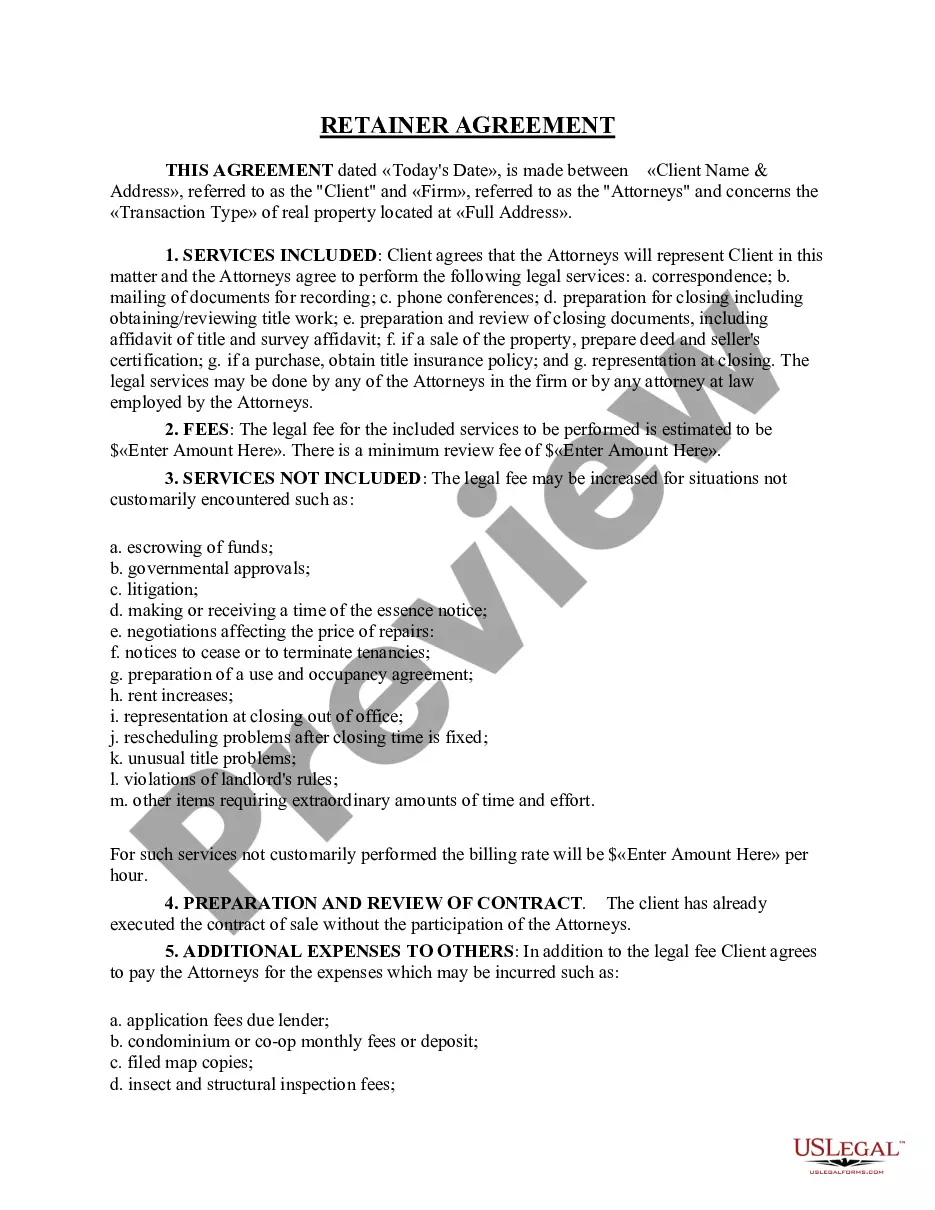
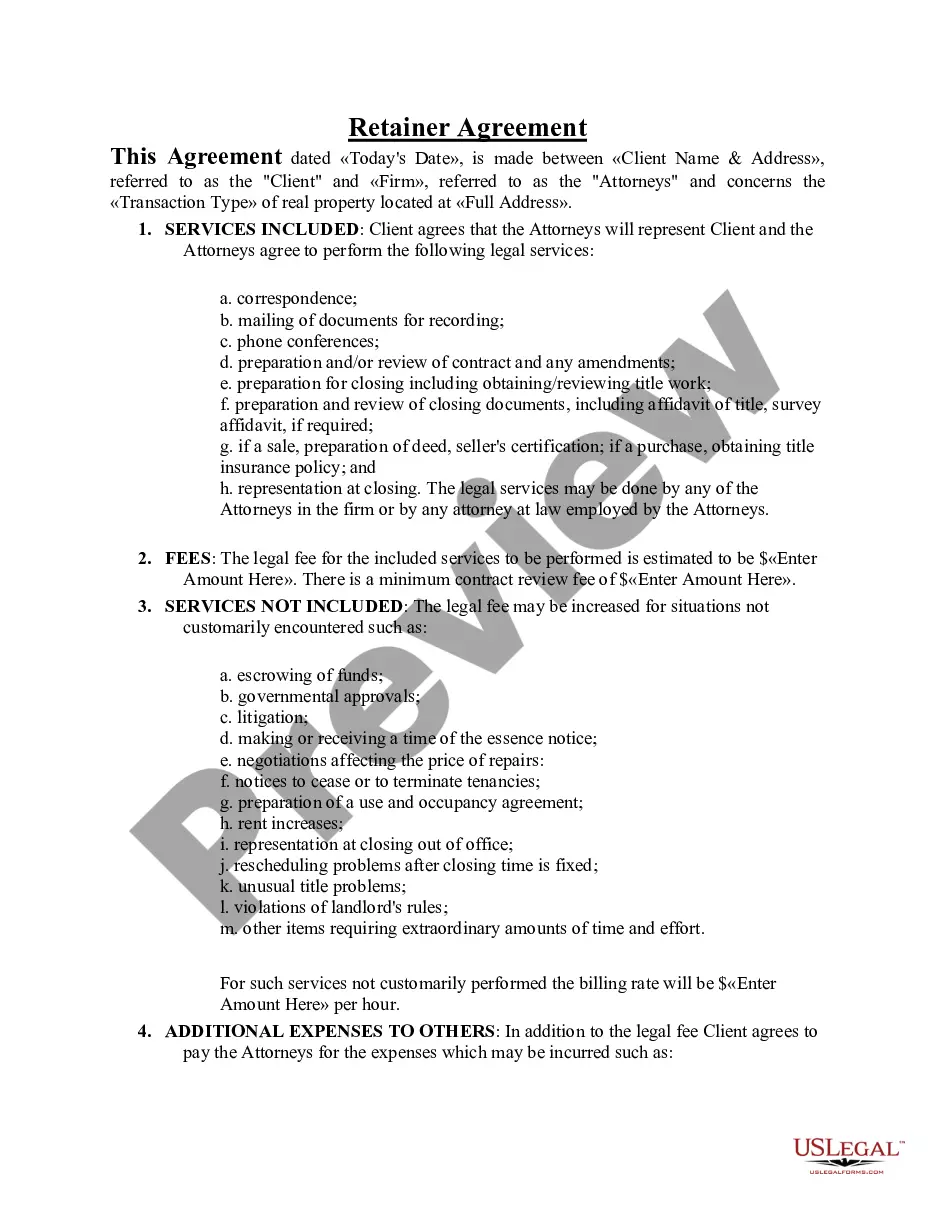
The Legal Services Agreement - Retainer is a contract between a client and an attorney that establishes the terms under which legal services will be rendered. This form outlines the payment of a retainer fee and clarifies that an attorney-client relationship will only be established upon payment. It serves to formalize the expectations of both parties, differentiating it from other legal service contracts that may not require an upfront fee.
Key components of this form
- Details of the parties involved, including the client's and law firm's names and addresses.
- Conditions that explain the contract's validity upon signing and payment.
- Scope of services to be provided by the law firm.
- Legal fees, including the retainer fee and hourly rates for additional services.
- Provisions regarding costs and expenses incurred by the law firm.
- Terms for billing and payments, including interest on late payments.
- Clauses for discharge and withdrawal by either party.
- Disclaimer stating that no guarantees about the outcome of the client's matter are made.


Common use cases
This form is needed when a client seeks to retain legal services from an attorney for a specific period or case and agrees to pay a retainer fee upfront. It is commonly used in situations where ongoing legal advice or representation is required, such as business matters, family law cases, or any legal issues that require substantial input from an attorney.
Intended users of this form
- Individuals or businesses seeking ongoing legal services from a law firm.
- Clients who want to outline the terms of their relationship with an attorney.
- Persons needing clarity on billing practices and obligations for legal fees.
- Clients looking to ensure that their legal representation is formalized through a written agreement.
Steps to complete this form
- Enter the date of the agreement at the top of the form.
- Provide the full name and address of the client.
- Specify the name of the attorney and the law firm, along with their address.
- Detail the scope of legal services the law firm will provide.
- Indicate the retainer fee and any applicable hourly rates for additional services.
- Both parties should sign and date the contract to validate the agreement.
Does this form need to be notarized?
In most cases, this form does not require notarization. However, some jurisdictions or signing circumstances might. US Legal Forms offers online notarization powered by Notarize, accessible 24/7 for a quick, remote process.
Get your form ready online
Our built-in tools help you complete, sign, share, and store your documents in one place.
Make edits, fill in missing information, and update formatting in US Legal Forms—just like you would in MS Word.
Download a copy, print it, send it by email, or mail it via USPS—whatever works best for your next step.
Sign and collect signatures with our SignNow integration. Send to multiple recipients, set reminders, and more. Go Premium to unlock E-Sign.
If this form requires notarization, complete it online through a secure video call—no need to meet a notary in person or wait for an appointment.
We protect your documents and personal data by following strict security and privacy standards.

Make edits, fill in missing information, and update formatting in US Legal Forms—just like you would in MS Word.

Download a copy, print it, send it by email, or mail it via USPS—whatever works best for your next step.

Sign and collect signatures with our SignNow integration. Send to multiple recipients, set reminders, and more. Go Premium to unlock E-Sign.

If this form requires notarization, complete it online through a secure video call—no need to meet a notary in person or wait for an appointment.

We protect your documents and personal data by following strict security and privacy standards.
Common mistakes
- Failing to specify the exact scope of services, leading to misunderstandings.
- Not providing clear terms regarding the retainer fee and additional charges.
- Neglecting to sign and date the agreement, which can render it invalid.
- Overlooking the importance of discussing and understanding billing practices upfront.
Benefits of completing this form online
- Convenient access to reliable legal templates crafted by licensed attorneys.
- Editable online format allows for customization according to specific needs.
- Fast download option ensures immediate availability for your use.
- Guidance provided through the completion process to reduce errors.
Looking for another form?
Form popularity
FAQ
The amount you're to receive each month. The date you're to be paid by. Any invoicing procedures you're expected to follow. Exactly how much work and what type of work you expect to do. When your client needs to let you know about the month's work by.
The amount serves as a guarantee by the client to pay the attorney upon completion of the agreed work. The attorney cannot claim the retainer fee until he has completed the work and invoiced the client. Any remaining retainer fee after paying the hourly attorney fees should be returned to the client.
When hiring a lawyer, a retainer agreement can sometimes be used. This involves payment of a "retainer fee," which is basically like a down payment paid from the client to the lawyer. The rest of the legal fees may be paid later on or after the case is completed.
A retainer fee is an advance payment that a client makes to his or her lawyer before the lawyer performs any legal work for the client. It is similar to an allowance in that the lawyer is able to draw funds for various fees as the case proceeds.