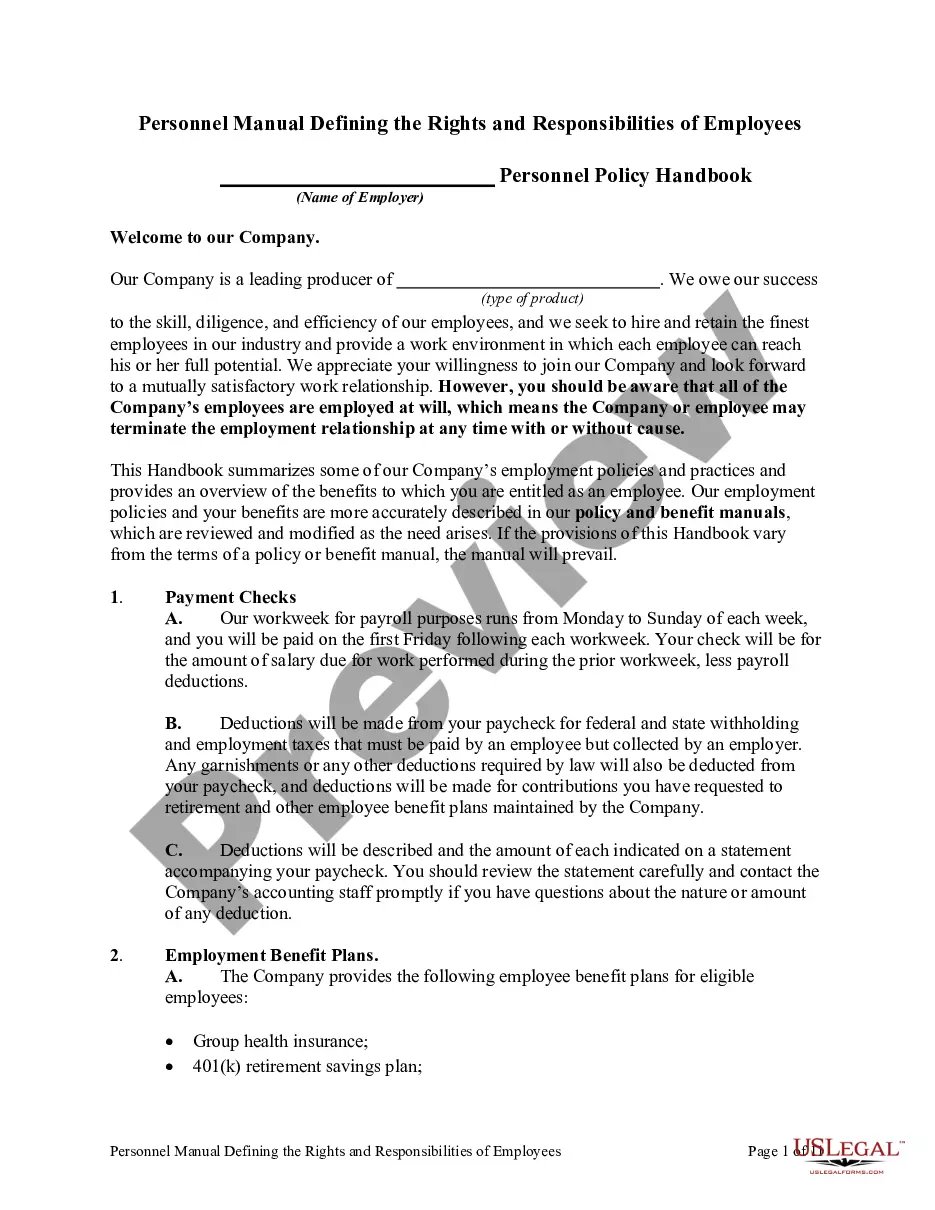
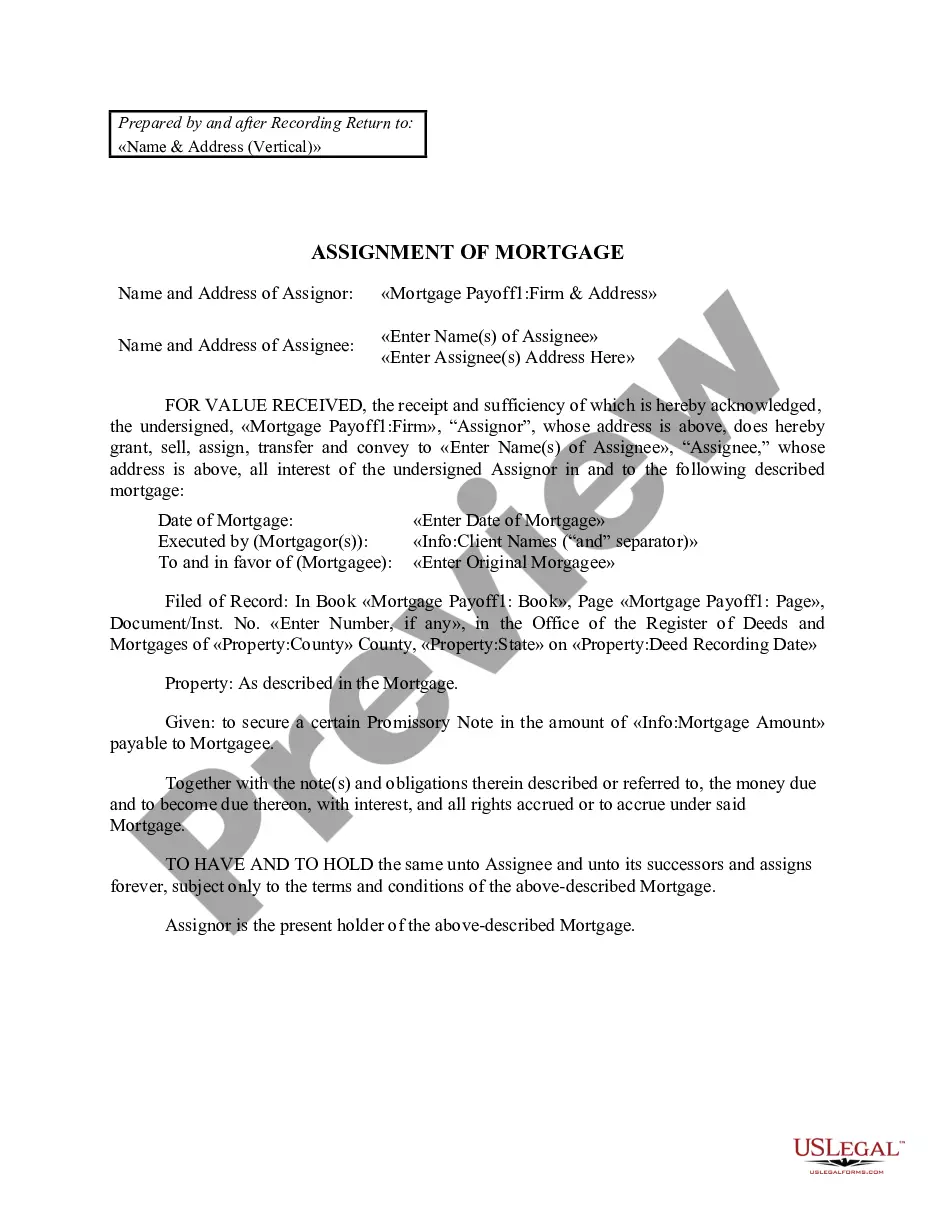
Texas Assignment of Bank Account
Description

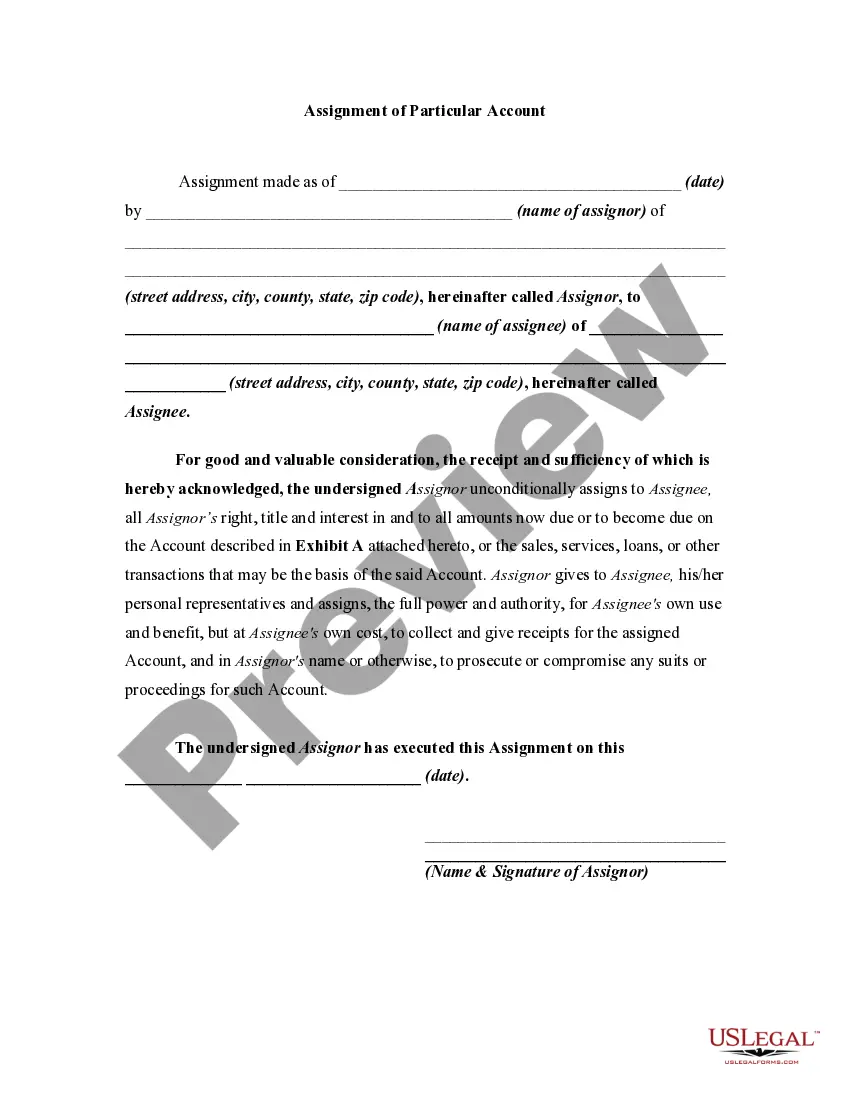
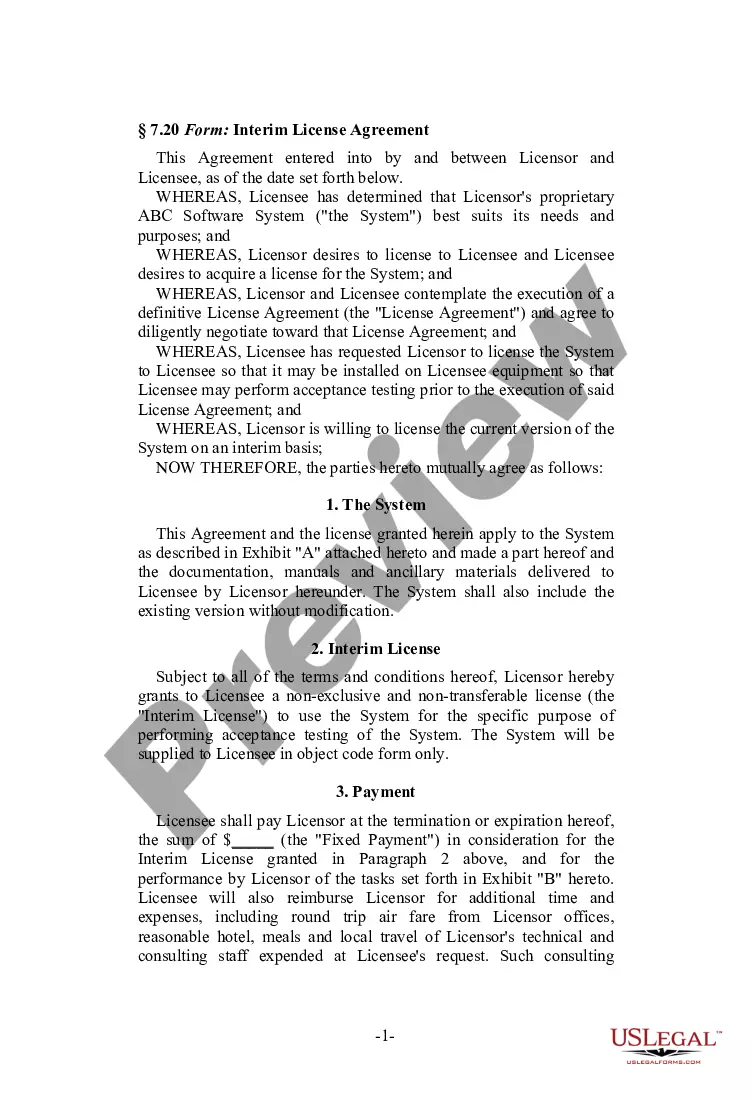

How to fill out Assignment Of Bank Account?
US Legal Forms - one of the greatest libraries of legal types in America - provides a wide range of legal document layouts you may download or produce. Using the site, you can get a large number of types for organization and specific uses, categorized by types, states, or search phrases.You can get the most recent types of types just like the Texas Assignment of Bank Account in seconds.
If you already have a subscription, log in and download Texas Assignment of Bank Account from your US Legal Forms catalogue. The Down load option will show up on every type you perspective. You gain access to all earlier saved types from the My Forms tab of your profile.
In order to use US Legal Forms the very first time, listed here are straightforward instructions to get you started:
- Be sure to have chosen the correct type to your area/area. Select the Review option to review the form`s information. Browse the type explanation to actually have selected the proper type.
- If the type does not satisfy your needs, use the Research industry towards the top of the screen to find the the one that does.
- In case you are satisfied with the form, affirm your decision by simply clicking the Purchase now option. Then, pick the costs strategy you favor and provide your accreditations to register to have an profile.
- Procedure the transaction. Use your charge card or PayPal profile to finish the transaction.
- Find the structure and download the form on the device.
- Make alterations. Fill up, modify and produce and sign the saved Texas Assignment of Bank Account.
Each web template you added to your bank account does not have an expiry time and it is the one you have eternally. So, if you want to download or produce one more version, just go to the My Forms portion and click about the type you need.
Gain access to the Texas Assignment of Bank Account with US Legal Forms, the most substantial catalogue of legal document layouts. Use a large number of expert and state-distinct layouts that fulfill your small business or specific demands and needs.
Form popularity
FAQ
Make Someone a ?Joint Owner? of your Account You can make someone a Joint Owner of any of your bank accounts while you are living. Any joint owner of a bank account has complete access and rights to the account while you are living and after your death.
Not all property becomes subject to the Texas probate process after one passes away. Assets such as jointly owned real estate, bank accounts, or insurance policies for which a beneficiary has been designated will transfer without becoming a part of the deceased's probate estate.
You can give someone power of attorney to deal with all your property and financial affairs or only certain things, for example, to operate a bank account, to buy and sell property or change investments.
If the deceased person was the sole owner of the bank account and named a beneficiary, then the bank can release the funds to the beneficiary without probate. If there is no named beneficiary, then the bank will require probate before releasing any funds.
To add an authorized signer to an account, both you and the individual will usually need to go the bank to fill out an application and provide proper identification. There may be other conditions or terms specific to your bank, so it's best to inquire in advance.
If a bank account has no joint owner or designated beneficiary, it will likely have to go through probate. The account funds will then be distributed?after all creditors of the estate are paid off?ing to the terms of the will.
Naming a beneficiary is fairly simple but may require paperwork and information, such as the beneficiary's Social Security number. Many banks offer payable-on-death (POD) accounts, instructing the bank to pass your account funds to one or several beneficiaries.
Banks allow you to designate someone to be a ?signor? on your account. That means that this person can write checks and make withdrawals from your bank account while you are living ? without the need of having a signed Power of Attorney for Property Document.