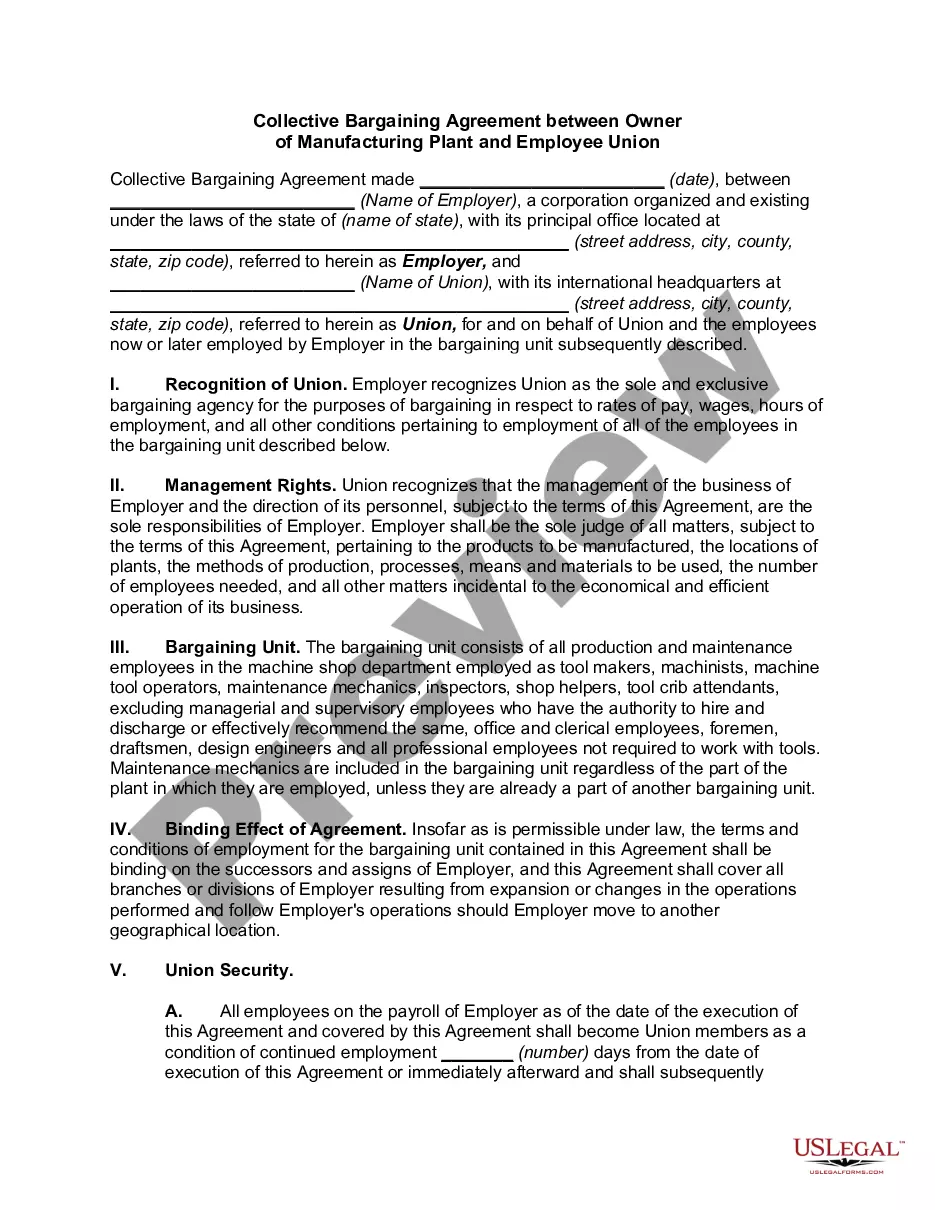
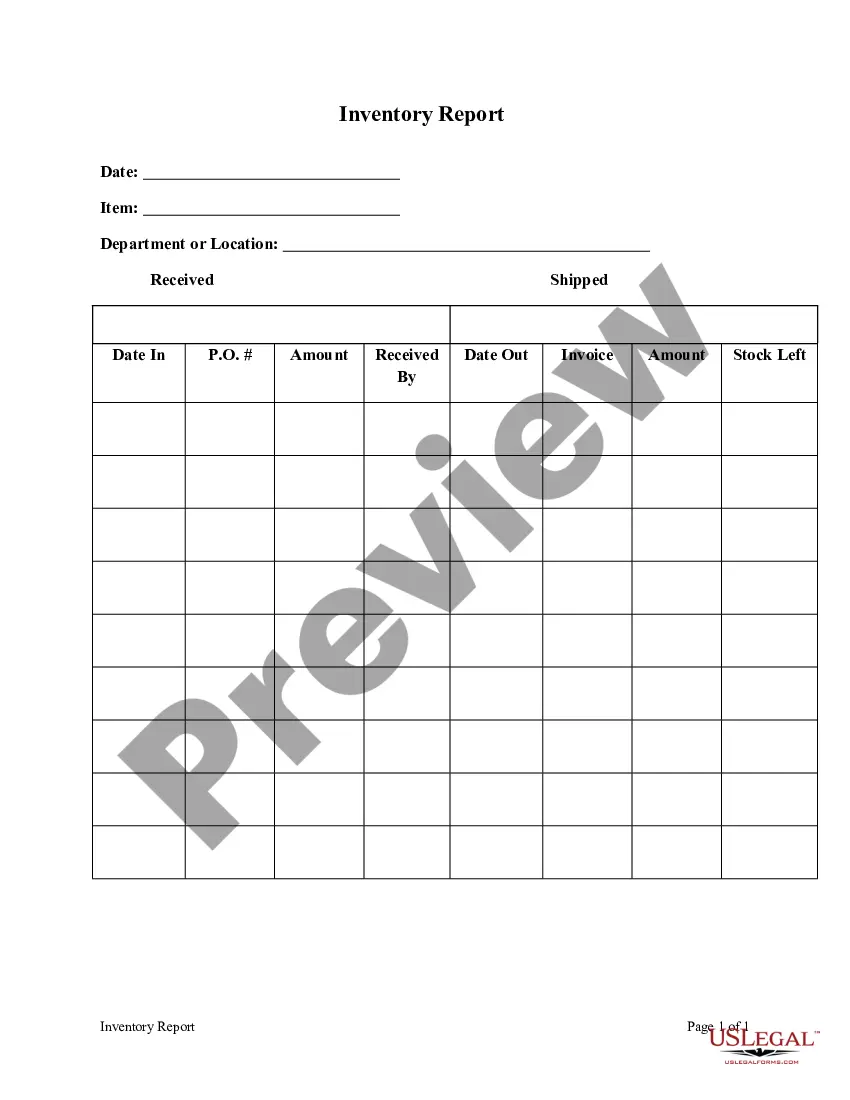
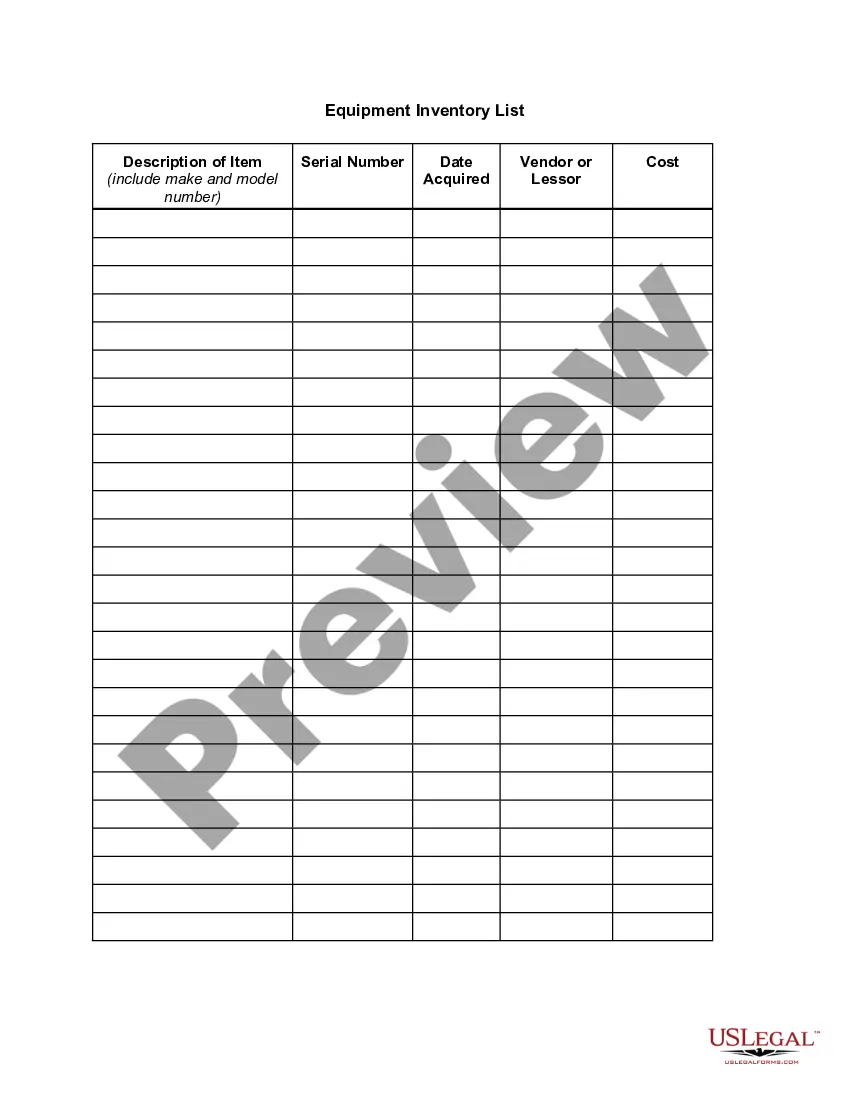
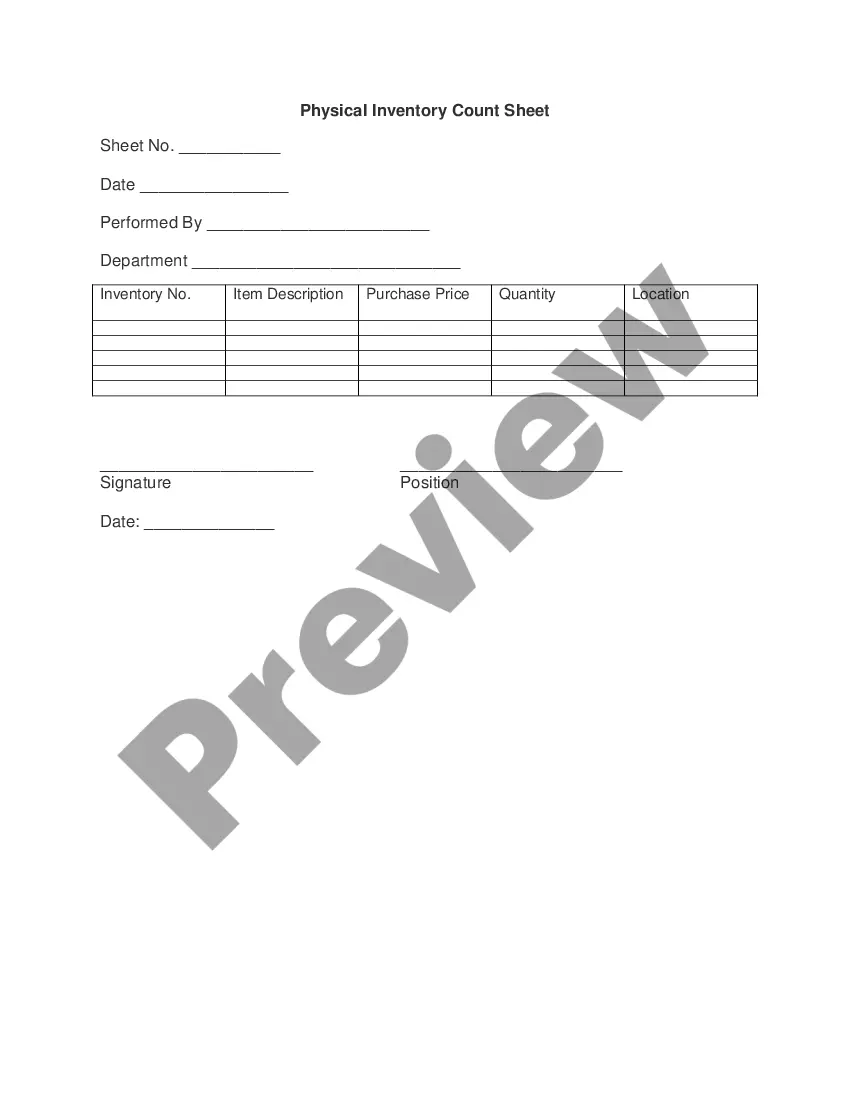
Texas Inventory Report
Description
Get your form ready online
Our built-in tools help you complete, sign, share, and store your documents in one place.
Make edits, fill in missing information, and update formatting in US Legal Forms—just like you would in MS Word.
Download a copy, print it, send it by email, or mail it via USPS—whatever works best for your next step.
Sign and collect signatures with our SignNow integration. Send to multiple recipients, set reminders, and more. Go Premium to unlock E-Sign.
If this form requires notarization, complete it online through a secure video call—no need to meet a notary in person or wait for an appointment.
We protect your documents and personal data by following strict security and privacy standards.

Make edits, fill in missing information, and update formatting in US Legal Forms—just like you would in MS Word.

Download a copy, print it, send it by email, or mail it via USPS—whatever works best for your next step.

Sign and collect signatures with our SignNow integration. Send to multiple recipients, set reminders, and more. Go Premium to unlock E-Sign.

If this form requires notarization, complete it online through a secure video call—no need to meet a notary in person or wait for an appointment.

We protect your documents and personal data by following strict security and privacy standards.
Looking for another form?




How to fill out Inventory Report?
Selecting the ideal authorized document template can be challenging.
Clearly, there are numerous templates accessible online, but how do you find the legal form you require.
Utilize the US Legal Forms website. The service offers a vast array of templates, including the Texas Inventory Report, which you can use for both business and personal purposes.
You can review the form using the Preview button and read the form details to confirm it is suitable for you.
- All forms are reviewed by professionals and comply with federal and state regulations.
- If you are already a member, Log In to your account and click the Download button to access the Texas Inventory Report.
- Use your account to browse the legal documents you have previously purchased.
- Visit the My documents section of your account and obtain another copy of the document you need.
- If you are a new user of US Legal Forms, here are simple steps to follow.
- First, ensure you have selected the correct form for your city/state.
Form popularity
FAQ
An inventory report details the goods a business has on hand, including quantities and values, while a stock report typically focuses on the availability of items ready for sale. The Texas Inventory Report serves businesses by providing comprehensive insights into inventory status, which aids in financial planning and tax reporting. Understanding these differences can enhance your inventory management strategies and aid in meeting regulatory requirements.
Texas does not impose a property tax specifically on inventory. However, businesses must report their inventory as part of their overall property tax filings. Utilizing the Texas Inventory Report can simplify this process, ensuring you accurately declare your assets while taking advantage of any tax exemptions available.
In Texas, several items are tax exempt, including certain types of food, prescription medications, and some agricultural products. If you are a business owner, items like machinery used in manufacturing can also be tax exempt. For accurate reporting, a Texas Inventory Report can help you categorize your inventory correctly to ensure compliance with state tax laws.
While completely avoiding inventory tax in Texas is difficult, there are strategies to minimize it. Businesses can maintain precise records and accurately report values on their Texas Inventory Report. In addition, seeking advice from tax professionals can provide insights into legal deductions or exemptions. Proactive management can lead to potential savings on tax liabilities.
Yes, inventory is subject to personal property tax in Texas. This means that businesses must include their inventory when submitting their Texas Inventory Report to the local appraisal district. Failing to report inventory accurately can lead to fines or other penalties. Therefore, it's important to stay informed and maintain accurate records.
Calculating inventory tax in Texas involves determining the value of your inventory at the end of the tax year. You should compile a Texas Inventory Report that lists all your goods and their fair market value. Once you have the total value, you can apply the local tax rate to find your tax amount. Accurate calculations help ensure compliance and avoid potential penalties.
Yes, inventory is taxable in Texas. Businesses must report their inventory when filing their taxes, as it is an important component of the Texas Inventory Report. This report helps determine the value of the business's goods for tax purposes. Understanding how inventory tax works is crucial for effective financial planning.
Special inventory tax in Texas refers to an additional tax levied on specific categories of inventory under state and local laws. This tax may apply differently based on the nature of the inventory and the jurisdiction. It is crucial to stay informed on these taxes and accurately report them in your Texas Inventory Report to avoid miscalculations and potential issues.
An inventory tax is a tax assessed on the goods a business holds for sale at a given point in time. In Texas, this type of tax applies to tangible personal property. It is important to keep accurate records for your Texas Inventory Report to comply with state requirements and ensure your business operations remain smooth.
Filing your annual franchise tax report in Texas involves gathering your financial records and necessary business information. You can file online using the Texas Comptroller's website or submit a paper form. To make this process efficient, consider using USLegalForms to assist with your Texas Inventory Report preparation and filing.