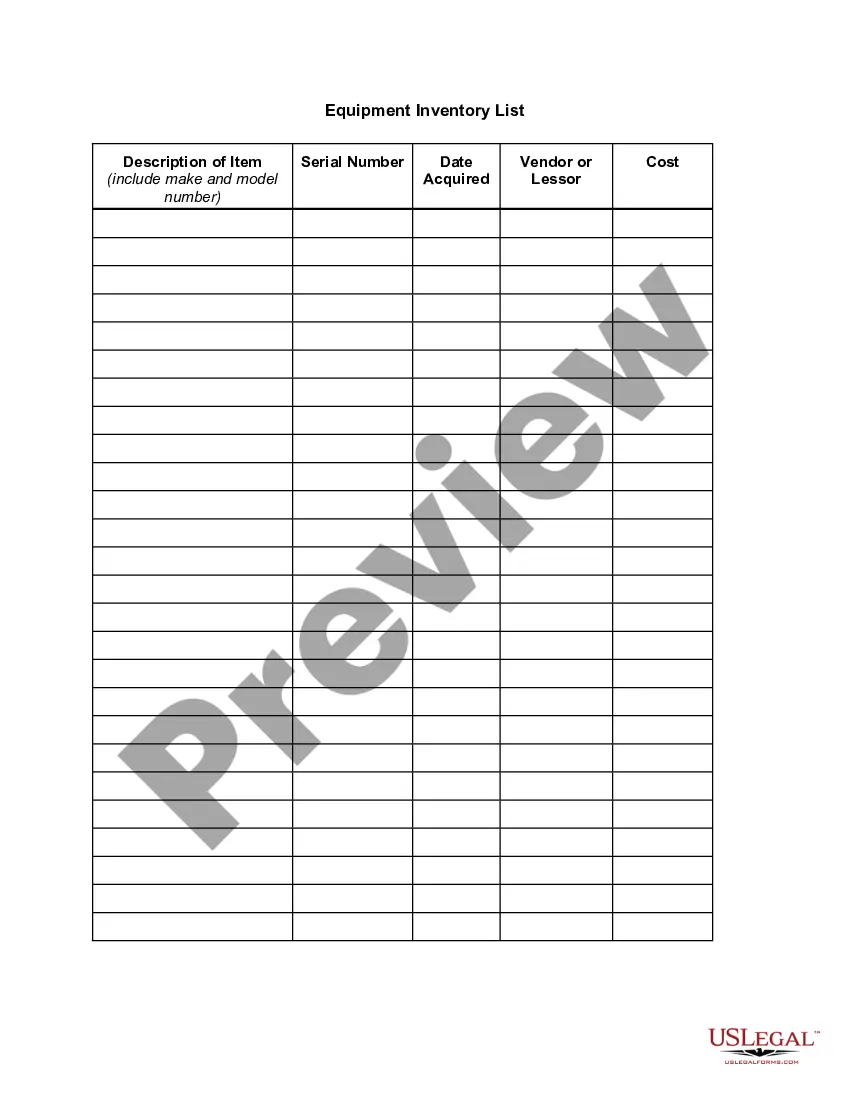
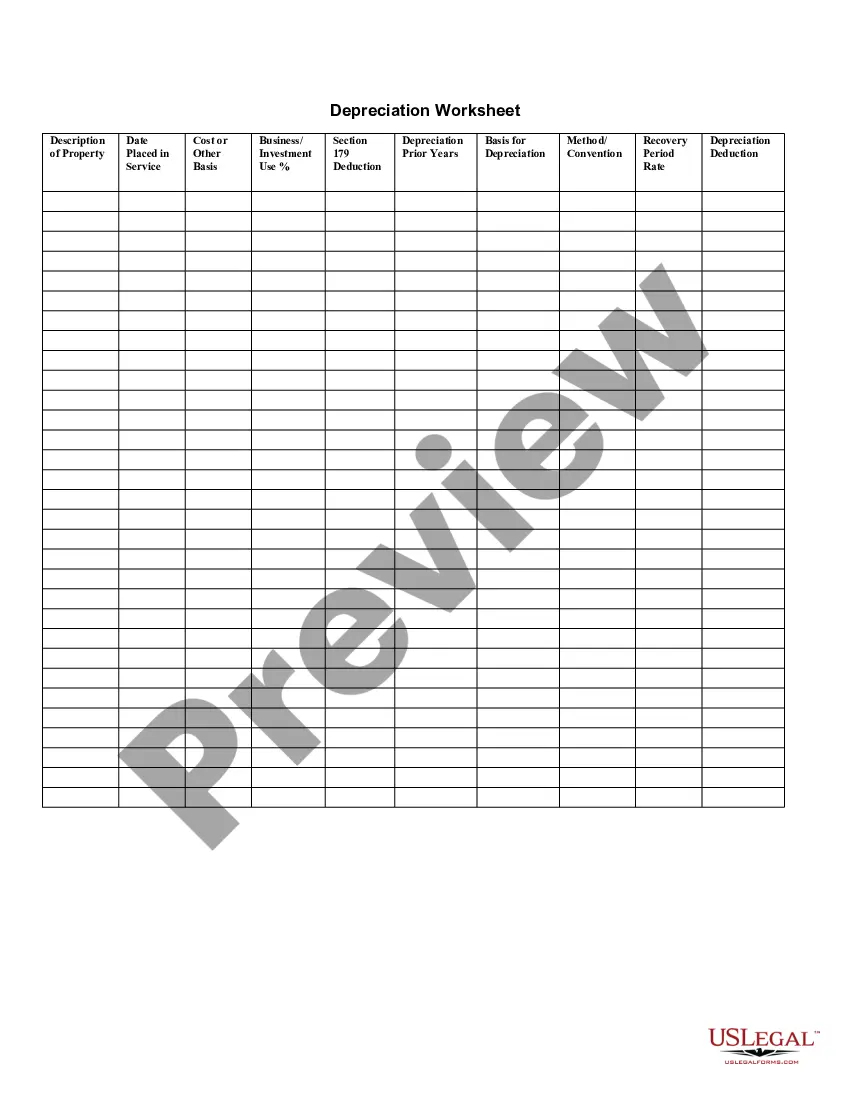
Texas Equipment Inventory List
Description
Get your form ready online
Our built-in tools help you complete, sign, share, and store your documents in one place.
Make edits, fill in missing information, and update formatting in US Legal Forms—just like you would in MS Word.
Download a copy, print it, send it by email, or mail it via USPS—whatever works best for your next step.
Sign and collect signatures with our SignNow integration. Send to multiple recipients, set reminders, and more. Go Premium to unlock E-Sign.
If this form requires notarization, complete it online through a secure video call—no need to meet a notary in person or wait for an appointment.
We protect your documents and personal data by following strict security and privacy standards.

Make edits, fill in missing information, and update formatting in US Legal Forms—just like you would in MS Word.

Download a copy, print it, send it by email, or mail it via USPS—whatever works best for your next step.

Sign and collect signatures with our SignNow integration. Send to multiple recipients, set reminders, and more. Go Premium to unlock E-Sign.

If this form requires notarization, complete it online through a secure video call—no need to meet a notary in person or wait for an appointment.

We protect your documents and personal data by following strict security and privacy standards.
Looking for another form?



How to fill out Equipment Inventory List?
You are capable of spending hours online searching for the permitted document template that meets the federal and state requirements you need.
US Legal Forms offers a vast array of legal templates that have been reviewed by specialists.
You can easily obtain or print the Texas Equipment Inventory List from your service.
If available, utilize the Review button to peruse the document template as well.
- If you already possess a US Legal Forms account, you can Log In and then click the Download button.
- Subsequently, you can complete, modify, print, or sign the Texas Equipment Inventory List.
- Each legal document template you purchase is yours permanently.
- To retrieve an additional copy of any purchased form, navigate to the My documents section and click the respective button.
- If you are visiting the US Legal Forms website for the first time, follow the straightforward instructions listed below.
- First, ensure you have selected the correct document template for the state/town of your choice.
- Review the form description to confirm you have selected the correct form.
Form popularity
FAQ
Indeed, inventory is subject to personal property tax in Texas. Each business must report its inventory to local appraisal districts for assessment. By maintaining an accurate Texas Equipment Inventory List, you can ensure that your reporting is precise and that you fulfill your tax obligations effectively.
Yes, inventory is subject to property tax in Texas, classified as personal property. Businesses must list and evaluate their inventory annually to ascertain tax responsibilities. Keeping a comprehensive Texas Equipment Inventory List can aid in meeting these requirements and avoiding potential penalties.
In Texas, property tax applies to real and personal property, including land, buildings, vehicles, and equipment. Businesses must report their inventory accurately to local tax assessors. Familiarizing yourself with your Texas Equipment Inventory List will help you identify all taxable items and assist in compliance.
To calculate inventory tax in Texas, first determine the total value of your inventory as of January 1st of each tax year. Multiply this value by the local property tax rate. Using a detailed Texas Equipment Inventory List can streamline this process and ensure accuracy in your calculations.
In Texas, heavy equipment is subject to property tax based on its value as determined by local appraisal districts. This tax can vary depending on the county and the equipment's assessed valuation. Properly maintaining your Texas Equipment Inventory List will help you stay compliant and aware of the taxes that may affect your heavy equipment.
Yes, inventory is considered property under Texas law. It includes all items that a business holds for sale or production. Understanding this classification is crucial when managing your Texas Equipment Inventory List, as it directly affects your business's financial and tax obligations.
Yes, leased equipment is often subject to taxation in Texas, and this includes items listed on your Texas Equipment Inventory List. Taxability depends on a few factors, such as the terms of the lease and the nature of the equipment. To ensure compliance, keep detailed records of all leased equipment. If you have questions or need assistance, uslegalforms provides resources to help you navigate the complexities of equipment taxation in Texas.
Property tax responsibility for leased equipment in Texas typically falls on the lessee unless specified otherwise in the lease agreement. It's important to understand your obligations concerning the Texas Equipment Inventory List, as you may need to report the equipment on your tax filings. Always review your lease terms to confirm who bears the tax burden. Consider consulting with a tax professional to clarify your specific situation.
In Texas, leased equipment appears on your Texas Equipment Inventory List, but its tax treatment can vary. Generally, you cannot deduct lease payments as a depreciation expense on your taxes. Instead, lease payments are treated as business expenses, providing potential tax benefits. It's crucial to maintain accurate records of your leased equipment for compliance.
To keep track of inventory quantities effectively, employ barcode scanning or RFID technology for accurate counts. Regular reconciliations with your Texas Equipment Inventory List can help identify shortages or overages quickly. Staying proactive in tracking inventory will minimize loss and improve financial decision-making.