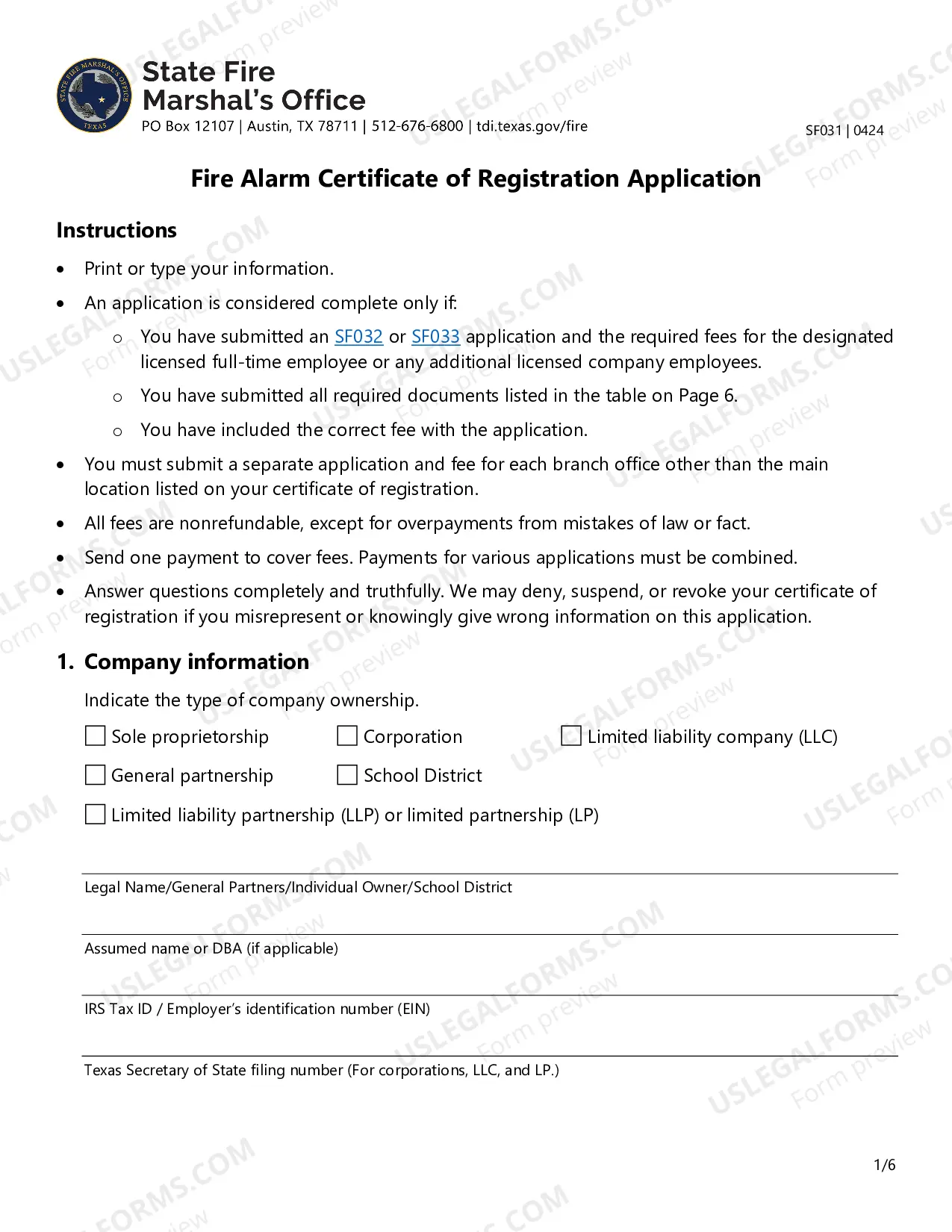
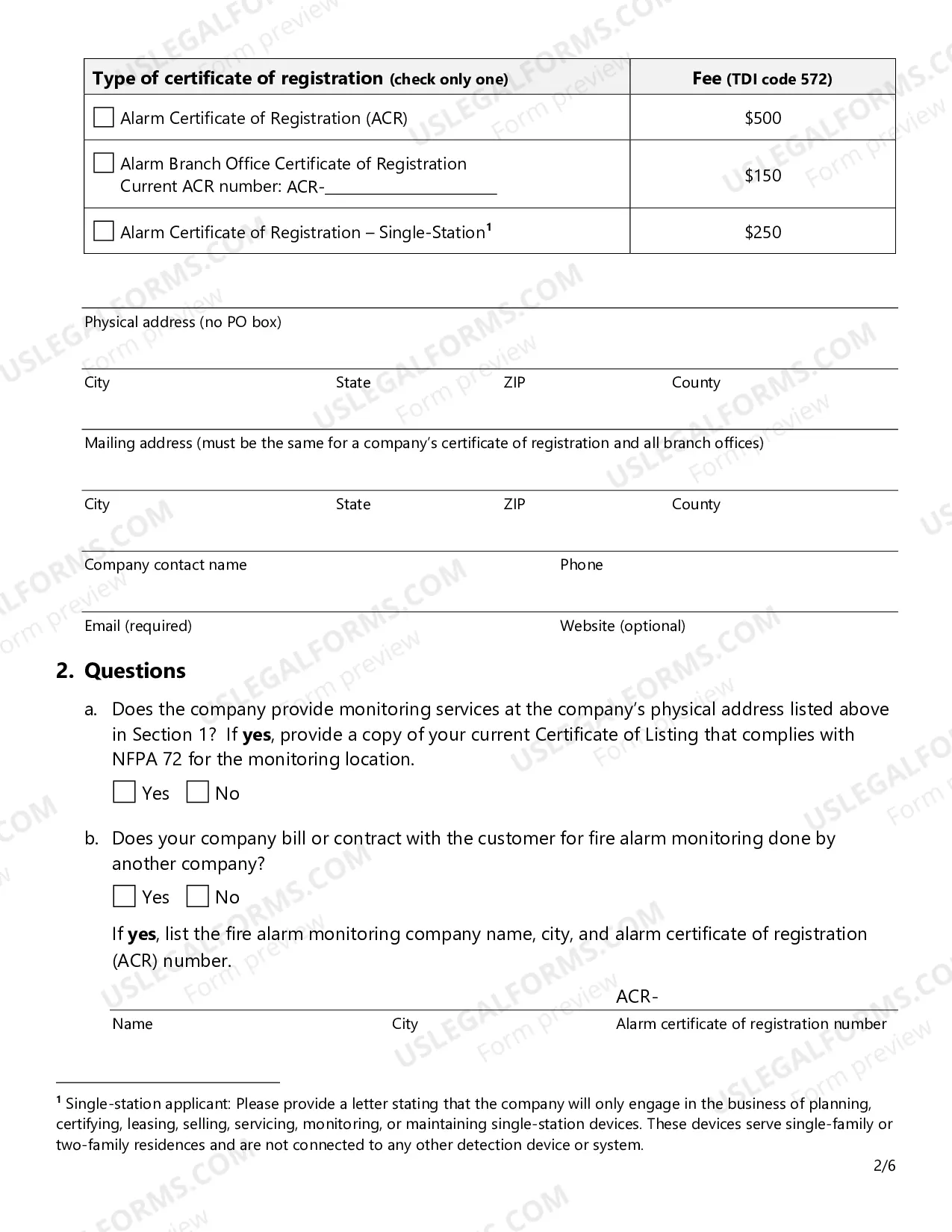
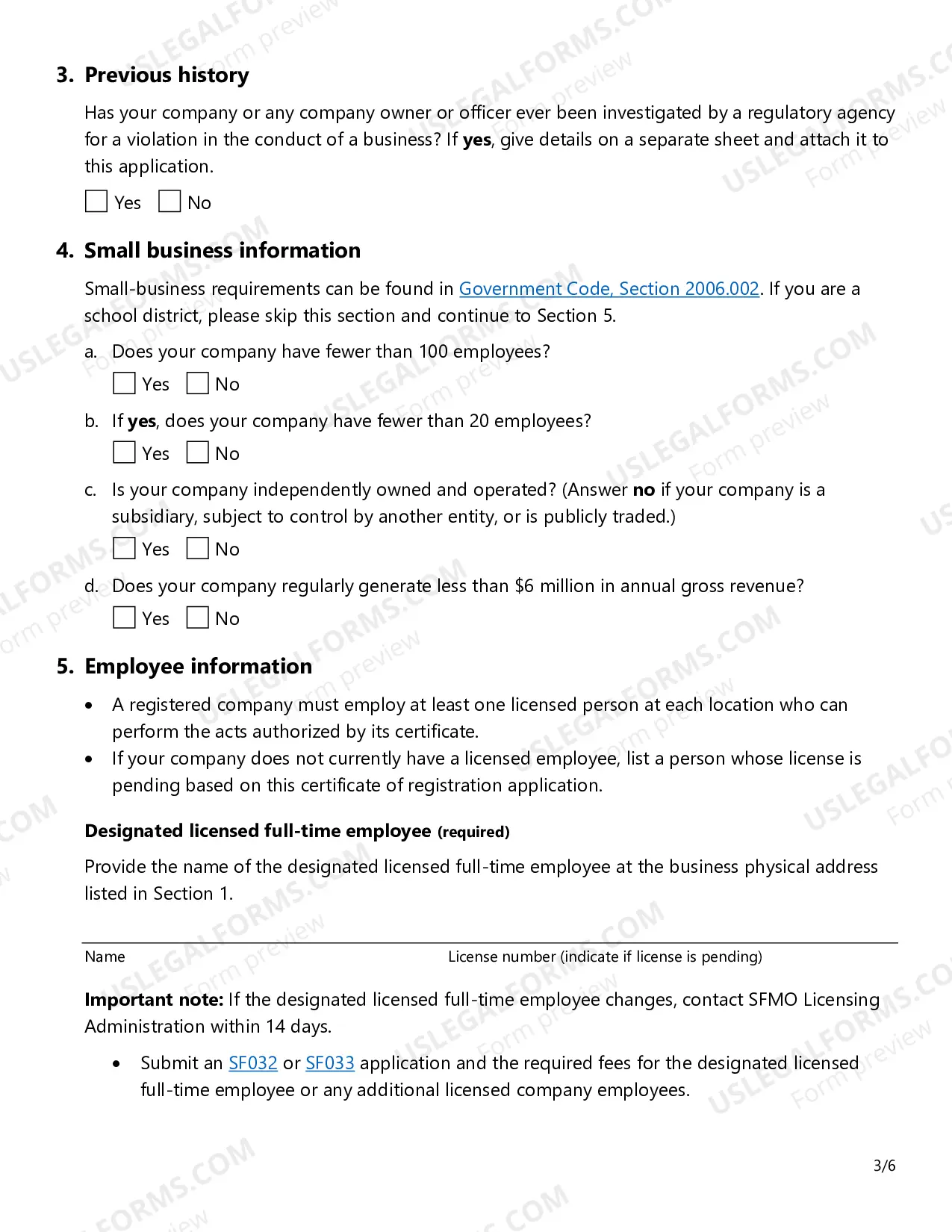
Texas Fire Alarm Certificate of Registration Application
Description
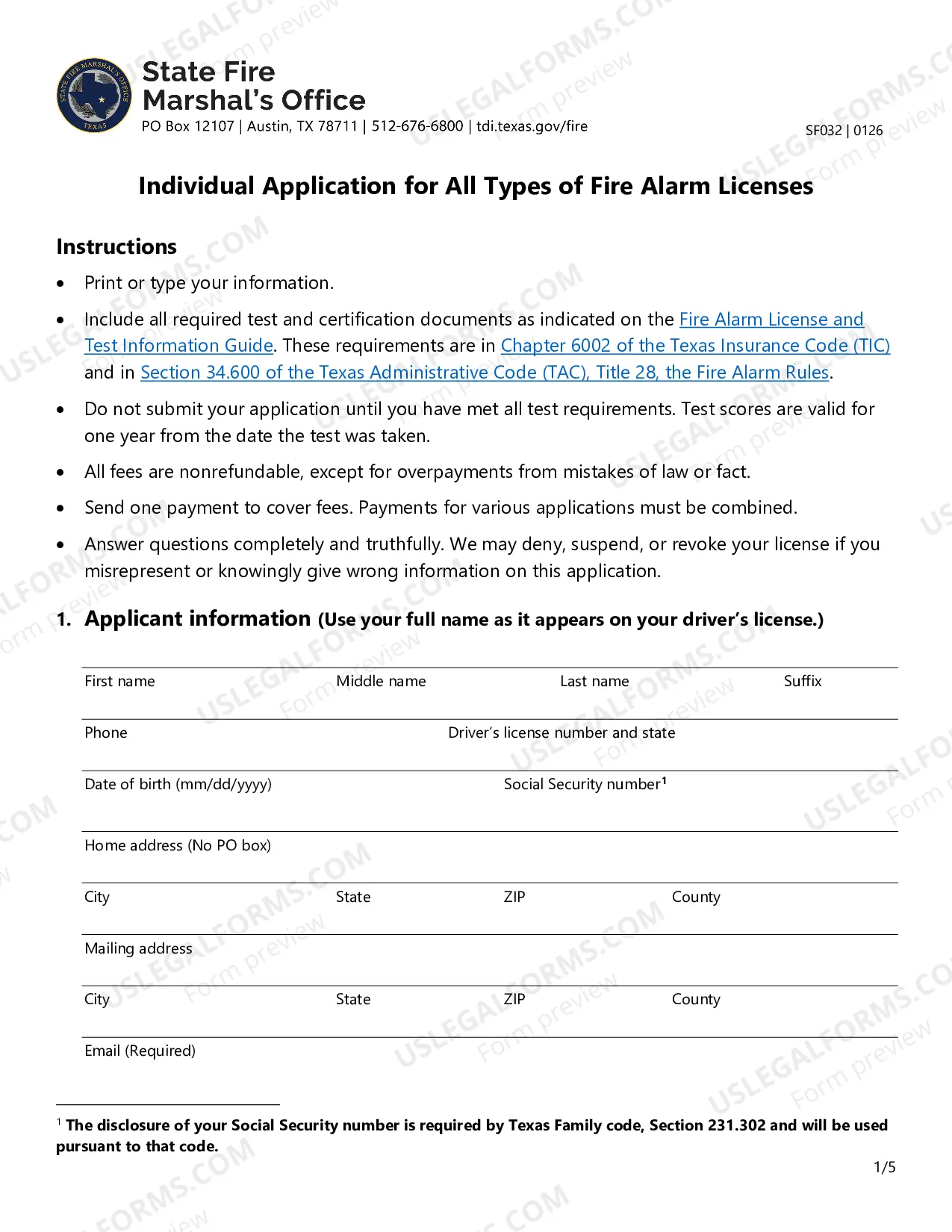
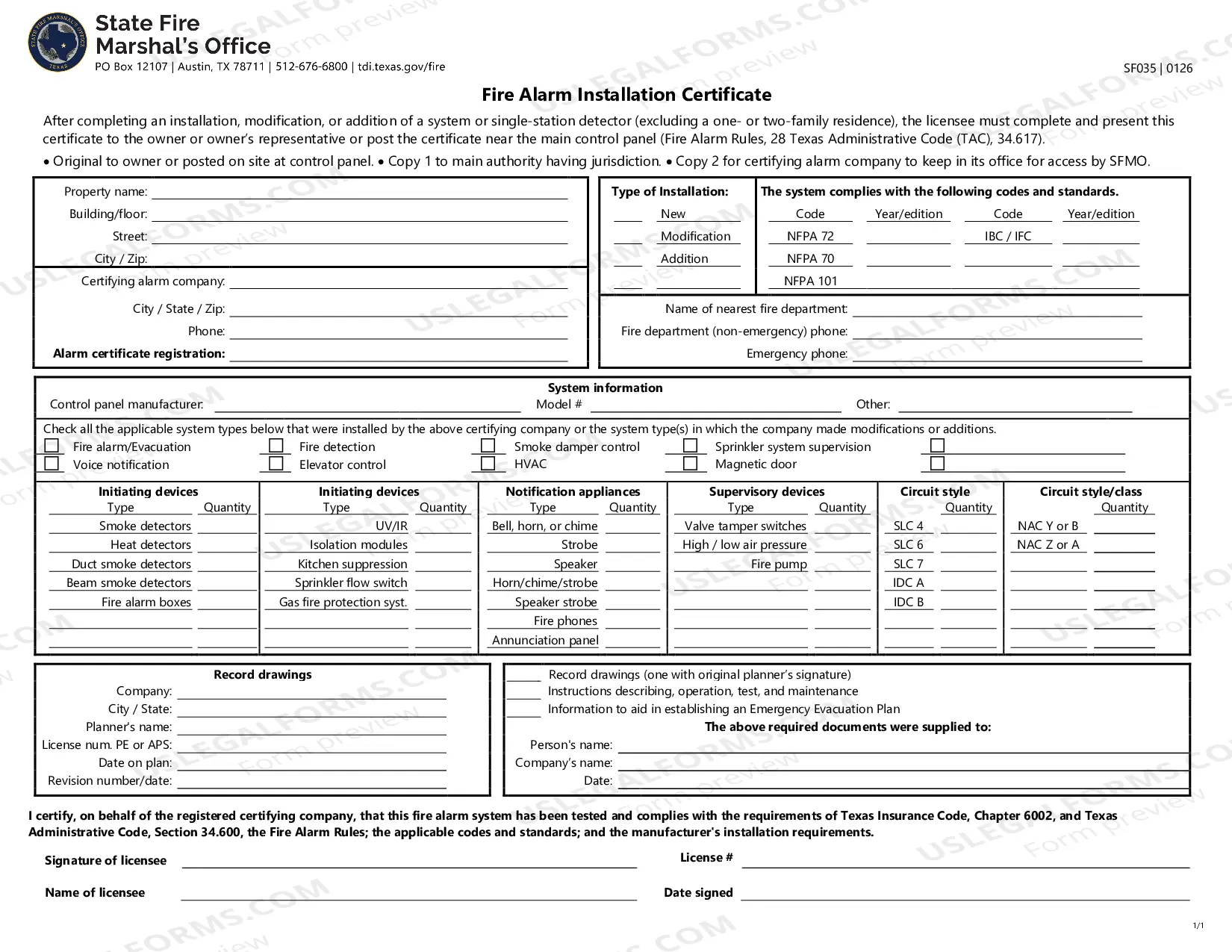
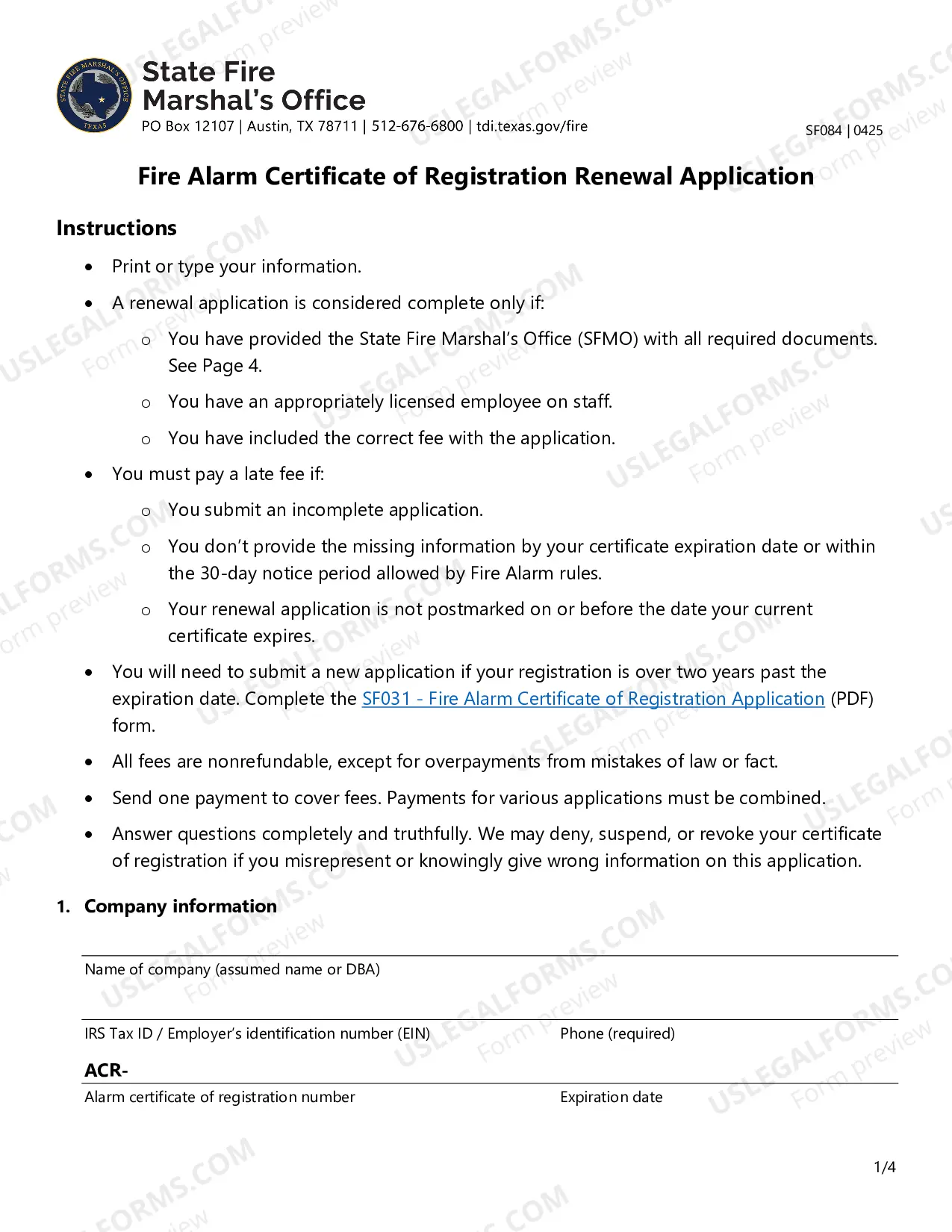
Get your form ready online
Our built-in tools help you complete, sign, share, and store your documents in one place.
Make edits, fill in missing information, and update formatting in US Legal Forms—just like you would in MS Word.
Download a copy, print it, send it by email, or mail it via USPS—whatever works best for your next step.
Sign and collect signatures with our SignNow integration. Send to multiple recipients, set reminders, and more. Go Premium to unlock E-Sign.
If this form requires notarization, complete it online through a secure video call—no need to meet a notary in person or wait for an appointment.
We protect your documents and personal data by following strict security and privacy standards.

Make edits, fill in missing information, and update formatting in US Legal Forms—just like you would in MS Word.

Download a copy, print it, send it by email, or mail it via USPS—whatever works best for your next step.

Sign and collect signatures with our SignNow integration. Send to multiple recipients, set reminders, and more. Go Premium to unlock E-Sign.

If this form requires notarization, complete it online through a secure video call—no need to meet a notary in person or wait for an appointment.

We protect your documents and personal data by following strict security and privacy standards.
Looking for another form?
How to fill out Texas Fire Alarm Certificate Of Registration Application?
How much time and resources do you usually spend on drafting formal documentation? There’s a greater way to get such forms than hiring legal experts or wasting hours searching the web for a proper template. US Legal Forms is the top online library that provides professionally designed and verified state-specific legal documents for any purpose, like the Texas Fire Alarm Certificate of Registration Application.
To acquire and prepare a suitable Texas Fire Alarm Certificate of Registration Application template, follow these easy steps:
- Look through the form content to make sure it complies with your state requirements. To do so, check the form description or use the Preview option.
- If your legal template doesn’t satisfy your needs, locate another one using the search tab at the top of the page.
- If you already have an account with us, log in and download the Texas Fire Alarm Certificate of Registration Application. If not, proceed to the next steps.
- Click Buy now once you find the correct document. Select the subscription plan that suits you best to access our library’s full opportunities.
- Create an account and pay for your subscription. You can make a transaction with your credit card or through PayPal - our service is absolutely safe for that.
- Download your Texas Fire Alarm Certificate of Registration Application on your device and complete it on a printed-out hard copy or electronically.
Another advantage of our service is that you can access previously downloaded documents that you safely store in your profile in the My Forms tab. Obtain them at any moment and re-complete your paperwork as often as you need.
Save time and effort completing formal paperwork with US Legal Forms, one of the most trusted web services. Sign up for us today!
Form popularity
FAQ
You must meet one of the following requirements: Have a current Electronic Security Association (ESA) Level III Fire Alarm Designer certification. Pass the National Institute for Certification in Engineering Technologies (NICET) Level III Fire Alarm Systems test. Be a licensed Texas Professional Engineer.
NFPA 72 should also be consulted for full details regarding inspection, testing, and maintenance of fire alarm systems. Chapter 14 of NFPA 72 will provide the detailed requirements for ITM.
It is essential to understand how to turn off the fire alarm in a commercial building: Modern fire alarms typically come equipped with 3 buttons on the device: Silence, trouble silence, and acknowledge; these will temporarily stop the beeping.
1 of NFPA 101 requires one- and two-family dwellings to have only an alarm system (no monitoring needed) with audible alarms in the following locations: Within every sleeping room. In the immediate vicinity outside of every sleeping room. On every level of the building (including basements)
Inspected Semiannually. Functionally Tested Annually. Sensitivity Tested 1 year after then checked every other year and increased to every 5 years if the device remains within its sensitivity range. Maintained in ance with manufacturer's instructions.
A Fire Alarm Certificate is a mandatory inspection and should be carried out in ance with BS5839. These regulations are part of the fire detection and fire alarm systems for buildings; they cover design commissioning and maintenance.
NFPA 72 currently recognized four methods of communication from the protected premises to the supervising station for fire alarm systems: Performance-Based Technology, Digital Alarm Communicator Systems, Two-Way Radio Frequency (RF) Multiplex, and One-Way Private Radio Alarm Systems.
Smoke alarms inside each bedroom, outside each sleeping area and on every level of the home, including the basement. On levels without bedrooms, alarms in the living room (or den or family room) or near the stairway to the upper level, or in both locations.