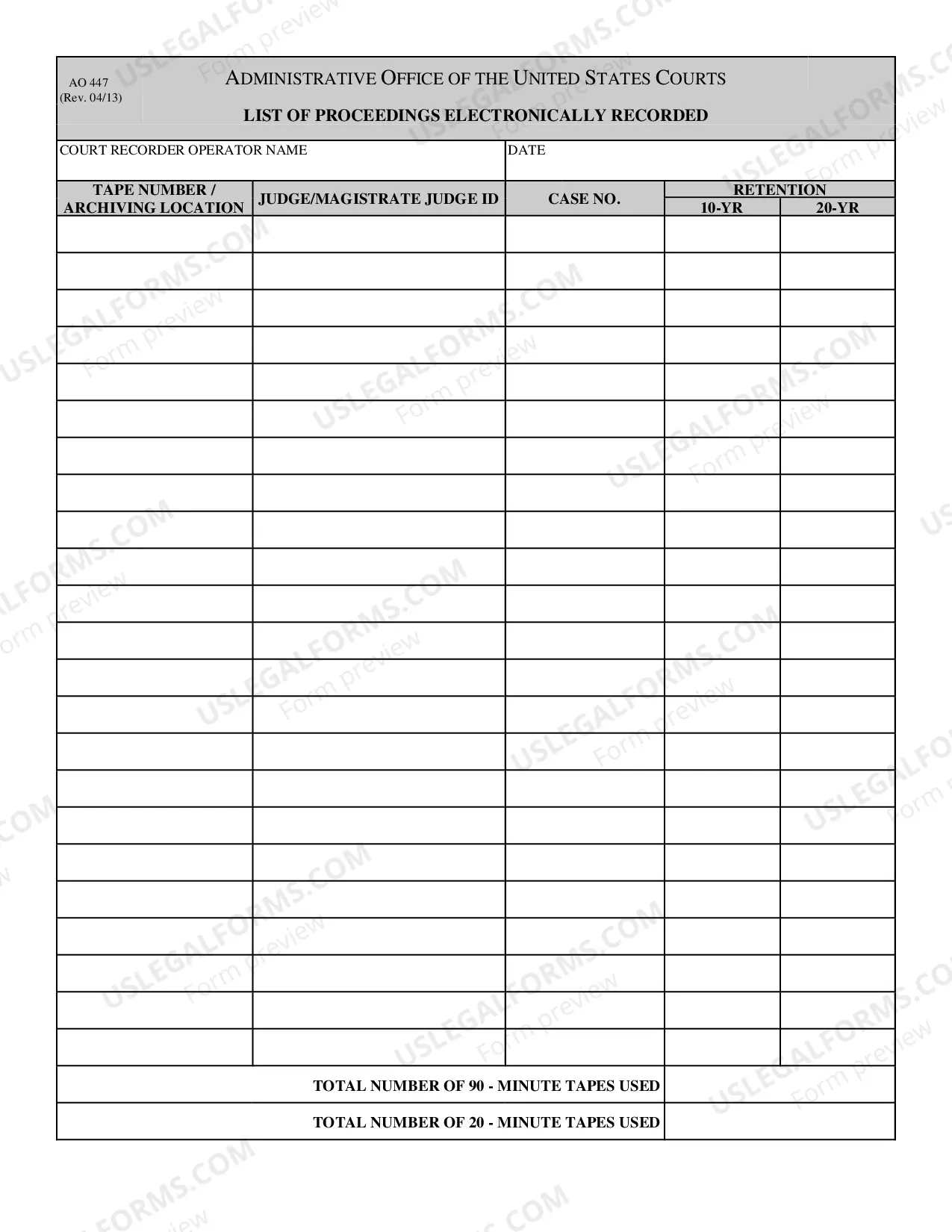
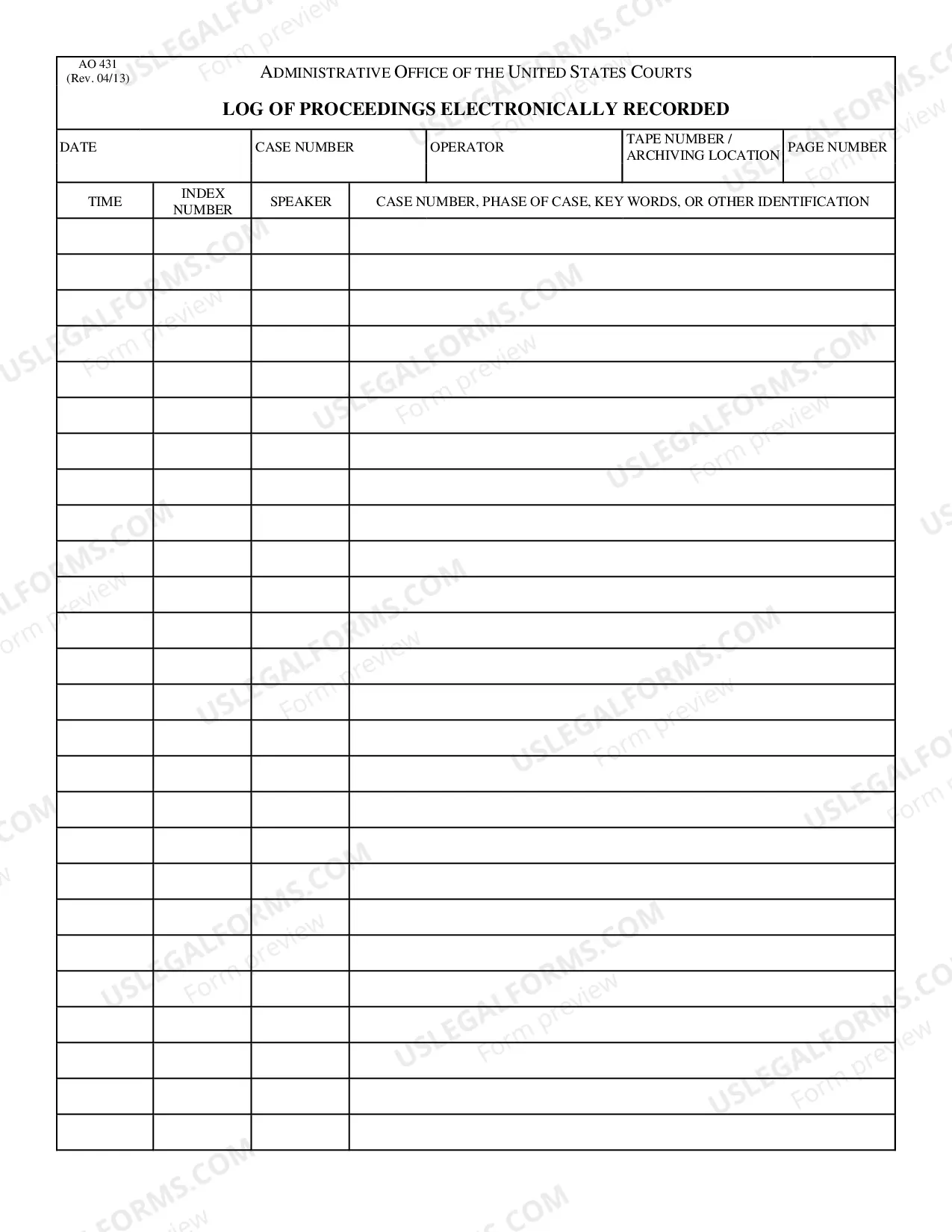
Texas List of Proceedings Electronically Recorded
Description

Get your form ready online
Our built-in tools help you complete, sign, share, and store your documents in one place.
Make edits, fill in missing information, and update formatting in US Legal Forms—just like you would in MS Word.
Download a copy, print it, send it by email, or mail it via USPS—whatever works best for your next step.
Sign and collect signatures with our SignNow integration. Send to multiple recipients, set reminders, and more. Go Premium to unlock E-Sign.
If this form requires notarization, complete it online through a secure video call—no need to meet a notary in person or wait for an appointment.
We protect your documents and personal data by following strict security and privacy standards.

Make edits, fill in missing information, and update formatting in US Legal Forms—just like you would in MS Word.

Download a copy, print it, send it by email, or mail it via USPS—whatever works best for your next step.

Sign and collect signatures with our SignNow integration. Send to multiple recipients, set reminders, and more. Go Premium to unlock E-Sign.

If this form requires notarization, complete it online through a secure video call—no need to meet a notary in person or wait for an appointment.

We protect your documents and personal data by following strict security and privacy standards.
Looking for another form?






How to fill out Texas List Of Proceedings Electronically Recorded?
If you’re searching for a way to properly prepare the Texas List of Proceedings Electronically Recorded without hiring a lawyer, then you’re just in the right place. US Legal Forms has proven itself as the most extensive and reliable library of formal templates for every personal and business situation. Every piece of documentation you find on our web service is created in accordance with federal and state laws, so you can be certain that your documents are in order.
Adhere to these straightforward guidelines on how to obtain the ready-to-use Texas List of Proceedings Electronically Recorded:
- Make sure the document you see on the page corresponds with your legal situation and state laws by checking its text description or looking through the Preview mode.
- Type in the form title in the Search tab on the top of the page and select your state from the list to find another template in case of any inconsistencies.
- Repeat with the content check and click Buy now when you are confident with the paperwork compliance with all the requirements.
- Log in to your account and click Download. Create an account with the service and select the subscription plan if you still don’t have one.
- Use your credit card or the PayPal option to purchase your US Legal Forms subscription. The document will be available to download right after.
- Choose in what format you want to save your Texas List of Proceedings Electronically Recorded and download it by clicking the appropriate button.
- Add your template to an online editor to fill out and sign it rapidly or print it out to prepare your hard copy manually.
Another great advantage of US Legal Forms is that you never lose the paperwork you acquired - you can pick any of your downloaded blanks in the My Forms tab of your profile any time you need it.
Form popularity
FAQ
Our federal government has three parts. They are the Executive, (President and about 5,000,000 workers) Legislative (Senate and House of Representatives) and Judicial (Supreme Court and lower Courts).
The Supreme Court consists of the chief justice of the United States and eight associate justices. The president has the power to nominate the justices and appointments are made with the advice and consent of the Senate.
The judicial branch is called the court system. There are different levels of courts. The Supreme Court is the highest court in the United States. The courts review laws.
Federal courts enjoy the sole power to interpret the law, determine the constitutionality of the law, and apply it to individual cases.
Established by Article I of the Constitution, the Legislative Branch consists of the House of Representatives and the Senate, which together form the United States Congress.
The judicial branch of government is coequal to the other two branches, the legislative and executive. At the top of the judicial branch is the US Supreme Court.
The judicial branch decides the constitutionality of federal laws and resolves other disputes about federal laws. However, judges depend on our government's executive branch to enforce court decisions.