Texas Lien -Property
About this form
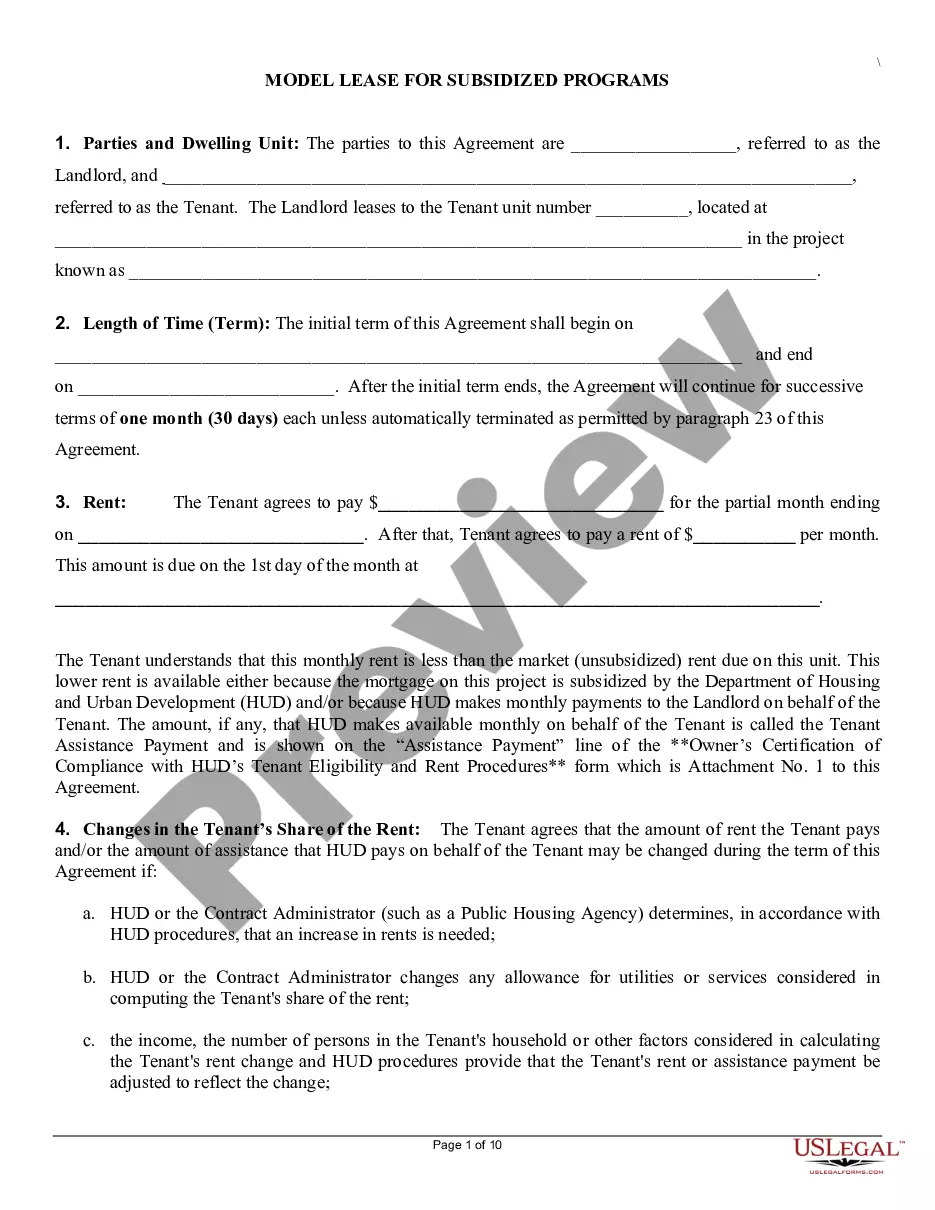
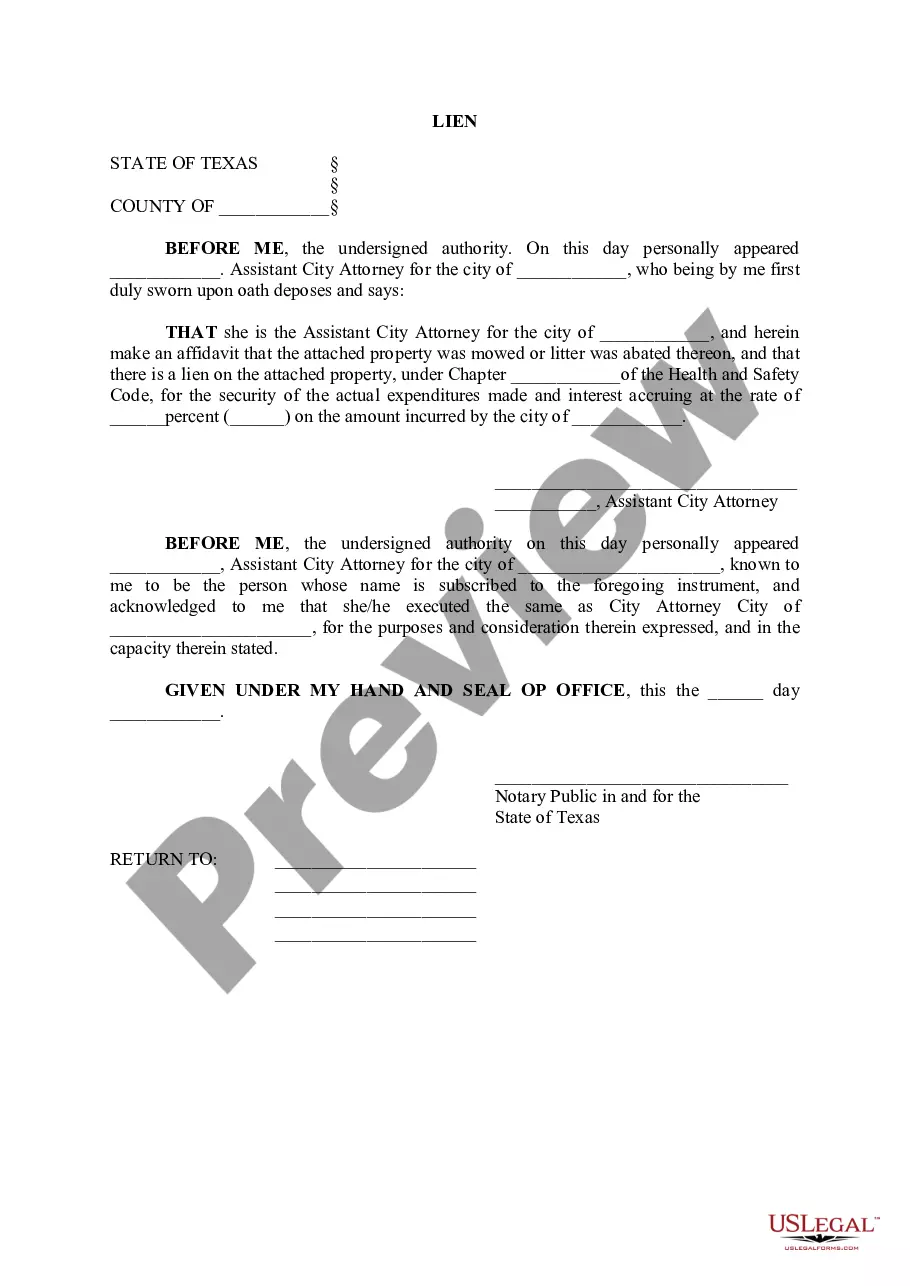
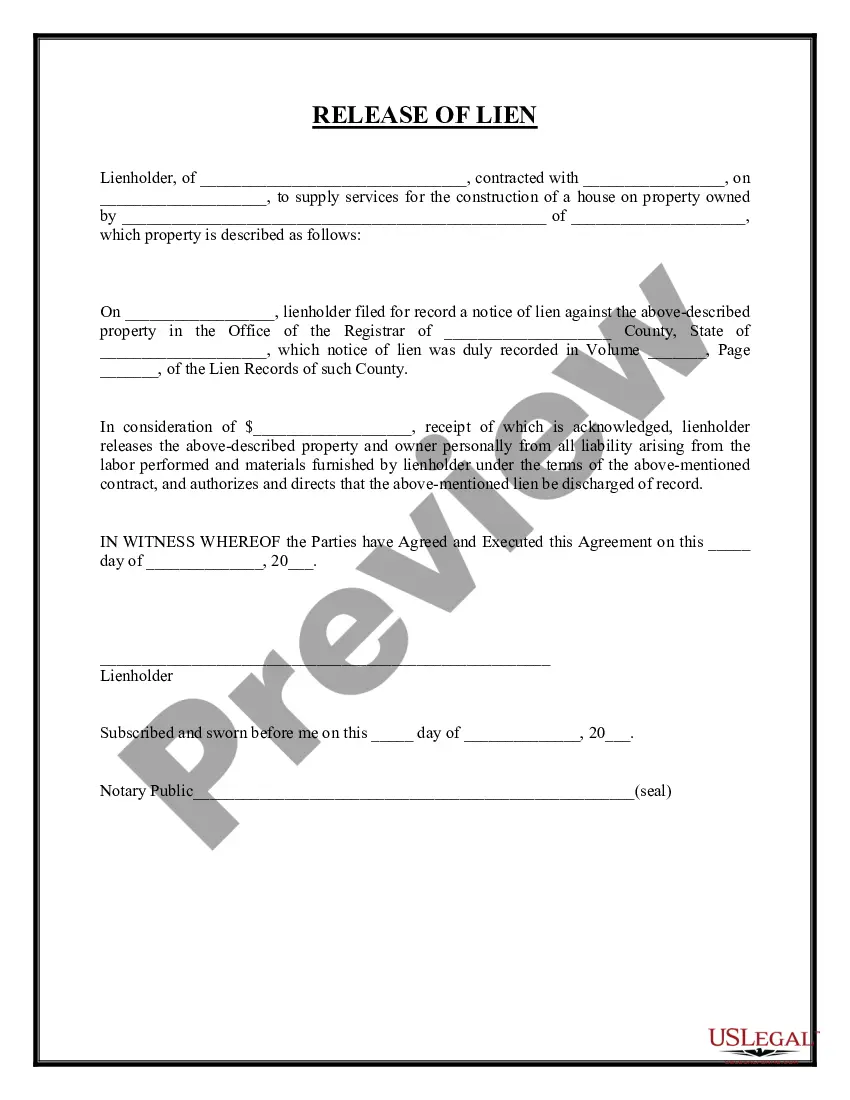
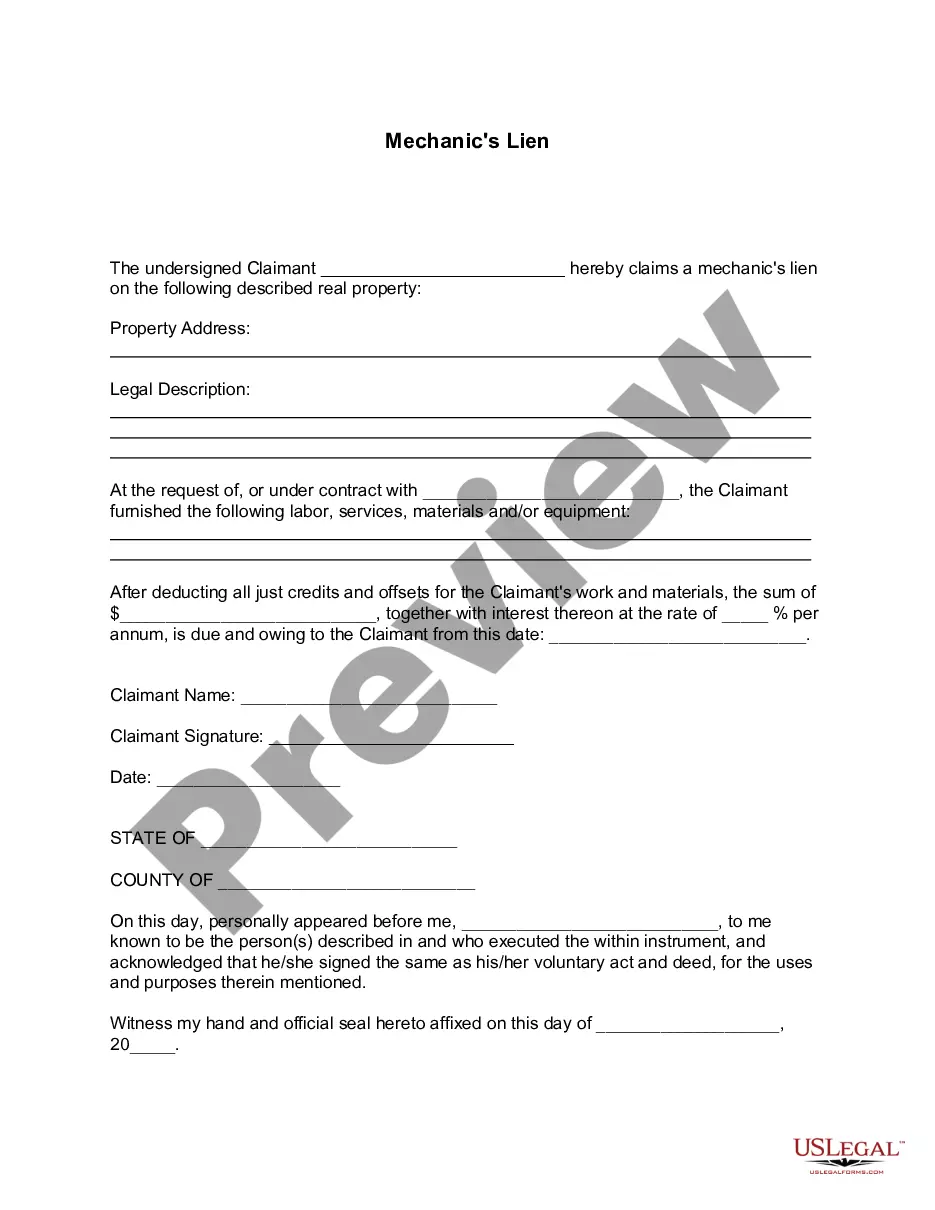
The Lien - Property form is a legal document used to establish a lien against a property for costs incurred by the city, specifically for the cleanup of the property. This form is crucial for cities to recover expenses related to property maintenance and safety. It serves as an affidavit filed by the City Attorney, differentiating it from other lien forms which may pertain to different types of debts or claims against properties.
Main sections of this form
- Affidavit section confirming the issuance of the lien by the Assistant City Attorney.
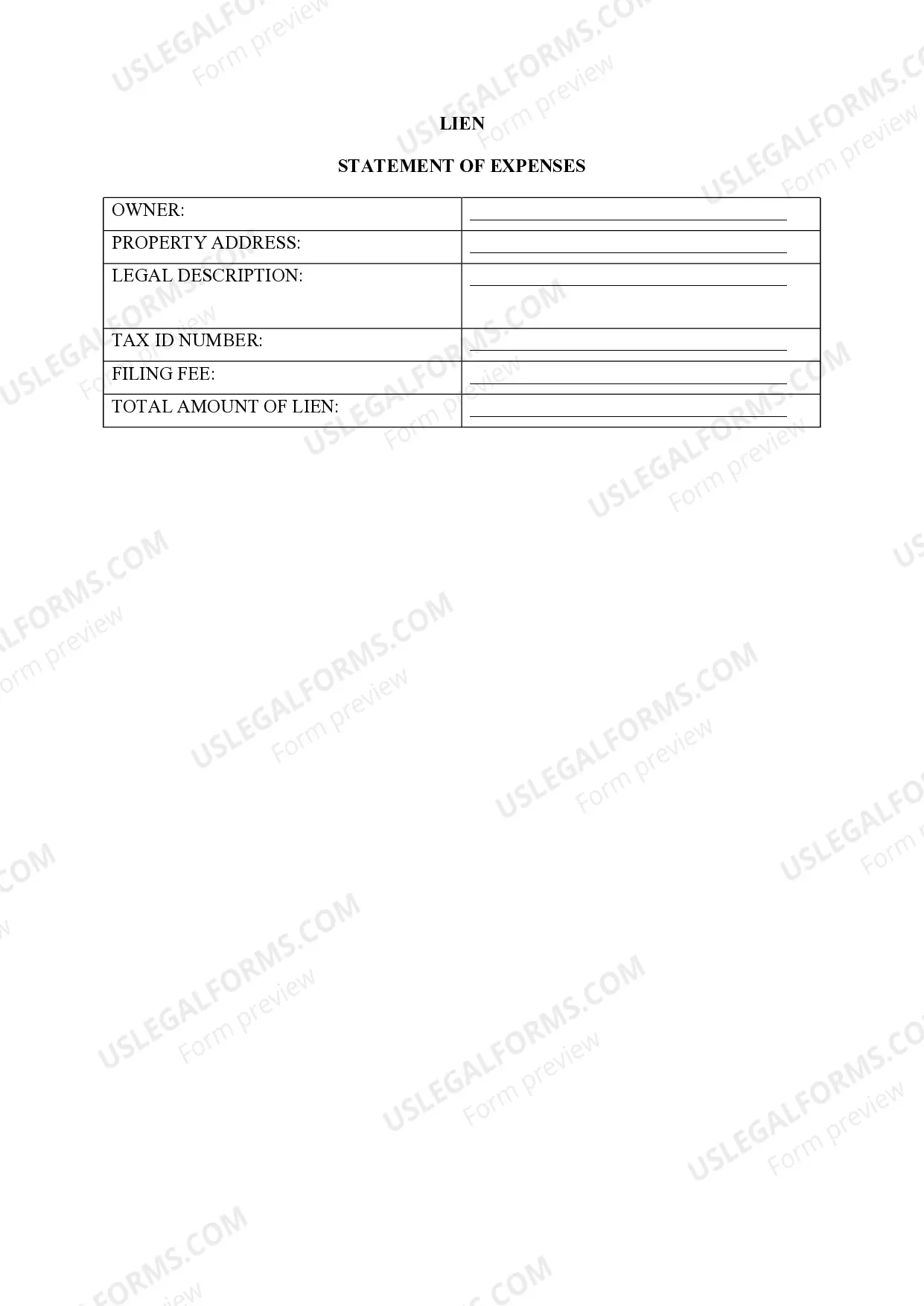
- Identification of the property owner and property details, including legal description and tax ID number.
- Statement of expenses incurred by the city for property cleanup, outlining total amounts and applicable fees.
- Notary acknowledgement section ensuring legal validation of the document.
When to use this form
This form should be used when a city has incurred costs for cleanup services on a property and needs to secure a lien to recover those costs. Typical scenarios include situations where property owners have neglected their properties, leading to municipal action for mowing or litter abatement. Filing this lien ensures that the city can recoup expenditures incurred for maintaining public health and safety concerning the property.
Intended users of this form
- Municipal officials, particularly City Attorneys, responsible for enforcing city ordinances related to property maintenance.
- City management or administrative staff involved in handling property cleanup and associated costs.
- Legal counsel representing municipalities in financial recovery efforts against property owners.
How to prepare this document
- Enter the name of the city and state where the property is located.
- Provide the property owner's name and the property address, including the legal description and tax ID number.
- Fill in the relevant chapter of the Health and Safety Code applicable to the lien.
- Detail the expenses incurred by the city for cleanup, including filing fees and the total amount of the lien.
- Have the Assistant City Attorney sign the affidavit and ensure it is notarized for legal validation.
Notarization requirements for this form
Yes, this form must be notarized to be legally valid. It requires the Assistant City Attorney's signature to confirm its authenticity. US Legal Forms offers integrated online notarization services that are available 24/7, allowing for secure video calls, legal equivalence, and no need for travel.
Get your form ready online
Our built-in tools help you complete, sign, share, and store your documents in one place.
Make edits, fill in missing information, and update formatting in US Legal Forms—just like you would in MS Word.
Download a copy, print it, send it by email, or mail it via USPS—whatever works best for your next step.
Sign and collect signatures with our SignNow integration. Send to multiple recipients, set reminders, and more. Go Premium to unlock E-Sign.
If this form requires notarization, complete it online through a secure video call—no need to meet a notary in person or wait for an appointment.
We protect your documents and personal data by following strict security and privacy standards.

Make edits, fill in missing information, and update formatting in US Legal Forms—just like you would in MS Word.

Download a copy, print it, send it by email, or mail it via USPS—whatever works best for your next step.

Sign and collect signatures with our SignNow integration. Send to multiple recipients, set reminders, and more. Go Premium to unlock E-Sign.

If this form requires notarization, complete it online through a secure video call—no need to meet a notary in person or wait for an appointment.

We protect your documents and personal data by following strict security and privacy standards.
Avoid these common issues
- Omitting the property owner's complete legal name or property details.
- Failing to accurately calculate the total amount of lien, including all pertinent fees.
- Not obtaining the required notary signature, rendering the document invalid.
Advantages of online completion
- Convenience of instant access to a legally sound form, ensuring compliance with state laws.
- Editable documents allow users to customize details without having to draft from scratch.
- Reduced processing time, as online forms can be filled and submitted quickly compared to paper forms.
Looking for another form?
Form popularity
FAQ
The vehicle title. a release of lien letter and/or other notifications from the lienholder(s) currently named on the vehicle title. a completed Application for Texas Title and/or Registration (Form 130-U)
1. TO COMPLETE THE TX MOTOR VEHICLE TRANSFER NOTIFICATION ONLINE: PREFERRED METHOD If possible, we highly recommend completing forms online instead of by mail, so you may easily save and print out a copy for your records that includes a date/timestamp.
Write your name and return address in the top three lines of the letter. Insert the complete date (month, day, year). Enter the recipient's name, title, company name and address on the next five lines. Greet the reader by writing "Dear (recipient's name):" Skip two lines. State the subject in a subject line.
The signed vehicle title. Application for Texas Title and/or Registration (Form 130-U) Any other supporting documents, such as release of lien or power of attorney.
Apply in Person Complete the Application for a Certified Copy of Title (Form VTR-34). NOTE: All recorded owners must sign the form and provide photo ID (or a copy) at time of application. Provide a valid photo ID and $5.45 fee by check, cash or money order (no debit or credit card accepted).
Not only do you need a completed application and your state-issued driver's license, but you must also either submit a check or money order for $2.00 in your application if mailing it in. Mailing can take a couple of weeks for you to get your duplicate. You can also go to your nearest TXDOT regional office.
Satisfy the terms of the loan by paying the balance of the loan back to the lender, including any interest incurred. If you don't receive the lien release, submit a request to your lender for proof that the loan has been satisfied.
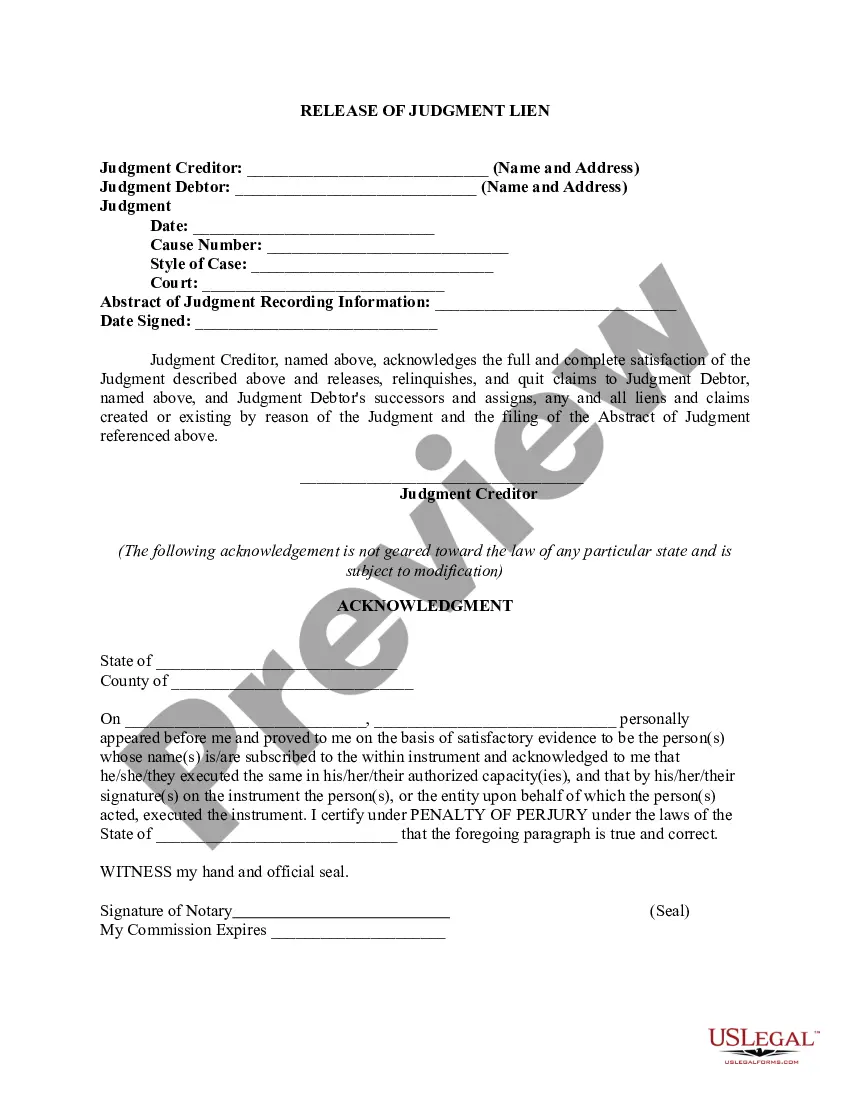
Pay off your debt. Fill out a release-of-lien form and have the lien holder sign it. Run out the statute of limitations. Get a court order. Make a claim with your title insurance company. Learn more:
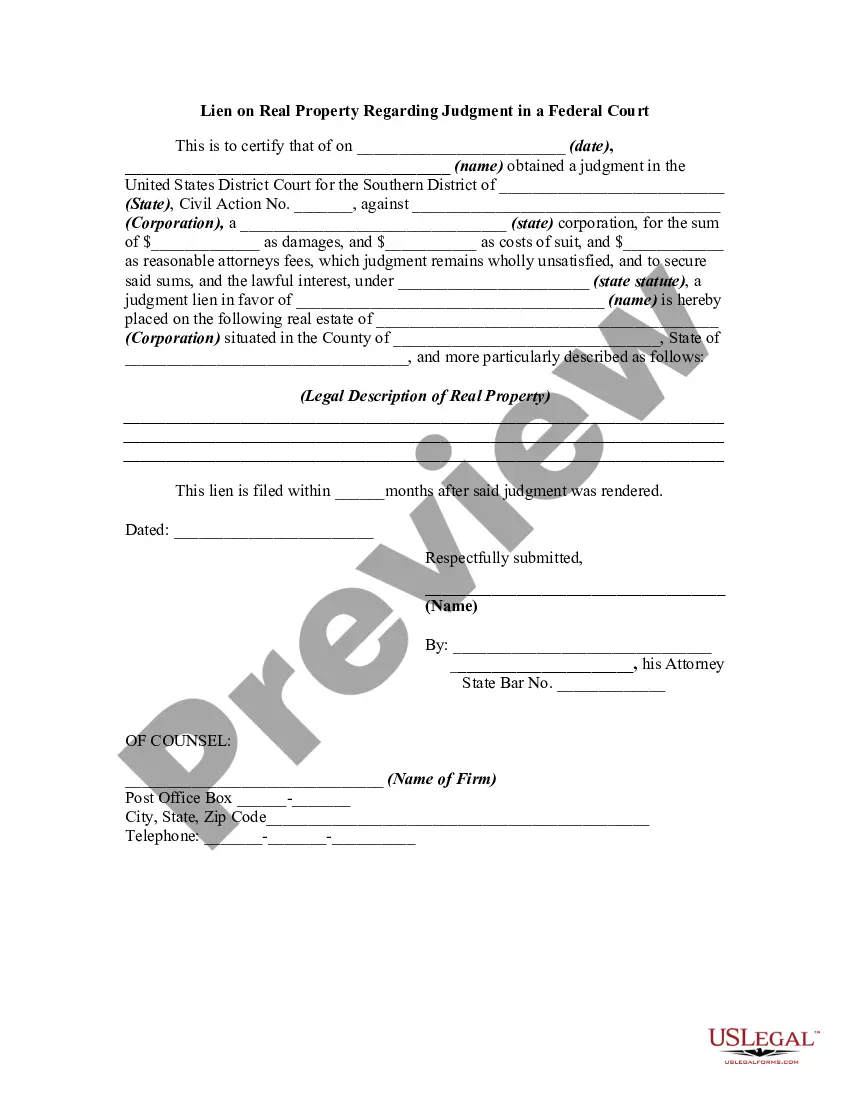
A judgment lien lasts for ten years. According to Section 52.001 of the Texas Property Code, a judgment lien cannot attach to any real property that is exempt from seizure or forced sale under Chapter 41 of the Texas Property Code.