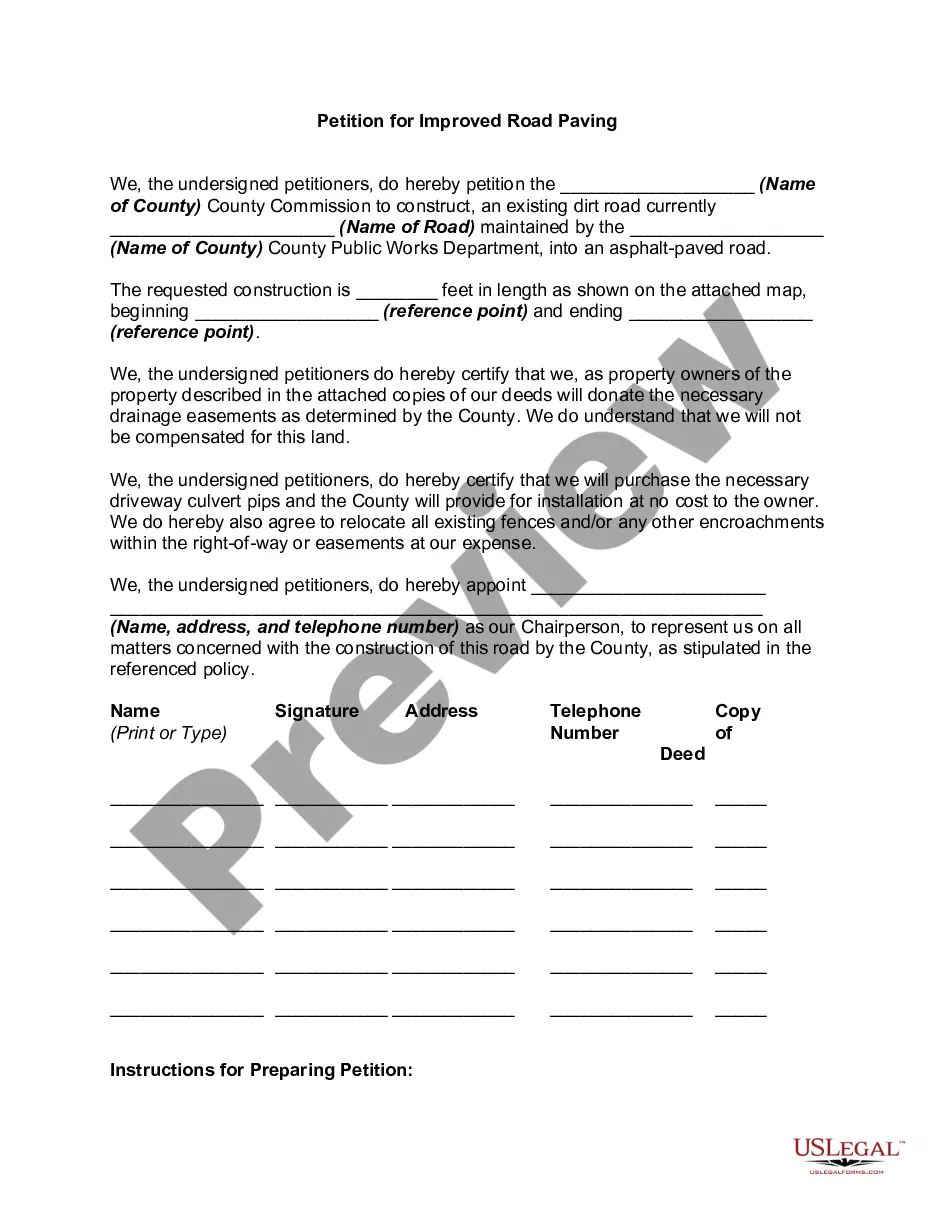
Texas Easement for Telephone Facilities
Understanding this form
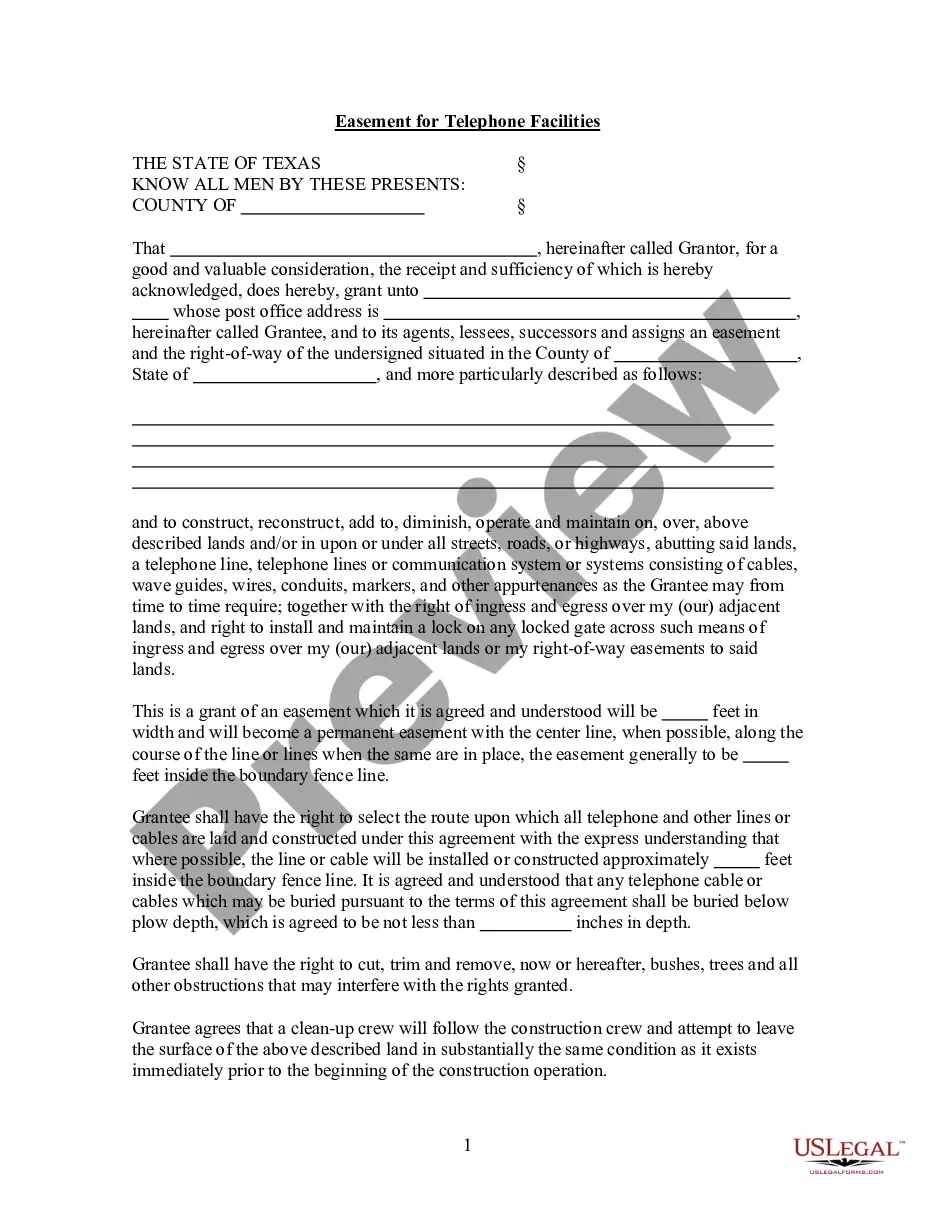
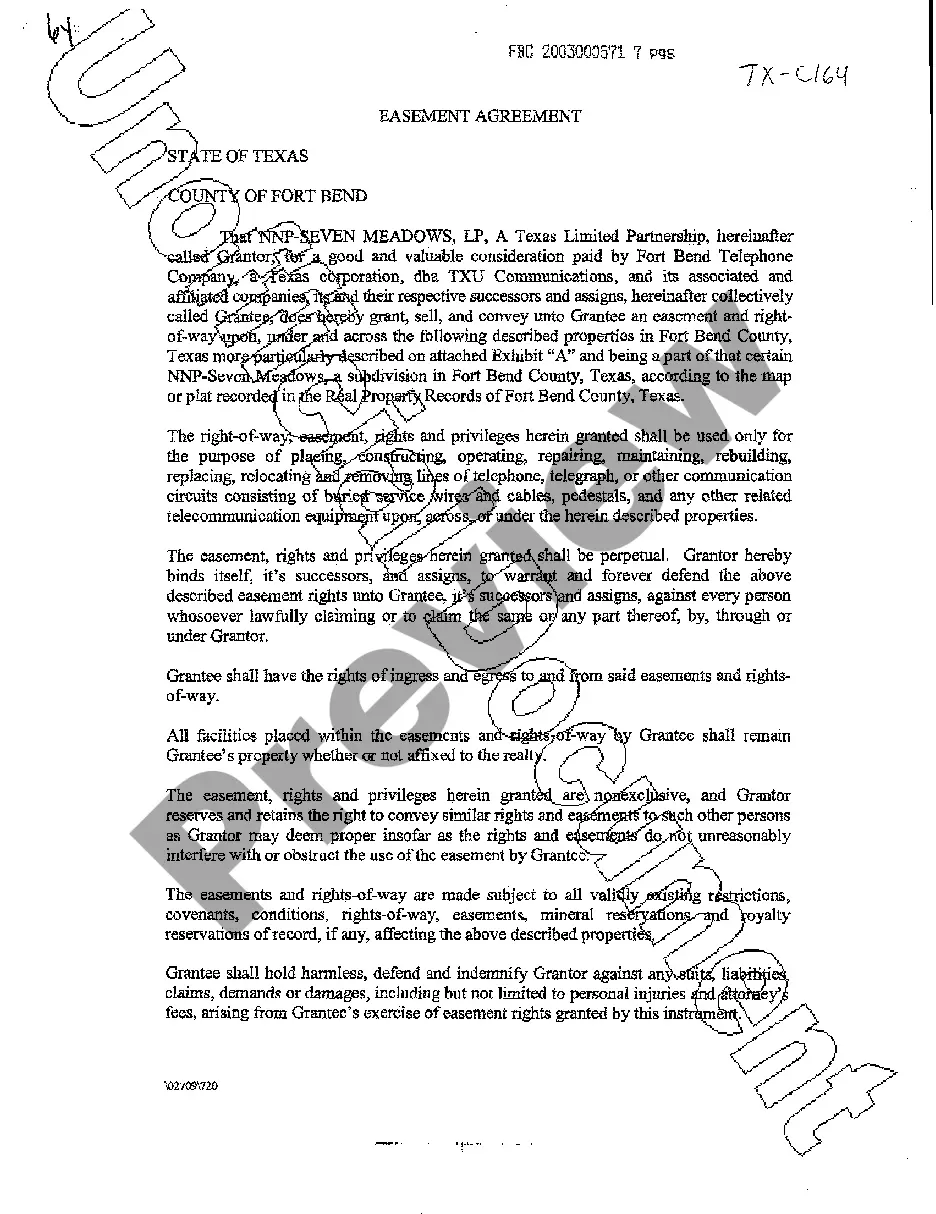
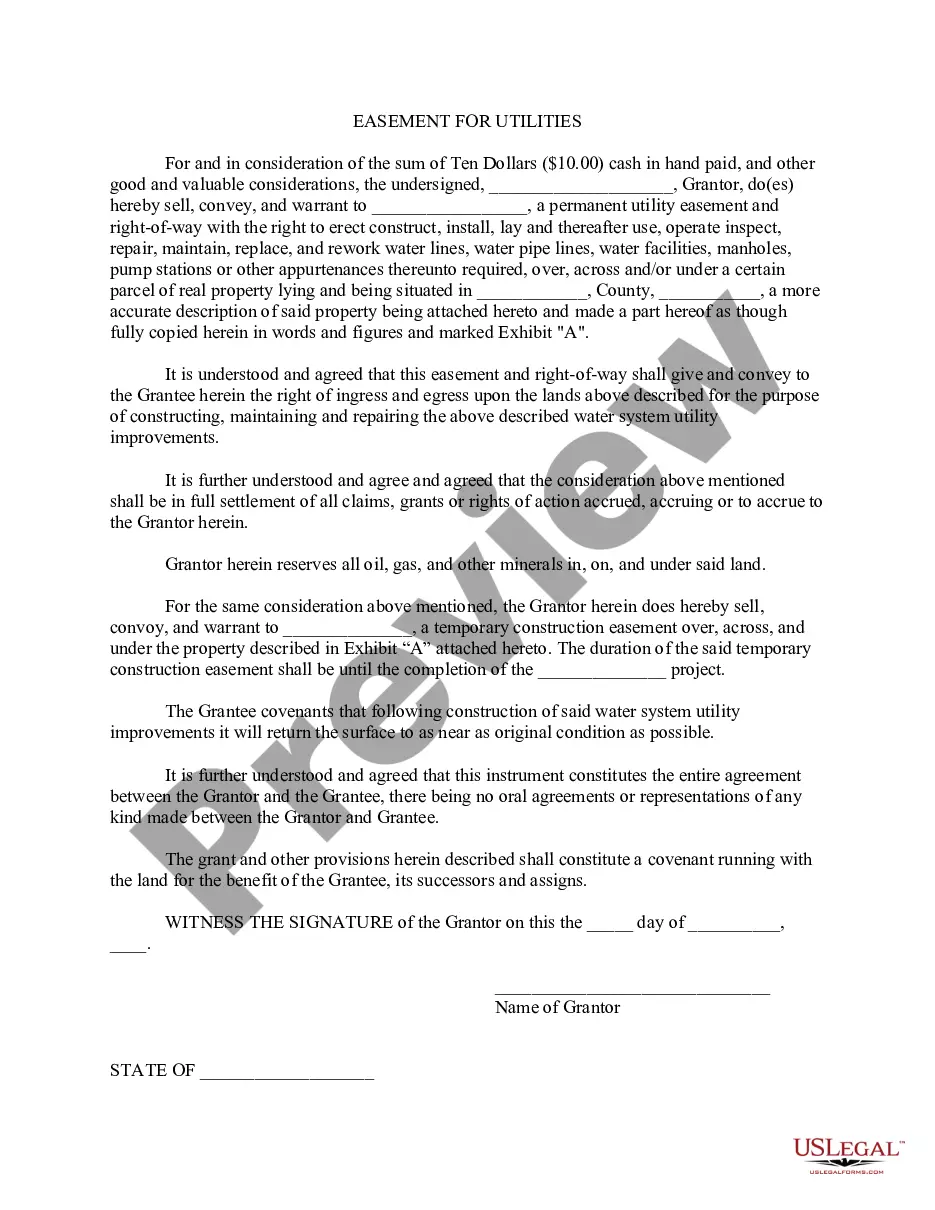
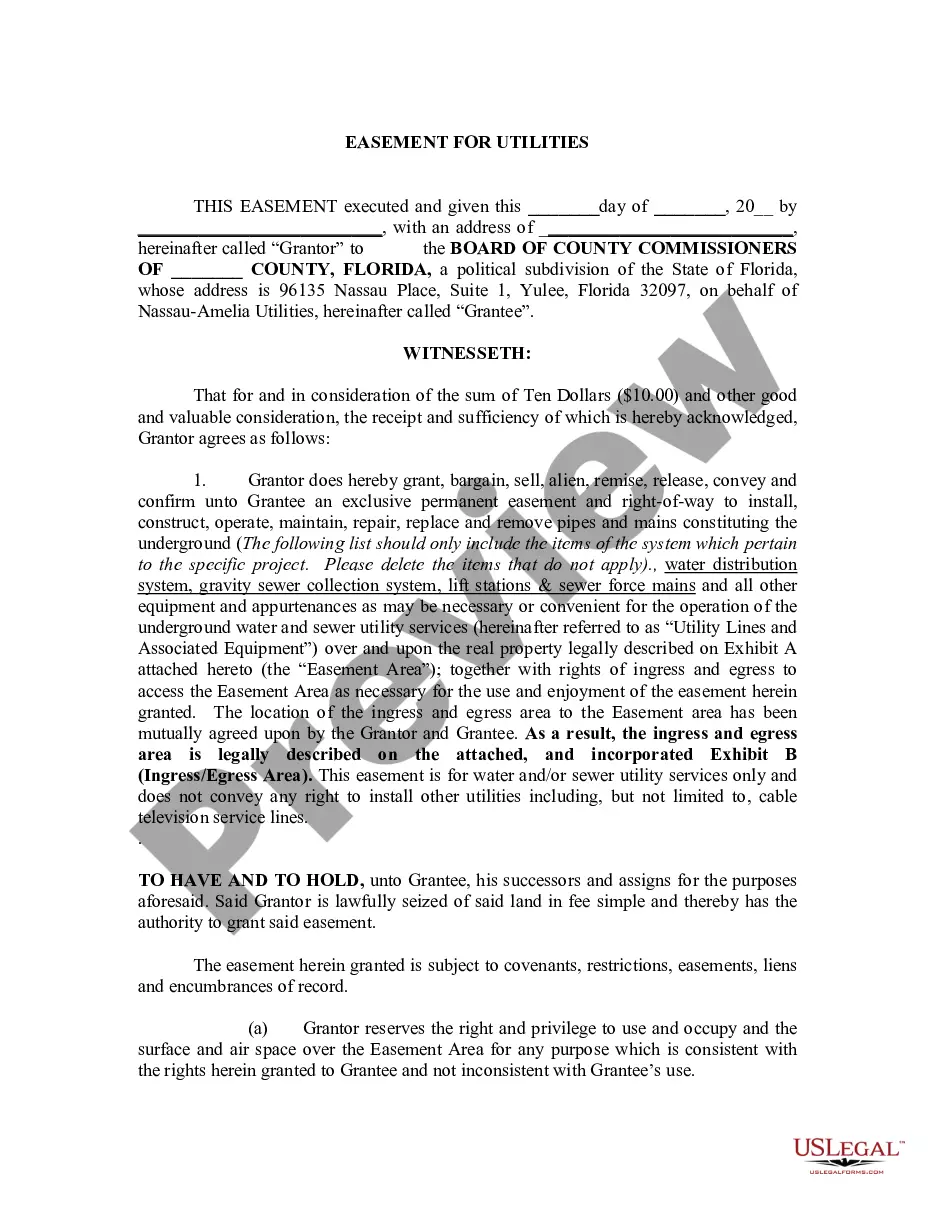
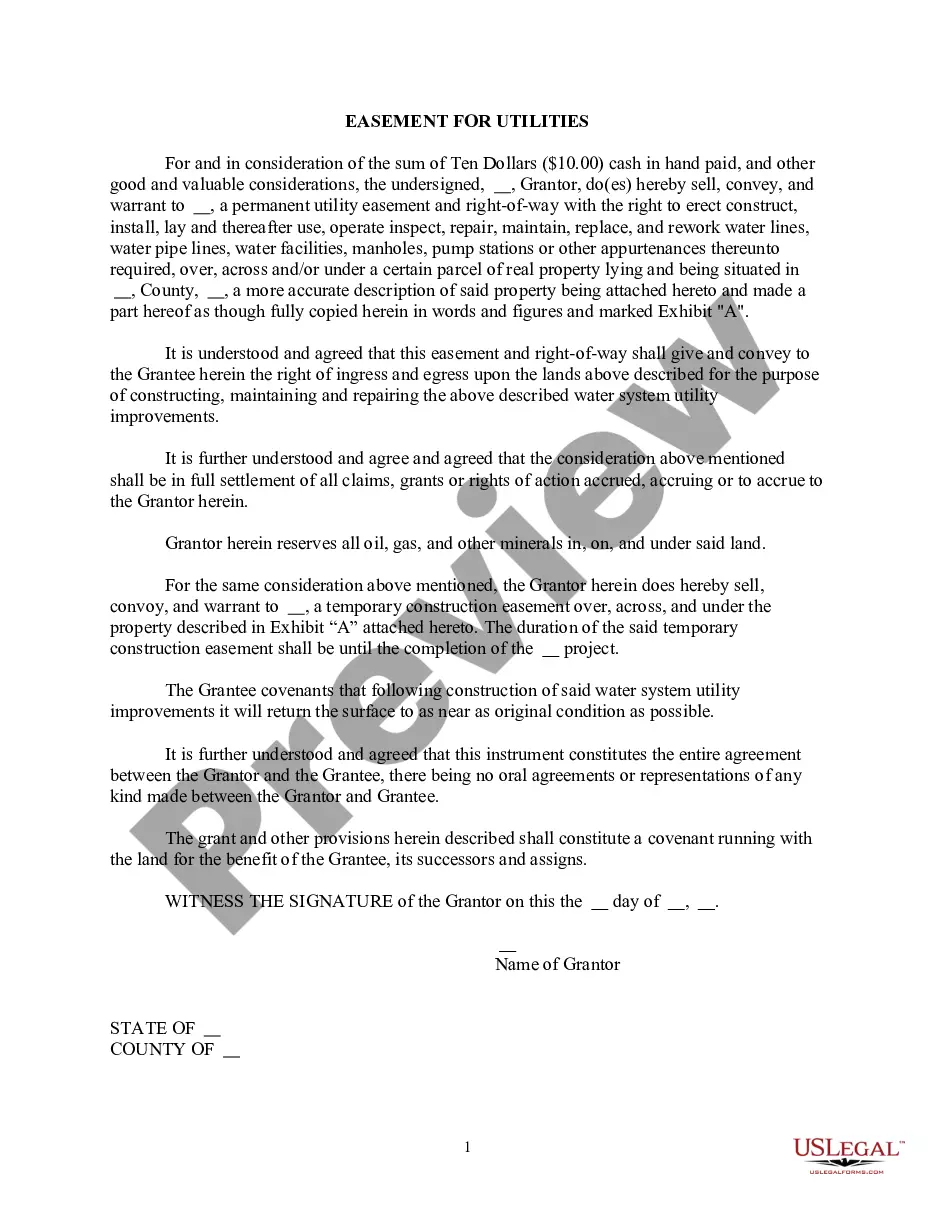
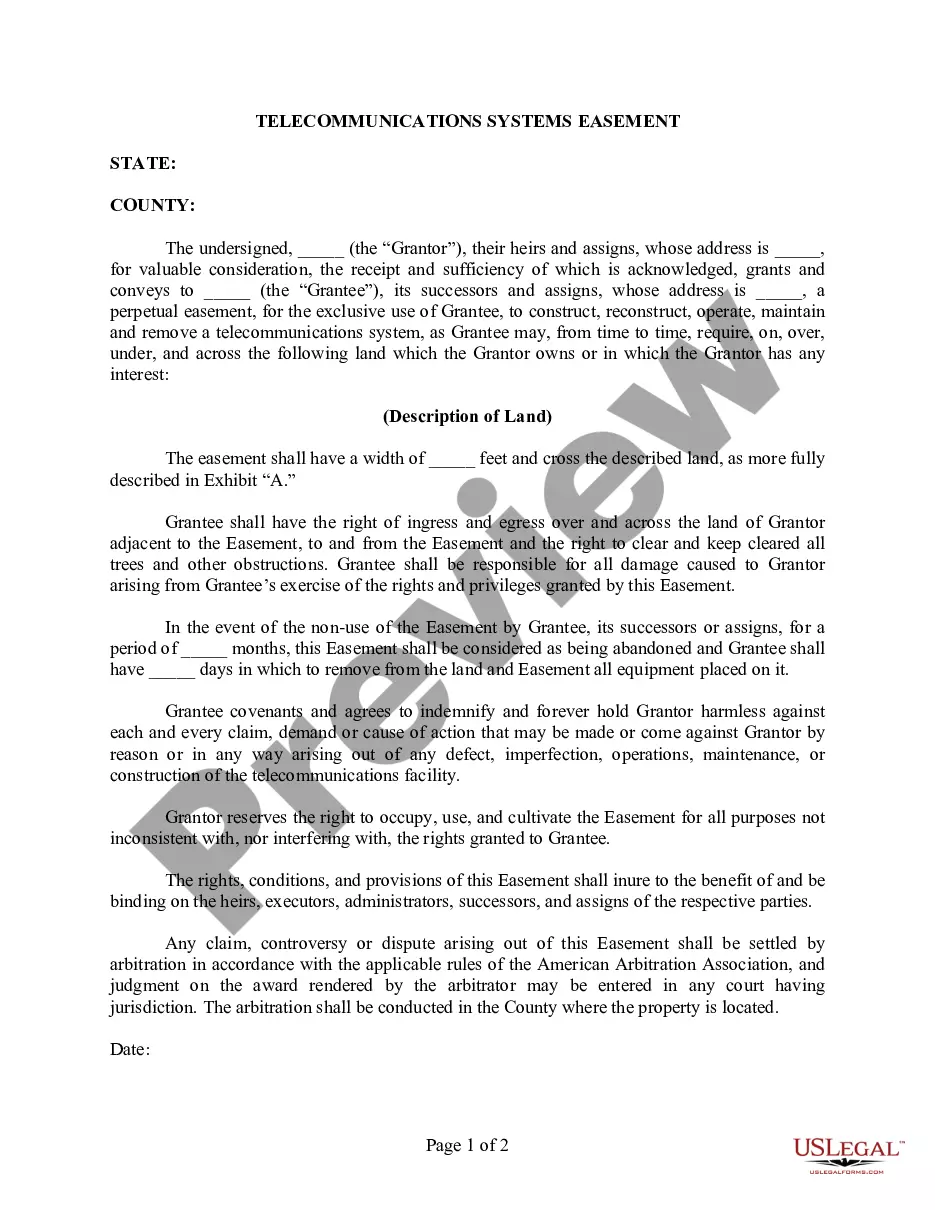
An Easement for Telephone Facilities is a legal document that allows a utility company to install and maintain telephone lines on another person's property. This form ensures that both the property owner (Grantor) and the utility company (Grantee) understand their rights and responsibilities related to the easement. Unlike other easements, this form specifically pertains to telephone infrastructure, granting access for installation and upkeep while protecting the property owner's interests.
Form components explained
- Identification of the parties involved: Grantor and Grantee.
- Description of the property where the easement applies.
- Details on the construction and maintenance of telephone facilities.
- Provisions regarding the restoration of the property after construction.
- Clauses addressing damages and liabilities for any harm caused during the easement's use.
- Notary requirements for legal validation.

When to use this form
This form is useful when a utility company needs to access private land to construct and maintain telephone lines. It should be used when both parties have agreed on the terms of access, including the rights to install necessary equipment and the responsibilities for any damages that may occur during the process.
Who needs this form
- Utility companies needing to establish communication infrastructure.
- Property owners allowing access for telephone or communication services.
- Legal professionals assisting clients in drafting or executing easements.
Completing this form step by step
- Identify the parties: Clearly state the names and addresses of the Grantor and Grantee.
- Specify the property: Provide an accurate description of the property subject to the easement.
- Detail construction rights: Outline the specific rights granted to the Grantee regarding installation and maintenance.
- Include restoration obligations: Note that the Grantee must restore the property to its original condition after construction.
- Include signatures and dates: Ensure all parties sign and date the document in the presence of a notary if required.
Is notarization required?
Yes, this form must be notarized to be legally valid. This verification helps ensure that both parties are entering into the agreement voluntarily and understand the terms outlined in the easement.
Get your form ready online
Our built-in tools help you complete, sign, share, and store your documents in one place.
Make edits, fill in missing information, and update formatting in US Legal Forms—just like you would in MS Word.
Download a copy, print it, send it by email, or mail it via USPS—whatever works best for your next step.
Sign and collect signatures with our SignNow integration. Send to multiple recipients, set reminders, and more. Go Premium to unlock E-Sign.
If this form requires notarization, complete it online through a secure video call—no need to meet a notary in person or wait for an appointment.
We protect your documents and personal data by following strict security and privacy standards.

Make edits, fill in missing information, and update formatting in US Legal Forms—just like you would in MS Word.

Download a copy, print it, send it by email, or mail it via USPS—whatever works best for your next step.

Sign and collect signatures with our SignNow integration. Send to multiple recipients, set reminders, and more. Go Premium to unlock E-Sign.

If this form requires notarization, complete it online through a secure video call—no need to meet a notary in person or wait for an appointment.

We protect your documents and personal data by following strict security and privacy standards.
Avoid these common issues
- Failing to clearly define the property boundaries involved in the easement.
- Omitting signatures or dates from the form, rendering it invalid.
- Not addressing potential damages or liabilities in sufficient detail.
- Assuming that verbal agreements supersede the formal written agreement.
Benefits of using this form online
- Convenience: Access and download the form from anywhere at any time.
- Editability: Customize the form to meet your or your client's specific needs before finalizing.
- Reliability: Use professionally drafted templates, ensuring legal accuracy and clarity.
What to keep in mind
- The Easement for Telephone Facilities allows utility access on private property while protecting property owner rights.
- It is essential to clearly define terms, responsibilities, and obligations in the agreement.
- Proper completion and notarization of the document are crucial for legal enforceability.
Looking for another form?

Form popularity
FAQ
Absent an express agreement to the contrary, the owner of the dominant estate has a duty to maintain the easement, and the owner of the servient estate has no right to interfere with the dominant estate. Roberts v. Freindswood Dev. Co., 886 S.W.
The easiest way to gain access to a landlocked property is to obtain an express easement from the neighboring landowner. This easement should be in writing, signed by the grantor, specifically identify the property and details of the allowed easement use, and filed in the county deed records.
An easement provides the right to use an owner's property for a particular purpose. A WCID110 utility easement allows WCID110 the right to use an owner's property for specific purposes such as to construct, repair, maintain, operate, and manage utility facilities.
Express Grant by Instrument. An express grant by written instrument is the most common source of an easement. Implied. The owner of a large tract of land splits up the land with one or more parcels that do not abut a public highway or road. Necessity. Dedication.
A property easement is generally written and recorded with the local assessor's office. The documented easement will show up when a title search is conducted and it stays there indefinitely, unless both parties agree to remove it.
Utility easements are one of the most common types of easements for private property, which generally allow public utility companies access to the property for the purpose of installing, repairing and maintaining utility lines.
When the said equipment, devices and other property is/are installed as designated by Cooperative, the Easement herein granted shall be a thirty (30) foot wide easement located fifteen (15) feet on both sides of the center conductor of the electric distribution line as built by Cooperative with an additional fifteen (
Ask him to grant you a formal easement by deed. Your neighbor the servient, or burdened landowner can give the easement of his own accord, but he is not obligated to do this. The chances are, you will have to negotiate a price; an easement is, after all, an interest in land, which has a value attached to it.
Rights of way (similar to the driveway example, but also including walkways or pathways); Public utilities, such as gas, electricity or water and sewer mains; Parking areas; Access to light and air; and. Shared walls.