Texas Eastern District Bankruptcy Guide and Forms Package for Chapters 7 or 13
Understanding this form
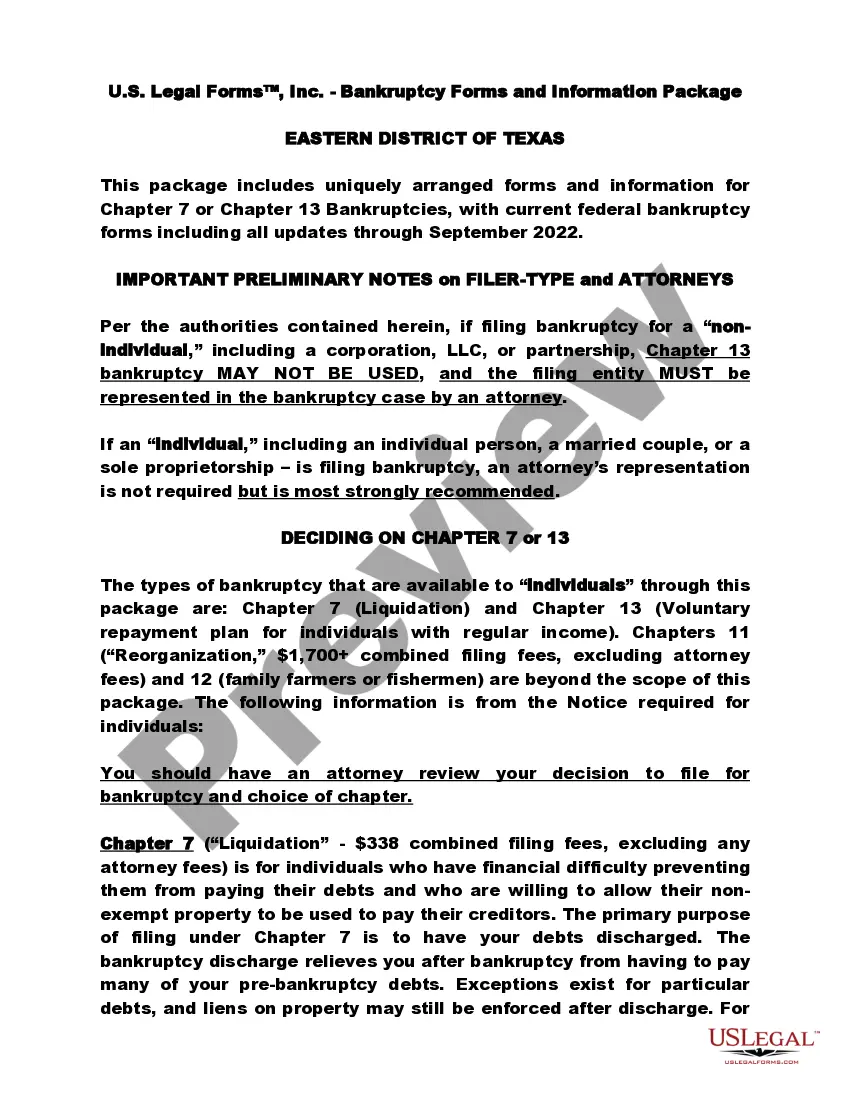
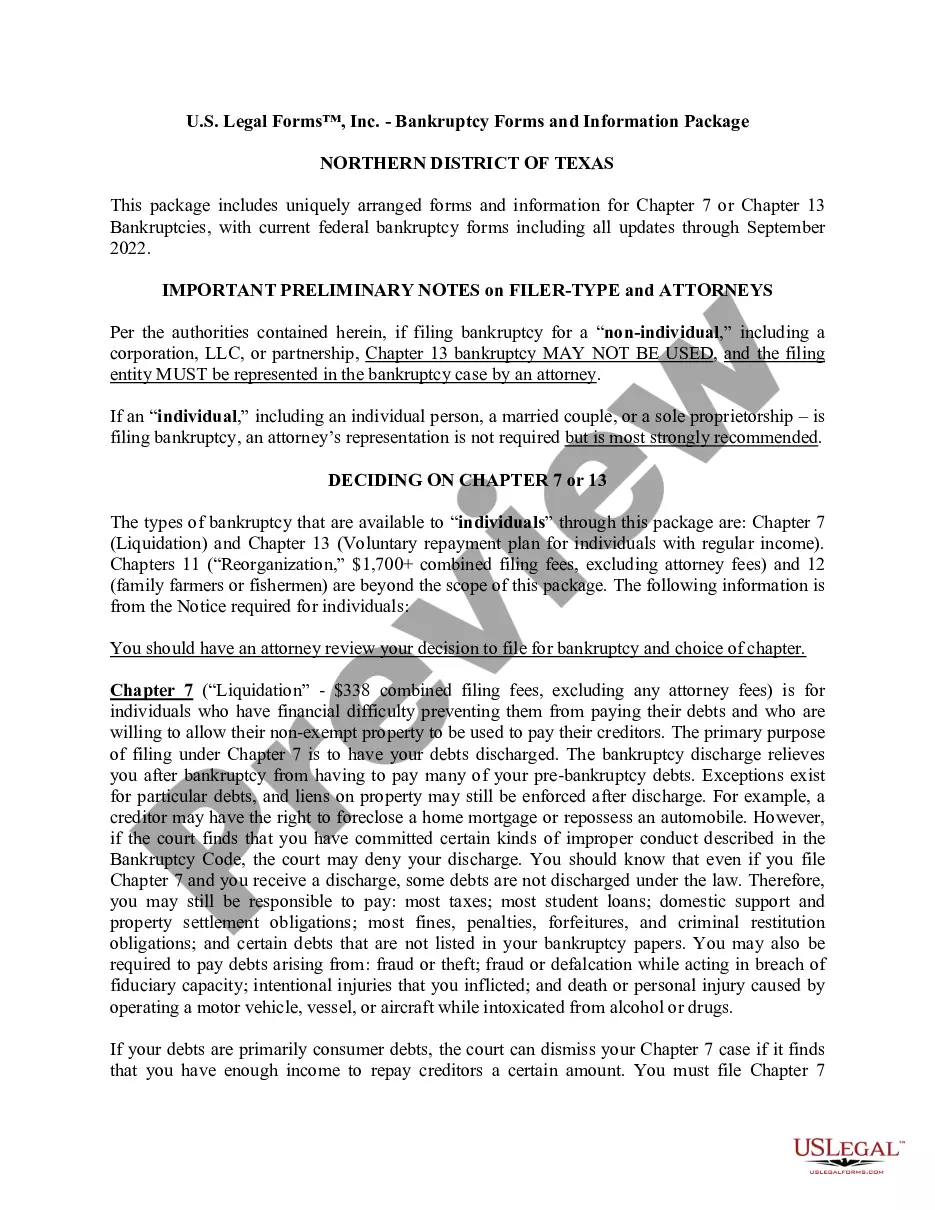
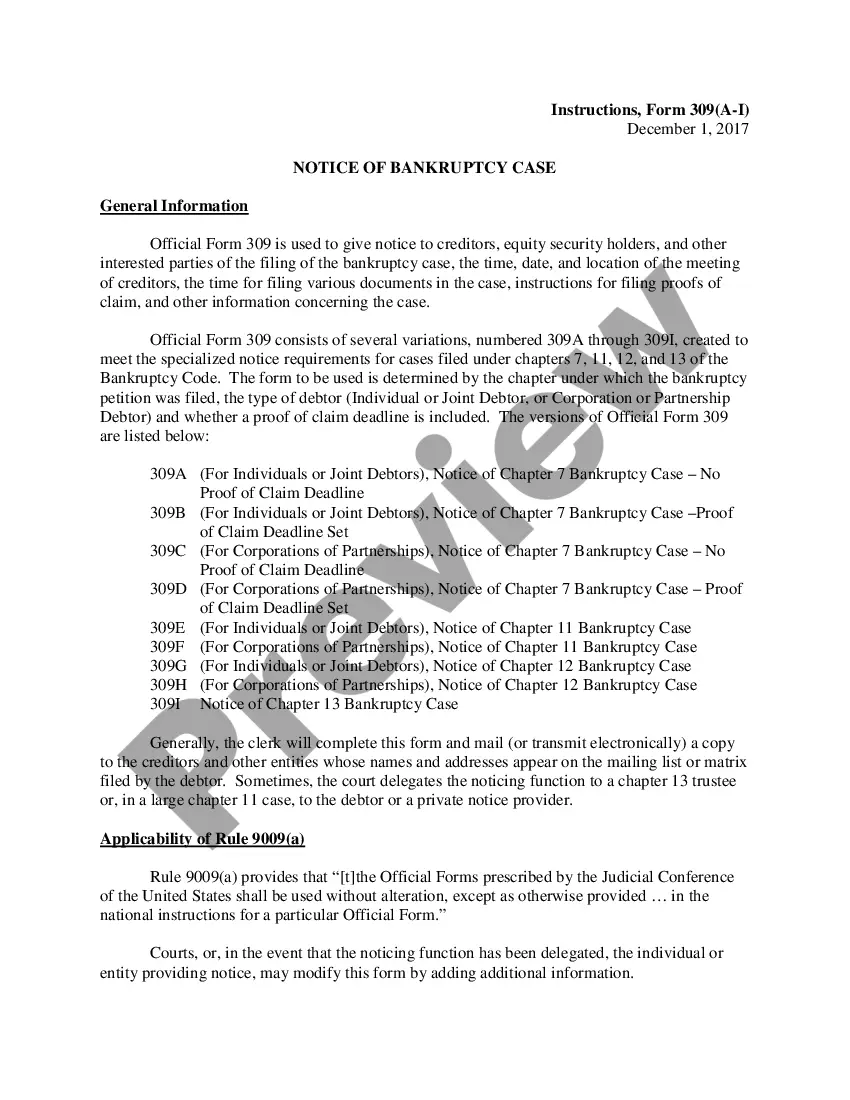
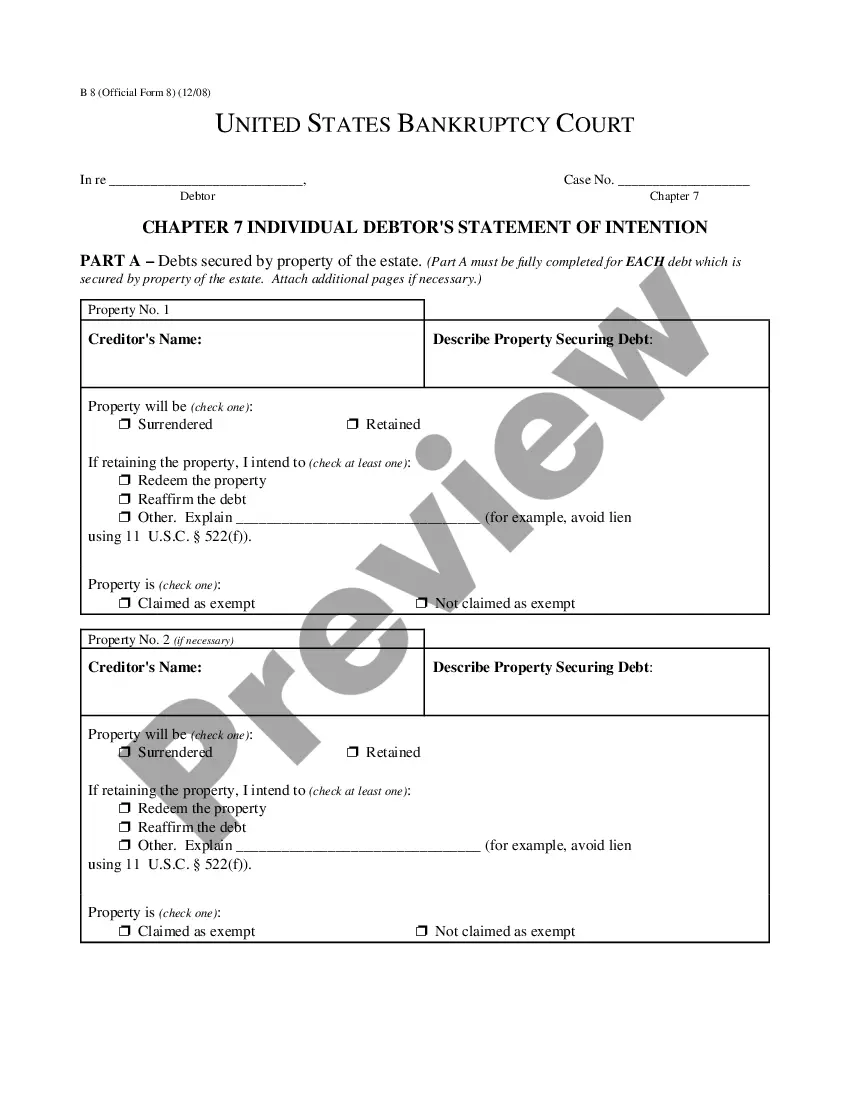
The Texas Eastern District Bankruptcy Guide and Forms Package for Chapters 7 or 13 provides a comprehensive set of forms and instructions specifically designed for individuals seeking bankruptcy relief. This package includes everything needed for filing under either Chapter 7, which focuses on liquidation of assets, or Chapter 13, which allows individuals with regular income to create a repayment plan. Unlike other bankruptcy forms, this package is tailored to meet the procedural requirements in the Texas Eastern District, ensuring that users have the necessary tools to navigate the bankruptcy process effectively.
Key parts of this document
- Important preliminary notes on filing type distinctions
- Instructions for deciding between Chapter 7 and Chapter 13 bankruptcy
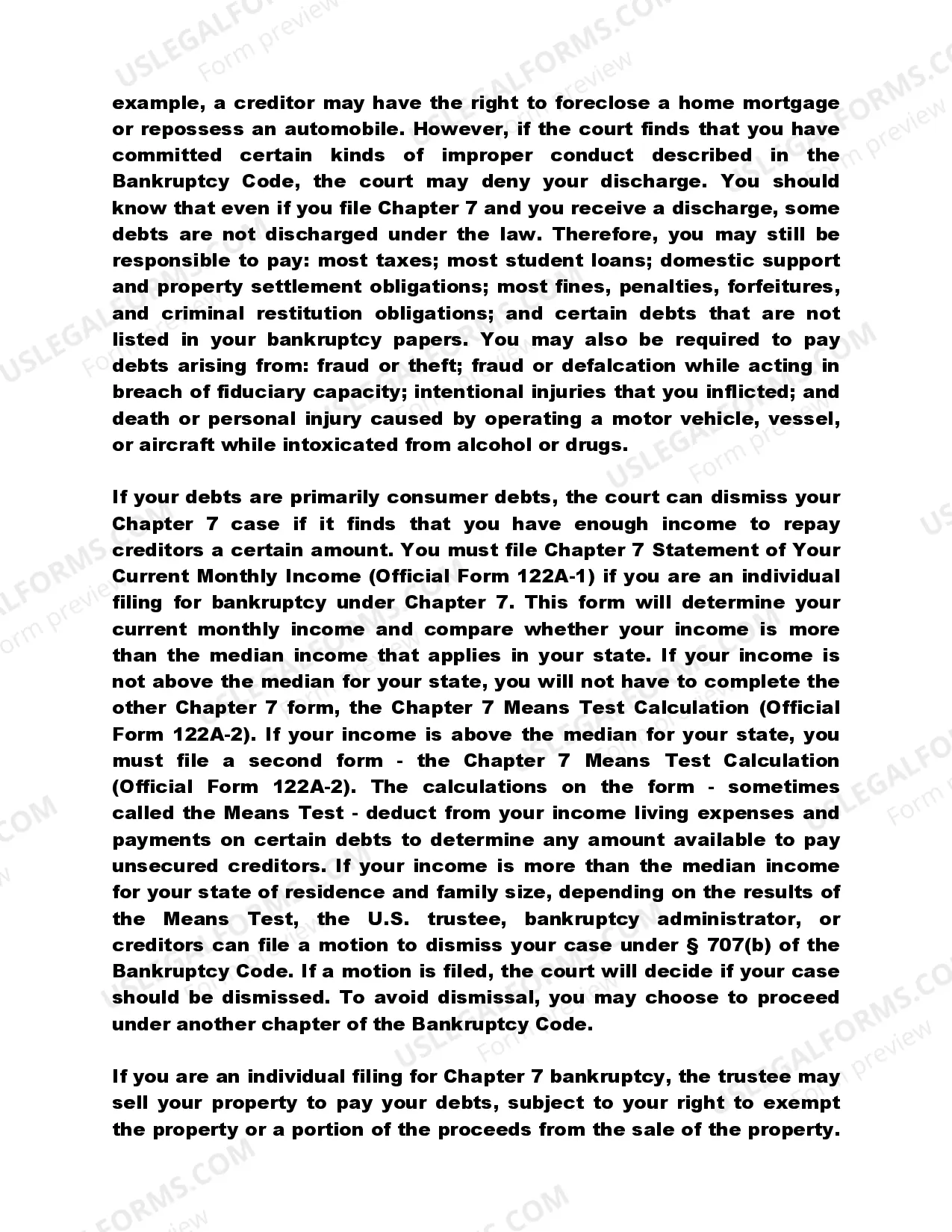
- Details on completing the Chapter 7 Statement of Your Current Monthly Income
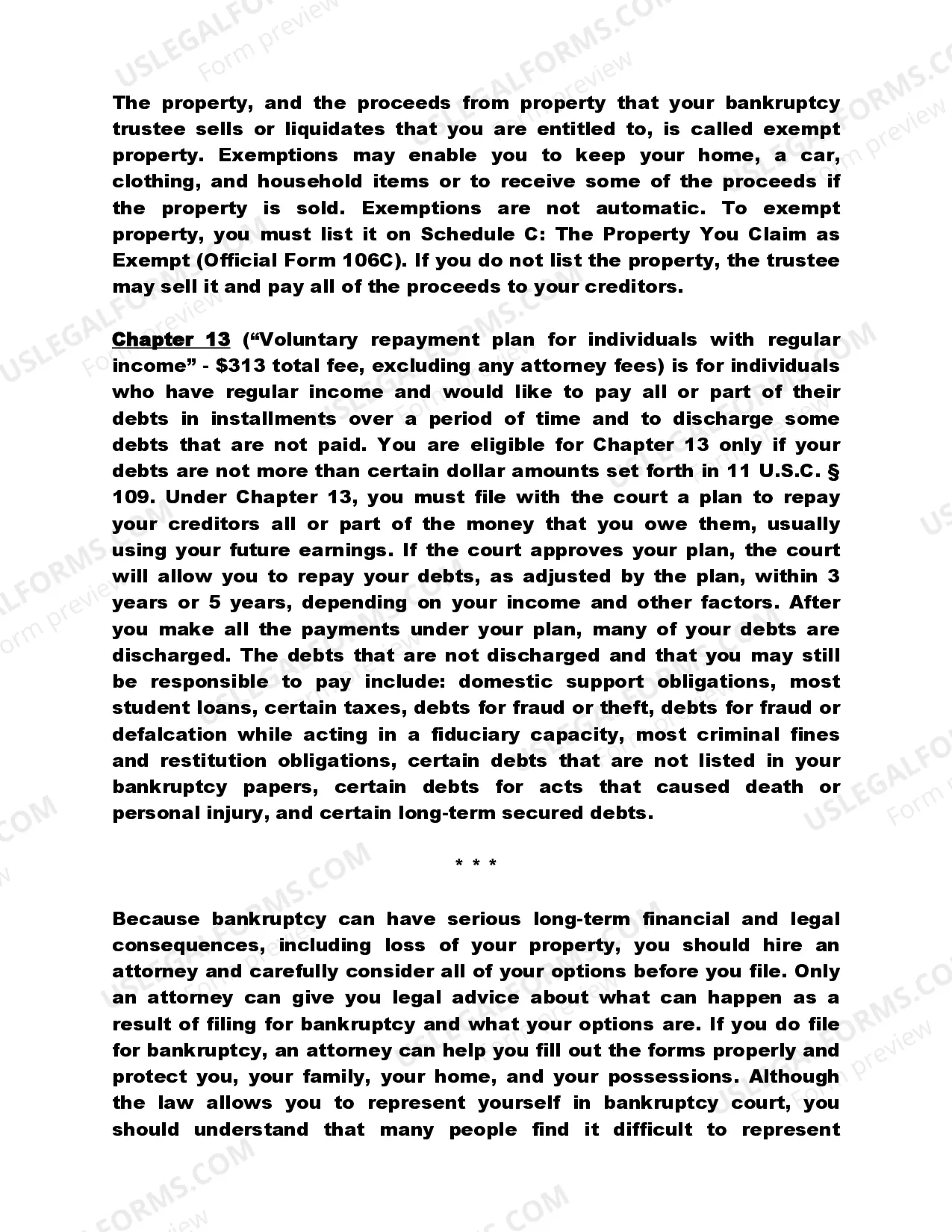
- Exemption guidelines for Chapter 7 bankruptcy
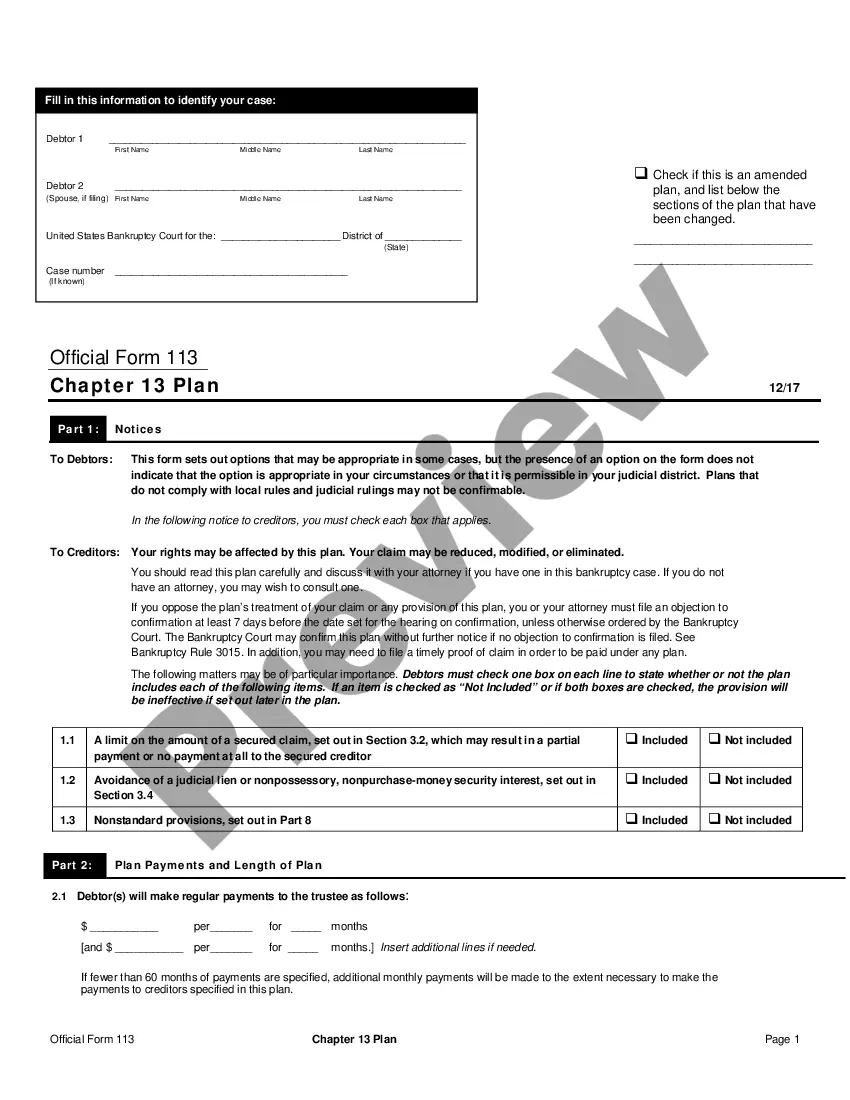
- Chapter 13 repayment plan requirements and eligibility criteria
- Access instructions for downloading the forms
Common use cases
This form package is necessary when you are considering filing for bankruptcy in the Texas Eastern District. Use it if you are an individual facing financial difficulties and are considering either discharging your debts through Chapter 7 or restructuring your debt payment plan through Chapter 13. It provides essential resources and forms to guide you through the filing process, making it easier to understand your options.
Who should use this form
- Individuals facing overwhelming debt and considering bankruptcy.
- Married couples seeking joint bankruptcy relief.
- Sole proprietors who may benefit from personal bankruptcy options.
- Those with regular income willing to create a repayment plan for their debts.
Instructions for completing this form
- Determine whether you are filing as an individual or a business entity.
- Choose between Chapter 7 and Chapter 13 based on your financial situation.
- Collect necessary financial details to complete the Statement of Your Current Monthly Income.
- Identify and list any exempt property on Schedule C to protect assets.
- Draft a repayment plan if filing under Chapter 13 and submit it to the court.
Does this document require notarization?
Notarization is generally not required for this form. However, certain states or situations might demand it. You can complete notarization online through US Legal Forms, powered by Notarize, using a verified video call available anytime.
Get your form ready online
Our built-in tools help you complete, sign, share, and store your documents in one place.
Make edits, fill in missing information, and update formatting in US Legal Forms—just like you would in MS Word.
Download a copy, print it, send it by email, or mail it via USPS—whatever works best for your next step.
Sign and collect signatures with our SignNow integration. Send to multiple recipients, set reminders, and more. Go Premium to unlock E-Sign.
If this form requires notarization, complete it online through a secure video call—no need to meet a notary in person or wait for an appointment.
We protect your documents and personal data by following strict security and privacy standards.

Make edits, fill in missing information, and update formatting in US Legal Forms—just like you would in MS Word.

Download a copy, print it, send it by email, or mail it via USPS—whatever works best for your next step.

Sign and collect signatures with our SignNow integration. Send to multiple recipients, set reminders, and more. Go Premium to unlock E-Sign.

If this form requires notarization, complete it online through a secure video call—no need to meet a notary in person or wait for an appointment.

We protect your documents and personal data by following strict security and privacy standards.
Common mistakes to avoid
- Failing to accurately report income or assets, leading to potential dismissal.
- Not completing all necessary forms or uploading documents as required.
- Overlooking state-specific rules which can significantly impact the outcome.
- Missing deadlines for filing or submitting the repayment plan.
Why use this form online
- Immediate access to downloadable forms and instructions, saving time.
- Conveniently fill out forms at your own pace from any location.
- Digital format allows for easy edits, ensuring accuracy before submission.
- Comprehensive resources provided all in one package, simplifying the process.
Looking for another form?
Form popularity
FAQ
Make sure Chapter 13 is the right choice. Analyze your debt. Value your property. Gauge your income. Fill out the bankruptcy forms. Take the required pre-filing course. File your forms and pay a fee. Provide the trustee with documents proving your income and other assets.
Make sure Chapter 13 is the right choice. Analyze your debt. Value your property. Gauge your income. Fill out the bankruptcy forms. Take the required pre-filing course. File your forms and pay a fee. Provide the trustee with documents proving your income and other assets.
Most Chapter 7 cases take from four to six months to complete. It might take longer if any number of things happen, such as: you need to provide more information or documents. the bankruptcy trustee must sell property, or.
You can't have more than $1,257,850 in secured debt or $419,275 in unsecured debt if you want to file for Chapter 13 bankruptcy (these amounts are adjusted every three years and are valid through April 2021).
If your annual income, as calculated on line 12b, is less than $84,952, you may qualify to file Chapter 7 bankruptcy. If it's greater than $84,952, you'll have to continue to Form 122A-2, which we'll review in the next section. It should be noted that every state has different median income calculations.
To qualify for Chapter 13 bankruptcy: You must have regular income. Your unsecured debt cannot exceed $394,725, and your secured debt cannot exceed $1,184,200. You must be current on tax filings.
The filing fees in a Chapter 13 case are $310. This figure is accurate as of December 1, 2016. To stay on top of the latest fees, visit the web sites for the bankruptcy courts in Texas. United States Bankruptcy Court for the Eastern District of Texas, Fee Schedule.
If you would like to file a Chapter 7 bankruptcy you must pass the Texas means test. The test only applies to higher income filers which means that if your income is below the Texas median for your household size you are exempt from the test and may file a Chapter 7.