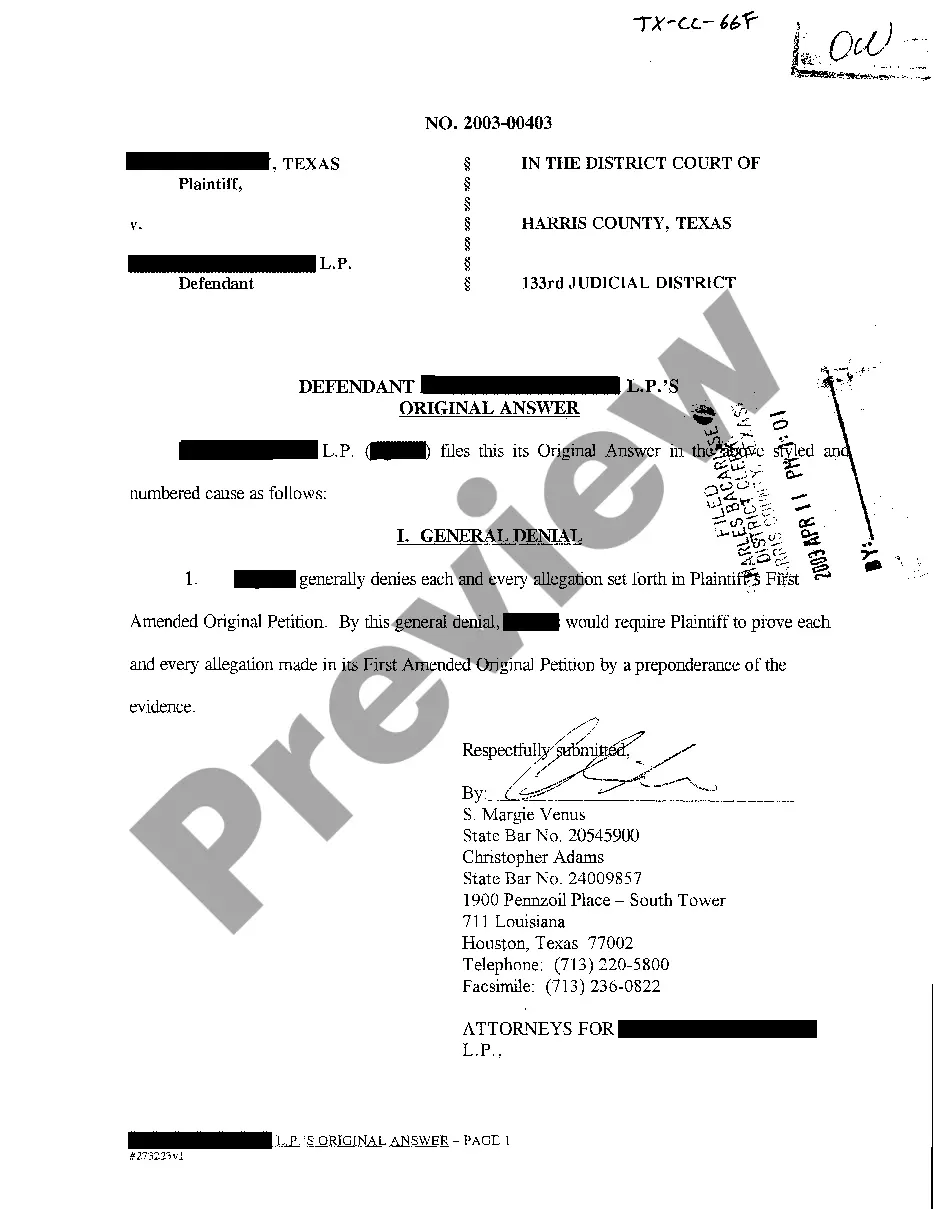
Texas Unimproved Property Contract
What this document covers
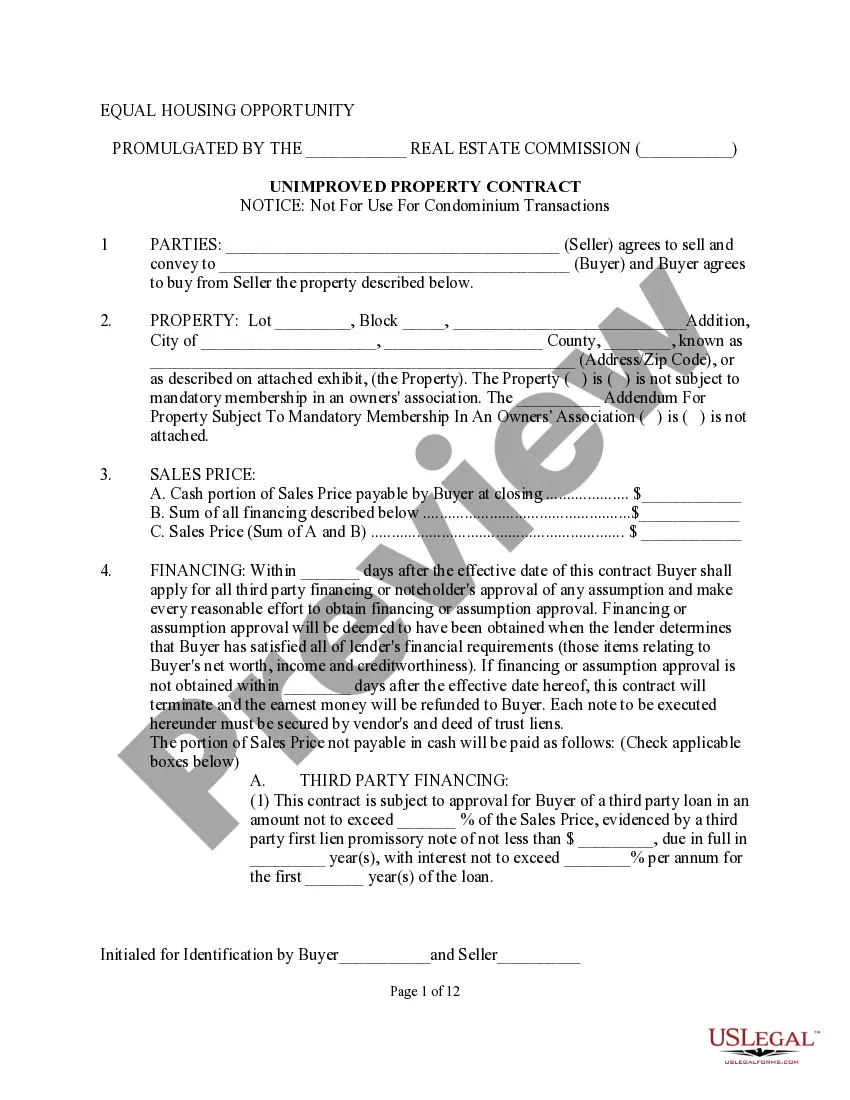
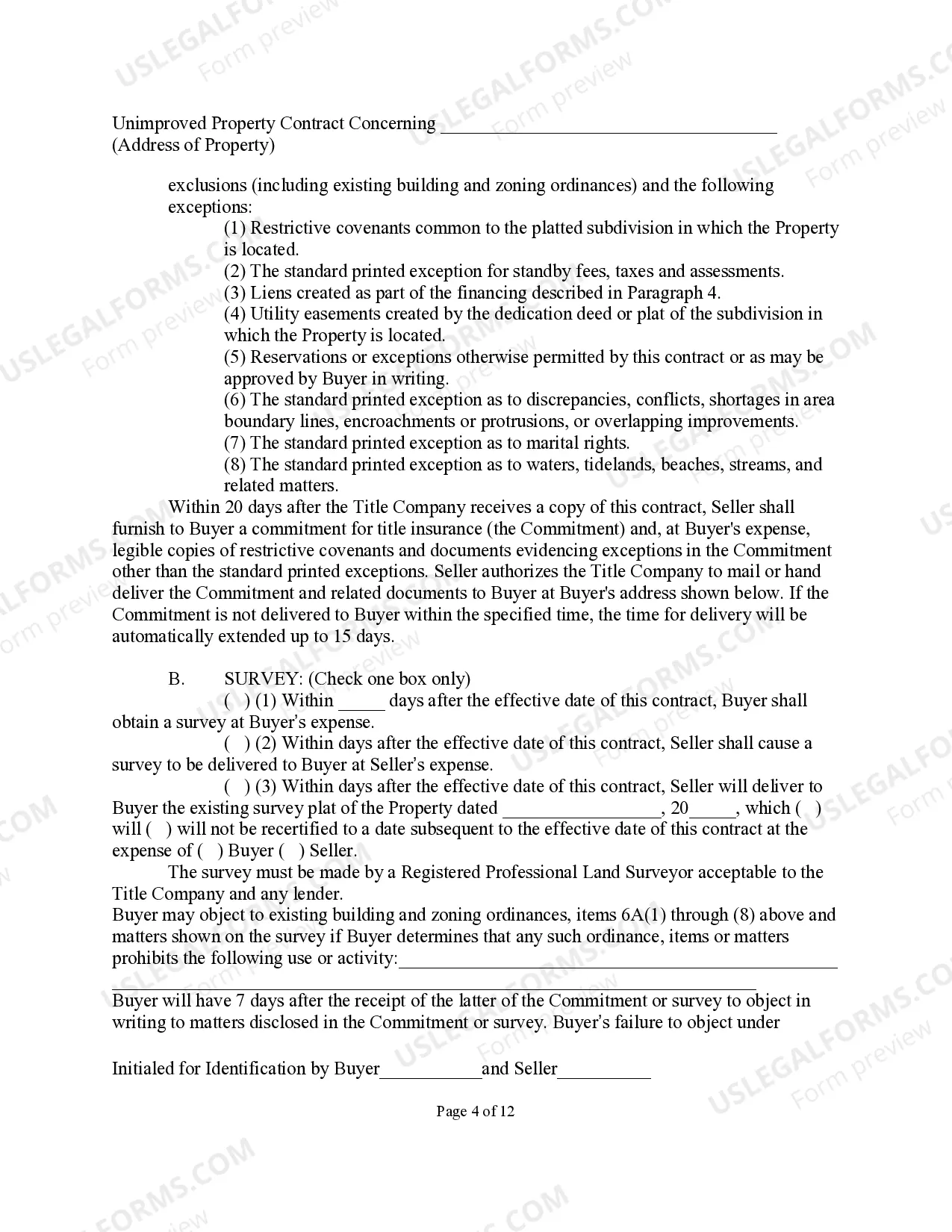
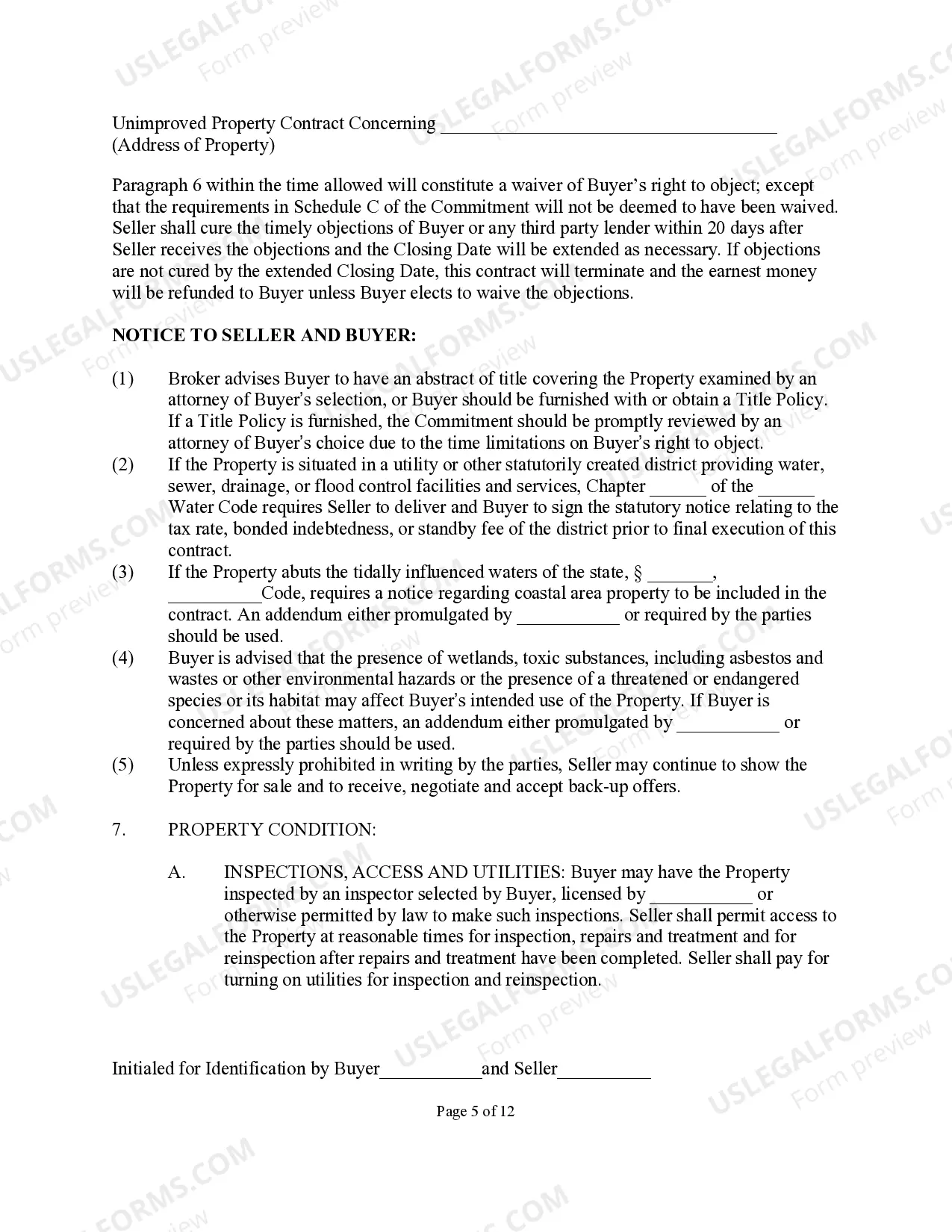
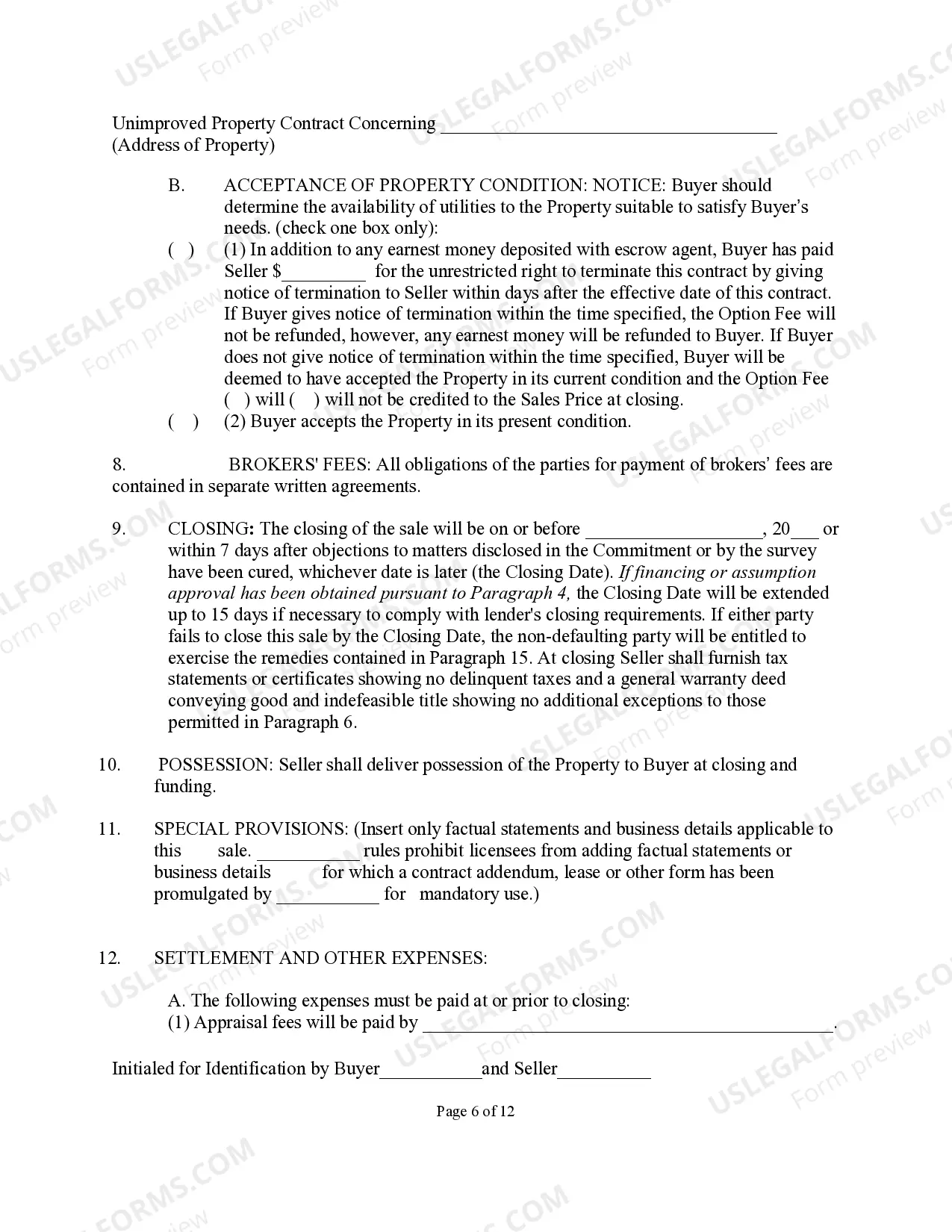
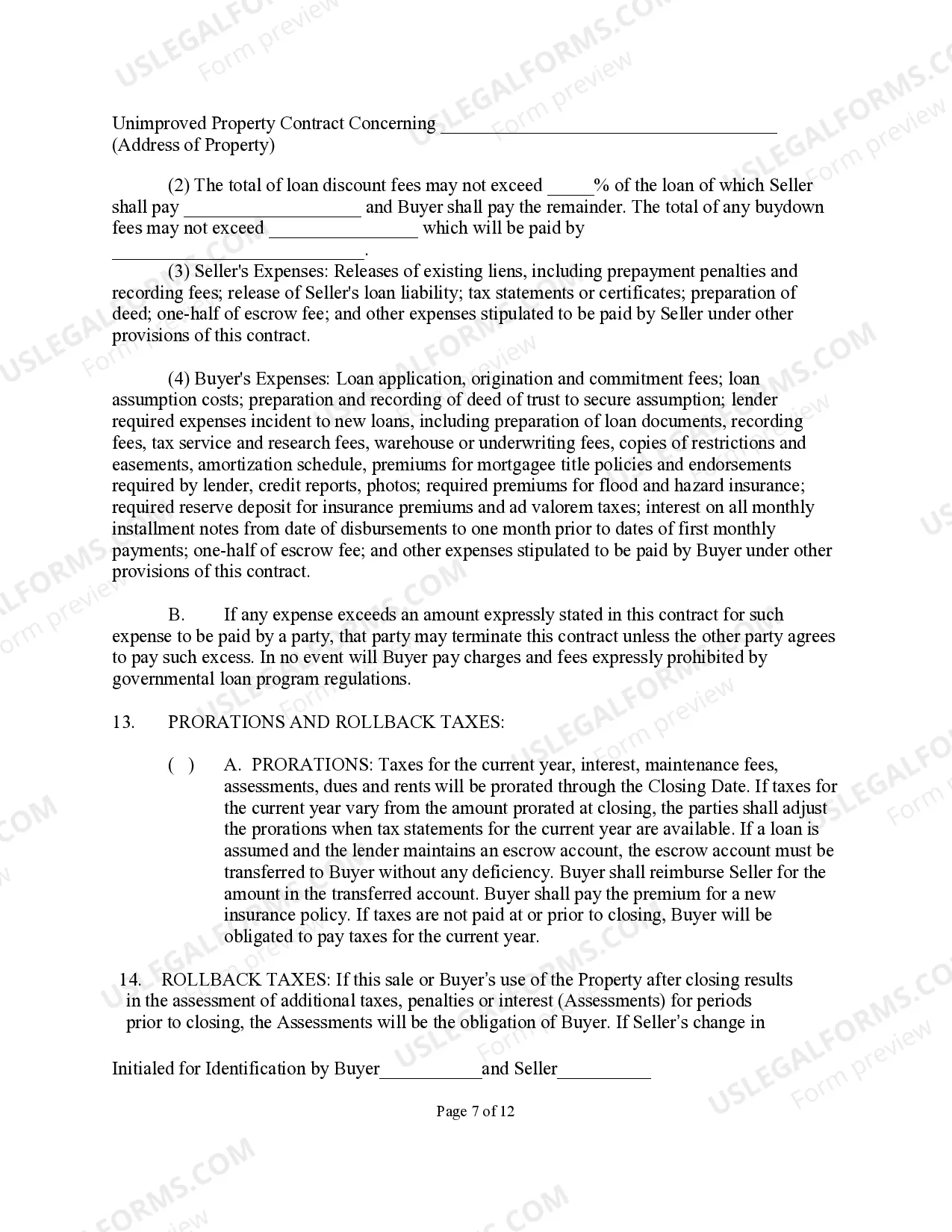
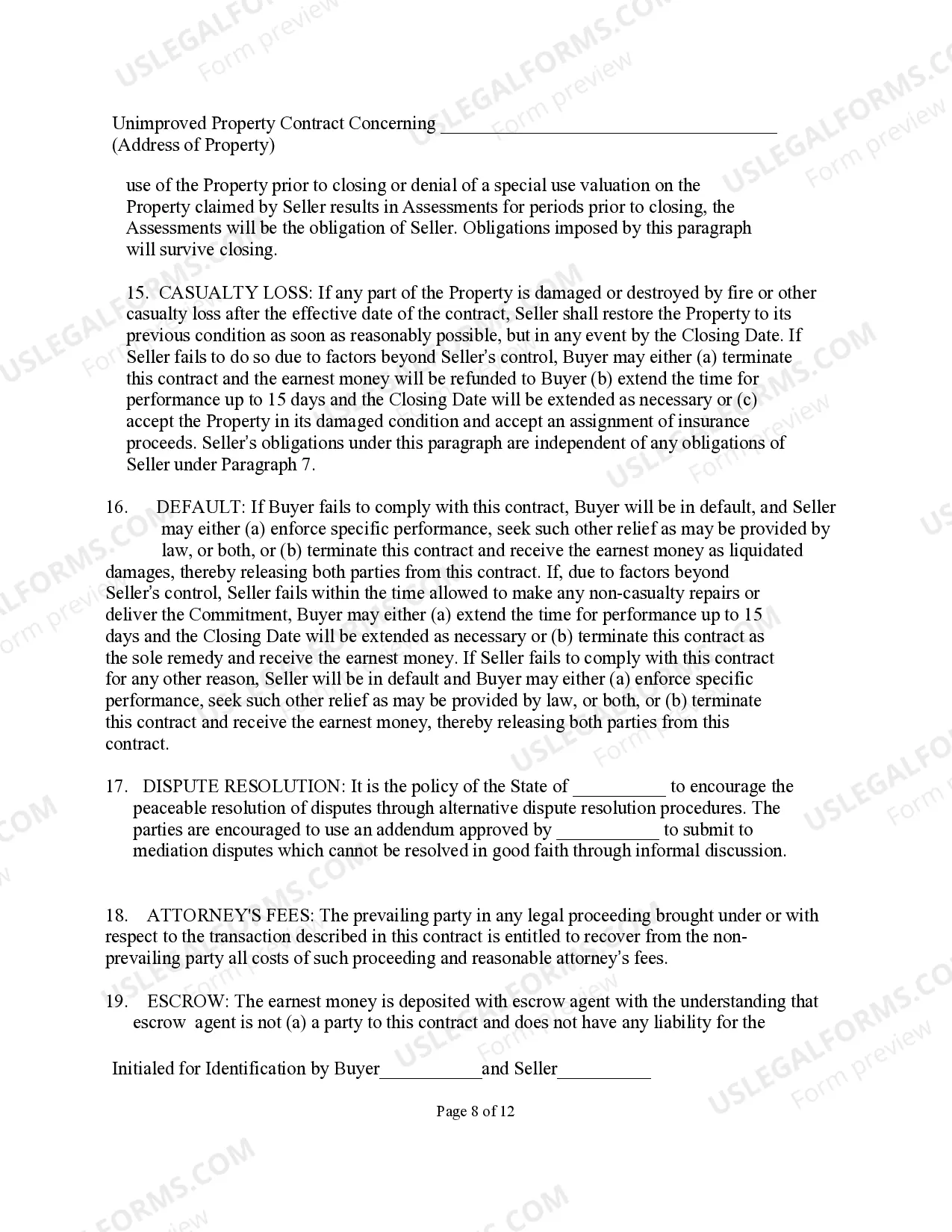
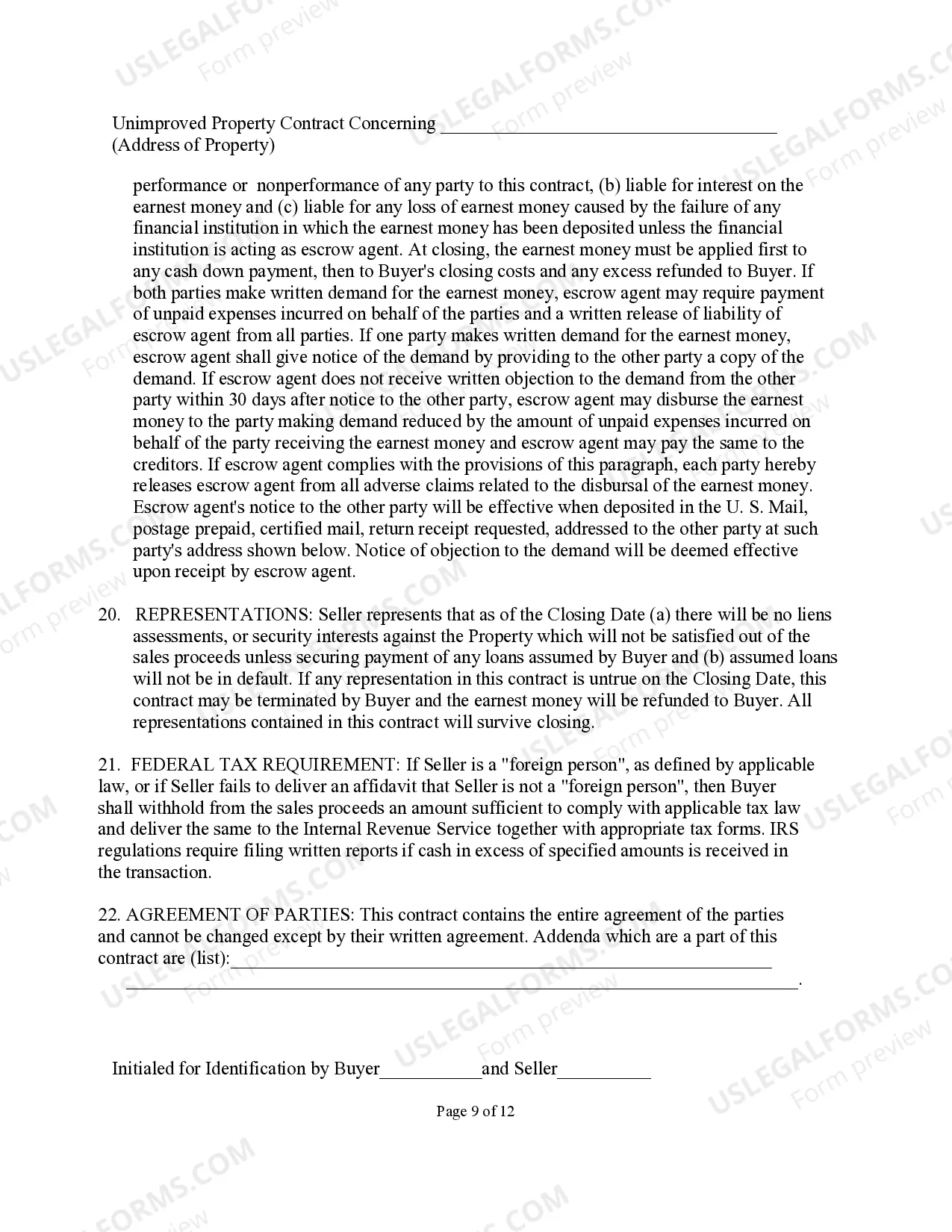
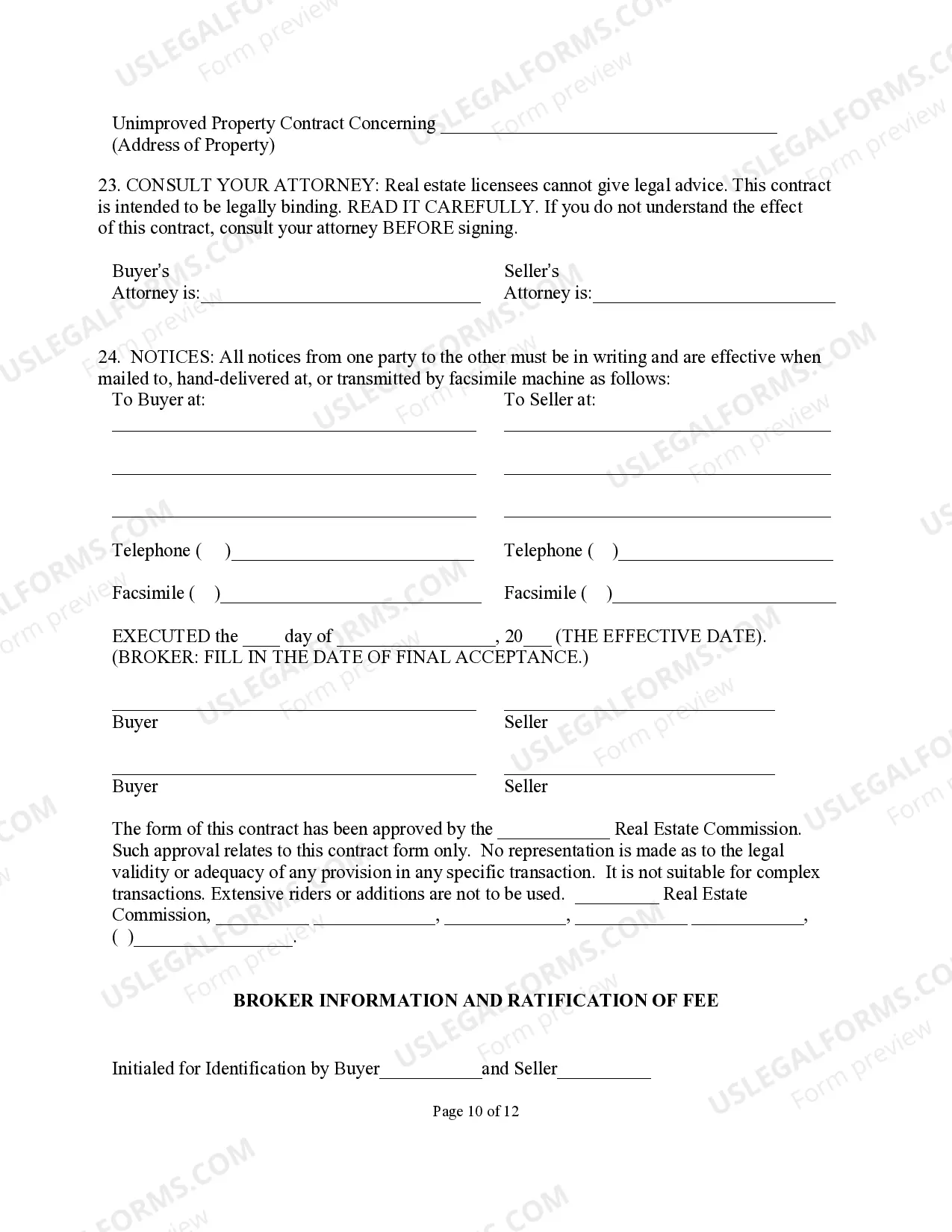
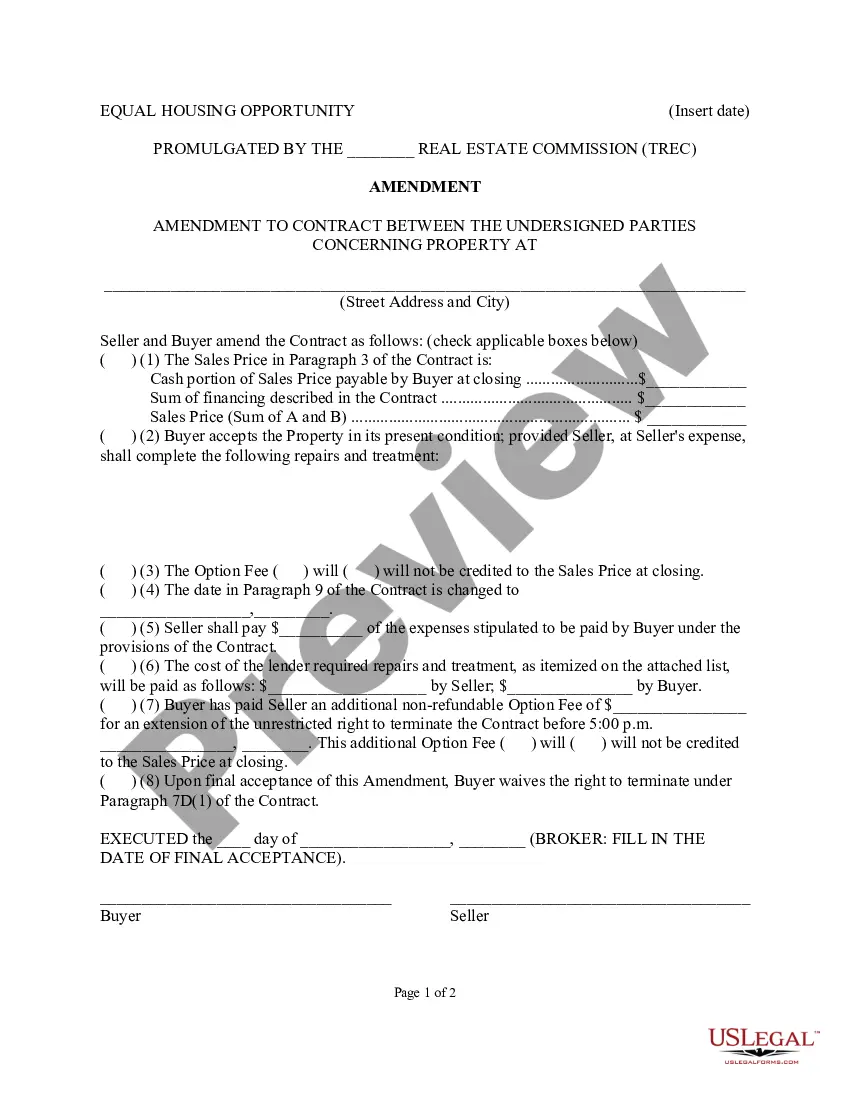
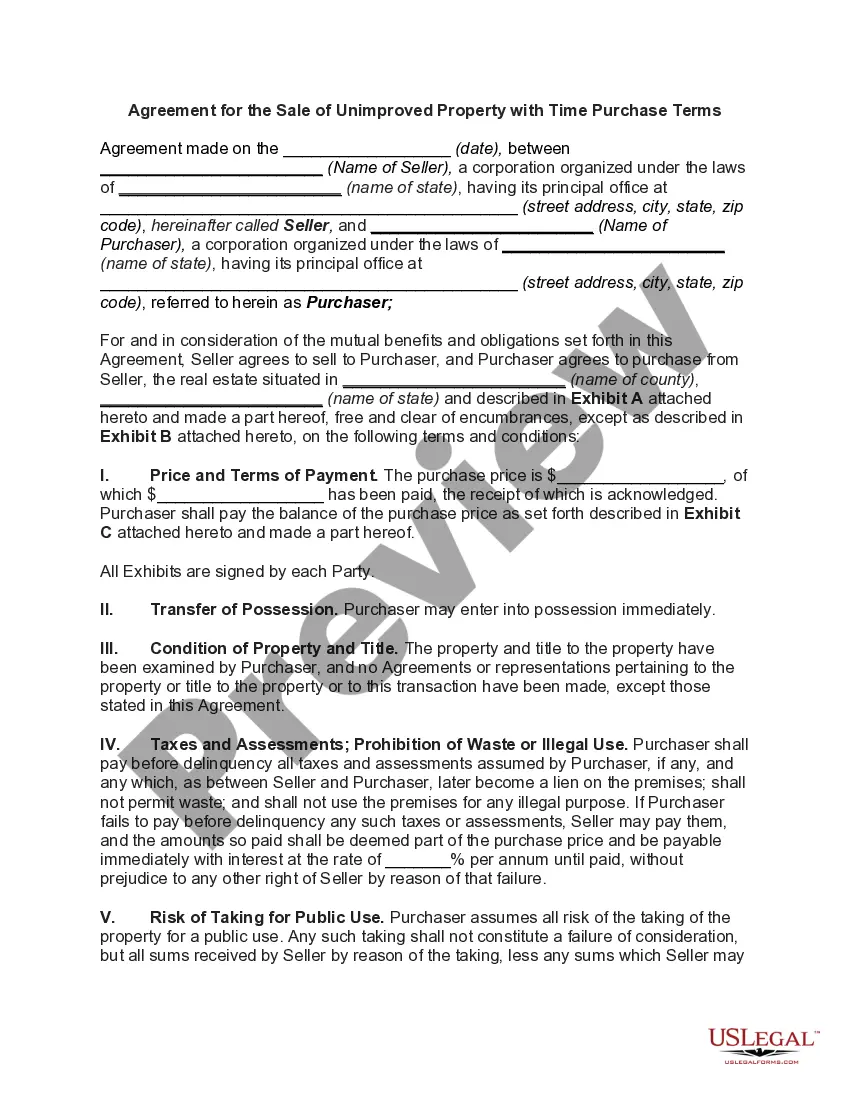
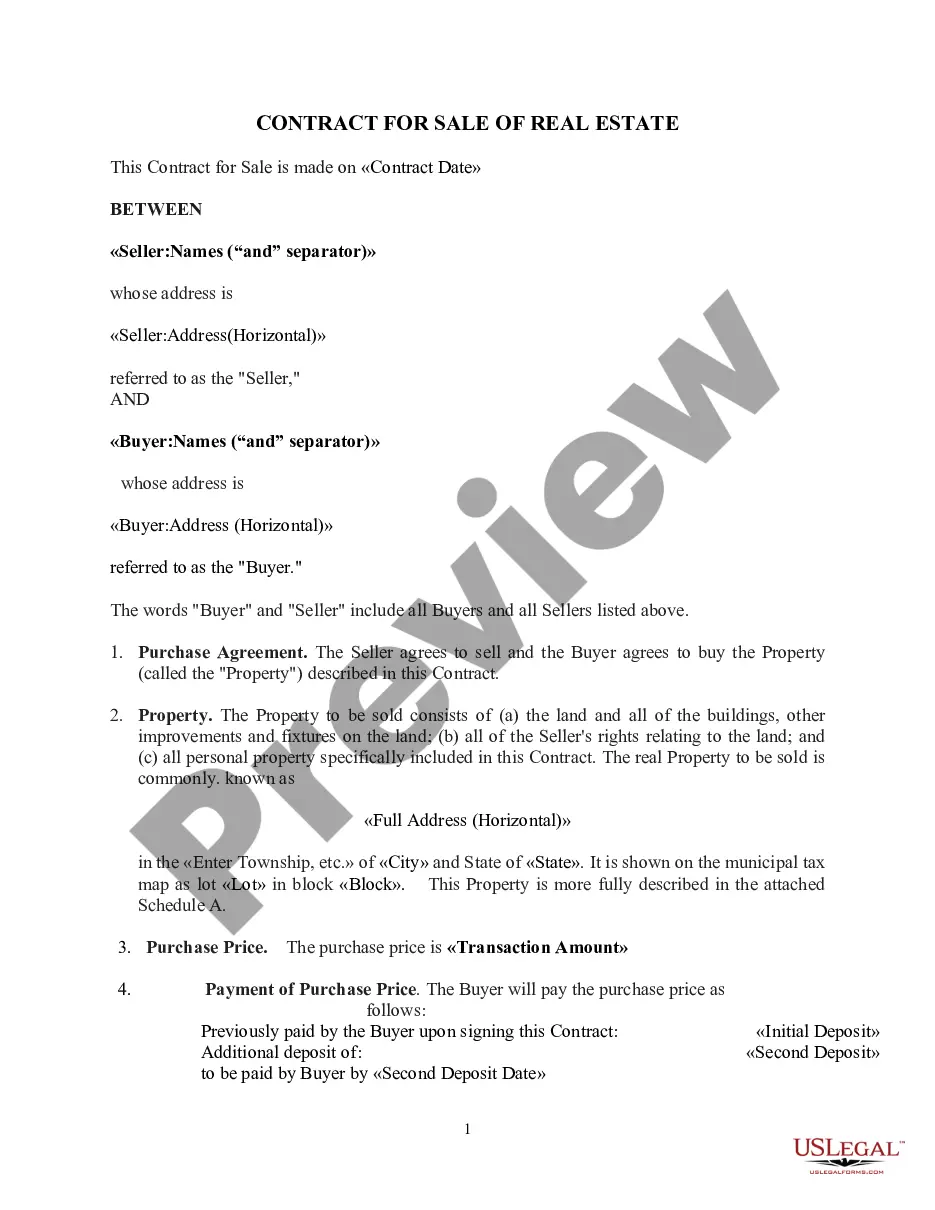
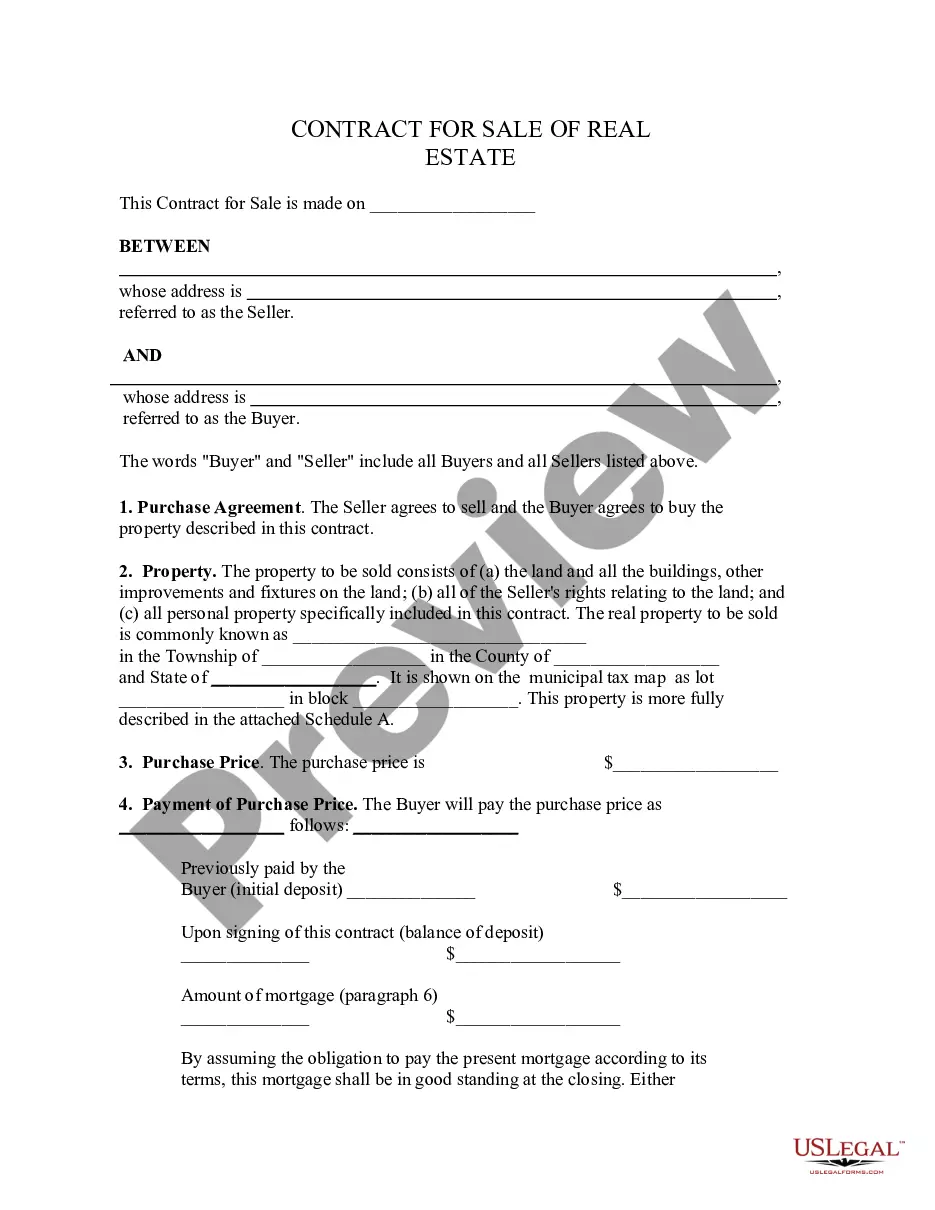
The Unimproved Property Contract is a legal document used in real estate transactions where the seller agrees to sell a piece of unimproved property to the buyer, who agrees to purchase it. This contract outlines key terms such as sales price, financing options, and earnest money deposits. Unlike other real estate contracts that may cover improved properties or include more complex terms, this form is specifically tailored for transactions involving land without structures. It is crucial to understand its provisions and seek legal advice for any unclear terms.
Key components of this form
- Parties involved: Identifies the seller and buyer.
- Property description: Provides details about the unimproved property.
- Sales price: Specifies the total cost and payment structure.
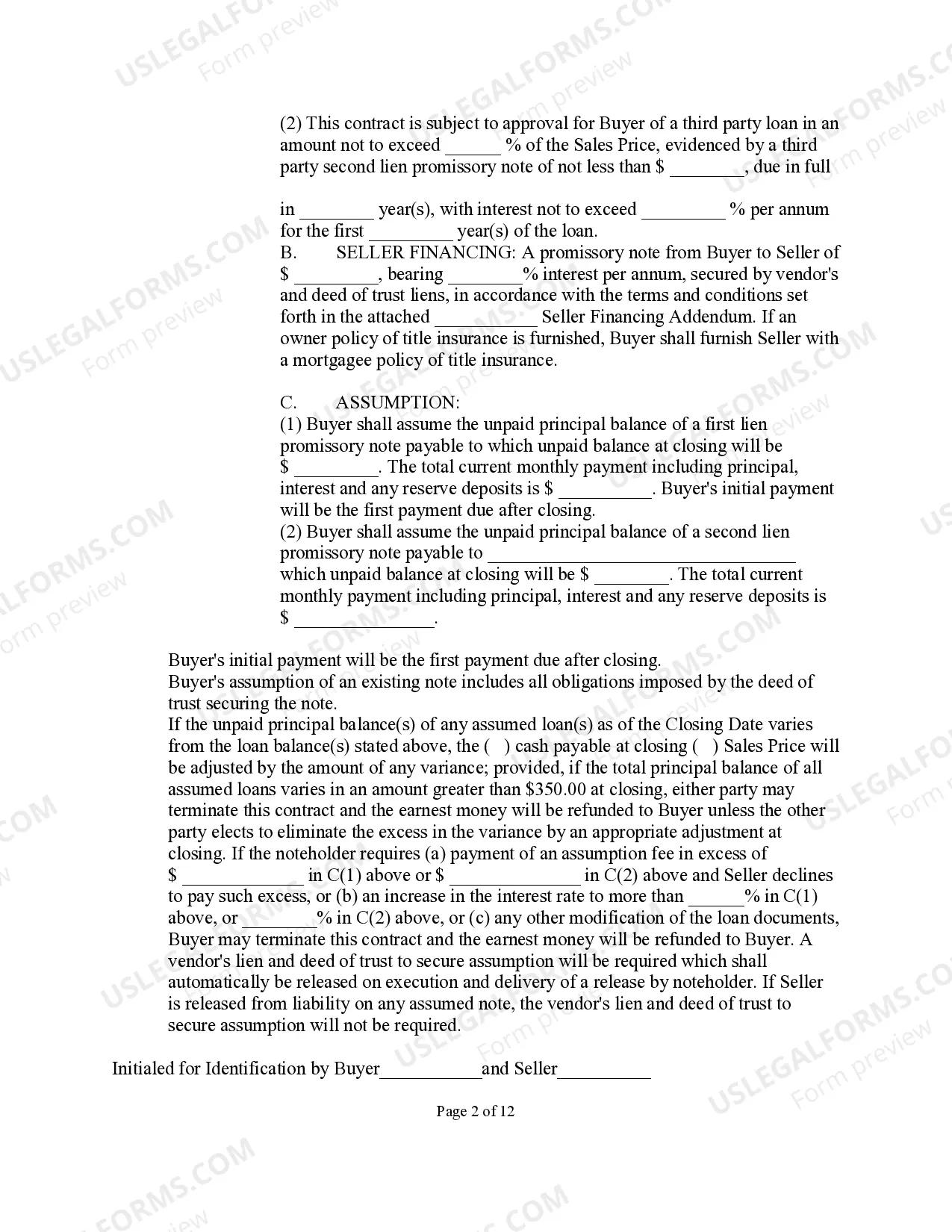
- Financing terms: Outlines the financing options available and requirements for obtaining them.
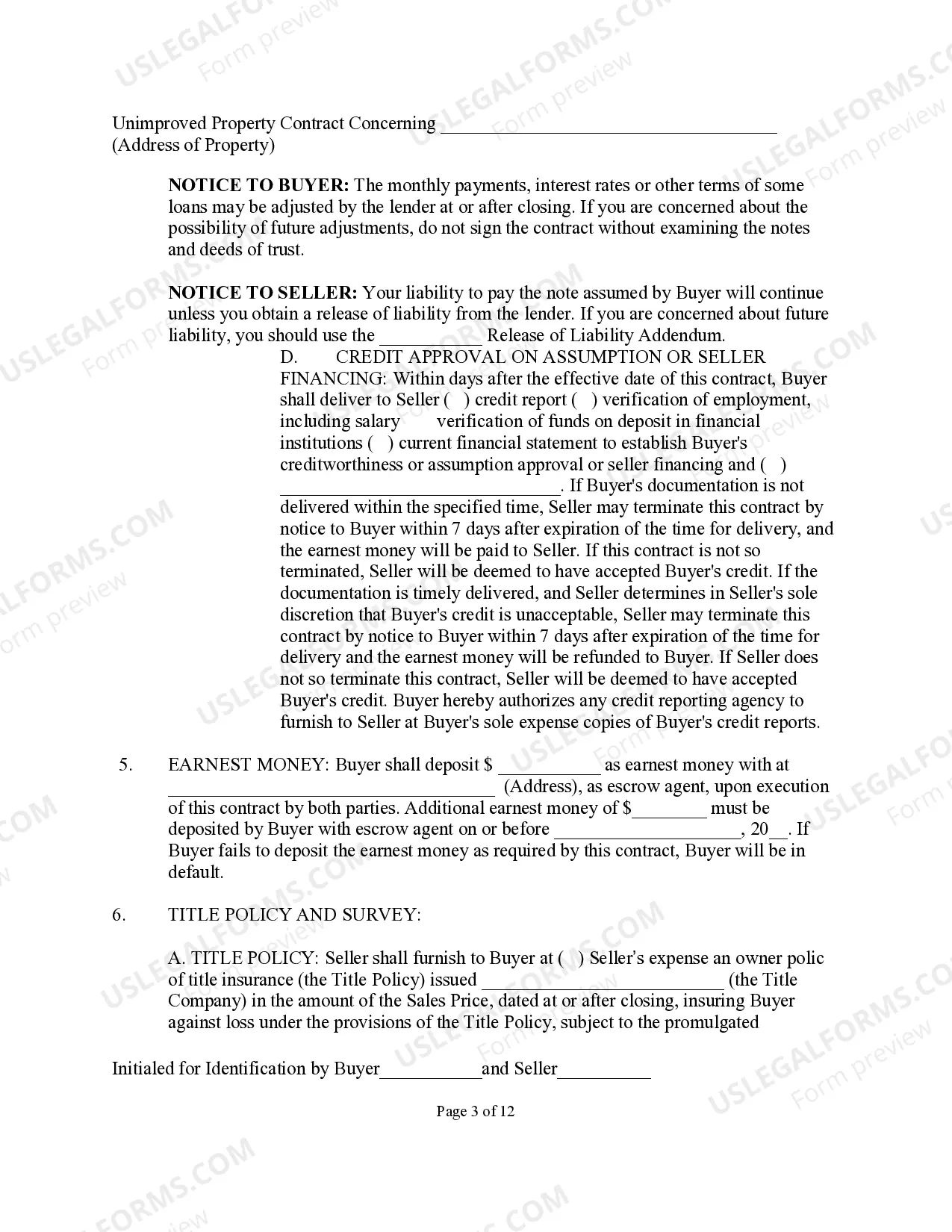
- Earnest money: Details the initial deposit and terms for additional deposits.
- Title policy: Discusses insurance provisions to protect buyers against disputes over property ownership.

When this form is needed
This form is necessary when engaging in the sale or purchase of unimproved land. It is suitable for various situations, including when individuals or entities wish to acquire vacant lots for future development, investment, or personal use. If you are unsure about the propertyâs legal status or financial obligations, this form allows for clear stipulations to protect both parties involved in the transaction.
Intended users of this form
The Unimproved Property Contract is intended for:
- Property sellers looking to formalize a sale agreement for unimproved land.
- Buyers interested in purchasing unimproved property for development or investment purposes.
- Real estate agents facilitating transactions involving vacant properties.
- Investors exploring opportunities in unimproved land markets.
Steps to complete this form
- Identify the parties by entering the full names of both the seller and buyer.
- Specify the property by providing the lot number, block number, addition name, city, and address of the unimproved land.
- Set the sales price, including any cash portion and financing details.
- Outline the financing structure, including any third-party loans or seller financing agreements.
- Enter the details for the earnest money deposit, including the amount and escrow agent information.
Notarization requirements for this form
This form does not typically require notarization unless specified by local law. However, it is always advisable to check local regulations to confirm specific requirements for your area.
Get your form ready online
Our built-in tools help you complete, sign, share, and store your documents in one place.
Make edits, fill in missing information, and update formatting in US Legal Forms—just like you would in MS Word.
Download a copy, print it, send it by email, or mail it via USPS—whatever works best for your next step.
Sign and collect signatures with our SignNow integration. Send to multiple recipients, set reminders, and more. Go Premium to unlock E-Sign.
If this form requires notarization, complete it online through a secure video call—no need to meet a notary in person or wait for an appointment.
We protect your documents and personal data by following strict security and privacy standards.

Make edits, fill in missing information, and update formatting in US Legal Forms—just like you would in MS Word.

Download a copy, print it, send it by email, or mail it via USPS—whatever works best for your next step.

Sign and collect signatures with our SignNow integration. Send to multiple recipients, set reminders, and more. Go Premium to unlock E-Sign.

If this form requires notarization, complete it online through a secure video call—no need to meet a notary in person or wait for an appointment.

We protect your documents and personal data by following strict security and privacy standards.
Mistakes to watch out for
- Failing to include all parties' names and details accurately.
- Not clearly detailing the property description, leading to potential disputes.
- Overlooking financing terms, which can cause issues in obtaining loans.
- Inadequately specifying earnest money terms, risking non-compliance.
- Neglecting to seek legal advice for confusing contract clauses.
Advantages of online completion
- Convenience: Downloadable forms allow for easy access and completion from any location.
- Editability: Users can fill in specific information at their own pace, ensuring accuracy.
- Reliability: The forms are drafted by licensed attorneys, enhancing their legal validity.
Legal use & context
- This contract is legally binding and must be filled out accurately to avoid disputes.
- Parties are encouraged to seek legal counsel to understand their rights and obligations.
- It is important to ensure all financing and property details are current and correct to maintain enforceability.
Quick recap
- The Unimproved Property Contract facilitates the sale of unimproved land.
- It includes essential terms like sales price, financing, and earnest money.
- Accuracy in this document ensures clarity and protects both parties.
Looking for another form?
Form popularity
FAQ
The memorandum of land contract is an abbreviated legal document referencing the land contract itself.The memorandum should list the address and legal description of the property as well as the names of the buyer and seller, and the date of the land contract. This document should be notarized and signed by the seller.
The Texas Real Estate Commission (TREC) is the state agency that governs real estate practices in the state of Texas. The agency is headquartered at 1700 North Congress in Austin. TREC is composed of nine members appointed by the Governor with the concurrence of the Texas Senate.
In terms of options, a lot represents the number of contracts contained in one derivative security. One equity option contract represents 100 underlying shares of a company's stock. In other words, the lot for one options contract is 100 shares.
The TREC contract allows the buyer to submit objections to the survey or the title commitment which the seller shall cure so long as the seller does not have to incur any expense in doing so.
The unimproved property contract is actually used for land or lot sale purchases. The contract is designed to outline the condition of the lot and other conditions that exist with the land. This contract shouldn't be used when purchasing or selling a structure that has been built on the land.
In real estate terminology, unimproved land is land without certain basic services, including electricity, telephone, street access, or the availability of water utilities.
A contract for deed is a different form of seller-finance. In a contract for deed, the seller keeps the title to the property and the buyer does not receive a deed to the property.In Texas, contracts for deed on residential property are considered potentially predatory and subject to strict consumer-protection laws.