Texas Commercial Contract for Contractor

Overview of this form
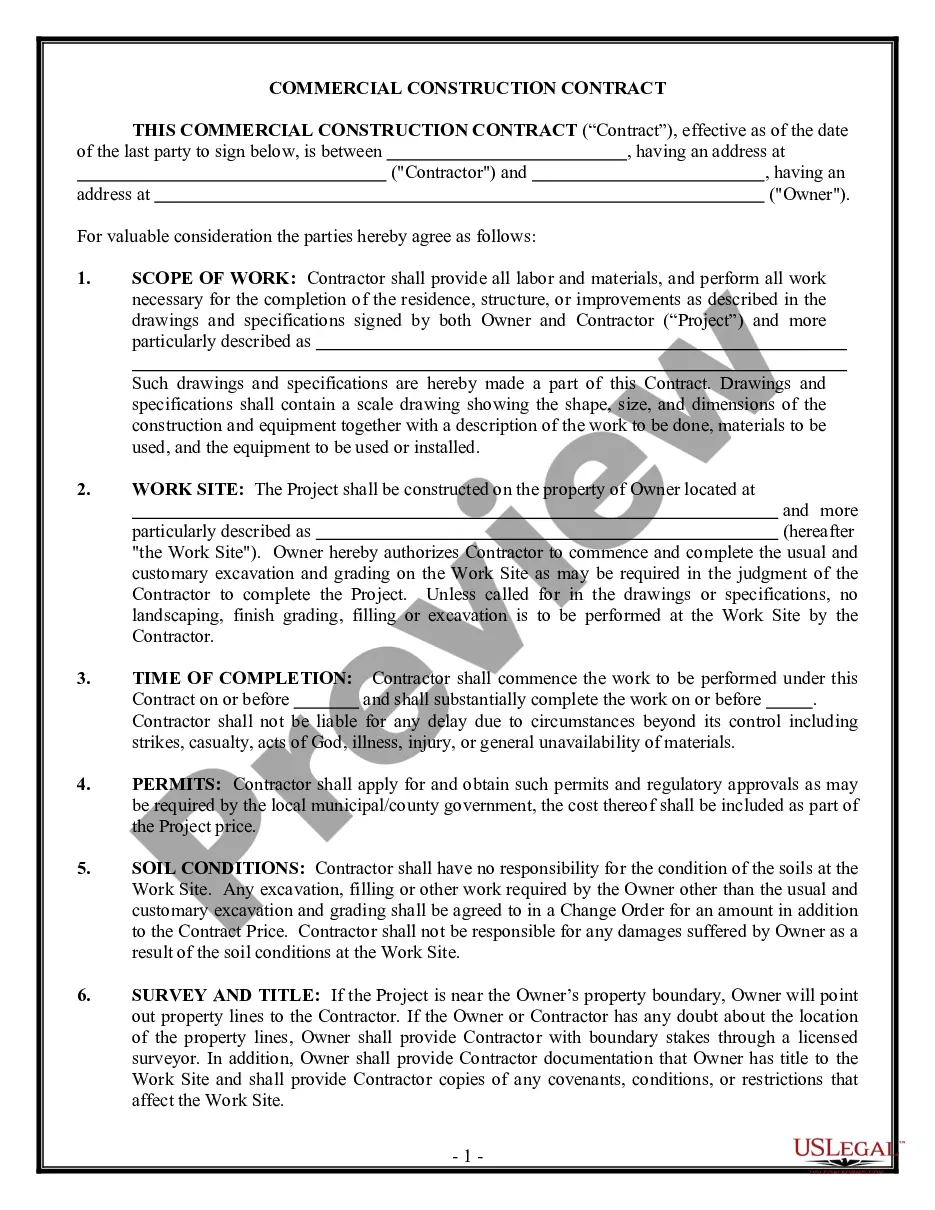
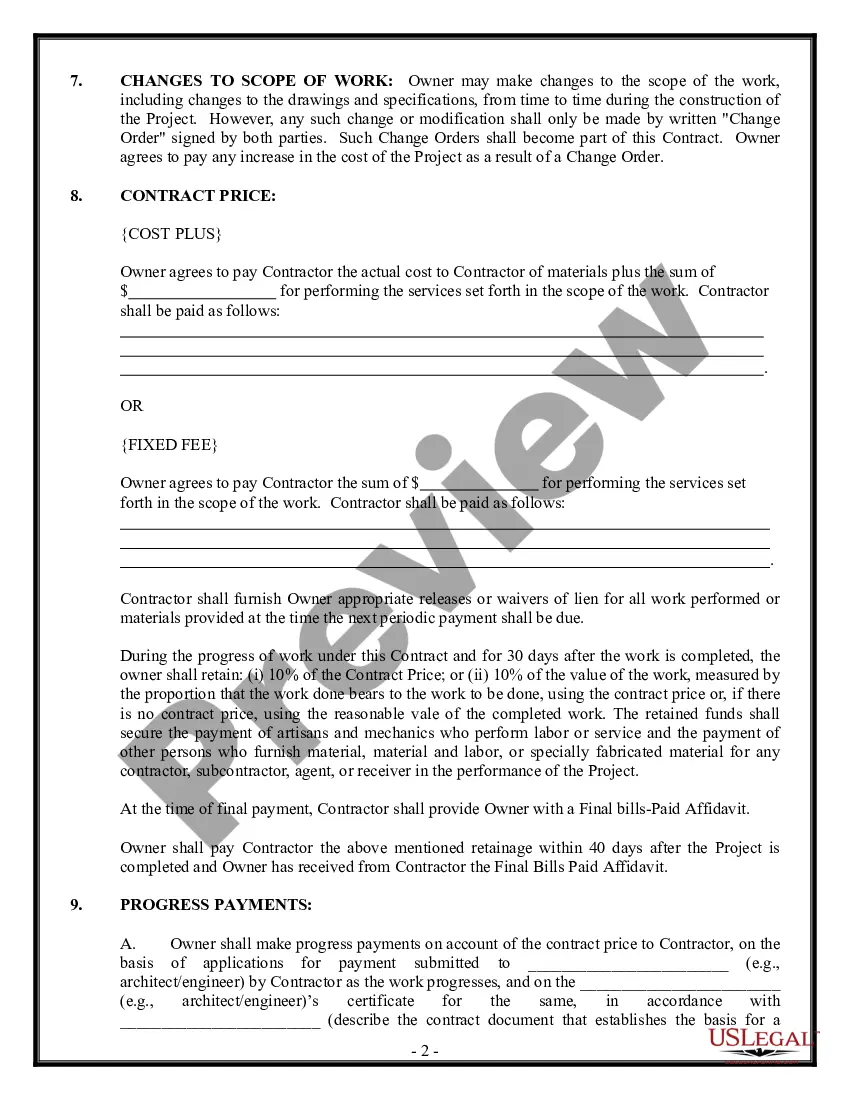
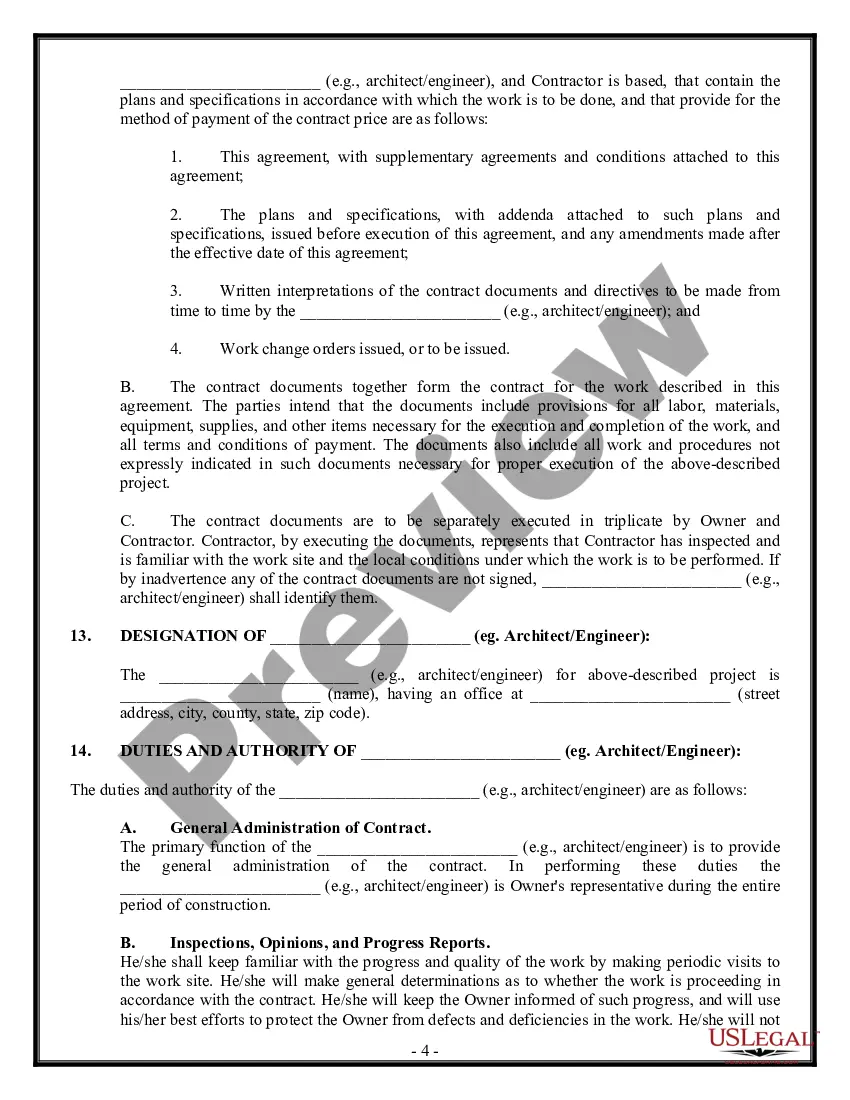
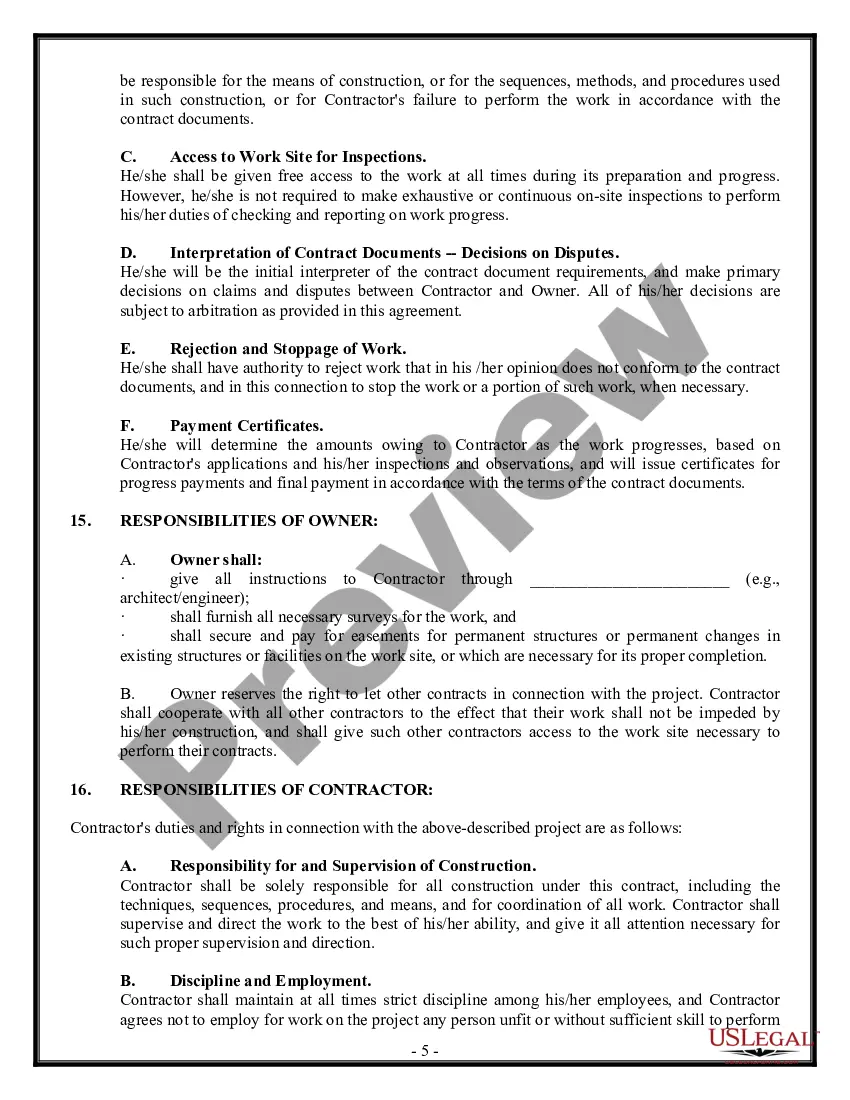
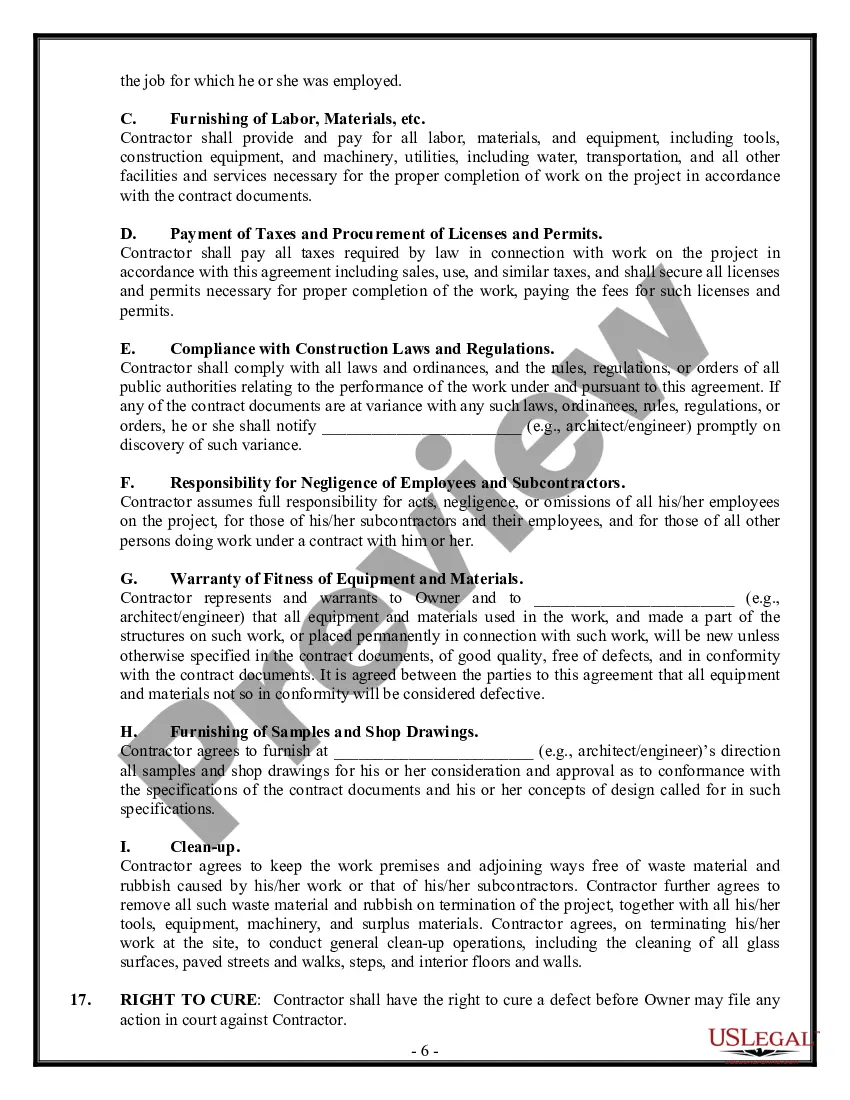
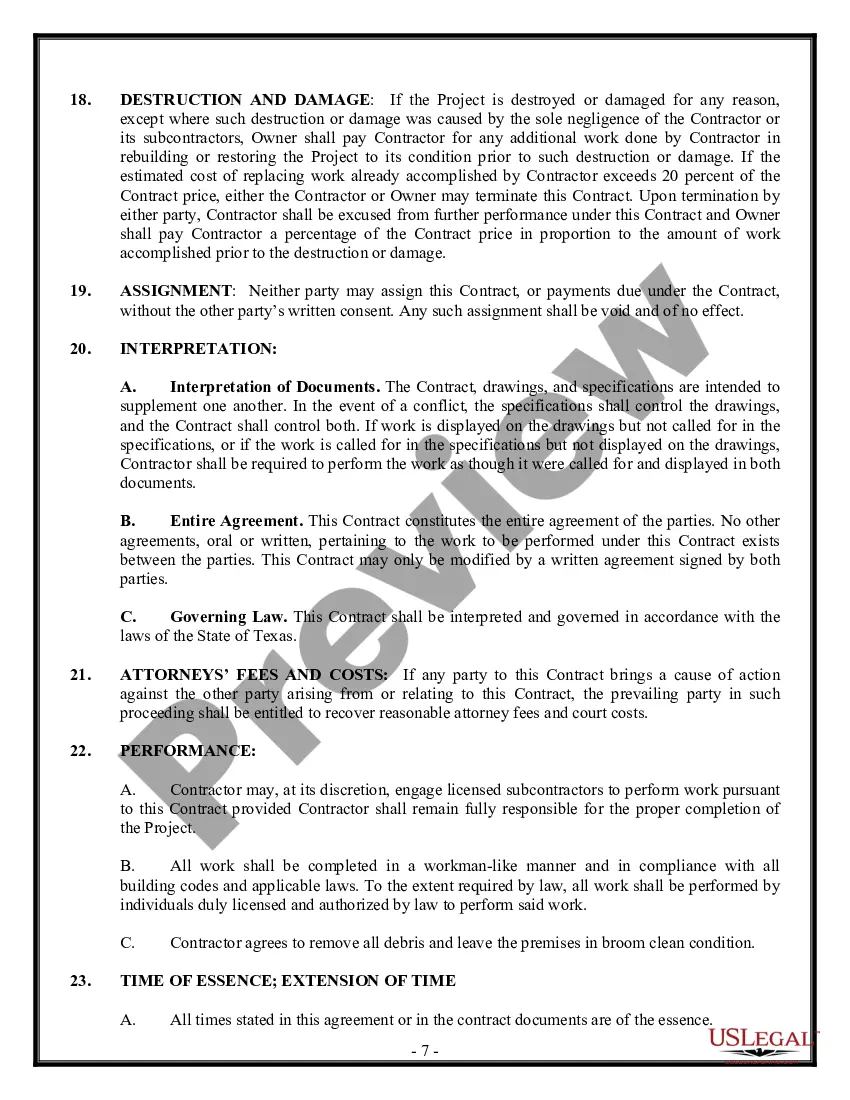
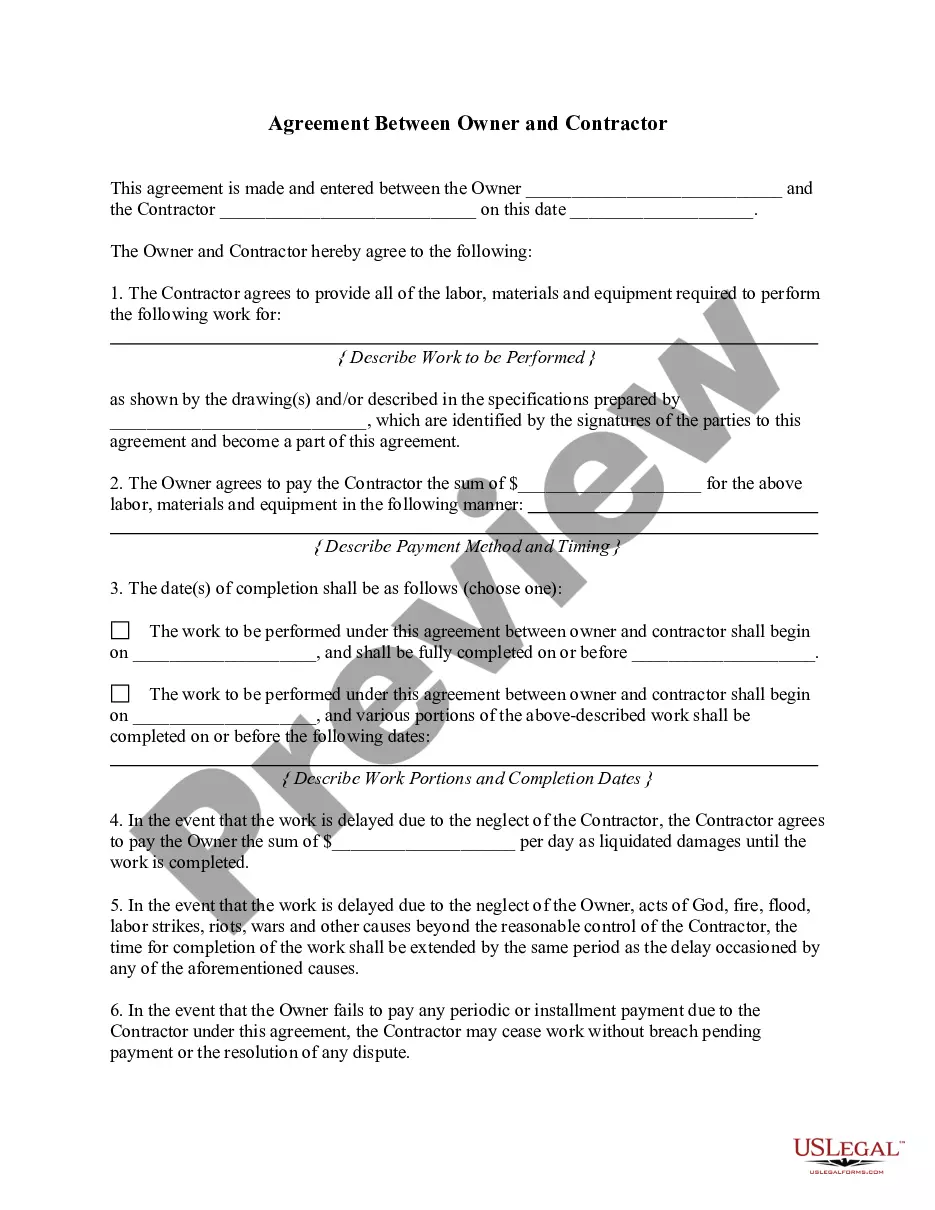
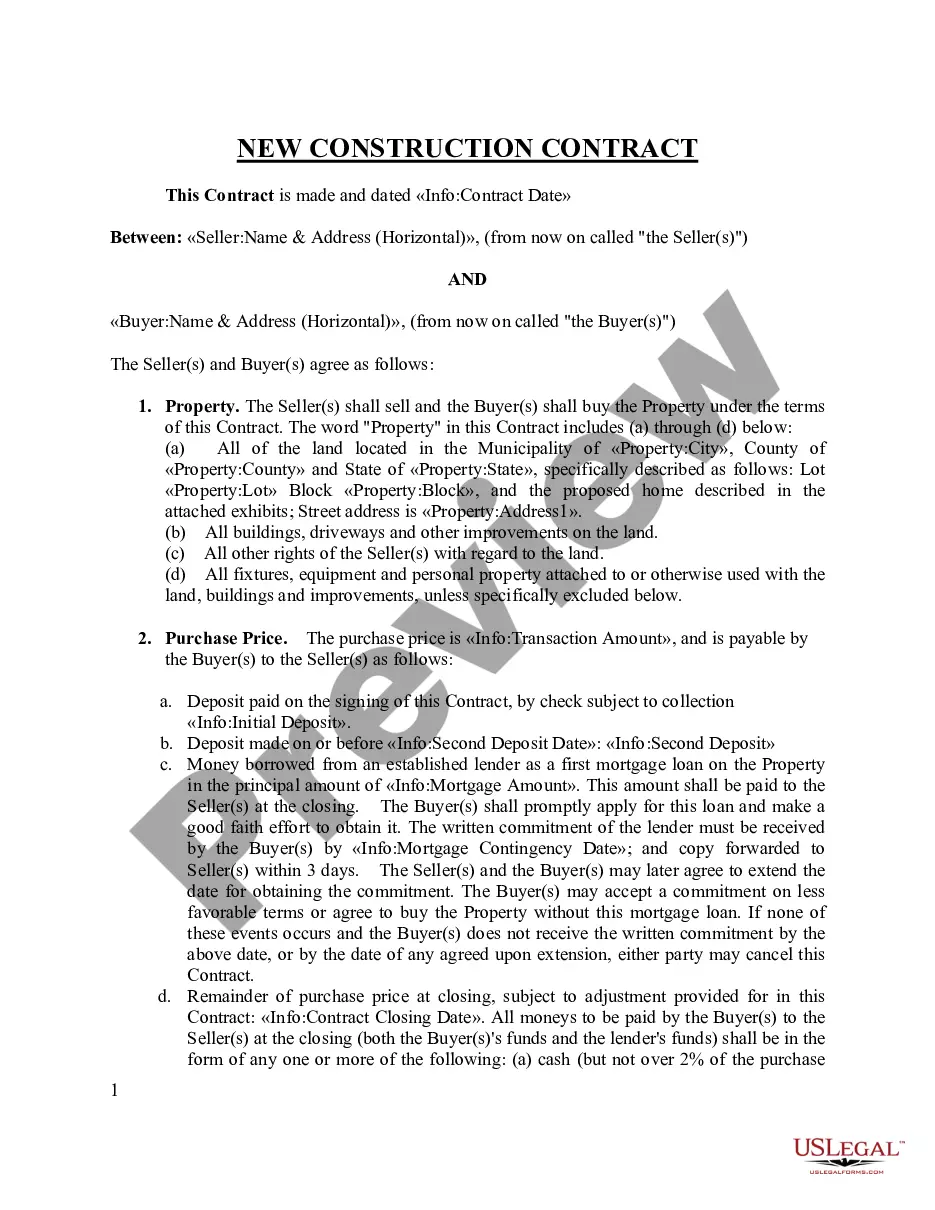
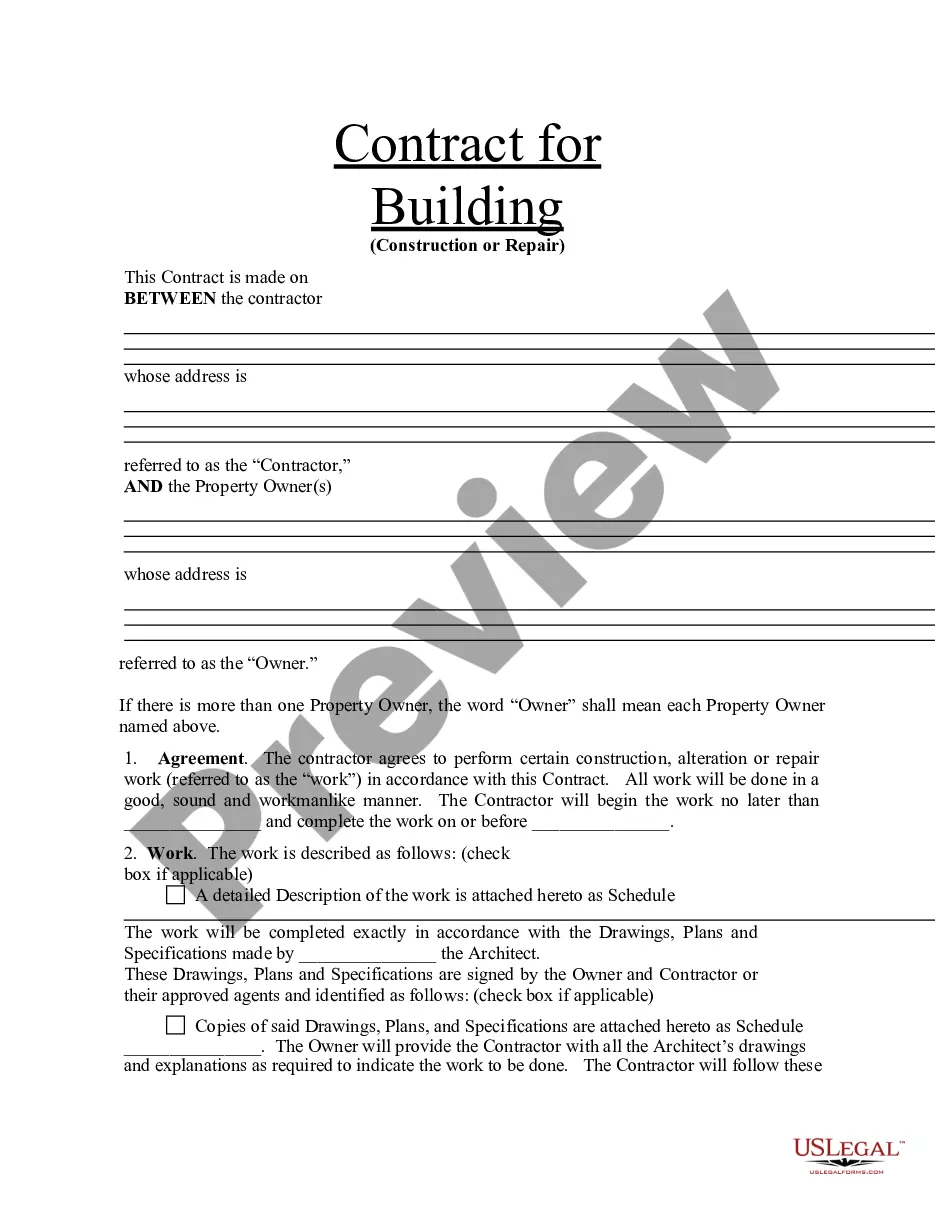
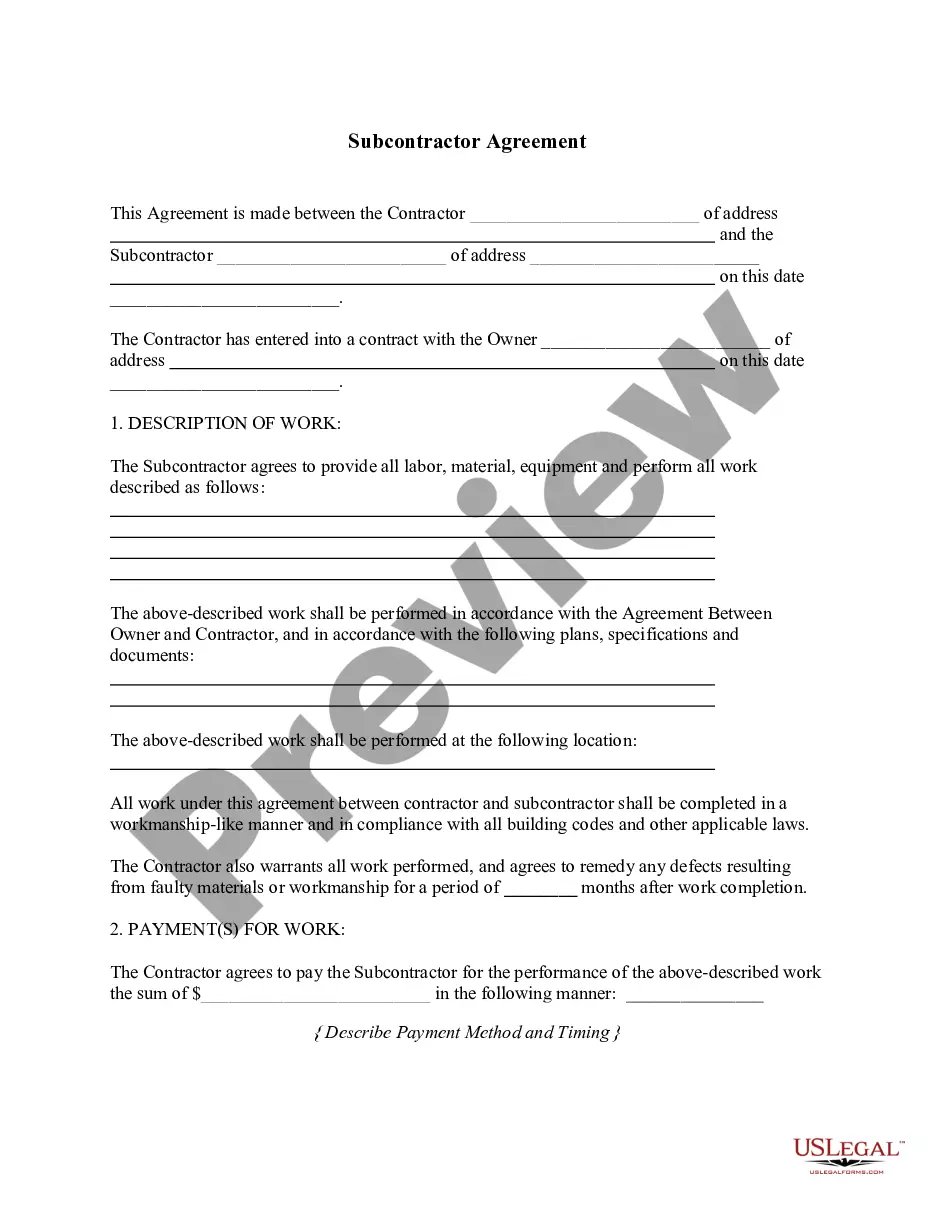
The Commercial Contract for Contractor is a legally binding agreement designed for use between commercial contractors and property owners. It details critical elements such as payment arrangementsâwhether cost-plus or fixed feeâwork site information, warranties, and insurance. This contract is specifically tailored to comply with the laws of Texas, ensuring that both parties are protected and their obligations defined clearly.
Key parts of this document
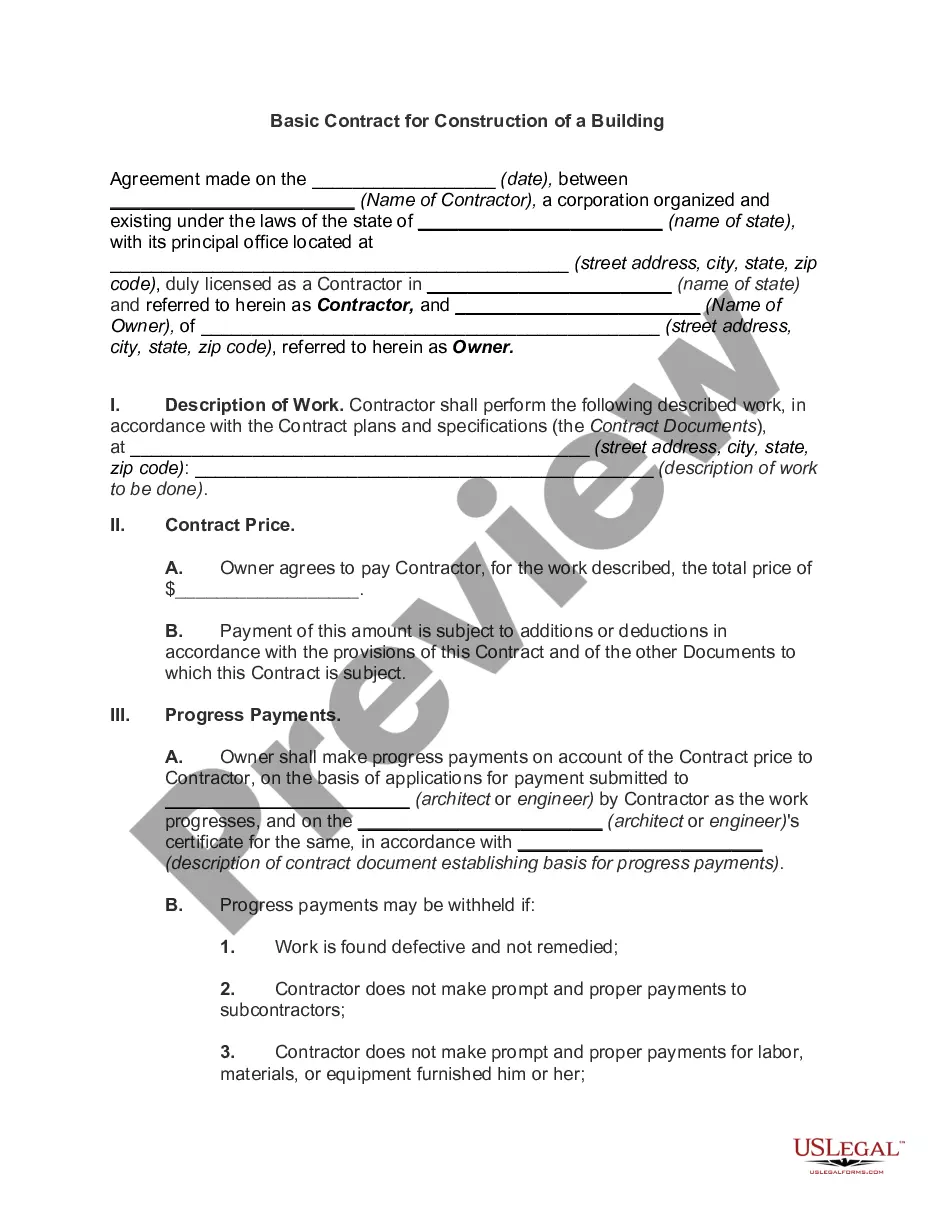
- Payment structure options: cost-plus or fixed fee.
- Contractor and owner duties at the work site.
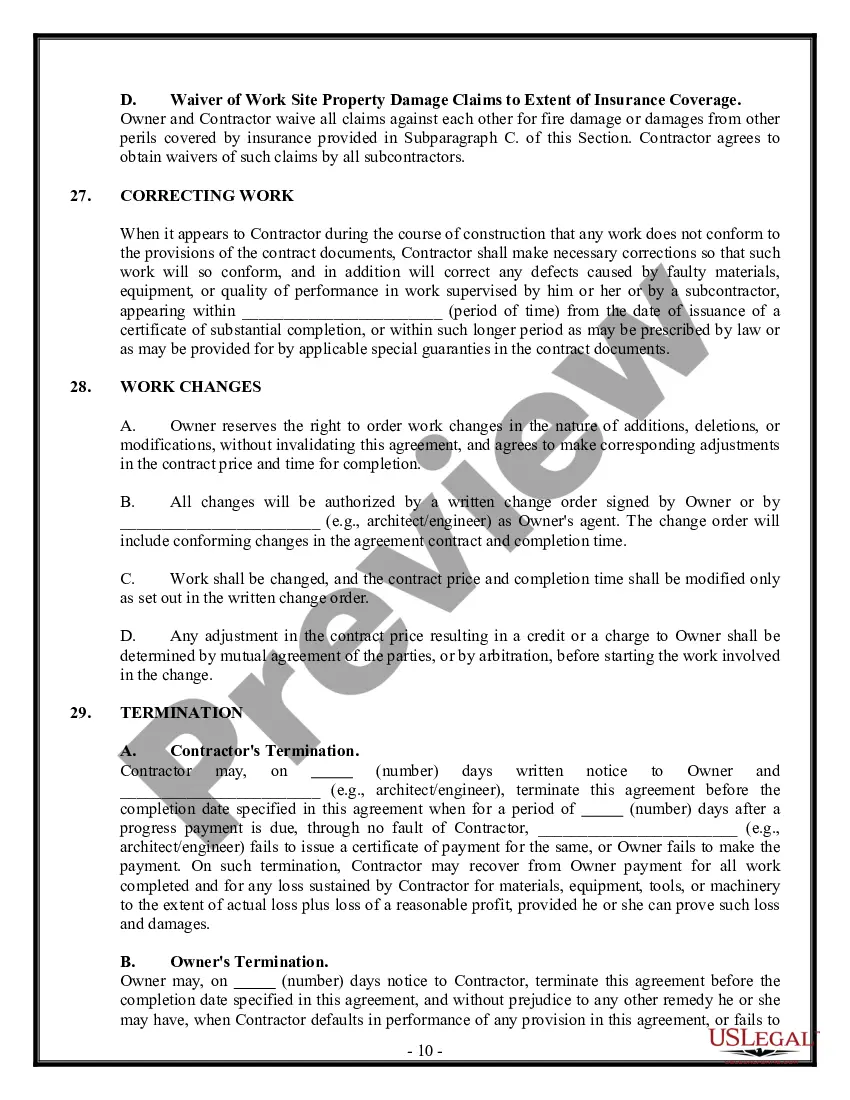
- Change orders for additional work due to unexpected site conditions.
- Regulatory permits and responsibilities for obtaining them.
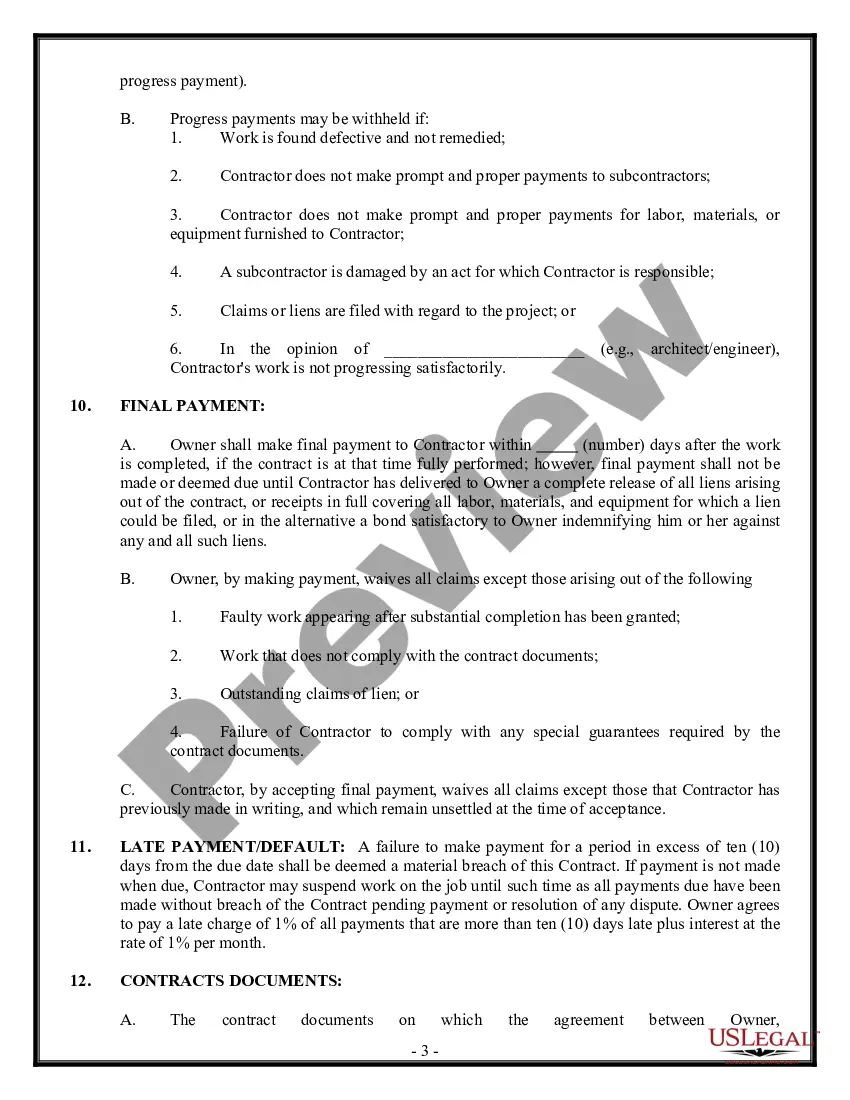
- Procedures for progress payments and terms for late payment.
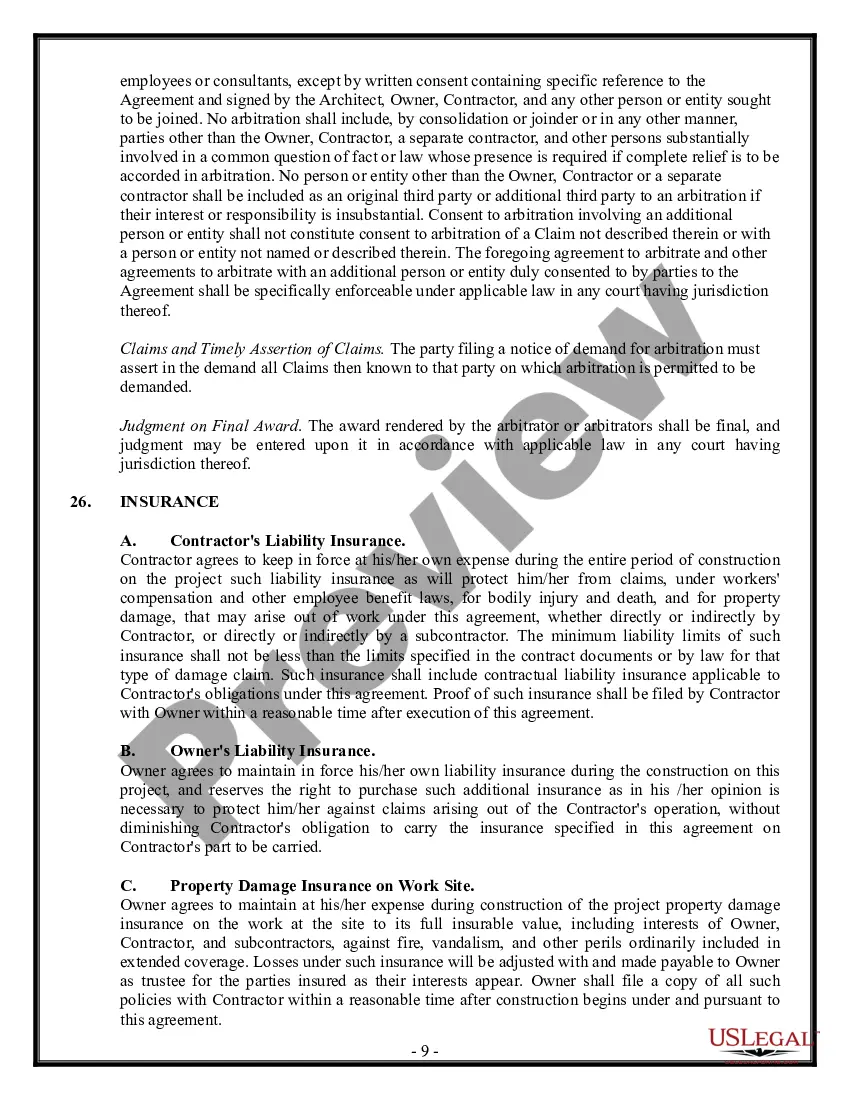
- Requirements for contractorâs liability and property damage insurance.
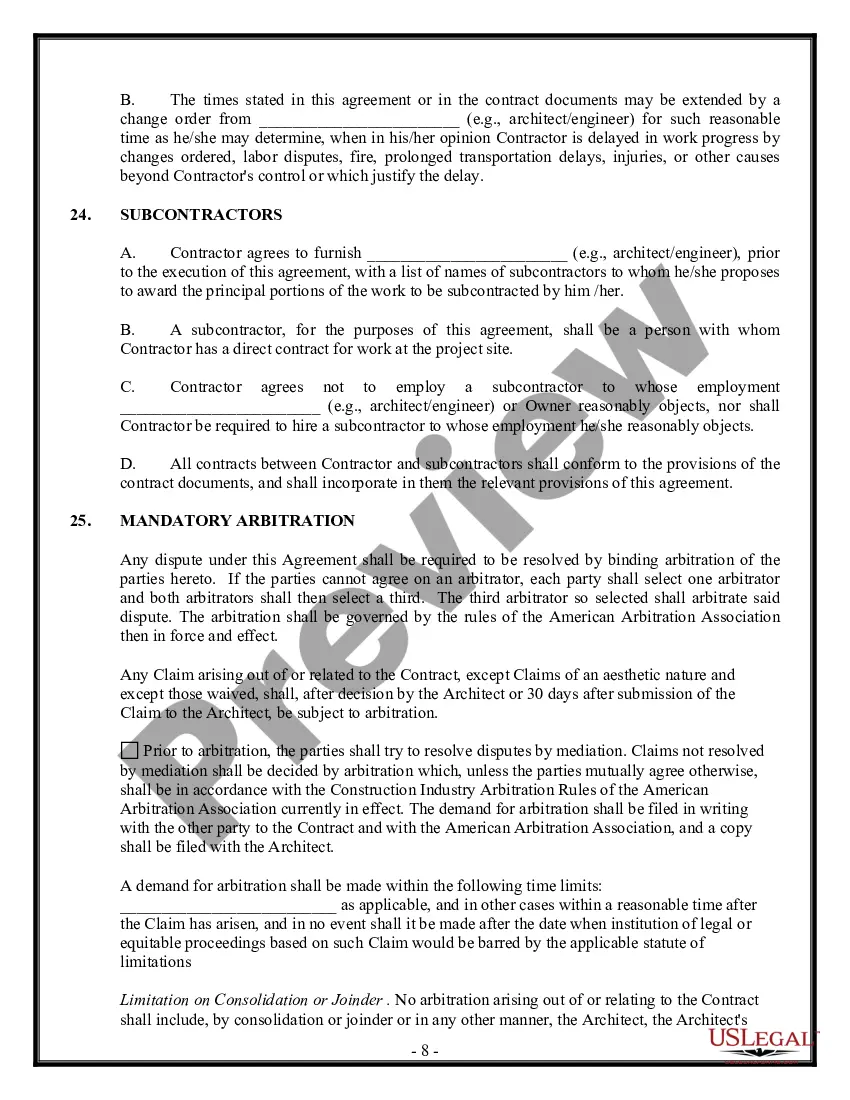
- Provisions for resolving disputes through mandatory arbitration.

When this form is needed
This form is necessary when a property owner is engaged in a construction project and hires a contractor to perform the work. It is appropriate in situations involving renovations, new constructions, or any project that requires a formal agreement delineating the rights and responsibilities of each party. Utilizing this contract ensures clarity in expectations and provides legal protection for both the contractor and the property owner.
Who needs this form
This form is suitable for:
- Property owners looking to hire a commercial contractor for construction projects.
- Commercial contractors seeking a standard agreement framework to outline their responsibilities and payment terms.
- Legal professionals advising clients on construction contracts in Texas.
Completing this form step by step
Steps to complete this form:
- Identify the parties involved (contractor and property owner).
- Describe the work site and detailed project information.
- Specify the payment structure and conditions for progress payments.
- Outline any necessary permits and regulatory requirements.
- Review the insurance provisions and sign the contract.
Does this form need to be notarized?
This form does not typically require notarization unless specified by local law. You should verify whether your specific project requires any additional verification by a notary for formalizing the agreement.
Get your form ready online
Our built-in tools help you complete, sign, share, and store your documents in one place.
Make edits, fill in missing information, and update formatting in US Legal Forms—just like you would in MS Word.
Download a copy, print it, send it by email, or mail it via USPS—whatever works best for your next step.
Sign and collect signatures with our SignNow integration. Send to multiple recipients, set reminders, and more. Go Premium to unlock E-Sign.
If this form requires notarization, complete it online through a secure video call—no need to meet a notary in person or wait for an appointment.
We protect your documents and personal data by following strict security and privacy standards.

Make edits, fill in missing information, and update formatting in US Legal Forms—just like you would in MS Word.

Download a copy, print it, send it by email, or mail it via USPS—whatever works best for your next step.

Sign and collect signatures with our SignNow integration. Send to multiple recipients, set reminders, and more. Go Premium to unlock E-Sign.

If this form requires notarization, complete it online through a secure video call—no need to meet a notary in person or wait for an appointment.

We protect your documents and personal data by following strict security and privacy standards.
Common mistakes to avoid
- Failing to specify detailed work descriptions can lead to misunderstandings.
- Not addressing change orders adequately, which may cause disputes later.
- Overlooking the need for insurance documentation before starting work.
Why use this form online
- Convenient access to a standardized legal form for commercial contracts.
- Editable features that allow customization to fit specific project needs.
- Reliability through attorney-drafted templates, minimizing legal risks.
Legal use & context
- The contract establishes clear expectations and duties for both parties, reducing the risk of disputes.
- This form serves as a legal framework in Texas, validating the contractual relationship between the contractor and property owner.
- Proper execution and adherence to state laws enhance the enforceability of the agreement.
Looking for another form?
Form popularity
FAQ
The purchase and sale agreement (the PSA) is the central document for the sale of commercial real property and one of the most important.
A land contract is a form of seller financing. It is similar to a mortgage, but rather than borrowing money from a lender or bank to buy real estate, the buyer makes payments to the real estate owner, or seller, until the purchase price is paid in full.
1Successfully complete the one-day Pricing Strategies: Mastering the CMA Course.2Submit application and one-time application fee of $179.3Be a member in good standing in NAR (or NAR cooperating international association)
AIR Commercial Real Estate Association has rebranded itself after 57 years in business. The member-owned platform now branded AIR CRE provides commercial real estate professionals in Southern California with the critical tools they need to be successful.
The Introduction. The beginning of the lease agreement should contain the name of the landlord and tenant, as well as a statement of the agreement into which they are entering. Rent. Deposit. Taxes. Property Insurance. Utilities and Amenities. Remodeling and Improvements. Repairs and Maintenance.