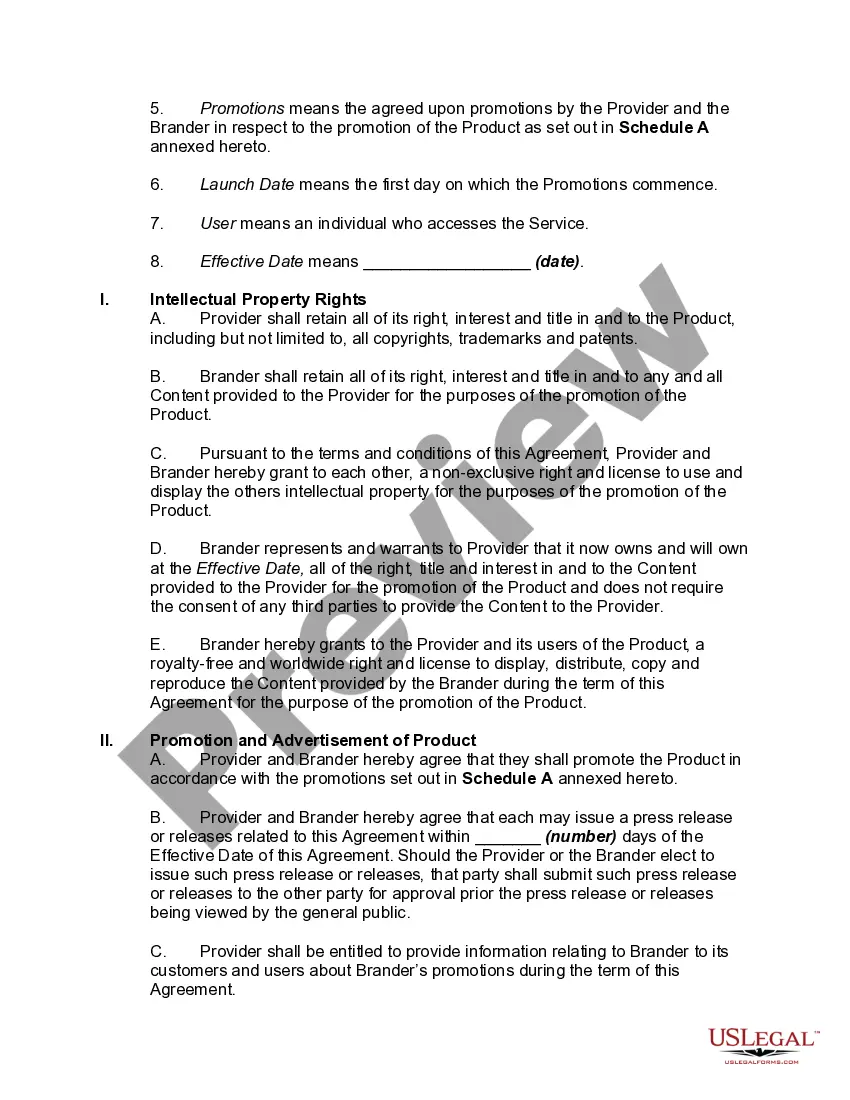
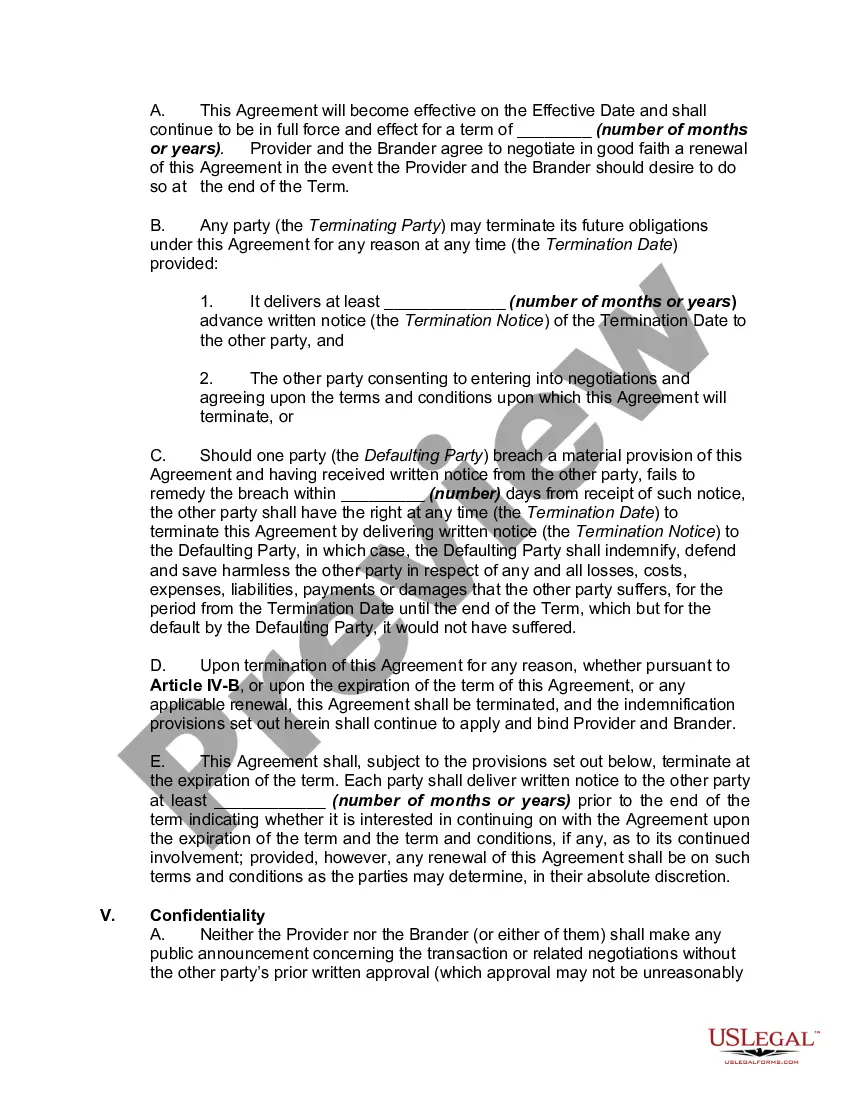
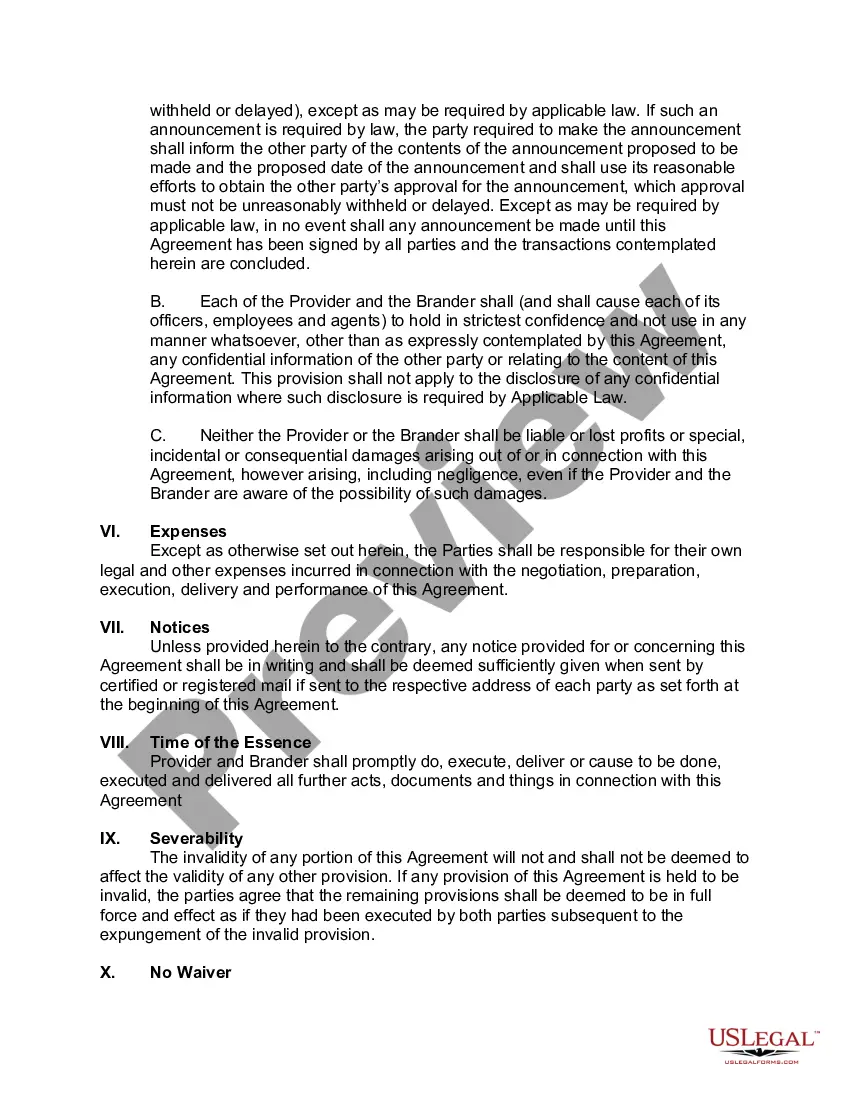
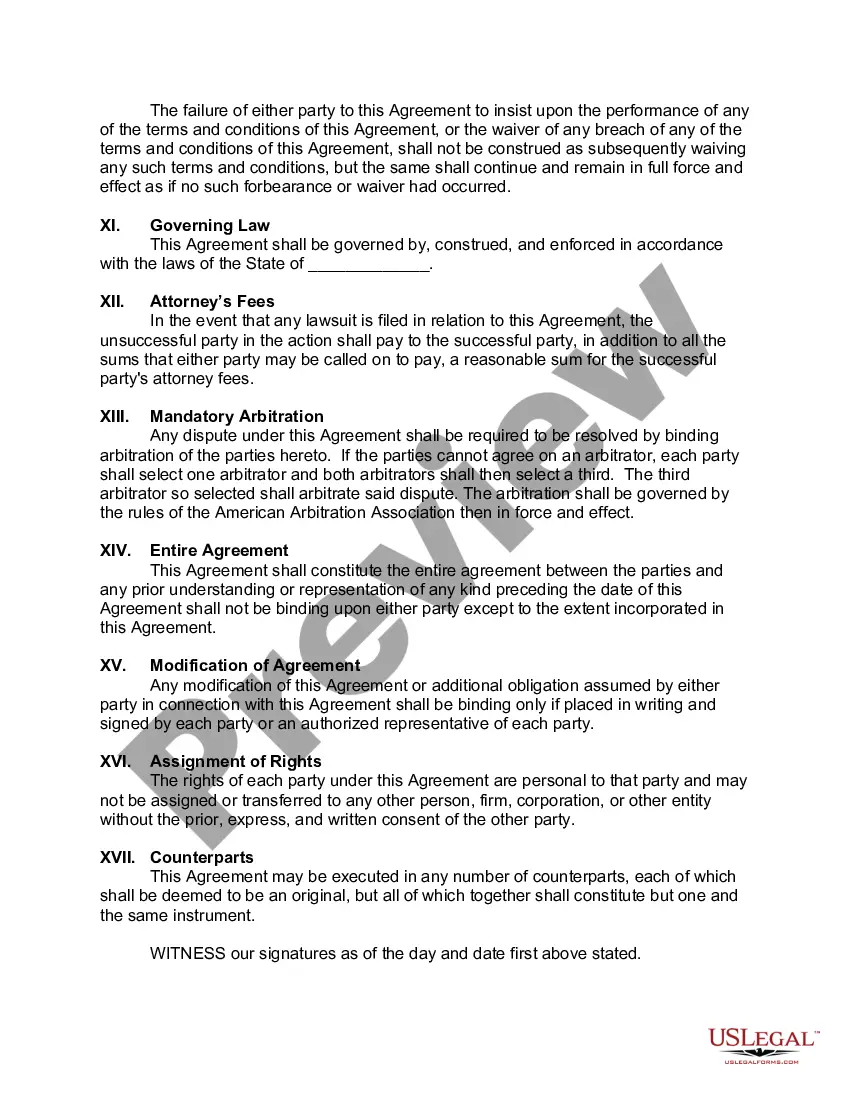
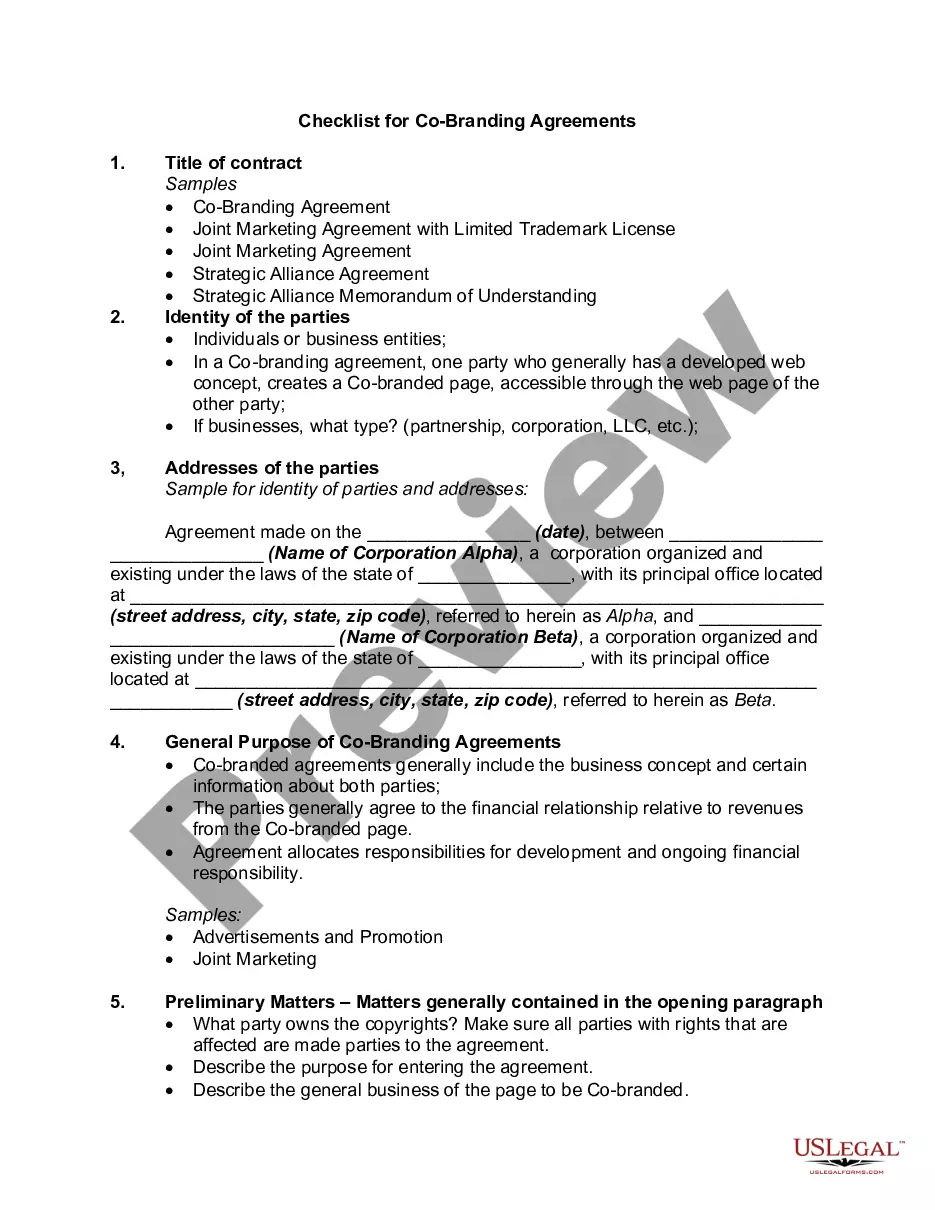
Tennessee Co-Branding Agreement
Description
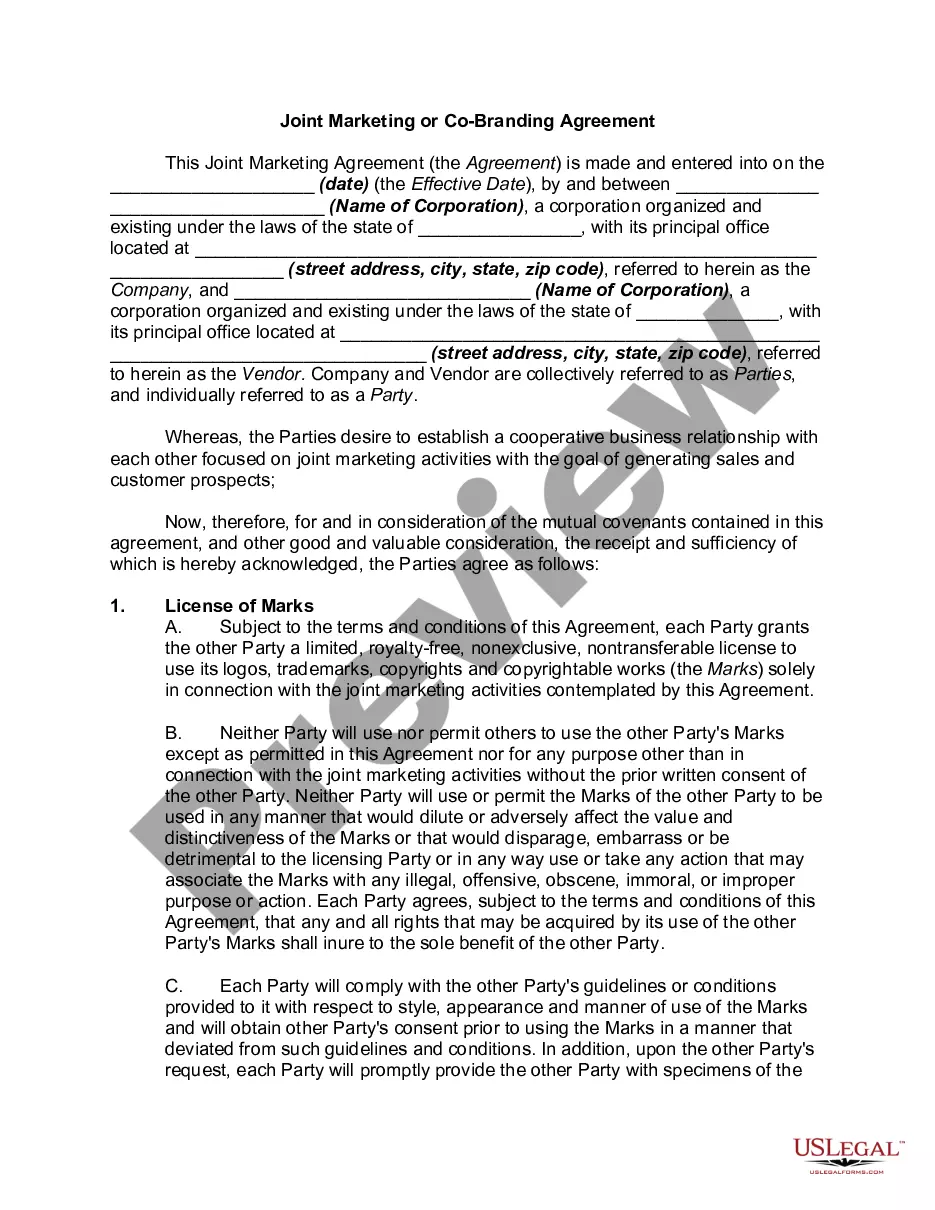


How to fill out Co-Branding Agreement?
US Legal Forms - one of the largest collections of legal templates in the USA - offers a range of legal document templates that you can download or print.
While using the site, you can find thousands of templates for business and personal purposes, organized by categories, states, or keywords.
You can access the latest iterations of documents like the Tennessee Co-Branding Agreement within minutes.
If the form does not meet your requirements, use the Search field at the top of the page to locate one that does.
If you are satisfied with the form, confirm your choice by clicking the Buy now button. Then, select the pricing plan that suits you and provide your details to create an account.
- If you have a subscription, sign in and download the Tennessee Co-Branding Agreement from the US Legal Forms library.
- The Download button will appear on every document you view.
- You can find all previously downloaded documents in the My documents section of your account.
- If you want to use US Legal Forms for the first time, here are simple steps to get started.
- Ensure you have selected the appropriate form for your locality.
- Click the Review button to check the contents of the form.
Form popularity
FAQ
When engaging in co-branding, consider how brand compatibility, target audience alignment, and shared values will affect the partnership. Explore potential risks like negative publicity and the challenge of managing brand identities. It's also important to clarify roles and expectations within a Tennessee Co-Branding Agreement to avoid disputes. With careful planning and clear guidelines, your co-branding initiative can build a strong partnership and enhance customer engagement.
Co-branding works by allowing two brands to leverage their individual strengths to create a unique product or service. This partnership often results in increased brand awareness and customer loyalty, as consumers are drawn to the combined value of both brands. Both companies then share marketing efforts, which can lead to greater reach and higher sales. By establishing a Tennessee Co-Branding Agreement, both parties can protect their interests while working towards a common goal.
To implement co-branding, start by identifying a complementary partner whose brand aligns with your values and target market. Next, negotiate a formal agreement detailing shared responsibilities, marketing efforts, and brand usage guidelines. It's crucial to create a cohesive marketing plan that benefits both brands equally. A Tennessee Co-Branding Agreement can serve as a roadmap, providing clarity and legally binding terms to your collaboration.
Co-branding involves two brands collaborating to create a combined product or marketing effort, enhancing each other's visibility and appeal. A well-known example is the partnership between Subway and the sandwich brand, which used co-branding to attract doughnut lovers to its restaurants. By utilizing a Tennessee Co-Branding Agreement, both parties can safeguard their interests while leveraging their brand strengths effectively.
To fill out a partnership agreement, start by identifying each partner's contributions, roles, and responsibilities. Clearly outline the purpose of your partnership and the sharing of profits and losses. Ensure that you include terms for resolving disputes and what happens if a partner wants to leave. Using a Tennessee Co-Branding Agreement template from a reputable platform like US Legal Forms can simplify this process and ensure you cover all necessary legal aspects.
To legally register a brand, begin by selecting a distinctive name and checking for trademark availability. Once you confirm that your brand name is unique, you can file an application with the appropriate state or federal agency. In Tennessee, you can register through the Secretary of State’s office, ensuring you meet their requirements. Implementing a Tennessee Co-Branding Agreement can streamline partnerships and protect your brand's integrity in collaborative efforts.
Registering a brand in Tennessee requires you to start by researching existing trademarks to avoid conflicts. Next, you will need to prepare and submit an application detailing your brand's name, its purpose, and how it will be used. This process typically involves filing with the Tennessee Secretary of State, along with applicable fees. Incorporating a Tennessee Co-Branding Agreement helps clarify roles and responsibilities when collaborating with other brands.
To register a brand in Tennessee, you first need to choose a unique name that reflects your business. After selecting your desired brand name, you should conduct a thorough search to ensure it is available and not already in use. Once verified, you can fill out the application forms through the Tennessee Secretary of State's office and submit them along with any required fees. Utilizing a Tennessee Co-Branding Agreement can be an excellent way to outline your brand's collaborations and ensure its protection.
Co-branding focuses on creating a product or service that highlights both brands, while a partnership can involve broader strategic alignments that don’t always include product development. Co-branding is typically more visible and defined, aiming to enhance brand equity for both parties. In contrast, partnerships might not directly affect public perception. A Tennessee Co-Branding Agreement formalizes the specifics of a co-branding effort within a partnership.
Branding limitations include the challenge of maintaining a unique identity in a crowded marketplace. Sometimes, businesses may find it hard to convey their message clearly, leading to misinterpretations. Additionally, the scope of branding efforts may be restricted by budget and resources. Crafting a well-structured Tennessee Co-Branding Agreement can help navigate these pitfalls, allowing brands to flourish together.