Purchase Money Security Agreement in Inventory along with Promissory Note
About this form
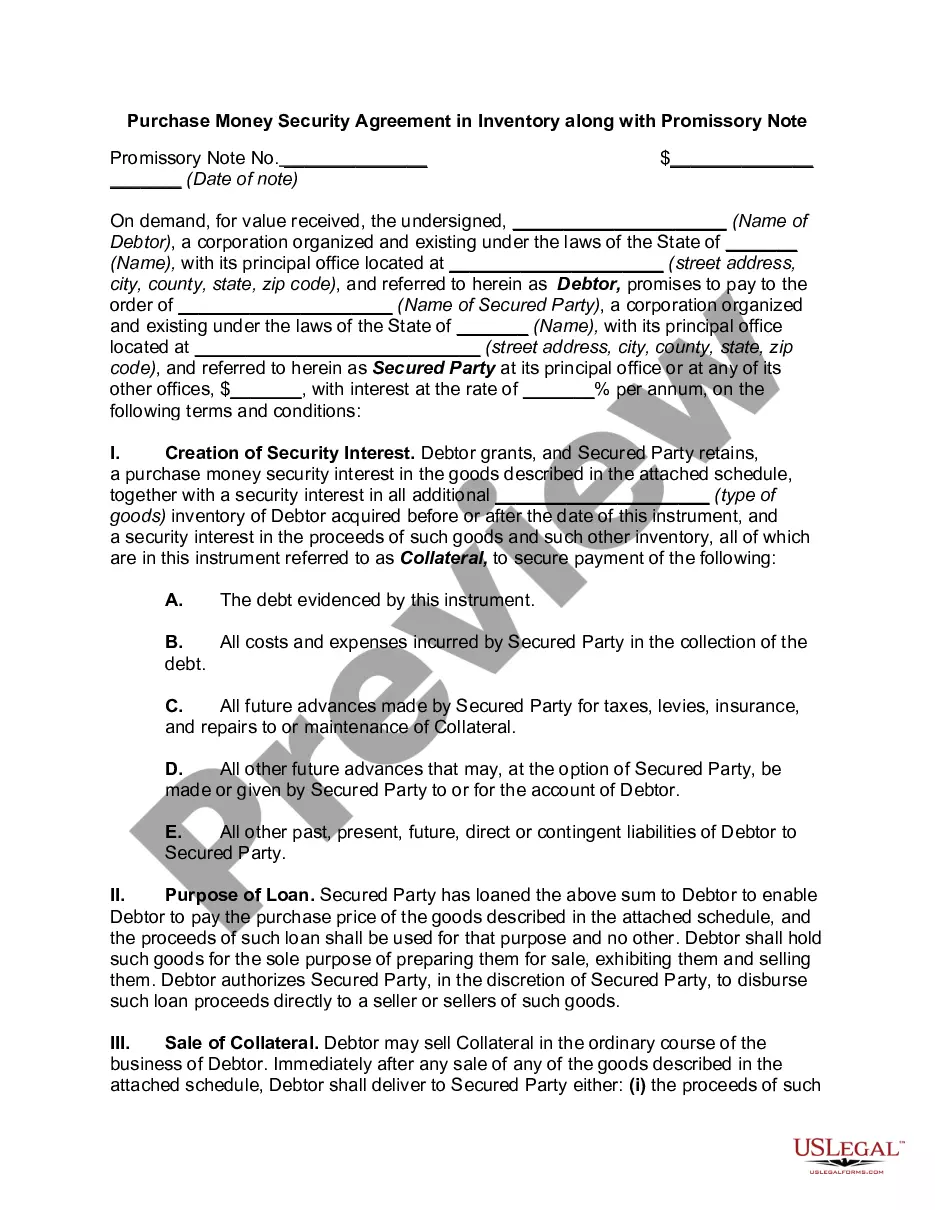
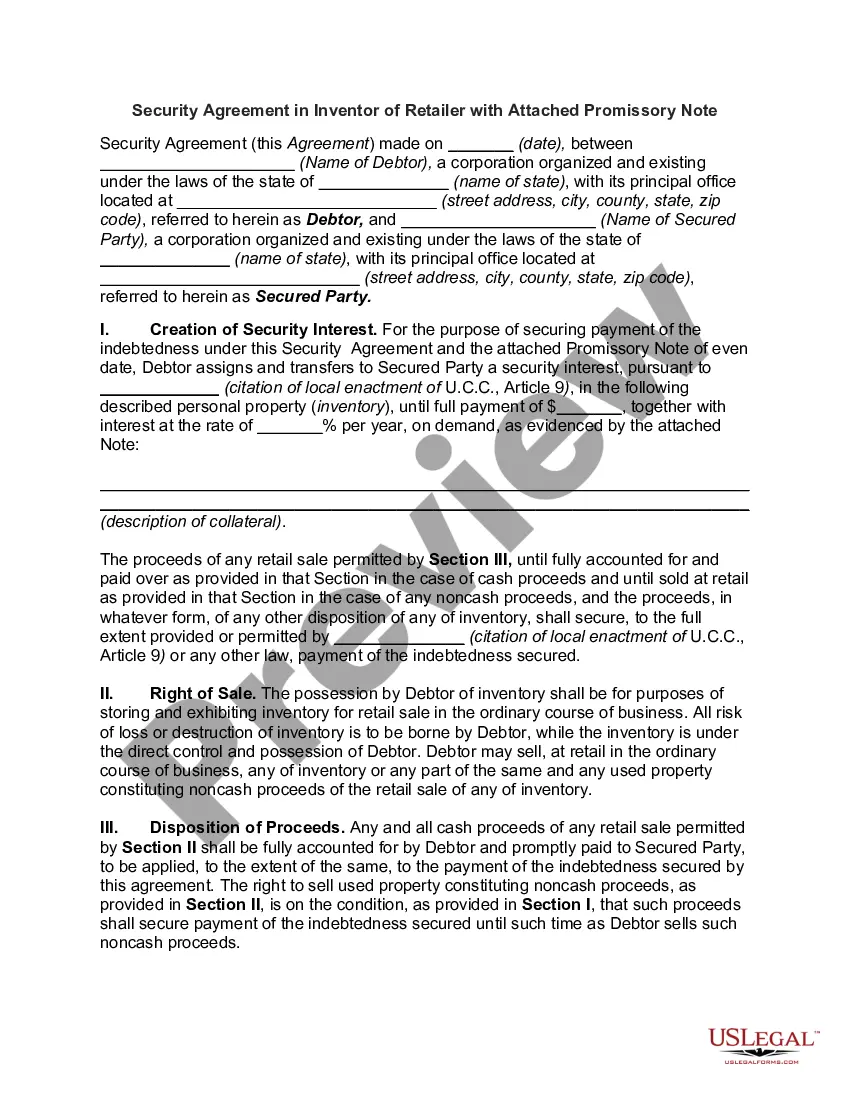
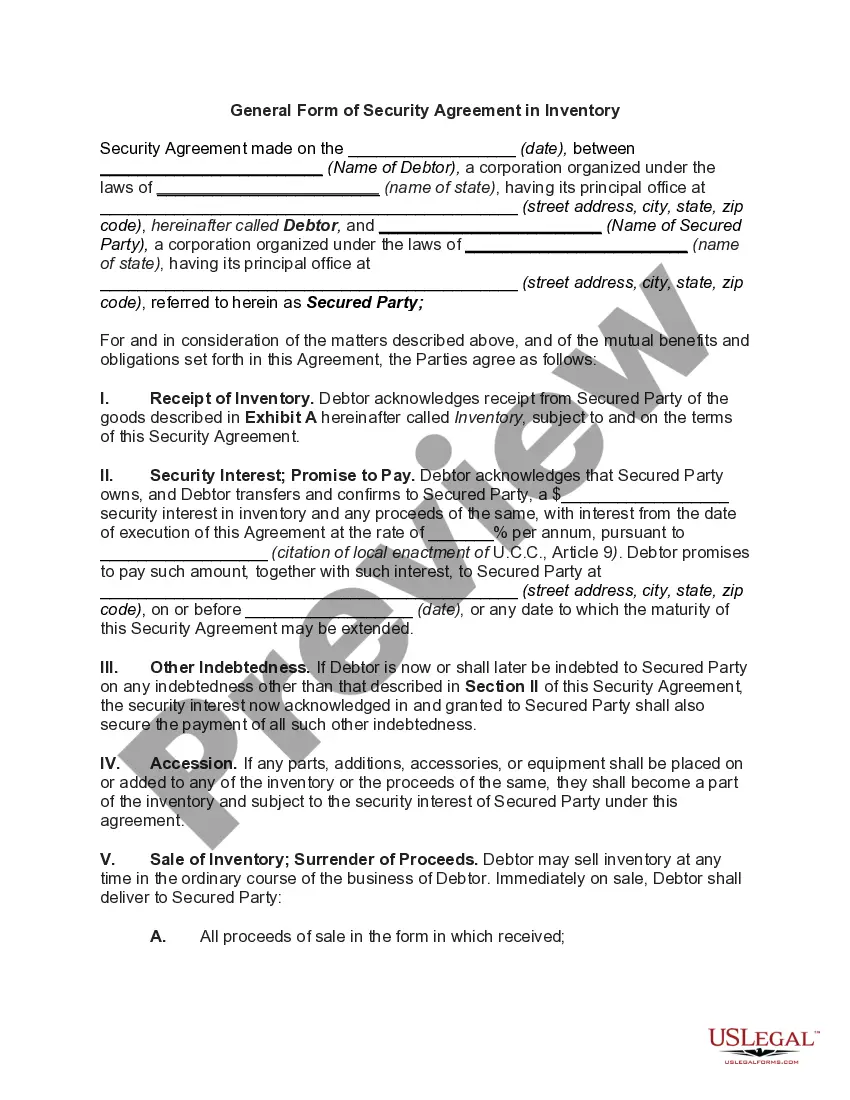
The Purchase Money Security Agreement in Inventory along with Promissory Note is a legal document that establishes a security interest in goods or inventory acquired through borrowed funds. This agreement allows lenders to have priority over other creditors regarding the collateral purchased, ensuring they can repossess the goods if the borrower defaults. It is an essential tool for businesses looking to finance inventory while providing security to lenders, differentiating it from standard loan agreements by incorporating specific protections for the lender's investment.
Key parts of this document
- Creation of Security Interest: Defines the collateral and secures the loan.
- Purpose of Loan: Specifies how the borrowed funds will be used.
- Sale of Collateral: Outlines conditions under which inventory can be sold and the lender's rights to proceeds.
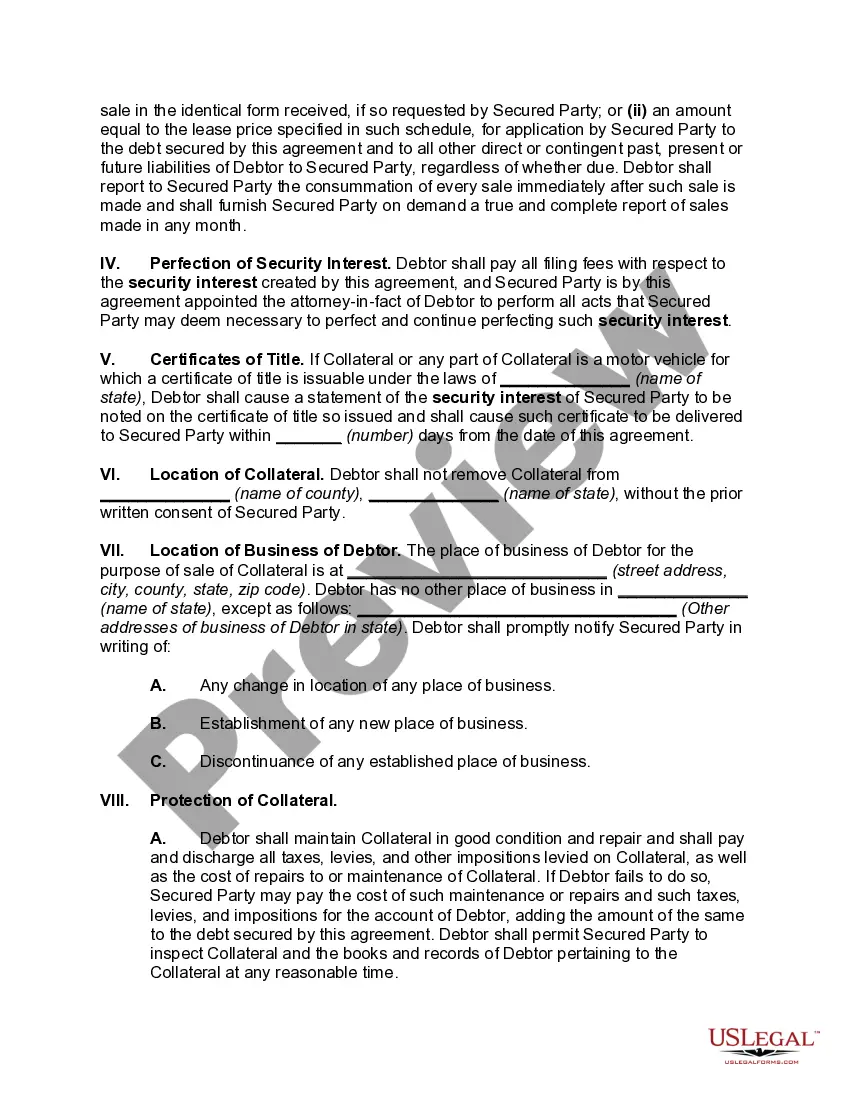
- Perfection of Security Interest: Details the steps required to protect the lender's interests legally.
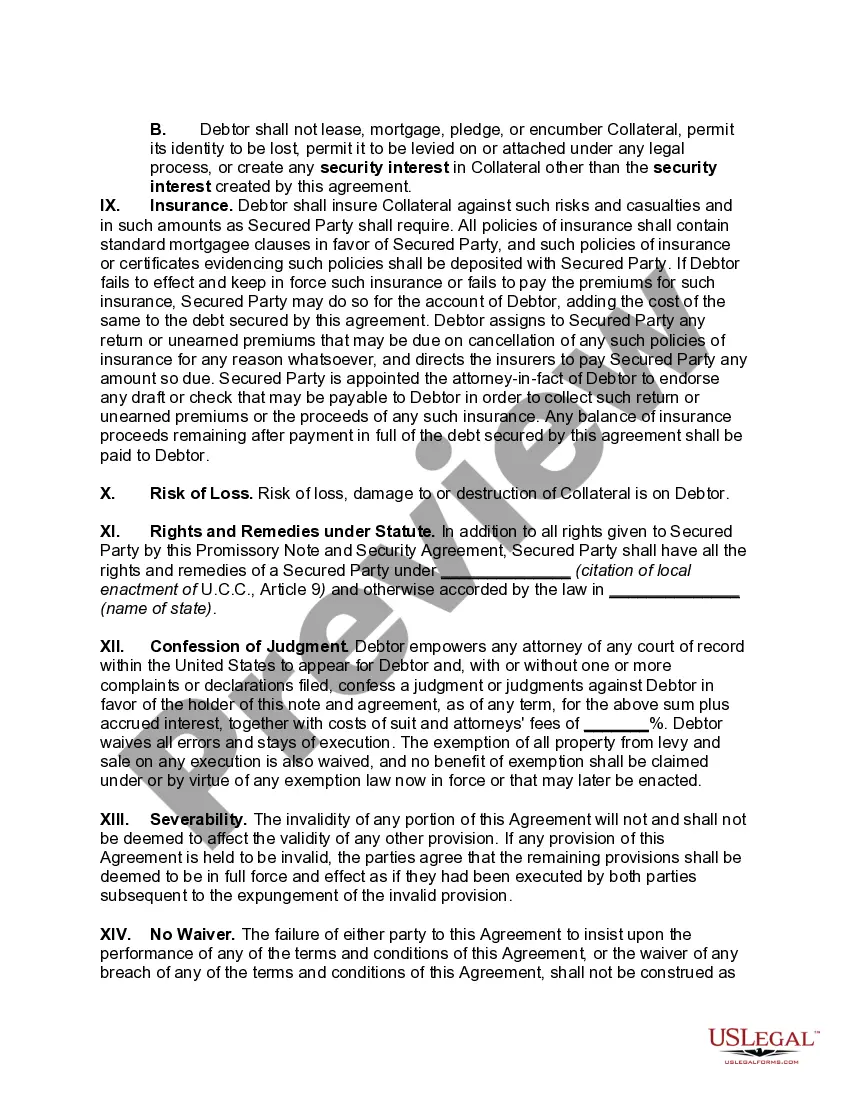
- Insurances and maintenance obligations: Stipulates requirements for insuring the collateral and its upkeep.


Common use cases
This form is commonly used by businesses that seek financing for purchasing inventory or equipment. It becomes necessary when a lender requires assurance that they can reclaim the funded assets in case of default, thereby minimizing their risk. This agreement is ideal for businesses that may have fluctuating inventory or require additional working capital to manage their operations effectively.
Who this form is for
- Business owners or corporations seeking to finance inventory purchases.
- Lenders providing financing for the purchase of goods or inventory.
- Legal professionals advising clients on secured transactions.
- Entities looking to establish a formal agreement for credit secured by purchased goods.
Instructions for completing this form
- Identify the parties involved: Enter the names and details of the debtor and secured party.
- Specify the collateral: Clearly list the goods or inventory that secures the agreement.
- Enter loan details: Fill in the amount borrowed, repayment terms, and interest rate.
- Include any additional clauses: Add specifics about collateral use, insurance, and maintenance as needed.
- Sign the agreement: Ensure signatures from authorized officers of both parties are obtained.
Notarization requirements for this form
This form does not typically require notarization unless specified by local law. However, it's advisable to check with your attorney or local jurisdiction for any additional requirements regarding notarization in your specific state.
Get your form ready online
Our built-in tools help you complete, sign, share, and store your documents in one place.
Make edits, fill in missing information, and update formatting in US Legal Forms—just like you would in MS Word.
Download a copy, print it, send it by email, or mail it via USPS—whatever works best for your next step.
Sign and collect signatures with our SignNow integration. Send to multiple recipients, set reminders, and more. Go Premium to unlock E-Sign.
If this form requires notarization, complete it online through a secure video call—no need to meet a notary in person or wait for an appointment.
We protect your documents and personal data by following strict security and privacy standards.

Make edits, fill in missing information, and update formatting in US Legal Forms—just like you would in MS Word.

Download a copy, print it, send it by email, or mail it via USPS—whatever works best for your next step.

Sign and collect signatures with our SignNow integration. Send to multiple recipients, set reminders, and more. Go Premium to unlock E-Sign.

If this form requires notarization, complete it online through a secure video call—no need to meet a notary in person or wait for an appointment.

We protect your documents and personal data by following strict security and privacy standards.
Common mistakes to avoid
- Failing to clearly define collateral, leading to disputes.
- Not including specific repayment terms or interest rates.
- Overlooking state regulations that may affect the agreement's enforceability.
- Neglecting to obtain signatures from all required parties.
Why use this form online
- Convenient access to editable templates that can save time.
- Legal accuracy, crafted by licensed attorneys to ensure compliance.
- Immediate download capability for quick use in your transactions.
- Secure storage of completed forms for future reference.
Looking for another form?

Form popularity
FAQ
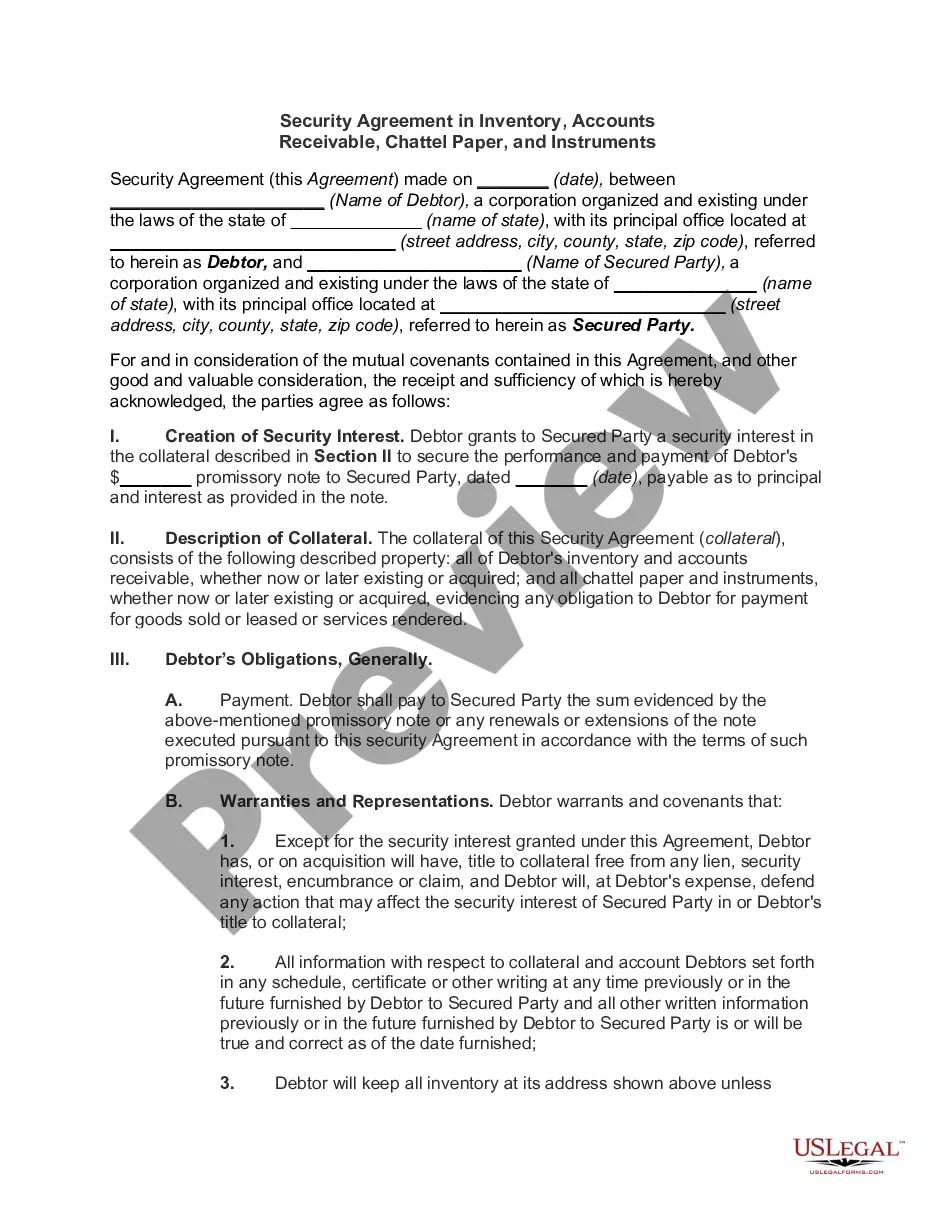
Security agreements are generally used to supplement a secured promissory note. The note is the borrower's actual promise to repay the money it received. The enclosed security agreement assumes the existence of a secured promissory note, but that agreement is not included with this package.
A promissory note secured by collateral will need a second document. If the collateral is real property, there will be either a mortgage or a deed of trust. If the collateral is personal property, there will be a security agreement.
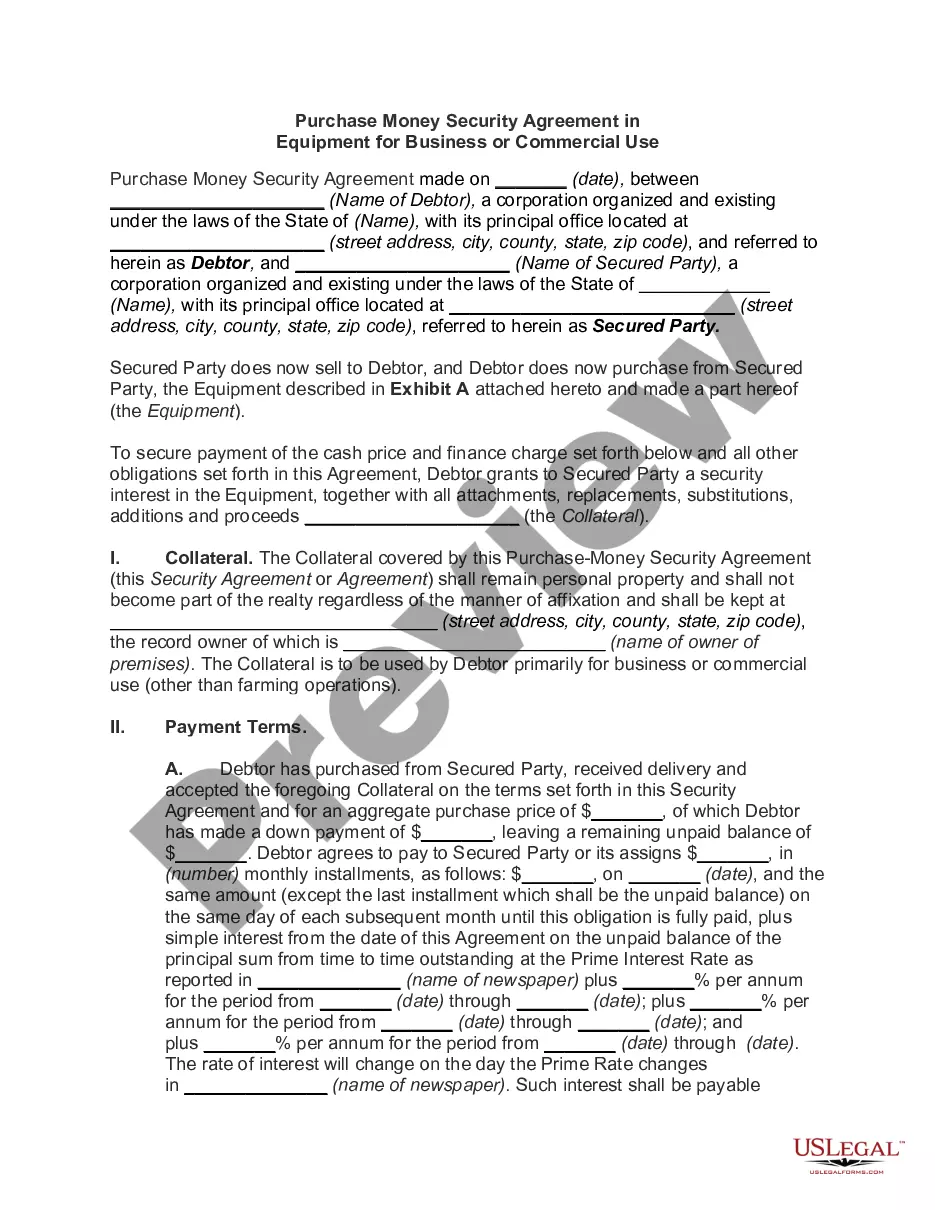
There are different types of collateral in which the creditor may be able to obtain a PMSI, including inventory, non-inventory, farm products, and software.
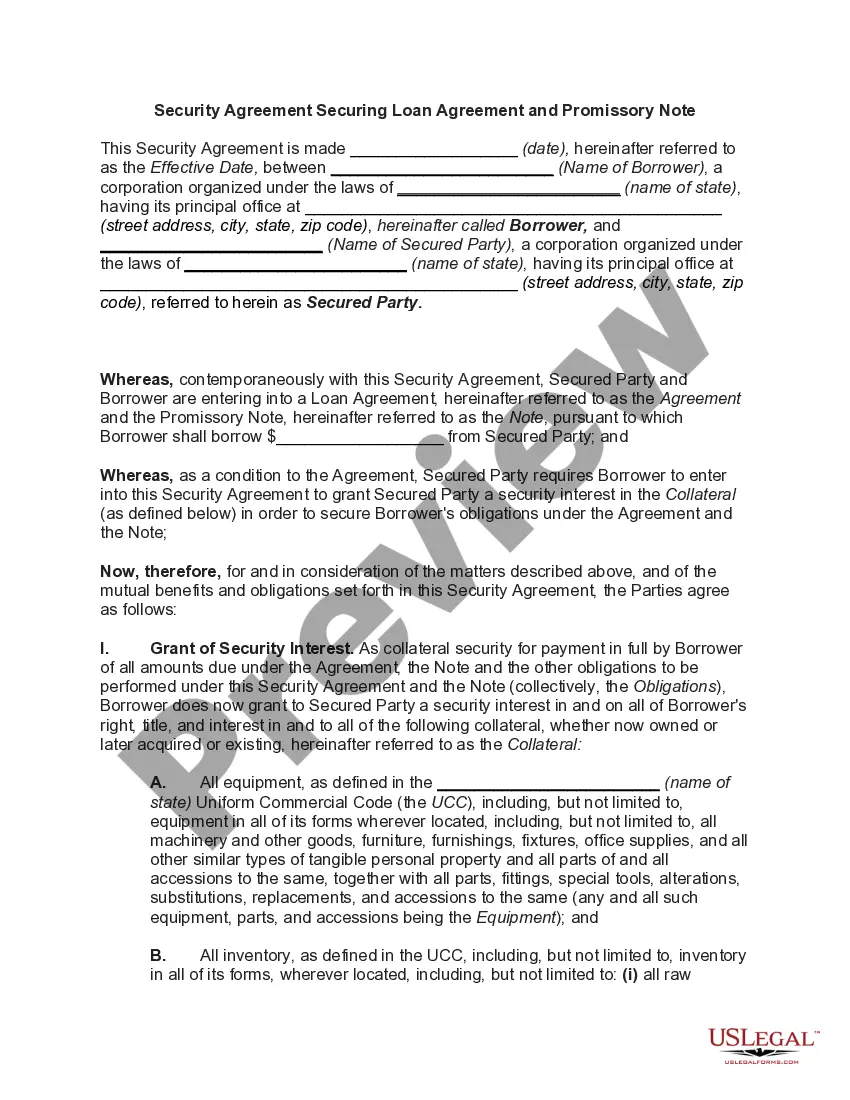
Loans from banks or other institutional lenders are always made using a number of documents, two of which are a promissory and security agreement. In general, the promissory note is your written promise to repay the loan and a security agreement is used when collateral is given for the loan.
Borrower's promise to pay is secured by a mortgage, deed of trust or similar security instrument that is dated the same date as this Note and called the ?Security Instrument.? The Security Instrument protects the Lender from losses, which might result if Borrower defaults under this Note.
This document may be called the Security Instrument, Deed of Trust, or Mortgage. When you sign this document, you are giving the lender the right to take your property by foreclosure if you fail to pay your mortgage ing to the terms you've agreed to.
The lender holds the note until the mortgage repayments are complete and it's the note that gives them the power to foreclose if the homeowner defaults. Without a legally binding promissory note, a financial institution may not have any legal recourse to foreclose on the home or attempt to get their money back.
Deeds of trust are used in conjunction with promissory notes. The deed of trust is the security for the amount loaned to finance the real estate purchase, and is secured by the underlying piece of real estate. The deed of trust is what secures the promissory note.