New Mexico Grant of Drainage Easement
What this document covers
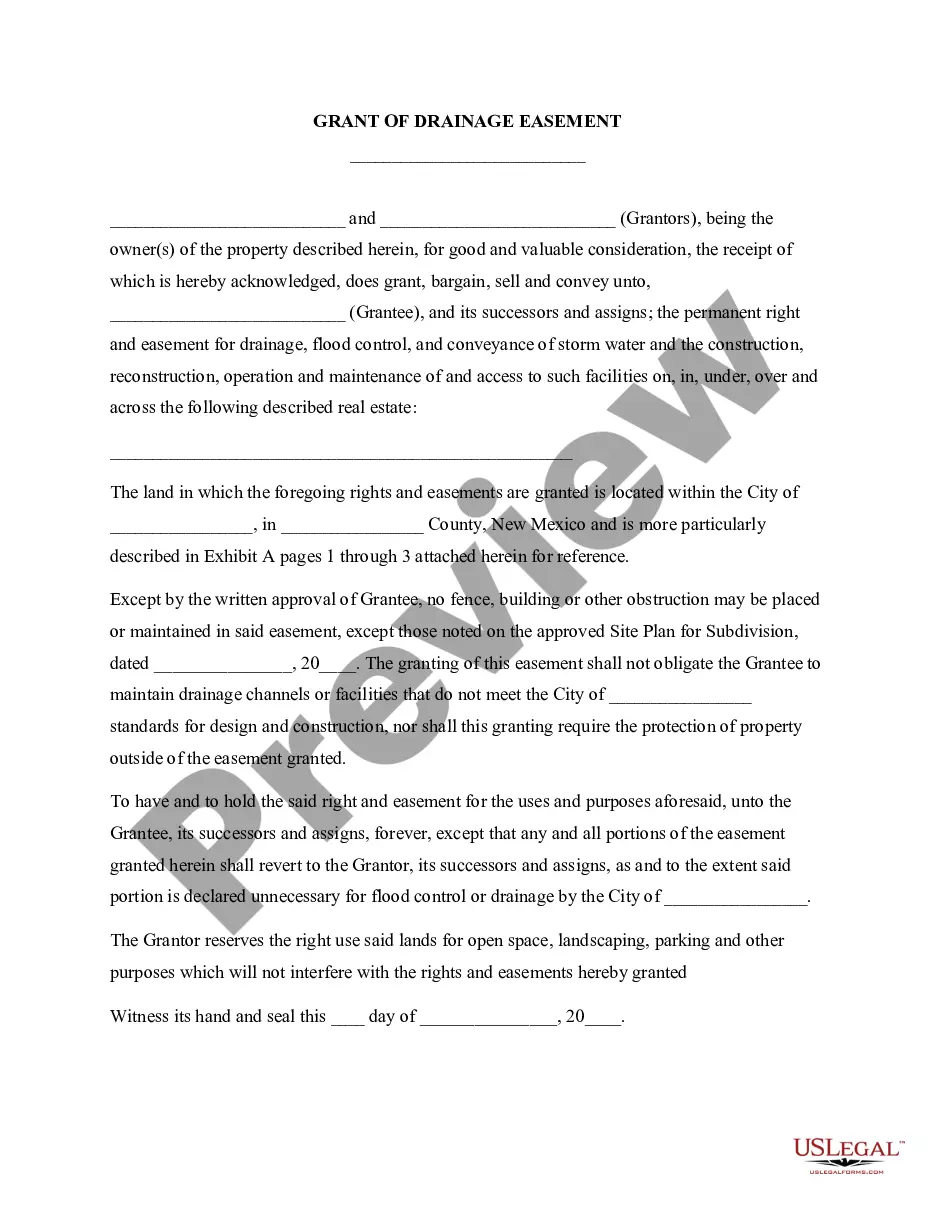
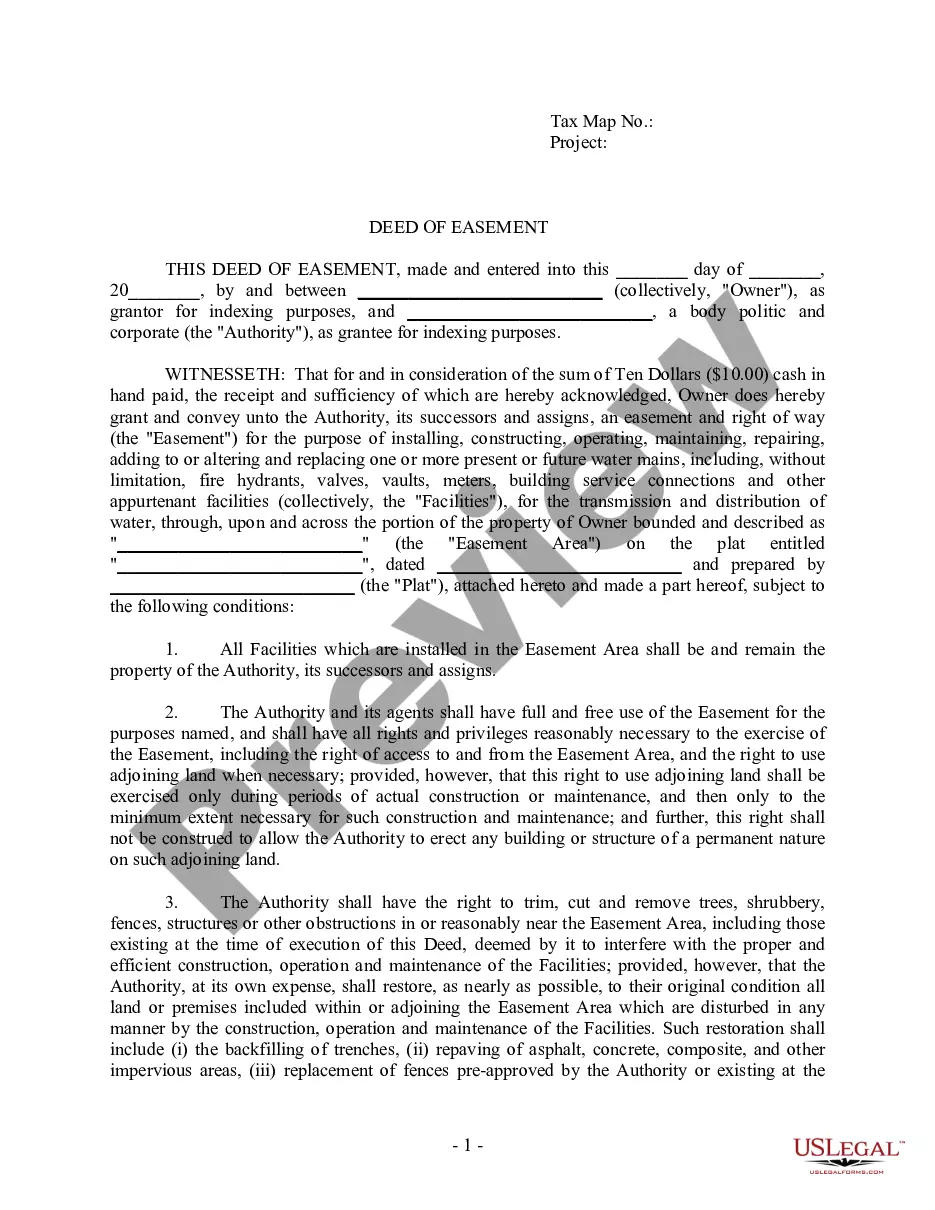
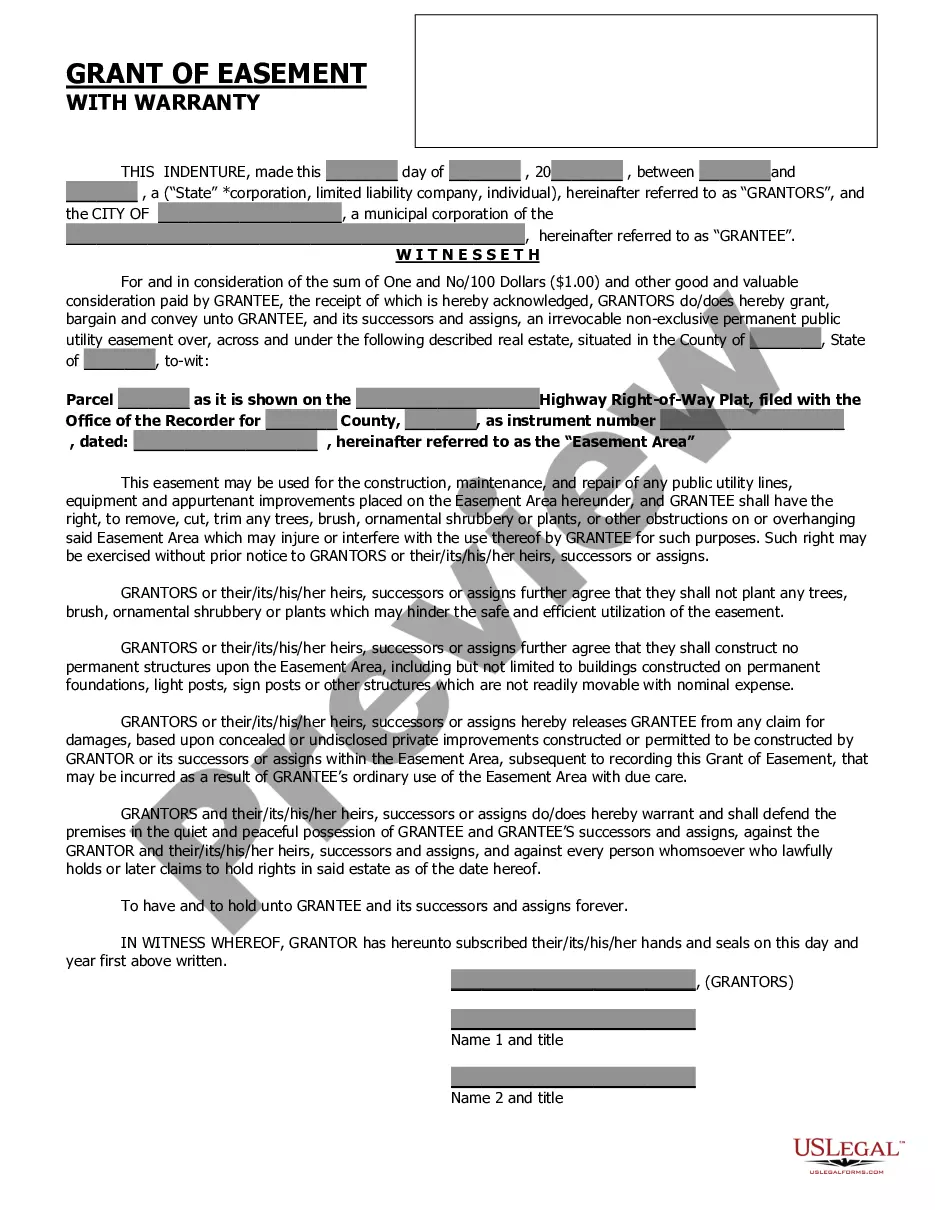
The Grant of Drainage Easement is a legal document that provides a permanent easement for the discharge and conveyance of surface and storm water across another party's property. This form is essential for property owners who need to manage drainage effectively and ensures that the easement rights are clear and legally enforceable. Unlike temporary easements, this grant offers exclusive rights in perpetuity, making it a vital tool for long-term drainage solutions.
Main sections of this form
- Identification of Grantors (property owners) and Grantee (party receiving easement).
- Description of the property where the easement is granted.
- Terms regarding maintenance responsibilities for drainage facilities.
- Provisions for land use by the Grantor in the easement area.
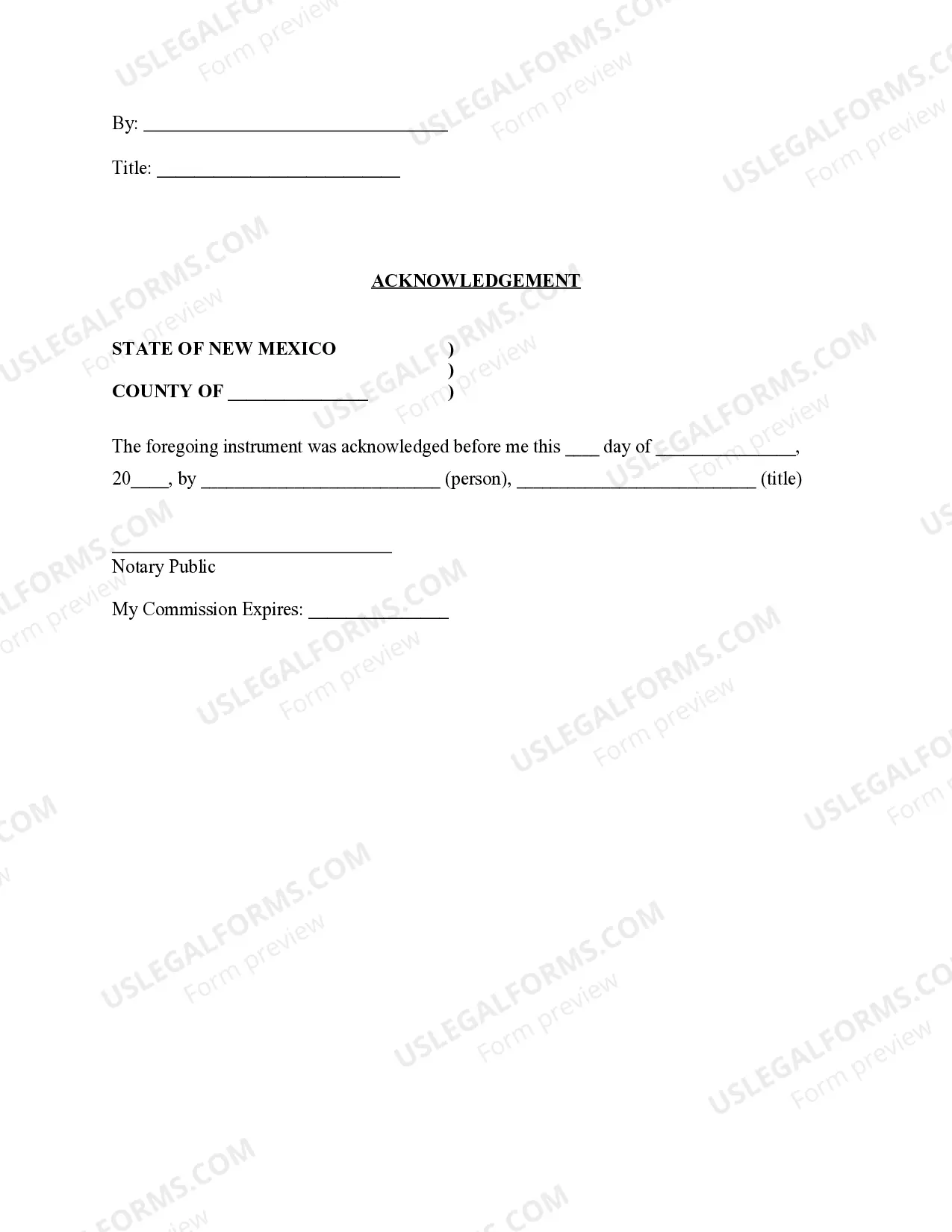
- Acknowledgment section for notarization.
When this form is needed
This form should be used when a property owner wishes to grant another party the right to manage storm water drainage on their property. Common situations include developments that require drainage easements for compliance with local regulations, the need to prevent flooding on adjacent properties, or when utility companies require access to infrastructure. It is particularly relevant in areas prone to heavy rainfall or flooding.
Intended users of this form
- Property owners looking to grant an easement for drainage.
- Developers needing to establish legal rights for storm water management.
- Utility companies that require access to drainage facilities.
- Real estate attorneys representing clients involved in property transactions.
Completing this form step by step
- Identify the Grantors and Grantee by entering their names and titles.
- Specify the property description related to the easement.
- Fill in the relevant dates and details concerning the easement and storm water management.
- Ensure the Site Plan for Subdivision is attached if applicable.
- Sign the document in the presence of a notary public.
Does this document require notarization?
Yes, this form must be notarized to be legally valid. US Legal Forms offers integrated online notarization options, allowing you to complete this process securely via video call at any time, ensuring that your document is fully compliant and ready for use.
Get your form ready online
Our built-in tools help you complete, sign, share, and store your documents in one place.
Make edits, fill in missing information, and update formatting in US Legal Forms—just like you would in MS Word.
Download a copy, print it, send it by email, or mail it via USPS—whatever works best for your next step.
Sign and collect signatures with our SignNow integration. Send to multiple recipients, set reminders, and more. Go Premium to unlock E-Sign.
If this form requires notarization, complete it online through a secure video call—no need to meet a notary in person or wait for an appointment.
We protect your documents and personal data by following strict security and privacy standards.

Make edits, fill in missing information, and update formatting in US Legal Forms—just like you would in MS Word.

Download a copy, print it, send it by email, or mail it via USPS—whatever works best for your next step.

Sign and collect signatures with our SignNow integration. Send to multiple recipients, set reminders, and more. Go Premium to unlock E-Sign.

If this form requires notarization, complete it online through a secure video call—no need to meet a notary in person or wait for an appointment.

We protect your documents and personal data by following strict security and privacy standards.
Mistakes to watch out for
- Failing to accurately describe the property involved in the easement.
- Not including necessary signatures from all Grantors.
- Omitting the required acknowledgment section for notarization.
Benefits of completing this form online
- Convenience of downloading and completing the form at your own pace.
- Accessibility to revisions, ensuring that the document meets your specific needs.
- Reliability of forms drafted by licensed attorneys, providing legal assurance.
Looking for another form?


Form popularity
FAQ
Creating an easement requires the same formalities as the transferring or creating of other interests in land. It typically requires a written document, a signature, and proper delivery of the document.Easements of necessity are typically implied to give access to a landlocked piece of property.
Rights of way (similar to the driveway example, but also including walkways or pathways); Public utilities, such as gas, electricity or water and sewer mains; Parking areas; Access to light and air; and. Shared walls.
A Legal Easement is an easement that is Recorded in the same County Office where Deeds to Property are Recorded. This easement is also called a Deeded Easement or a Recorded Easement.No other type of easement gives you the legal right to cross someone's private land to access your land.
While an unrecorded easement may still be enforceable, the easement may be nullified by a "bona fide purchaser" of the property if the property is sold for value and the subsequent purchaser has no notice (constructive or otherwise) of the unrecorded easement.
Give the document a simple title: Grant of Easement is sufficient. Identify the parties. You need to explain who the parties are to the agreement. The person granting the easement to his property is the Grantor and the person gaining access to the property is the Grantee.
An easement is a nonpossessory right to use and/or enter onto the real property of another without possessing it. It is "best typified in the right of way which one landowner, A, may enjoy over the land of another, B".
An easement is a limited right to use another person's land for a stated purpose. Examples of easements include the use of private roads and paths, or the use of a landowner's property to lay railroad tracks or electrical wires.
A property easement is generally written and recorded with the local assessor's office. The documented easement will show up when a title search is conducted and it stays there indefinitely, unless both parties agree to remove it.
In order to acquire a prescriptive easement, a claimant must establish (1) that the use was continuous for five years; (2) the use was open, notorious and clearly visible to the owner of the property; and (3) the use was hostile and adverse to the owner.