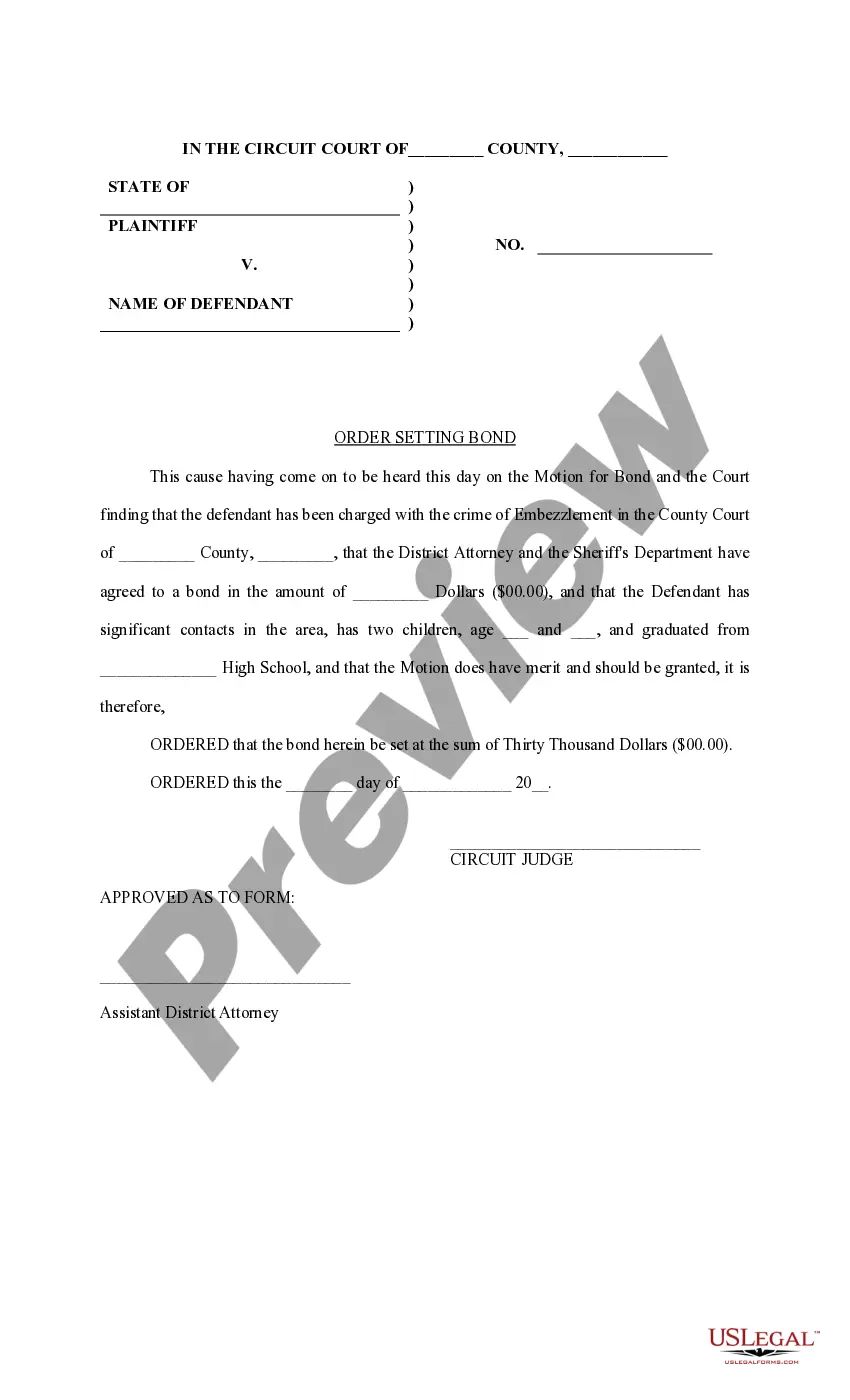
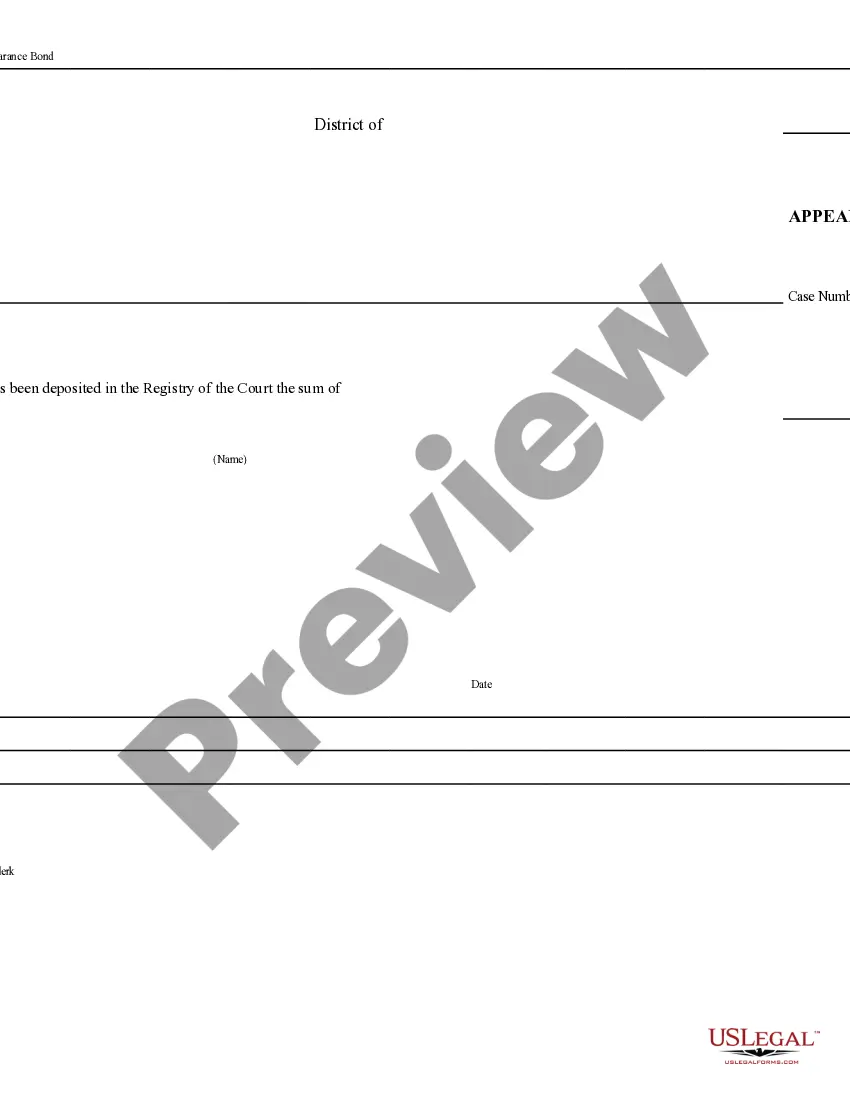
Tennessee Order Setting Bond
Description
Get your form ready online
Our built-in tools help you complete, sign, share, and store your documents in one place.
Make edits, fill in missing information, and update formatting in US Legal Forms—just like you would in MS Word.
Download a copy, print it, send it by email, or mail it via USPS—whatever works best for your next step.
Sign and collect signatures with our SignNow integration. Send to multiple recipients, set reminders, and more. Go Premium to unlock E-Sign.
If this form requires notarization, complete it online through a secure video call—no need to meet a notary in person or wait for an appointment.
We protect your documents and personal data by following strict security and privacy standards.

Make edits, fill in missing information, and update formatting in US Legal Forms—just like you would in MS Word.

Download a copy, print it, send it by email, or mail it via USPS—whatever works best for your next step.

Sign and collect signatures with our SignNow integration. Send to multiple recipients, set reminders, and more. Go Premium to unlock E-Sign.

If this form requires notarization, complete it online through a secure video call—no need to meet a notary in person or wait for an appointment.

We protect your documents and personal data by following strict security and privacy standards.
Looking for another form?





How to fill out Order Setting Bond?
US Legal Forms - one of the largest collections of legal documents in the United States - provides a broad selection of legal document templates that you can download or print. By using the website, you can discover thousands of forms for business and personal purposes, organized by categories, states, or keywords. You can locate the latest versions of forms like the Tennessee Order Setting Bond in moments.
If you already hold a membership, Log In and retrieve the Tennessee Order Setting Bond from the US Legal Forms collection. The Acquire button will appear on every form you view. You have access to all previously downloaded forms in the My documents section of your account.
To utilize US Legal Forms for the first time, here are simple instructions to assist you: Ensure you have selected the correct form for your city/state. Click on the Review button to check the form's details. Review the form description to confirm you have chosen the right document. If the form does not fulfill your requirements, use the Search box at the top of the page to find the one that does.
Access the Tennessee Order Setting Bond with US Legal Forms, one of the most extensive collections of legal document templates. Utilize thousands of professional and state-specific templates that cater to your business or personal requirements.
- If you are satisfied with the form, confirm your choice by clicking the Get now button.
- Next, select the payment plan you prefer and provide your information to register for an account.
- Complete the transaction. Use your credit card or PayPal account to finalize the payment.
- Select the format and download the form to your device.
- Make modifications. Fill out, edit, print, and sign the downloaded Tennessee Order Setting Bond.
- Every template you have added to your account does not have an expiration date and belongs to you indefinitely. Therefore, if you wish to download or print another copy, simply go to the My documents section and click on the form you need.
Form popularity
FAQ
Generally, the bail bond agency pays the full amount of the bail if the defendant pays his/her share. If the defendant appears for all his/her court hearings, the court releases the amount that the bail bond agency paid into court. If the defendant doesn't show/skips out on the hearing, the court keeps the bail money.
In exchange for the capital, the company pays an interest coupon, which is the annual interest rate paid on a bond expressed as a percentage of the face value. The company pays the interest at predetermined intervals (usually annually or semiannually) and returns the principal on the maturity date, ending the loan.
Common bail conditions in Tennessee In addition to being required to appear at any court hearings, the defendant who is released on bail must: Keep his/her job. Submit to substance abuse testing. Check with court officials about his/her whereabouts.
Once an amount is set and you've contacted a bail bond agency for professional help, getting out of jail can then range anywhere from 30 minutes to 24 hours. This, of course, depends on the court system, how busy they are, what the details of your case are, and other factors.
If the defendant appears for all scheduled court dates, the bail money will be returned, sometimes less a small administrative fee. If the defendant does not appear for his or her scheduled court date, the court may keep the full bail amount and issue a warrant for the defendant's arrest.
Simply put, a source hearing is conducted for the purpose of proving that the funds being used to post the bond are not derived from criminal activity, such as drug deals or other crimes. If a source hearing is required, your attorney will file a motion to schedule such a hearing.
At a preliminary hearing, the Judge listens to witnesses and decides if the case should go to the Grand Jury. The defendant can send the case to the Grand Jury if he waives or gives up his right to a preliminary hearing.
Bail/Bond Hearing Once the defendant has been arrested, the Court may hold a bail hearing, sometimes called a ?bond hearing,? to determine whether the defendant should be held in the local jail until the trial is complete or can be released on bail.