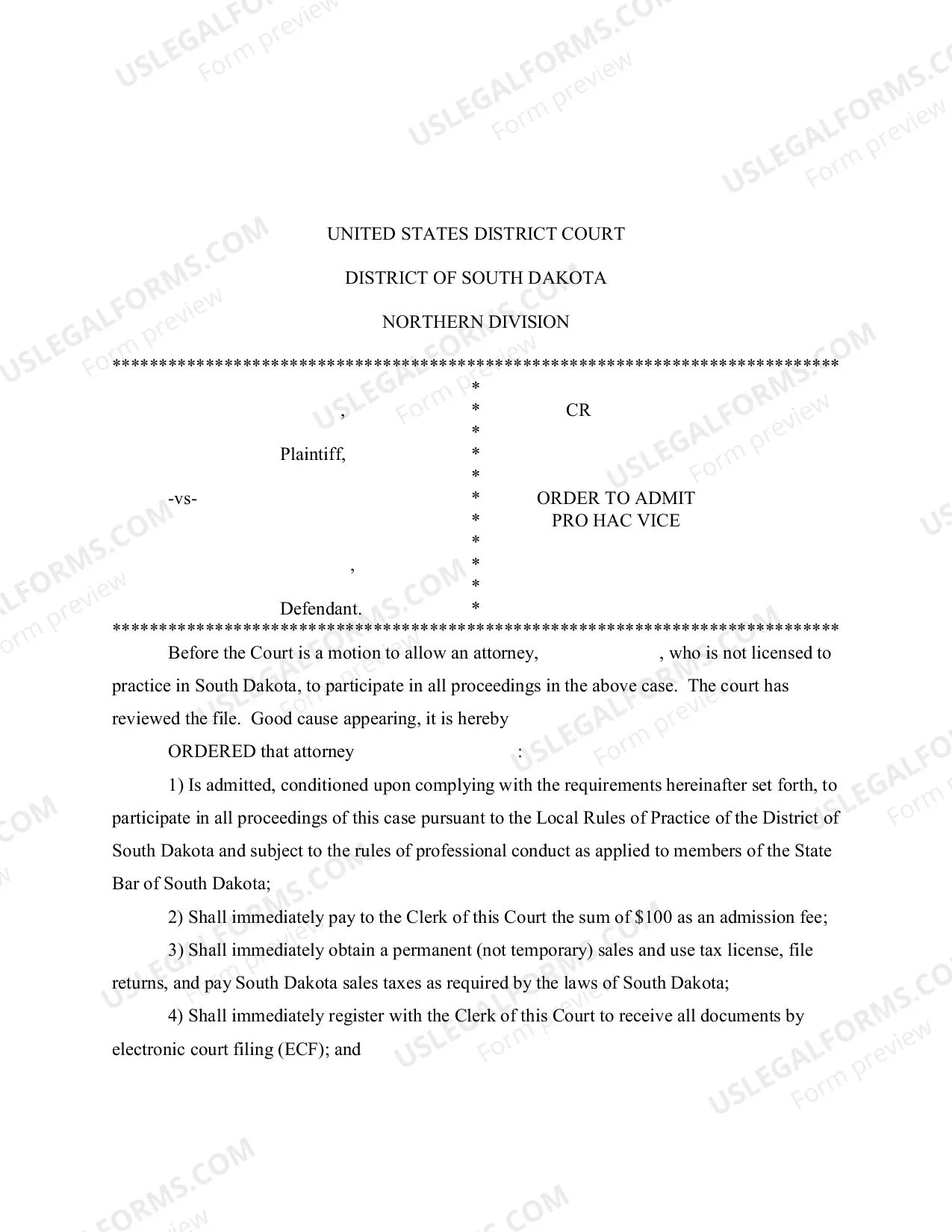
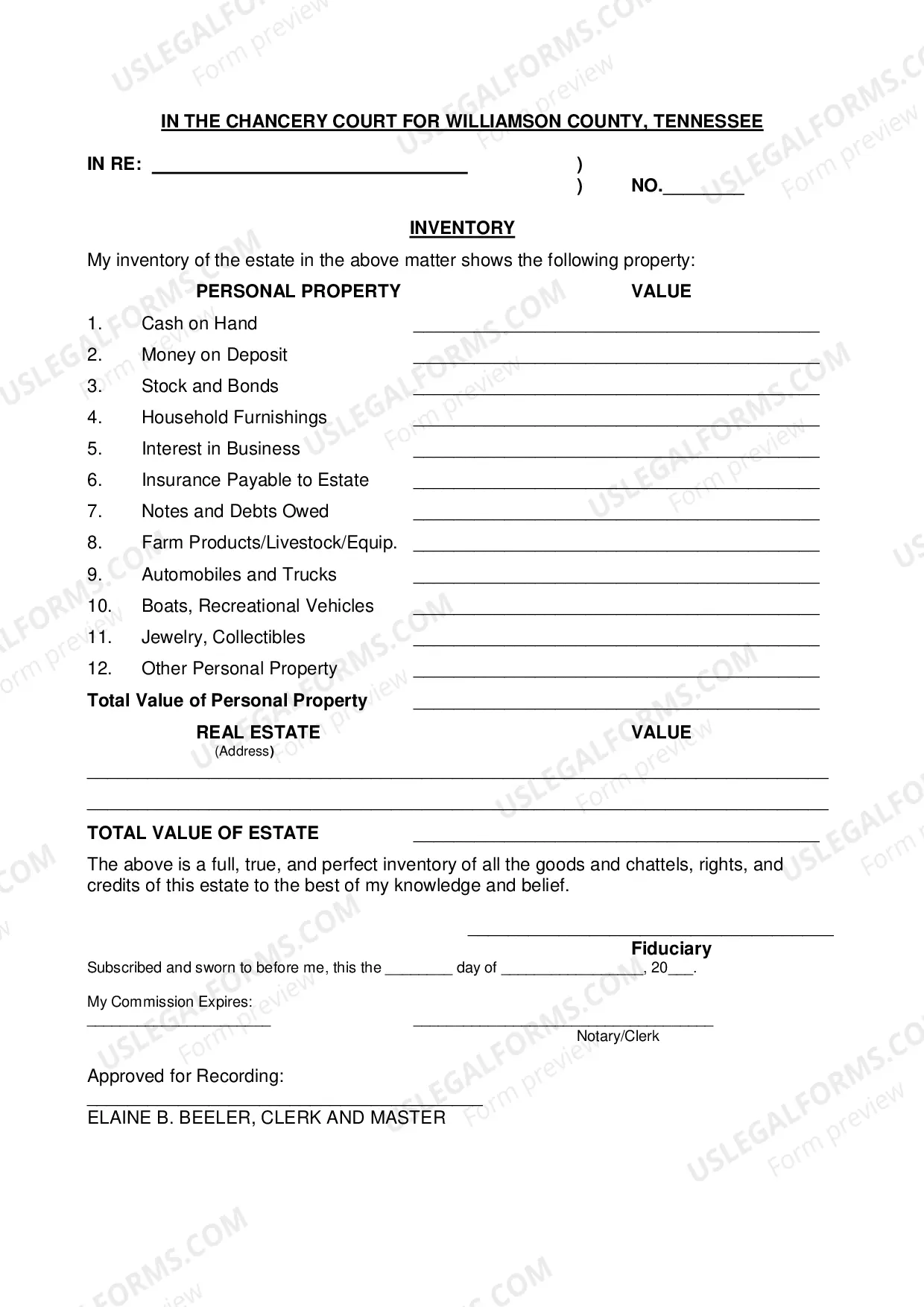
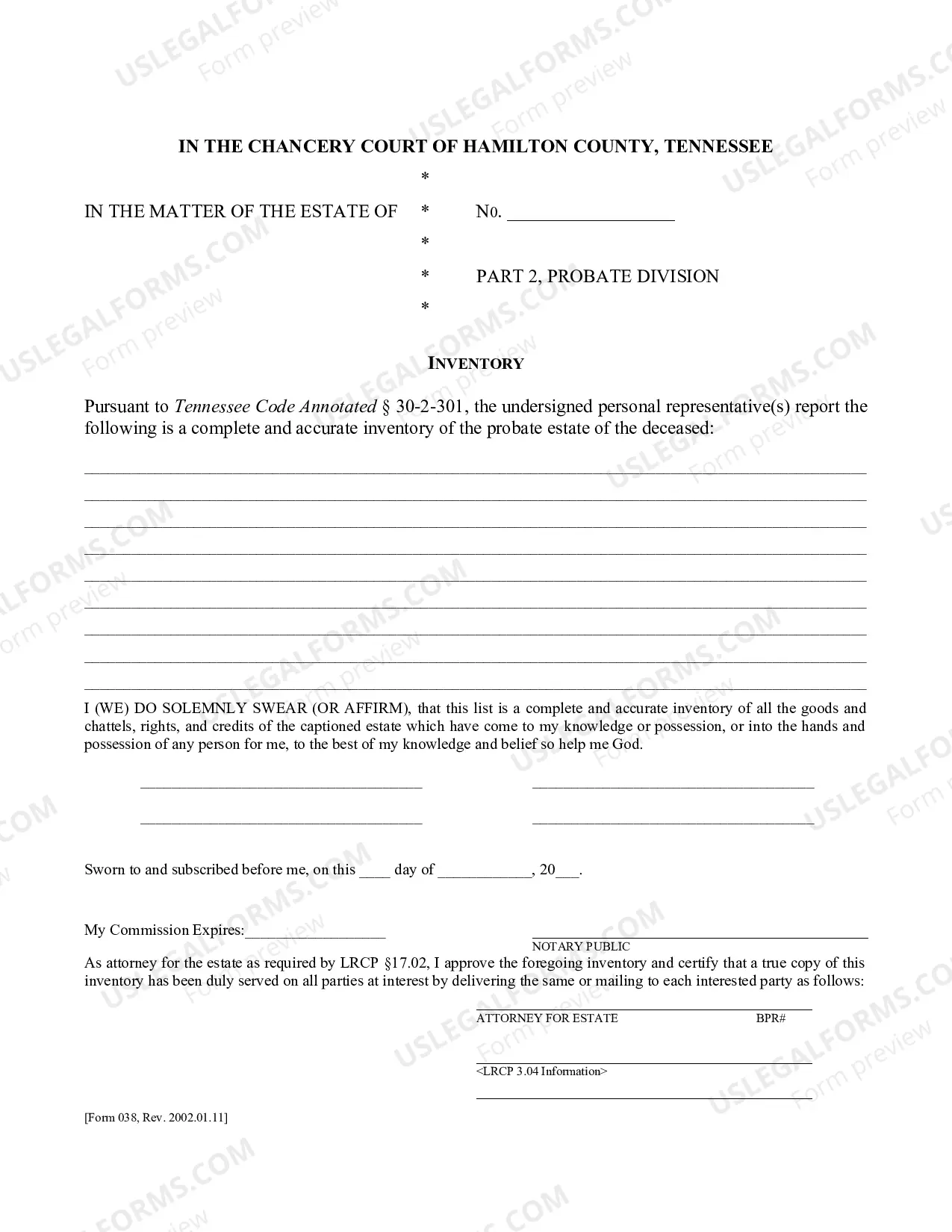
Tennessee Estate Inventory
Description
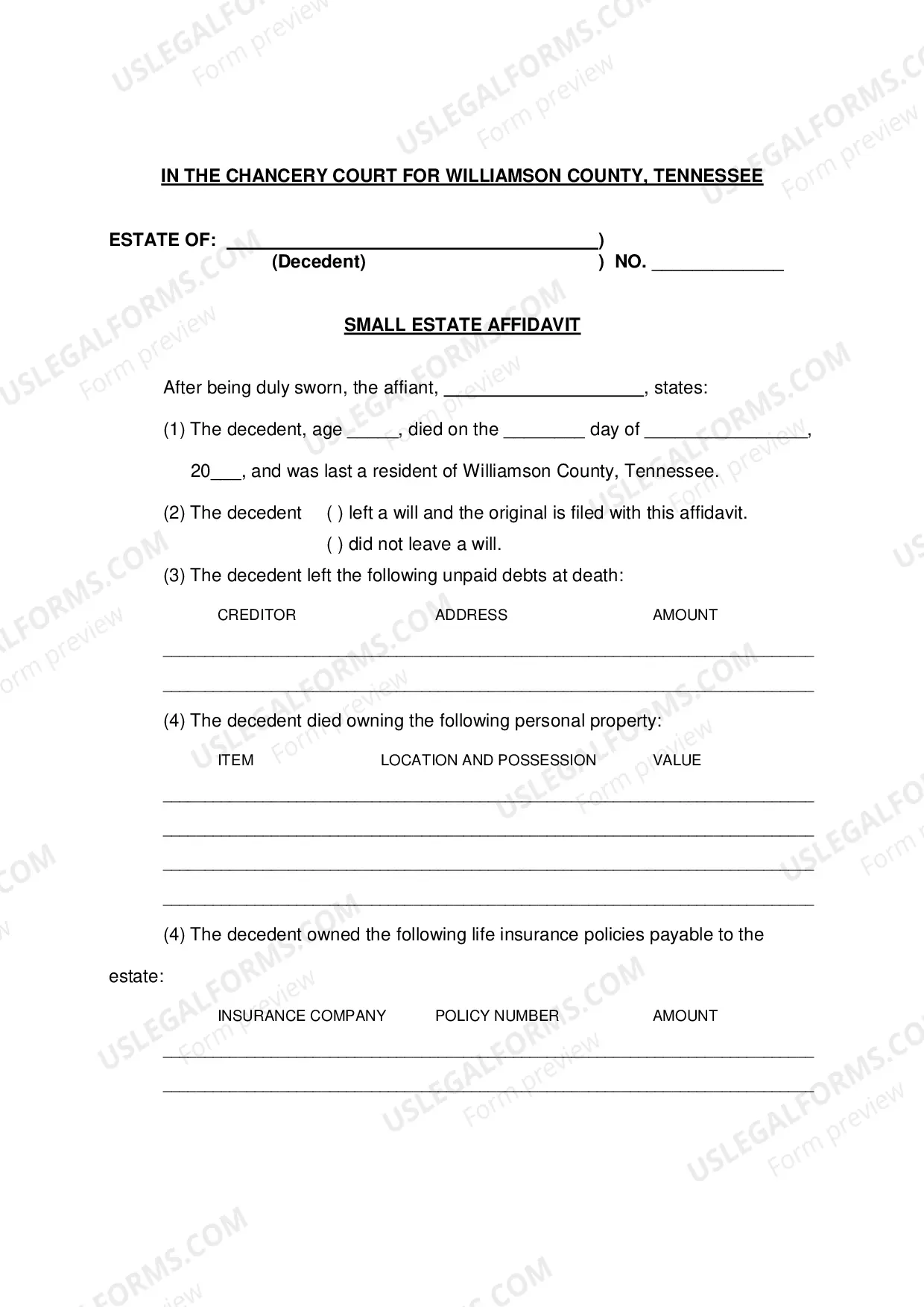
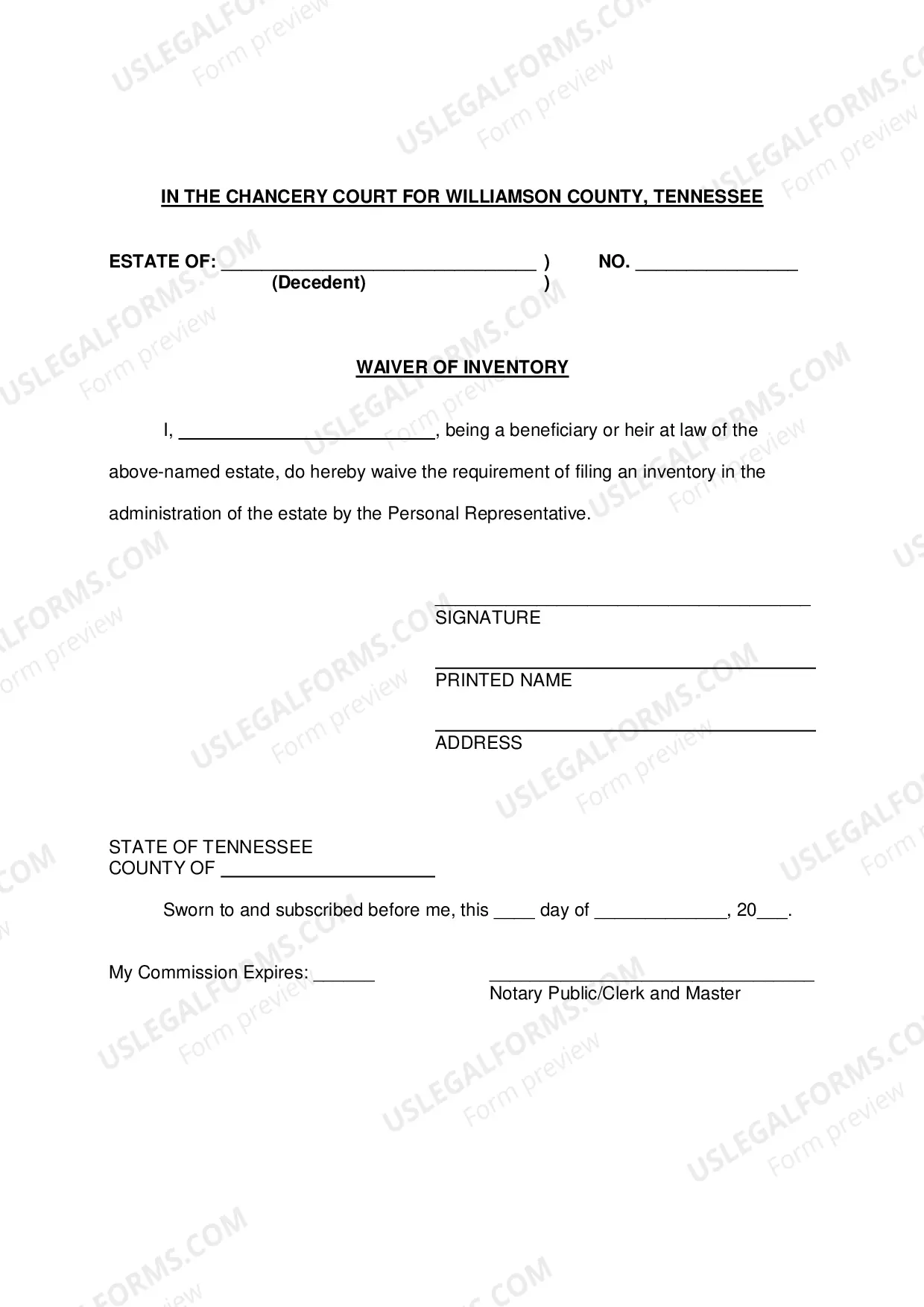
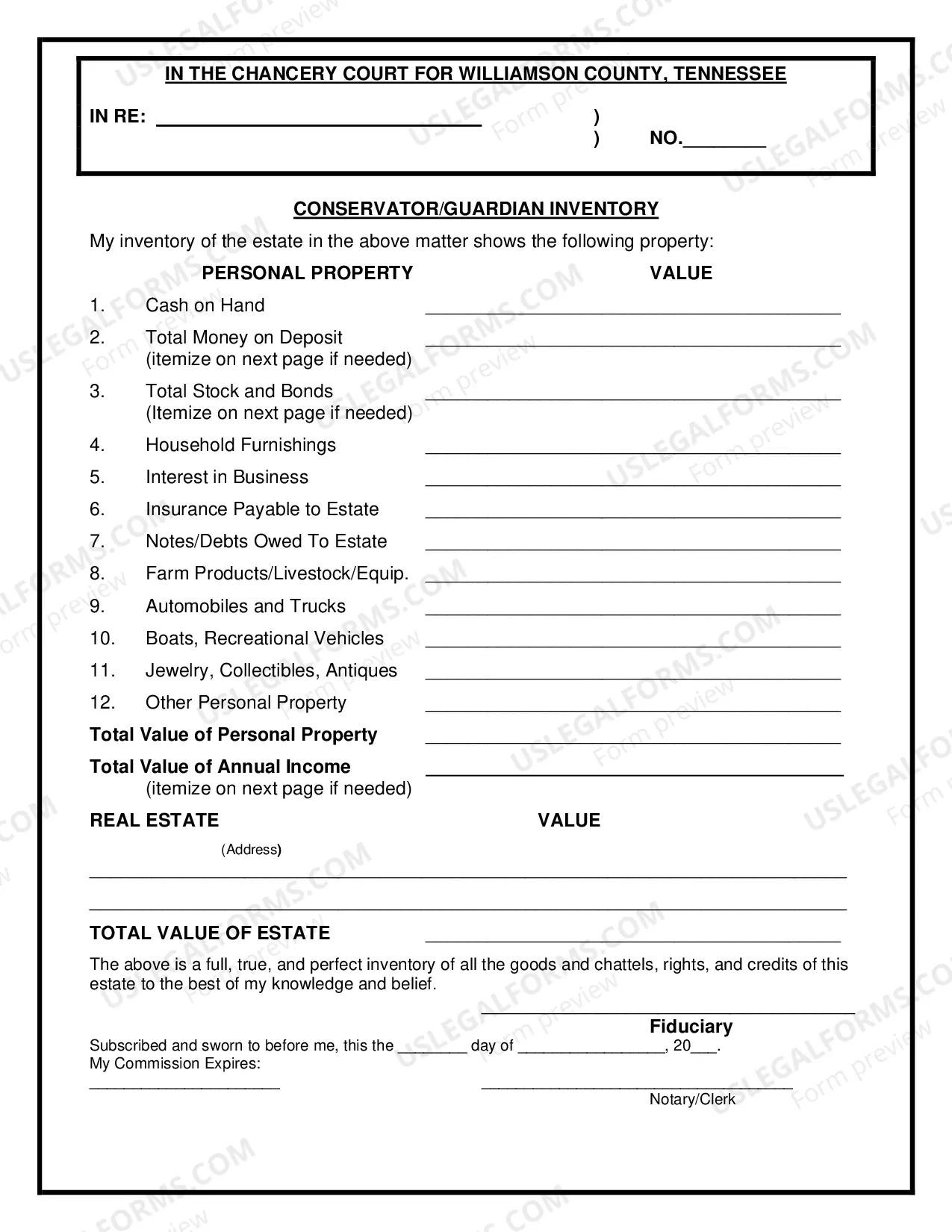
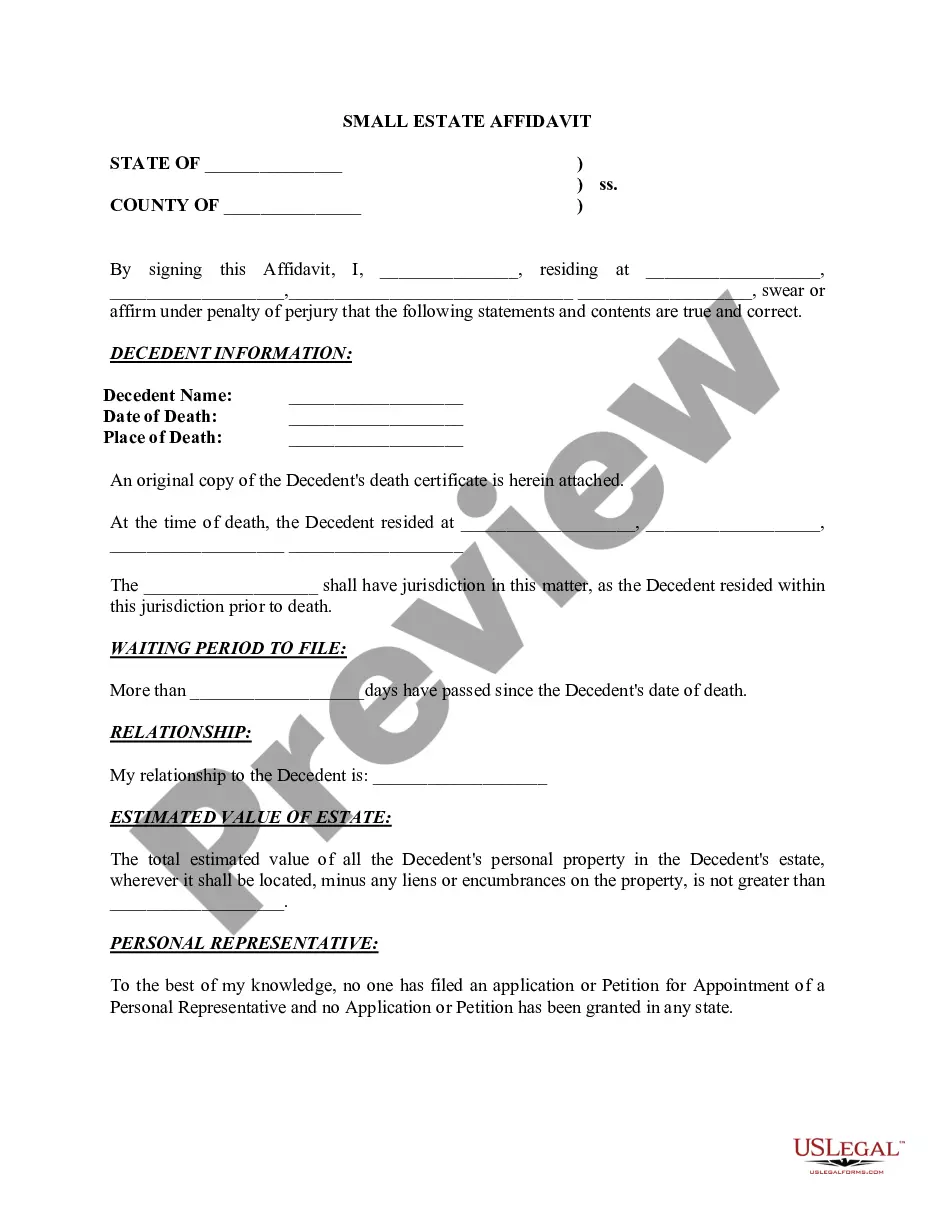
Get your form ready online
Our built-in tools help you complete, sign, share, and store your documents in one place.
Make edits, fill in missing information, and update formatting in US Legal Forms—just like you would in MS Word.
Download a copy, print it, send it by email, or mail it via USPS—whatever works best for your next step.
Sign and collect signatures with our SignNow integration. Send to multiple recipients, set reminders, and more. Go Premium to unlock E-Sign.
If this form requires notarization, complete it online through a secure video call—no need to meet a notary in person or wait for an appointment.
We protect your documents and personal data by following strict security and privacy standards.

Make edits, fill in missing information, and update formatting in US Legal Forms—just like you would in MS Word.

Download a copy, print it, send it by email, or mail it via USPS—whatever works best for your next step.

Sign and collect signatures with our SignNow integration. Send to multiple recipients, set reminders, and more. Go Premium to unlock E-Sign.

If this form requires notarization, complete it online through a secure video call—no need to meet a notary in person or wait for an appointment.

We protect your documents and personal data by following strict security and privacy standards.
Looking for another form?
How to fill out Tennessee Estate Inventory?
US Legal Forms is the most straightforward and profitable way to find appropriate formal templates. It’s the most extensive online library of business and individual legal paperwork drafted and checked by legal professionals. Here, you can find printable and fillable blanks that comply with federal and local laws - just like your Tennessee Estate Inventory.
Getting your template takes just a few simple steps. Users that already have an account with a valid subscription only need to log in to the website and download the form on their device. Afterwards, they can find it in their profile in the My Forms tab.
And here’s how you can obtain a professionally drafted Tennessee Estate Inventory if you are using US Legal Forms for the first time:
- Look at the form description or preview the document to guarantee you’ve found the one meeting your demands, or find another one utilizing the search tab above.
- Click Buy now when you’re sure of its compatibility with all the requirements, and judge the subscription plan you prefer most.
- Register for an account with our service, log in, and pay for your subscription using PayPal or you credit card.
- Select the preferred file format for your Tennessee Estate Inventory and save it on your device with the appropriate button.
After you save a template, you can reaccess it whenever you want - simply find it in your profile, re-download it for printing and manual fill-out or import it to an online editor to fill it out and sign more proficiently.
Take full advantage of US Legal Forms, your reliable assistant in obtaining the required official documentation. Give it a try!
Form popularity
FAQ
Non-probate assets are assets that are either jointly titled or have a designated beneficiary. You do not have to go through probate if the estate is made up entirely of non-probate assets, regardless of whether the decedent has a valid will.
Does Tennessee Law Require Probate? Yes, probate is a requirement for estates in Tennessee. This is the method used to distribute the assets to the heirs and ensure the will is followed.
If an estate is valued at less than $25,000, there is no Will and the decedent was not married, in Tennessee, you can use the summary probate procedure. Note that the state does not have an Affidavit procedure for small estates.
In simple terms, an estate inventory includes all of the assets of an estate belonging to someone who's passed away. This inventory can also include a listing of the person's liabilities or debts.
Only assets that the deceased person owned in his or her own name, alone, must go through probate. All other assets pass to new owners without oversight from the probate court. Assets that go through probate make up what's called the "probate estate."
Non-probate assets are assets that are either jointly titled or have a designated beneficiary. You do not have to go through probate if the estate is made up entirely of non-probate assets, regardless of whether the decedent has a valid will.
What assets are subject to probate in Tennessee? Real estate held in the deceased's name only. If the deceased is the only name on the deed, then it will need to go through the probate process, in most cases. Personal property in the deceased's name.Bank and other financial accounts.
Following the deceased's passing, the executor has 60 days to turn in an inventory of the deceased's assets that need to go through probate. They also must notify the deceased's beneficiaries, whether the deceased named them in their will or they were decided ing to Tennesse's intestacy laws.