Tennessee Writ of Possession
Overview of this form
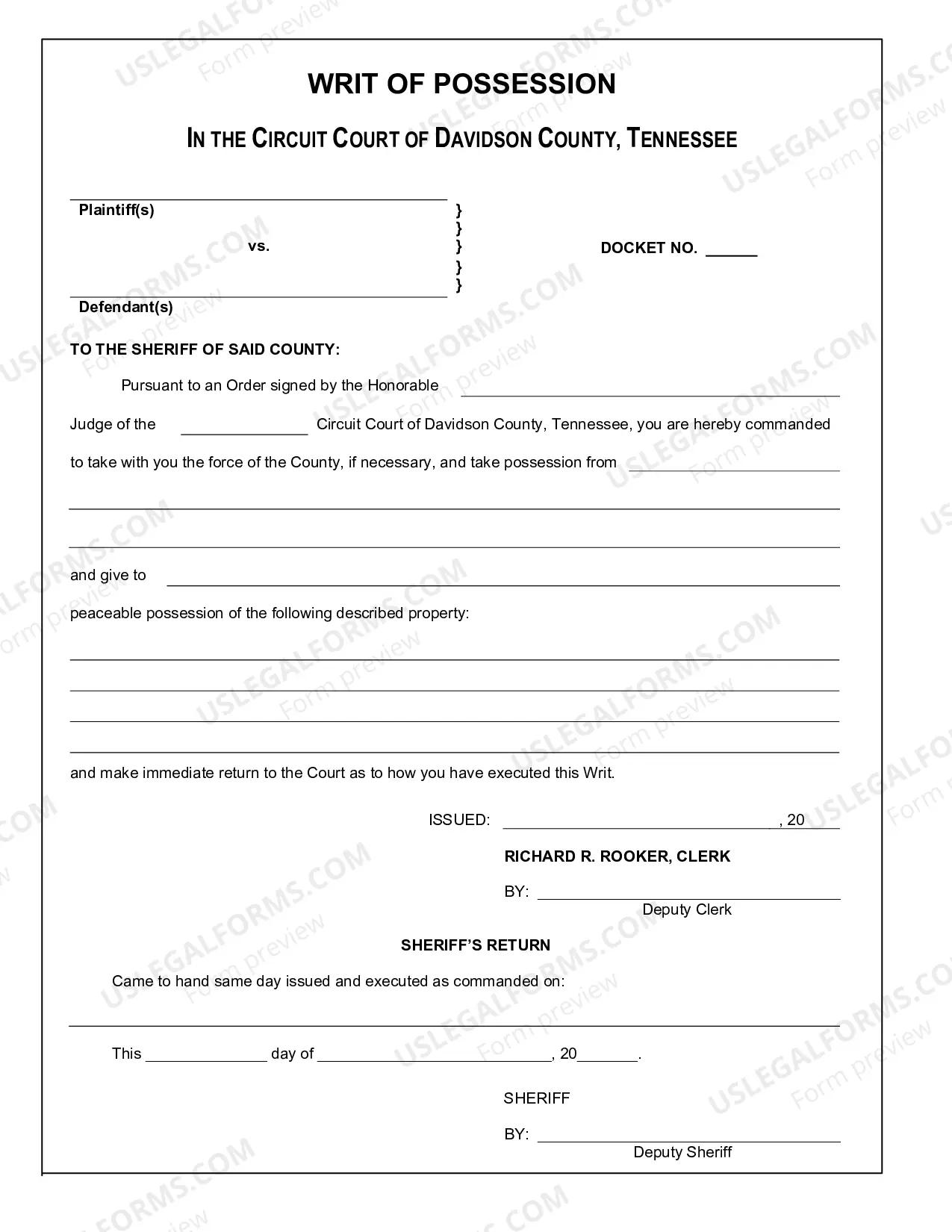
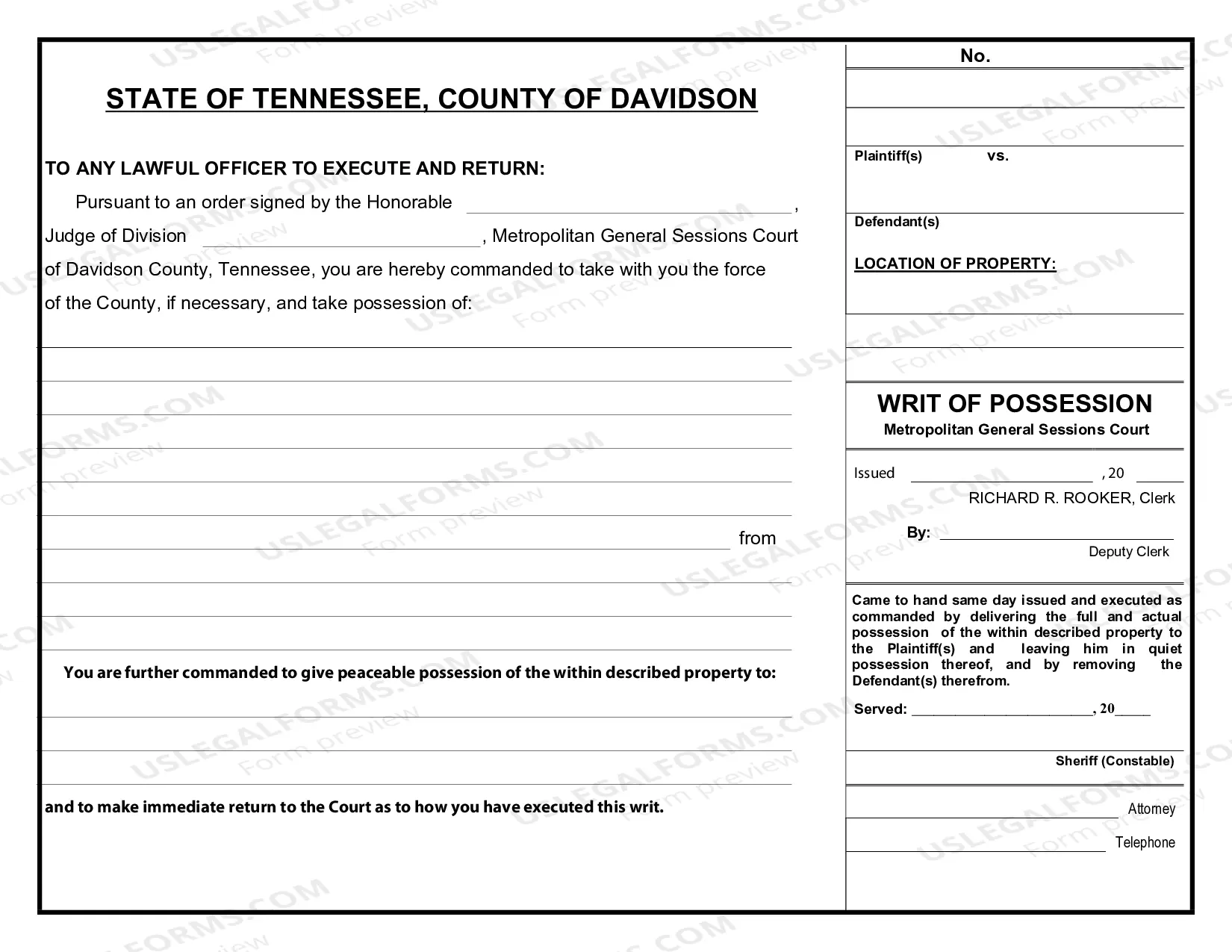
The Writ of Possession is a legal document issued by a court that authorizes law enforcement to take possession of property from a tenant or occupant who has been ordered to vacate. This form is typically used in landlord-tenant disputes and provides a mechanism for property owners to reclaim possession of their property after a legal eviction process. It is distinct from other eviction notices as it involves direct enforcement by law enforcement officers, ensuring the rightful owner can regain control without resistance.
Key components of this form
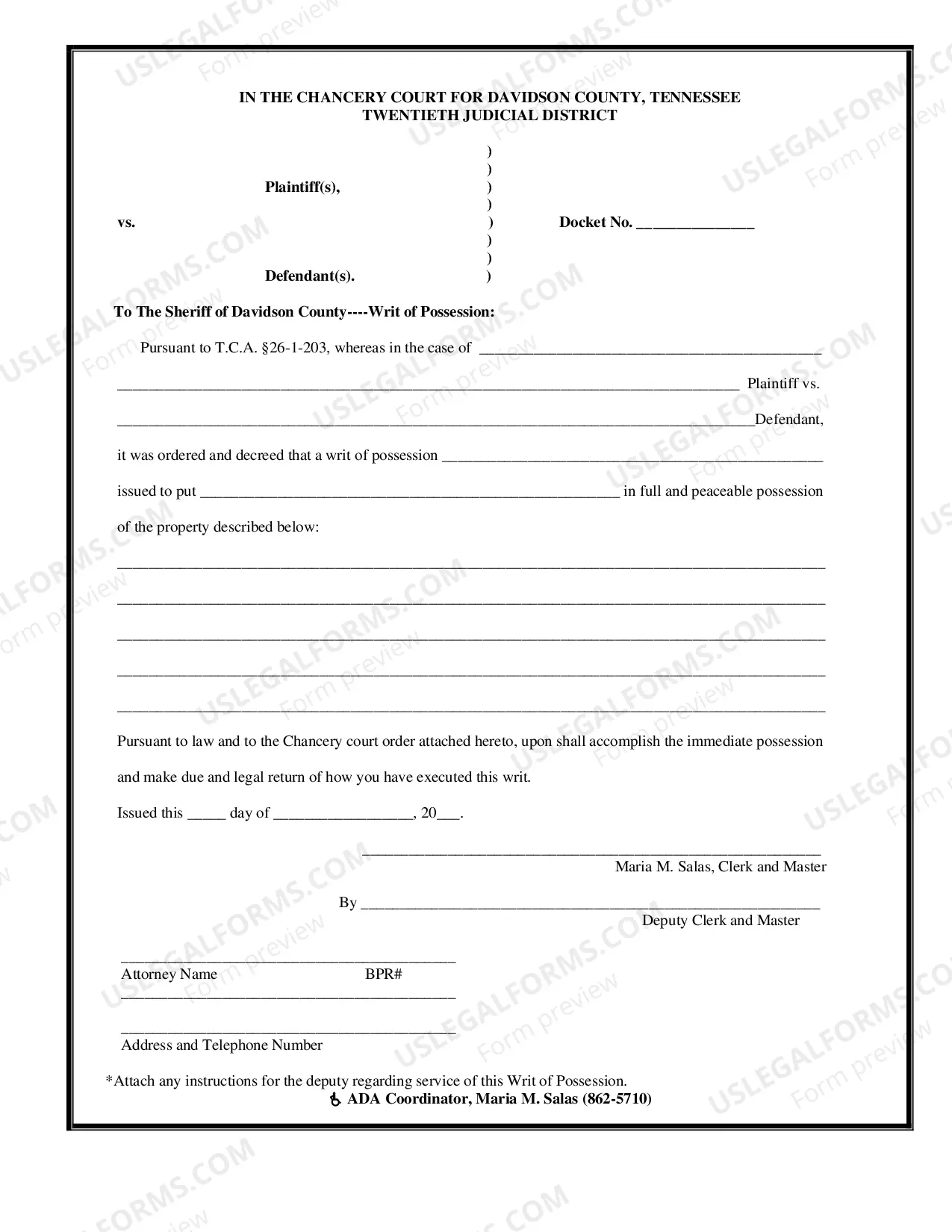
- Case caption, including the plaintiff and defendant names.
- Docket number for tracking the case within the court system.
- Instructions to the sheriff regarding the execution of the writ.
- Description of the property from which possession is to be taken.
- Signature and issuance date from the court clerk.
- Return section for the sheriff's confirmation of execution.
Situations where this form applies
This form should be used after a successful eviction judgment has been obtained in court. It is applicable in instances where a tenant has failed to vacate the premises after the court has ordered them to leave. If a landlord needs to enforce a judgment and recover possession of their property, they would file this writ to formally initiate that process with the assistance of the sheriff.
Who needs this form
This form is intended for:
- Landlords seeking to reclaim possession of rental property.
- Property owners who have evicted tenants but face resistance in vacating the premises.
- Court officials involved in the enforcement of eviction orders.
- Legal representatives handling landlord-tenant disputes.
Completing this form step by step
- Enter the names of the plaintiff(s) and defendant(s) at the top of the form.
- Provide the docket number assigned to the case.
- Specify the property address from which possession is being sought.
- Sign and date the form where indicated by the court clerk.
- Ensure the sheriff's return is properly completed by law enforcement after execution.
Does this document require notarization?
This form does not typically require notarization to be legally valid. However, some jurisdictions or document types may still require it. US Legal Forms provides secure online notarization powered by Notarize, available 24/7 for added convenience.
Get your form ready online
Our built-in tools help you complete, sign, share, and store your documents in one place.
Make edits, fill in missing information, and update formatting in US Legal Forms—just like you would in MS Word.
Download a copy, print it, send it by email, or mail it via USPS—whatever works best for your next step.
Sign and collect signatures with our SignNow integration. Send to multiple recipients, set reminders, and more. Go Premium to unlock E-Sign.
If this form requires notarization, complete it online through a secure video call—no need to meet a notary in person or wait for an appointment.
We protect your documents and personal data by following strict security and privacy standards.

Make edits, fill in missing information, and update formatting in US Legal Forms—just like you would in MS Word.

Download a copy, print it, send it by email, or mail it via USPS—whatever works best for your next step.

Sign and collect signatures with our SignNow integration. Send to multiple recipients, set reminders, and more. Go Premium to unlock E-Sign.

If this form requires notarization, complete it online through a secure video call—no need to meet a notary in person or wait for an appointment.

We protect your documents and personal data by following strict security and privacy standards.
Common mistakes to avoid
- Failing to include the correct docket number, which may delay processing.
- Omitting the property description or providing incomplete details.
- Not properly signing the document, which can lead to invalidation.
- Assuming subsequent legal action is unnecessary after filing; be aware of further requirements.
Advantages of online completion
- Quick access to a professionally drafted legal form tailored to specific needs.
- Easy download and editing options allow for customization based on unique circumstances.
- Cost-effective compared to hiring an attorney for routine legal documentation tasks.
What to keep in mind
- The Writ of Possession enables landlords to reclaim property following a legal eviction.
- Completion requires accurate details, including proper identification of all parties and property.
- Know the specific requirements and procedures of your local jurisdiction, particularly in Davidson County, Tennessee.
Looking for another form?


Form popularity
FAQ
Talk to Your Landlord You may be able to come to an agreement without going to court. An eviction will cost both of you money (as well as time), and your landlord may be willing to stop the eviction if you agree to certain terms, such as paying rent you owe or stopping behavior that violates the lease.
The Writ of Possession is a court order which informs the tenant that they must move out of their housing on the property or else they will be forcibly evicted.
If you did something dangerous or threatening, the landlord only needs to give you three (3) days to move out. If you did not pay rent or broke your lease agreement, you may be given a thirty (30) day notice to move out.
A writ of attachment is a form of prejudgment process in which a court orders the attachment or seizure of property described in the writ. The property is seized and held in the custody of an appointed official, such as a U.S. Marshal or law enforcement officer, under court supervision.
The Writ of Possession is issued 10 days after the landlord wins the case and it is executed immediately once the law enforcement officials receive it. Any personal belongings left by the tenant is kept for 30 days.
Simply put, the Motion to Stay the Writ of Possession is a document filed with the court asking the judge to ?stay? or ?stop? the sheriff from executing the Writ of Possession and removing the resident. It can be a typed or handwritten document filed by the resident or the resident's attorney if one is retained.