Tennessee Property Manager Agreement
Understanding this form
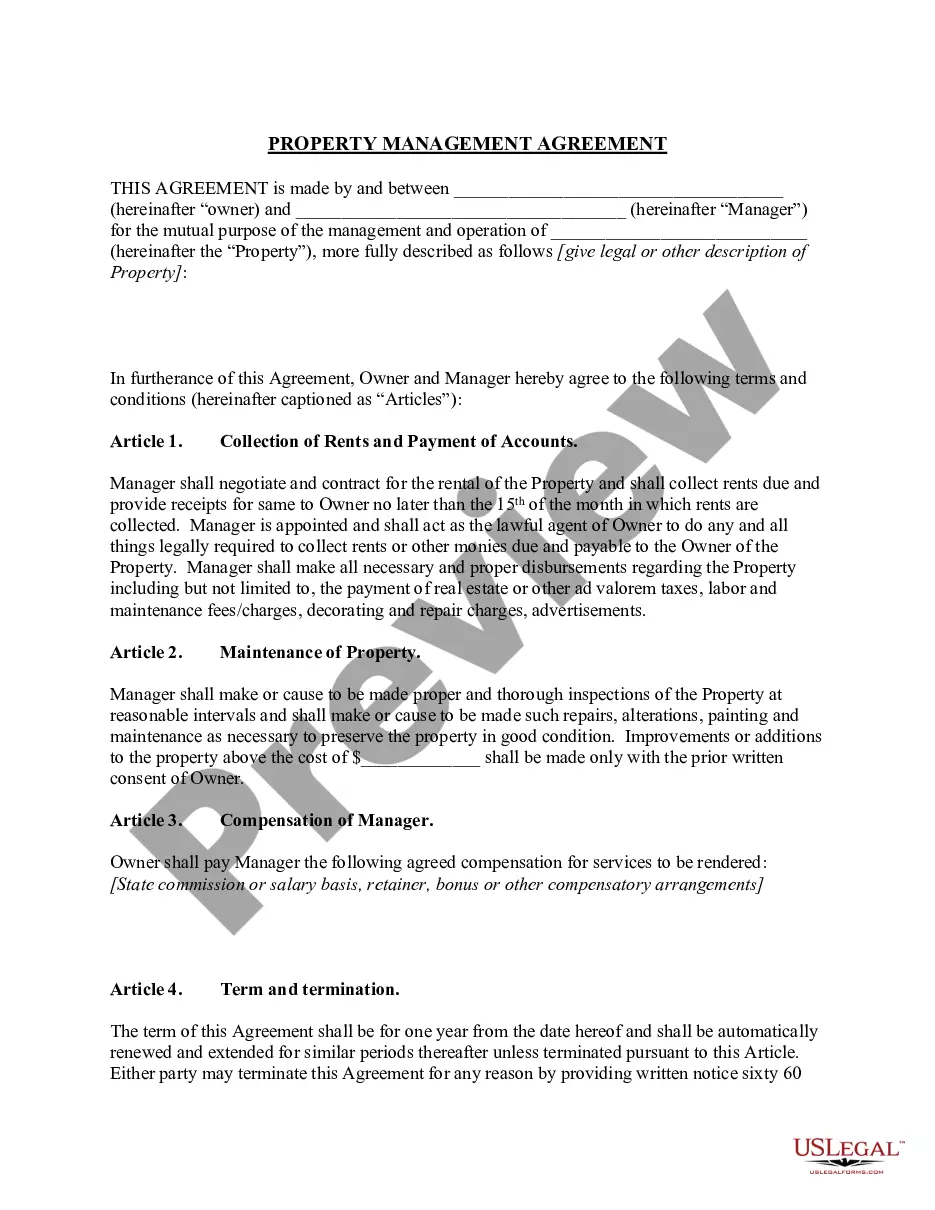
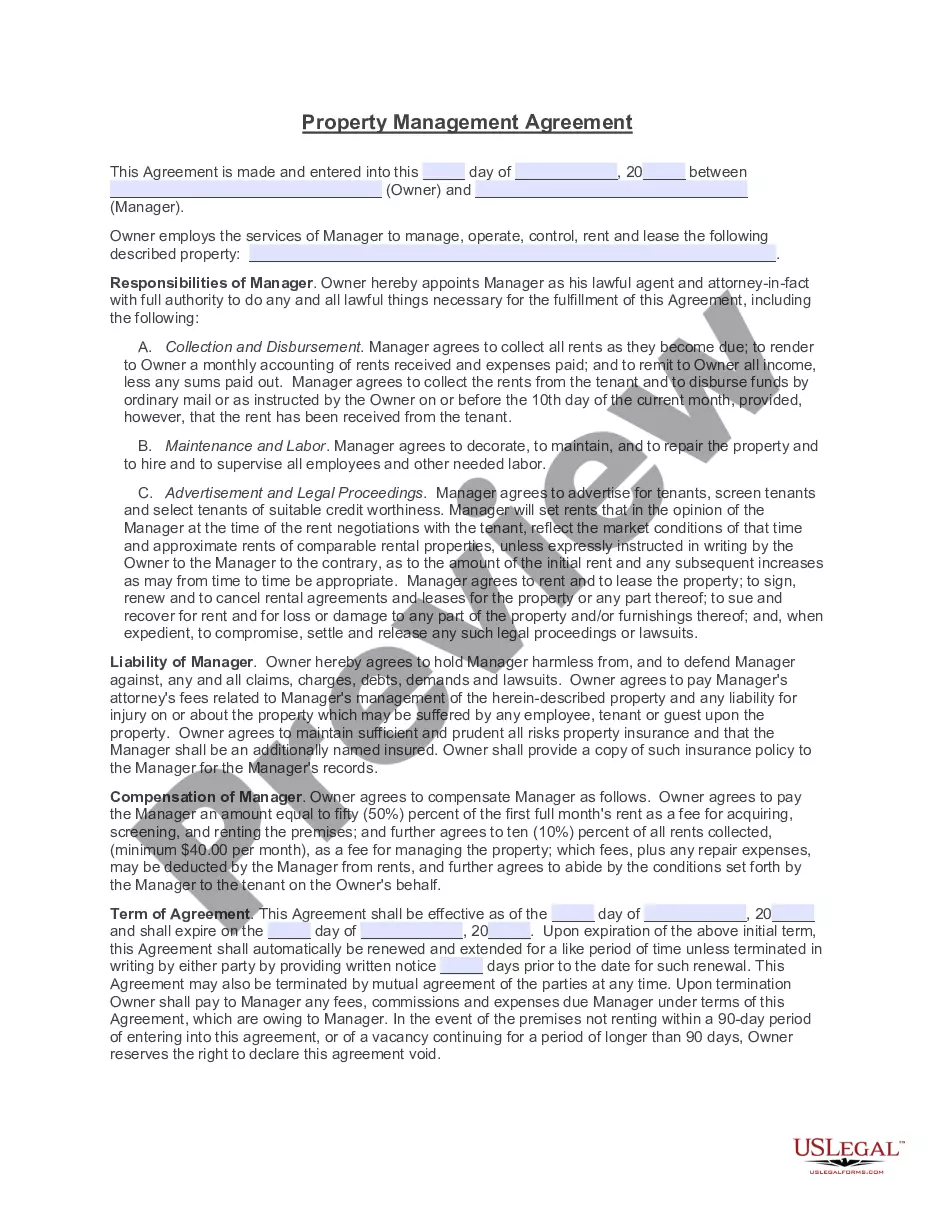
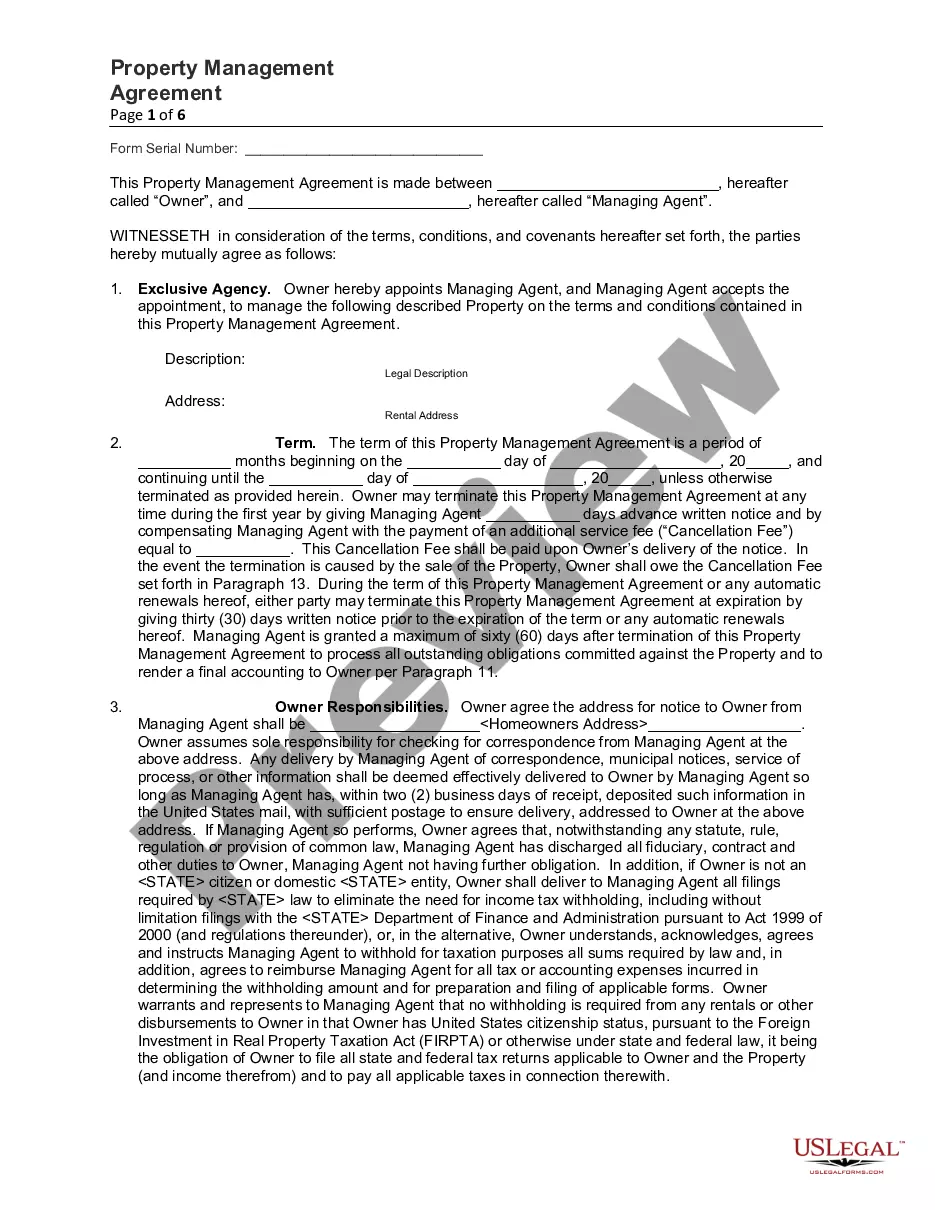
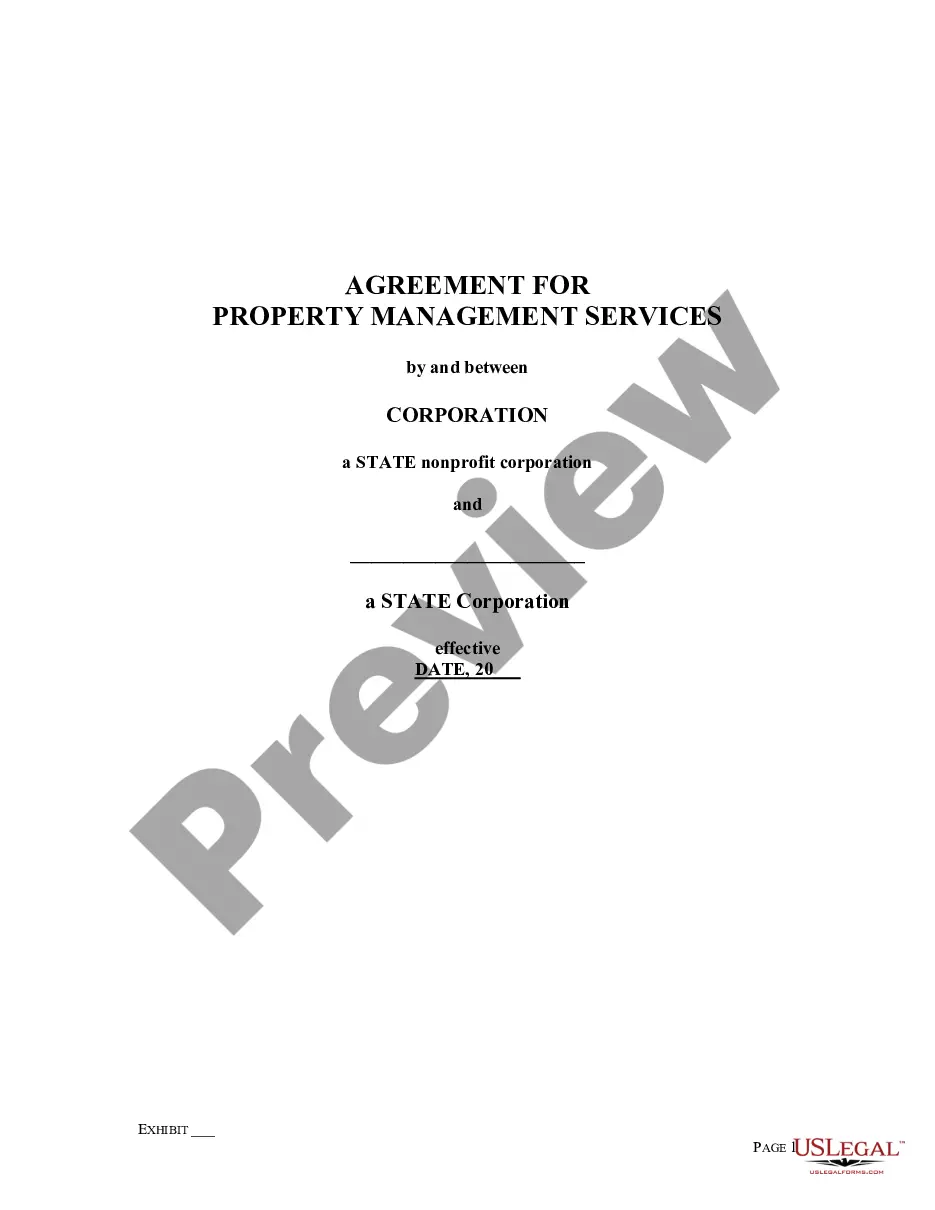
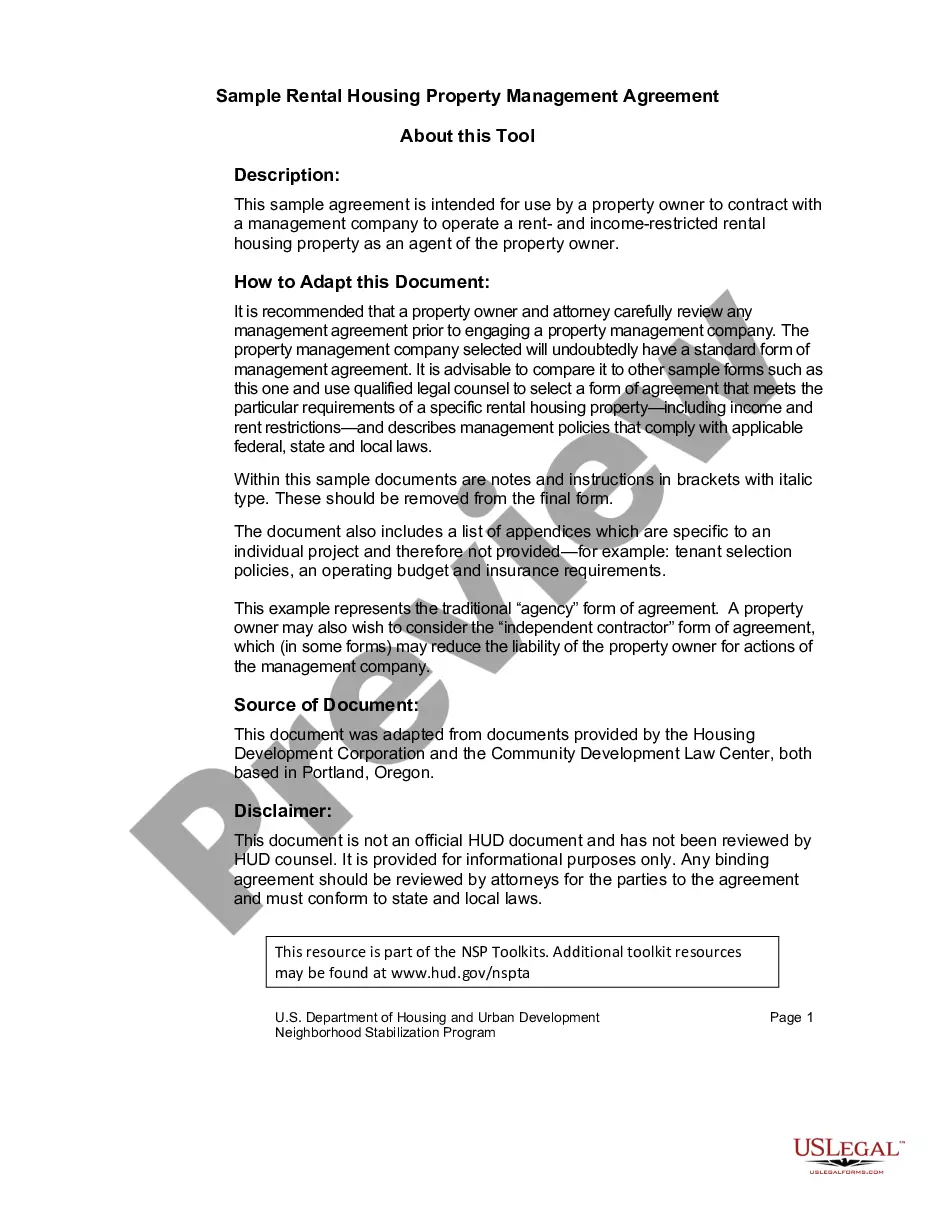
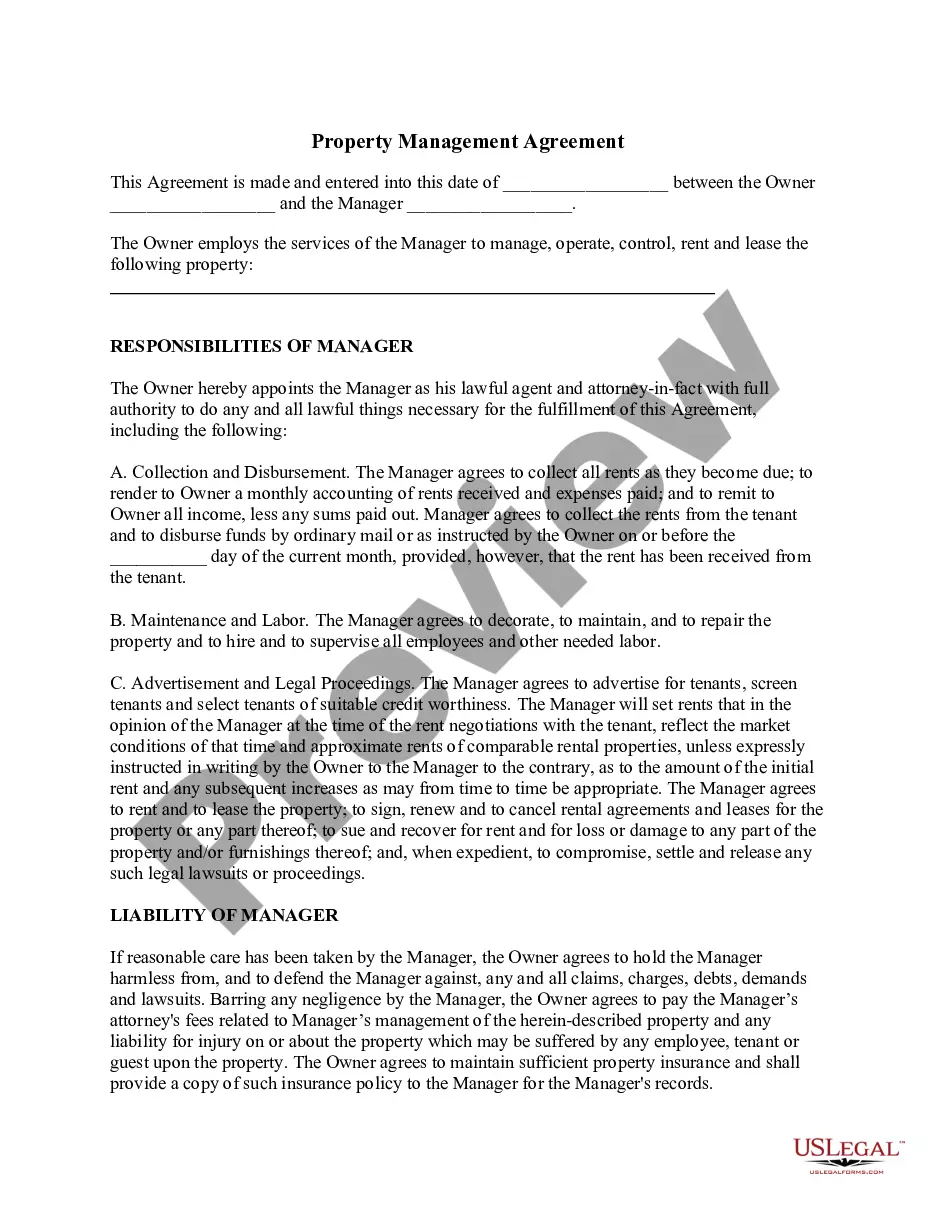
The Property Manager Agreement is a legally binding contract between a property owner and a property manager. This agreement outlines the terms and conditions of the property manager's employment, detailing their responsibilities for managing and operating rental properties. Unlike general leases, this contract focuses specifically on the relationship and duties between the owner and the manager, ensuring compliance with state statutory law.
Main sections of this form
- Identification of the owner and manager, including their roles.
- Description of the property being managed, including legal specifications.
- Terms regarding the duration of the agreement and automatic renewal conditions.
- Termination clauses outlining how either party can end the agreement.
- Severability clause ensuring the remainder of the agreement remains valid if part is invalidated.

When to use this form
This form is essential when a property owner seeks to hire a property manager for rental properties. Use this agreement if you want to define clear expectations, establish payment terms, and articulate the scope of management responsibilities. It is particularly useful in the case of multiple rental properties or when hiring a professional property management company.
Who can use this document
- Property owners who wish to hire a property manager.
- Property management companies looking to formalize their agreements with property owners.
- Individuals with rental properties seeking to clarify management roles and responsibilities.
Instructions for completing this form
- Identify the parties involved: clearly state the names of the owner and manager.
- Specify the property: provide an accurate description, including the address and any legal identifiers.
- Outline the term of the agreement: indicate the starting date and specify the renewal terms.
- Insert termination conditions: include how and when either party can terminate the agreement.
- Ensure both parties sign the agreement, using the date at the end of the form.
Does this form need to be notarized?
This form does not typically require notarization unless specified by local law. Ensure all parties have a copy for their records after signing.
Get your form ready online
Our built-in tools help you complete, sign, share, and store your documents in one place.
Make edits, fill in missing information, and update formatting in US Legal Forms—just like you would in MS Word.
Download a copy, print it, send it by email, or mail it via USPS—whatever works best for your next step.
Sign and collect signatures with our SignNow integration. Send to multiple recipients, set reminders, and more. Go Premium to unlock E-Sign.
If this form requires notarization, complete it online through a secure video call—no need to meet a notary in person or wait for an appointment.
We protect your documents and personal data by following strict security and privacy standards.

Make edits, fill in missing information, and update formatting in US Legal Forms—just like you would in MS Word.

Download a copy, print it, send it by email, or mail it via USPS—whatever works best for your next step.

Sign and collect signatures with our SignNow integration. Send to multiple recipients, set reminders, and more. Go Premium to unlock E-Sign.

If this form requires notarization, complete it online through a secure video call—no need to meet a notary in person or wait for an appointment.

We protect your documents and personal data by following strict security and privacy standards.
Avoid these common issues
- Failing to clearly define property description, leading to disputes.
- Not specifying the notice period for termination, which can lead to misunderstandings.
- Overlooking the signature section, resulting in an unenforceable agreement.
Why complete this form online
- Convenience of downloading and filling out the form at your own pace.
- Editability allows you to customize terms according to your specific needs.
- Reliability of a document prepared to comply with legal standards and requirements.
Looking for another form?
Form popularity
FAQ
The percentage collected will vary, but is traditionally between 8% and 12% of the gross monthly rent. Managers will often charge a lower percentage, between 4% and 7%, for properties with 10 units or more or for commercial properties, and a higher percentage, 10% or more, for smaller or residential properties.
Regarding your TN license, you will need to take the 60-hour course (Real Estate Principles) as well as the 30-hour course (Course for New Affiliates), and pass the Affiliate Broker's license exam. At that point you can hold your license with a principal broker and perform PM duties under their firm.
Must Tennessee property management companies have a real estate broker's license? YES. Key components of property management (leasing, renting and collecting rent) are considered real estate activities under existing Tennessee real estate licensing laws.
The property manager can provide full leasing services. They effectively negotiate leases with tenants and prepare those leases for signature. They make suggestions regarding the tenant mix and prospective tenants.
As The Landlord: As an investor or property owner signing a property management agreement is a legal document that allows you to enter into a business relationship with a property management company that allows you to have your property managed for a monthly or agreed upon fee.
Many landlords manage properties on their own or with the help of an employee, such as a resident manager.If you are hiring an individual resident manager, protect your rental property and the manager by using Nolo's Residential Rental Property Manager Agreement.
The Main Difference Between Leasing Agents and Property Managers. To keep it simple a leasing agent, or rental agent and buyer agent, shows potential renters the space that could be their new home. A property manager, on the other hand, focuses on what happens after the lease is signed.
Property management isn't worth the money to some investors.One important note, even if you choose to manage your own properties it pays to have a backup plan in case you're no longer able to handle them. For others investing in real estate, there's no way they'd choose to manage their own rental properties.
Most property managers are required to hold a property management license or a real estate broker's license in order to conduct real estate transactions, which includes those related to managing and leasing rental properties. Only a couple of states do not have this requirement.