Tennessee Warranty Deed - Parent to Four Children with Reserved Life Estate
What is this form?
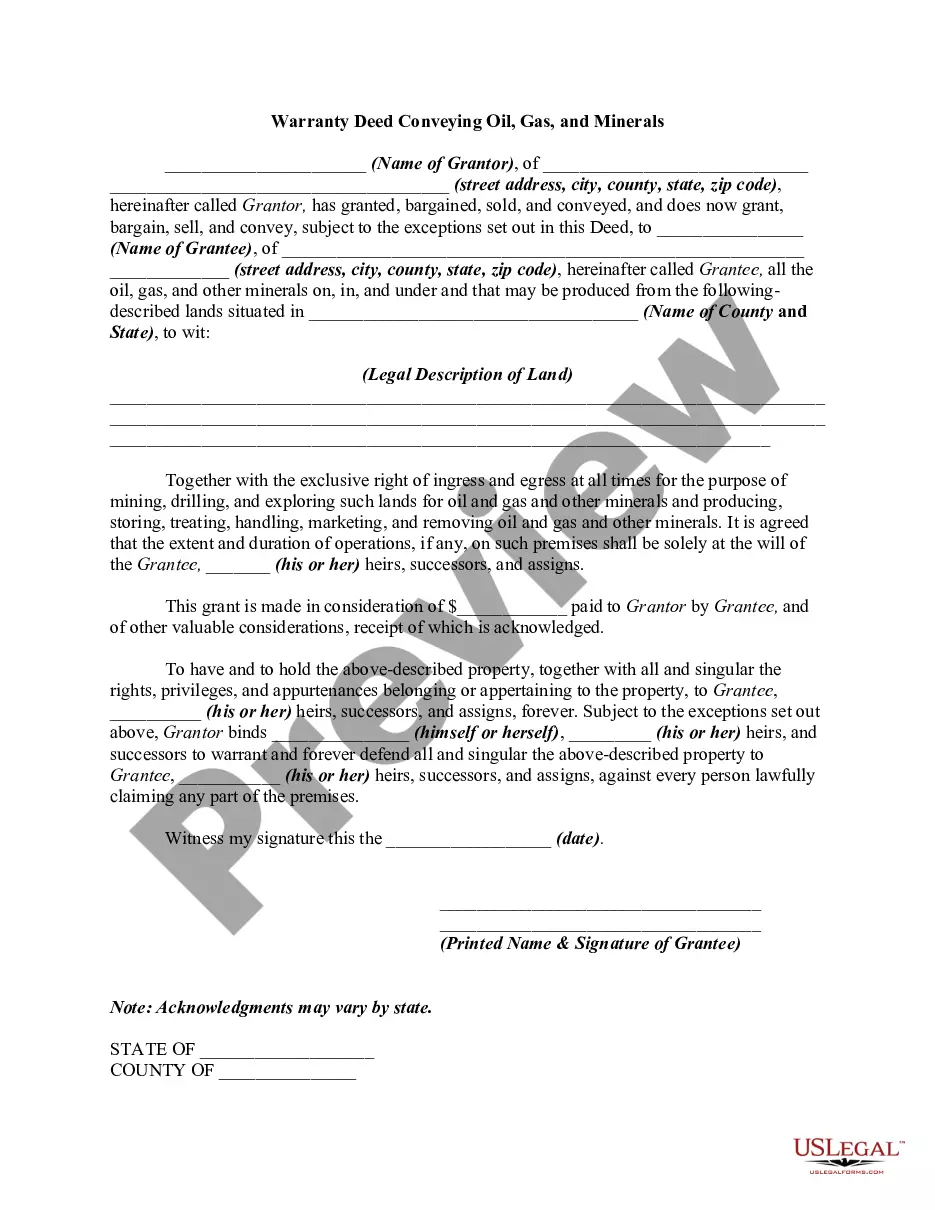
This Warranty Deed allows a parent to transfer property to four children while retaining a life estate. This means that the grantor can live on the property for their lifetime, after which it fully transfers to the children as either tenants in common or joint tenants with the right of survivorship. This form ensures compliance with state laws, distinguishing it from other property transfer documents by incorporating the reserved life estate clause.
Form components explained
- Identification of the grantor (parent) and grantees (children).
- Description of the property being conveyed.
- Statement of the reserved life estate for the grantor.
- Details on how the grantees will hold title (tenants in common or joint tenants with right of survivorship).
- Signature and notary requirements for the legal validity of the deed.


When to use this document
This form is typically used when a parent wishes to transfer property ownership to their children while retaining the right to live in the property for the rest of their life. Scenarios may include estate planning, simplifying asset transfer, or ensuring that the family home remains within the family while allowing the parent to maintain residency.
Intended users of this form
- Parents wishing to convey property to their children.
- Individuals involved in estate planning or asset management.
- Families looking to retain occupancy rights while ensuring property transfer upon death.
Instructions for completing this form
- Identify the parties involved: grantor (parent) and grantees (children).
- Provide a detailed description of the property being transferred.
- Specify the life estate being reserved by the grantor in the document.
- Choose how the grantees will hold the property title (as tenants in common or joint tenants).
- Obtain the necessary signatures from the grantor and witnesses, including notarization.
Is notarization required?
This form needs to be notarized to ensure legal validity. US Legal Forms provides secure online notarization powered by Notarize, allowing you to complete the process through a verified video call, available anytime.
Get your form ready online
Our built-in tools help you complete, sign, share, and store your documents in one place.
Make edits, fill in missing information, and update formatting in US Legal Forms—just like you would in MS Word.
Download a copy, print it, send it by email, or mail it via USPS—whatever works best for your next step.
Sign and collect signatures with our SignNow integration. Send to multiple recipients, set reminders, and more. Go Premium to unlock E-Sign.
If this form requires notarization, complete it online through a secure video call—no need to meet a notary in person or wait for an appointment.
We protect your documents and personal data by following strict security and privacy standards.

Make edits, fill in missing information, and update formatting in US Legal Forms—just like you would in MS Word.

Download a copy, print it, send it by email, or mail it via USPS—whatever works best for your next step.

Sign and collect signatures with our SignNow integration. Send to multiple recipients, set reminders, and more. Go Premium to unlock E-Sign.

If this form requires notarization, complete it online through a secure video call—no need to meet a notary in person or wait for an appointment.

We protect your documents and personal data by following strict security and privacy standards.
Common mistakes to avoid
- Failing to accurately describe the property can lead to legal disputes.
- Not specifying how the grantees will hold title may cause confusion.
- Skipping the notary requirement can invalidate the deed.
- Not including all necessary parties in the document can complicate future ownership issues.
Why use this form online
- Convenient access allows for easy downloading and printing.
- Editability ensures personal information and property details can be accurately entered.
- Forms are prepared by licensed attorneys, ensuring reliability and compliance with legal standards.
Legal use & context
- This deed is enforceable under state law when properly executed.
- It establishes clear property ownership and usage rights.
- Always consider consulting with an attorney for complicated circumstances.
Key takeaways
- The Warranty Deed allows parents to convey property while retaining usage rights.
- Proper completion and notarization are essential for legality.
- This form is particularly useful in estate planning for families.
Looking for another form?
Form popularity
FAQ
A warranty deed guarantees that: The grantor is the rightful owner of the property and has the legal right to transfer the title.The title would withstand third-party claims to ownership of the property. The grantor will do anything to ensure the grantee's title to the property.
Can a life estate deed be changed? It is challenging to modify or change a life estate deed. The grantor cannot change the life estate as he or she has no power to do so after creating the life estate deed unless all of the future tenants agree. It requires the permission or consent of every one of the beneficiaries.
A life estate deed permits the property owner to have full use of their property until their death, at which point the ownership of the property is automatically transferred to the beneficiary.
A life estate is a form of joint ownership that allows one person to remain in a house until his or her death, when it passes to the other owner.
This life estate deed is a document that transfers ownership of real property, while reserving access and use of the property for the duration of the grantor's life. It allows the original owner (grantor) to remain on the premises with full access to and benefits from the property.
What happens to a life estate after someone dies? Upon the life tenant's death, the property passes to the remainder owner outside of probate.They can sell the property or move into and claim it as their primary residence (homestead). Property taxes will not be reassessed.
Reservation of the present interest allows the owner to retain ownership for a period of time measured by the life of one or more individuals, by a term of years, or by a combination of the two.
A person owns property in a life estate only throughout their lifetime. Beneficiaries cannot sell property in a life estate before the beneficiary's death. One benefit of a life estate is that property can pass when the life tenant dies without being part of the tenant's estate.
This life estate deed is a document that transfers ownership of real property, while reserving access and use of the property for the duration of the grantor's life. It allows the original owner (grantor) to remain on the premises with full access to and benefits from the property.