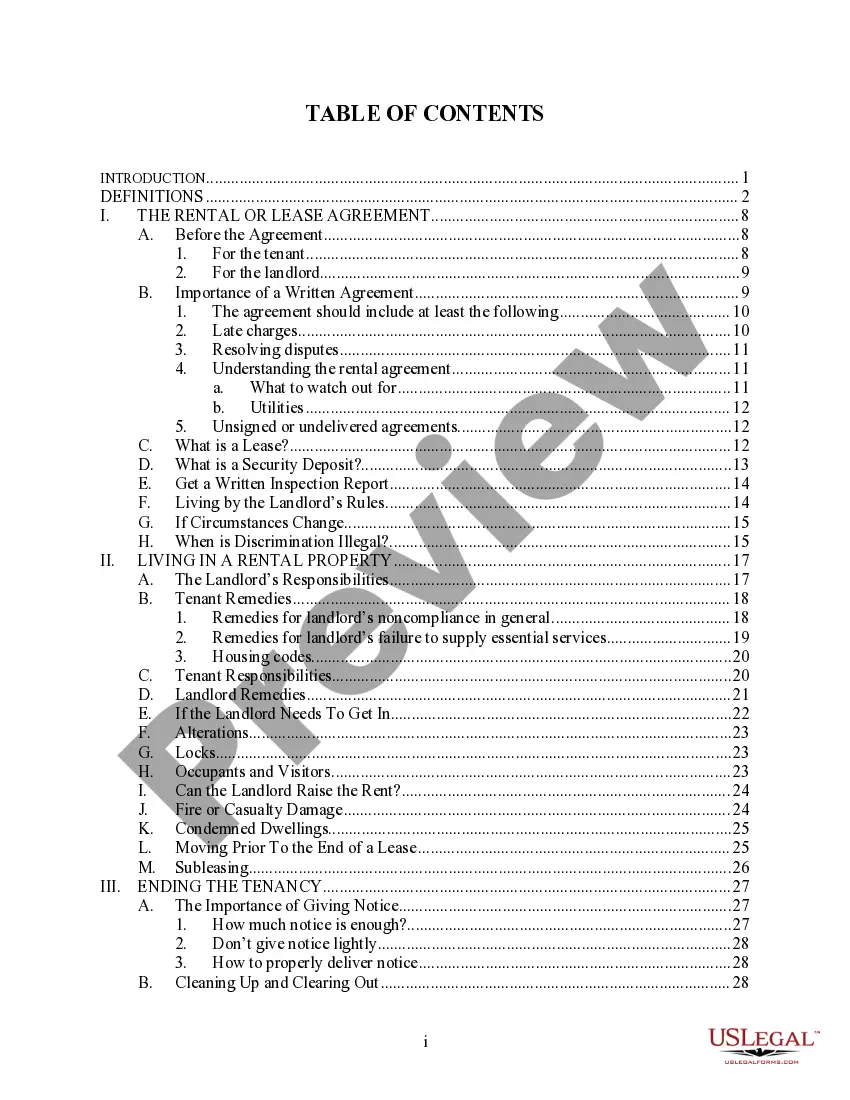
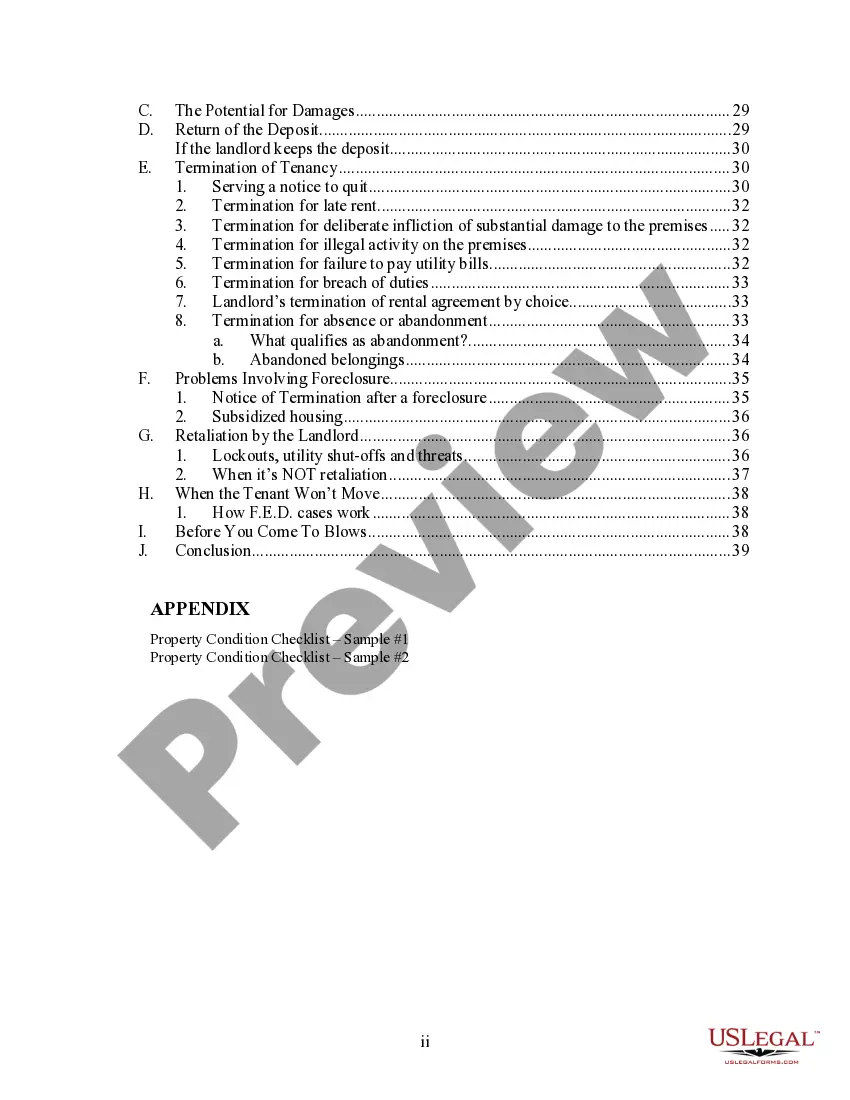
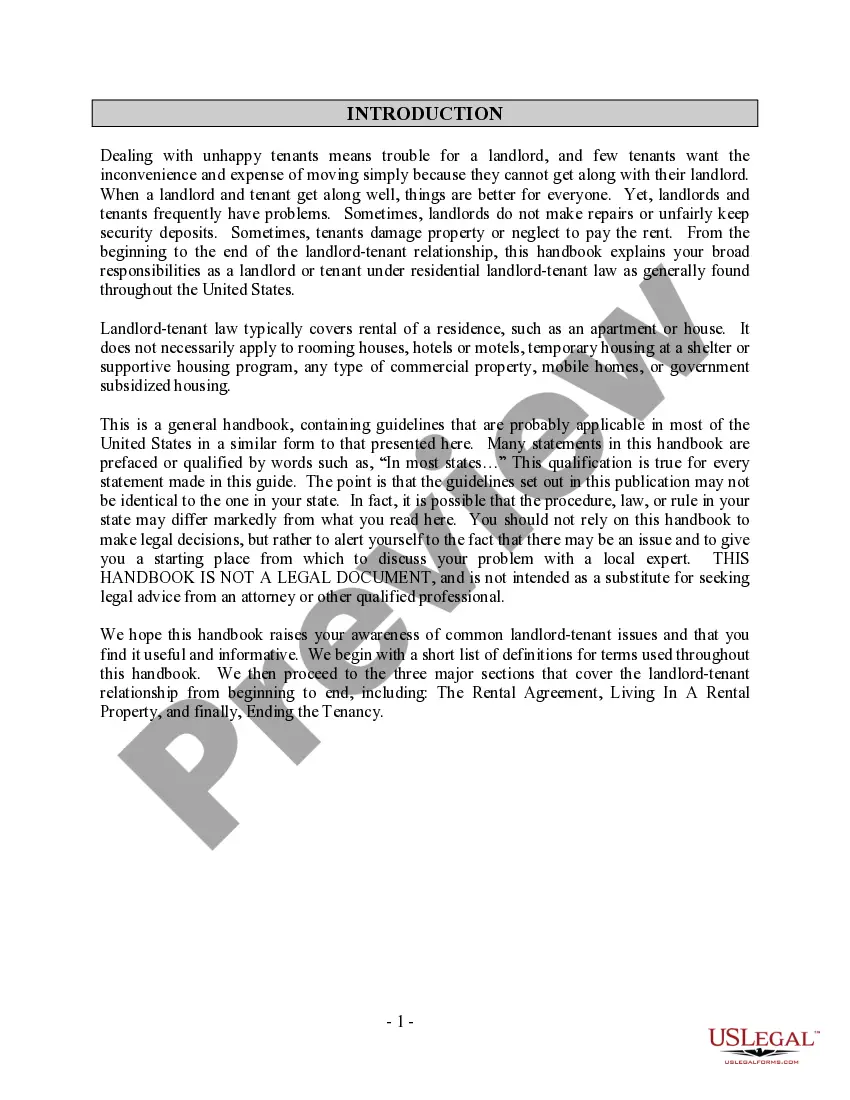
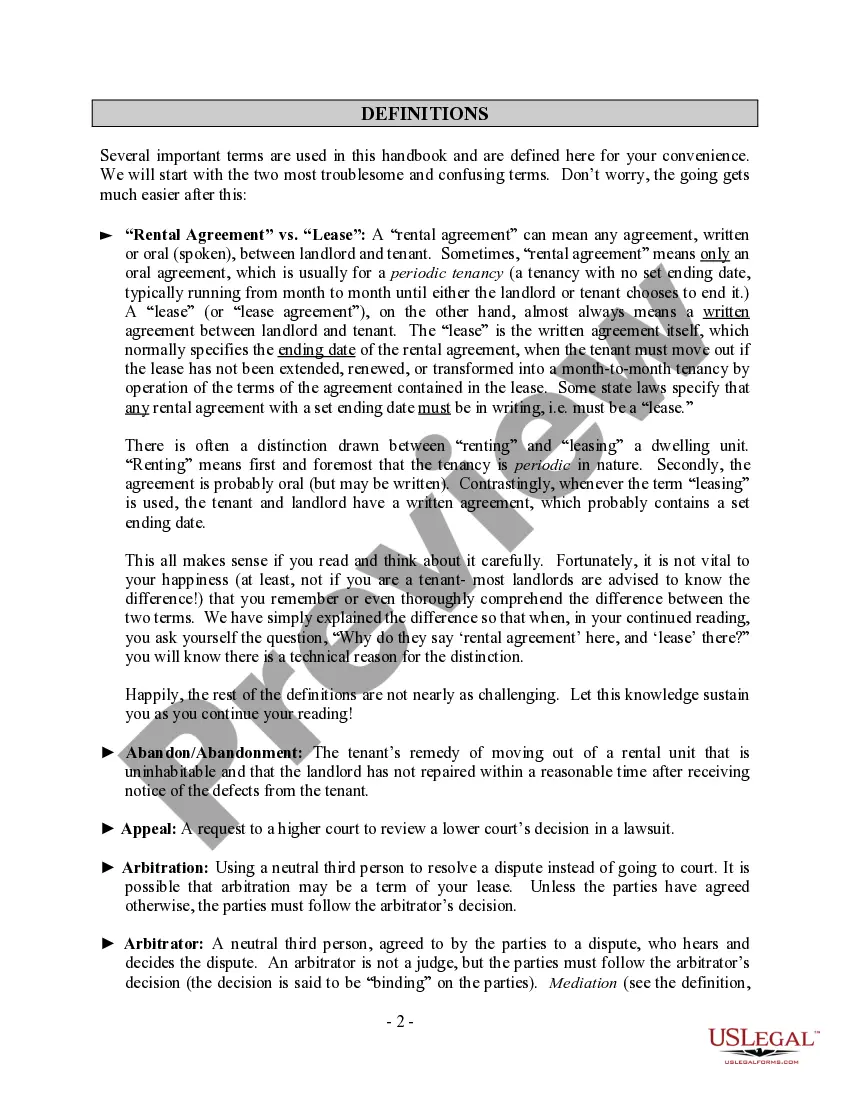
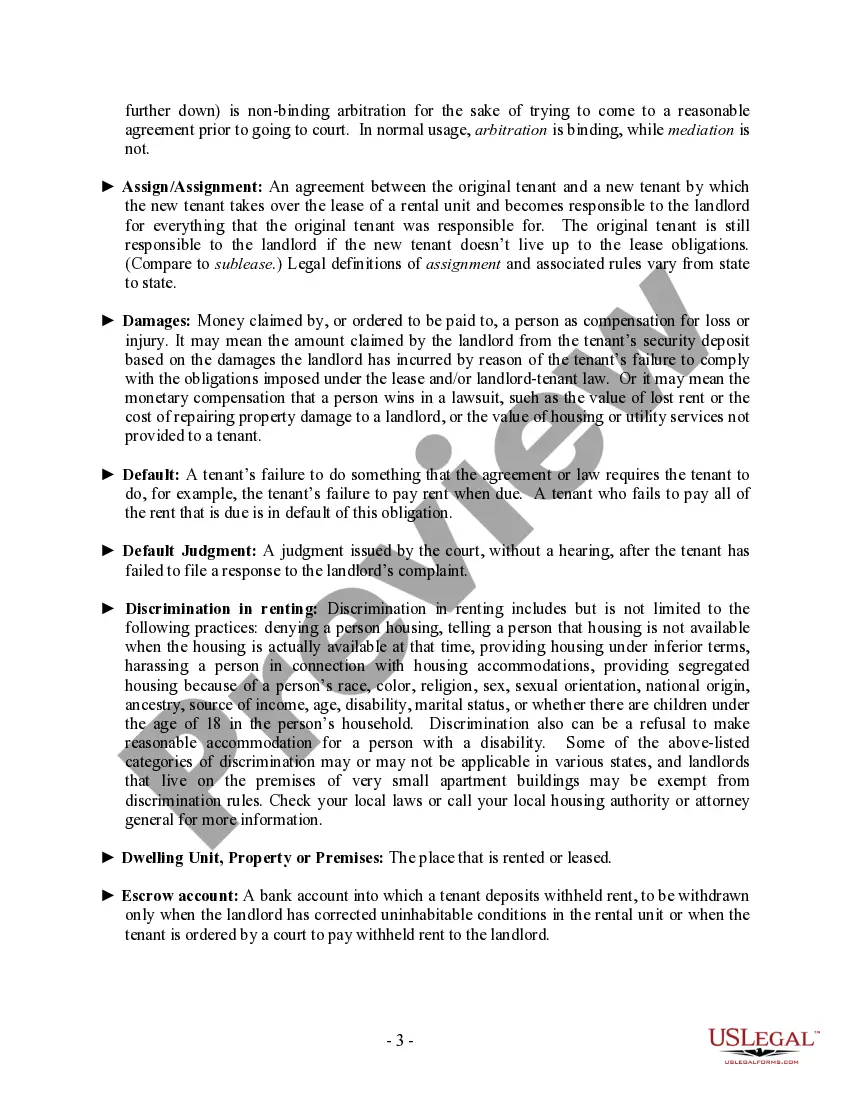
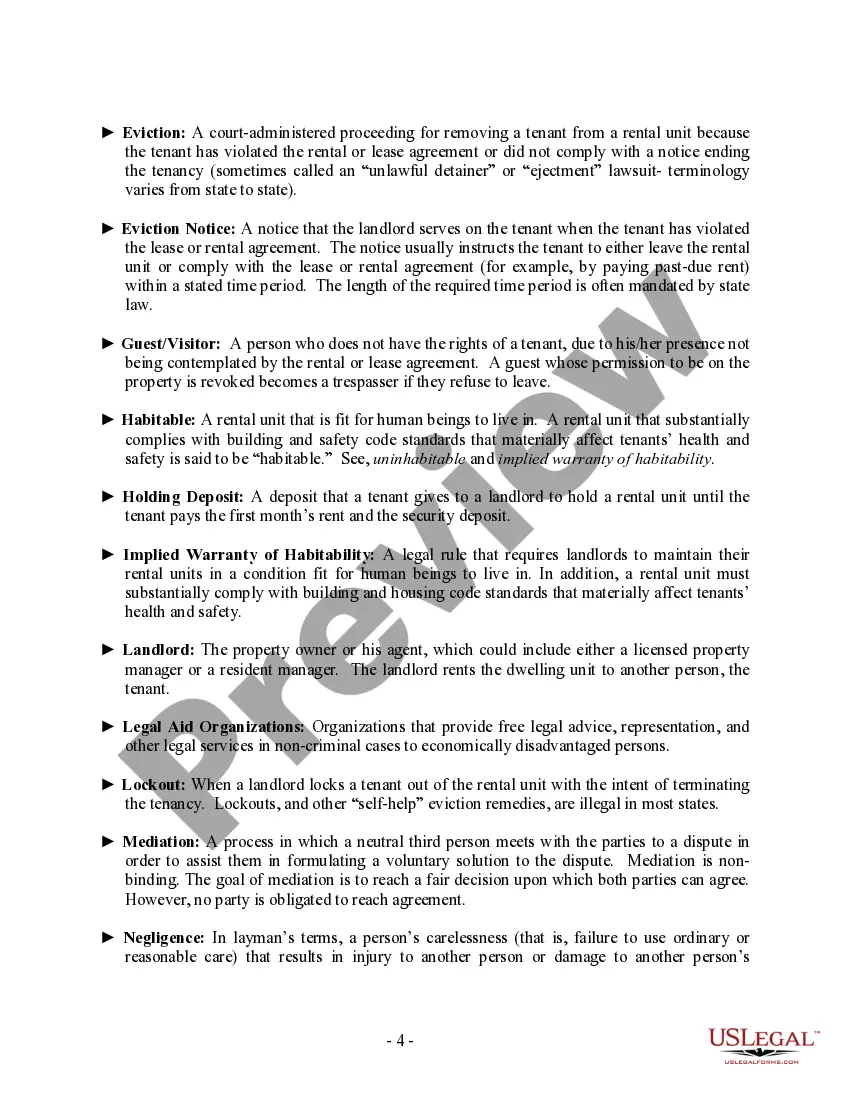
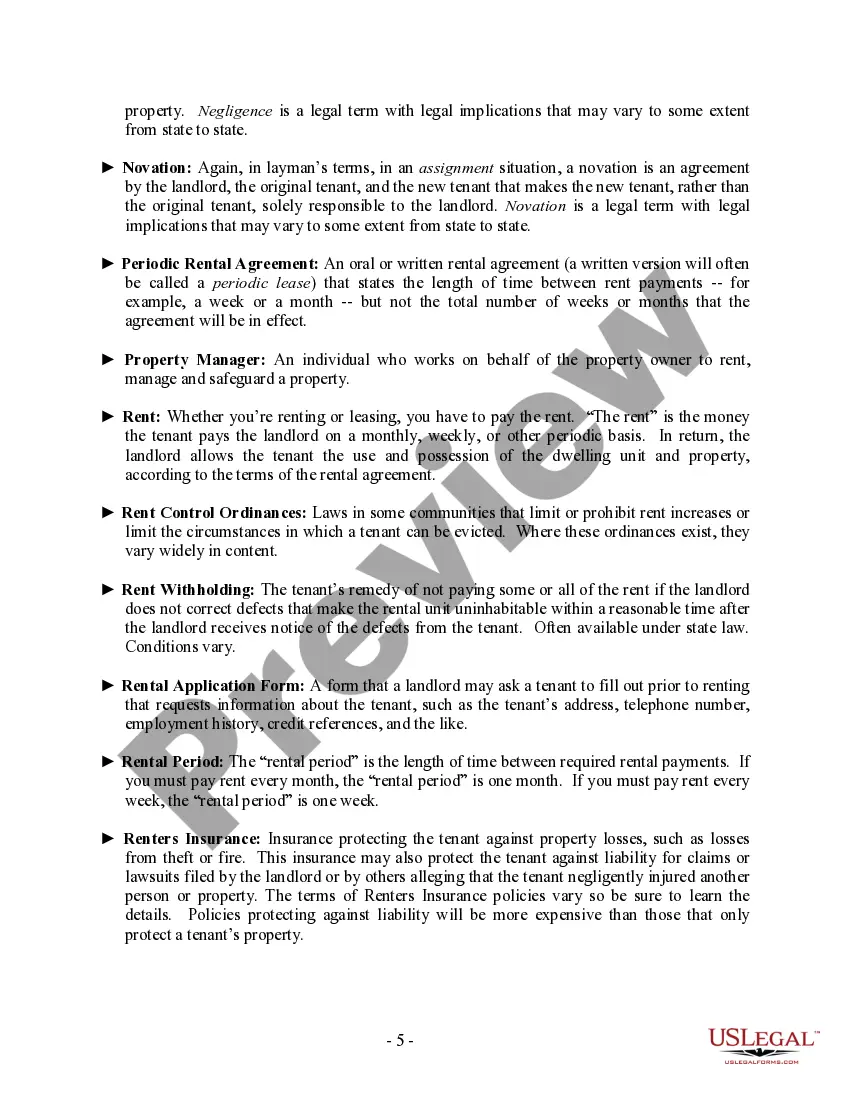
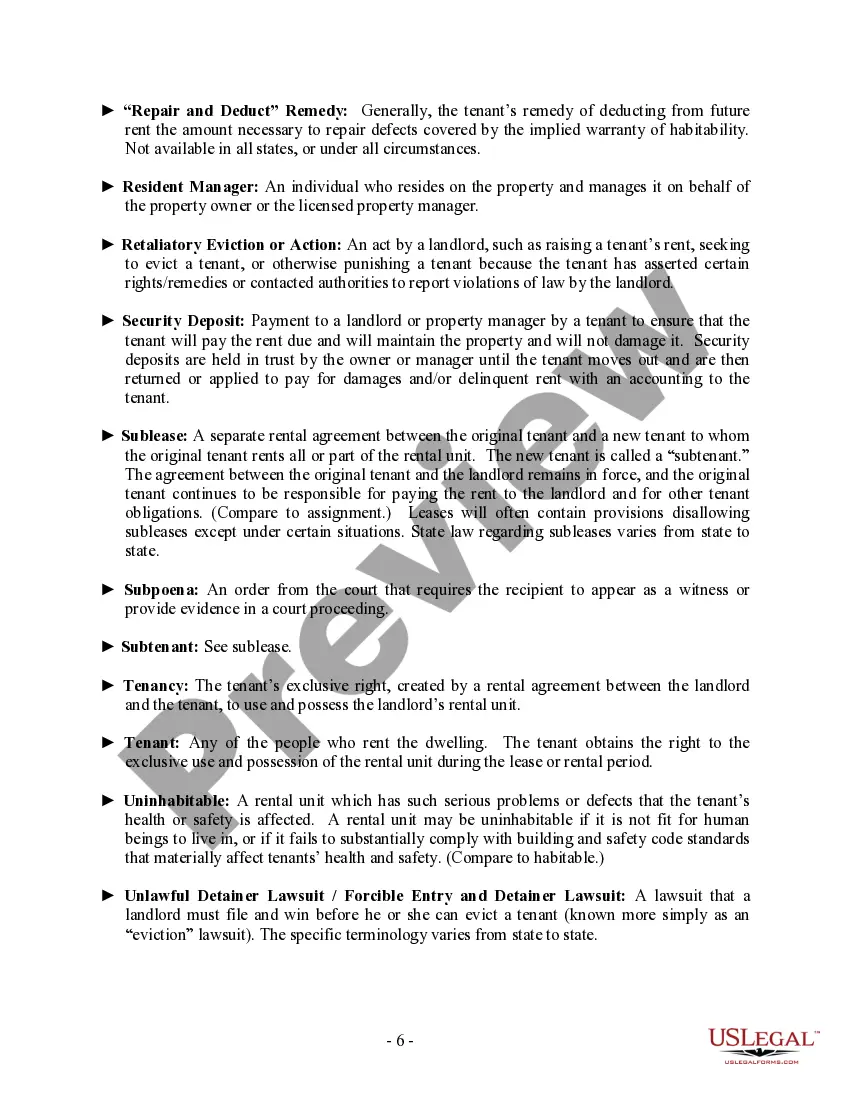
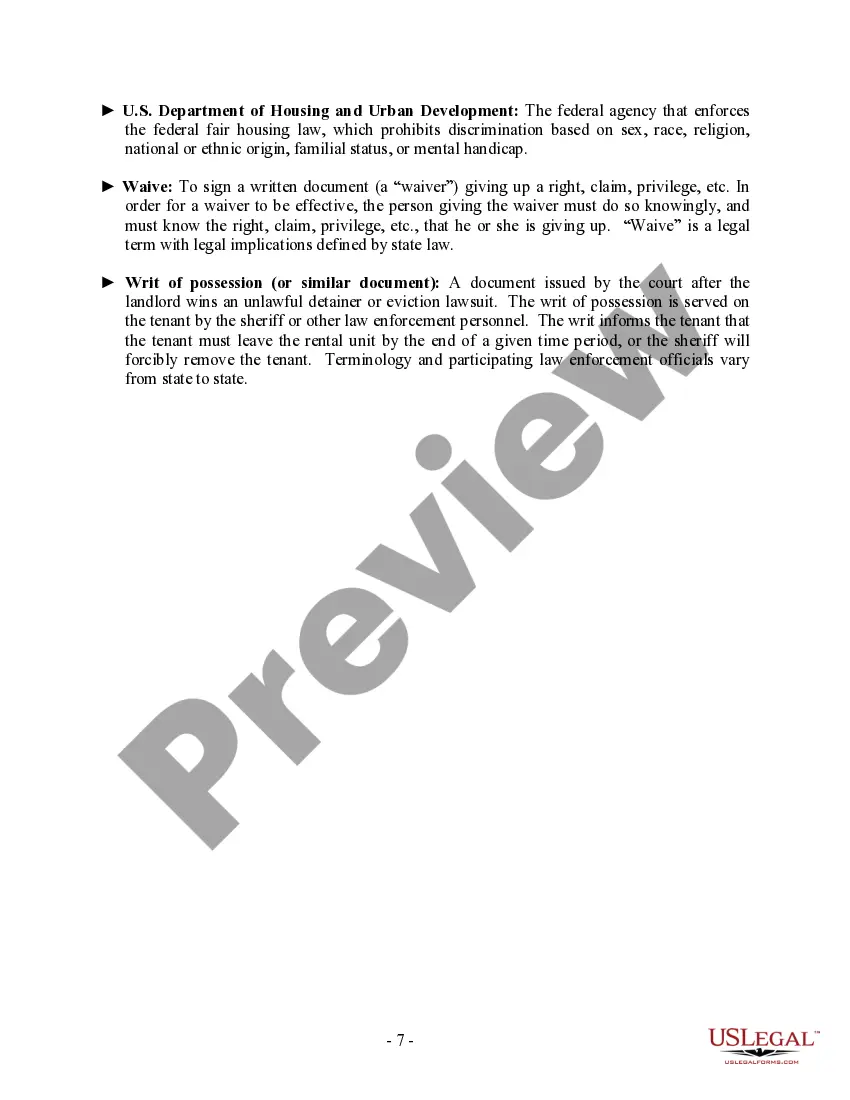
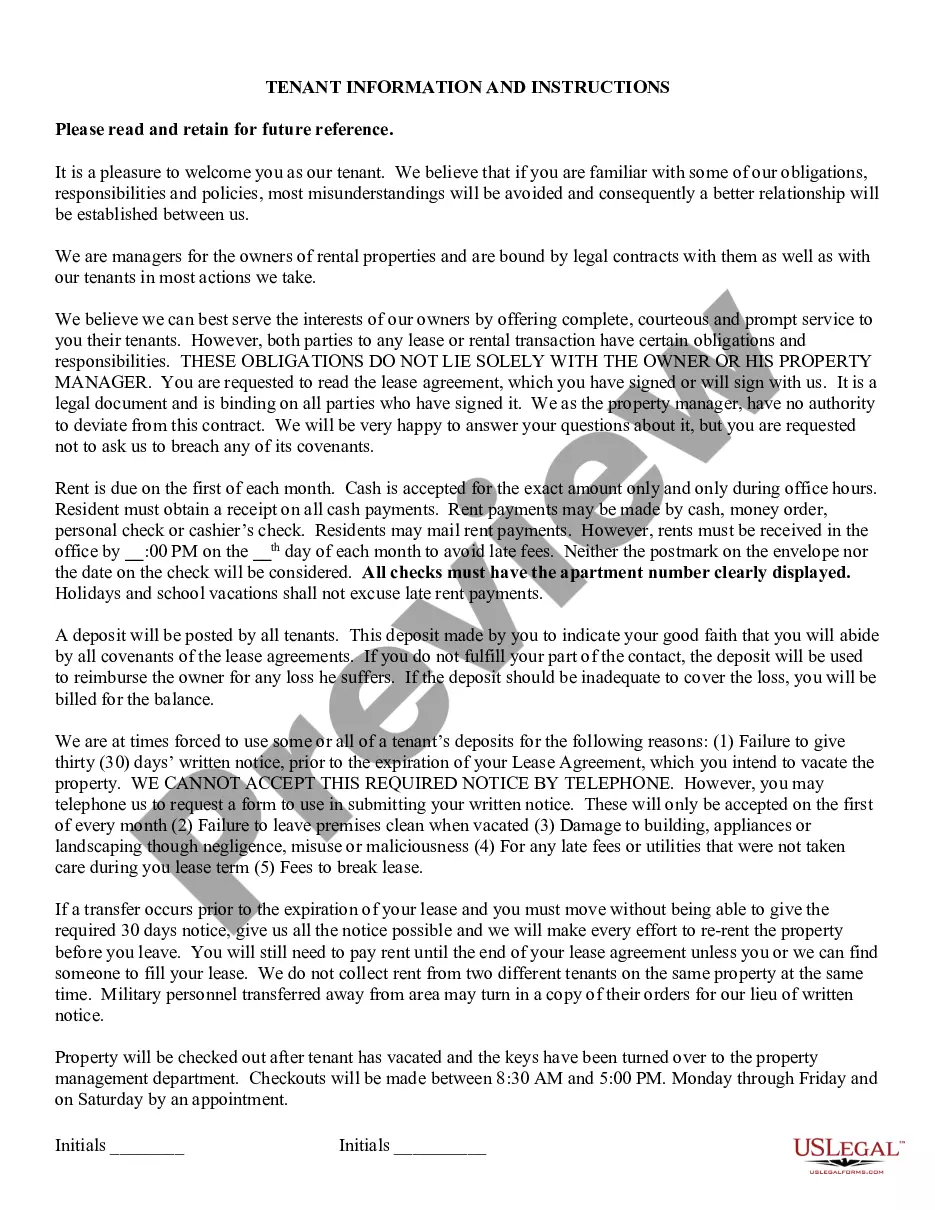
This Handbook summarizes the rights and obligations of landlords and tenants, and is designed to be a helpful guide to both landlords and tenants. Information about rental applications, leases, security deposits, inventory checklists, repair responsibilities, rent increases, termination of leases, eviction notices and much more is included in 40+ pages of materials.
South Dakota Multistate Landlord Tenant Handbook - Guide - Laws
Instant download
Description
Free preview

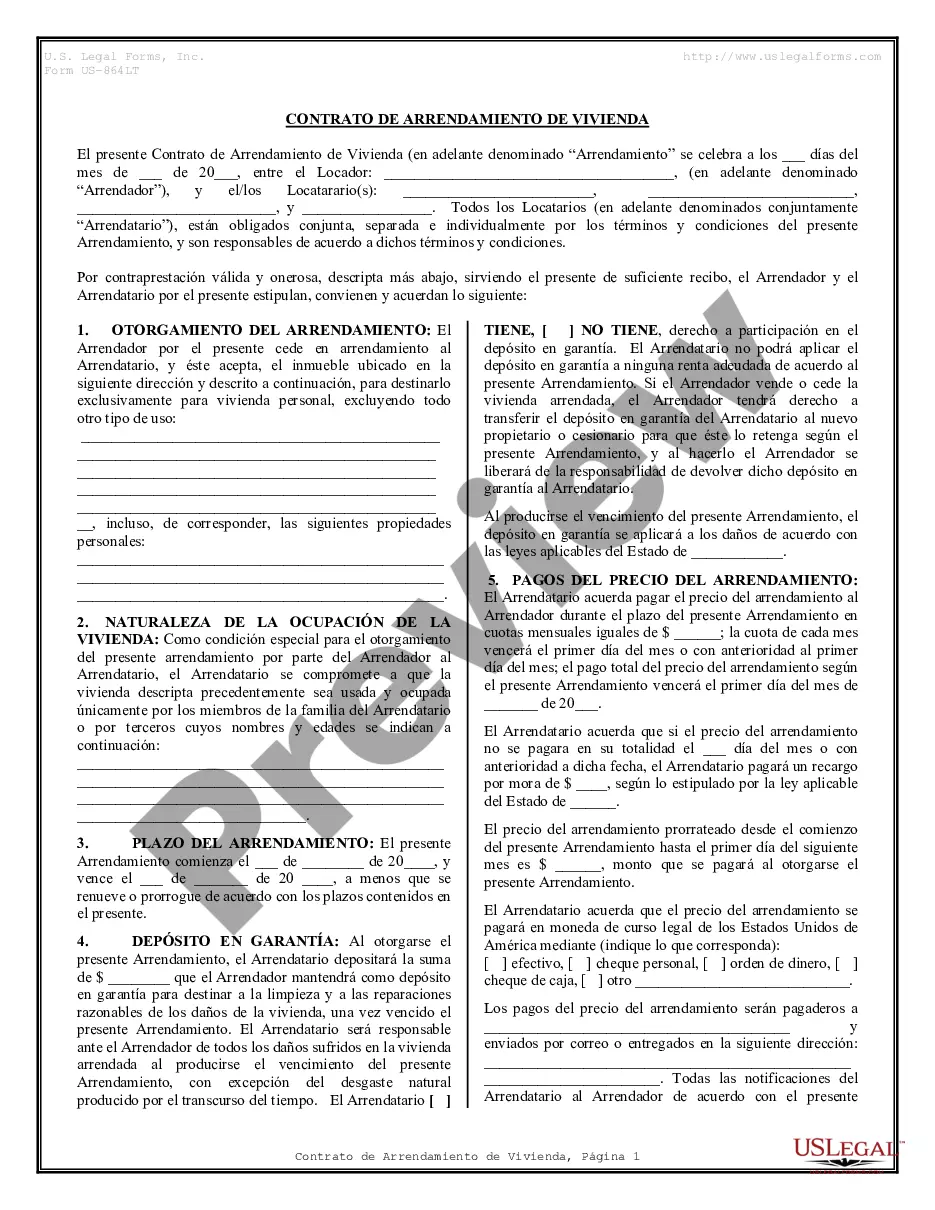
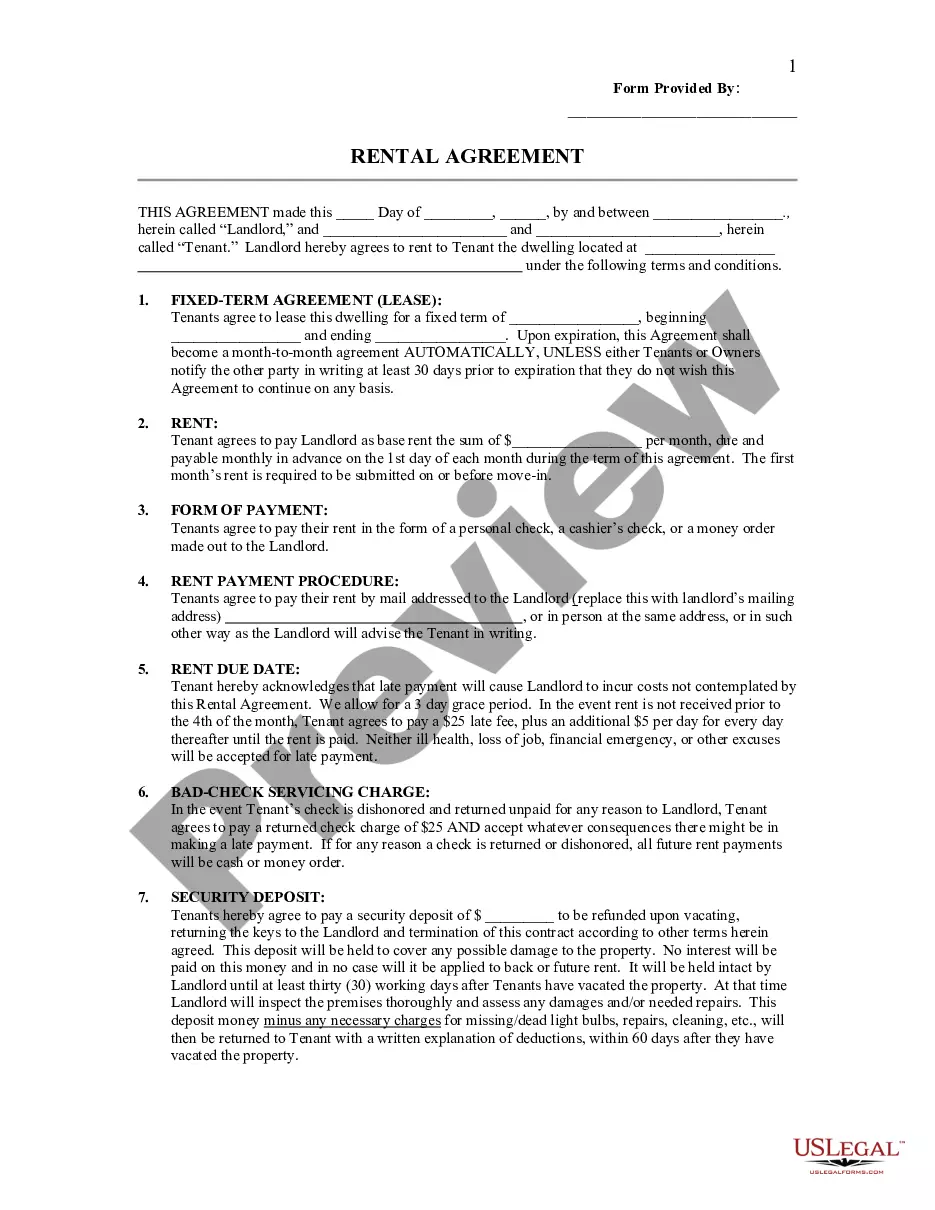
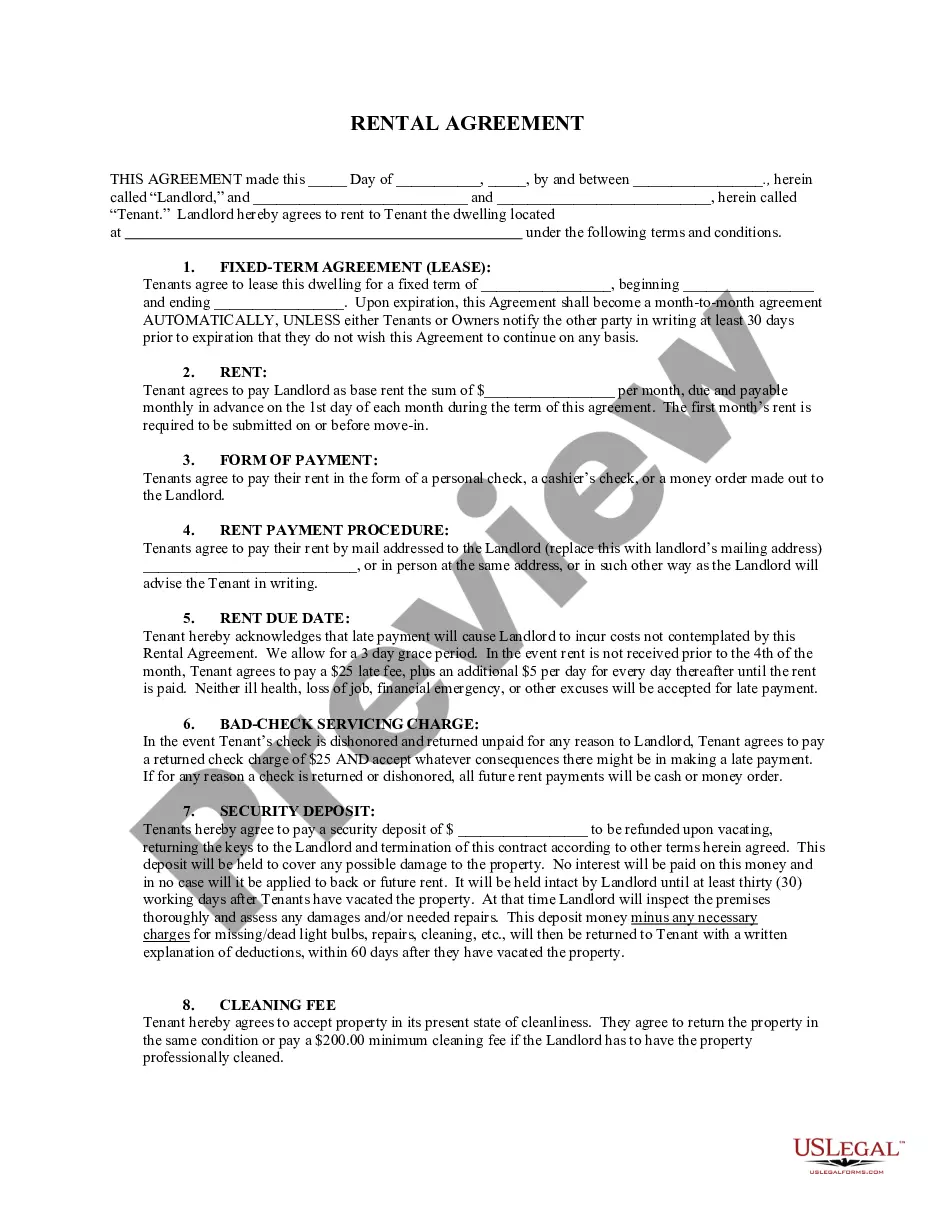

How to fill out Multistate Landlord Tenant Handbook - Guide - Laws?
You can take time online attempting to locate the legal document template that satisfies the federal and state requirements you desire.
US Legal Forms offers thousands of legal templates that are reviewed by experts.
You can download or print the South Dakota Multistate Landlord Tenant Handbook - Guide - Laws from the service.
If available, use the Review option to look through the document template as well. If you wish to find another model of the form, utilize the Search section to discover the template that meets your needs. Once you have found the template you require, click on Buy now to proceed. Select the pricing plan you want, enter your details, and register for your account on US Legal Forms. Complete the purchase. You can use your credit card or PayPal account to pay for the legal document. Choose the format of the file and download it to your device. Make modifications to your document if necessary. You can complete, alter, and sign and print South Dakota Multistate Landlord Tenant Handbook - Guide - Laws. Download and print thousands of document layouts using the US Legal Forms website, which offers the largest collection of legal templates. Utilize professional and state-specific templates to address your business or personal needs.
- If you have a US Legal Forms account, you may Log In and click on the Download option.
- Then, you can complete, modify, print, or sign the South Dakota Multistate Landlord Tenant Handbook - Guide - Laws.
- Every legal document template you obtain is yours permanently.
- To obtain another copy of a purchased form, go to the My documents tab and click on the corresponding option.
- If you are visiting the US Legal Forms website for the first time, follow the simple instructions below.
- First, ensure that you have selected the correct document template for your county/town of choice.
- Check the form details to confirm you have chosen the right template.
Form popularity
FAQ
SDCL 43-32-8 refers to the South Dakota Codified Laws regarding landlord and tenant obligations. Specifically, it outlines the responsibilities landlords have in maintaining rental properties and ensuring they meet safety standards. Understanding this law is crucial for both landlords and tenants to ensure compliance and protect their rights. You can find comprehensive details in the South Dakota Multistate Landlord Tenant Handbook - Guide - Laws available through our services.
When communicating with your landlord, avoid making statements that could undermine your position or create misunderstandings. Do not express dissatisfaction without offering constructive feedback, and refrain from making threats or ultimatums. Instead, focus on clear and respectful communication to foster a positive relationship. For more detailed guidance, refer to the South Dakota Multistate Landlord Tenant Handbook - Guide - Laws available on our platform.
Yes, you can create your own lease agreement, but it's essential to ensure it complies with the South Dakota Multistate Landlord Tenant Handbook - Guide - Laws. This handbook provides crucial information about the necessary terms and conditions that should be included in any lease agreement. Using a well-structured template can help you cover all legal aspects, and platforms like US Legal Forms offer customizable lease agreements tailored to South Dakota laws. By following the guidelines, you can establish a clear and legally sound agreement with your tenants.
Many states, including South Dakota, have regulations that often favor landlords, particularly in eviction proceedings and lease enforcement. The South Dakota Multistate Landlord Tenant Handbook - Guide - Laws outlines specific landlord advantages, such as streamlined processes for reclaiming properties. If you are looking for resources to understand landlord-tenant dynamics better, platforms like uslegalforms can provide valuable information and documents to help you navigate these laws confidently. Knowing the legal landscape can greatly benefit both landlords and tenants.
South Dakota is generally considered a landlord-friendly state due to its laws that favor landlords in various aspects, such as eviction processes and lease agreements. The South Dakota Multistate Landlord Tenant Handbook - Guide - Laws provides insights into these regulations, making it easier for landlords to manage their properties. However, it is essential for tenants to be aware of their rights to ensure a balanced relationship. Familiarizing yourself with these laws can help you navigate your responsibilities and rights effectively.
Under the South Dakota Multistate Landlord Tenant Handbook - Guide - Laws, your landlord cannot enter your rental unit without proper notice, typically 24 hours in advance, except in emergencies. They cannot retaliate against you for exercising your legal rights, such as reporting unsafe living conditions. Additionally, landlords must maintain the property and ensure it is safe and habitable. Understanding these rights can empower you as a tenant.
Can a tenant refuse entry to a landlord or letting agent? Yes, they can. In 99% of cases a tenant refusing entry to a landlord will usually boil down to convenience, or lack thereof. Simply adjusting the time and date will be enough to gain access to the property.
A tenancy agreement is a legally binding document as soon as it has been signed by all of the relevant parties. Usually, this is the tenant and the landlord, though it may also include a guarantor if the rental requires one.
Landlords cannot enter tenanted properties without giving proper notice. Landlords cannot arbitrarily end someone's tenancy before the lease expires. Arbitrary, mid-lease rent increases are not permitted unless specified in certain circumstances in the lease or by the municipality.
The landlord cannot enter the property without proper notice to the tenant. If the landlord enters the rental property without consent, this action could be considered trespassing. It doesn't matter whether the tenant is home or not.