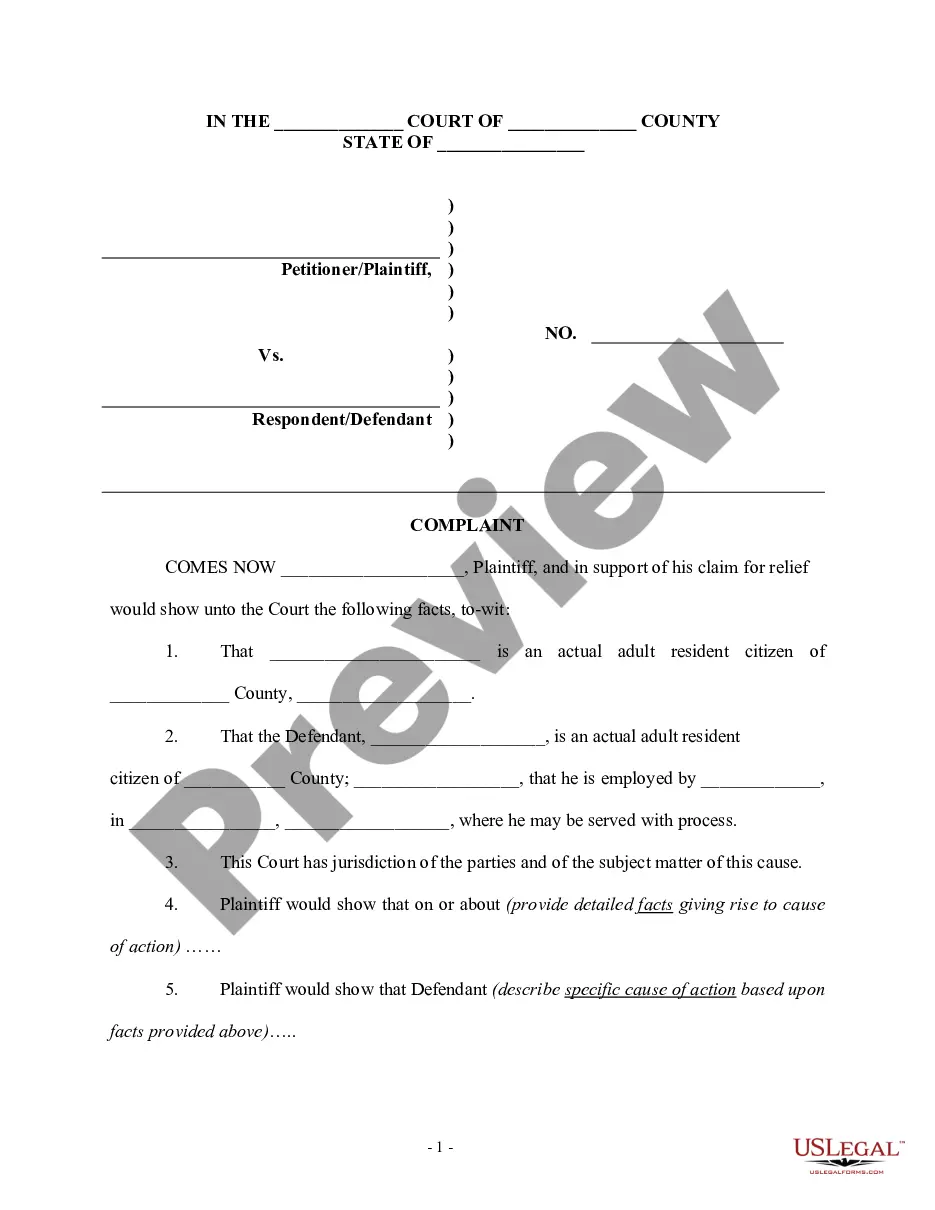
South Dakota Complaint for Alienation of Affections
Description

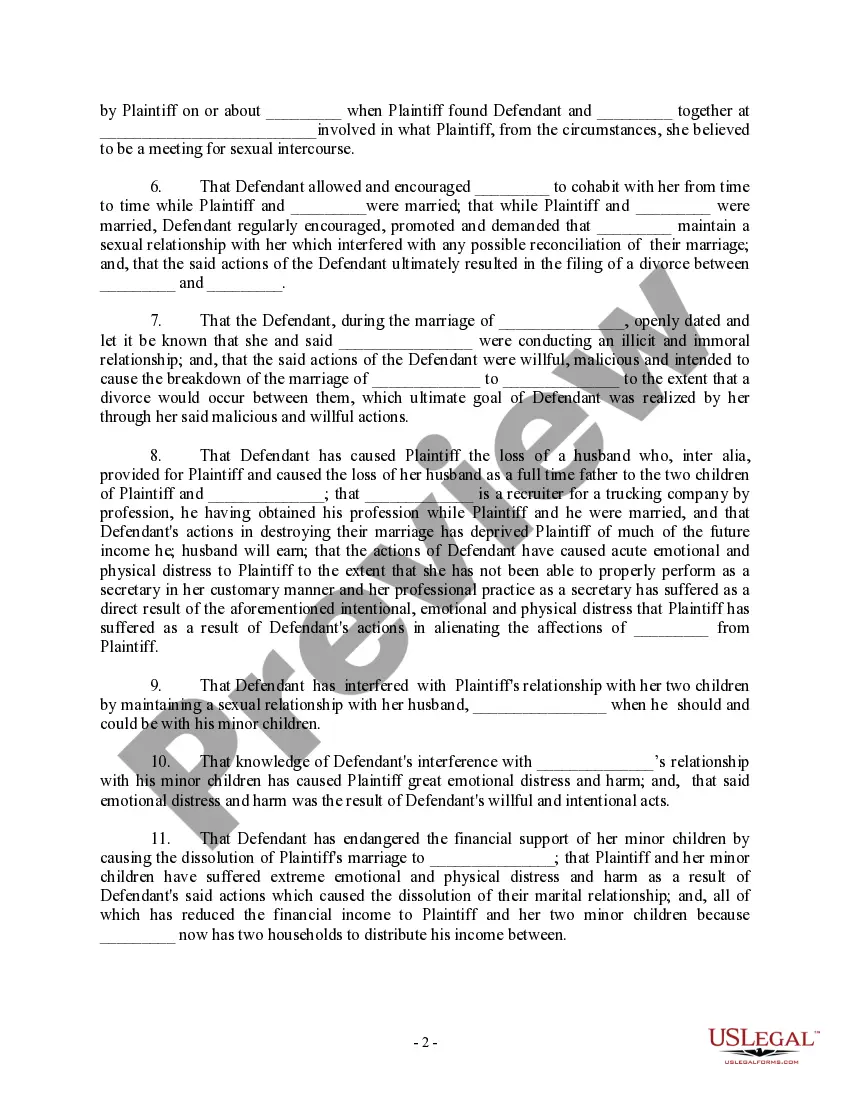
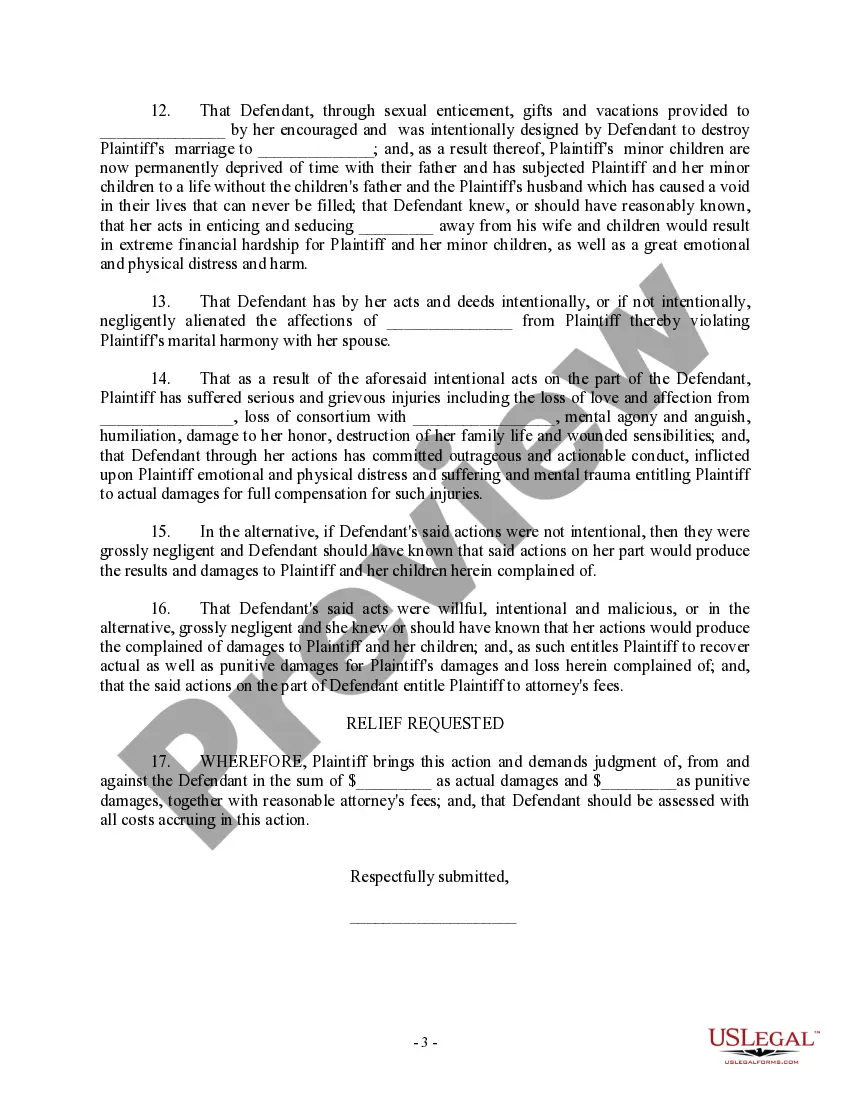


Get your form ready online
Our built-in tools help you complete, sign, share, and store your documents in one place.
Make edits, fill in missing information, and update formatting in US Legal Forms—just like you would in MS Word.
Download a copy, print it, send it by email, or mail it via USPS—whatever works best for your next step.
Sign and collect signatures with our SignNow integration. Send to multiple recipients, set reminders, and more. Go Premium to unlock E-Sign.
If this form requires notarization, complete it online through a secure video call—no need to meet a notary in person or wait for an appointment.
We protect your documents and personal data by following strict security and privacy standards.

Make edits, fill in missing information, and update formatting in US Legal Forms—just like you would in MS Word.

Download a copy, print it, send it by email, or mail it via USPS—whatever works best for your next step.

Sign and collect signatures with our SignNow integration. Send to multiple recipients, set reminders, and more. Go Premium to unlock E-Sign.

If this form requires notarization, complete it online through a secure video call—no need to meet a notary in person or wait for an appointment.

We protect your documents and personal data by following strict security and privacy standards.
Looking for another form?

How to fill out Complaint For Alienation Of Affections?
You can spend hrs on-line trying to find the authorized file format that fits the federal and state needs you want. US Legal Forms offers 1000s of authorized forms which can be examined by professionals. It is possible to download or print out the South Dakota Complaint for Alienation of Affections from the assistance.
If you already possess a US Legal Forms accounts, you may log in and click on the Obtain switch. After that, you may complete, modify, print out, or signal the South Dakota Complaint for Alienation of Affections. Every single authorized file format you purchase is yours eternally. To acquire one more copy of the purchased develop, visit the My Forms tab and click on the related switch.
If you are using the US Legal Forms internet site initially, keep to the simple guidelines below:
- Initial, make certain you have selected the proper file format for your state/area of your choice. See the develop description to make sure you have selected the correct develop. If offered, use the Review switch to search throughout the file format at the same time.
- In order to find one more edition in the develop, use the Look for field to get the format that suits you and needs.
- After you have identified the format you would like, click on Purchase now to carry on.
- Pick the rates plan you would like, key in your credentials, and sign up for a merchant account on US Legal Forms.
- Total the financial transaction. You should use your Visa or Mastercard or PayPal accounts to cover the authorized develop.
- Pick the structure in the file and download it to your system.
- Make alterations to your file if necessary. You can complete, modify and signal and print out South Dakota Complaint for Alienation of Affections.
Obtain and print out 1000s of file web templates utilizing the US Legal Forms web site, that provides the biggest collection of authorized forms. Use skilled and condition-specific web templates to tackle your company or individual demands.
Form popularity
FAQ
Defenses Lack of knowledge that the adulterous spouse was married. The marriage was an unhappy marriage. The sex was consensual. The defendant was seduced. The Plaintiff had engaged in adulterous affairs (although that may reduce the damages) The sex had no effect on the marriage.
Evidence that may strengthen the claim includes photographs depicting a loving bond between the married couple, testimony from friends and family regarding the strength of their relationship prior to the affair, and cards, notes, texts, etc.
However, these cases are extremely difficult to prove, let alone win. It's for this reason that many attorneys often refuse to take these cases.
Defenses to an Alienation of Affection Lawsuit Considering this requirement, it's a valid defense if the defendant didn't know that the person was married. It's also a possible defense if the defendant can provide evidence that the cheating spouse aggressively seduced the defendant.
Though it's not illegal to cheat on your spouse, there may be repercussions in a civil court for infidelity depending on your location. Few people are ever successful in winning alienation of affection claims because of the elements that are required for a successful case.
The person filing an Alienation of Affection lawsuit must show 3 things: The person and their spouse were married and a genuine love and affection existed between them. The love and affection was alienated and destroyed. The wrongful and malicious acts of the third party alienated the affection of plaintiff's spouse.
?But South Dakota law protects a person whose marriage is wrongfully interfered with.? Alienation of affection, in theory, protects a spouse from a philanderer who intentionally seduces his or her mate. And while many states have judicially or legislatively done away with it, it's not stuck in the 18th Century.