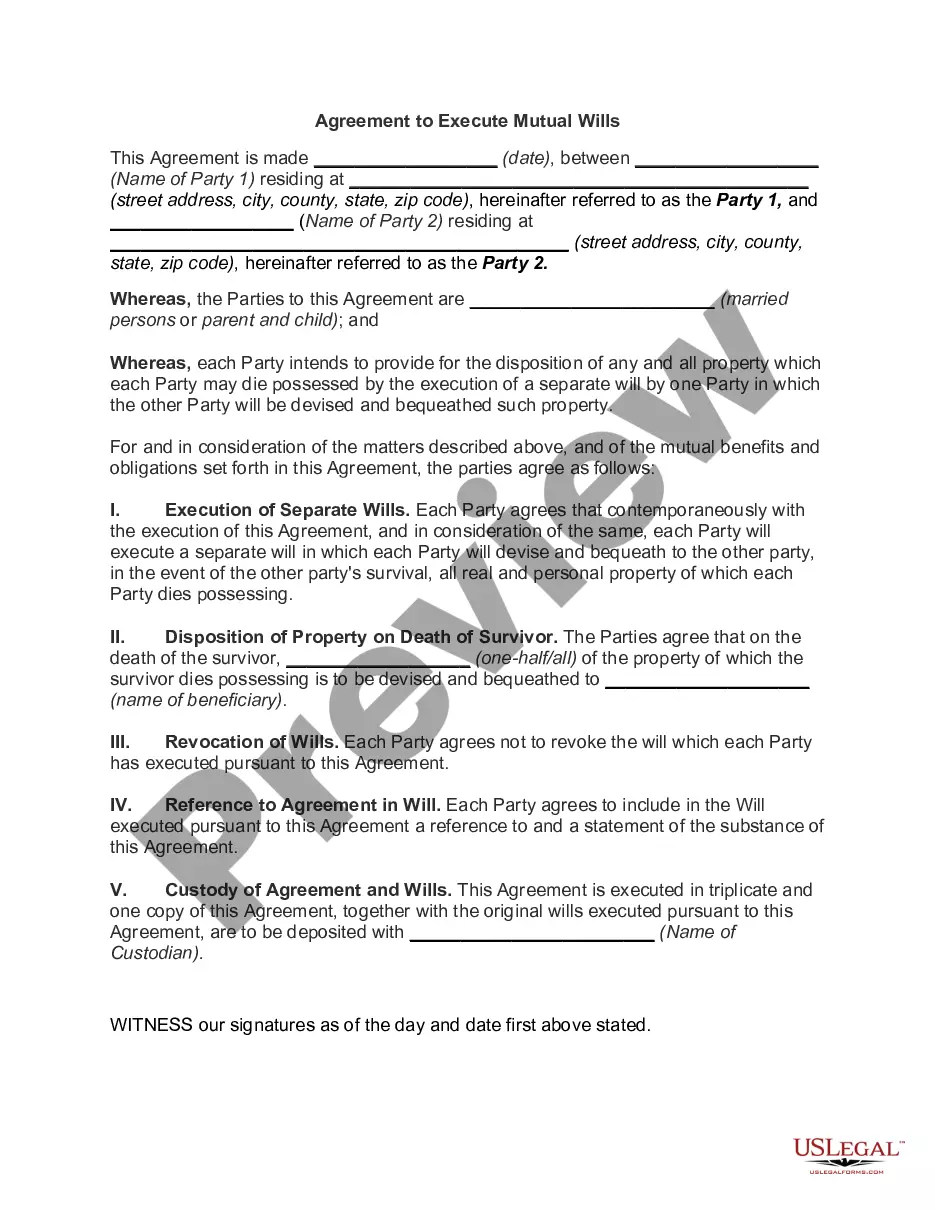
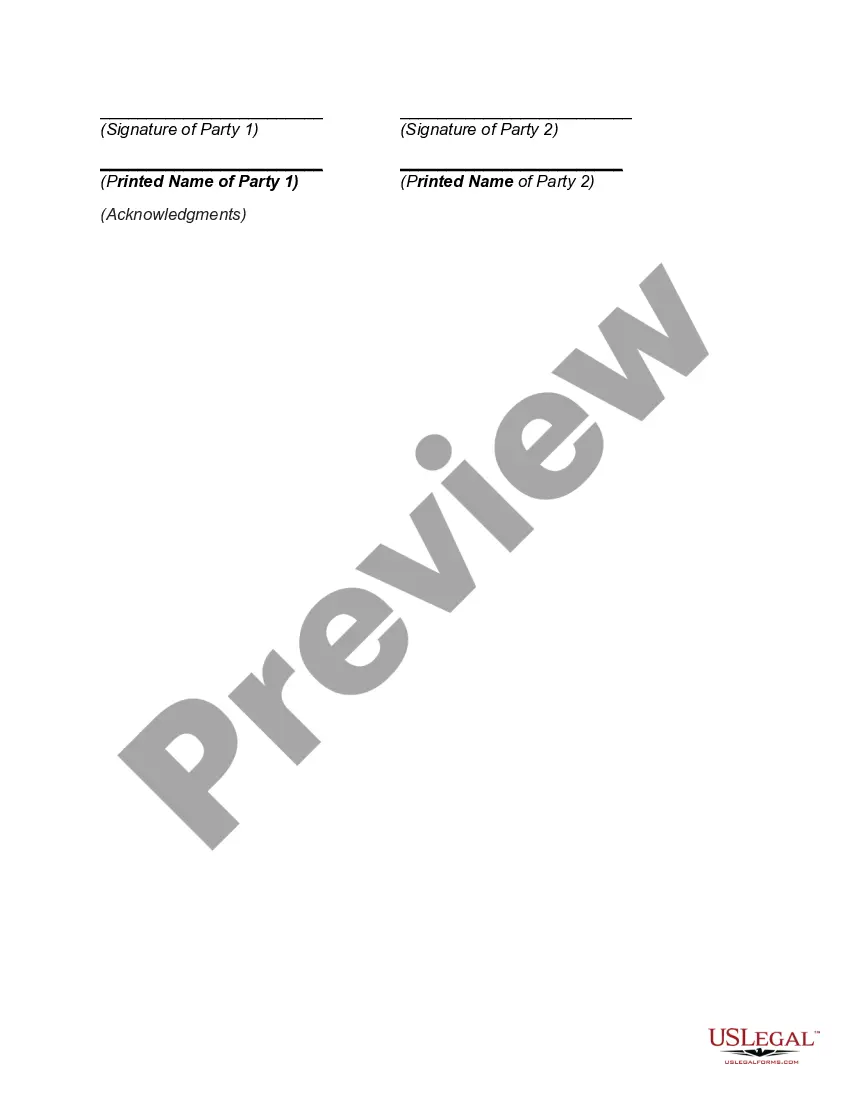
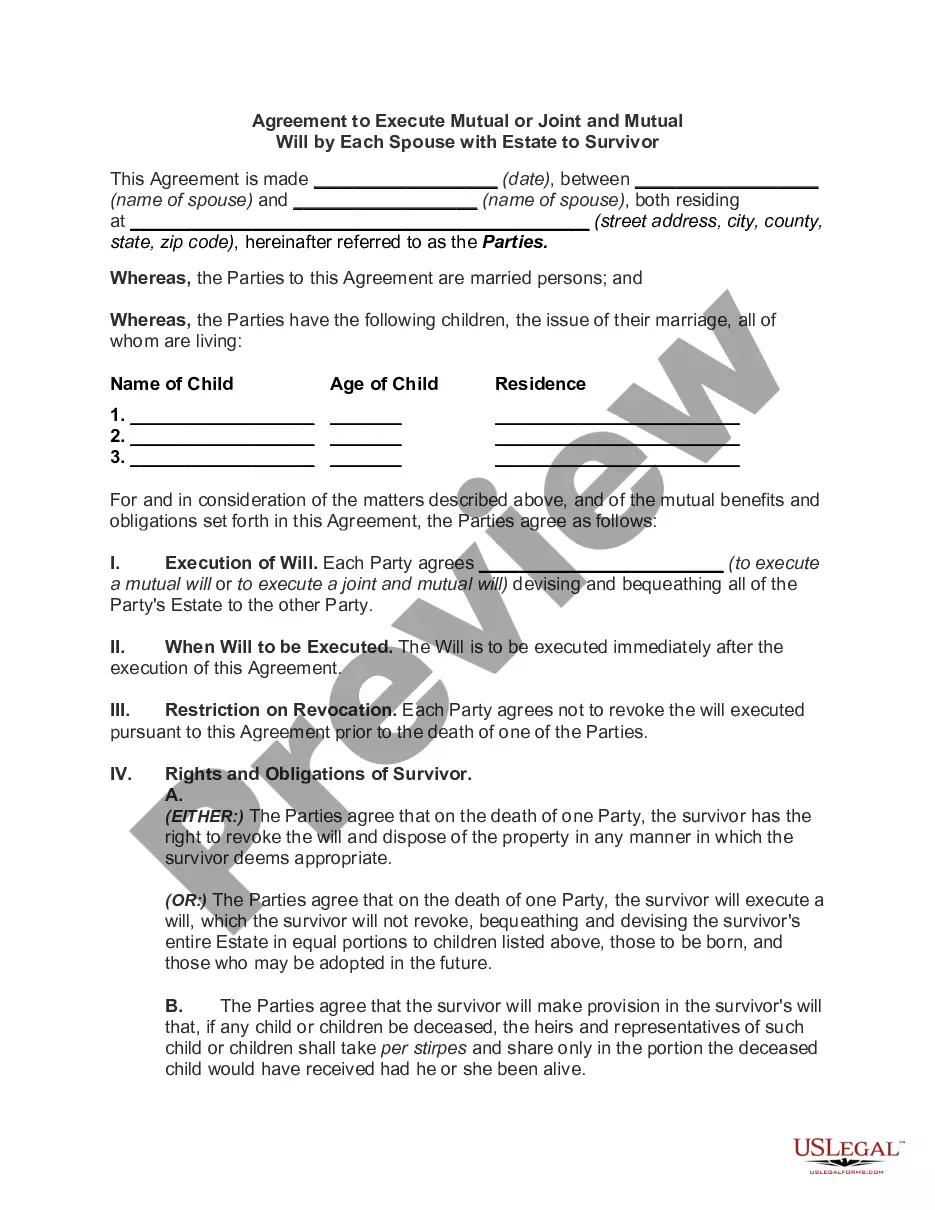
South Dakota Agreement to Execute Mutual Wills
Description
Get your form ready online
Our built-in tools help you complete, sign, share, and store your documents in one place.
Make edits, fill in missing information, and update formatting in US Legal Forms—just like you would in MS Word.
Download a copy, print it, send it by email, or mail it via USPS—whatever works best for your next step.
Sign and collect signatures with our SignNow integration. Send to multiple recipients, set reminders, and more. Go Premium to unlock E-Sign.
If this form requires notarization, complete it online through a secure video call—no need to meet a notary in person or wait for an appointment.
We protect your documents and personal data by following strict security and privacy standards.

Make edits, fill in missing information, and update formatting in US Legal Forms—just like you would in MS Word.

Download a copy, print it, send it by email, or mail it via USPS—whatever works best for your next step.

Sign and collect signatures with our SignNow integration. Send to multiple recipients, set reminders, and more. Go Premium to unlock E-Sign.

If this form requires notarization, complete it online through a secure video call—no need to meet a notary in person or wait for an appointment.

We protect your documents and personal data by following strict security and privacy standards.
Looking for another form?
How to fill out Agreement To Execute Mutual Wills?
Are you currently in a circumstance where you need documents for potential business or personal reasons almost every workday.
There are numerous legal document templates accessible online, but finding reliable ones can be challenging.
US Legal Forms provides thousands of form templates, including the South Dakota Agreement to Execute Mutual Wills, which are designed to comply with federal and state requirements.
Select a suitable file format and download your copy.
Access all the form templates you have purchased in the My documents section. You can retrieve an additional copy of the South Dakota Agreement to Execute Mutual Wills whenever needed by following the appropriate link to download or print the format.
Utilize US Legal Forms, the most extensive collection of legal documents, to save time and minimize errors. The service offers professionally crafted legal document templates that you can use for various purposes. Create an account on US Legal Forms and start simplifying your life.
- If you are already acquainted with the US Legal Forms website and have an account, simply Log In.
- After that, you can download the South Dakota Agreement to Execute Mutual Wills template.
- If you do not have an account and wish to start using US Legal Forms, follow these steps.
- Select the form you need and ensure it is for the correct city/state.
- Use the Preview button to review the form.
- Read the description to confirm you have selected the right form.
- If the form does not match your needs, utilize the Search field to find the form that meets your requirements.
- When you have the correct form, click Acquire now.
- Choose the pricing option you prefer, provide the necessary details to set up your payment, and complete the transaction using your PayPal or credit card.
Form popularity
FAQ
In general, you can change your will without informing your spouse. (One big exception to this would be if one of you has filed for divorce and there is a restraining order on assets.)
Do I Need to Have My Will Notarized? No, in South Dakota, you do not need to notarize your will to make it legal. However, South Dakota allows you to make your will "self-proving" and you'll need to go to a notary if you want to do that.
For example, spouses often choose to leave their estates to each other with a gift over to their children upon the death of the second spouse. Reciprocal wills could be joint, mirror or mutual, but joint wills (one will made by two people) are not legal in Ontario.
Legal requirements for mutual wills The requirements for mutual wills are: there must be an agreement between the individuals who made the wills, which amounts to a contract at law; the agreement must be proven by clear and satisfactory evidence; and. it must include an agreement not to revoke wills.
A Mutual Will Agreement is a contract between two parties, usually spouses. Under a Mutual Will Agreement each party agrees that they will not change their Will without their spouse's consent, or if their spouse has died, the consent of their agreed beneficiaries (who are usually their children).
A joint will is one document signed by two people. A mutual will represents two individual wills that are signed separately, but are largely the same in content.
Mutual Wills go one step further than mirror Wills, creating a legally binding agreement between a couple that the survivor will not change their Will. A complicating factor is that there may be no written indication of such an agreement, either in the Wills or elsewhere.
Mutual wills are a common estate planning tool. Typically, a couple agrees to leave all or most of their estate to the surviving spouse, who then agrees to provide irrevocable gifts over to children.