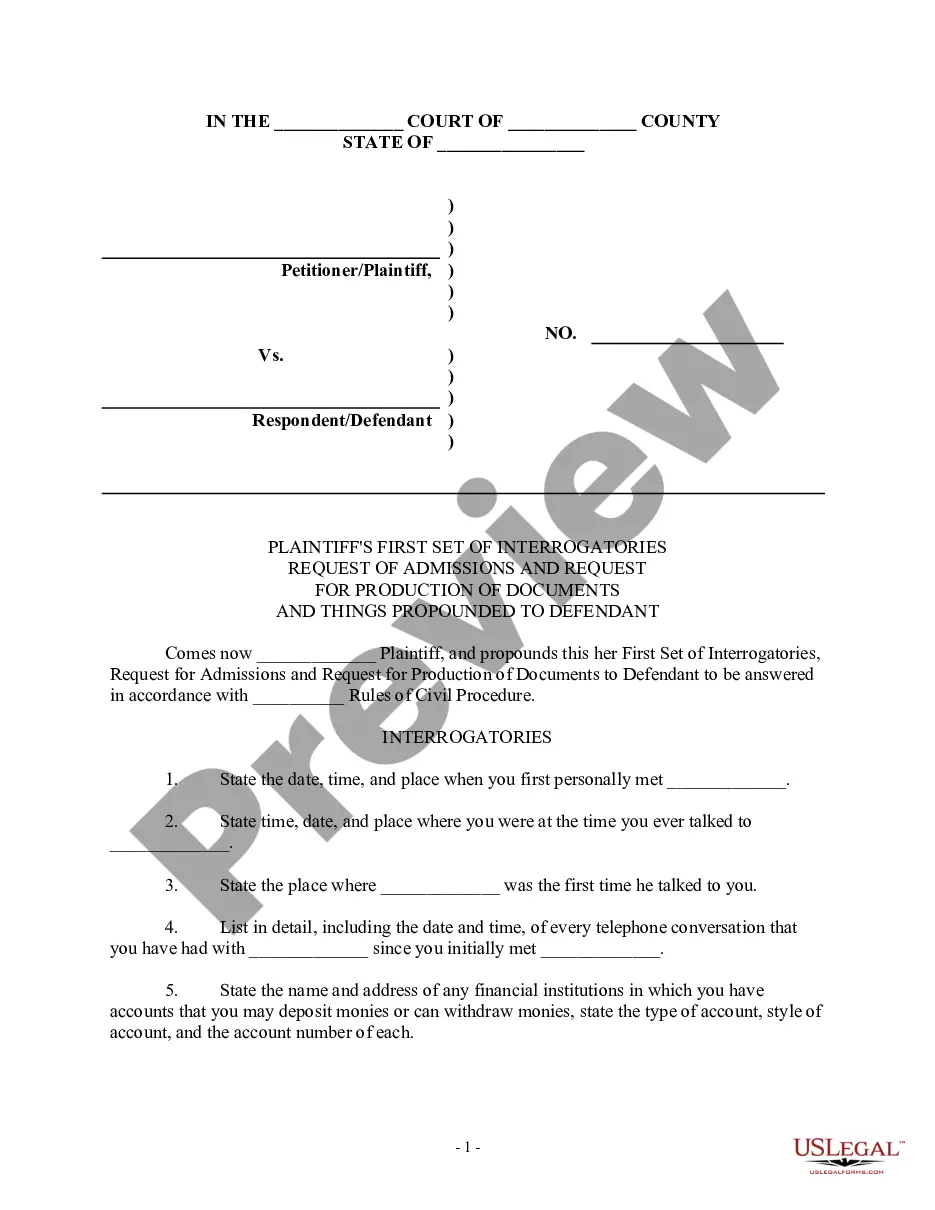
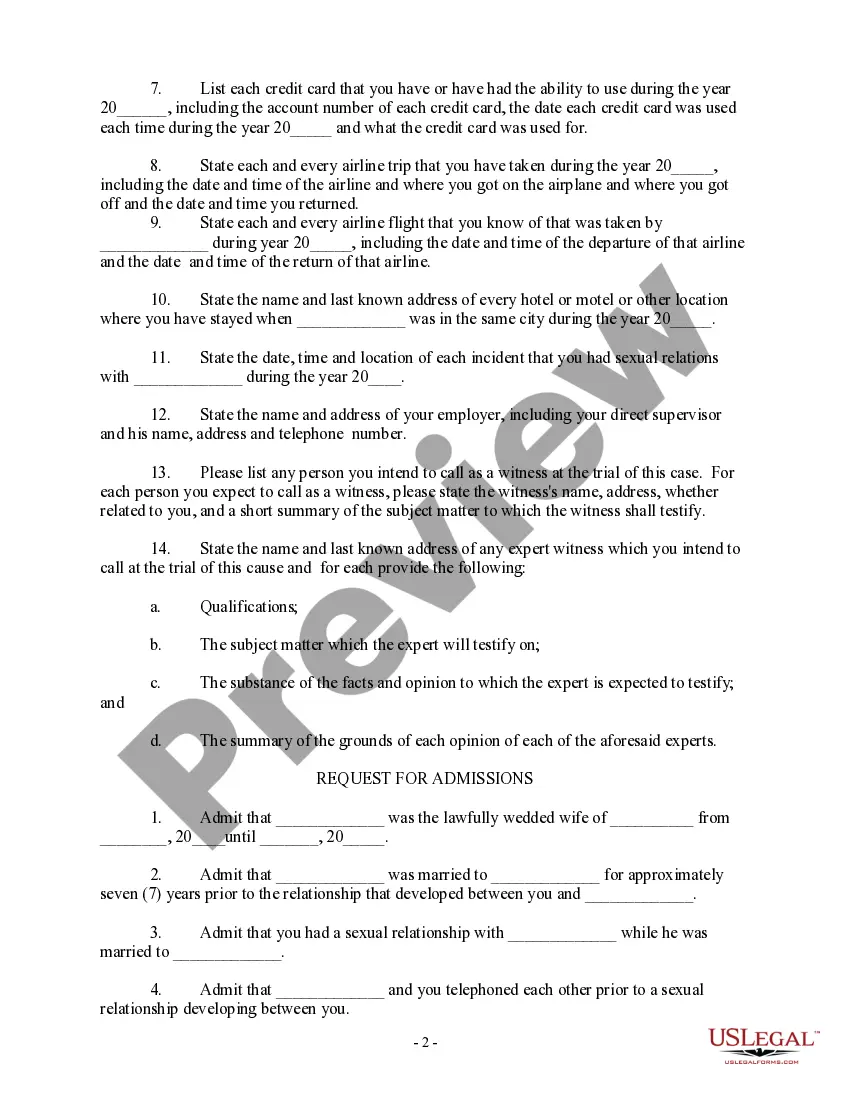
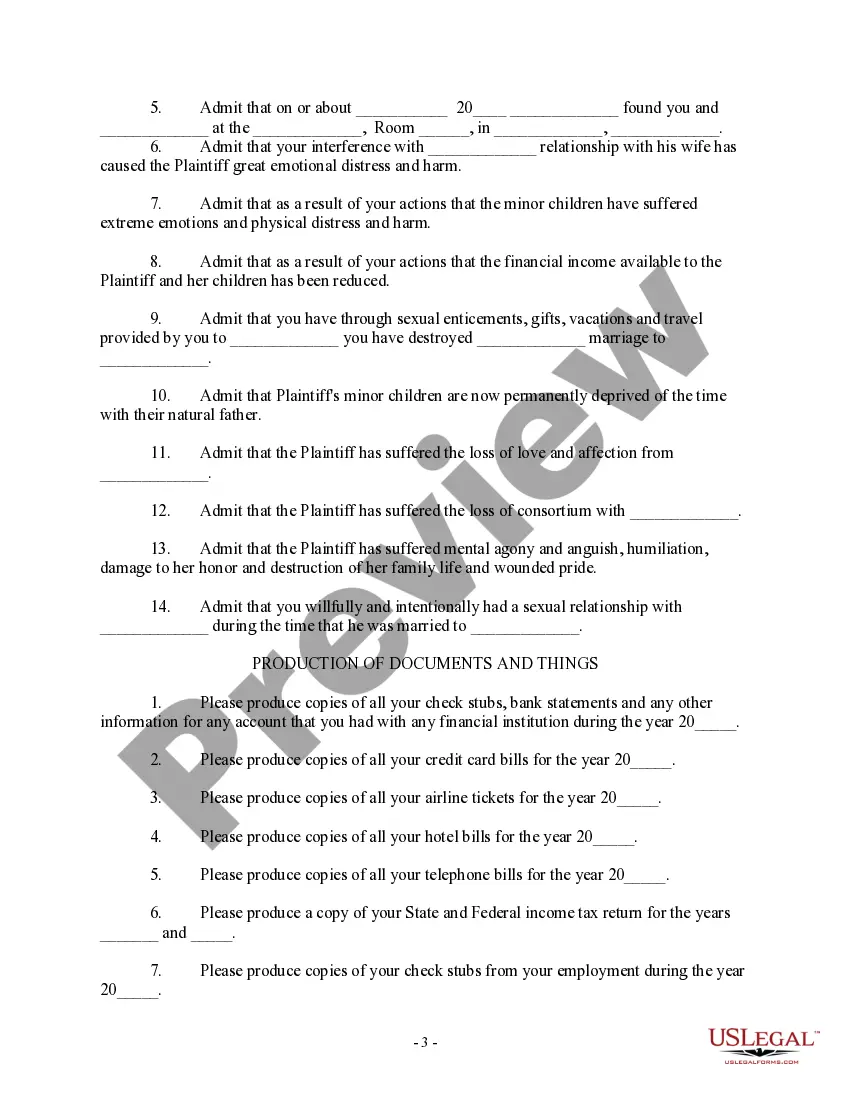
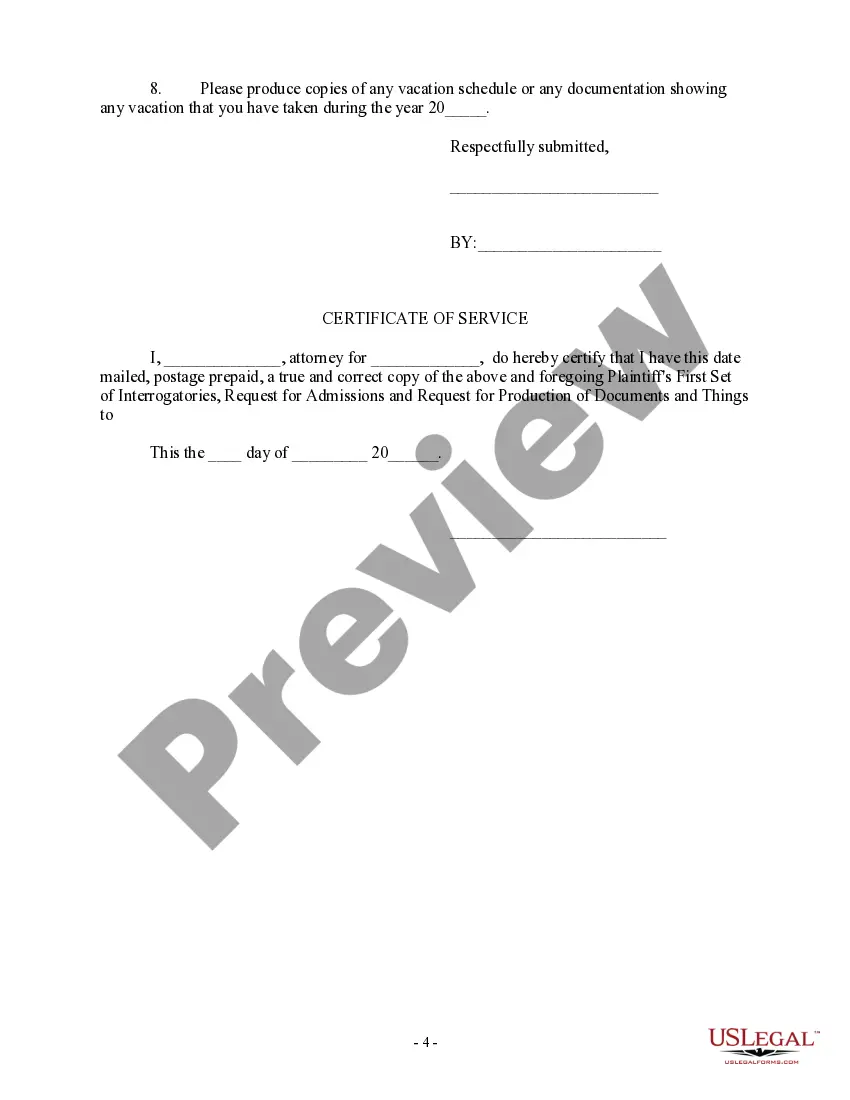
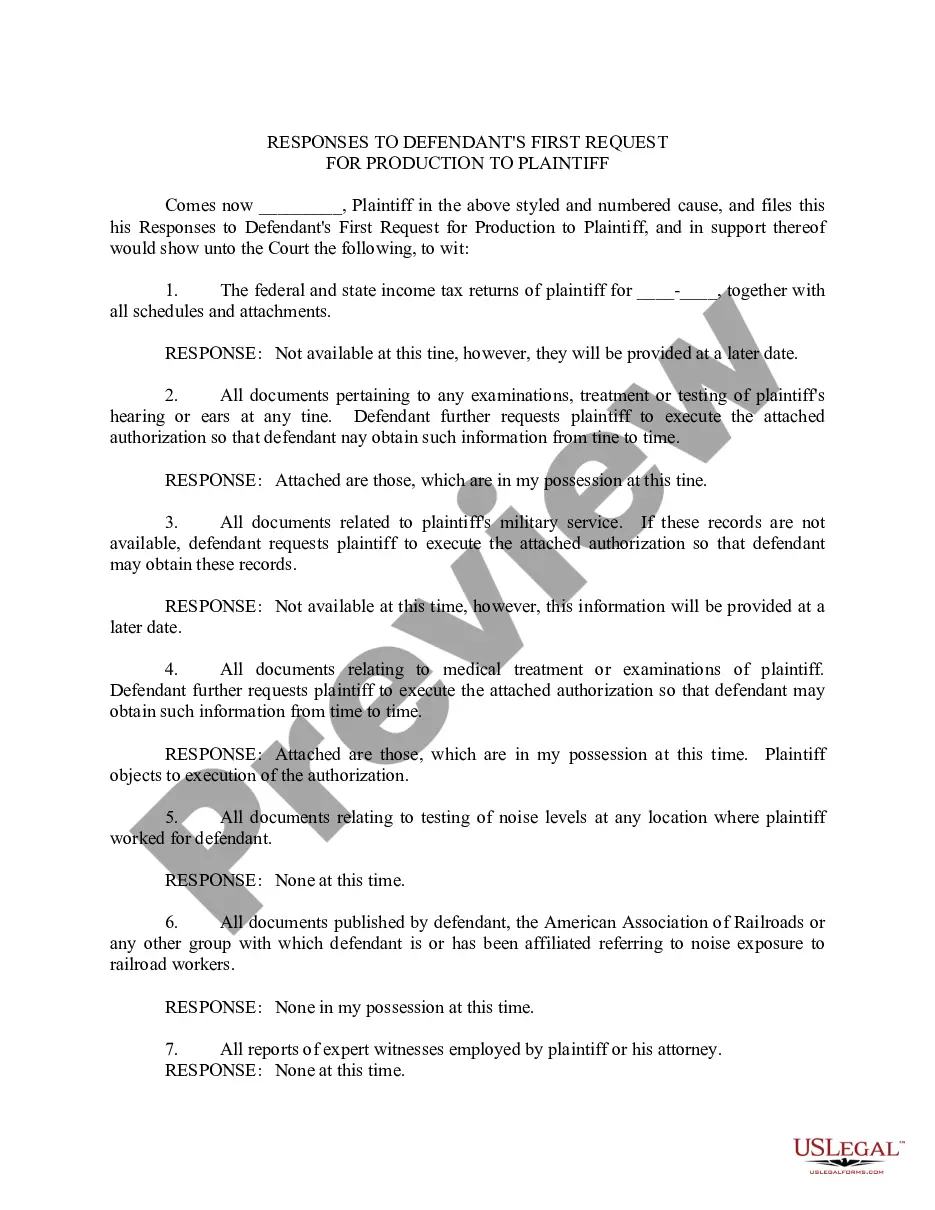
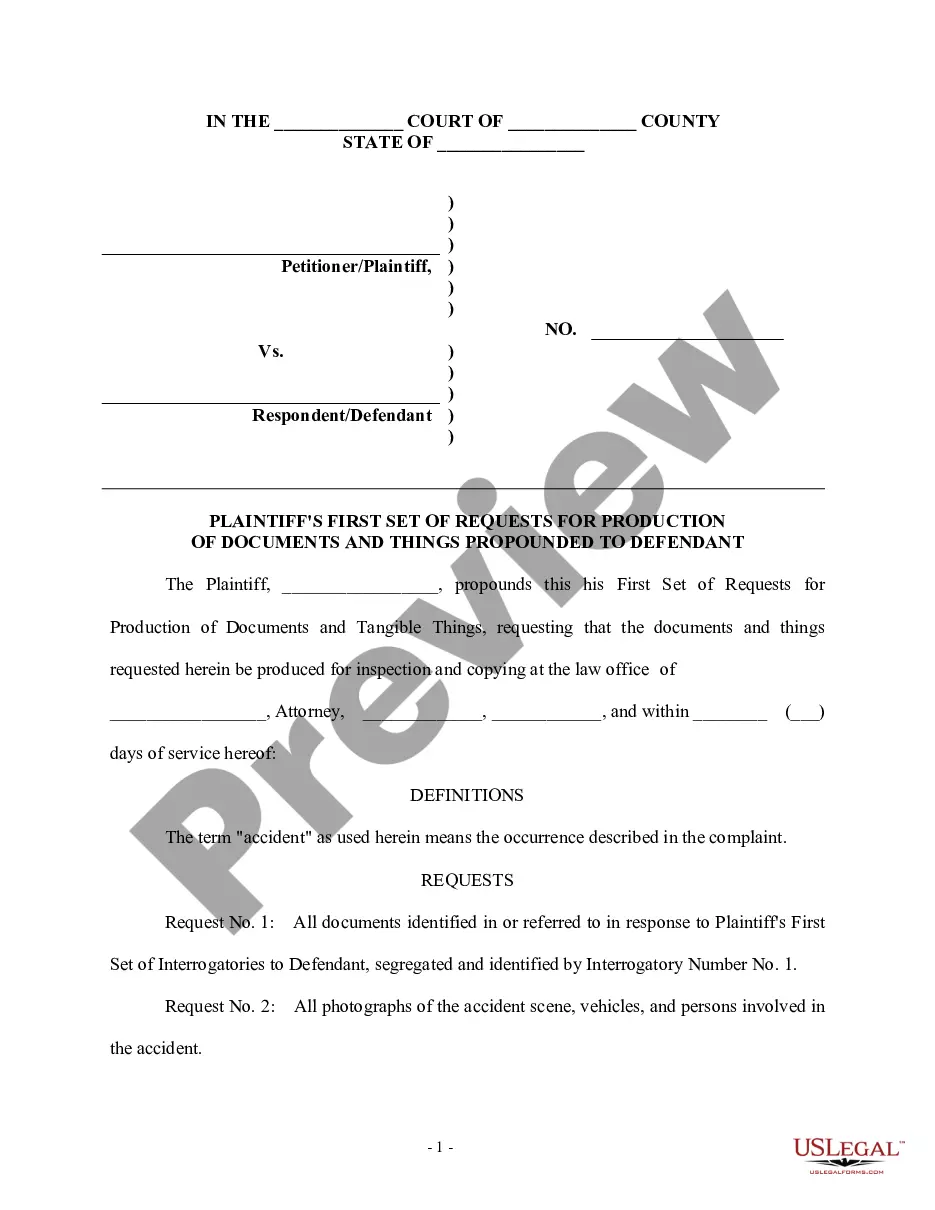
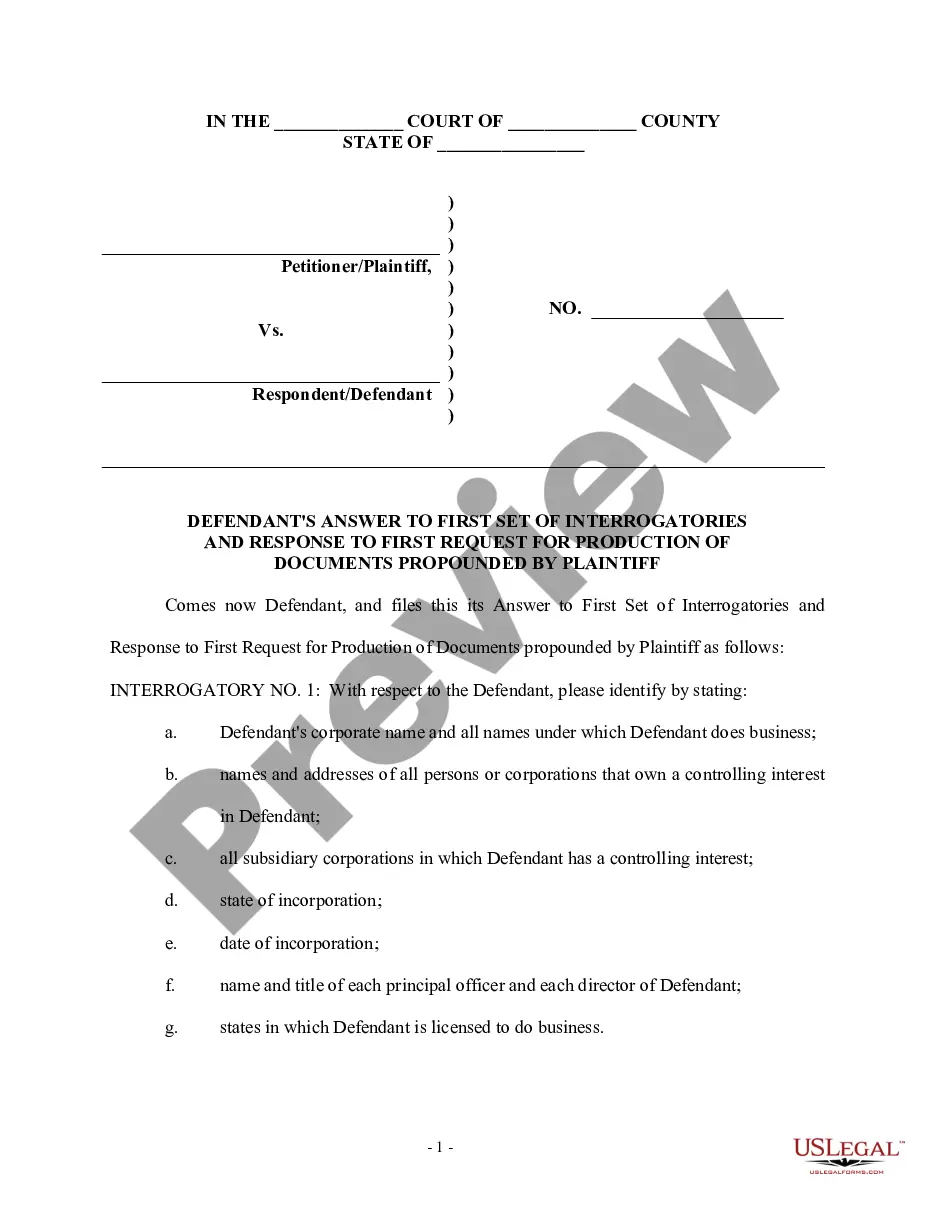
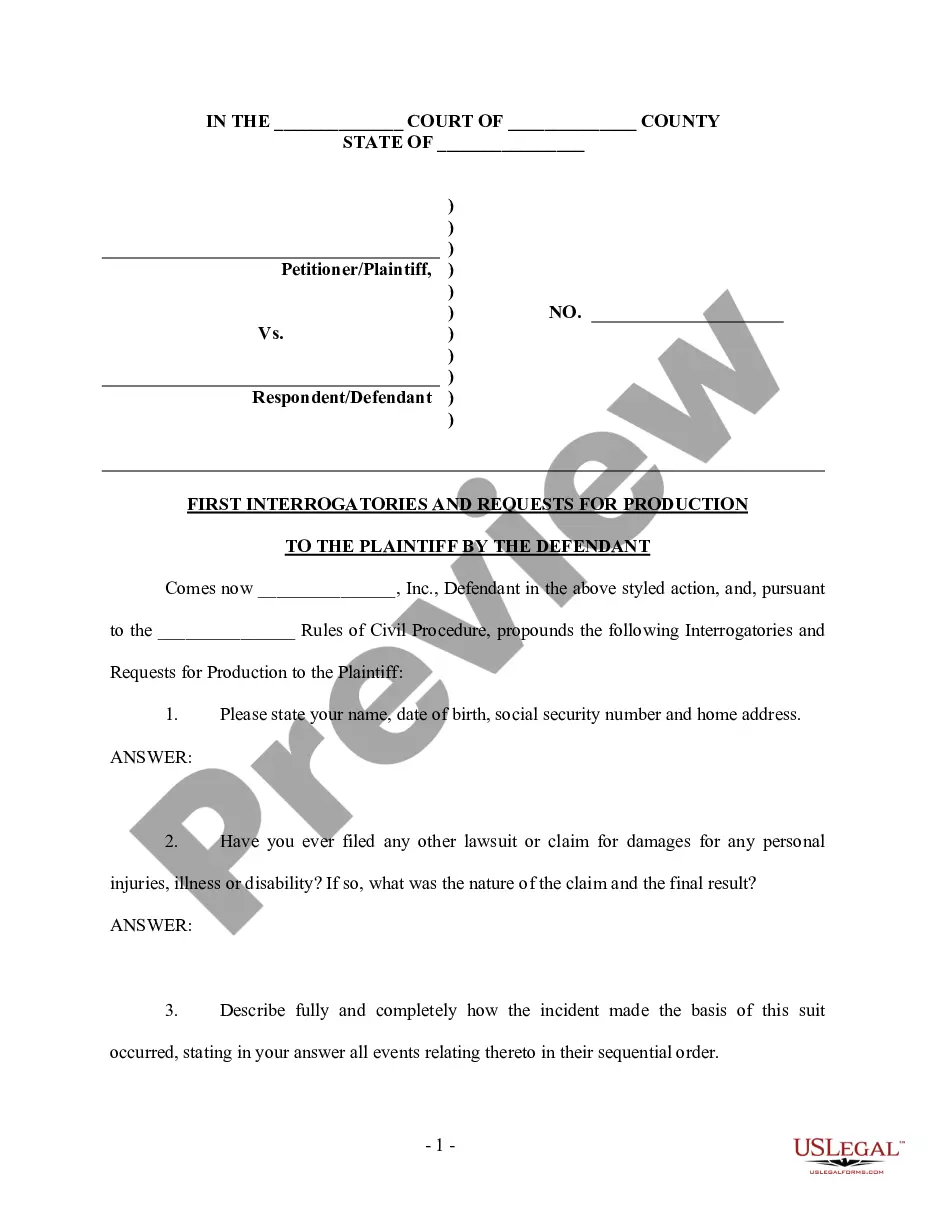
This form is Plaintiff's First Set of Interrogatories. The plaintiff also submits a Request for Admissions, Production of Documents and Things, and the form also contains a Certificate of Service.
South Dakota Plaintiff's First Set of Interrogatories and Request for Production of Documents
State:
Multi-State
Category:
Control #:
US-01582
Format:
Word;
Rich Text
899 downloads
Description
Free preview

Get your form ready online
Our built-in tools help you complete, sign, share, and store your documents in one place.
Built-in online Word editor
Make edits, fill in missing information, and update formatting in US Legal Forms—just like you would in MS Word.
Export easily
Download a copy, print it, send it by email, or mail it via USPS—whatever works best for your next step.
E-sign your document
Sign and collect signatures with our SignNow integration. Send to multiple recipients, set reminders, and more. Go Premium to unlock E-Sign.
Notarize online 24/7
If this form requires notarization, complete it online through a secure video call—no need to meet a notary in person or wait for an appointment.
Store your document securely
We protect your documents and personal data by following strict security and privacy standards.

Make edits, fill in missing information, and update formatting in US Legal Forms—just like you would in MS Word.

Download a copy, print it, send it by email, or mail it via USPS—whatever works best for your next step.

Sign and collect signatures with our SignNow integration. Send to multiple recipients, set reminders, and more. Go Premium to unlock E-Sign.

If this form requires notarization, complete it online through a secure video call—no need to meet a notary in person or wait for an appointment.

We protect your documents and personal data by following strict security and privacy standards.
Looking for another form?
How to fill out Plaintiff's First Set Of Interrogatories And Request For Production Of Documents?
US Legal Forms - one of the largest collections of official documents in the United States - provides a range of official form templates that you can download or create.
By utilizing the website, you can obtain thousands of forms for business and personal needs, categorized by types, states, or keywords. You can find the latest versions of forms such as the South Dakota Plaintiff's First Set of Interrogatories and Request for Production of Documents in just moments.
If you have a monthly subscription, Log In and download the South Dakota Plaintiff's First Set of Interrogatories and Request for Production of Documents from the US Legal Forms library. The Download button will appear on each form you view. You can access all previously downloaded forms from the My documents section of your account.
Complete the transaction. Use your Visa or Mastercard or PayPal account to finalize the transaction. Select the format and download the form to your device.
Make edits. Fill out, modify, print, and sign the downloaded South Dakota Plaintiff's First Set of Interrogatories and Request for Production of Documents. Each template you add to your account does not have an expiration date and is yours permanently. To download or create another copy, simply go to the My documents section and click on the form you wish to access. Gain access to the South Dakota Plaintiff's First Set of Interrogatories and Request for Production of Documents with US Legal Forms, the largest library of official document templates. Utilize a vast array of professional and state-specific templates that satisfy your business or personal needs and requirements.
- If you would like to use US Legal Forms for the first time, here are simple steps to get started.
- Ensure you have selected the correct form for your city/state.
- Click the Preview button to review the form's details.
- Check the form information to confirm that you have chosen the right form.
- If the form does not meet your requirements, use the Search field at the top of the screen to find one that does.
- When you are satisfied with the form, confirm your choice by clicking the Get now button.
- Then, select the pricing plan you prefer and provide your credentials to register for an account.
Form popularity
FAQ
First Set of Interrogatories means the Applicant's first set of interrogatories served on Opposer contemporaneously with these Requests.
Usually, lawyers use interrogatories to obtain detailed information about persons, corporations, facts, witnesses, and identity and locations of records and documents. Court rules usually limit the number of questions included in an interrogatory.
Interrogatories, which are written questions about things that are relevant or important to the case. (NRCP 33; JCRCP 33) Requests for production of documents or things, which are written requests that demand the other side provide particular documents or items. (NRCP 34; JCRCP 34.)
In civil procedure, an interrogatory is a list of written questions one party sends to another as part of the discovery process. The recipient must answer in writing under oath and ing to the case's schedule.
Use Form Interrogatories when you want to gather information from the other side by having them answer questions from a list on a form, and swear under oath that the answers are true.
Discovery is the formal process by which the parties to a case in court exchange information about the case. This includes information about the witnesses and evidence to be presented at trial. Its purpose is to make the parties aware of the evidence which may be presented at trial.