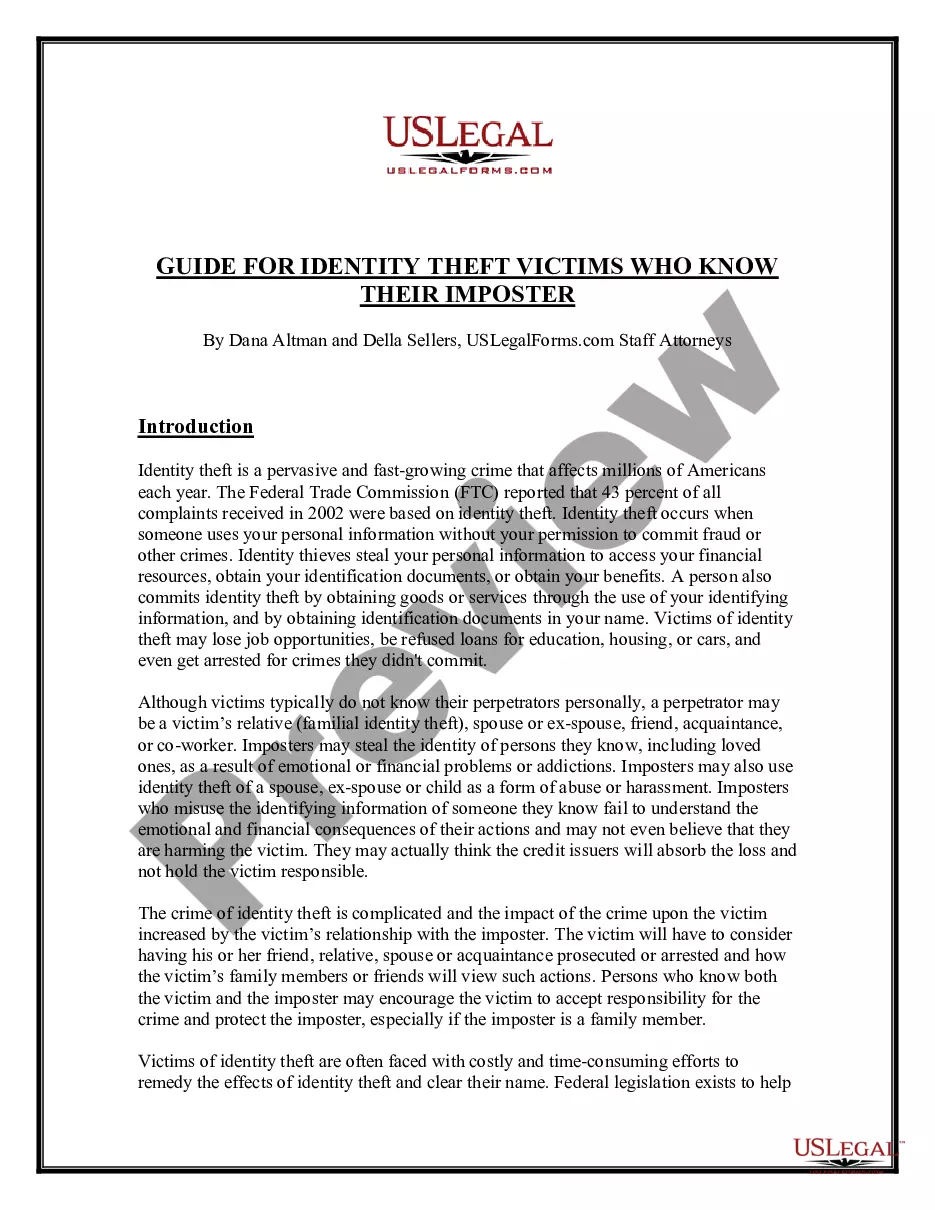
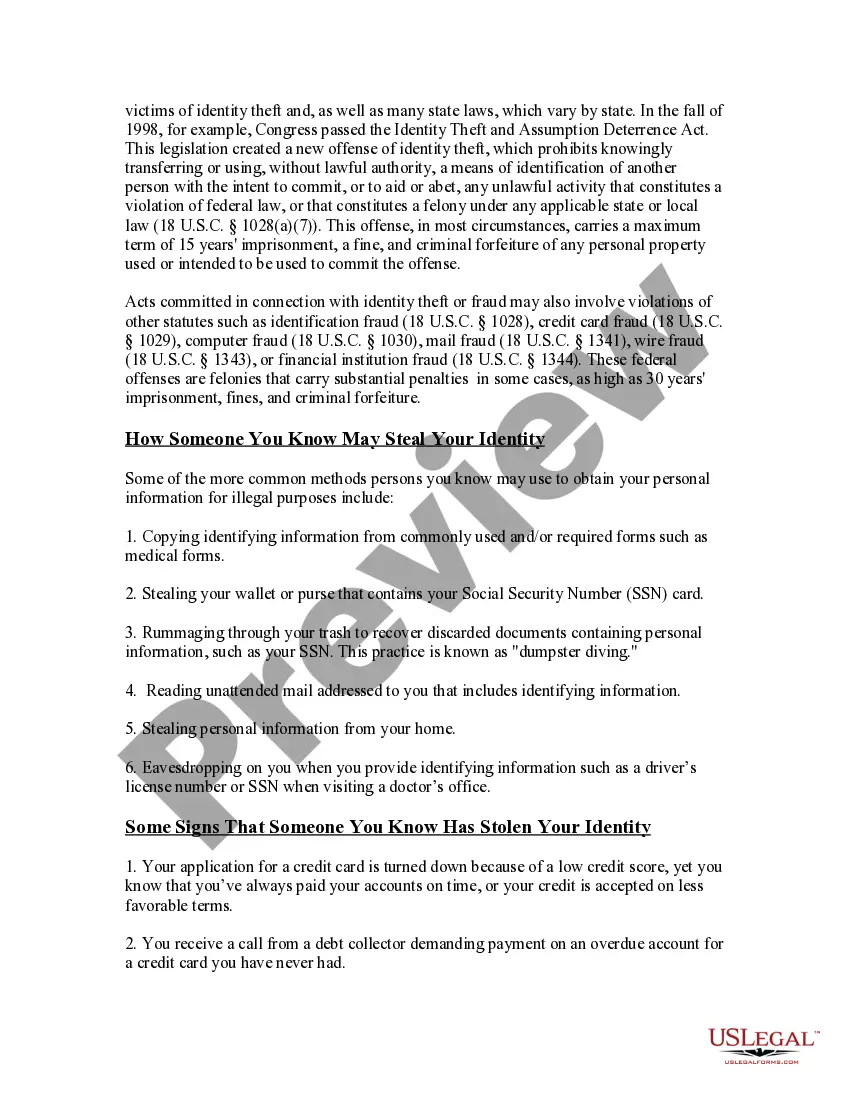
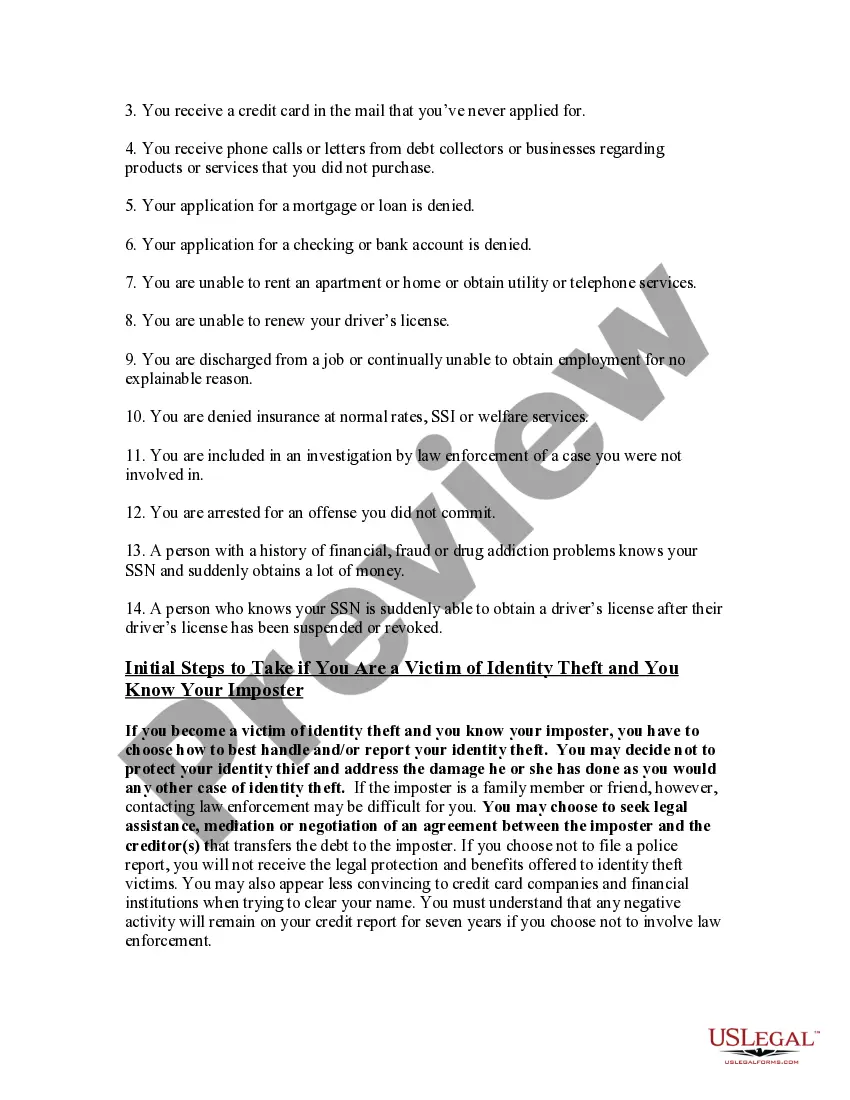
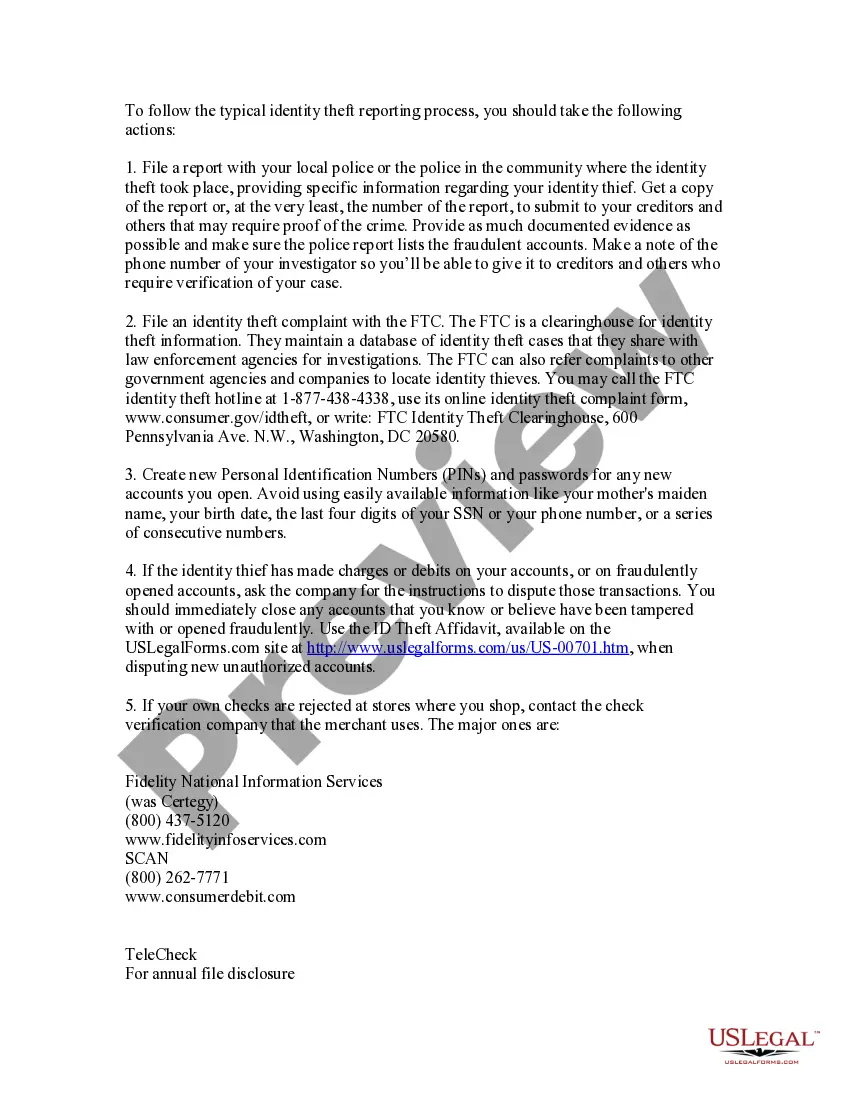
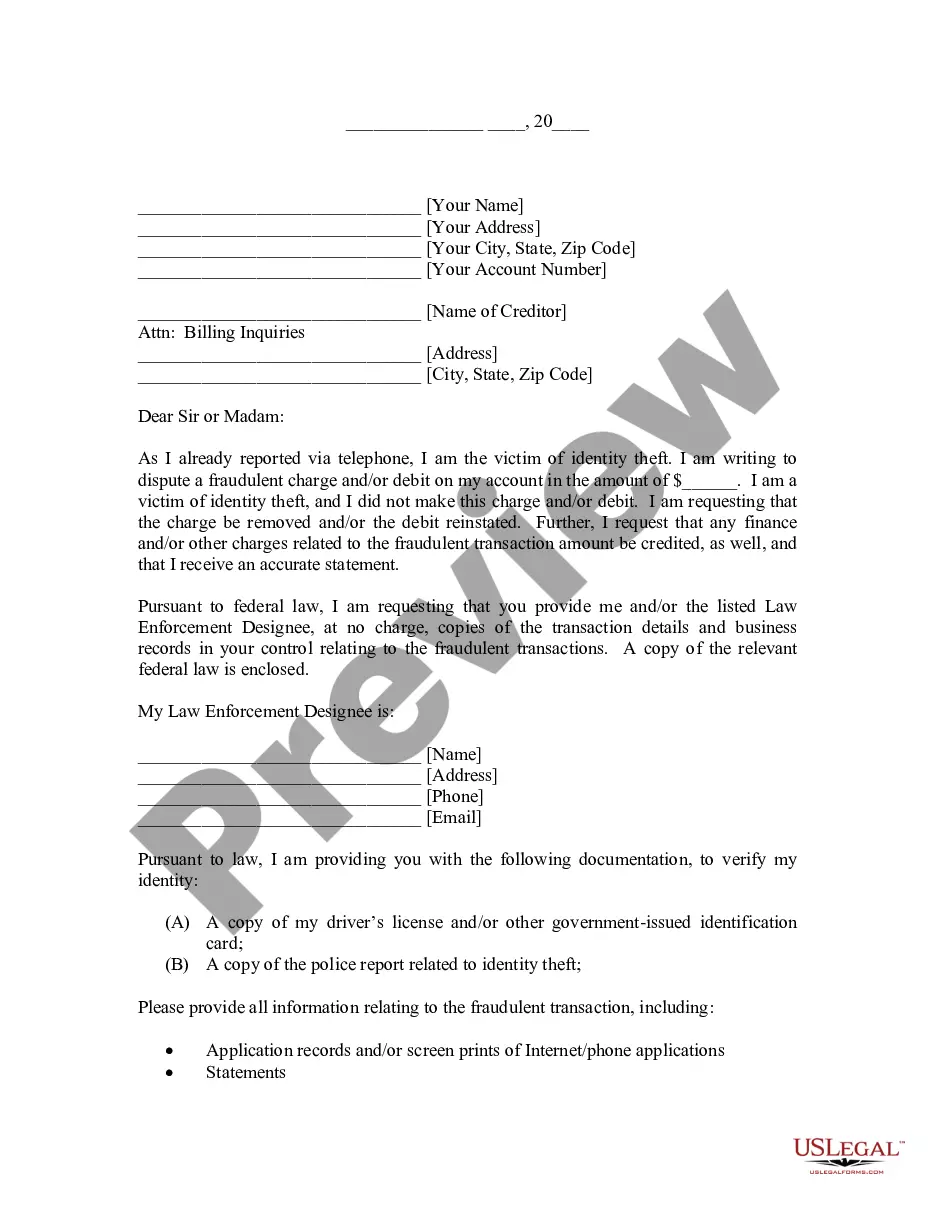
South Dakota Guide for Identity Theft Victims Who Know Their Imposter
Description
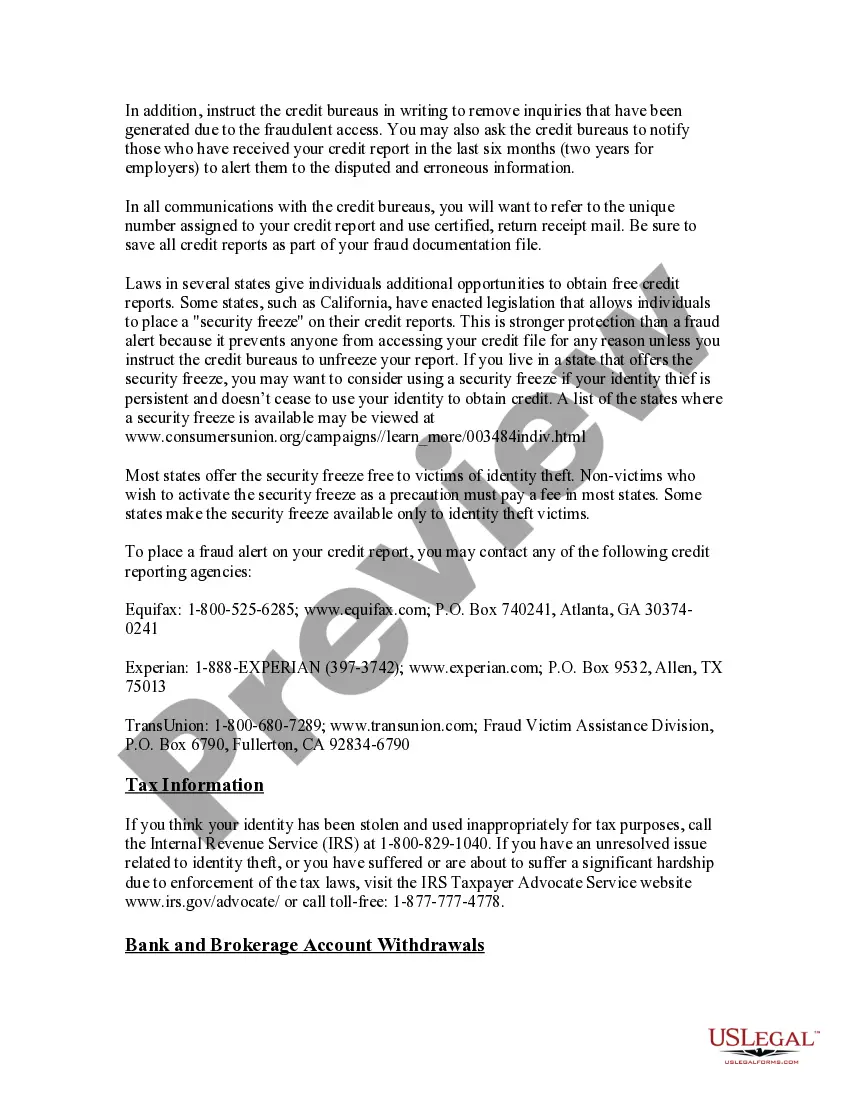
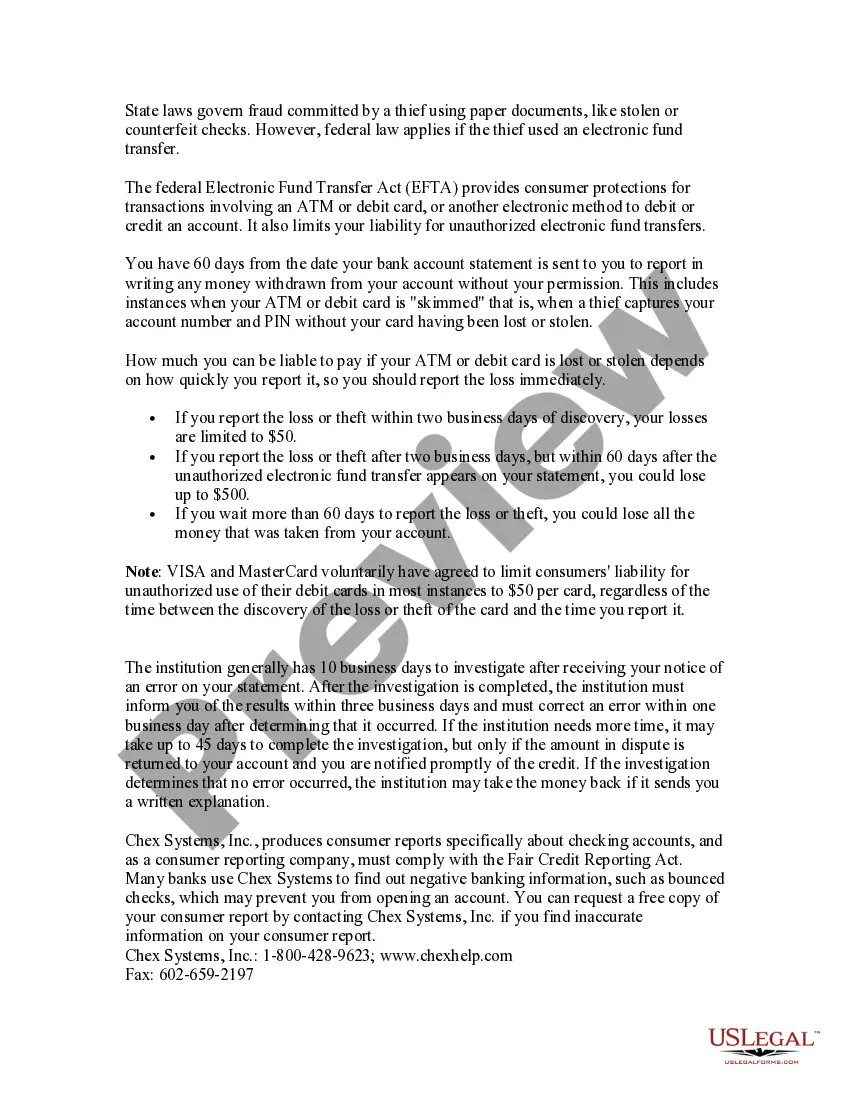

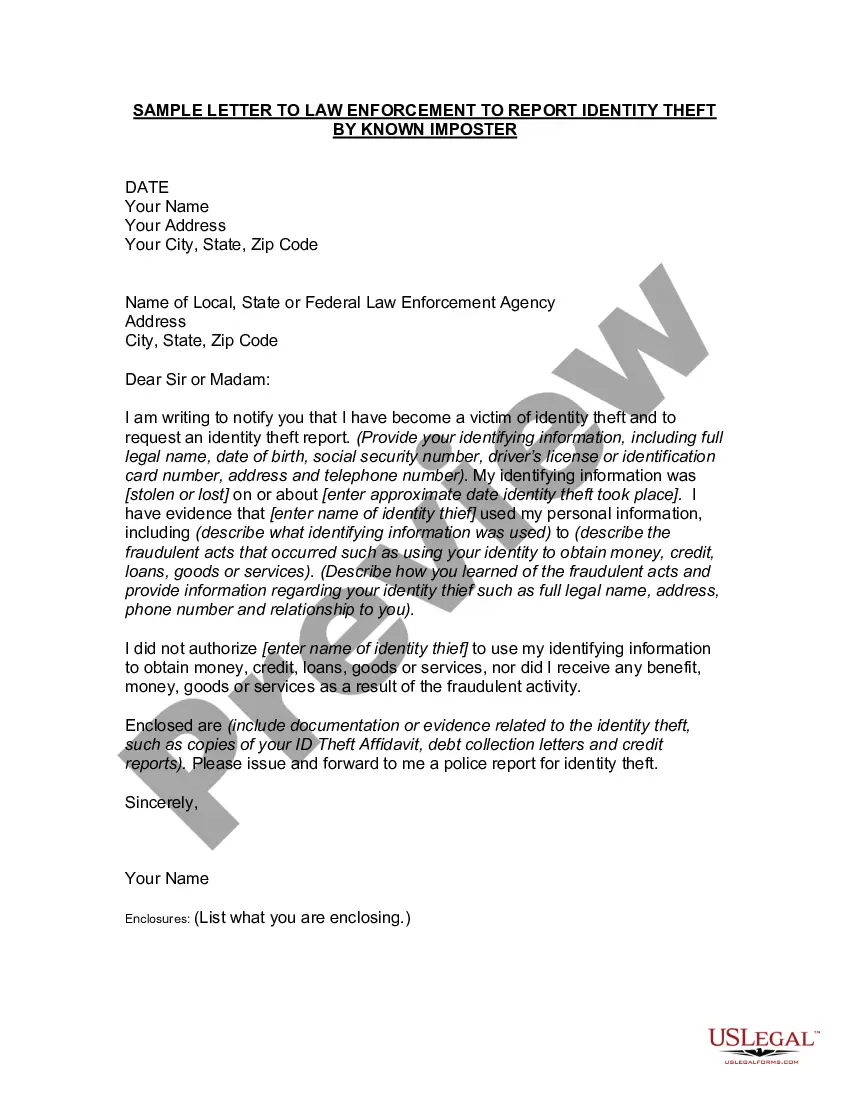
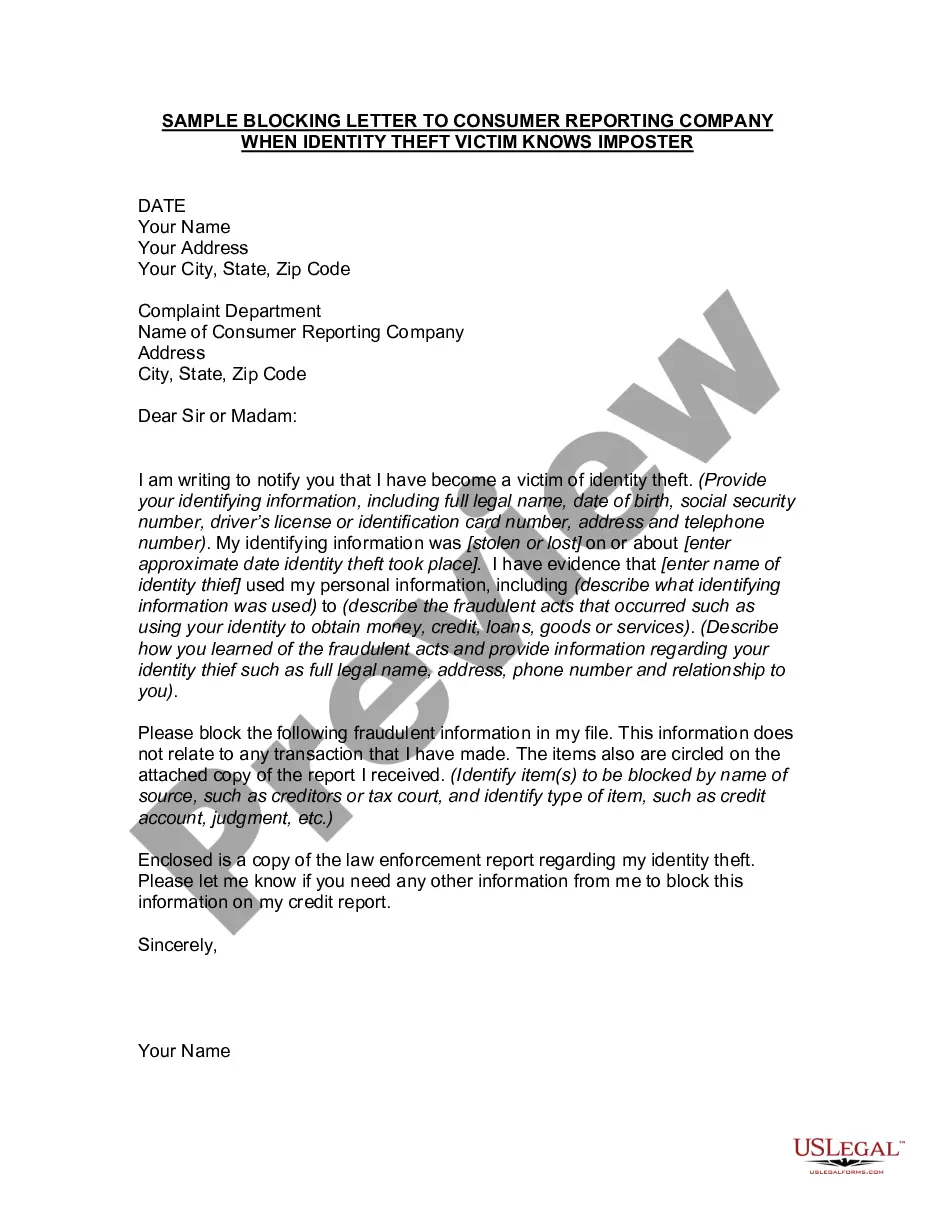
Get your form ready online
Our built-in tools help you complete, sign, share, and store your documents in one place.
Make edits, fill in missing information, and update formatting in US Legal Forms—just like you would in MS Word.
Download a copy, print it, send it by email, or mail it via USPS—whatever works best for your next step.
Sign and collect signatures with our SignNow integration. Send to multiple recipients, set reminders, and more. Go Premium to unlock E-Sign.
If this form requires notarization, complete it online through a secure video call—no need to meet a notary in person or wait for an appointment.
We protect your documents and personal data by following strict security and privacy standards.

Make edits, fill in missing information, and update formatting in US Legal Forms—just like you would in MS Word.

Download a copy, print it, send it by email, or mail it via USPS—whatever works best for your next step.

Sign and collect signatures with our SignNow integration. Send to multiple recipients, set reminders, and more. Go Premium to unlock E-Sign.

If this form requires notarization, complete it online through a secure video call—no need to meet a notary in person or wait for an appointment.

We protect your documents and personal data by following strict security and privacy standards.
Looking for another form?



How to fill out Guide For Identity Theft Victims Who Know Their Imposter?
US Legal Forms - one of the largest collections of legal documents in the USA - provides a diverse selection of legal form templates that you can download or print. Through the website, you can access thousands of forms for business and personal use, organized by categories, states, or keywords. You can find the most recent versions of forms such as the South Dakota Guide for Identity Theft Victims Who Know Their Imposter in just minutes.
If you have a subscription, Log In and download the South Dakota Guide for Identity Theft Victims Who Know Their Imposter from the US Legal Forms library. The Download button will be visible on every form you view. You can access all previously downloaded forms in the My documents section of your account.
If you would like to use US Legal Forms for the first time, here are some simple steps to get started: Ensure you have chosen the correct form for your region/area. Click the Preview button to examine the form’s content. Review the form description to confirm that you have selected the right form. If the form does not meet your requirements, use the Search field at the top of the screen to find one that does.
Access the South Dakota Guide for Identity Theft Victims Who Know Their Imposter with US Legal Forms, one of the most extensive collections of legal document templates. Utilize thousands of professional and state-specific templates that fulfill your business or personal needs and requirements.
- If you are satisfied with the form, confirm your selection by clicking the Get now button.
- Next, choose the pricing plan you prefer and provide your information to create an account.
- Process the transaction. Use your credit card or PayPal account to complete the transaction.
- Select the format and download the form to your device.
- Make modifications. Fill out, edit, print, and sign the downloaded South Dakota Guide for Identity Theft Victims Who Know Their Imposter.
- Every template you added to your account does not have an expiration date and is yours indefinitely. Therefore, if you wish to download or print another copy, simply navigate to the My documents section and click on the form you desire.
Form popularity
FAQ
You see unfamiliar and unauthorized activity on your credit card or credit report. Another sign that you may be a victim of financial ID theft is suspicious activity on your credit card statement. Criminals sometimes make small charges to test an account to see if a fraudulent charge will go through.
Reviewing your credit report is one of the most important steps you can take to ensure that you are not a victim of identity theft (ID theft). To review your credit report, contact one or all of the major consumer credit reporting agencies and request a copy of your credit report.
File a report with your local police department. Place a fraud alert on your credit report. ... Consumer Reporting Agencies (CRA's) Close the accounts that you know or believe have been tampered with or opened fraudulently. ... Report the theft to the Federal Trade Commission. ... File a police report.
Changes in your credit score can indicate identity theft. For example, if someone takes out utility bills in your name and doesn't pay them, your credit score may dip. Checking your credit report from each of the three major credit bureaus Equifax, Experian, and TransUnion can help pinpoint the problem.
Warning signs of identity theft Bills for items you did not buy. Debt collection calls for accounts you did not open. Information on your credit report for accounts you did not open. Denials of loan applications.
Identity theft--Felony. (2) Accesses or attempts to access the financial resources of that person through the use of identifying information; such person commits the crime of identity theft. Identity theft committed pursuant to this section is a Class 6 felony.
Federal prosecutors work with federal investigative agencies such as the Federal Bureau of Investigation, the United States Secret Service , and the United States Postal Inspection Service to prosecute identity theft and fraud cases.
What are the first signs of identity theft? It might start with a phone call from a collection agency for a debt you don't recognize, or an unfamiliar entry might show up on your credit report when you try to qualify for a home mortgage. It could start when you receive a court summons for a crime you didn't commit.