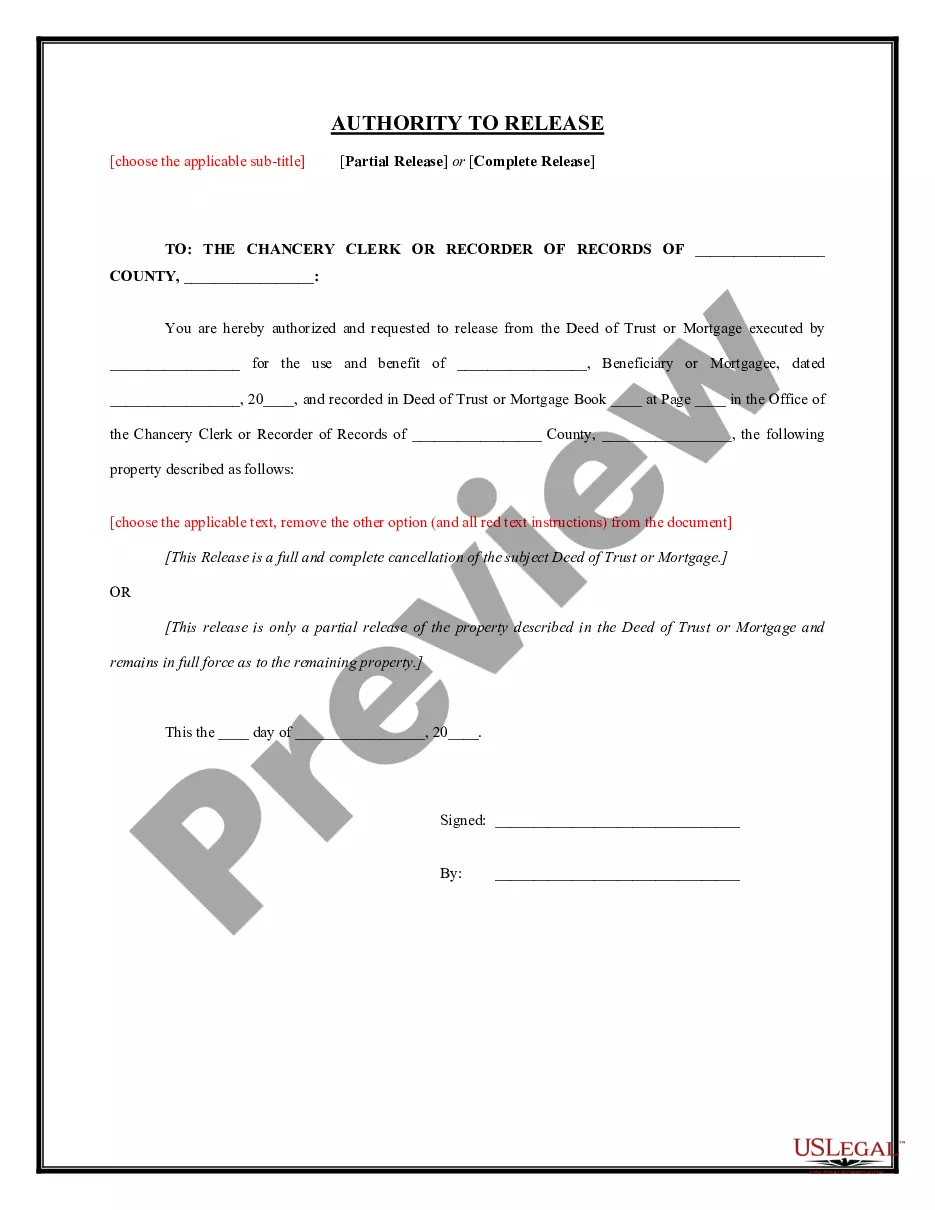
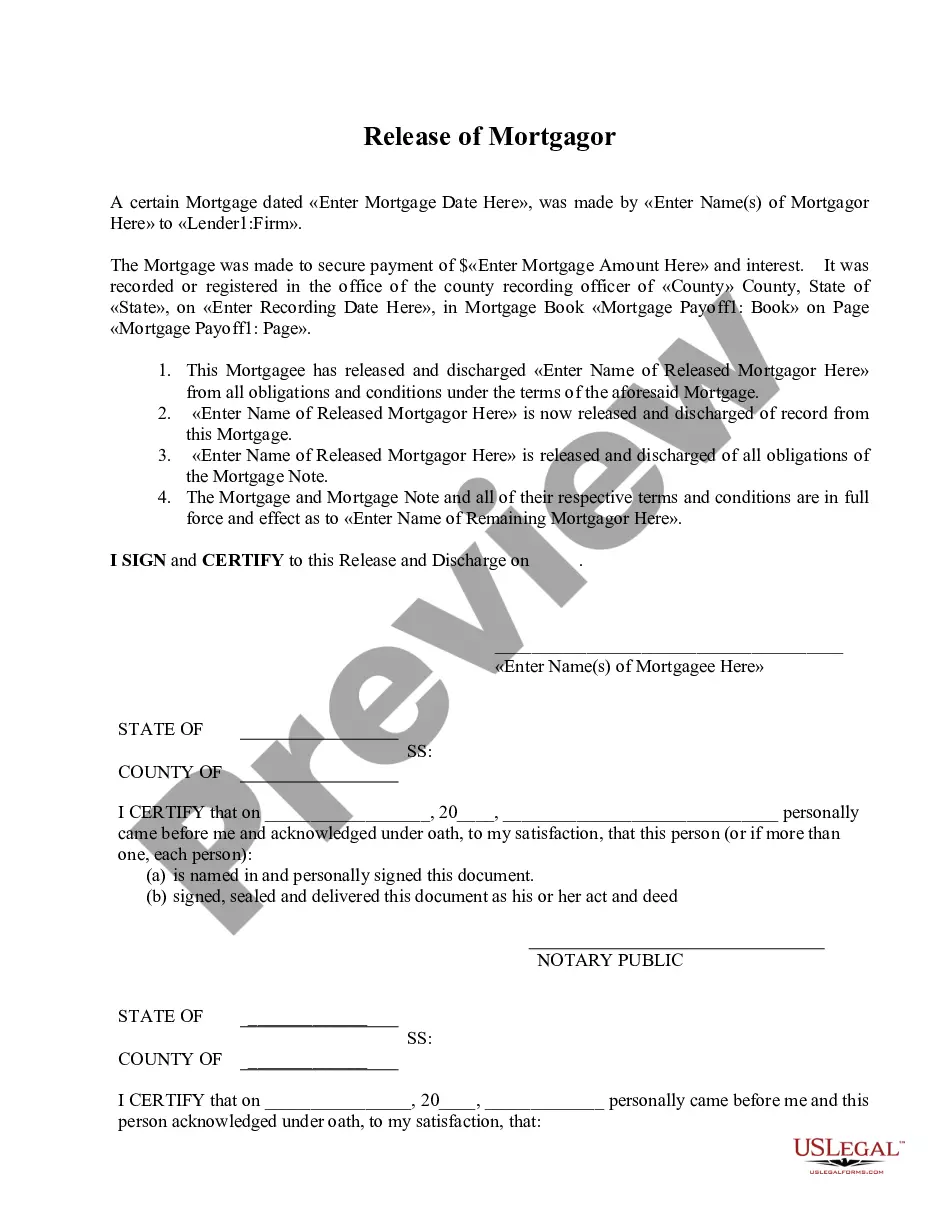
This form authorizes the chancery clerk or the recorder of deeds to release from the deed of trust or mortgage certain property described in the document.
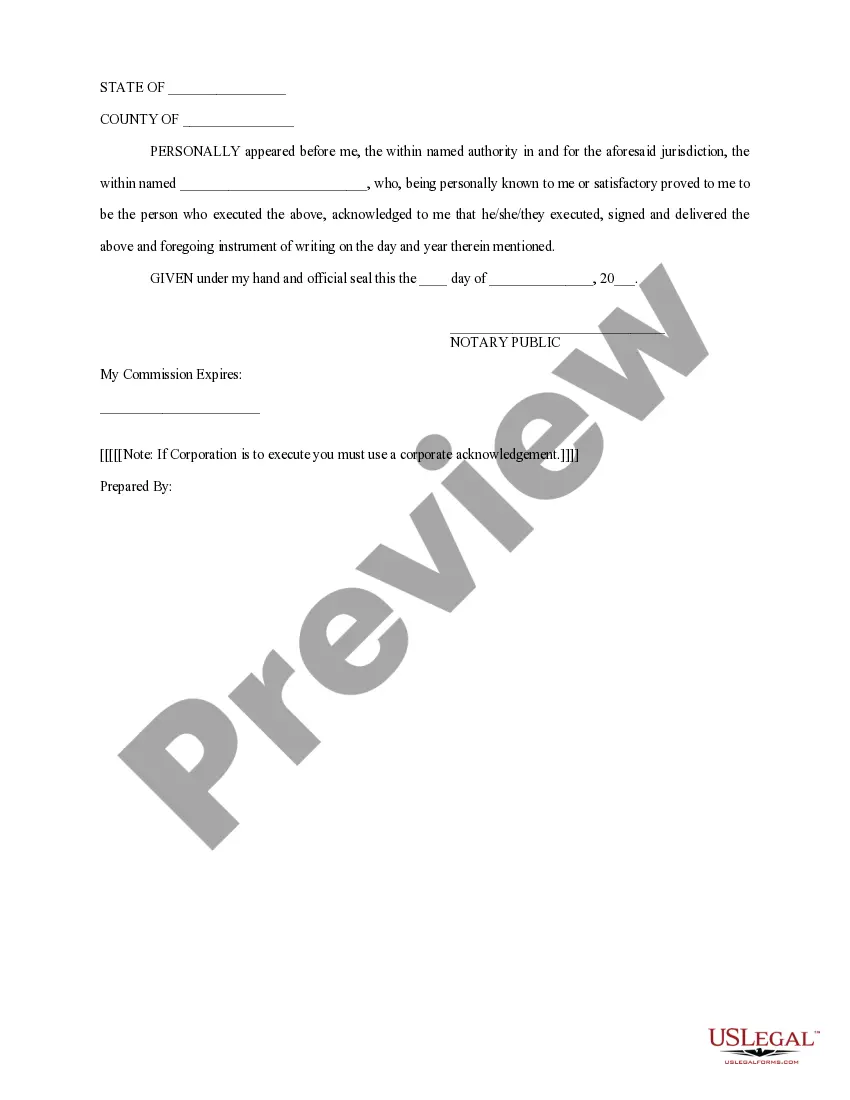
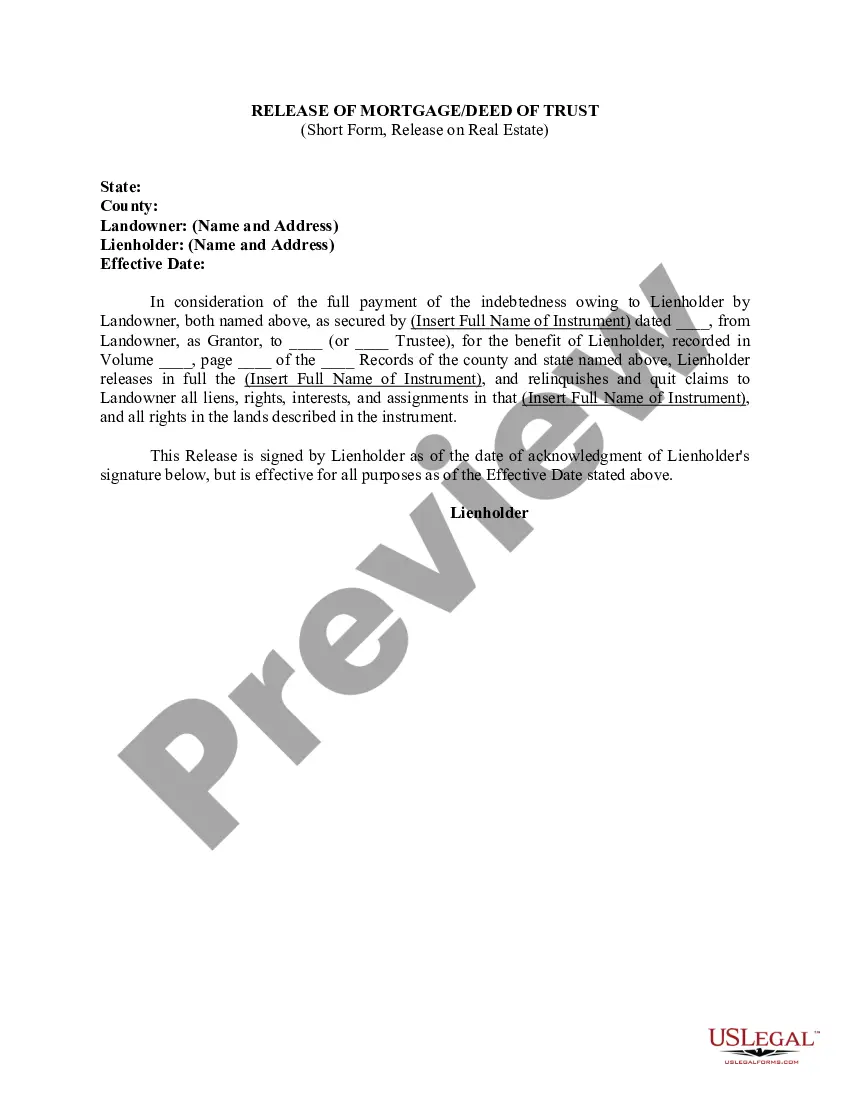
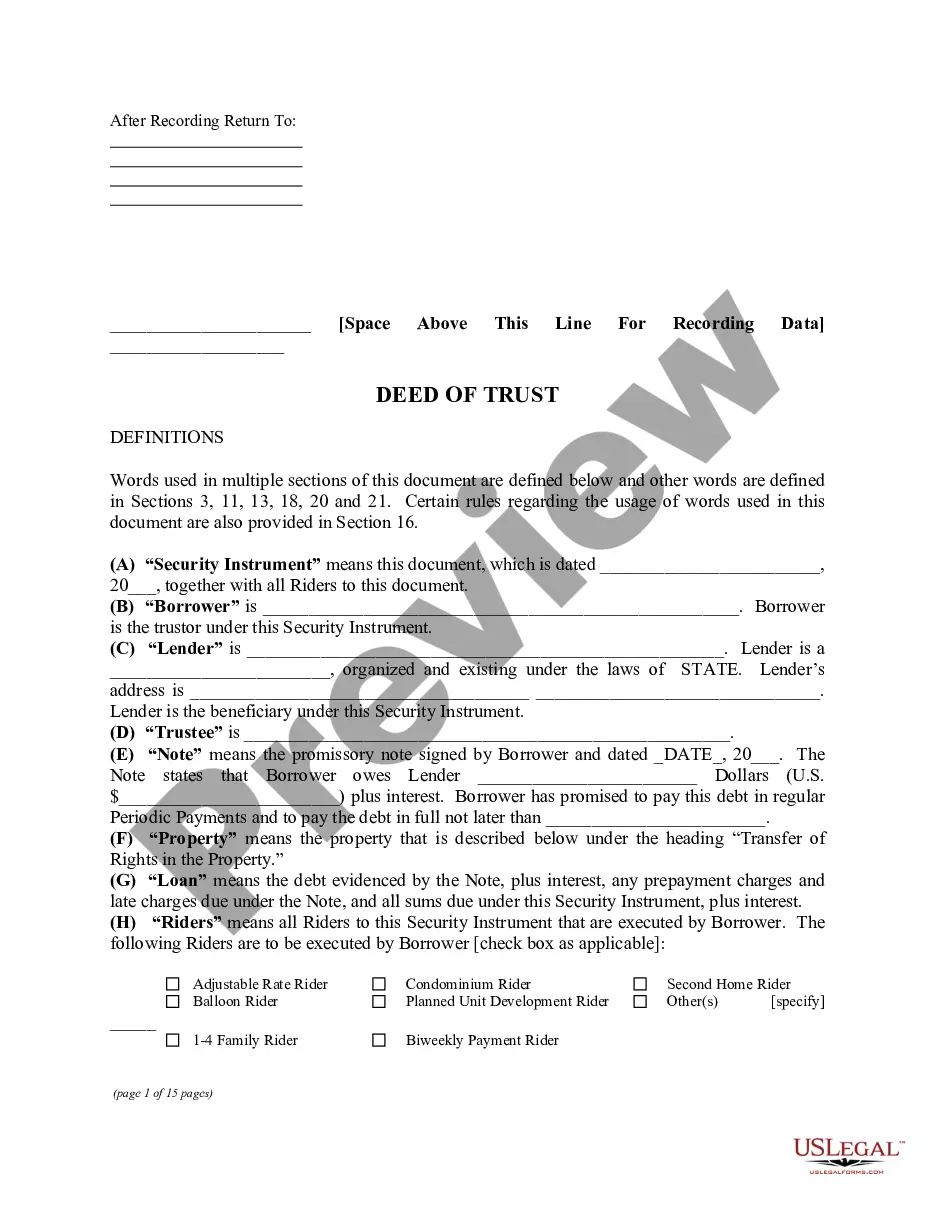
South Dakota Deed of Trust - Release
State:
Multi-State
Control #:
US-00489
Format:
Word;
Rich Text
111 downloads
Description
Free preview


Get your form ready online
Our built-in tools help you complete, sign, share, and store your documents in one place.
Built-in online Word editor
Make edits, fill in missing information, and update formatting in US Legal Forms—just like you would in MS Word.
Export easily
Download a copy, print it, send it by email, or mail it via USPS—whatever works best for your next step.
E-sign your document
Sign and collect signatures with our SignNow integration. Send to multiple recipients, set reminders, and more. Go Premium to unlock E-Sign.
Notarize online 24/7
If this form requires notarization, complete it online through a secure video call—no need to meet a notary in person or wait for an appointment.
Store your document securely
We protect your documents and personal data by following strict security and privacy standards.
Make edits, fill in missing information, and update formatting in US Legal Forms—just like you would in MS Word.
Download a copy, print it, send it by email, or mail it via USPS—whatever works best for your next step.
Sign and collect signatures with our SignNow integration. Send to multiple recipients, set reminders, and more. Go Premium to unlock E-Sign.

If this form requires notarization, complete it online through a secure video call—no need to meet a notary in person or wait for an appointment.
We protect your documents and personal data by following strict security and privacy standards.
Looking for another form?
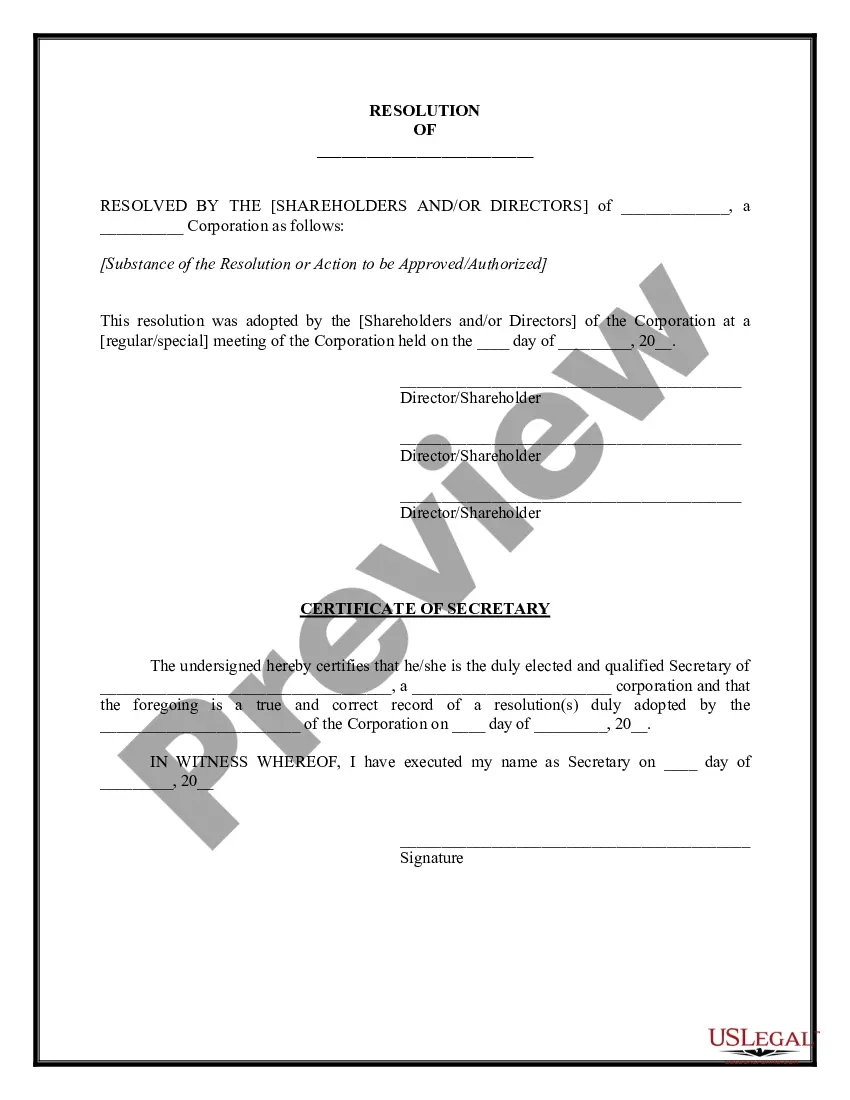
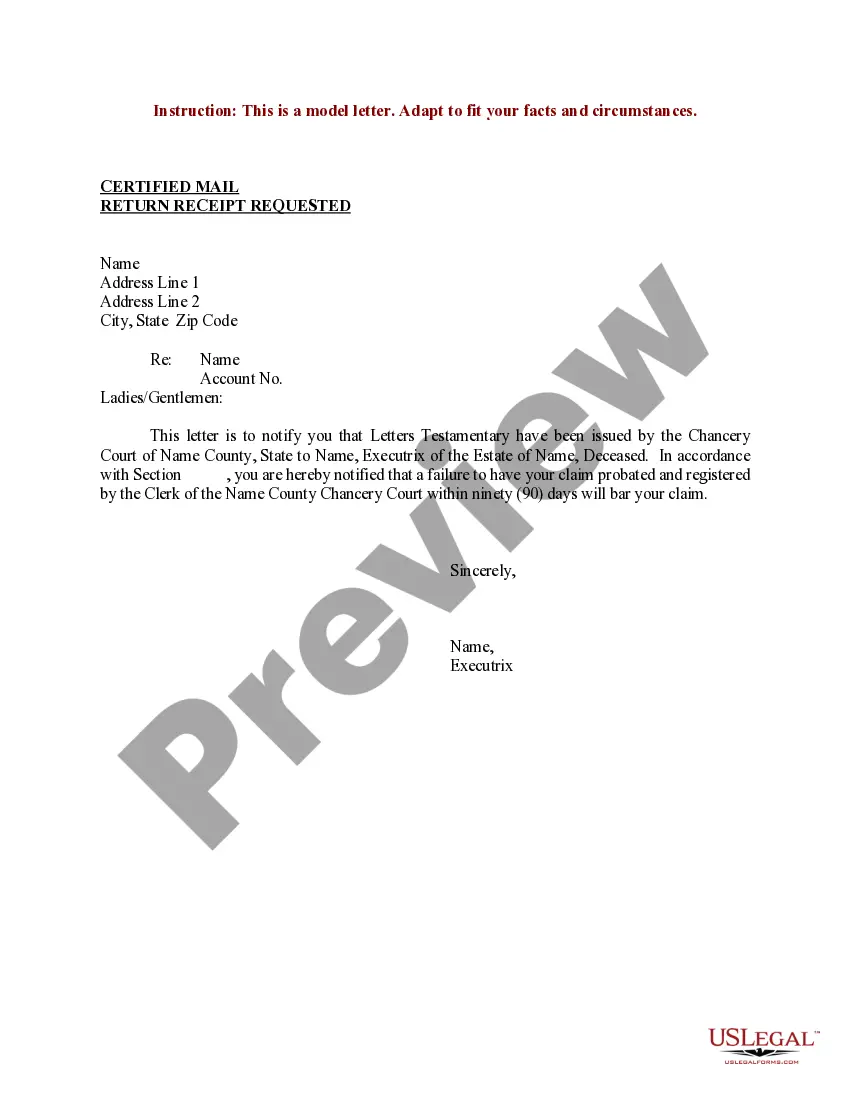
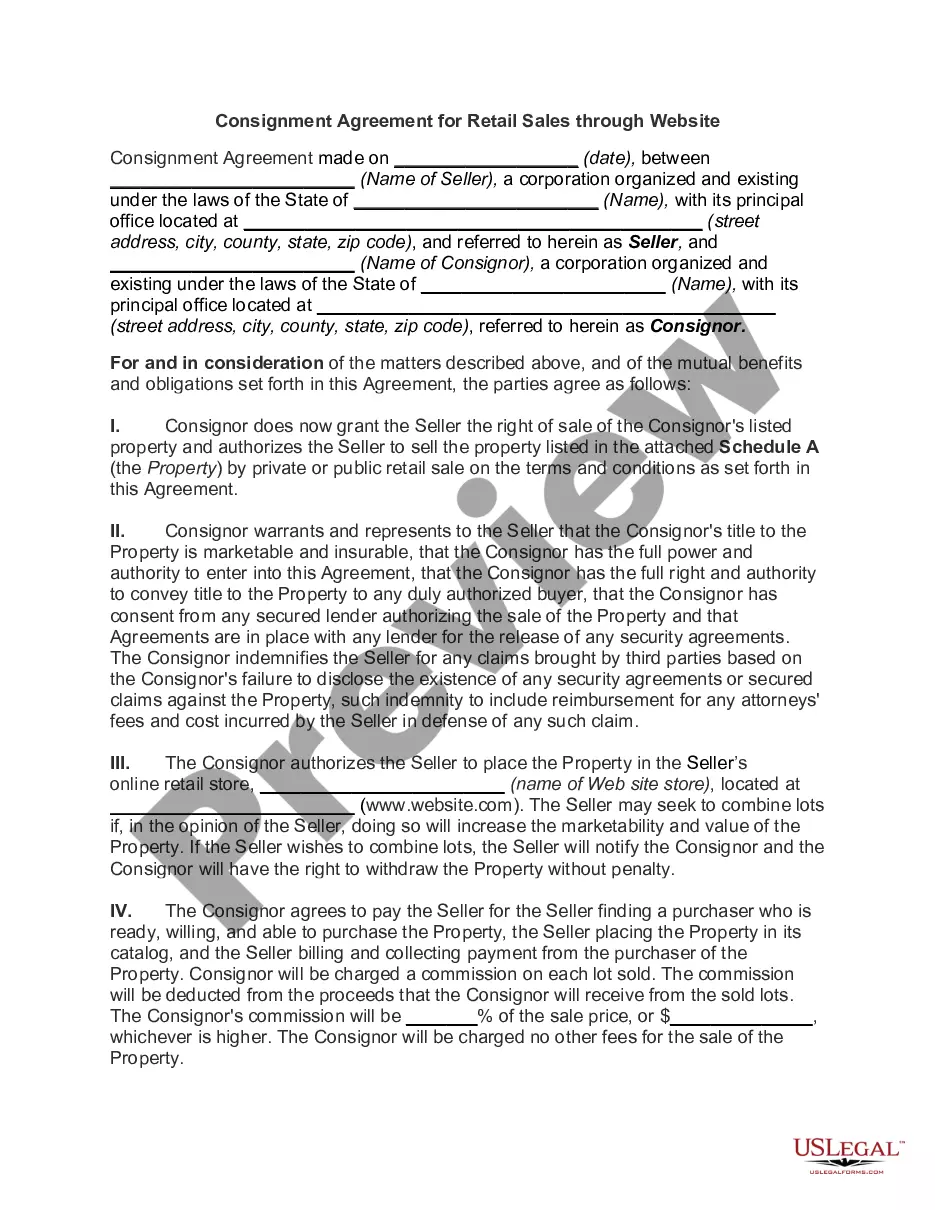

How to fill out Deed Of Trust - Release?
Have you found yourself in a scenario where you need documents for either business or personal purposes almost every day.
There are numerous authentic document templates available online, but locating ones you can rely on is not easy.
US Legal Forms provides thousands of form templates, including the South Dakota Deed of Trust - Release, which is crafted to comply with state and federal requirements.
Utilize US Legal Forms, the most extensive collection of legitimate forms, to save time and avoid mistakes.
The service offers professionally crafted legal document templates that can be used for various purposes. Create an account on US Legal Forms and start making your life a bit easier.
- If you are already familiar with the US Legal Forms website and possess an account, simply Log In.
- After that, you can download the South Dakota Deed of Trust - Release template.
- If you do not have an account and wish to begin using US Legal Forms, follow these steps.
- Find the form you need and verify that it is for your correct state/region.
- Use the Preview button to review the form.
- Read the description to ensure you have selected the correct form.
- If the form isn’t what you’re looking for, utilize the Search field to find the form that suits your needs.
- Once you find the correct form, click on Acquire now.
- Select the pricing plan you want, provide the required information to create your account, and pay for your order using PayPal or a credit card.
- Choose a convenient format and download your version.
- Access all the document templates you have purchased in the My documents menu. You can obtain another copy of South Dakota Deed of Trust - Release at any time if necessary. Click on the required form to download or print the document template.
Form popularity
FAQ
In a contract for deed, the purchase of property is financed by the seller rather than a third-party lender such as a commercial bank or credit union. The arrangement can benefit buyers and sellers by extending credit to homebuyers who would not otherwise qualify for a loan.
A major drawback of a contract for deed for buyers is that the seller retains the legal title to the property until the payment plan is completed. On one hand, this means that they're responsible for things like property taxes. On the other hand, the buyer lacks security and rights to their home.
A contract for deed is a contract where the seller remains the legal owner of the property and the buyer makes monthly payments to the seller to buy the house. The seller remains the legal owner of the property until the contract is paid.
A South Dakota deed must include the current owner's original signature. The owner's signature should be dated. A deed transferring real estate owned by two or more owners must include all co-owners' signatures?unless only one owner is transferring an interest.
A South Dakota transfer-on-death deed?often called a TOD deed?is a written legal document that transfers property to one or more beneficiaries named in the document on the death of the owner. South Dakota TOD deeds were first authorized by the South Dakota Real Property Transfer on Death Act in 2014.
Primary tabs. Contract for deed is a contract for the sale of land which provides that the buyer will acquire possession of the land immediately and pay the purchase price in installments over a period of time, but the seller will retain legal title until all payments are made.
Risks of a Contract for Deed Even one late payment can result in much higher penalties and fees, not to mention possible legal action from the seller (including kicking the homebuyer out of the home without recouping any money they have paid while living there).
Reviewed by Susan Chai, Esq. A South Dakota (SD) Quitclaim Deed is a legal document that transfers whatever ownership interest in a property one person (the grantor) has, if any, to another person (the grantee).