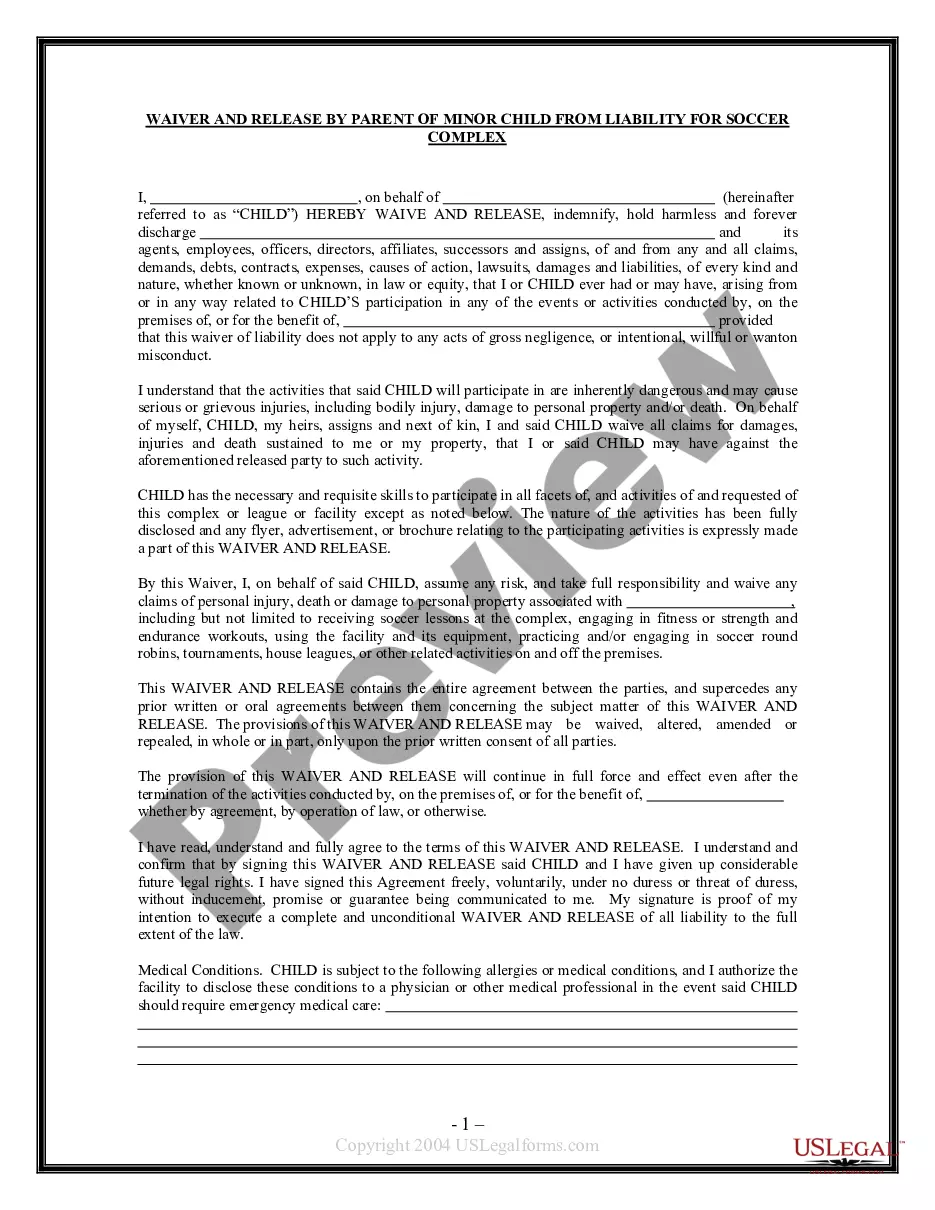
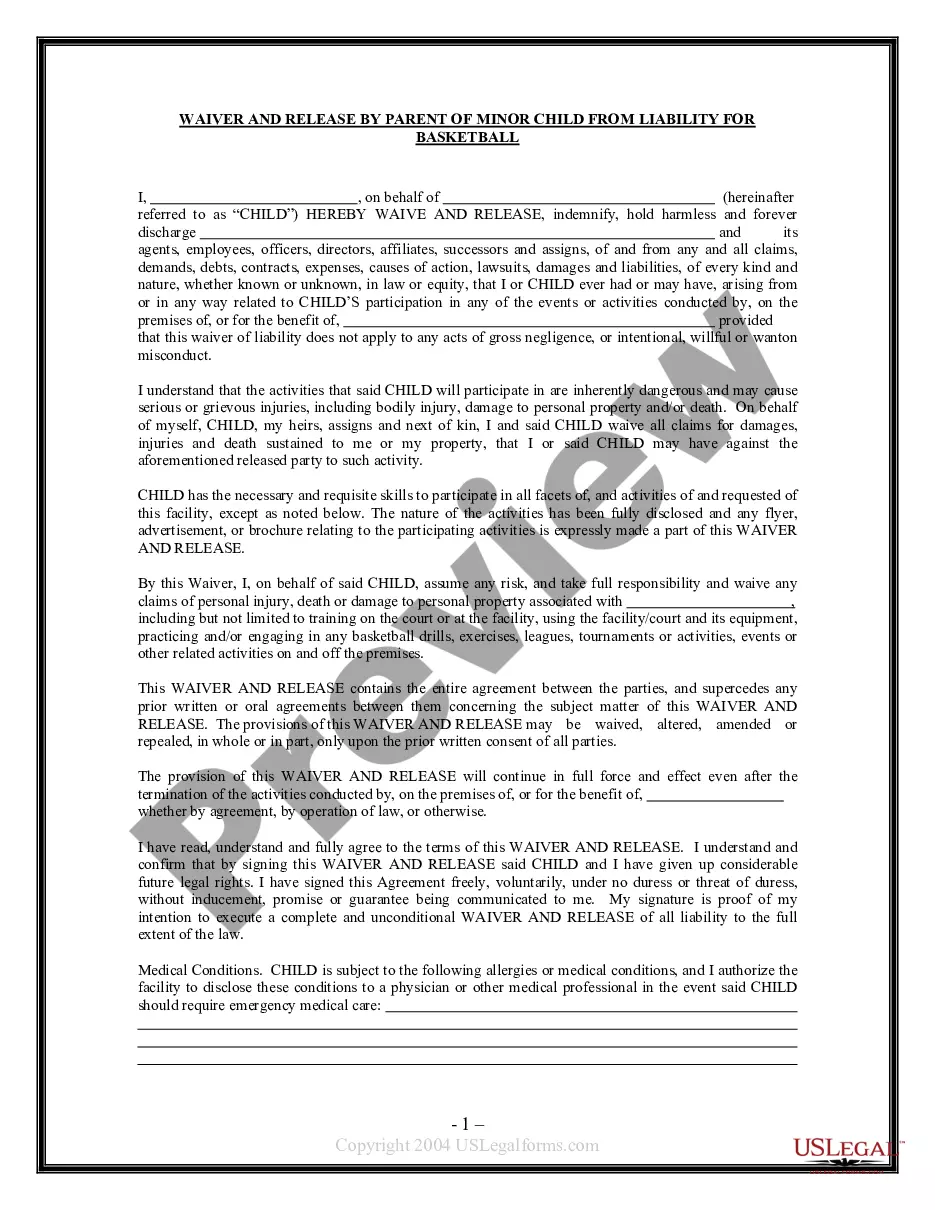
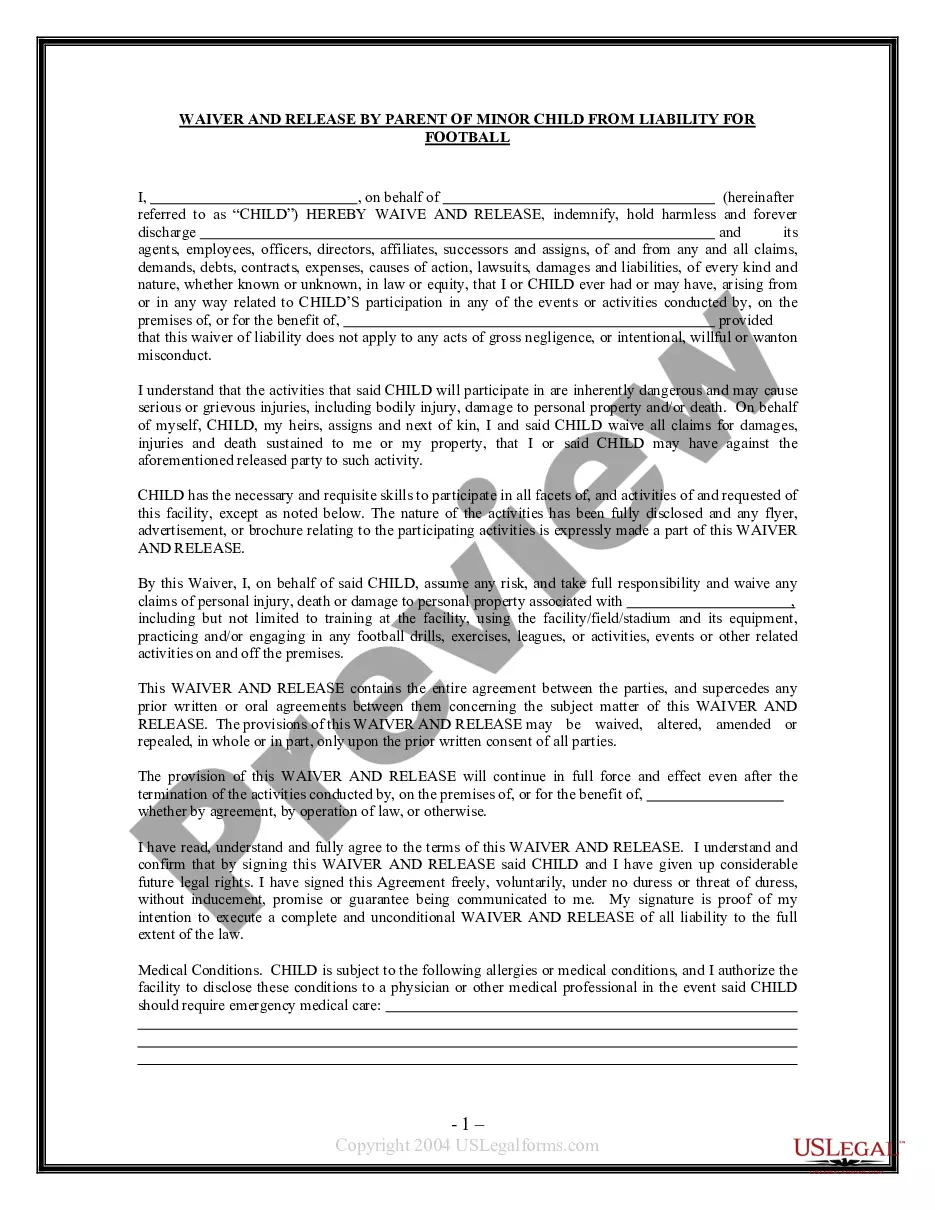
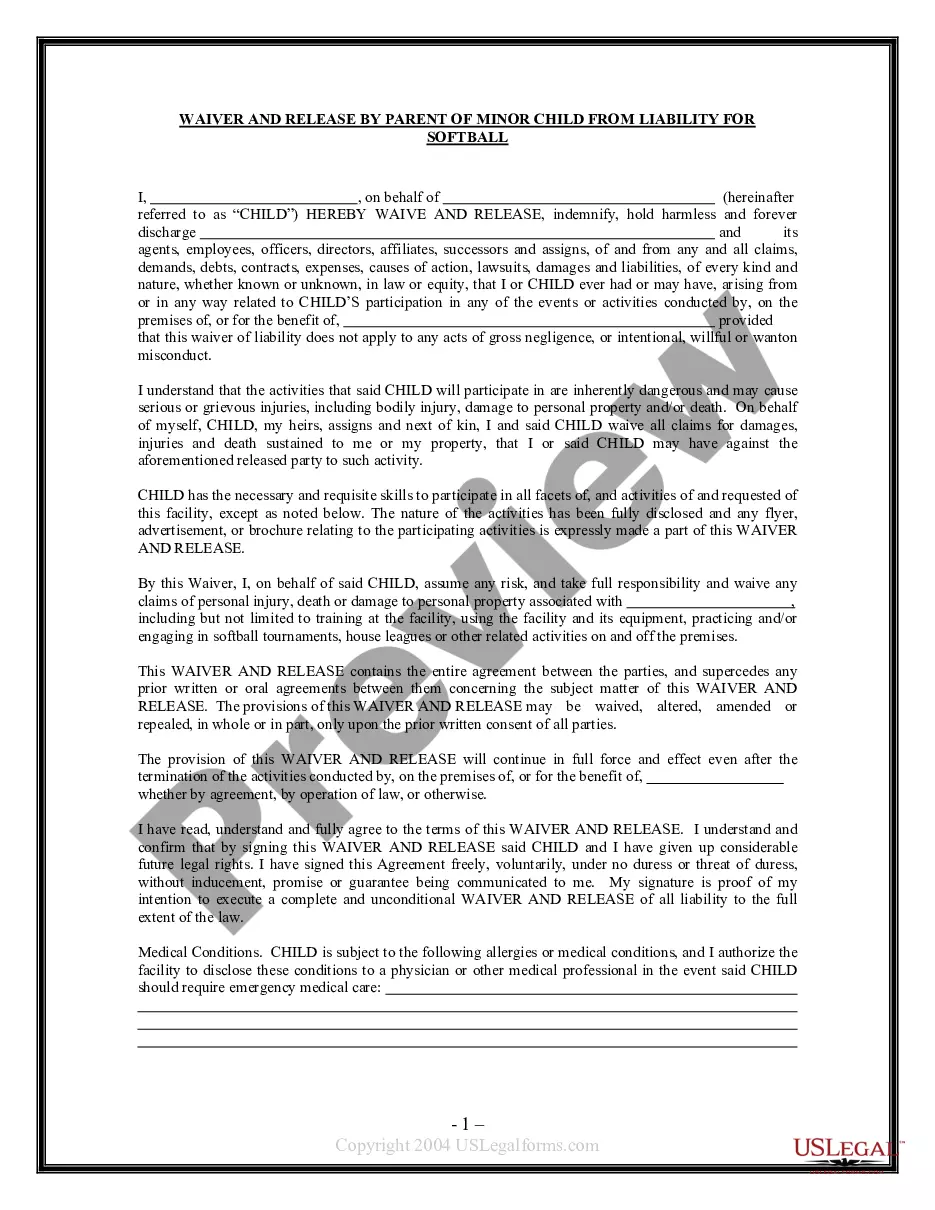
This form allows a parent or guardian to release a baseball stadium from liability for injuries which may be incurred by a minor child while on the premises, taking part in activities, etc.
South Carolina Waiver and Release From Liability For Minor Child for Baseball Stadium
Category:
State:
Multi-State
Control #:
US-WAV-30M
Format:
Word;
Rich Text
Instant download
Description
Free preview
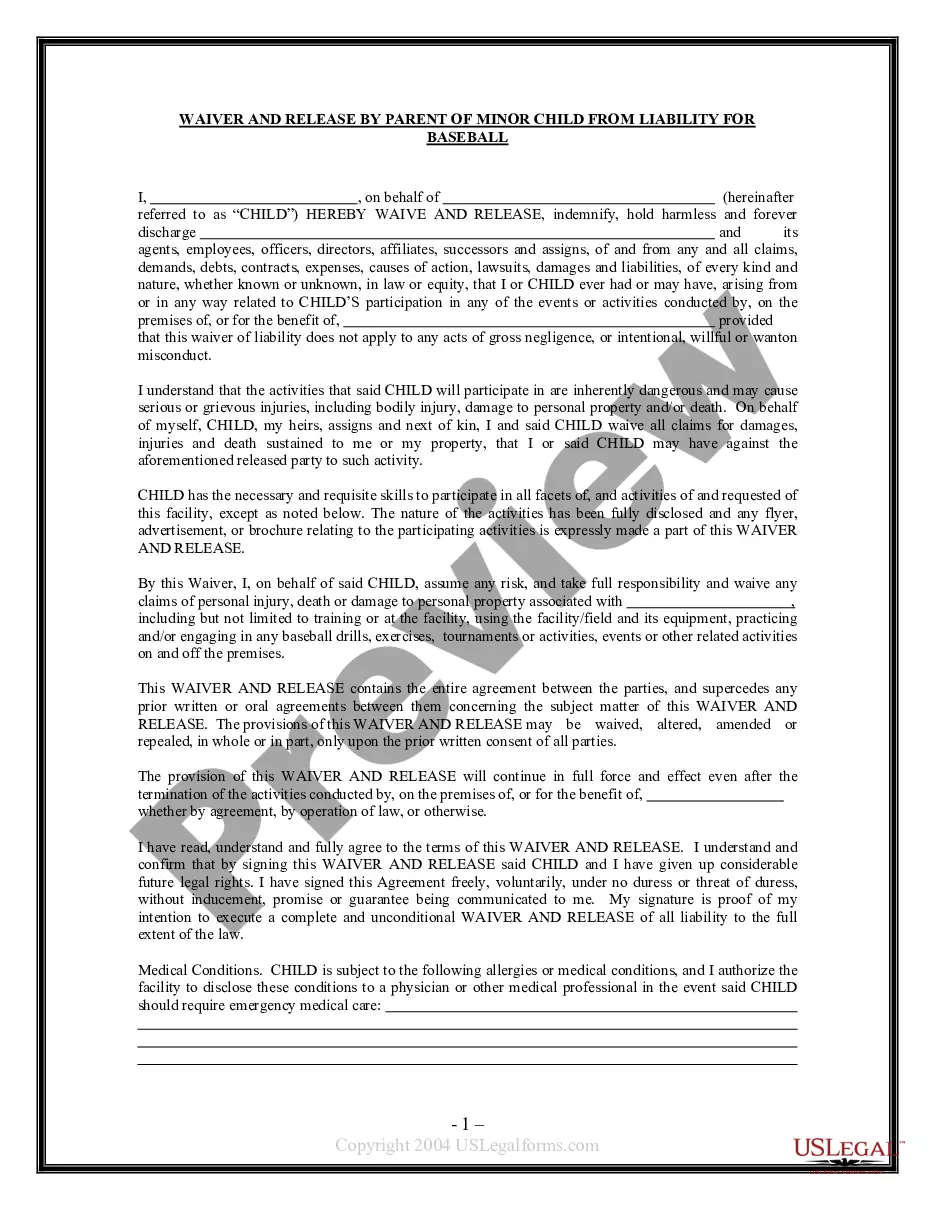
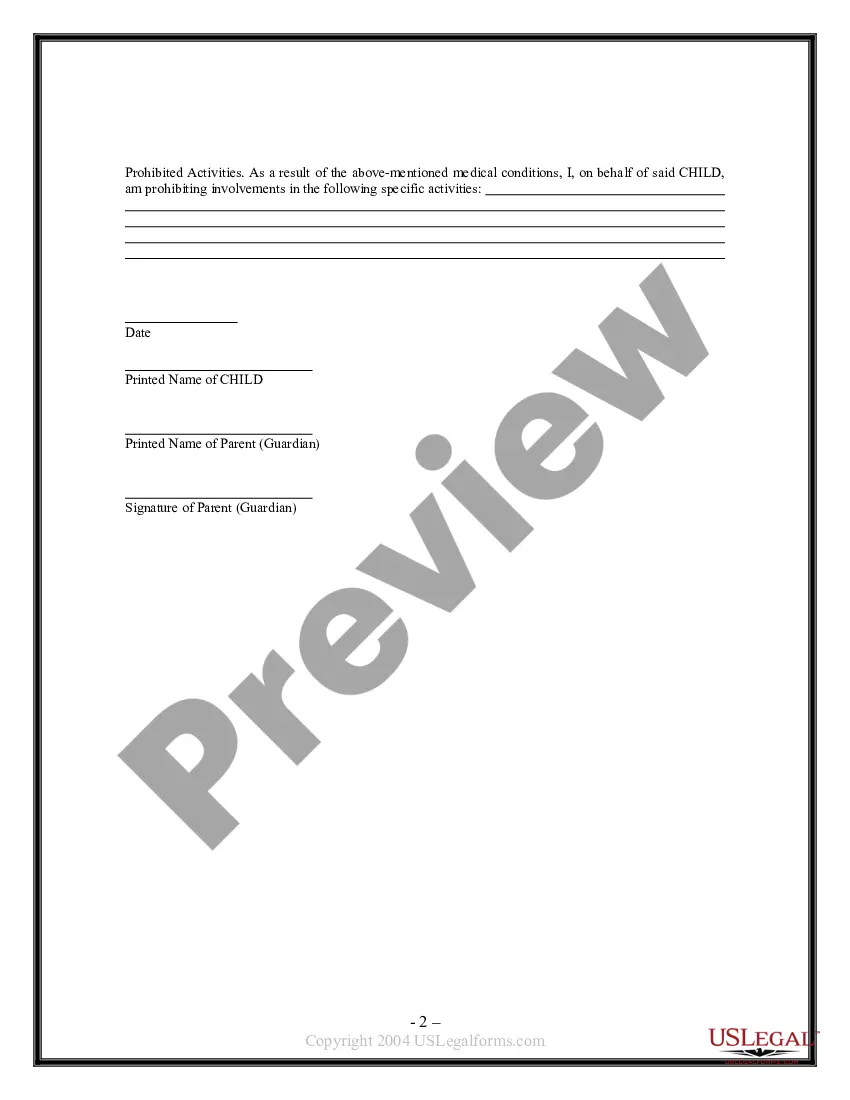
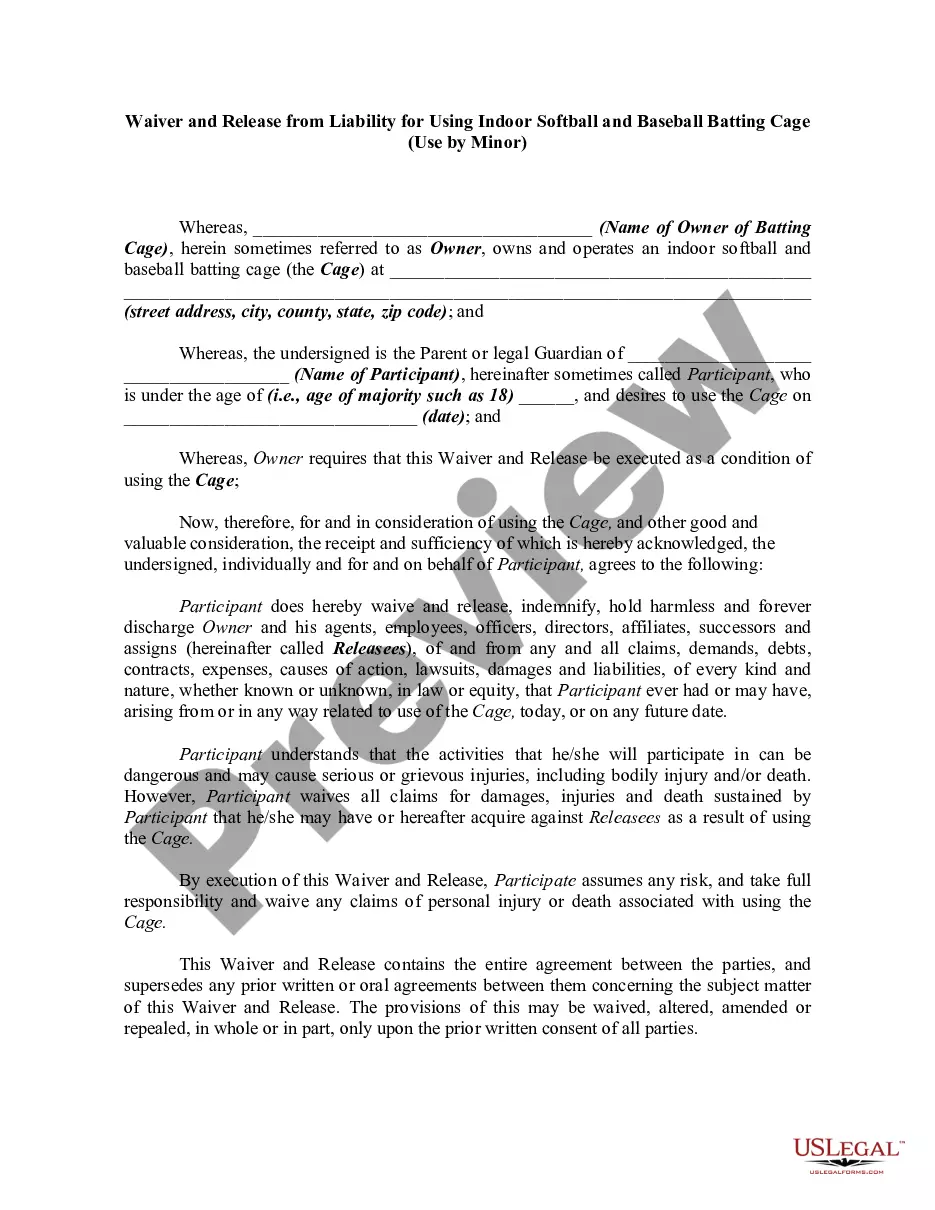
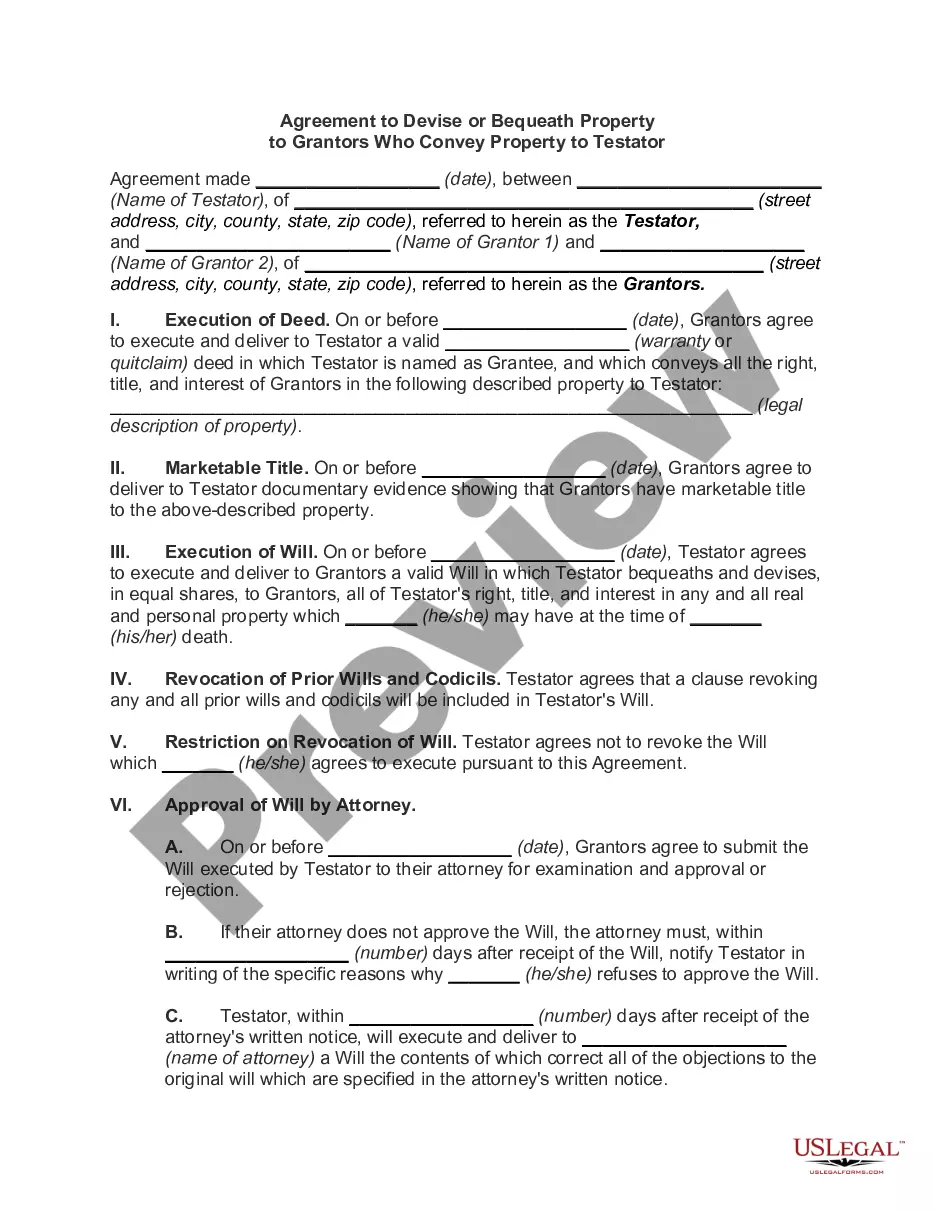
How to fill out Waiver And Release From Liability For Minor Child For Baseball Stadium?
If you need to acquire, download, or print legal document templates, utilize US Legal Forms, the largest collection of legal forms available online. Take advantage of the site's user-friendly and convenient search feature to find the documents you require. Numerous templates for business and personal purposes are categorized by types and states, or keywords.
Use US Legal Forms to locate the South Carolina Waiver and Release From Liability For Minor Child for Baseball Stadium in just a few clicks. If you are already a US Legal Forms user, Log In to your account and then click the Download button to retrieve the South Carolina Waiver and Release From Liability For Minor Child for Baseball Stadium. You can also access forms you previously downloaded from the My documents tab of your account.
If this is your first time using US Legal Forms, follow the steps below: Step 1. Ensure you have selected the form for the correct city/state. Step 2. Use the Review option to examine the form's content. Don’t forget to check the description. Step 3. If you are not satisfied with the form, use the Search field at the top of the screen to find other versions in the legal document template. Step 4. Once you have found the form you need, click on the Get now button. Choose the payment plan you prefer and enter your details to register for an account. Step 5. Complete the transaction. You can use your credit card or PayPal account to finalize the transaction. Step 6. Select the format of the legal document and download it to your device. Step 7. Fill out, modify, and print or sign the South Carolina Waiver and Release From Liability For Minor Child for Baseball Stadium.
- Every legal document template you purchase is yours permanently.
- You have access to every form you downloaded in your account.
- Click the My documents section and choose a form to print or download again.
- Stay competitive and download, and print the South Carolina Waiver and Release From Liability For Minor Child for Baseball Stadium with US Legal Forms.
- There are thousands of professional and state-specific forms you can use for your personal or business needs.
Form popularity
FAQ
A hold harmless agreement for youth sports is a legal document where parents or guardians agree not to hold the organization responsible for any injuries or damages that may occur during activities. This is often included in the South Carolina Waiver and Release From Liability For Minor Child for Baseball Stadium. Such agreements foster a safer environment by clearly stating the risks involved and the responsibilities of all parties, helping to protect both the organization and the participants.
Generally, waivers signed by minors are not legally binding. In South Carolina, a parent or guardian must sign the South Carolina Waiver and Release From Liability For Minor Child for Baseball Stadium on behalf of the minor to make it enforceable. This ensures that the adult accepts responsibility for the risks involved, providing a layer of protection for the organization hosting the activity.
To write a release of liability waiver, start by clearly identifying the parties involved, including the minor child and the organization. Next, outline the activities covered under the South Carolina Waiver and Release From Liability For Minor Child for Baseball Stadium, and specify the risks associated with those activities. Finally, include a statement where the parent or guardian acknowledges those risks and agrees to release the organization from liability, ensuring the language is straightforward and understandable.
Yes, you can create your own liability waiver, but it is important to ensure that it meets legal requirements. A well-drafted South Carolina Waiver and Release From Liability For Minor Child for Baseball Stadium should be clear, concise, and cover all necessary aspects of the activity. Using templates from platforms like US Legal Forms can simplify the process, as they provide legally sound language and guidance tailored for your needs.
Liability waivers are enforceable in California solely to the extent they shift to the customer the risk of ordinary negligence. Under California law, a liability waiver cannot excuse an injury caused by a defendant's gross negligence, recklessness or intentionally wrongful act.
Liability waivers are enforceable in California solely to the extent they shift to the customer the risk of ordinary negligence. Under California law, a liability waiver cannot excuse an injury caused by a defendant's gross negligence, recklessness or intentionally wrongful act.
As tempting as it may be, you should never write your own liability waiver. Unless you're a fully qualified lawyer with experience in this area, it's likely that you'll omit critical language that puts your business at risk for lawsuits.
Ambiguous language or missing information can invalidate a waiver. The waiver contains errors that make it invalid. The language of the waiver must obey relevant state laws. An improperly worded or drafted waiver, as well as one that violates the law or public policy, may not hold up in court.
Here is all that pertains writing an effective liability waiver:Get help. Writing a waiver should not be complicated.Use the correct structure.Proper formatting.Include a subject line.Include a caution!Talk about the activity risks.Do not forget an assumption of risk.Hold harmless.More items...?
A liability waiver, or release waiver, is a legal document that a company or organization requires members of the public to sign in order to protect their organization from being sued if you sustain an injury.