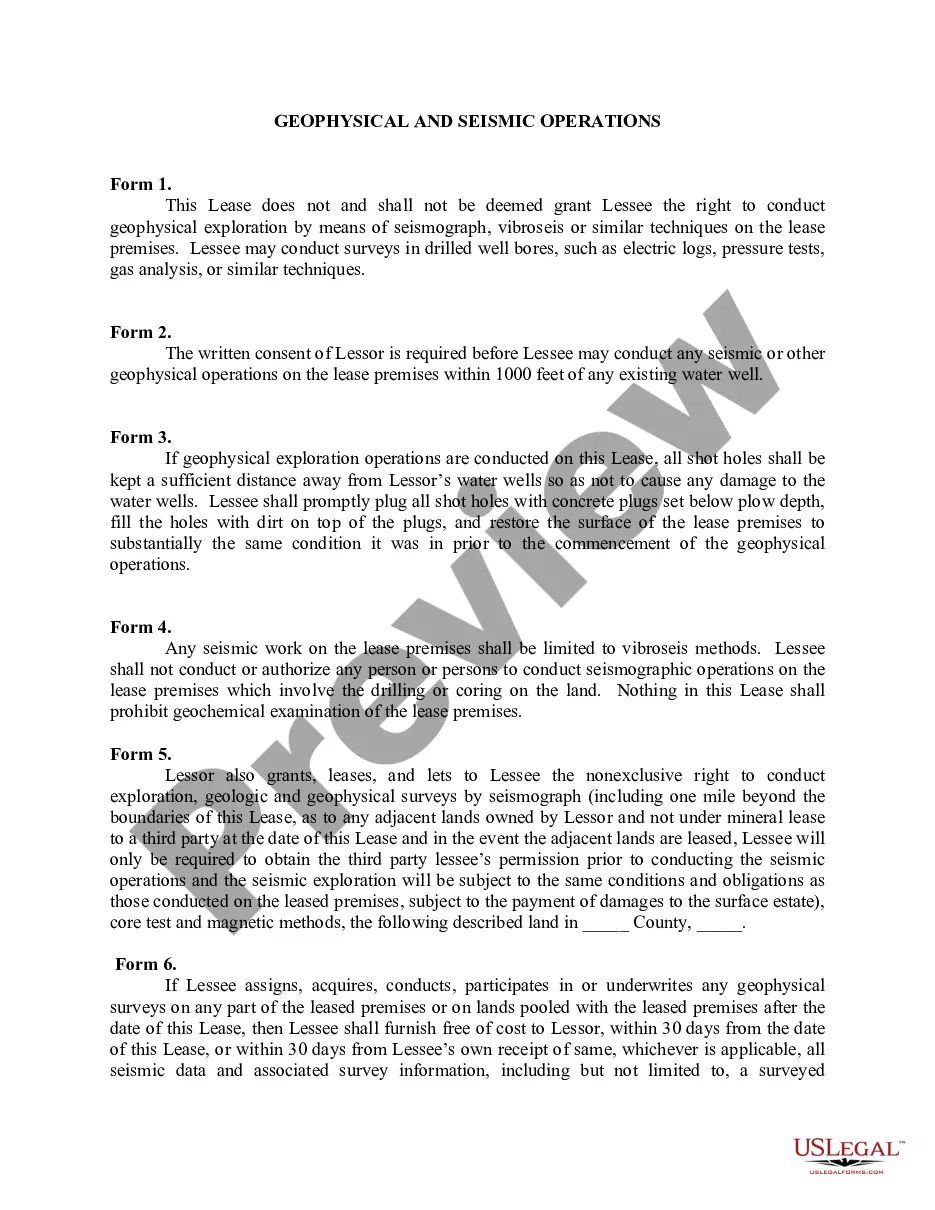
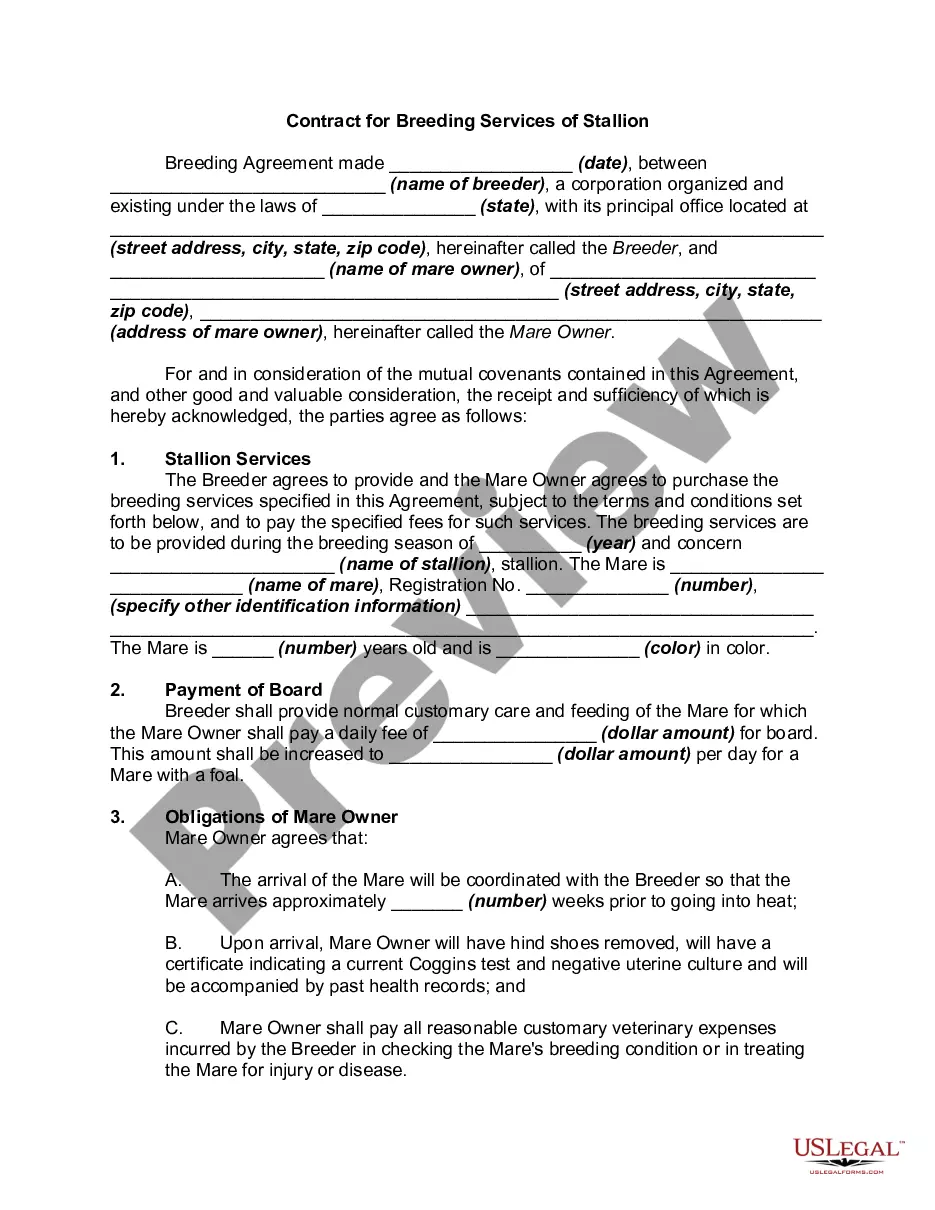
This form is a contract for the breeding of birds.
South Carolina Bird Breeding Contract
Category:
State:
Multi-State
Control #:
US-PET-2
Format:
Word;
Rich Text
Instant download
Description
Free preview

Get your form ready online
Our built-in tools help you complete, sign, share, and store your documents in one place.
Built-in online Word editor
Make edits, fill in missing information, and update formatting in US Legal Forms—just like you would in MS Word.
Export easily
Download a copy, print it, send it by email, or mail it via USPS—whatever works best for your next step.
E-sign your document
Sign and collect signatures with our SignNow integration. Send to multiple recipients, set reminders, and more. Go Premium to unlock E-Sign.
Notarize online 24/7
If this form requires notarization, complete it online through a secure video call—no need to meet a notary in person or wait for an appointment.
Store your document securely
We protect your documents and personal data by following strict security and privacy standards.

Make edits, fill in missing information, and update formatting in US Legal Forms—just like you would in MS Word.

Download a copy, print it, send it by email, or mail it via USPS—whatever works best for your next step.

Sign and collect signatures with our SignNow integration. Send to multiple recipients, set reminders, and more. Go Premium to unlock E-Sign.

If this form requires notarization, complete it online through a secure video call—no need to meet a notary in person or wait for an appointment.

We protect your documents and personal data by following strict security and privacy standards.
Looking for another form?




How to fill out Bird Breeding Contract?
Finding the appropriate legal document template can be quite challenging. Clearly, there are numerous templates accessible online, but how can you locate the legal form you require? Utilize the US Legal Forms website. This service offers a vast array of templates, including the South Carolina Bird Breeding Agreement, which can be utilized for both business and personal purposes. All documents are reviewed by experts and comply with state and federal regulations.
If you are already registered, Log In to your account and click the Download button to access the South Carolina Bird Breeding Agreement. Use your account to search for the legal documents you have previously purchased. Navigate to the My documents section of your account and obtain another copy of the document you need.
If you are a new user of US Legal Forms, here are simple instructions for you to follow: First, ensure that you have selected the correct form for your city/state. You can preview the form using the Preview button and review the form details to confirm it is suitable for you. If the form does not meet your needs, use the Search field to find the correct form. Once you are certain that the form is suitable, click the Buy now button to obtain the form. Select the pricing plan you prefer and enter the required information. Create your account and pay for the order using your PayPal account or credit card. Choose the file format and download the legal document template to your device. Complete, edit, print, and sign the acquired South Carolina Bird Breeding Agreement.
Take advantage of US Legal Forms to streamline your legal documentation process.
- US Legal Forms is the largest repository of legal documents where you can find a variety of document templates.
- Utilize the service to acquire properly drafted documents that comply with state regulations.
- Access a wide range of templates tailored for different legal needs.
- Ensure all legal forms are up-to-date and compliant.
- Enjoy a user-friendly platform for all your legal document needs.
- Benefit from expert-reviewed templates for peace of mind.
Form popularity
FAQ
Breeding contracts serve as formal agreements between breeders and buyers, outlining the terms of the sale and responsibilities of each party. In South Carolina, a well-crafted South Carolina Bird Breeding Contract can cover aspects such as health guarantees, payment terms, and return policies. These contracts are essential for protecting both the breeder's and buyer's interests, ensuring a smooth transaction.
A responsible breeder should provide a variety of paperwork, including health certifications, vaccination records, and a South Carolina Bird Breeding Contract. This contract should clearly outline the terms of the sale, any guarantees, and the responsibilities of both parties. Providing comprehensive documentation helps foster trust and transparency in the breeding process.
Selling one litter of puppies in South Carolina generally does not require a license, but it is essential to comply with local laws. A South Carolina Bird Breeding Contract is helpful to outline terms and conditions for the sale, ensuring both the seller and buyer understand their rights and responsibilities. Always consider consulting local ordinances to stay informed about any specific requirements.
In South Carolina, breeders are not required to register with a state authority unless they operate as a commercial breeder. However, having a well-documented South Carolina Bird Breeding Contract can be beneficial for establishing legitimacy and trust with potential buyers. It is advisable to check local regulations as some municipalities might have specific requirements for breeders.
Transect Surveys: A transect consists of a person walking from point A to point B along a defined path. He or she counts the number of individual birds (of each species) seen and heard within a certain distance from their path (on both sides).
Each survey route is approximately 24.5 miles long with stops situated ideally 0.5-mile apart. At each stop, a 3-minute point count is conducted. During the count, every bird seen within a 0.25-mile radius or heard is recorded. Surveys start one-half hour before local sunrise and take about 5 hours to complete.
In the southern part of South Carolina, for example, it is legal to put out corn or other "bait" for deer, but it's against the law in some upstate areas. Quite aside from any legal aspects, feeding a black bear with sharp teeth and big claws is not a good idea, no matter how cute and cuddly it appears to be.
Each route is 24.5 miles long, with a total of fifty stops located at 0.5 mile intervals along the route. Here is an example of a BBS route located in Oregon. A three-minute point count is conducted at each stop, during which the observer records all birds heard or seen within 0.25 mile of the stop.
Point counts of birds are the most widely used quantitative method and involve an observer recording birds from a single point for a standardized time period. Statistical aspects of sampling and analysis were discussed and applied to the objectives of point counts.
The British Trust for Ornithology recommends one early season visit between mid-April and mid-May and one late season visit between mid-May and late-June, with at least four weeks between survey dates.