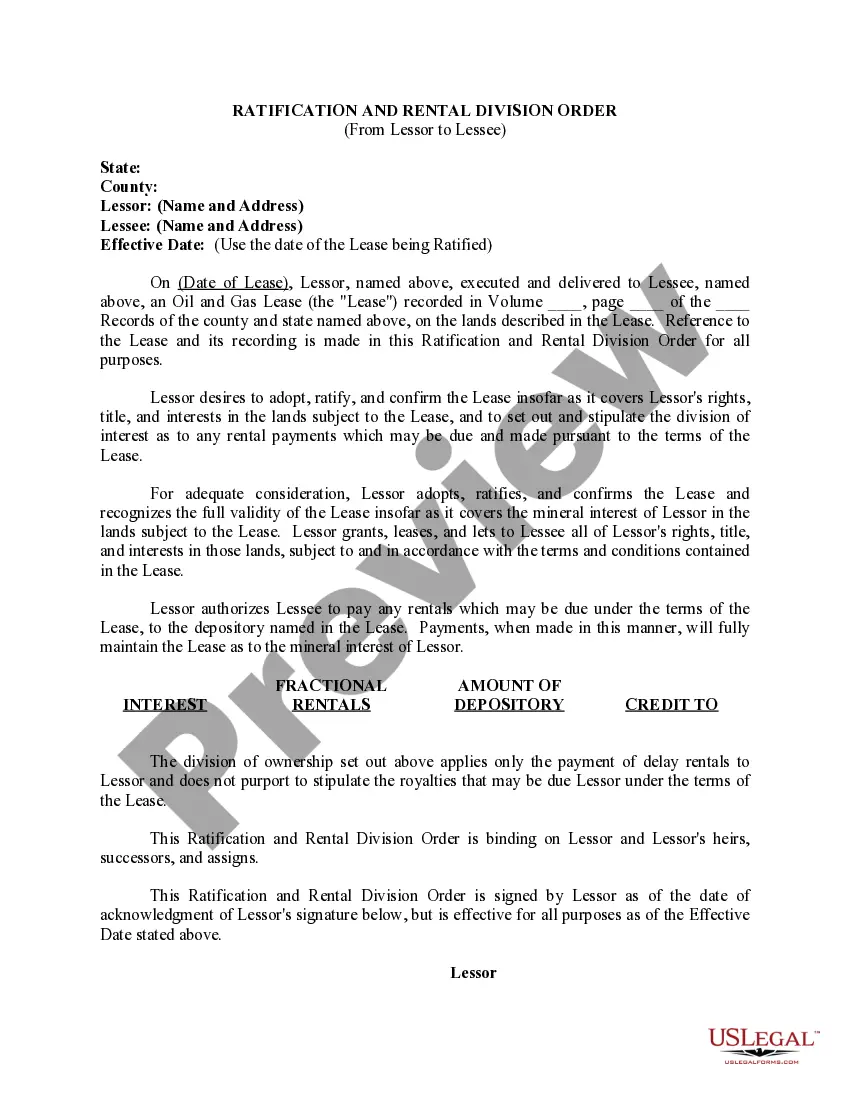
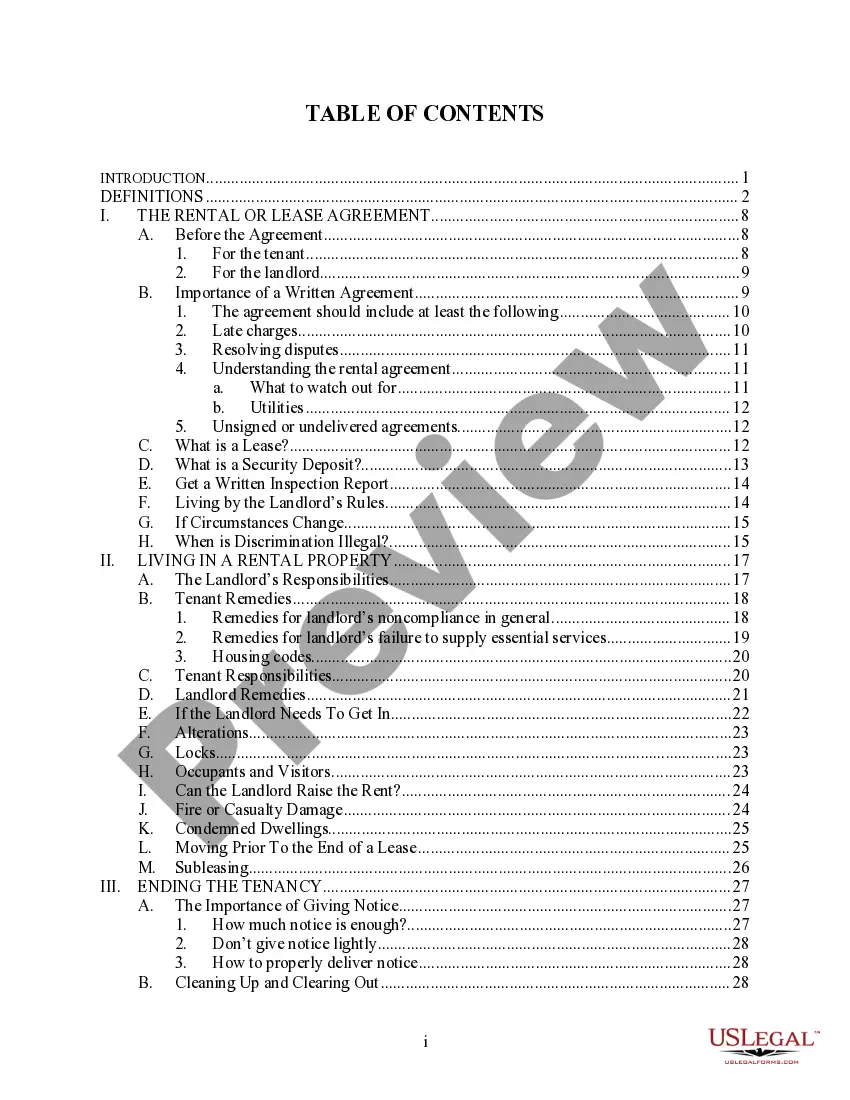
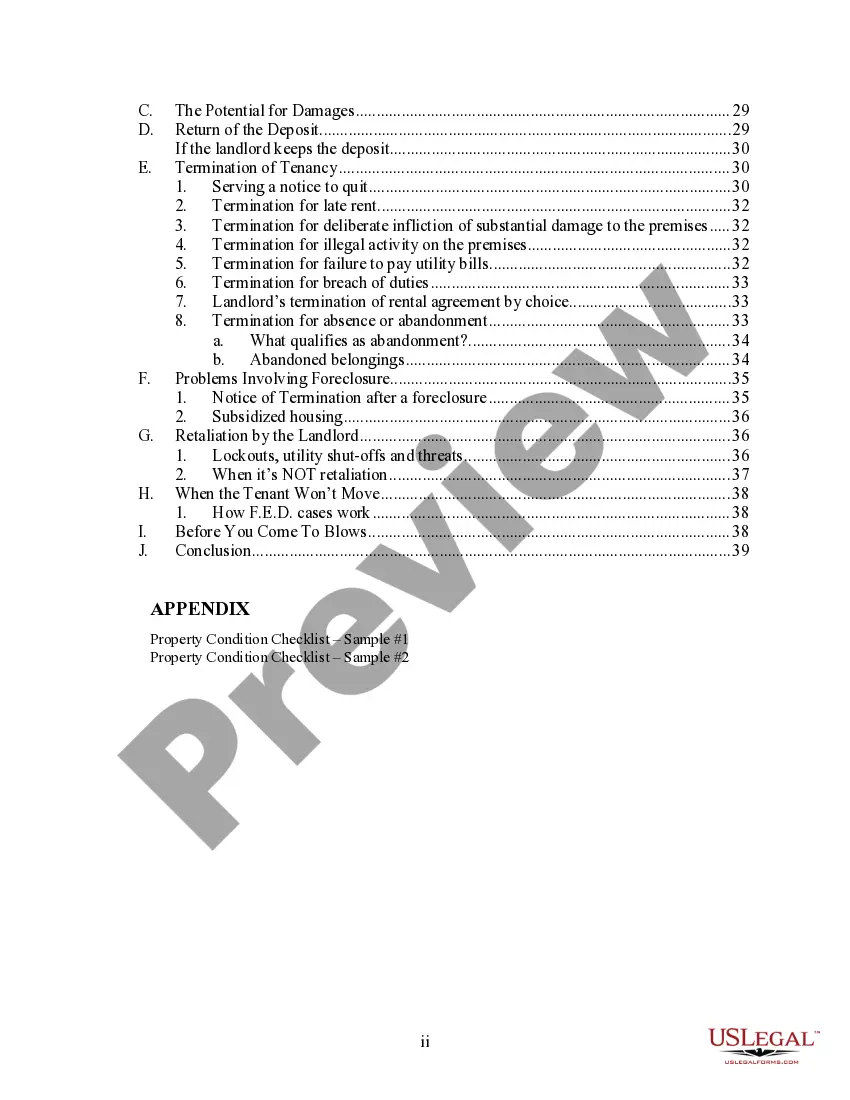
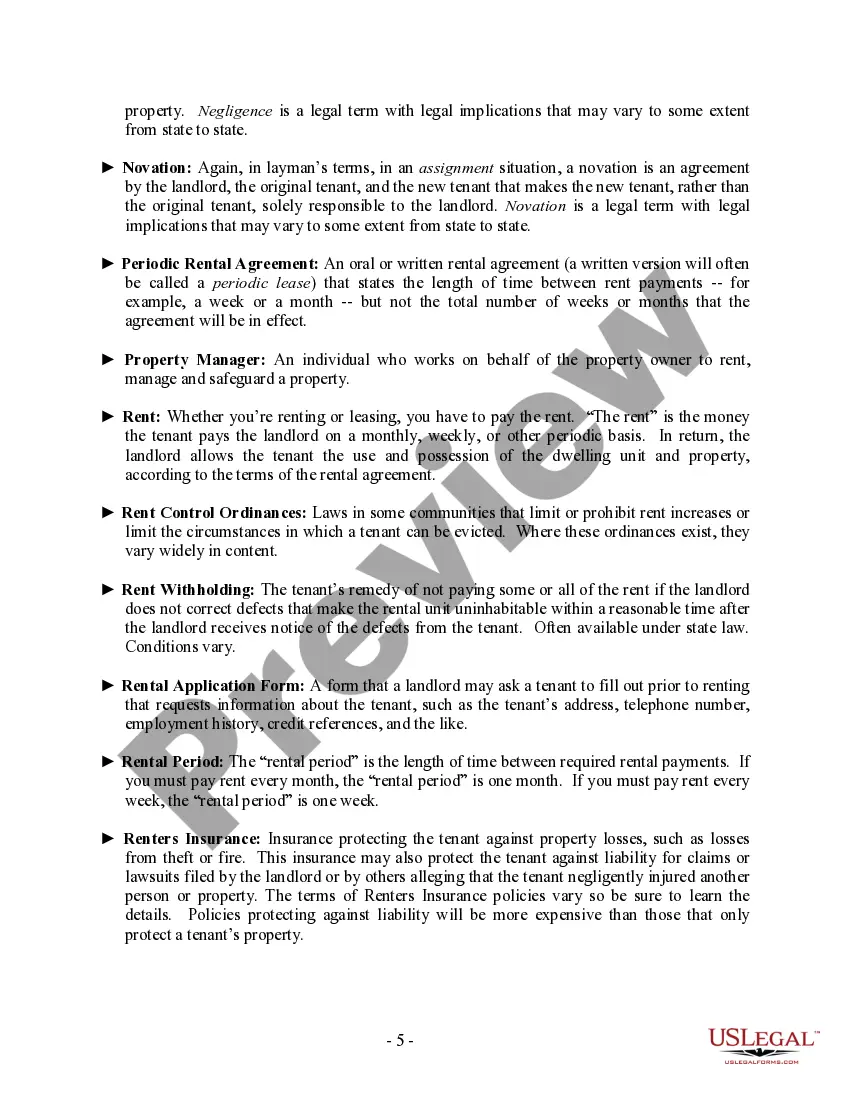
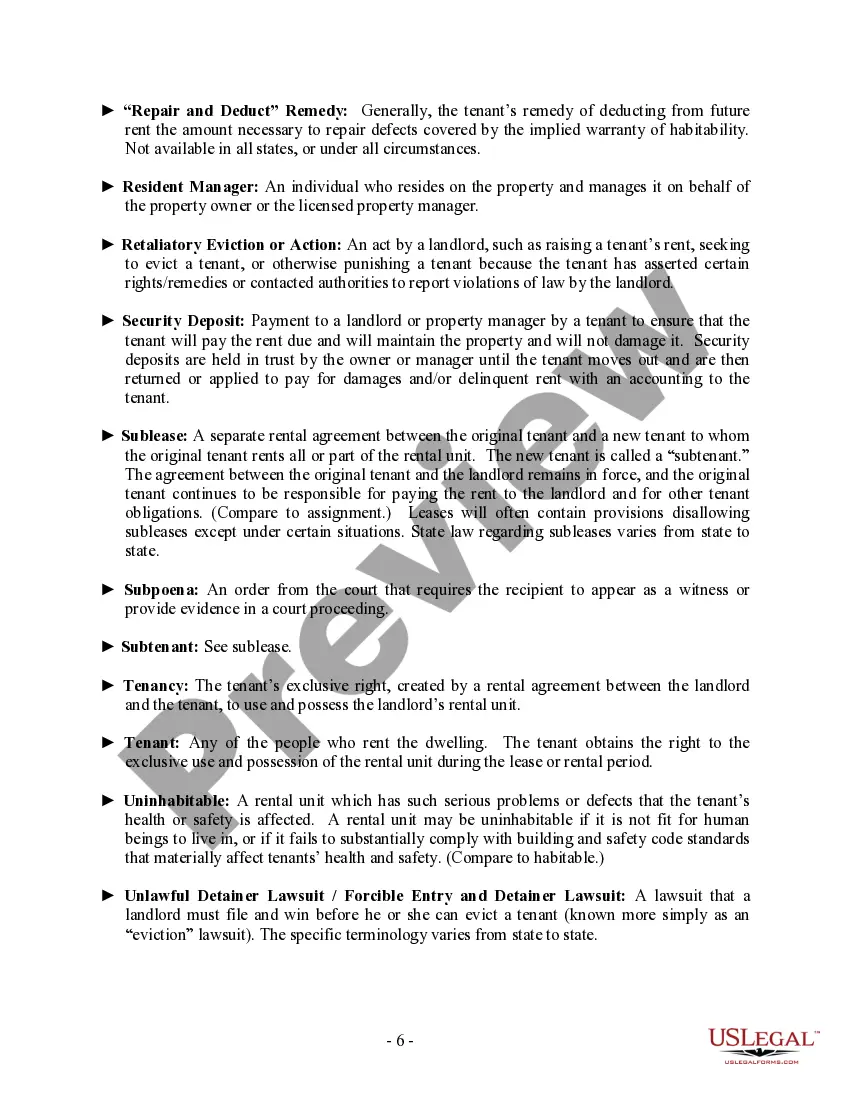
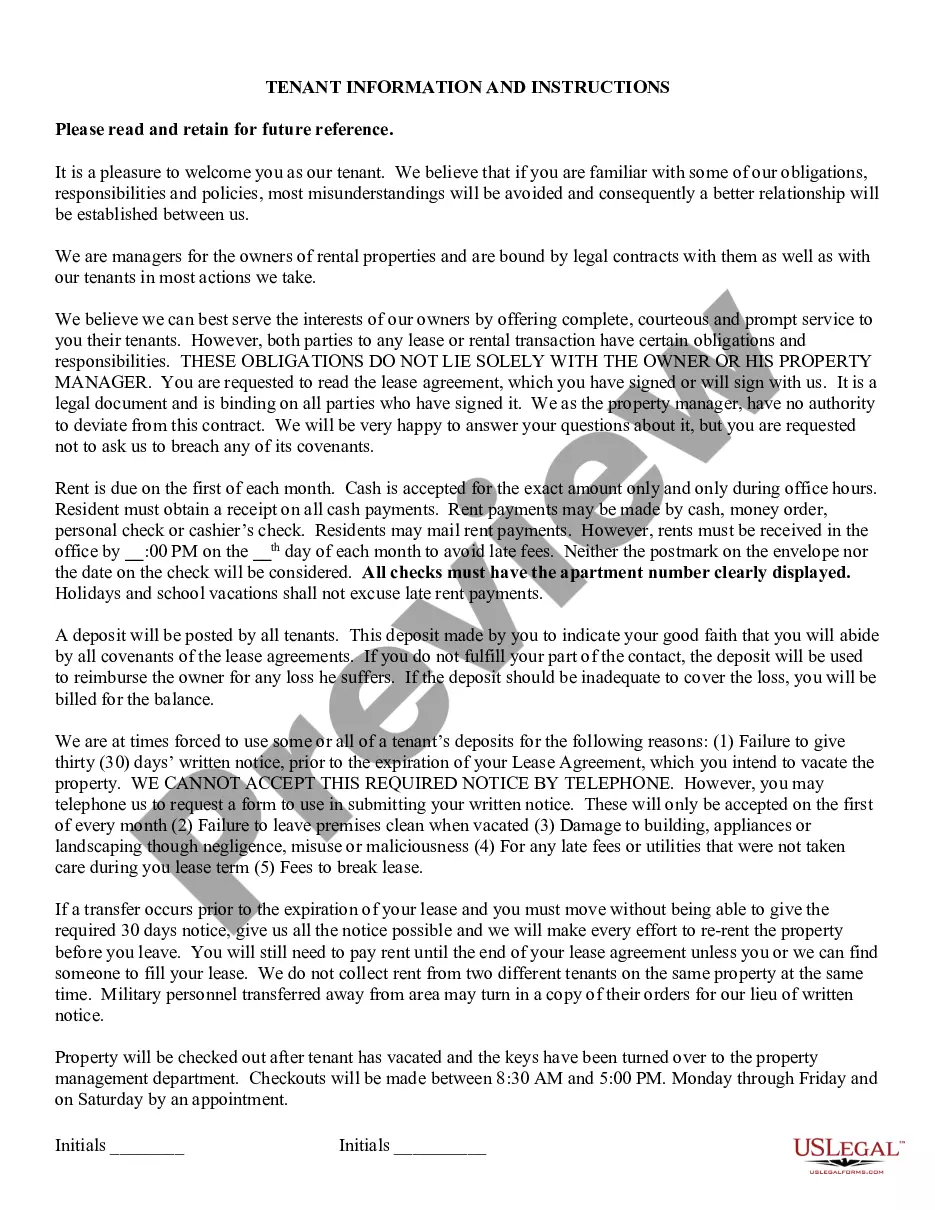
This Handbook summarizes the rights and obligations of landlords and tenants, and is designed to be a helpful guide to both landlords and tenants. Information about rental applications, leases, security deposits, inventory checklists, repair responsibilities, rent increases, termination of leases, eviction notices and much more is included in 40+ pages of materials.
South Carolina Multistate Landlord Tenant Handbook - Guide - Laws
Instant download
Description
Free preview
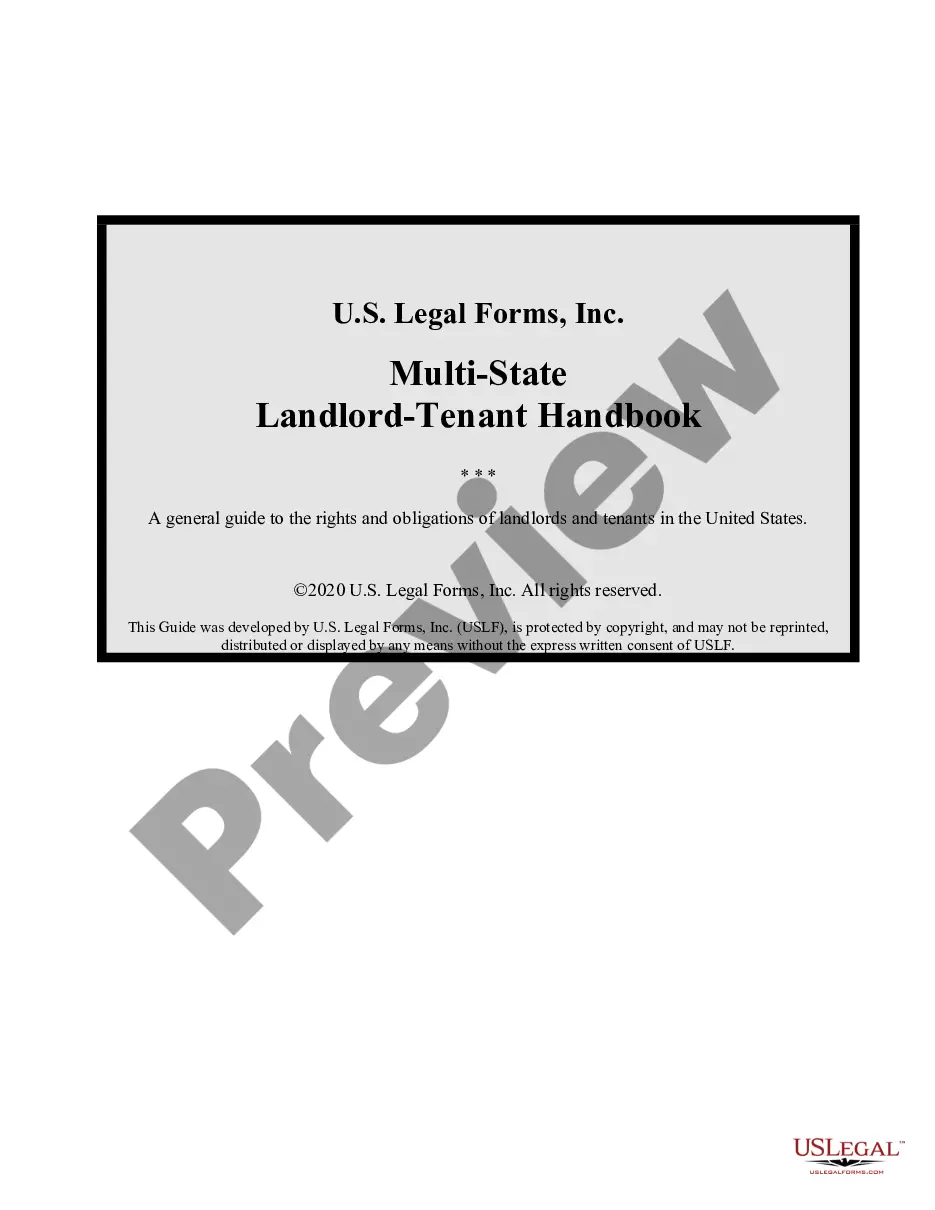
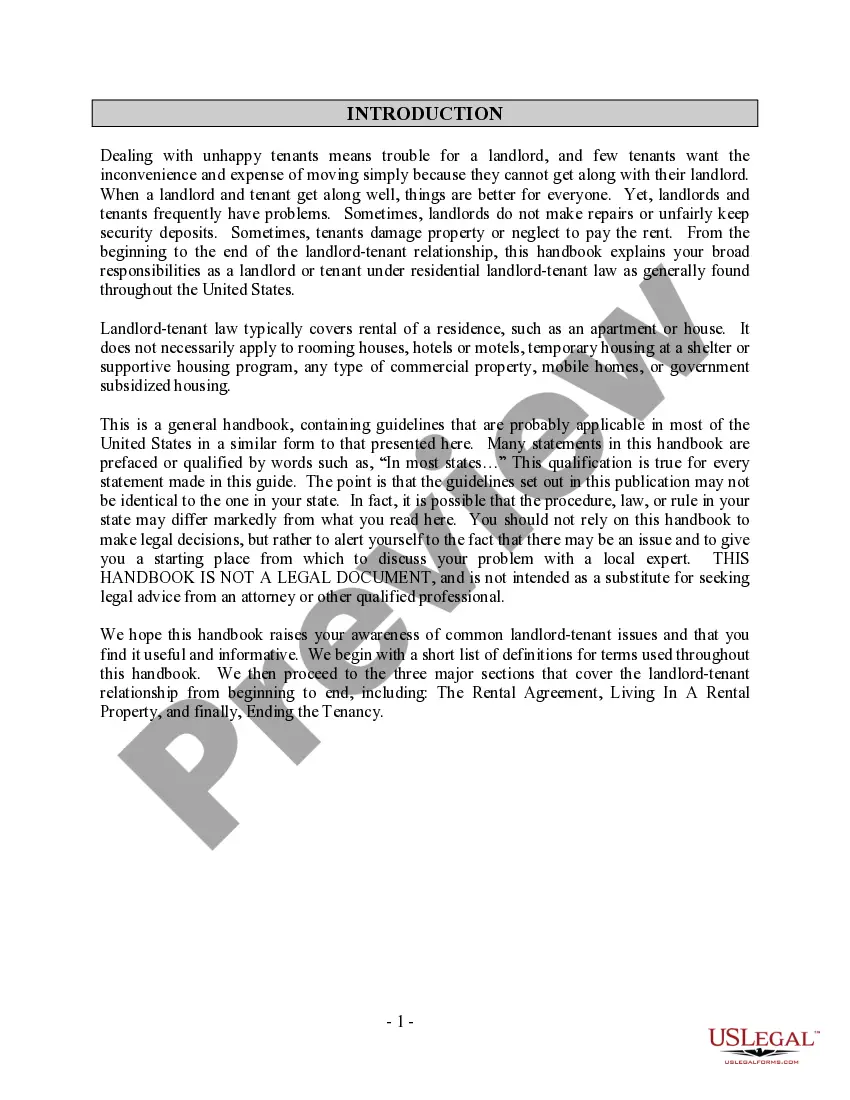
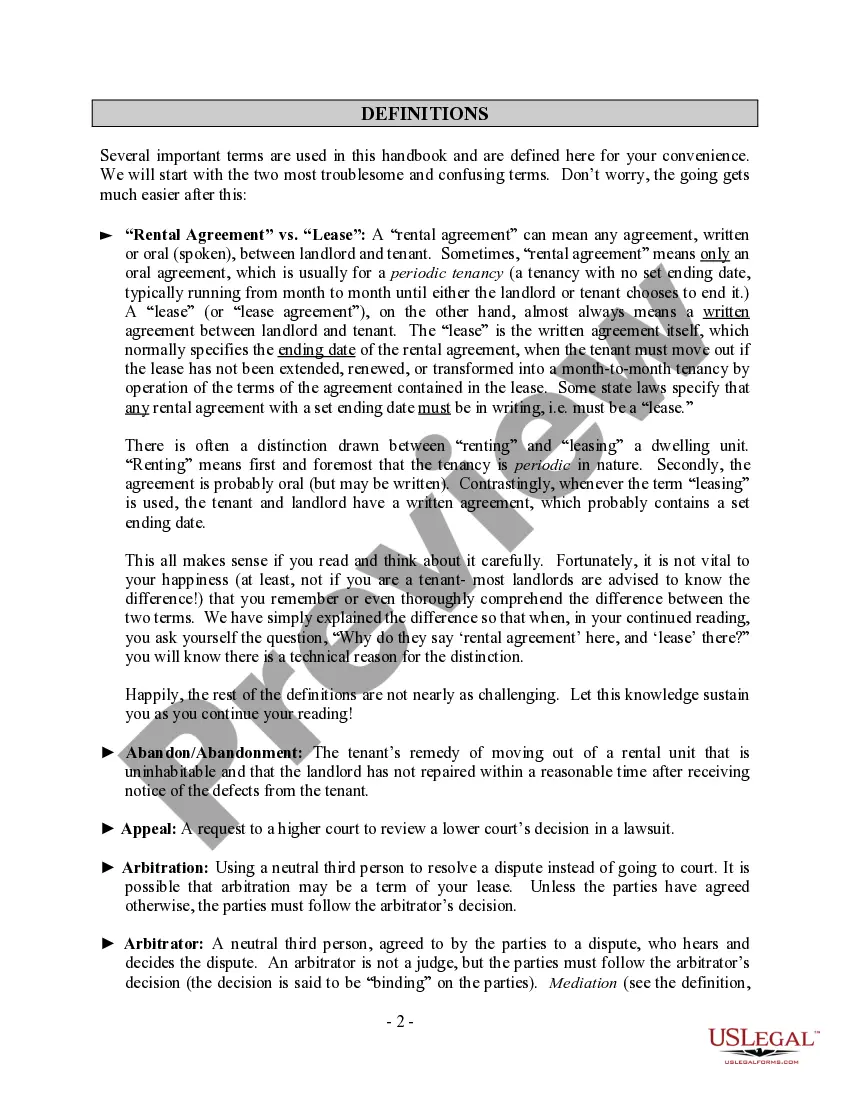
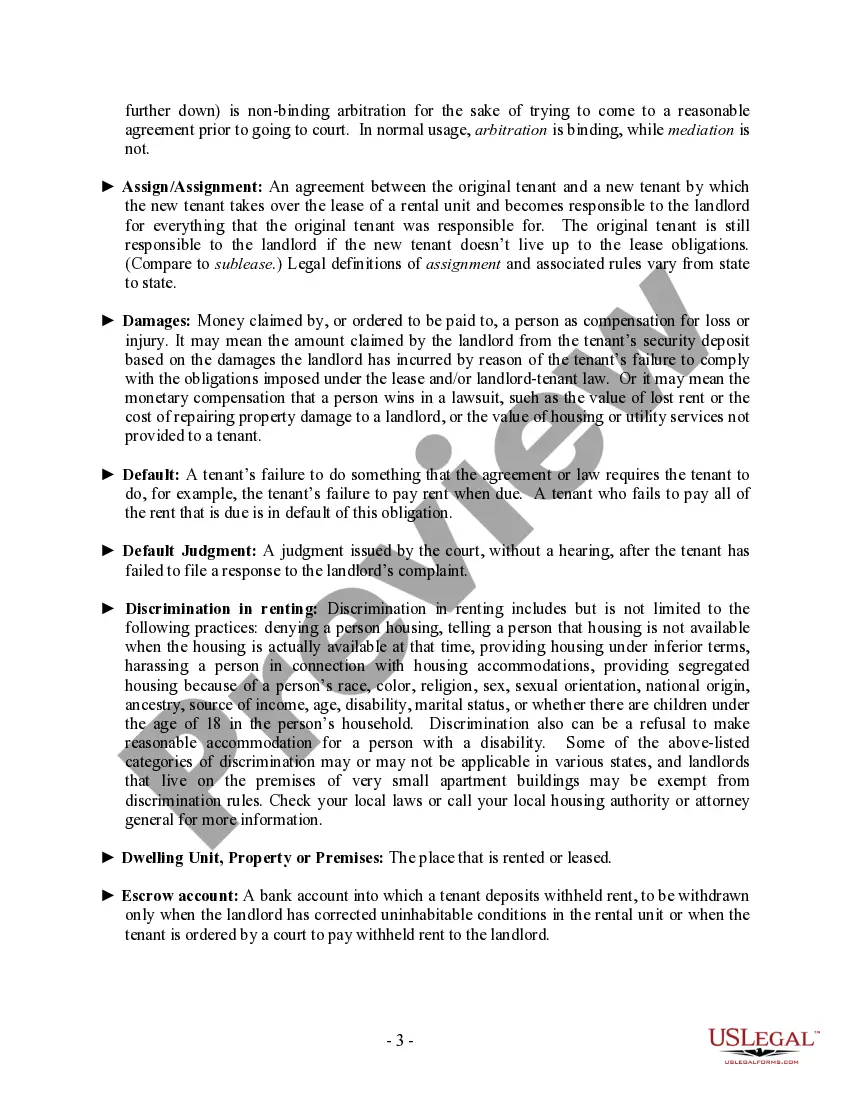
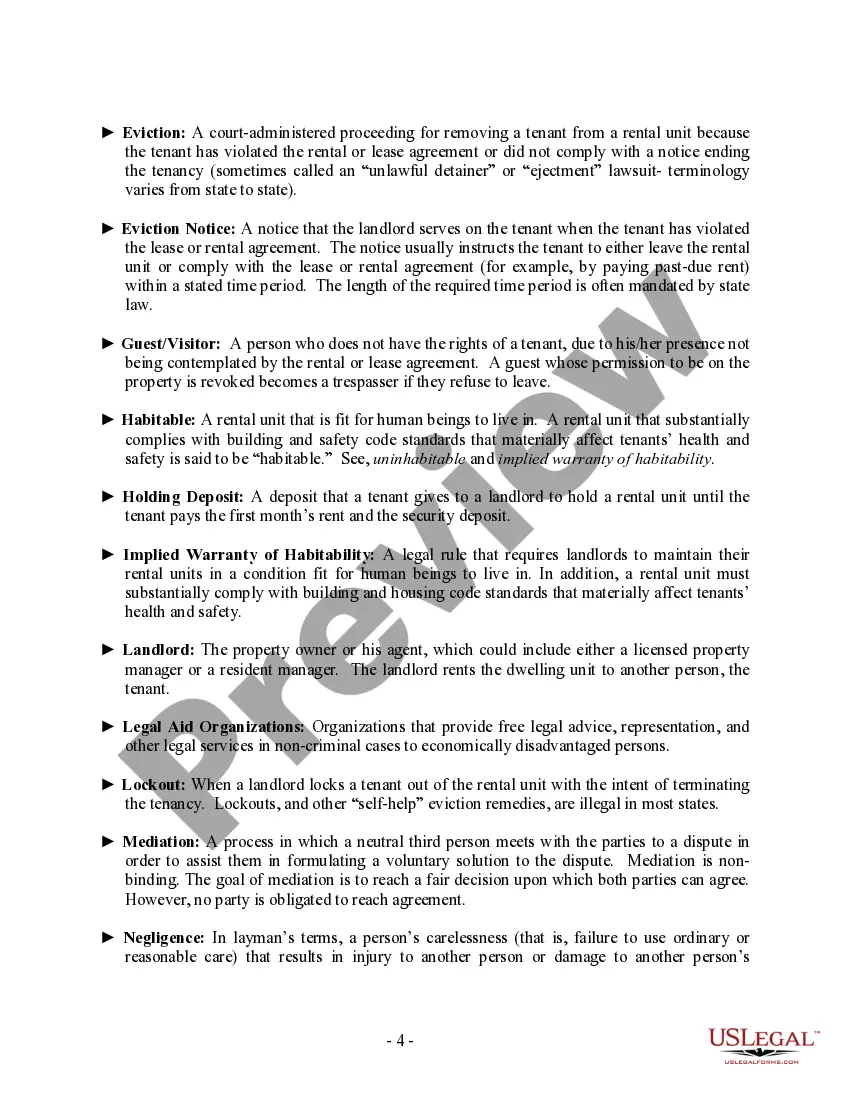

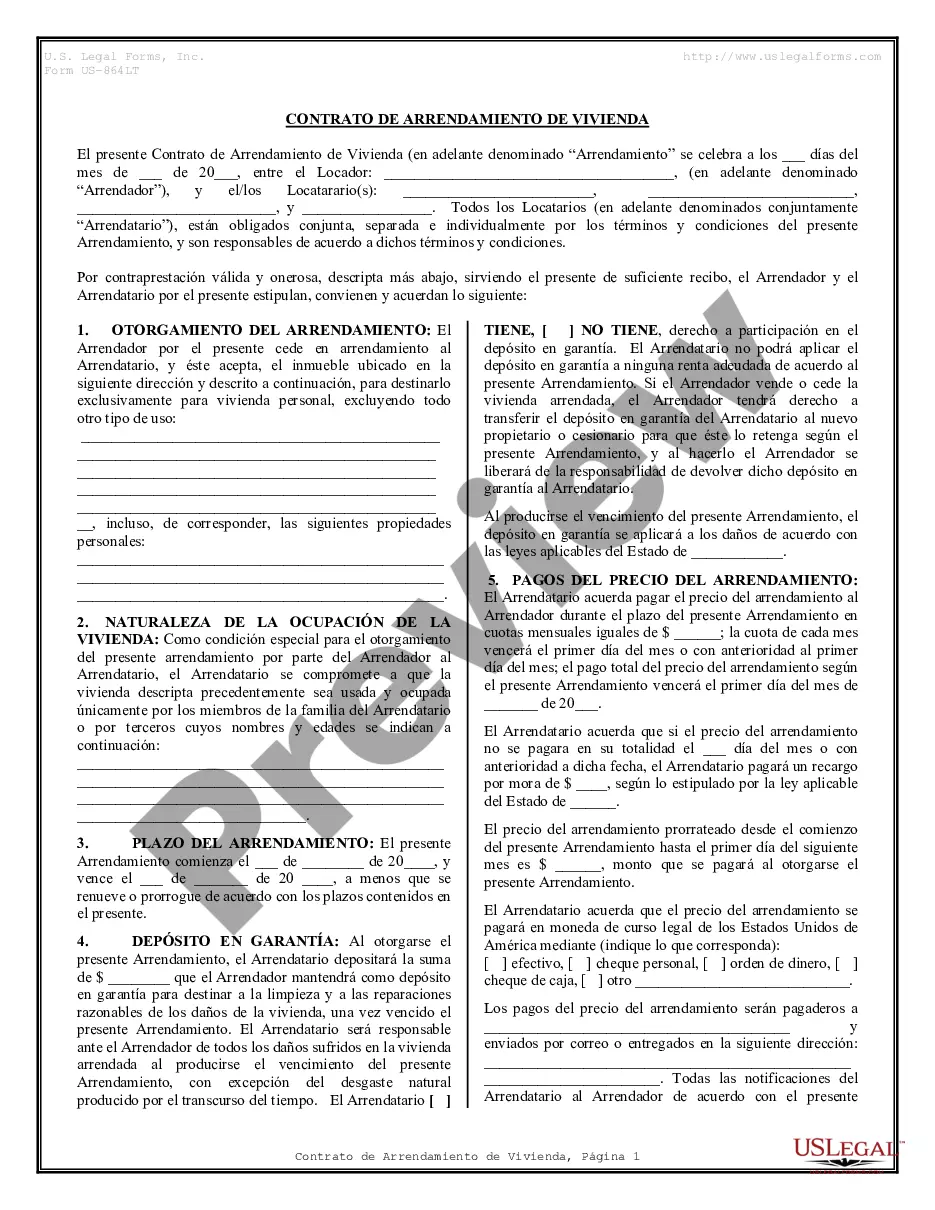
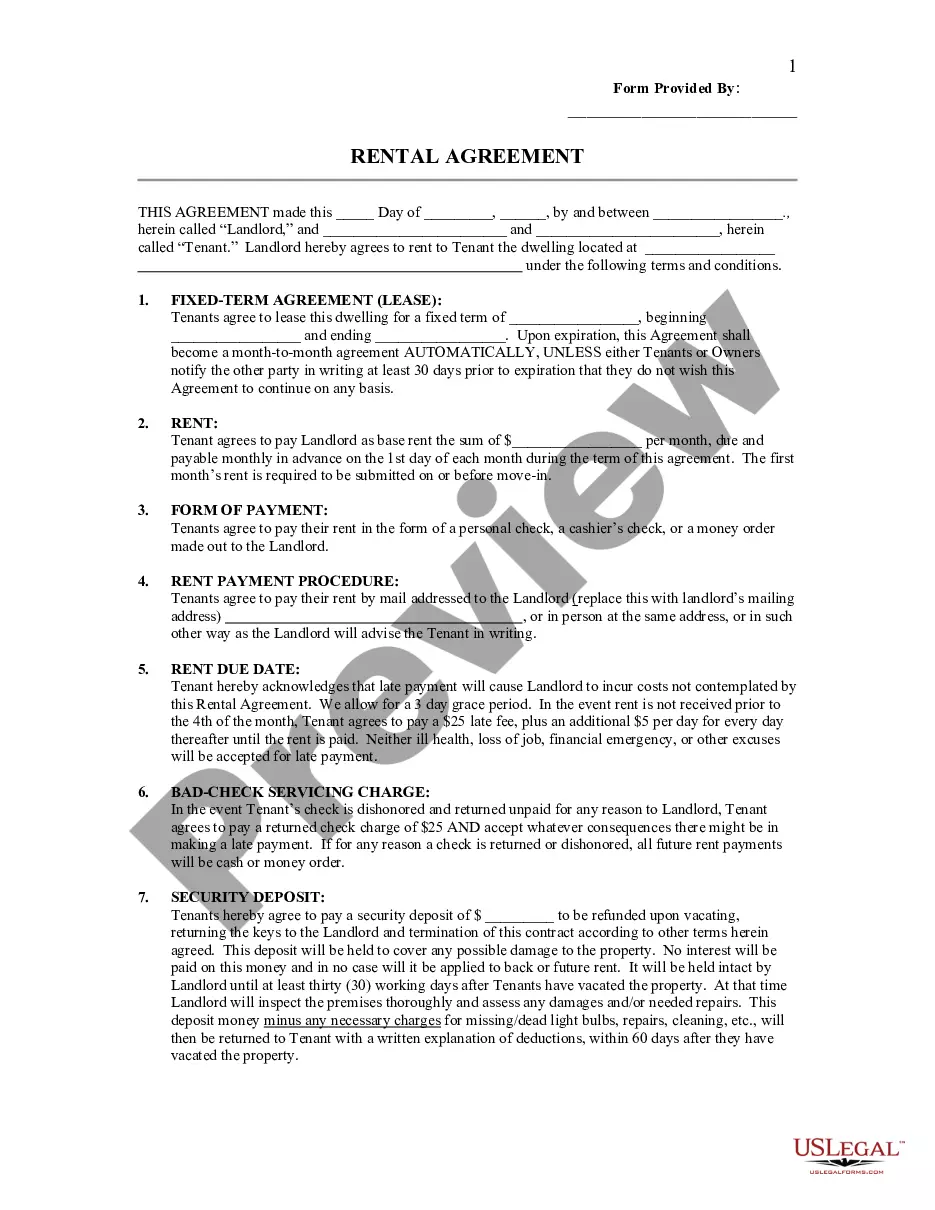
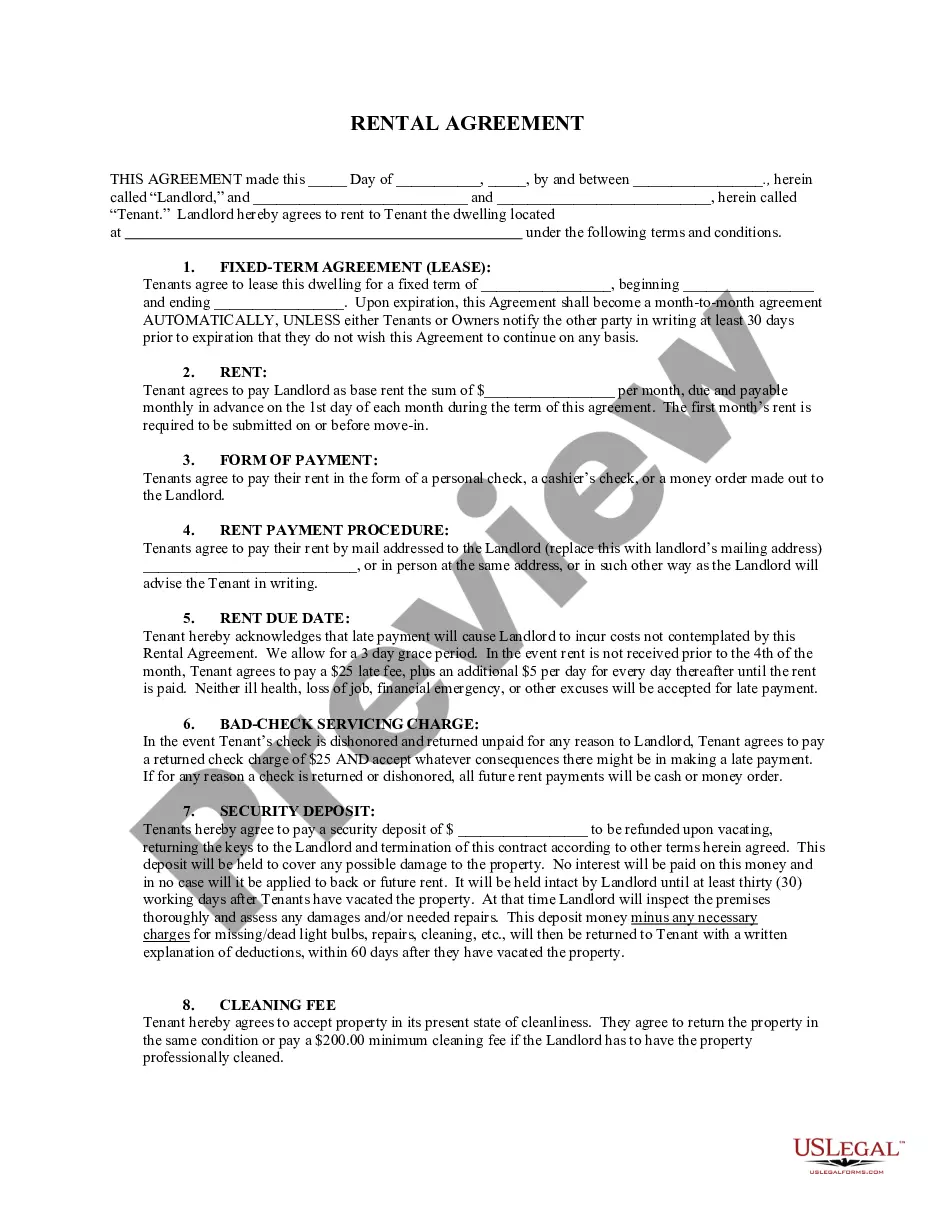
How to fill out Multistate Landlord Tenant Handbook - Guide - Laws?
Are you currently in a position where you require documents for either business or personal purposes almost daily? There are numerous authentic document templates available online, but locating versions you can trust is not simple.
US Legal Forms offers a vast selection of template documents, such as the South Carolina Multistate Landlord Tenant Handbook - Guide - Laws, which are designed to meet state and federal requirements.
If you are already familiar with the US Legal Forms website and have an account, simply Log In. Then, you can download the South Carolina Multistate Landlord Tenant Handbook - Guide - Laws template.
Select a convenient file format and download your copy.
Access all the document templates you have purchased in the My documents section. You can obtain another copy of the South Carolina Multistate Landlord Tenant Handbook - Guide - Laws at any time if needed. Just click the necessary document to download or print the template. Use US Legal Forms, one of the most extensive collections of authentic forms, to save time and avoid errors. The service offers professionally crafted legal document templates that can be used for various purposes. Create an account on US Legal Forms and start simplifying your life.
- If you do not have an account and wish to start using US Legal Forms, follow these steps.
- Find the document you need and ensure it is for the correct city/county.
- Use the Review button to inspect the form.
- Read the details to ensure you have selected the right document.
- If the document is not what you seek, use the Search field to locate the document that meets your needs and requirements.
- Once you find the correct document, click Purchase now.
- Choose the pricing plan you want, fill in the required information to create your account, and pay for the order with your PayPal or credit card.
Form popularity
FAQ
Section 27-40-410 of the South Carolina code outlines the legal grounds for eviction and the processes landlords must follow. This section is an essential part of the South Carolina Multistate Landlord Tenant Handbook - Guide - Laws, detailing both landlord and tenant rights. Understanding this section can help minimize disputes and ensure that the eviction process is handled legally and fairly.
In South Carolina, landlords are prohibited from taking retaliatory actions against tenants, such as evicting them for exercising their legal rights. Additionally, landlords cannot lock tenants out, remove their belongings, or shut off utilities without a court order. Familiarizing yourself with these restrictions is vital, and the South Carolina Multistate Landlord Tenant Handbook - Guide - Laws provides clear insights into these landlord obligations.
The Sutton rule in South Carolina serves to guide landlords in their eviction practices while protecting tenant rights. It stipulates that landlords must provide a valid reason for eviction and follow the correct legal channels. To ensure compliance with this rule and other relevant laws, landlords should refer to the South Carolina Multistate Landlord Tenant Handbook - Guide - Laws for comprehensive information.
Evicting a tenant in South Carolina can be a complex process, as it requires following specific legal procedures. It is essential for landlords to familiarize themselves with the requirements set forth in the South Carolina Multistate Landlord Tenant Handbook - Guide - Laws. Failure to adhere to these guidelines can prolong the eviction process, so it is advisable to consult legal resources or professionals to navigate this system efficiently.
The Sutton rule refers to a legal principle in South Carolina that allows landlords to recover possession of their property under certain conditions. This rule emphasizes the importance of following proper legal procedures when evicting tenants. Understanding the Sutton rule is crucial for both landlords and tenants, as it ensures that rights are respected in accordance with the South Carolina Multistate Landlord Tenant Handbook - Guide - Laws.
Renters in South Carolina have several important rights that protect them during their tenancy. These rights include the right to a safe and habitable living environment, the right to privacy, and the right to fair treatment without discrimination. It is essential for tenants to know their rights to advocate for themselves effectively. The South Carolina Multistate Landlord Tenant Handbook - Guide - Laws is an excellent resource for understanding these rights fully.
Landlords must adhere to specific legal standards, and certain actions could be deemed illegal. For instance, a landlord cannot retaliate against a tenant for reporting safety violations or issues to authorities. Other illegal actions include entering a tenant's property without notice or refusing to make necessary repairs. Understanding these rights is crucial, and the South Carolina Multistate Landlord Tenant Handbook - Guide - Laws offers clear insights into tenant protections.
In South Carolina, there are specific grounds that allow a landlord to terminate a tenancy legally. These include nonpayment of rent, violation of lease terms, endangerment of property, engaging in illegal activities, failure to maintain the dwelling, and other significant breaches of the lease. Familiarizing yourself with these grounds can empower you as a tenant and help you react appropriately. The South Carolina Multistate Landlord Tenant Handbook - Guide - Laws provides a detailed overview of these regulations.
When communicating with your landlord, avoid making statements that could jeopardize your tenancy. For instance, do not threaten to withhold rent without a valid reason, as this can lead to eviction. Additionally, refrain from making promises you cannot keep, such as committing to long-term leases if you're uncertain. Understanding the guidelines in the South Carolina Multistate Landlord Tenant Handbook - Guide - Laws can help you navigate these discussions more effectively.