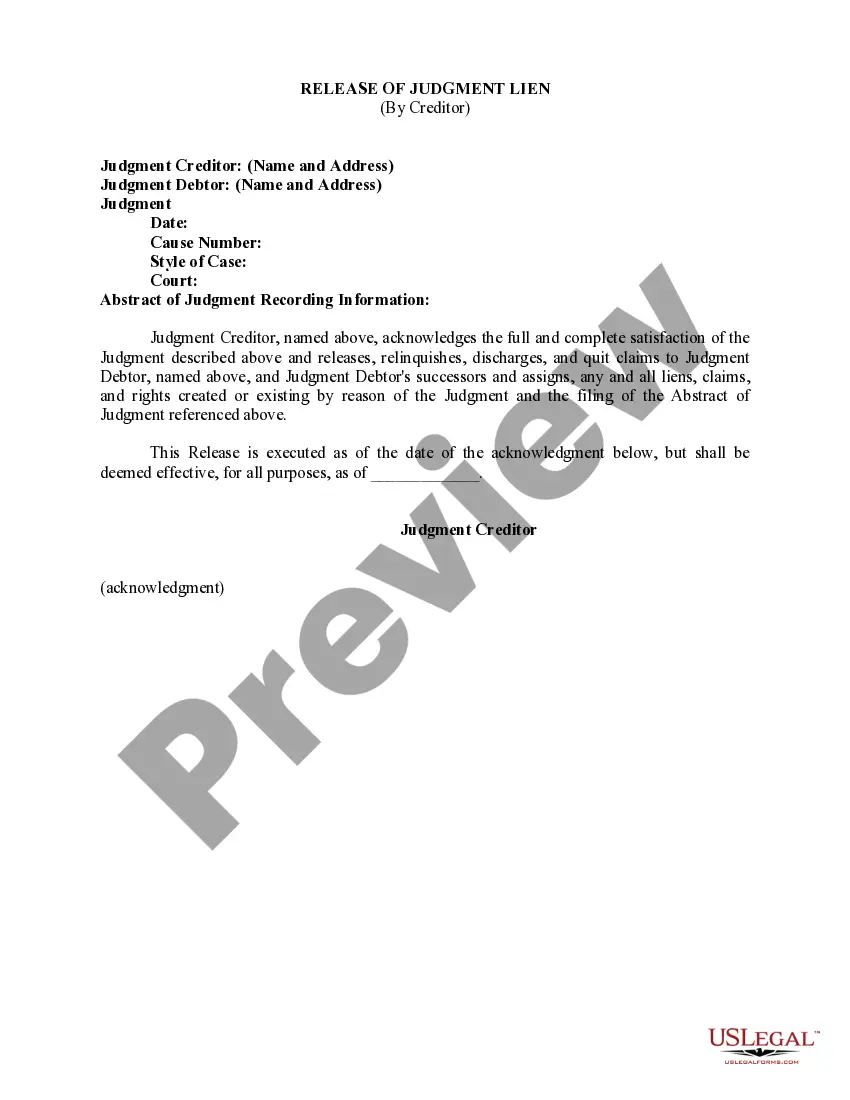
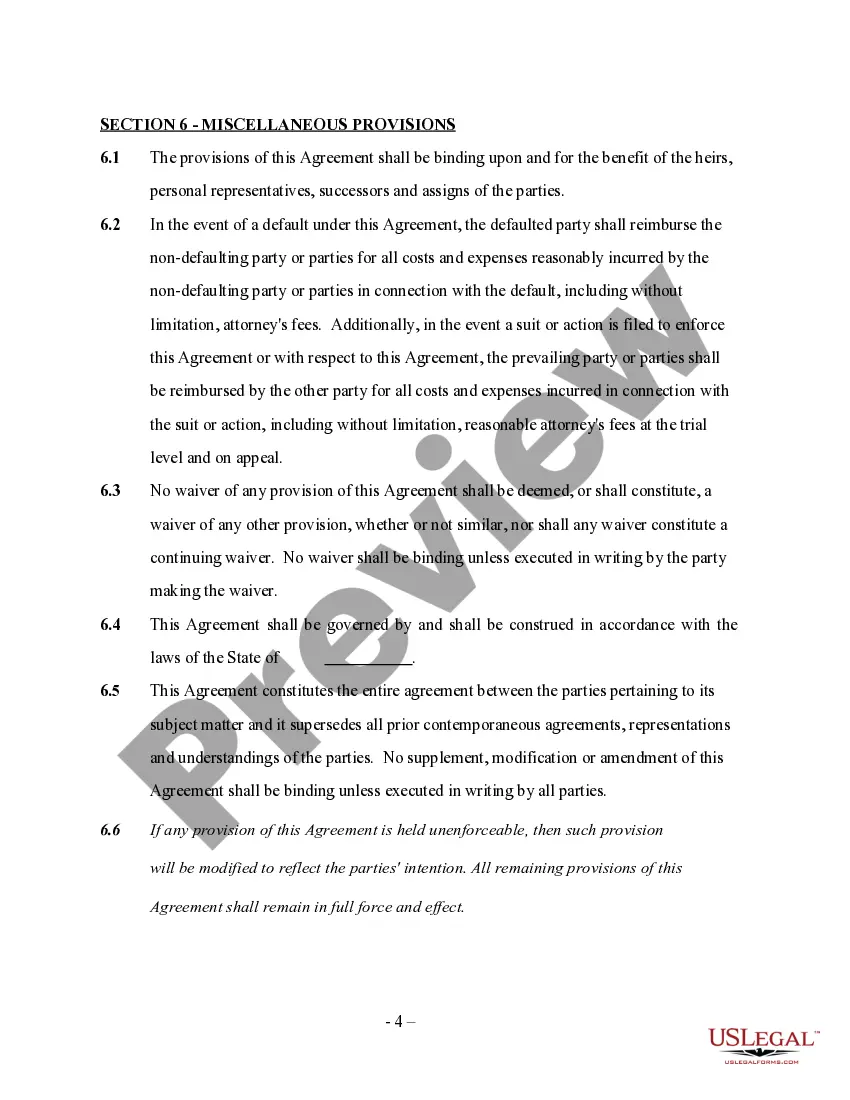
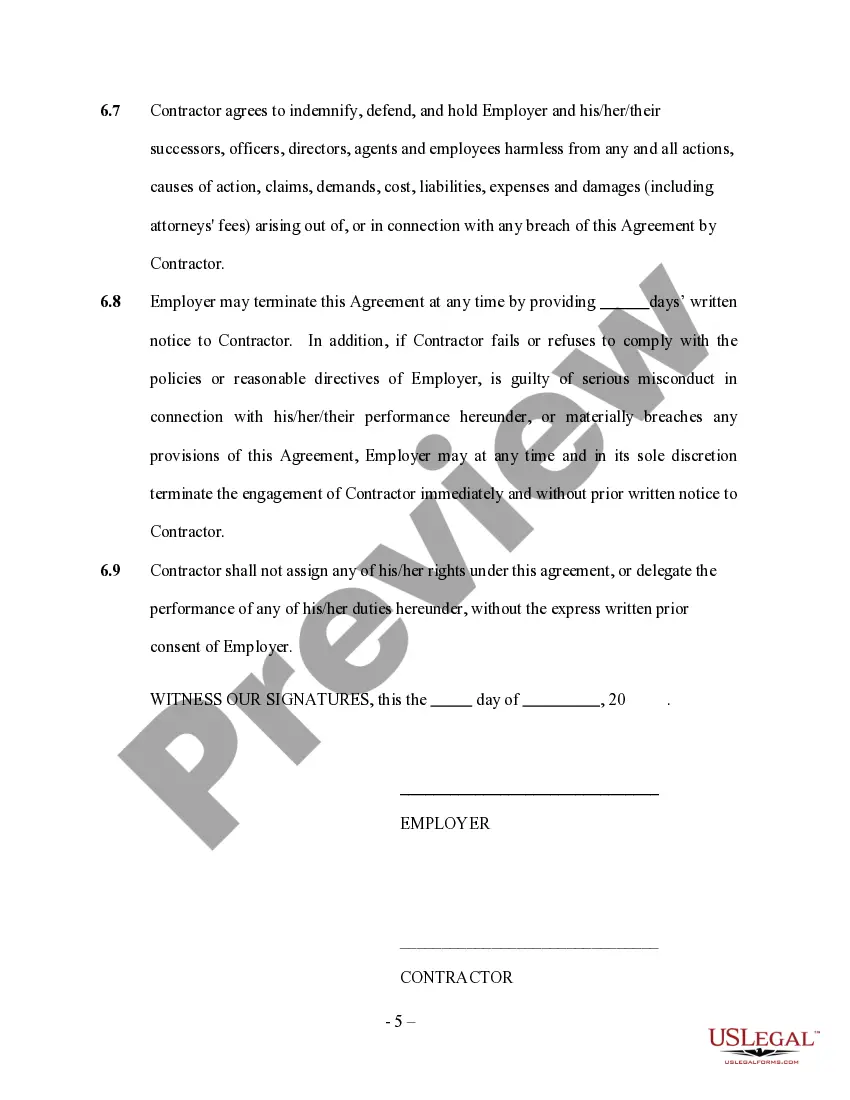
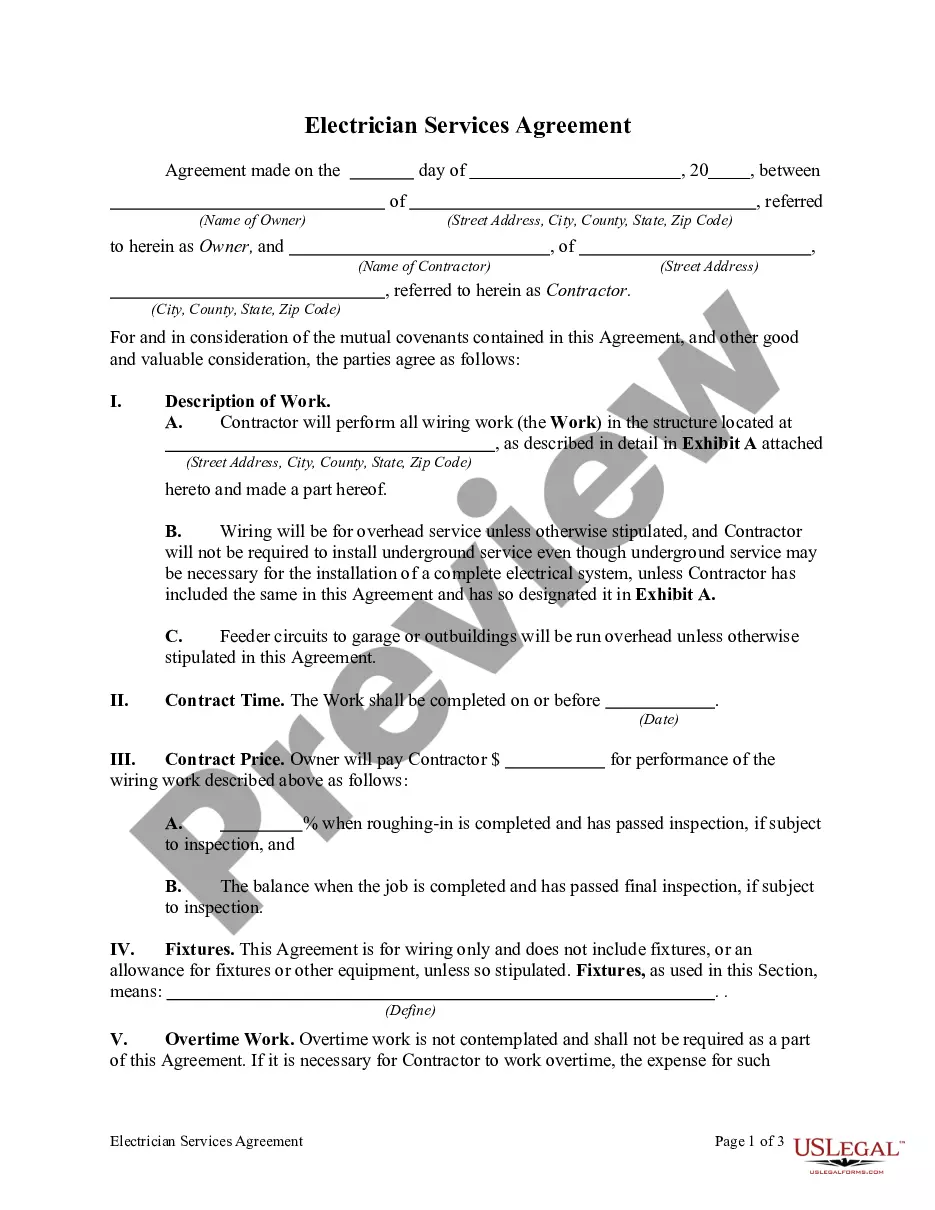
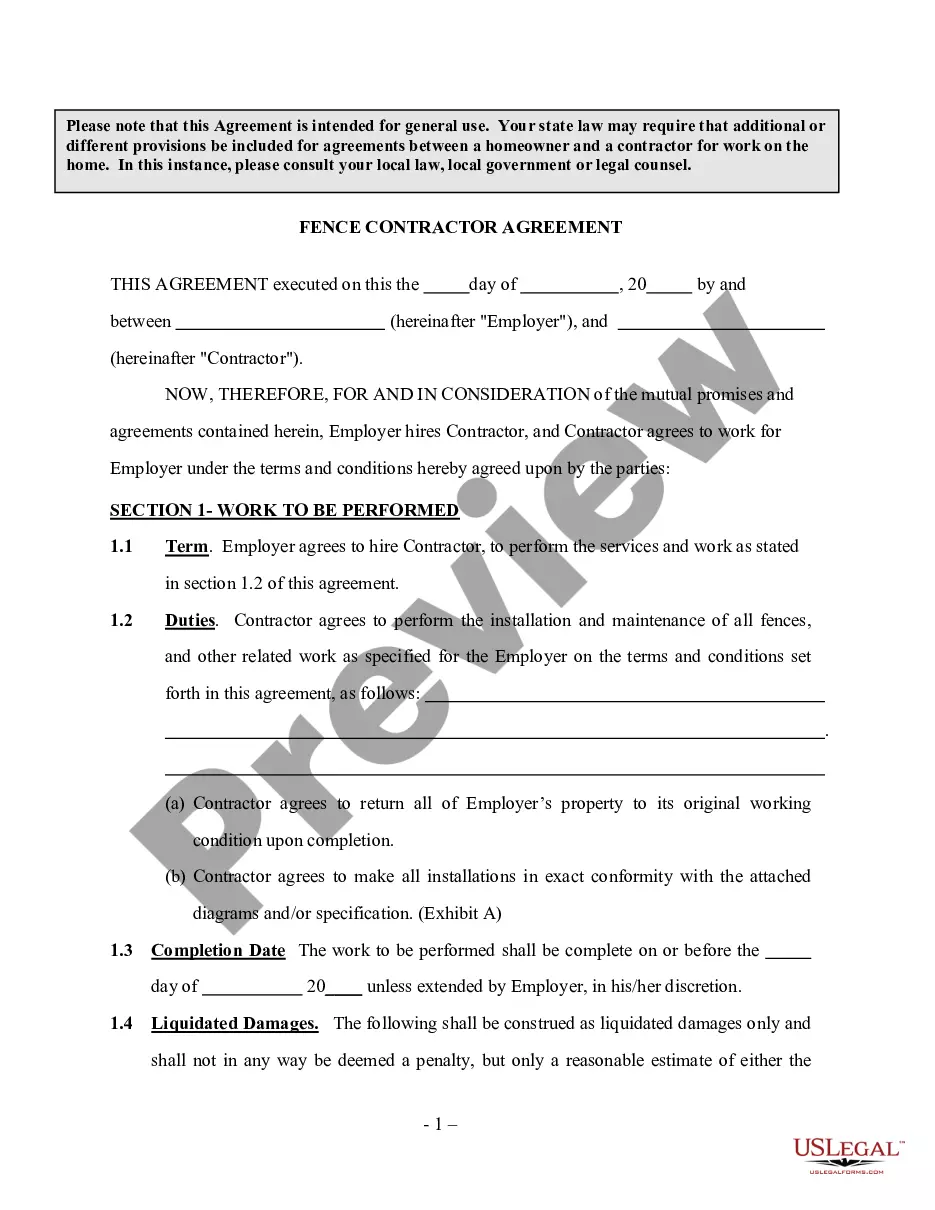
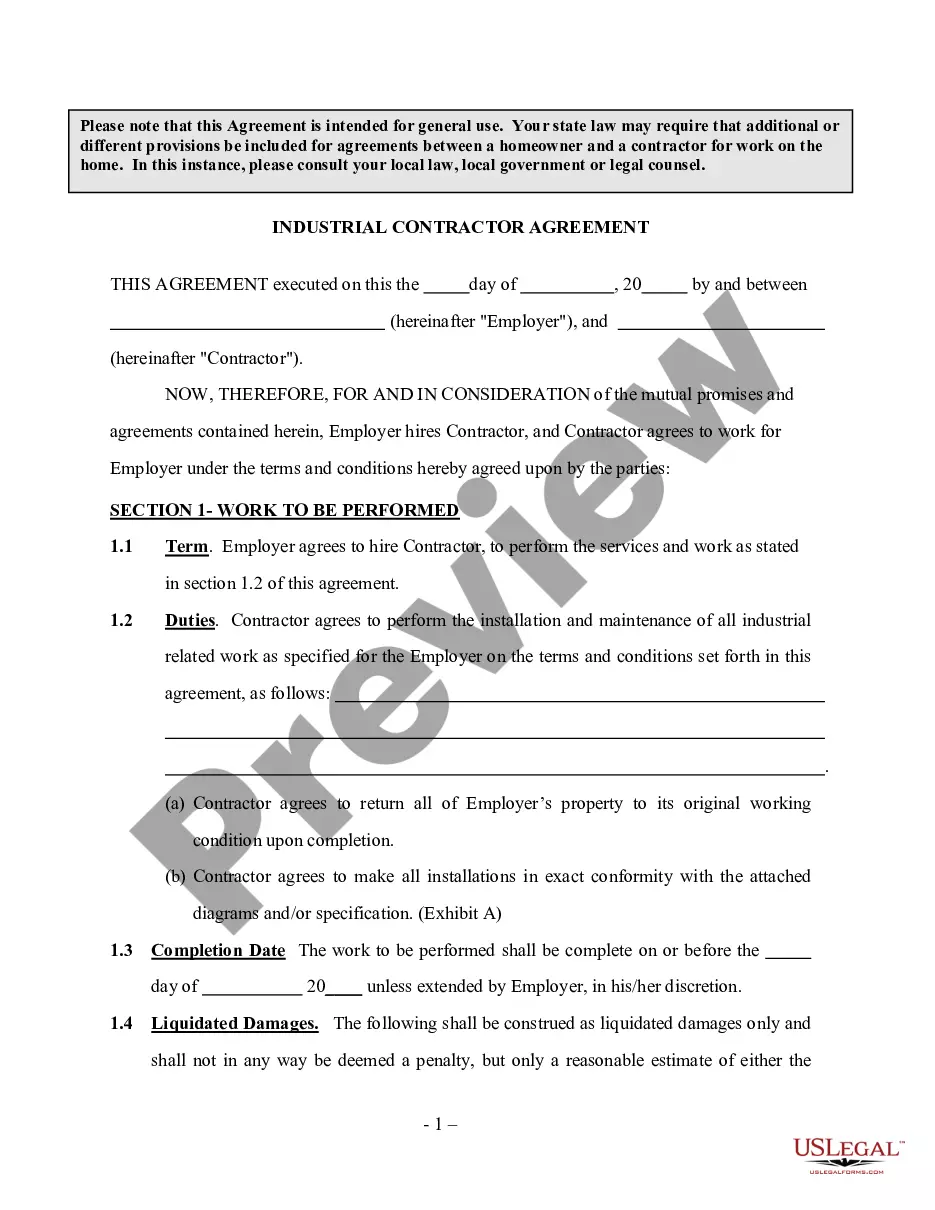
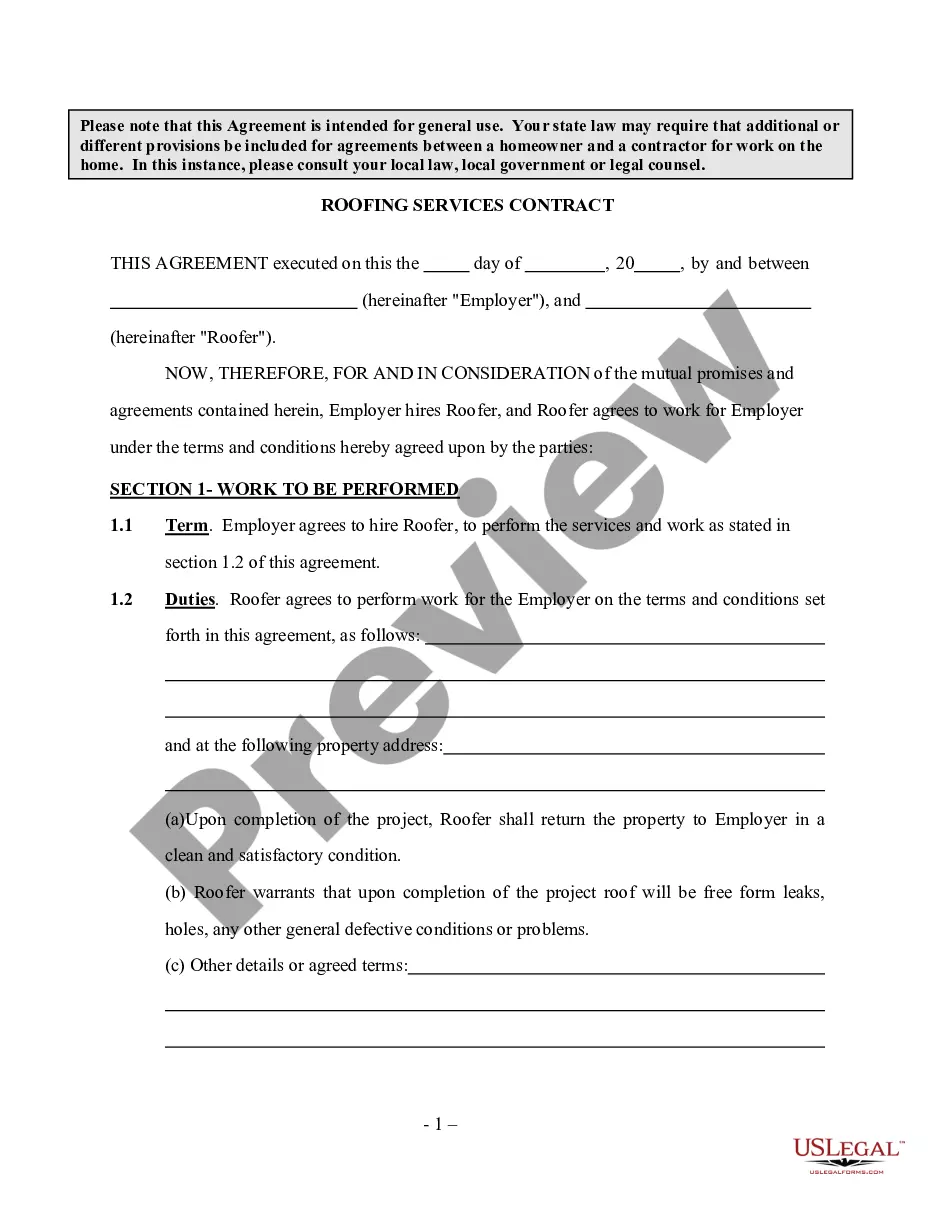
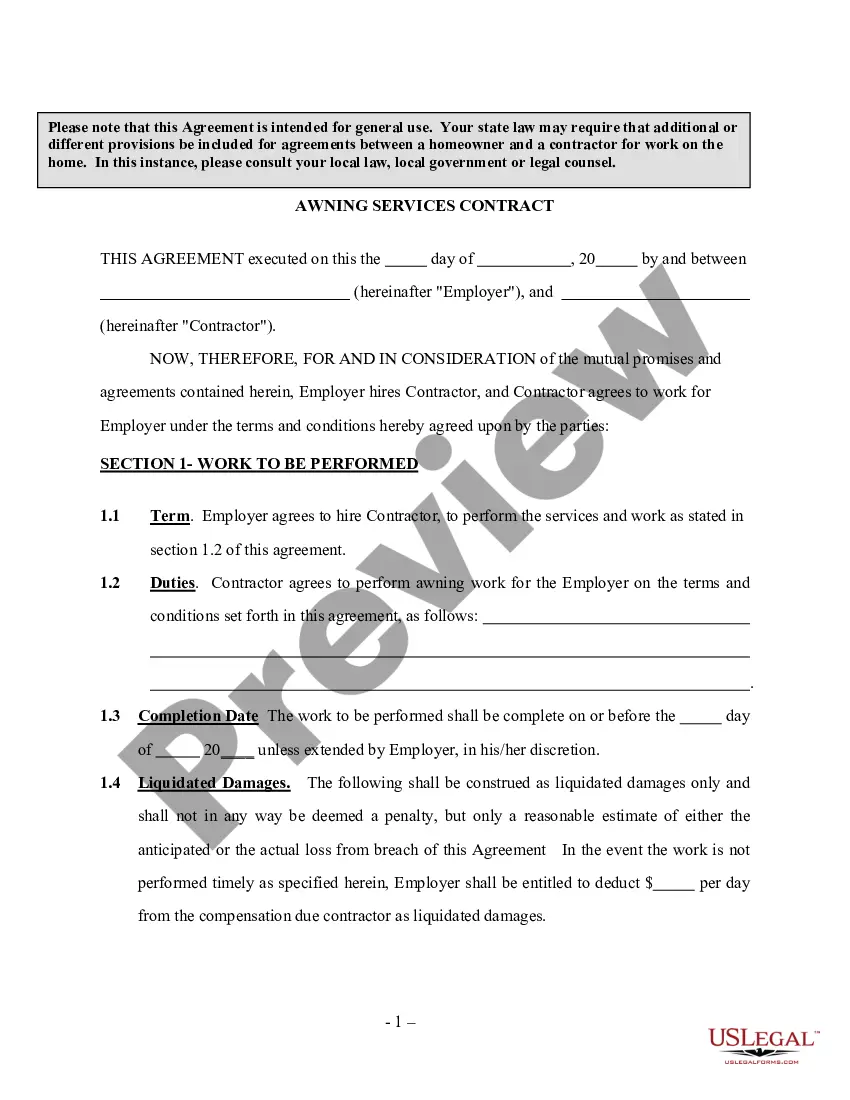
Employer contracts with an independent contractor to install or construct a ceiling as specified and agreed upon in the contract. Please note that this Agreement is intended for general use. Your state law may require that additional or different provisions be included for agreements between a homeowner and a contractor for work on the home. In this instance, please consult your local law, local government or legal counsel.
South Carolina Self-Employed Ceiling Installation Contract
State:
Multi-State
Control #:
US-INDC-90
Format:
Word;
Rich Text
Instant download
Description
Free preview
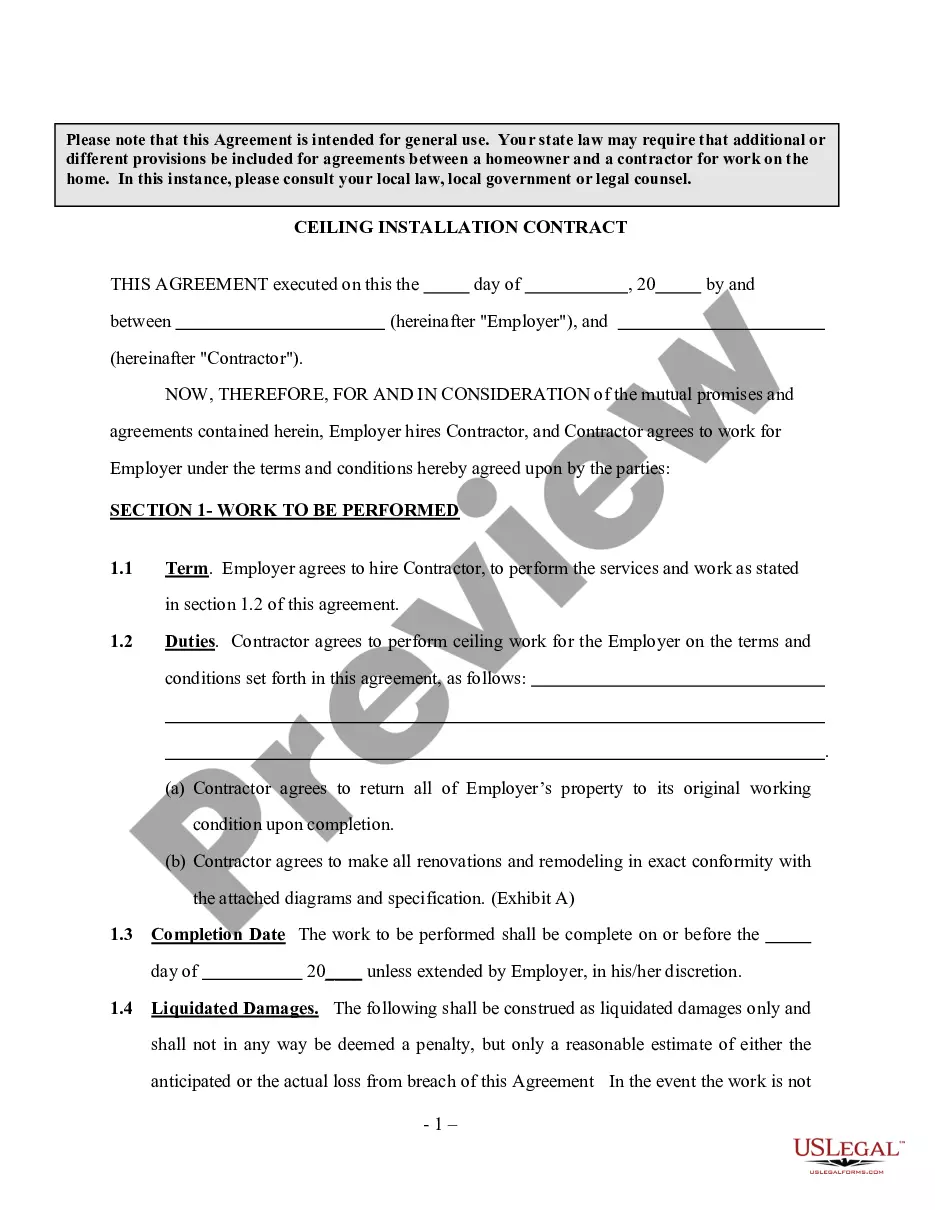
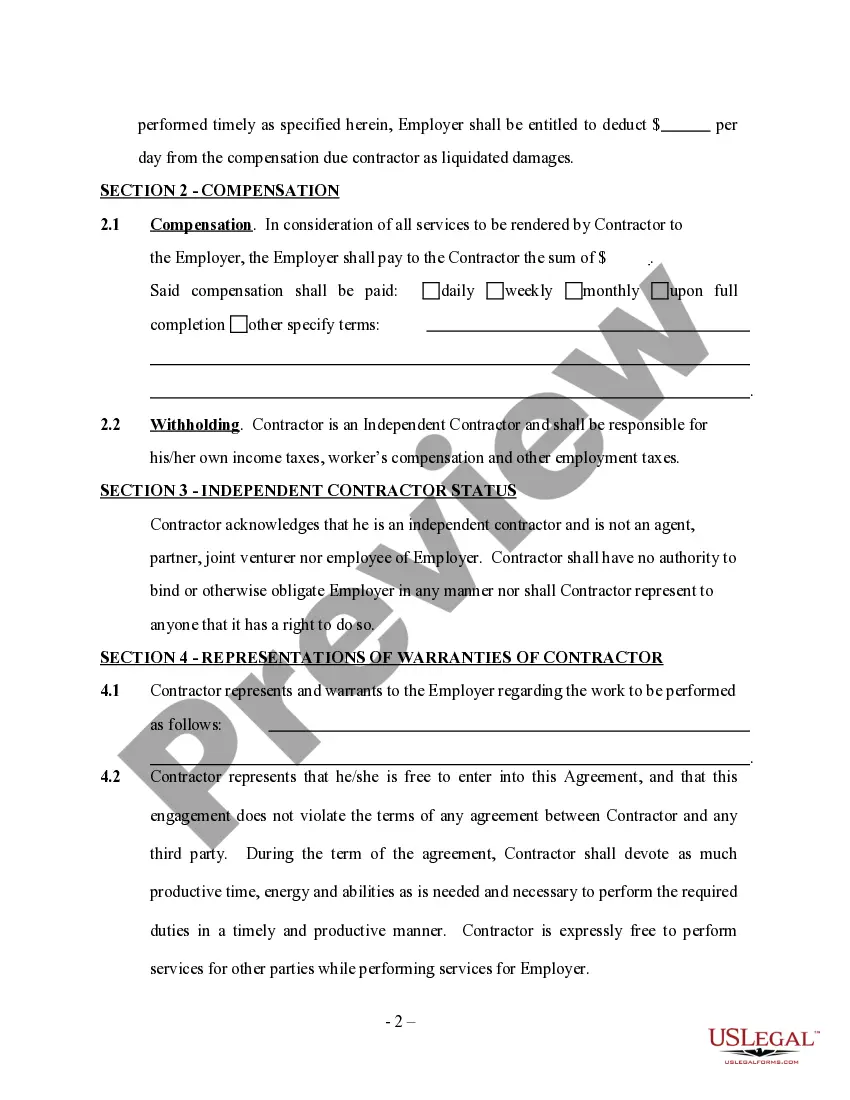
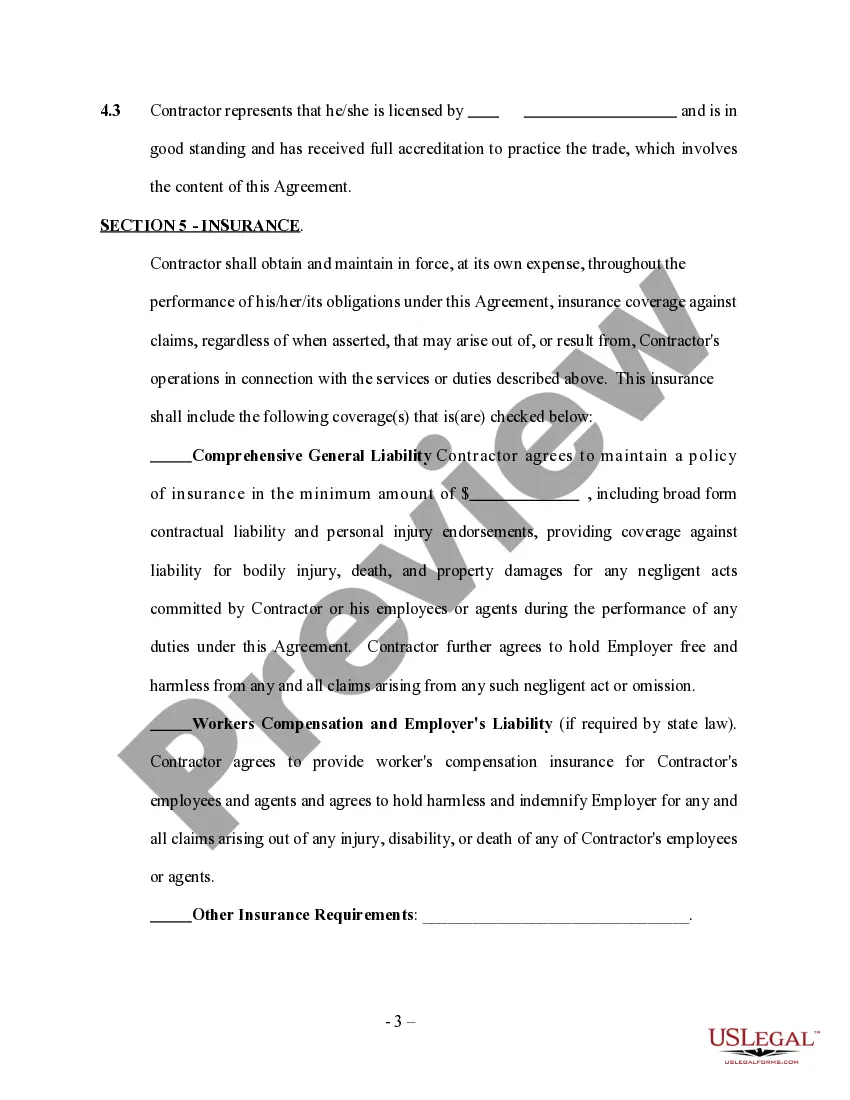
Get your form ready online
Our built-in tools help you complete, sign, share, and store your documents in one place.
Built-in online Word editor
Make edits, fill in missing information, and update formatting in US Legal Forms—just like you would in MS Word.
Export easily
Download a copy, print it, send it by email, or mail it via USPS—whatever works best for your next step.
E-sign your document
Sign and collect signatures with our SignNow integration. Send to multiple recipients, set reminders, and more. Go Premium to unlock E-Sign.
Notarize online 24/7
If this form requires notarization, complete it online through a secure video call—no need to meet a notary in person or wait for an appointment.
Store your document securely
We protect your documents and personal data by following strict security and privacy standards.

Make edits, fill in missing information, and update formatting in US Legal Forms—just like you would in MS Word.

Download a copy, print it, send it by email, or mail it via USPS—whatever works best for your next step.

Sign and collect signatures with our SignNow integration. Send to multiple recipients, set reminders, and more. Go Premium to unlock E-Sign.

If this form requires notarization, complete it online through a secure video call—no need to meet a notary in person or wait for an appointment.

We protect your documents and personal data by following strict security and privacy standards.
Looking for another form?

How to fill out Self-Employed Ceiling Installation Contract?
It is feasible to spend hours online searching for the official document template that meets the state and federal requirements you need.
US Legal Forms offers thousands of official forms that can be reviewed by experts.
You can download or print the South Carolina Self-Employed Ceiling Installation Contract from the platform.
- If you already possess a US Legal Forms account, you can Log In and click on the Download button.
- Afterward, you can complete, modify, print, or sign the South Carolina Self-Employed Ceiling Installation Contract.
- Every official document template you acquire is yours permanently.
- To obtain another copy of the purchased form, navigate to the My documents tab and click on the relevant button.
- If you are using the US Legal Forms website for the first time, follow the simple instructions below.
- First, ensure that you have selected the correct document template for the area/city of your choice.
- Review the form outline to confirm you have picked the correct form.
- If available, use the Preview button to examine the document template as well.
- If you wish to get an additional version of the form, use the Search field to find the template that fits your needs and specifications.
- Once you have located the template you need, click Get now to continue.
- Choose the pricing plan you want, enter your details, and register for an account on US Legal Forms.
- Complete the transaction. You can use your credit card or PayPal account to pay for the official form.
- Select the format of the document and download it to your device.
- Make adjustments to your document if necessary.
- You can complete, modify, sign, and print the South Carolina Self-Employed Ceiling Installation Contract.
- Download and print thousands of document templates using the US Legal Forms website, which offers the largest collection of official forms.
- Utilize professional and state-specific templates to address your business or personal needs.
Form popularity
FAQ
The independent contractor law in South Carolina establishes guidelines that define the relationship between contractors and clients. This law emphasizes the importance of having a written agreement, like the South Carolina Self-Employed Ceiling Installation Contract, to clarify expectations and responsibilities. Understanding these laws helps protect your rights and ensures both parties fulfill their obligations. For more detailed information and resources, consider exploring uslegalforms to find relevant contracts and legal insights.
In South Carolina, homeowners can perform their own electrical work, but there are strict regulations you must follow. It's crucial to obtain the appropriate permits and ensure your work meets local codes to avoid any legal issues. If you are considering a South Carolina Self-Employed Ceiling Installation Contract that involves electrical components, hiring a licensed electrician may be the best route. This approach ensures safety and compliance with regulations, protecting you from potential liabilities.
In South Carolina, independent contractors must adhere to specific legal requirements to operate within the law. You should have a clear contract that outlines the terms of your work, payment, and responsibilities, such as the South Carolina Self-Employed Ceiling Installation Contract. Additionally, you may need to register your business, obtain necessary licenses, and ensure compliance with tax obligations. Utilizing a platform like uslegalforms can simplify this process by providing you with the essential documents you need.
Yes, South Carolina imposes a self-employment tax on individuals who earn income through self-employment. This tax is used to fund Social Security and Medicare, and it applies to net earnings from your self-employed work. If you are working under a South Carolina Self-Employed Ceiling Installation Contract, be sure to account for this tax in your financial planning.
While it is uncommon, a contractor in South Carolina could face legal consequences, including jail time, for failing to complete a job under certain circumstances. If a contractor engages in fraudulent practices or violates contract agreements, they might face criminal charges. To avoid such issues, using a South Carolina Self-Employed Ceiling Installation Contract can help clarify responsibilities and minimize disputes.
In South Carolina, as a self-employed individual, you can perform work that falls under the threshold of $5,000 without needing a contractor's license. This includes smaller projects such as ceiling installations and minor repairs. If you plan to take on larger projects, consider using a South Carolina Self-Employed Ceiling Installation Contract to outline your work and protect your interests.
Yes, South Carolina does require a roofing license for most roofing activities. This regulation ensures that all roofing work meets safety and quality standards. If you are working under a South Carolina Self-Employed Ceiling Installation Contract, you must adhere to these licensing requirements. Utilizing platforms like uslegalforms can help you navigate the licensing process and ensure you have the necessary documentation.
In South Carolina, you can perform minor repair work without a contractor license. However, the limit on the value of work is set by state regulations, which can vary. If you plan to undertake larger projects under a South Carolina Self-Employed Ceiling Installation Contract, it is wise to obtain a license to ensure compliance and protect your business. Consulting with local authorities can provide clarity on the specific limits.
In South Carolina, you do need a license to perform roofing work. However, if you are working under a South Carolina Self-Employed Ceiling Installation Contract, you may have different requirements. It’s important to check with local regulations, as some minor roofing tasks might not require a license. Always ensure you comply with the specific state laws to avoid any legal issues.