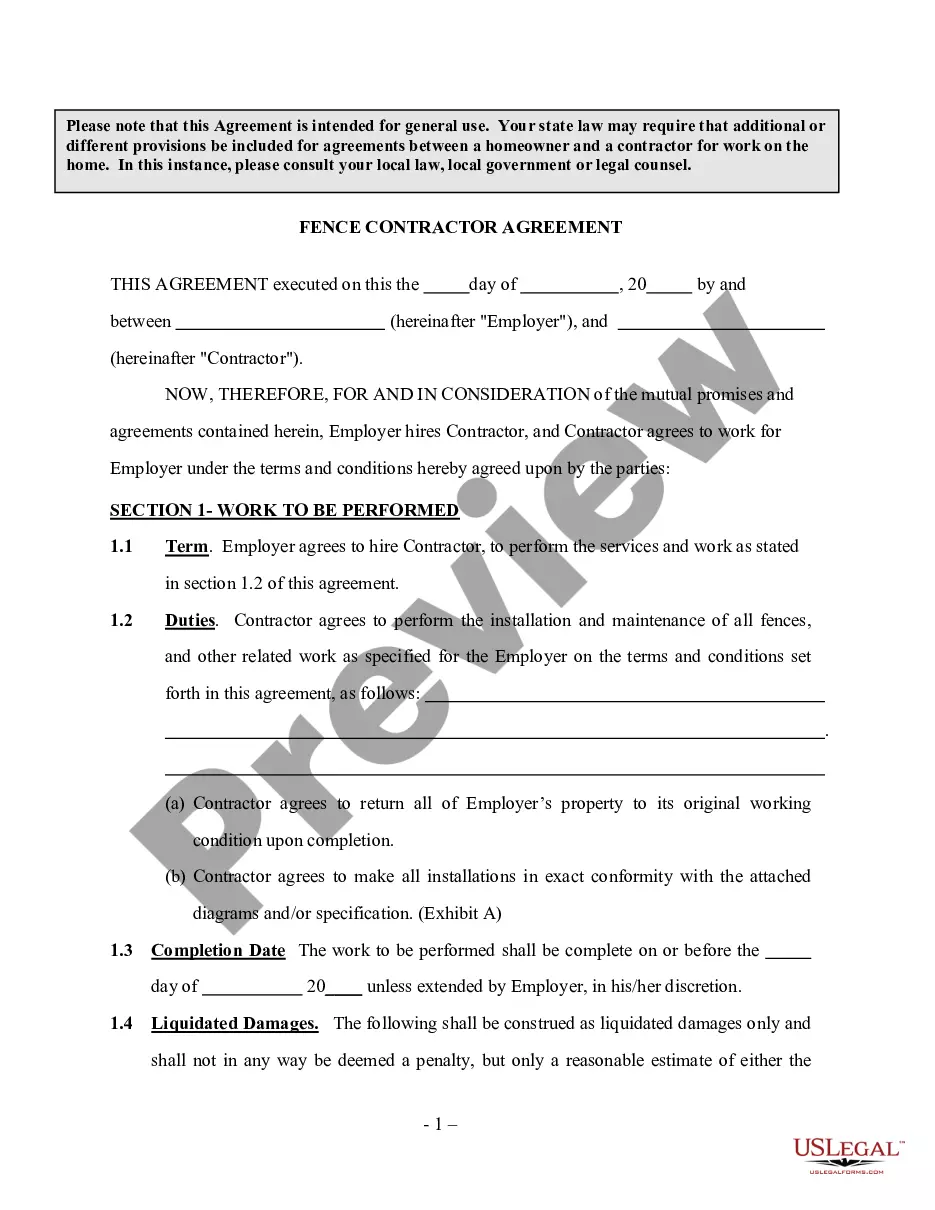
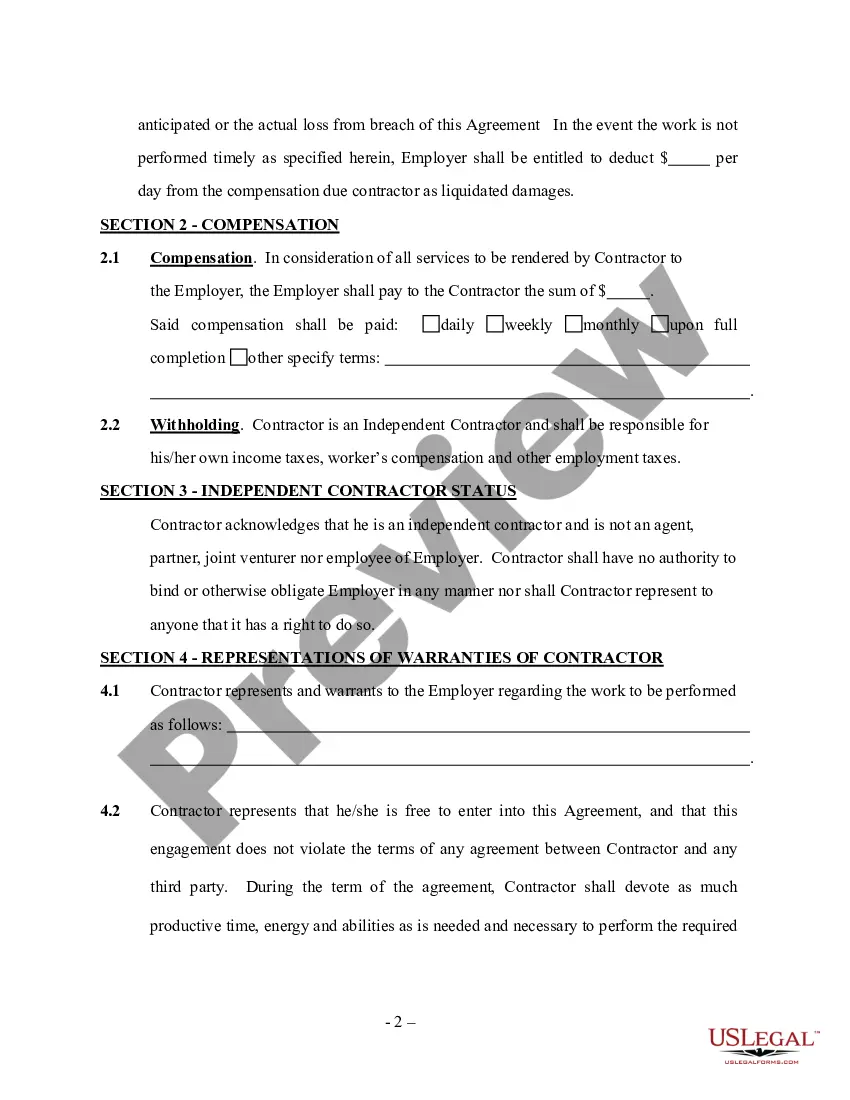
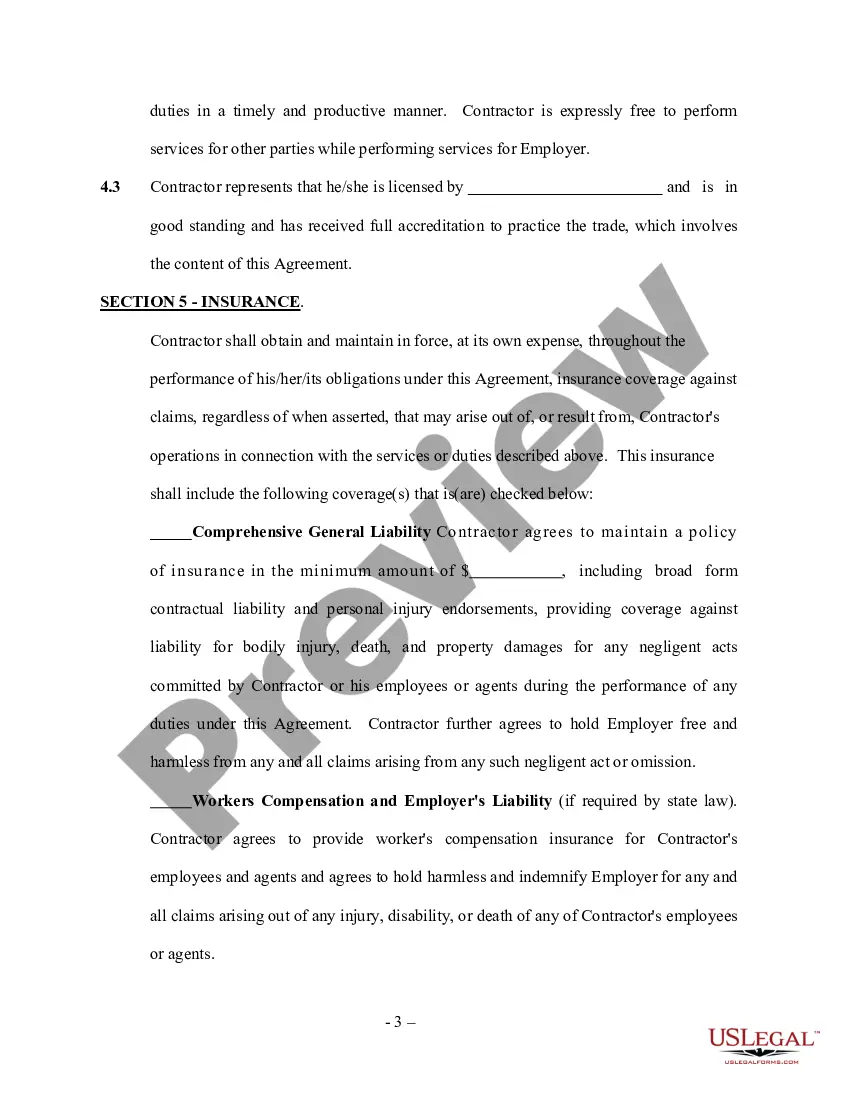
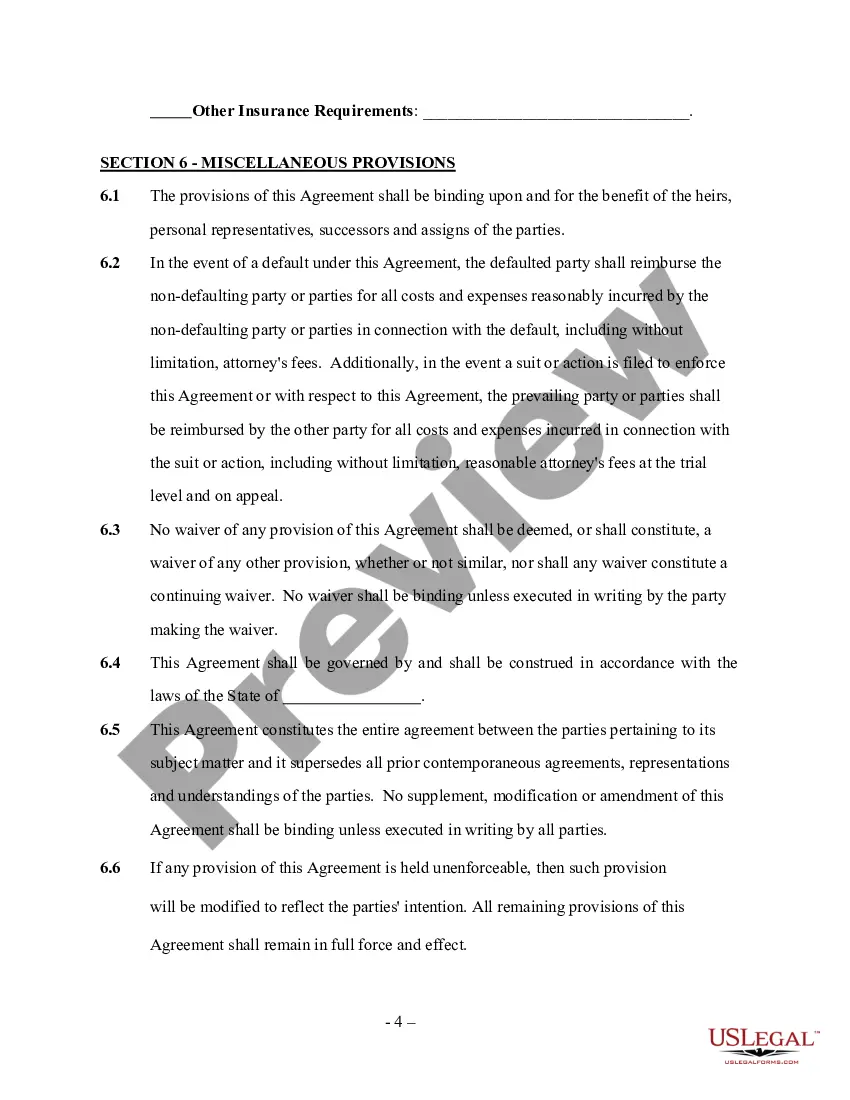
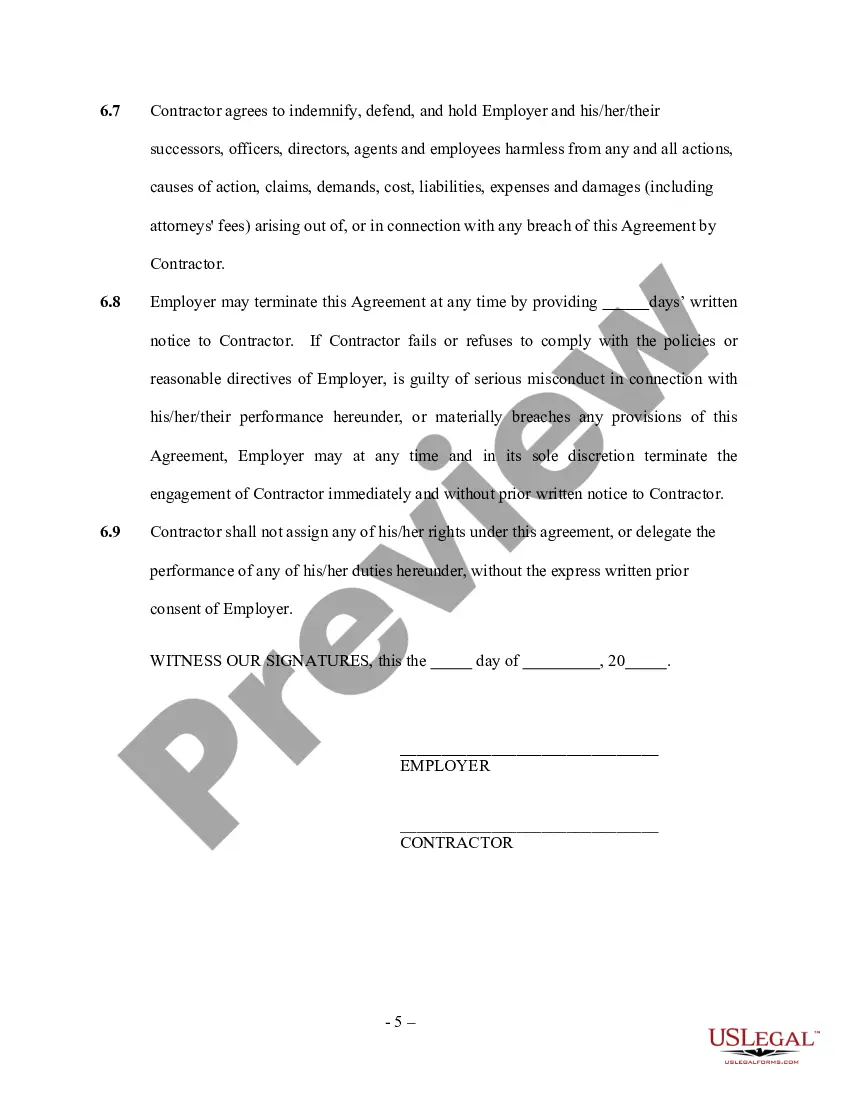
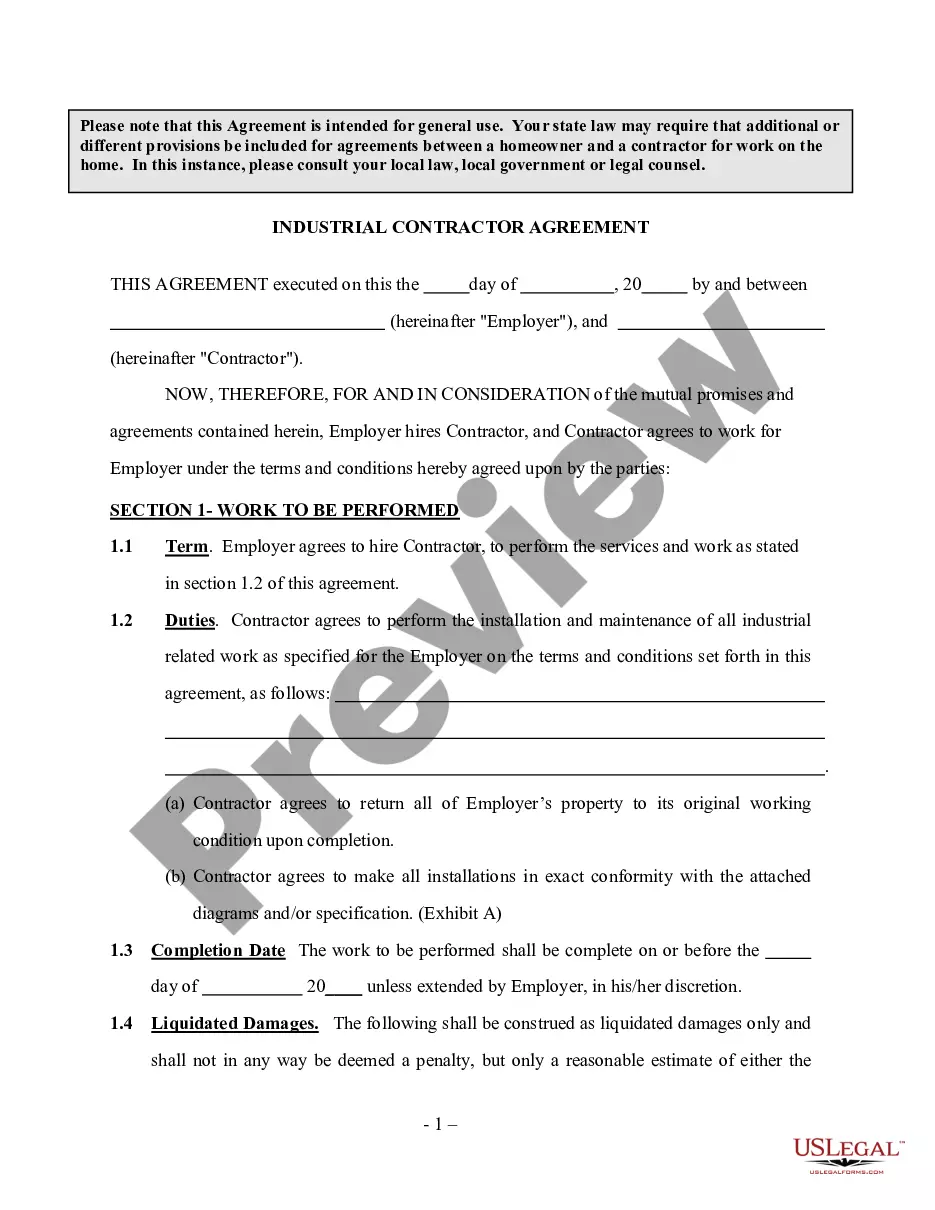
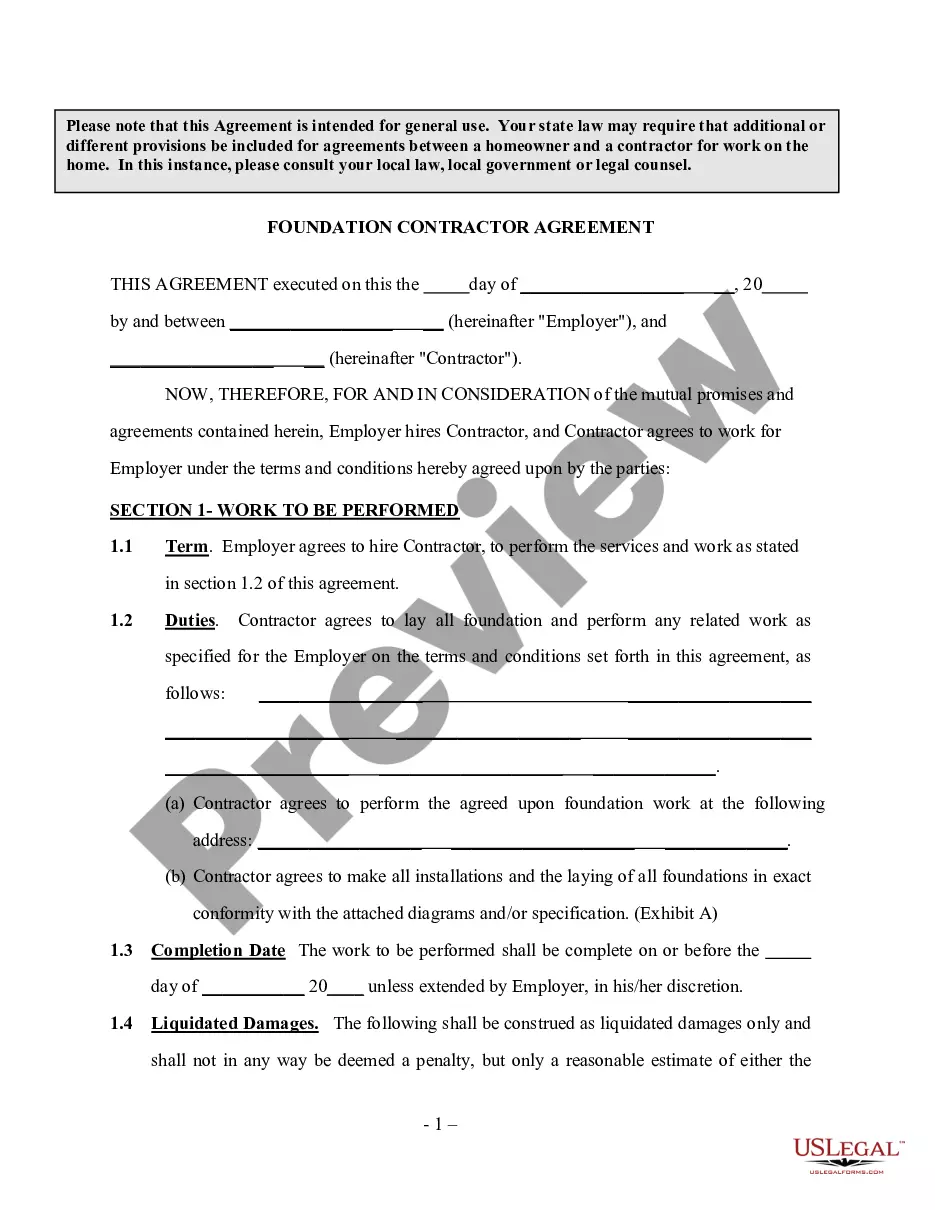
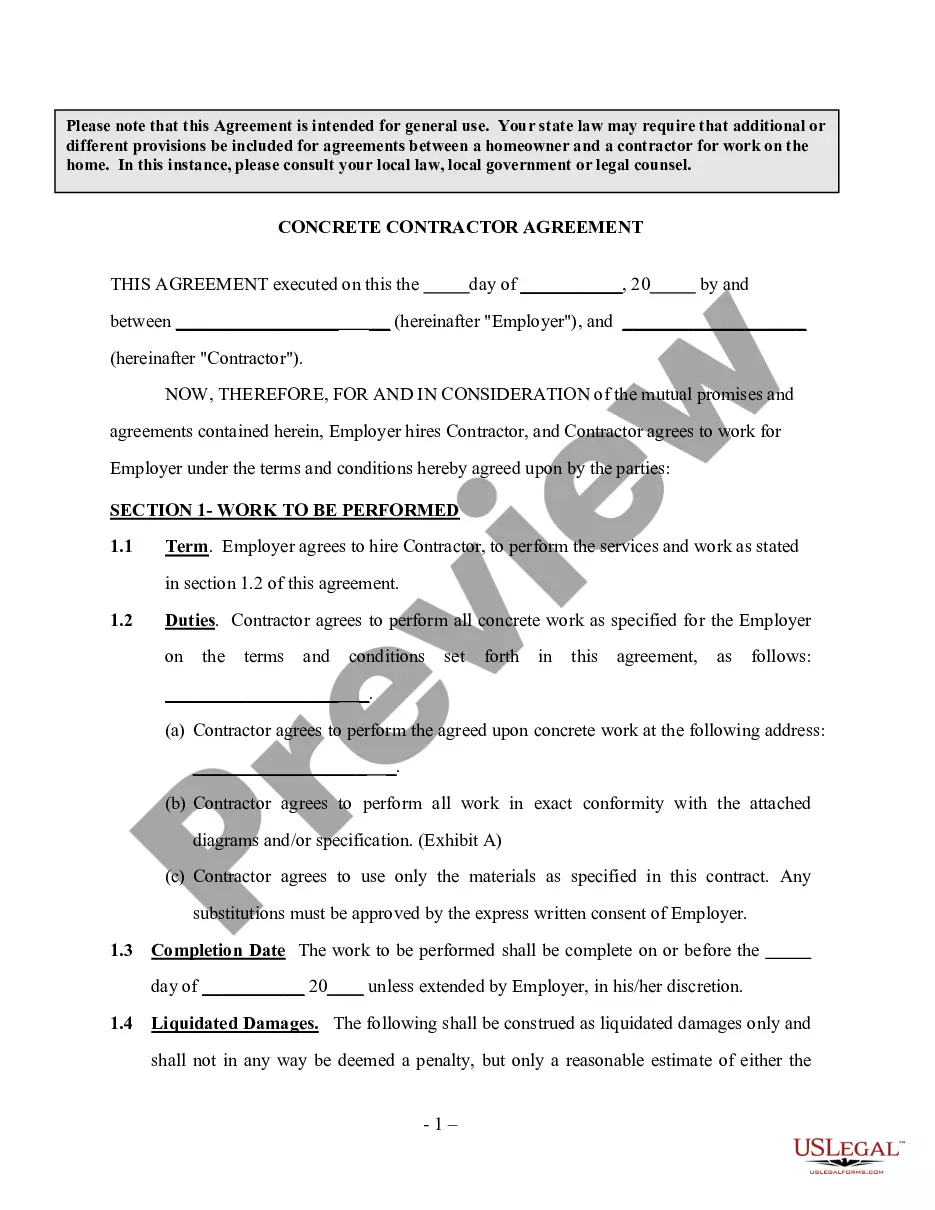
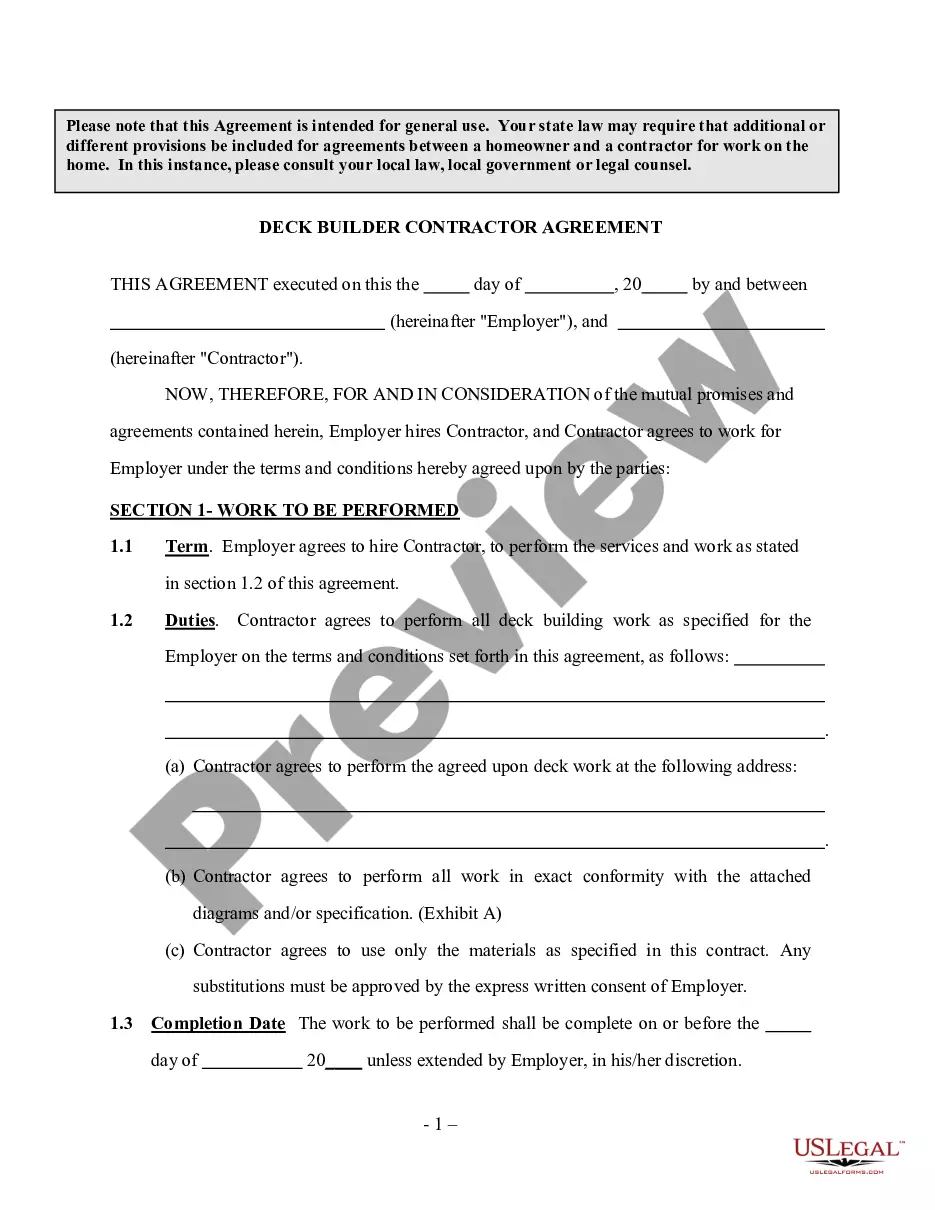
Employer contracts with an independent contractor to provide, install a fence as specified and agreed upon in the contract. Please note that this Agreement is intended for general use. Your state law may require that additional or different provisions be included for agreements between a homeowner and a contractor for work on the home. In this instance, please consult your local law, local government or legal counsel.
South Carolina Fence Contractor Agreement - Self-Employed
State:
Multi-State
Control #:
US-INDC-107
Format:
Word;
Rich Text
Instant download
Description
Free preview

Get your form ready online
Our built-in tools help you complete, sign, share, and store your documents in one place.
Built-in online Word editor
Make edits, fill in missing information, and update formatting in US Legal Forms—just like you would in MS Word.
Export easily
Download a copy, print it, send it by email, or mail it via USPS—whatever works best for your next step.
E-sign your document
Sign and collect signatures with our SignNow integration. Send to multiple recipients, set reminders, and more. Go Premium to unlock E-Sign.
Notarize online 24/7
If this form requires notarization, complete it online through a secure video call—no need to meet a notary in person or wait for an appointment.
Store your document securely
We protect your documents and personal data by following strict security and privacy standards.

Make edits, fill in missing information, and update formatting in US Legal Forms—just like you would in MS Word.

Download a copy, print it, send it by email, or mail it via USPS—whatever works best for your next step.

Sign and collect signatures with our SignNow integration. Send to multiple recipients, set reminders, and more. Go Premium to unlock E-Sign.

If this form requires notarization, complete it online through a secure video call—no need to meet a notary in person or wait for an appointment.

We protect your documents and personal data by following strict security and privacy standards.
Looking for another form?






How to fill out Fence Contractor Agreement - Self-Employed?
You might spend several hours on the internet attempting to locate the legal document template that fulfills the federal and state requirements you need.
US Legal Forms offers a vast array of legal forms that are reviewed by specialists.
You can conveniently obtain or print the South Carolina Fence Contractor Agreement - Self-Employed with my help.
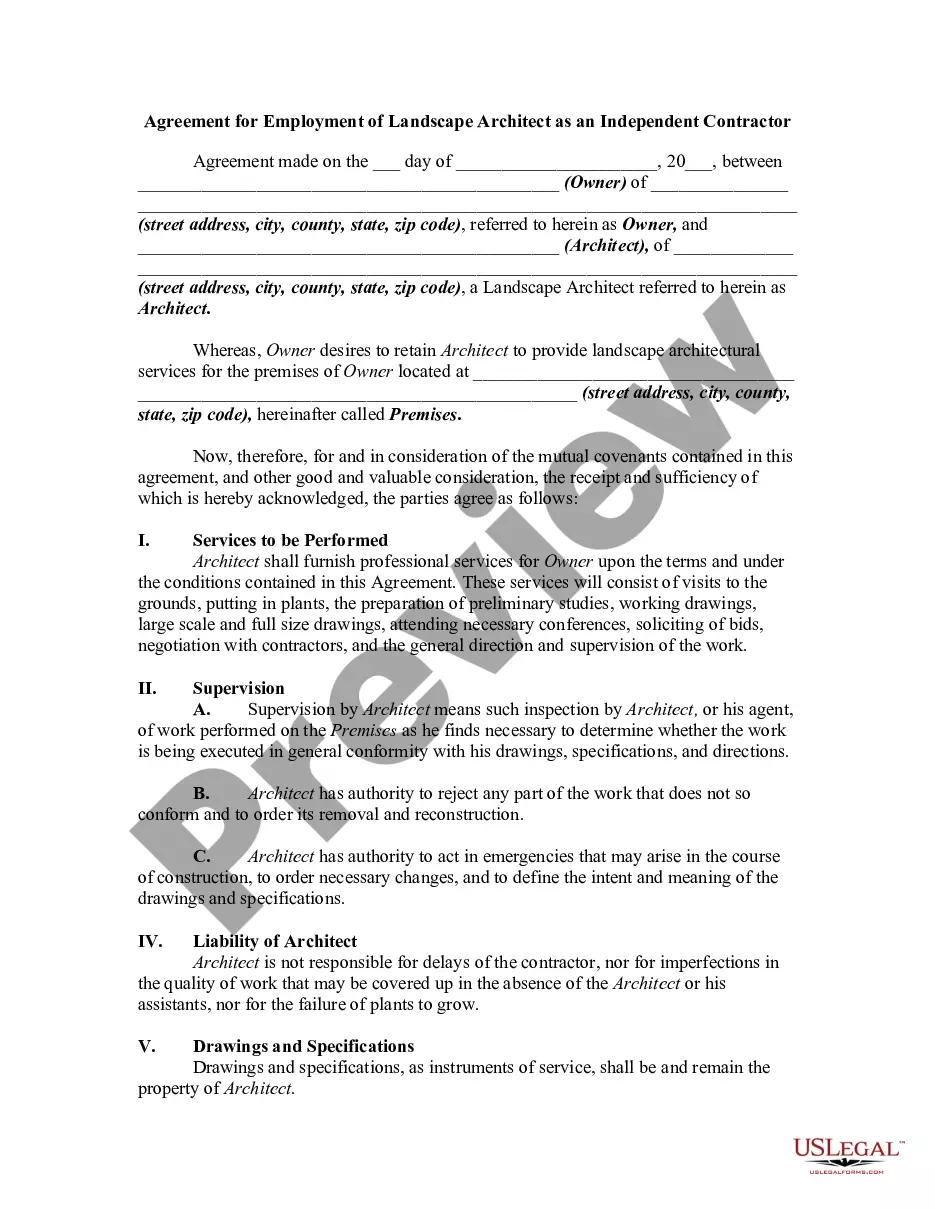
If available, utilize the Preview button to review the document template as well.
- If you have a US Legal Forms account, you can Log In and select the Obtain button.
- Then, you can complete, modify, print, or sign the South Carolina Fence Contractor Agreement - Self-Employed.
- Every legal document template you purchase is yours permanently.
- To get a duplicate of a purchased form, visit the My documents section and click the relevant button.
- If this is your first time using the US Legal Forms website, follow the simple instructions below.
- First, ensure that you have chosen the correct document template for the region/town of your preference.
- Check the form description to confirm you have selected the right form.
Form popularity
FAQ
To create an independent contractor agreement in South Carolina, start by outlining the scope of work, including specific tasks and deadlines. Include payment terms, such as rates and due dates, to ensure both parties are clear on compensation. It is also essential to define the relationship between the parties, emphasizing that this is a South Carolina Fence Contractor Agreement - Self-Employed. You can utilize platforms like US Legal Forms to access templates that simplify the process, ensuring you cover all necessary legal requirements.
An independent contractor generally needs to fill out various documents, including a South Carolina Fence Contractor Agreement - Self-Employed, tax forms such as a W-9, and potentially insurance documents. Depending on the project, additional permits or licenses might be necessary. Proper paperwork helps establish professionalism and ensures compliance with state laws. Look to uslegalforms for effective templates and support in managing your paperwork efficiently.
Filling out an independent contractor form typically requires providing personal details, project descriptions, and payment methods. Be sure to specify the nature of the project and the expected compensation structure. Accuracy is crucial to prevent disputes later. For guidance and accurate templates, uslegalforms offers resources that streamline this process and ensure all necessary information is covered.
The independent contractor agreement in South Carolina is a legally binding document that outlines the terms of work between a contractor and a client. This contract helps clarify responsibilities, payment terms, and project expectations while protecting the rights of both parties. It is essential to utilize a South Carolina Fence Contractor Agreement - Self-Employed to understand the specific requirements and local regulations. Choosing uslegalforms can enhance your understanding and help create compliant agreements.
To write an independent contractor agreement for South Carolina, start by outlining the basic terms, including the nature of the work, deliverables, and deadlines. Clearly define the relationship between the contractor and the client to avoid employee misclassification issues. You might also want to include clauses on confidentiality and termination. A well-structured agreement can aid your success, and tools available on uslegalforms can help you draft a solid contract.
Filling out a South Carolina Fence Contractor Agreement - Self-Employed involves including key information such as the names and addresses of both parties, the project details, payment terms, and timeline for completion. Ensure that you provide clear expectations regarding the scope of work. It's essential to review the contract thoroughly to avoid misunderstandings. Using a platform like uslegalforms can simplify this process by providing templates and guidance.
The independent contractor rule determines the legal relationship between a business and a contractor. Generally, it defines an independent contractor as someone who offers services to a client while maintaining control over how those services are performed. Understanding this rule helps in navigating your obligations and rights. For personalized guidance, consider creating a South Carolina Fence Contractor Agreement - Self-Employed to clarify this relationship effectively.
To protect yourself as an independent contractor, always have a written agreement in place, such as a South Carolina Fence Contractor Agreement - Self-Employed, that outlines your rights and responsibilities. Ensure you have proper insurance coverage to shield yourself from potential liabilities. Regularly communicate with clients and keep thorough records of your work and correspondence. This proactive approach helps safeguard your interests and contributes to a successful working relationship.