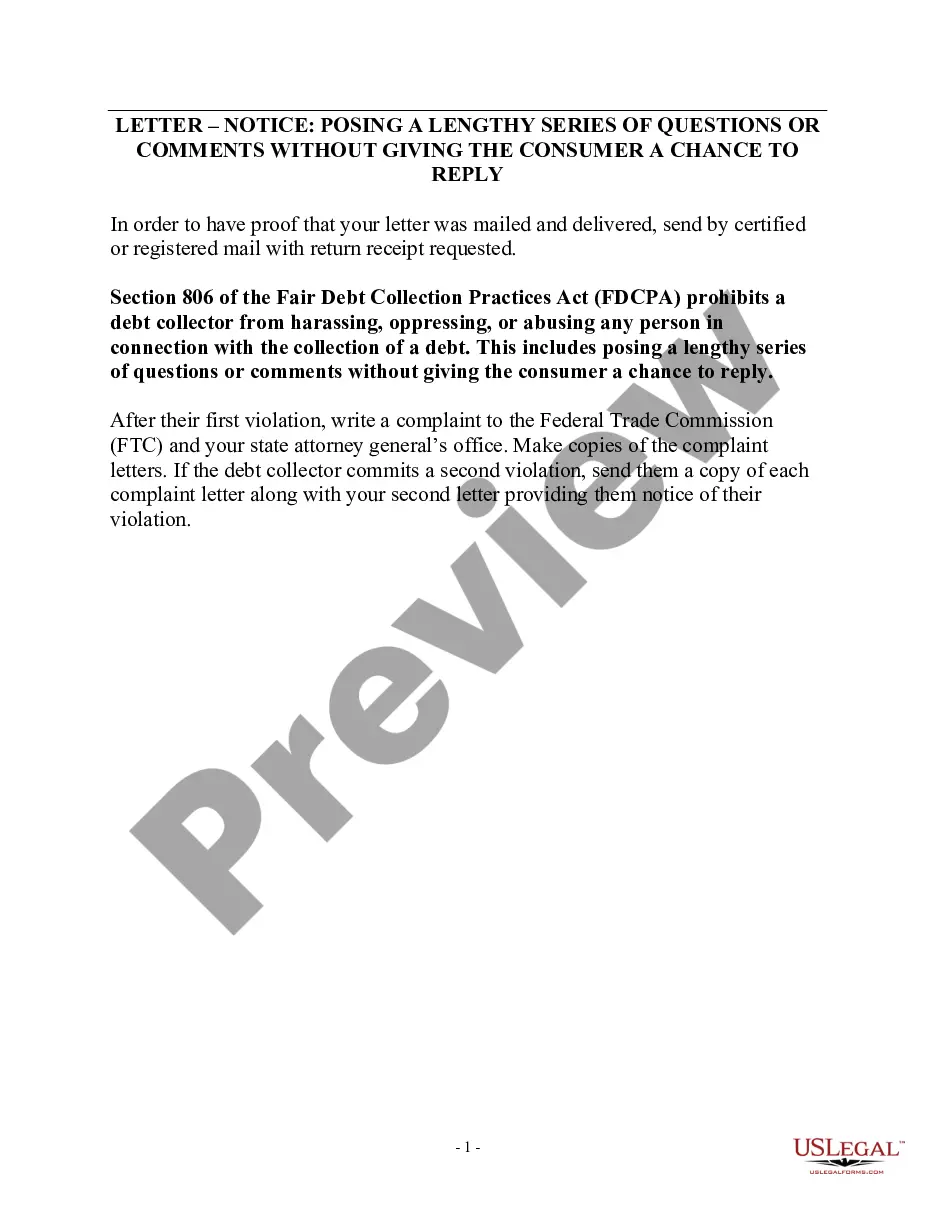
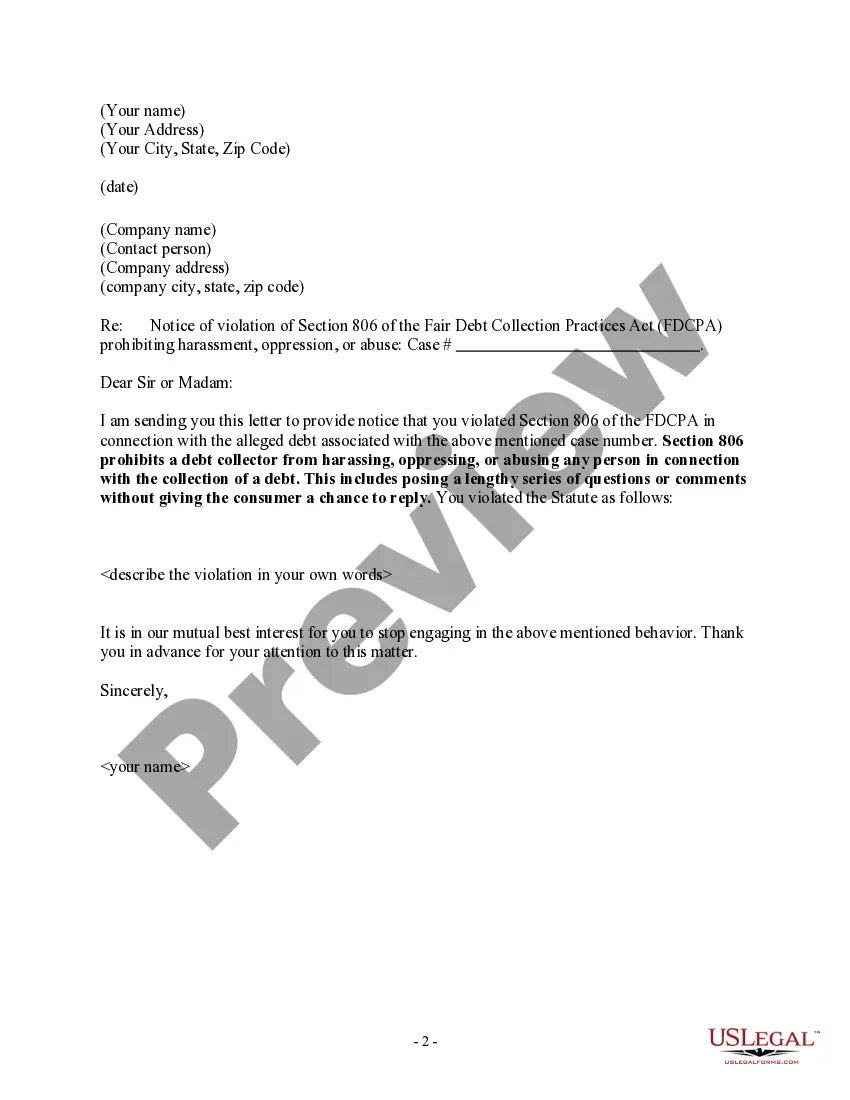
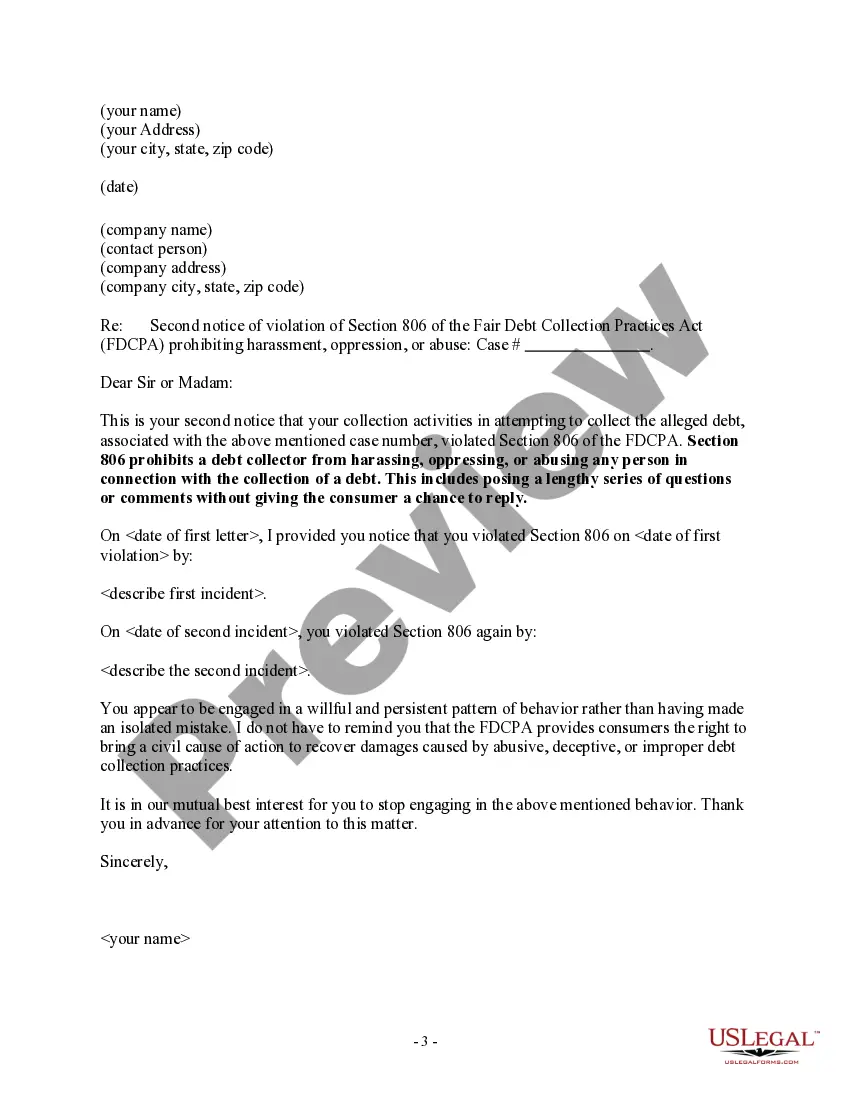
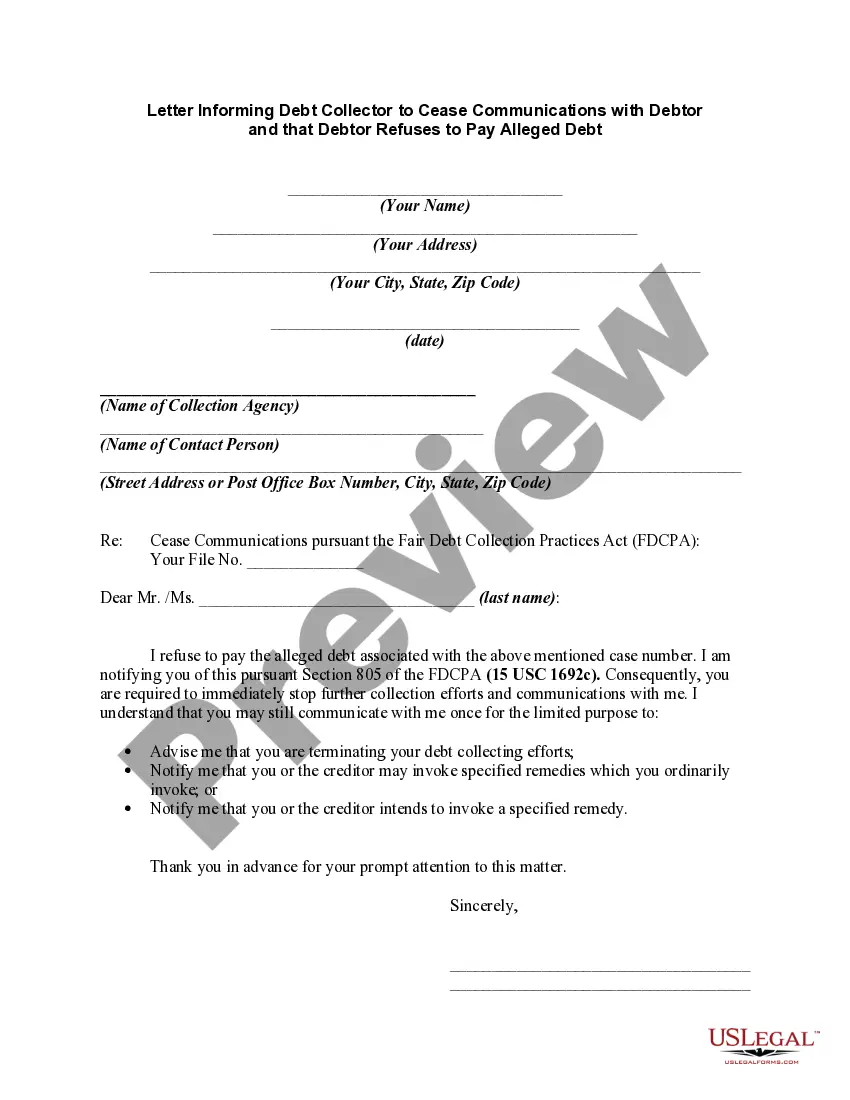
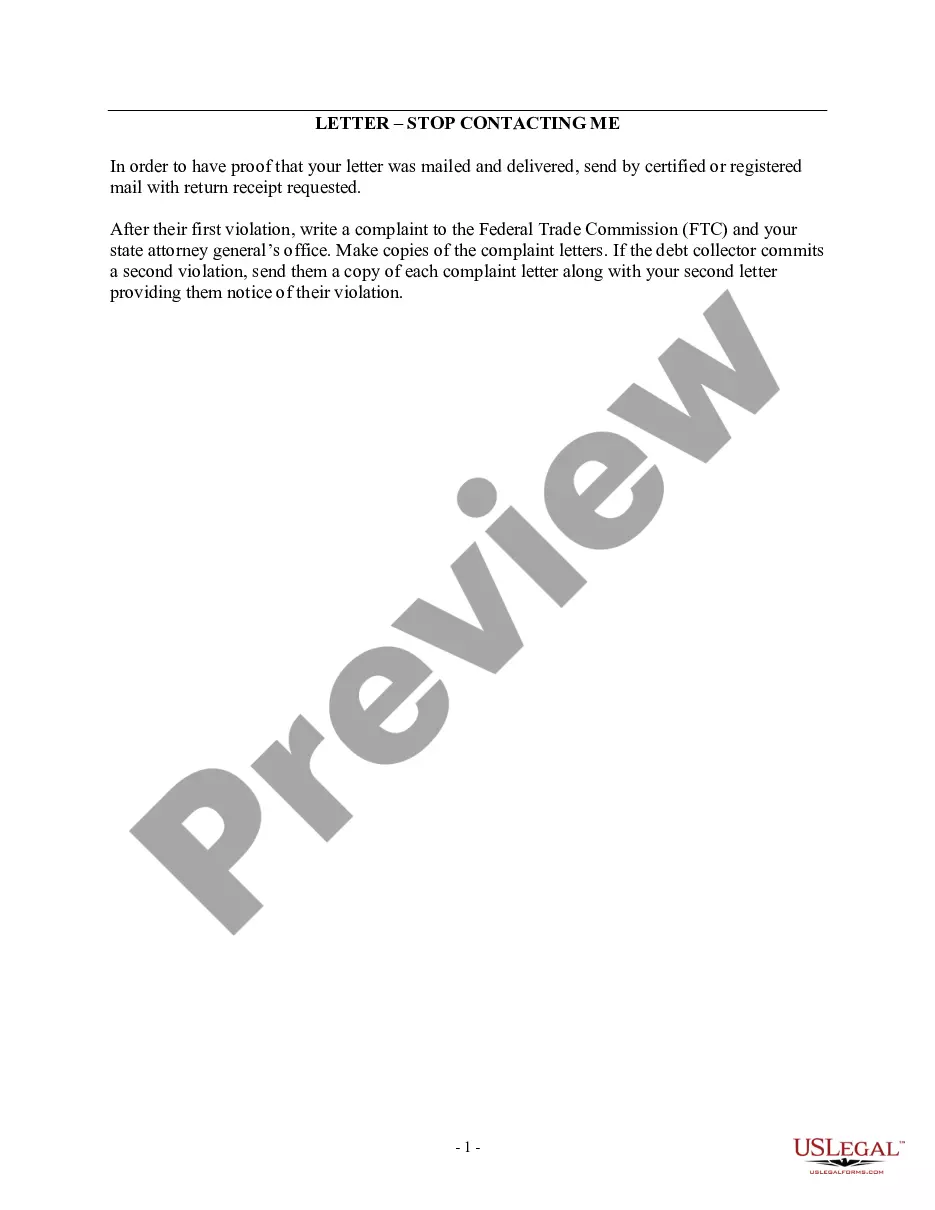
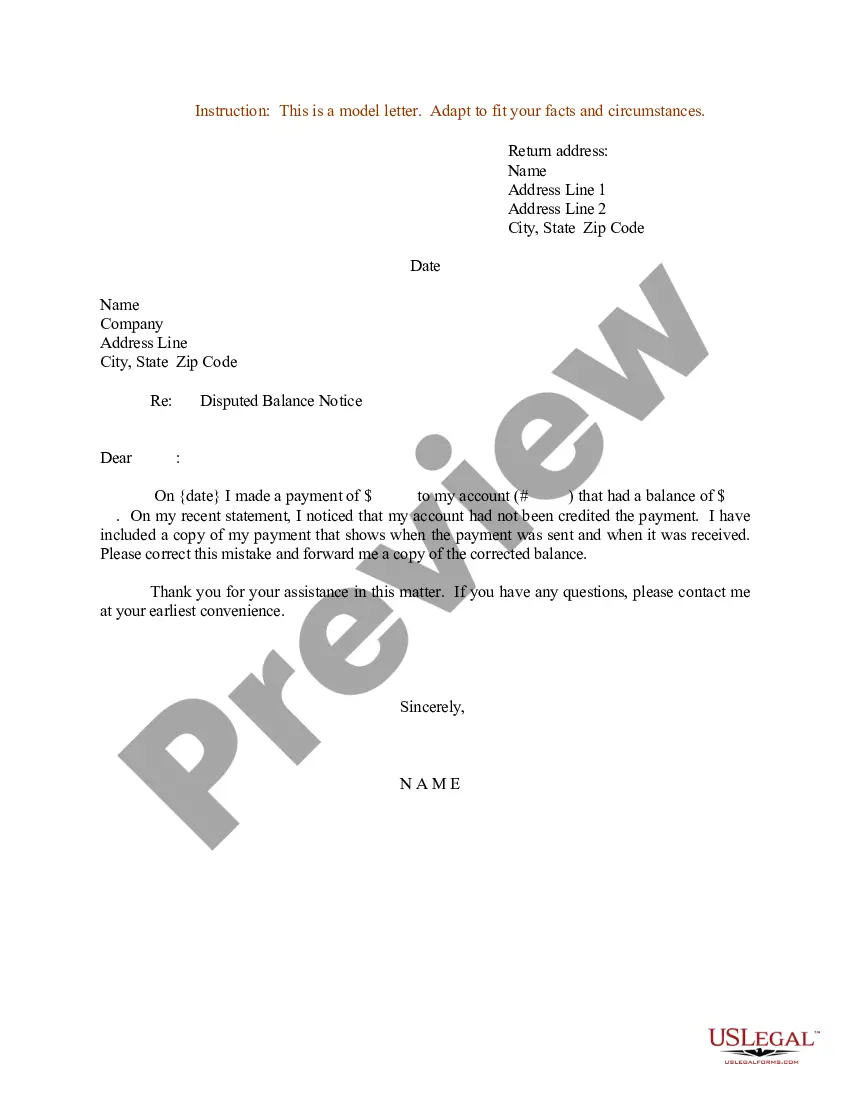
Use this form to notify a debt collector they violated the Fair Debt Collection Practices Act (FDCPA). Receiving notice from a consumer makes it more likely a debt collector will comply with the FDCPA. If they don't comply after receiving notice, your notice letter may help prove that their actions were intentional.
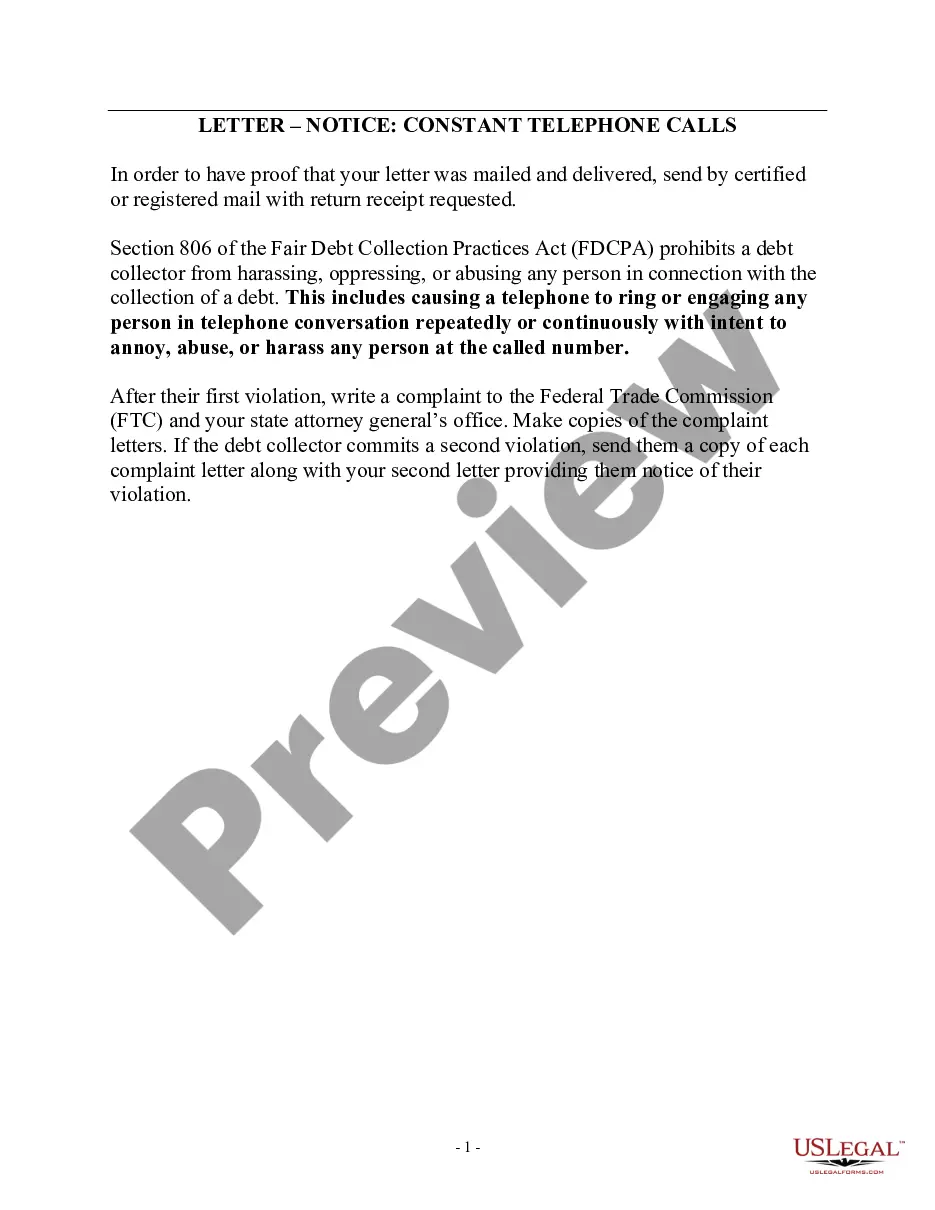
Section 806 of the Fair Debt Collection Practices Act says a debt collector may not harass, oppress, or abuse any person in connection with the collection of a debt. This includes posing a lengthy series of questions or comments to the consumer without giving the consumer a chance to reply.
South Carolina Notice to Debt Collector - Posing Lengthy Series of Questions or Comments
Category:
State:
Multi-State
Control #:
US-DCPA-30
Format:
Word;
Rich Text
Instant download
Description
Free preview
How to fill out Notice To Debt Collector - Posing Lengthy Series Of Questions Or Comments?
If you wish to obtain, procure, or print official document formats, utilize US Legal Forms, the most extensive collection of legal templates accessible online.
Utilize the site’s user-friendly and effective search feature to find the documents you require.
A multitude of templates for business and personal purposes are organized by categories and states, or keywords.
Step 3. If you are not satisfied with the form, use the Search field at the top of the screen to find other versions of the legal form template.
Step 4. After locating the form you need, select the Get Now option. Choose your desired pricing plan and enter your details to create an account.
- Utilize US Legal Forms to acquire the South Carolina Notice to Debt Collector - Asking Extended Series of Questions or Remarks with just a few clicks.
- If you are already a US Legal Forms user, Log In to your account and click the Download option to obtain the South Carolina Notice to Debt Collector - Asking Extended Series of Questions or Remarks.
- You can also access forms you previously downloaded in the My documents tab of your account.
- If this is your first time using US Legal Forms, follow the instructions below.
- Step 1. Ensure you have selected the form for the correct city/state.
- Step 2. Use the Preview option to review the form’s content. Don’t forget to check the summary.
Form popularity
FAQ
You only need to say a few things:This is not a good time. Please call back at 6.I don't believe I owe this debt. Can you send information on it?I prefer to pay the original creditor. Give me your address so I can send you a cease and desist letter.My employer does not allow me to take these calls at work.
Top 7 Debt Collector Scare TacticsExcessive Amount of Calls.Threatening Wage Garnishment.Stating You Have a Deadline.Collecting Old Debts.Pushing You to Pay Your Debt to Improve Your Credit ScoreStating They Do Not Need to Prove Your Debt ExistsSharing Your Debt With Family and Friends.
Debt collectors have a reputationin some cases a well-deserved onefor being obnoxious, rude, and even scary while trying to get borrowers to pay up. The federal Fair Debt Collection Practices Act (FDCPA) was enacted to curb these annoying and abusive behaviors, but some debt collectors flout the law.
In South Carolina, creditors and debt collectors can only come after you for medical and credit card debt for three years. They can pursue you for mortgage debt for twenty years and state tax debt for ten years.
If you choose not to speak with a debt collector over the phone or in writing about a debt, collection activity can still take place. You continue to run the risk of fees and finance charges, as well as being sued or the debt being reported as delinquent to the credit reporting companies.
3 Things You Should NEVER Say To A Debt CollectorAdditional Phone Numbers (other than what they already have)Email Addresses.Mailing Address (unless you intend on coming to a payment agreement)Employer or Past Employers.Family Information (ex.Bank Account Information.Credit Card Number.Social Security Number.
The FDCPA forbids harassing, oppressive, and abusive conductno matter what kind of communication media the debt collector uses. So, this prohibition applies to in-person interactions, telephone calls, audio recordings, paper documents, mail, email, text messages, social media, and other electronic media.
The Fair Debt Collection Practices Act (FDCPA) The FDCPA prohibits debt collection companies from using abusive, unfair or deceptive practices to collect debts from you.
Debt collectors cannot harass or abuse you. They cannot swear, threaten to illegally harm you or your property, threaten you with illegal actions, or falsely threaten you with actions they do not intend to take. They also cannot make repeated calls over a short period to annoy or harass you.
Don't be surprised if debt collectors slide into your DMs. A new rule allows debt collectors to contact you on social media, text or email not just by phone. The rule, which was approved last year by the Consumer Financial Protection Bureau's former president Kathleen L. Kraninger, took effect Tuesday, Nov.