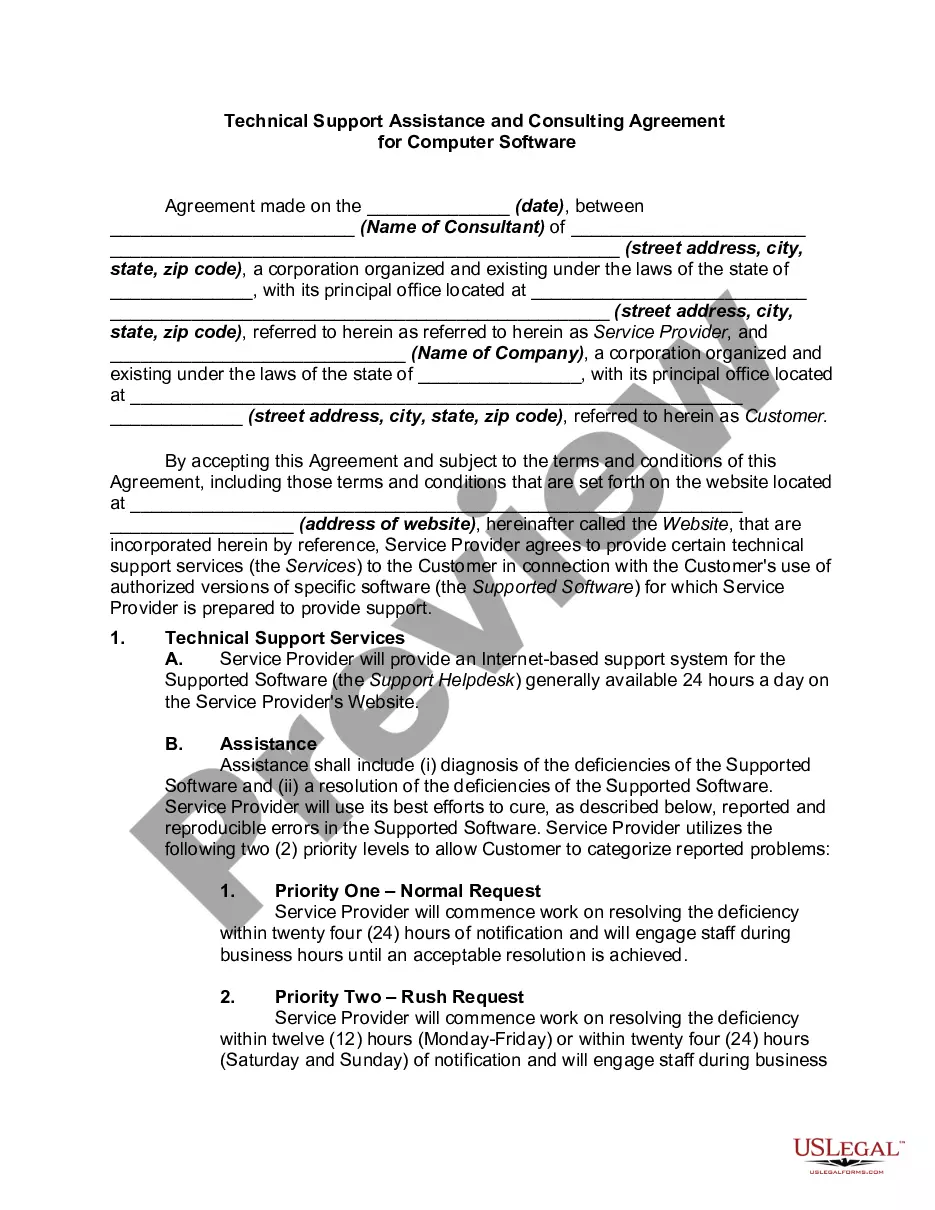
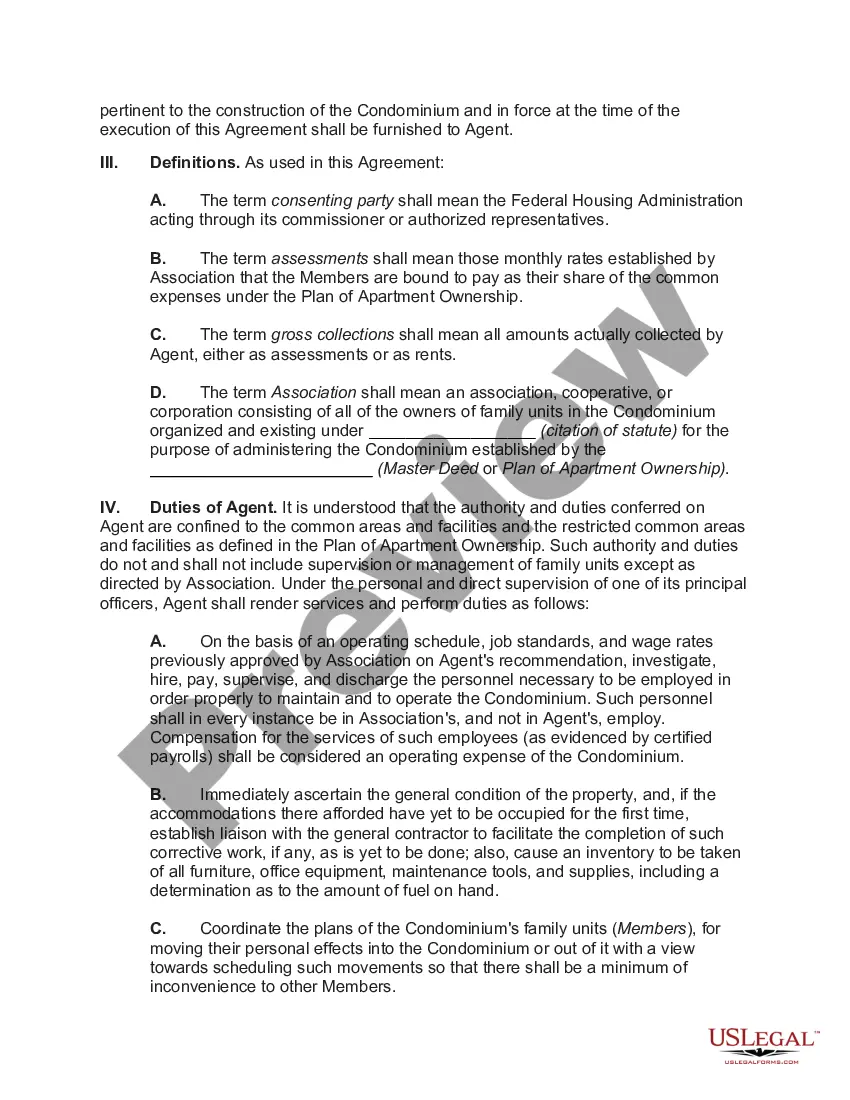
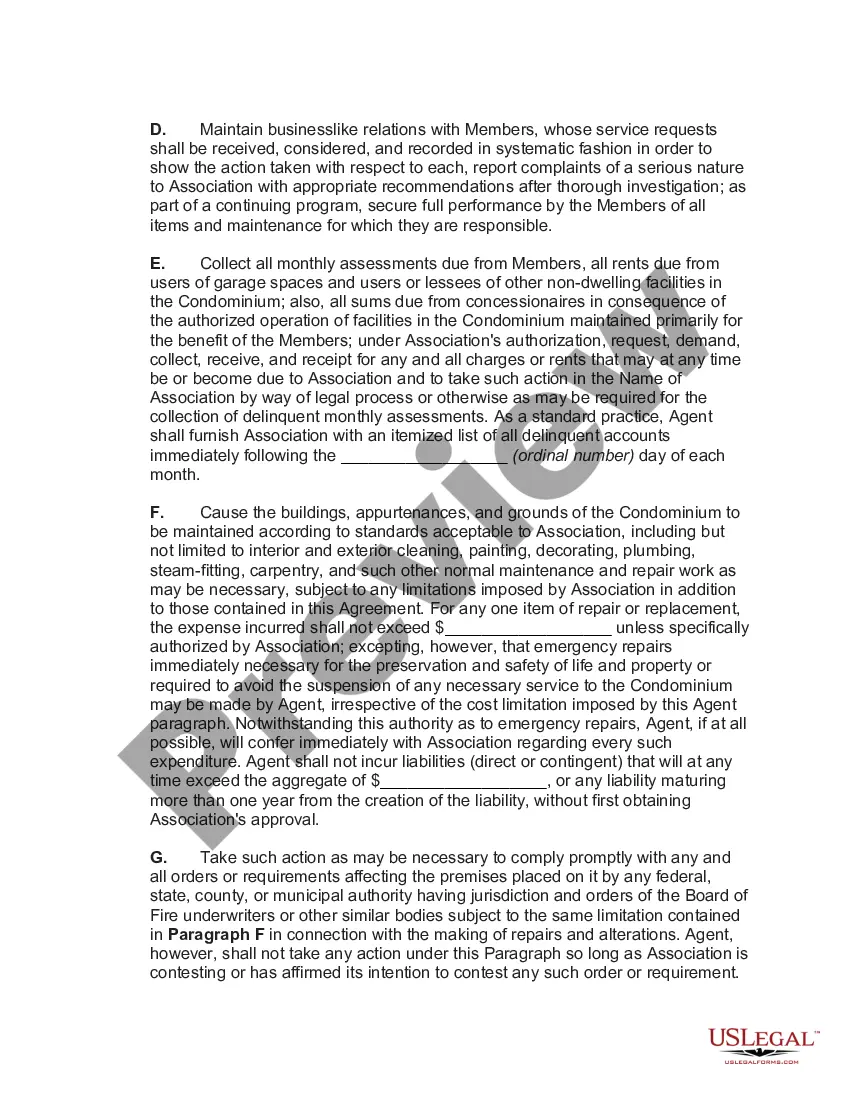
South Carolina Management Agreement for Condominium Between Owners' Association and Managing Agent
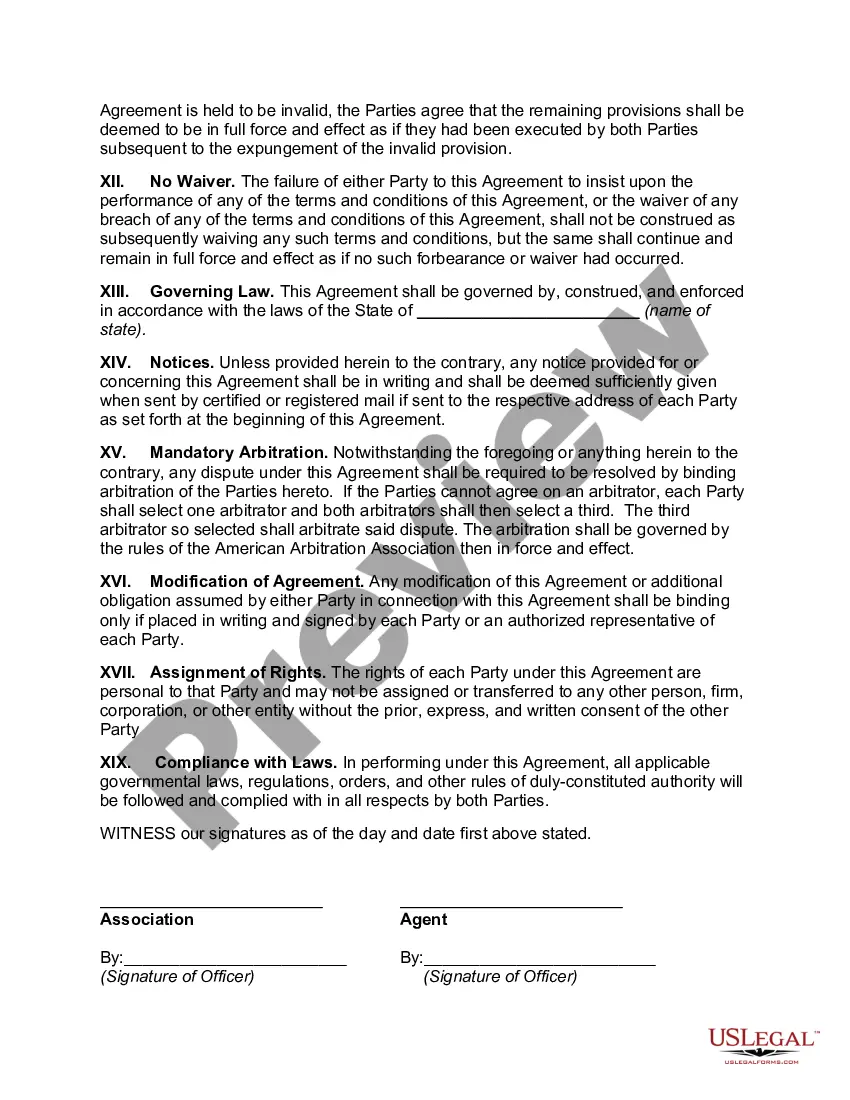
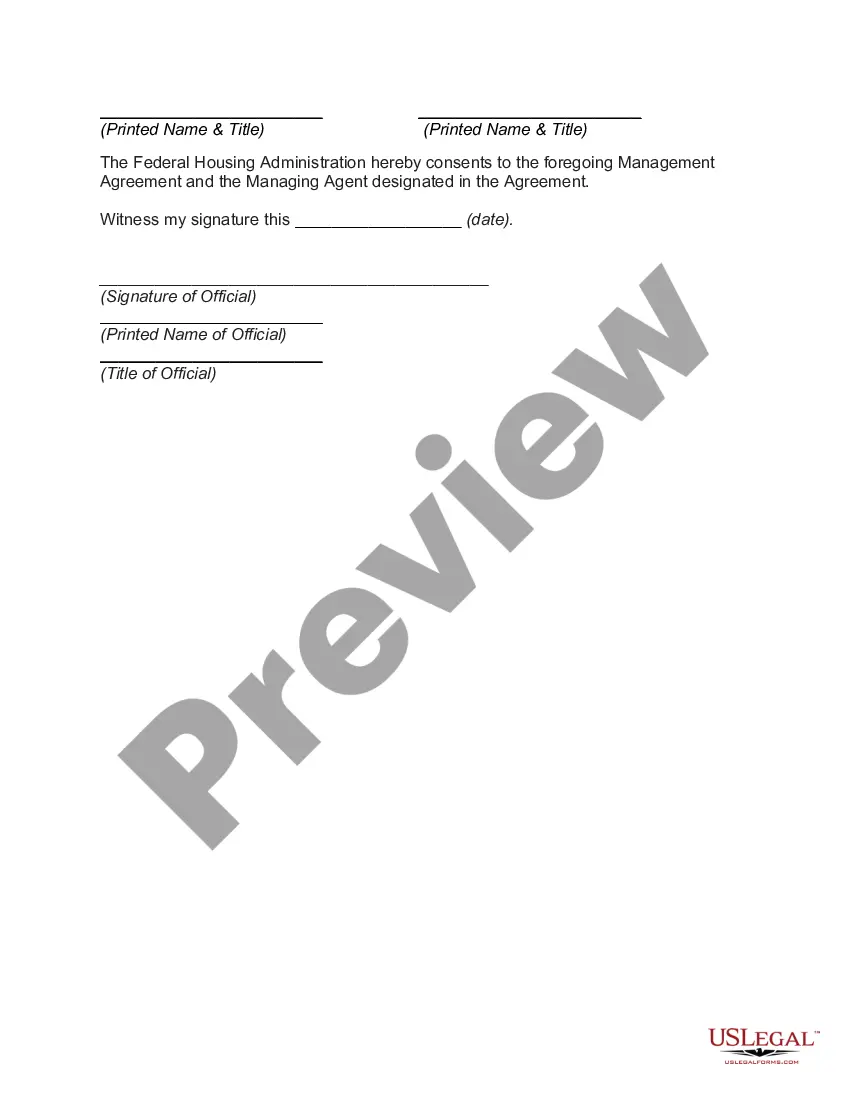
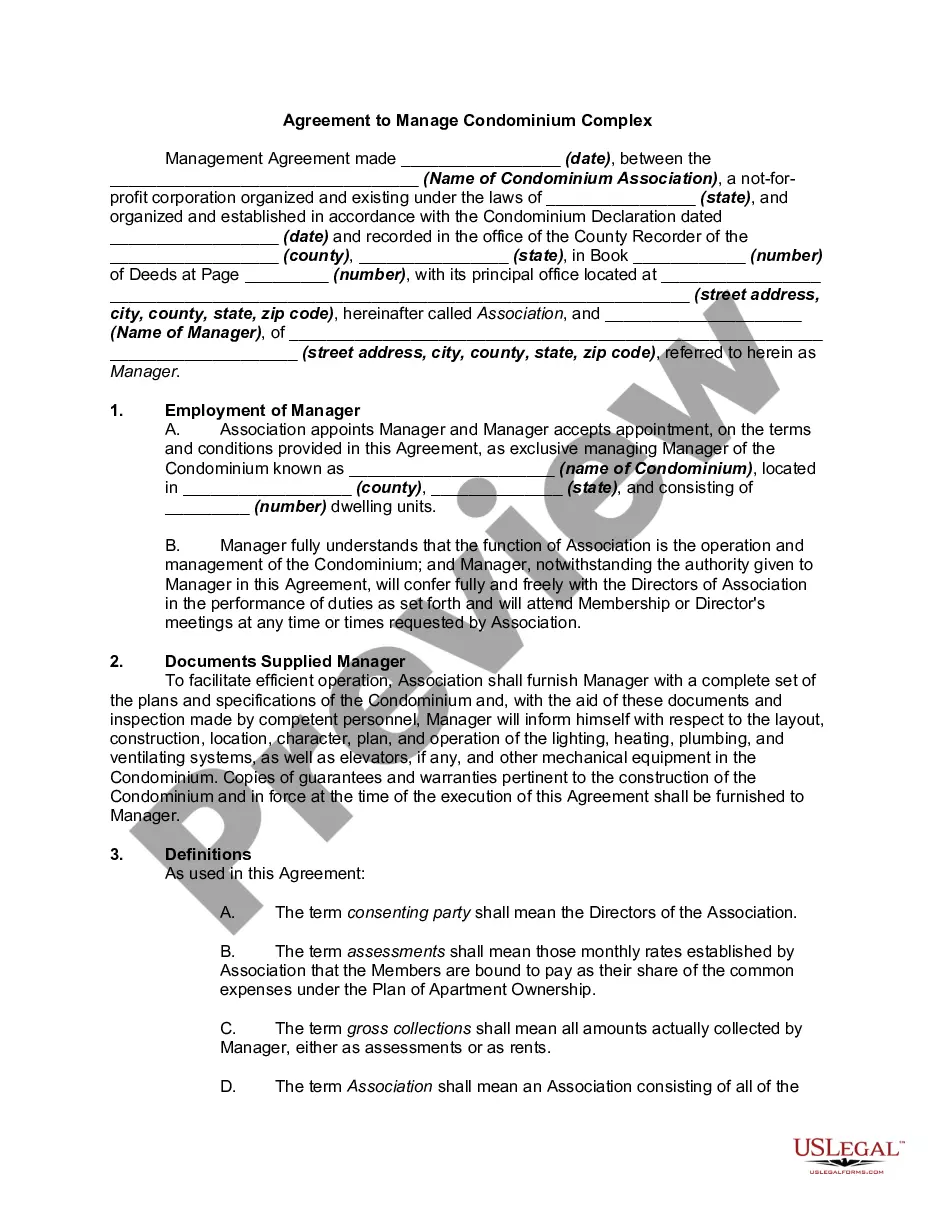
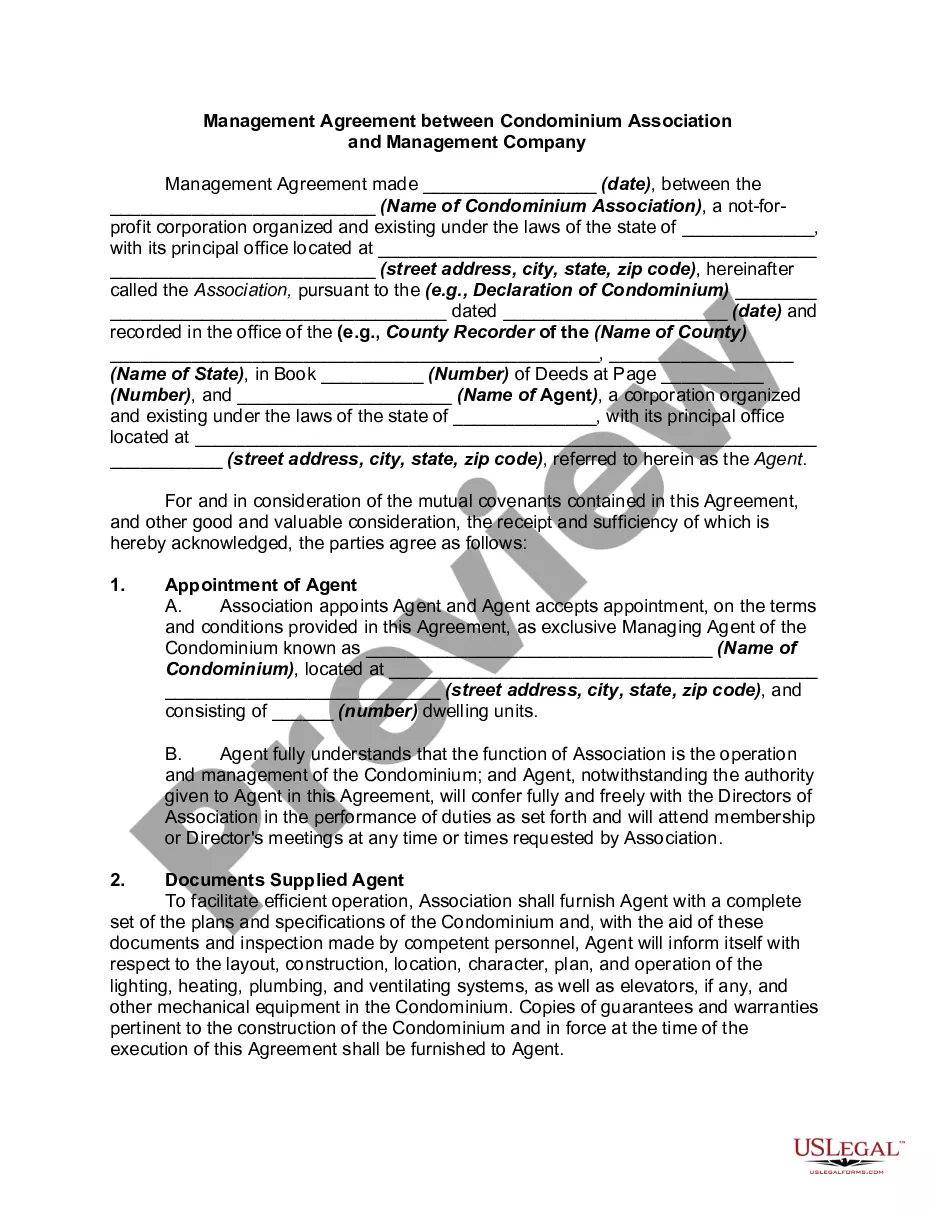
Description
Get your form ready online
Our built-in tools help you complete, sign, share, and store your documents in one place.
Make edits, fill in missing information, and update formatting in US Legal Forms—just like you would in MS Word.
Download a copy, print it, send it by email, or mail it via USPS—whatever works best for your next step.
Sign and collect signatures with our SignNow integration. Send to multiple recipients, set reminders, and more. Go Premium to unlock E-Sign.
If this form requires notarization, complete it online through a secure video call—no need to meet a notary in person or wait for an appointment.
We protect your documents and personal data by following strict security and privacy standards.
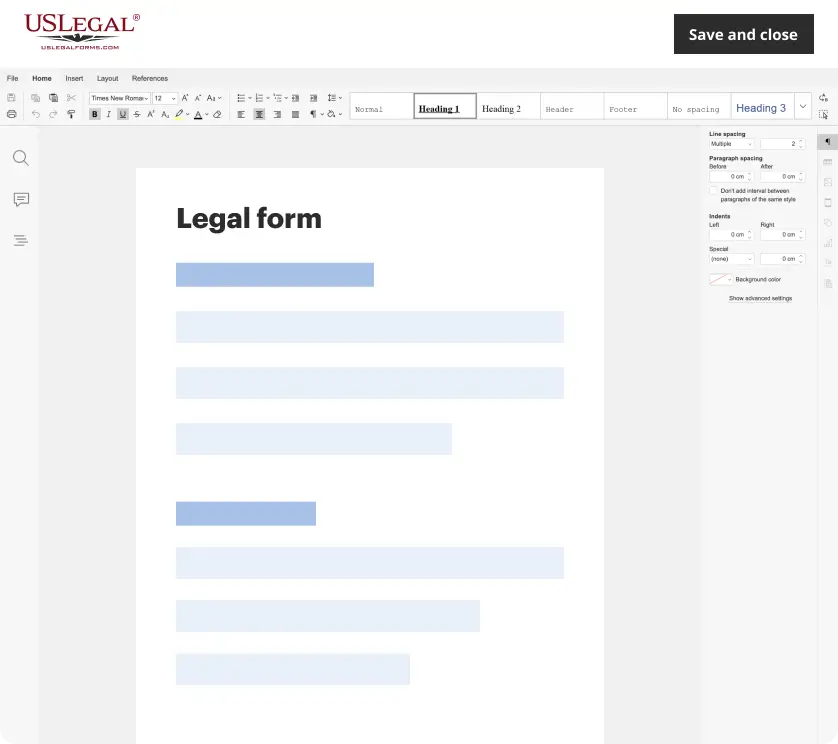
Make edits, fill in missing information, and update formatting in US Legal Forms—just like you would in MS Word.
Download a copy, print it, send it by email, or mail it via USPS—whatever works best for your next step.
Sign and collect signatures with our SignNow integration. Send to multiple recipients, set reminders, and more. Go Premium to unlock E-Sign.
If this form requires notarization, complete it online through a secure video call—no need to meet a notary in person or wait for an appointment.
We protect your documents and personal data by following strict security and privacy standards.
Looking for another form?



How to fill out Management Agreement For Condominium Between Owners' Association And Managing Agent?
It is feasible to spend countless hours online searching for the legal document template that meets the federal and state requirements you need.
US Legal Forms offers numerous legal templates that have been evaluated by professionals.
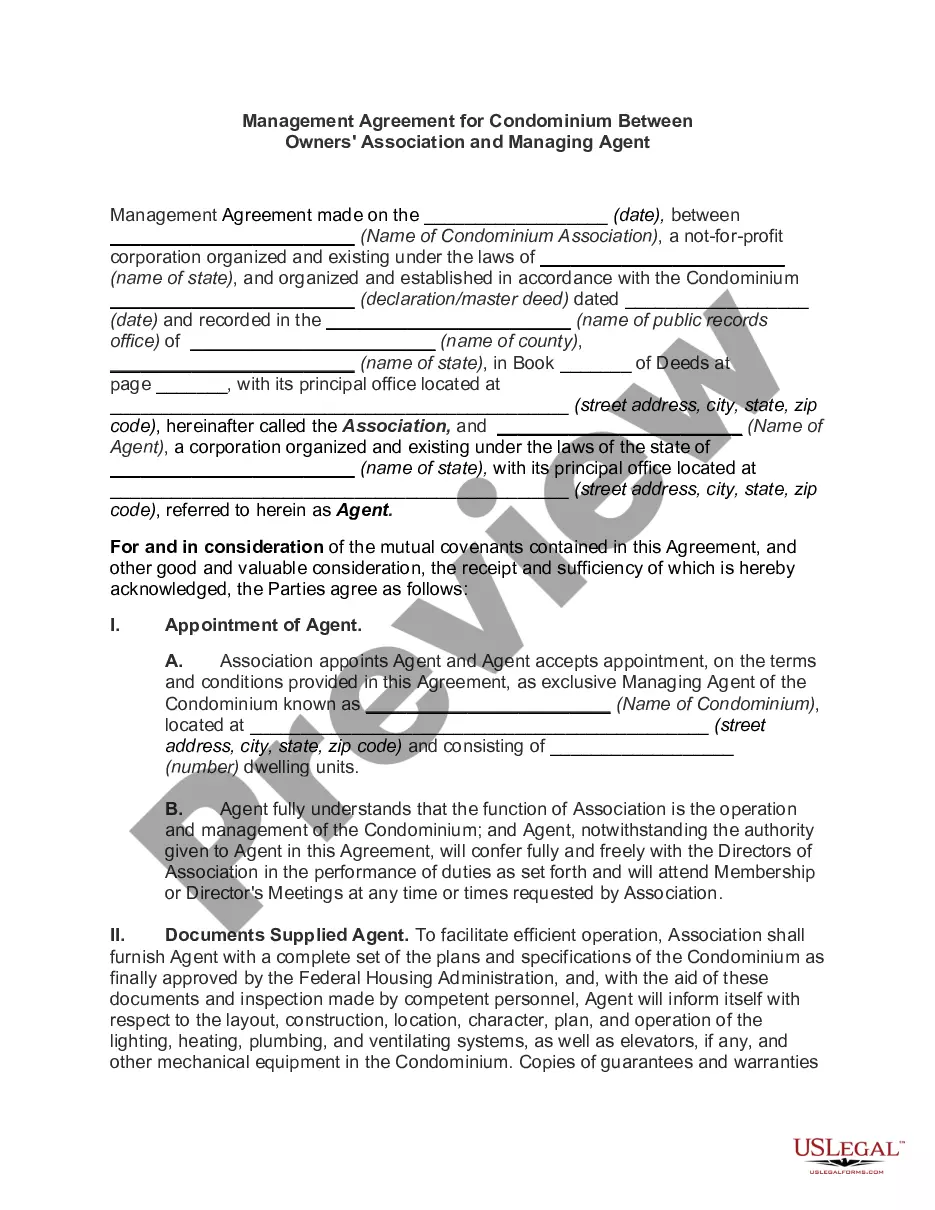
You can effortlessly obtain or create the South Carolina Management Agreement for Condominium Between Owners' Association and Managing Agent from our services.
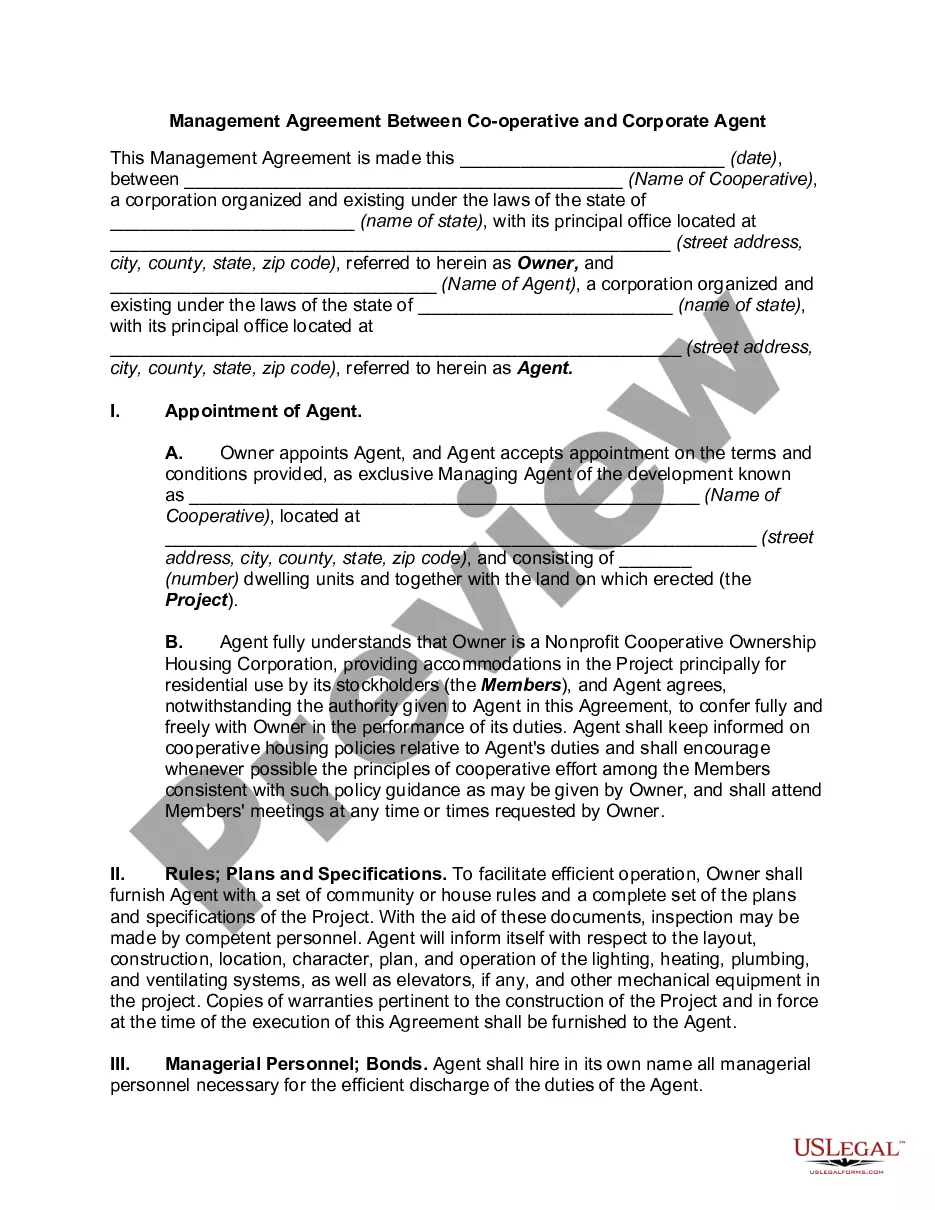
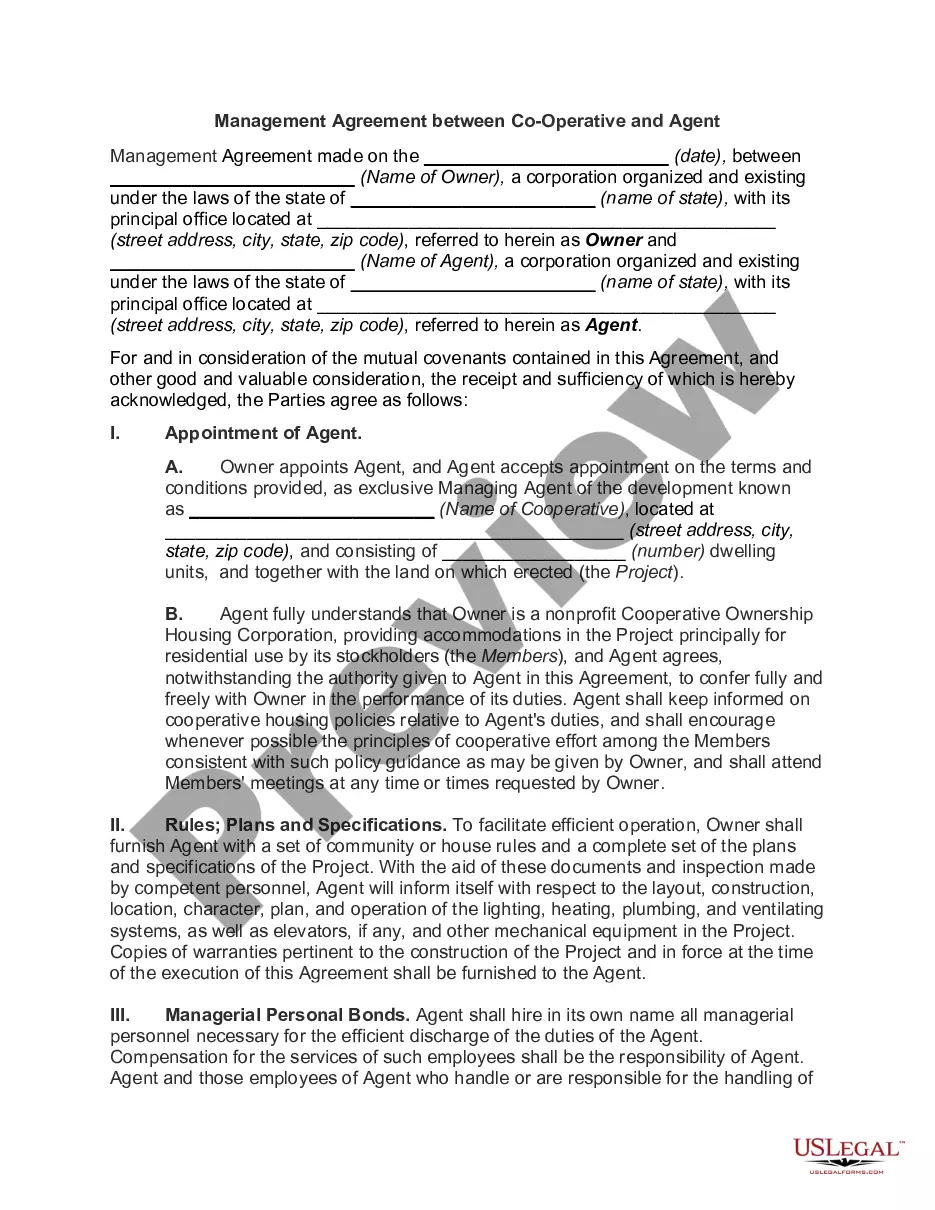
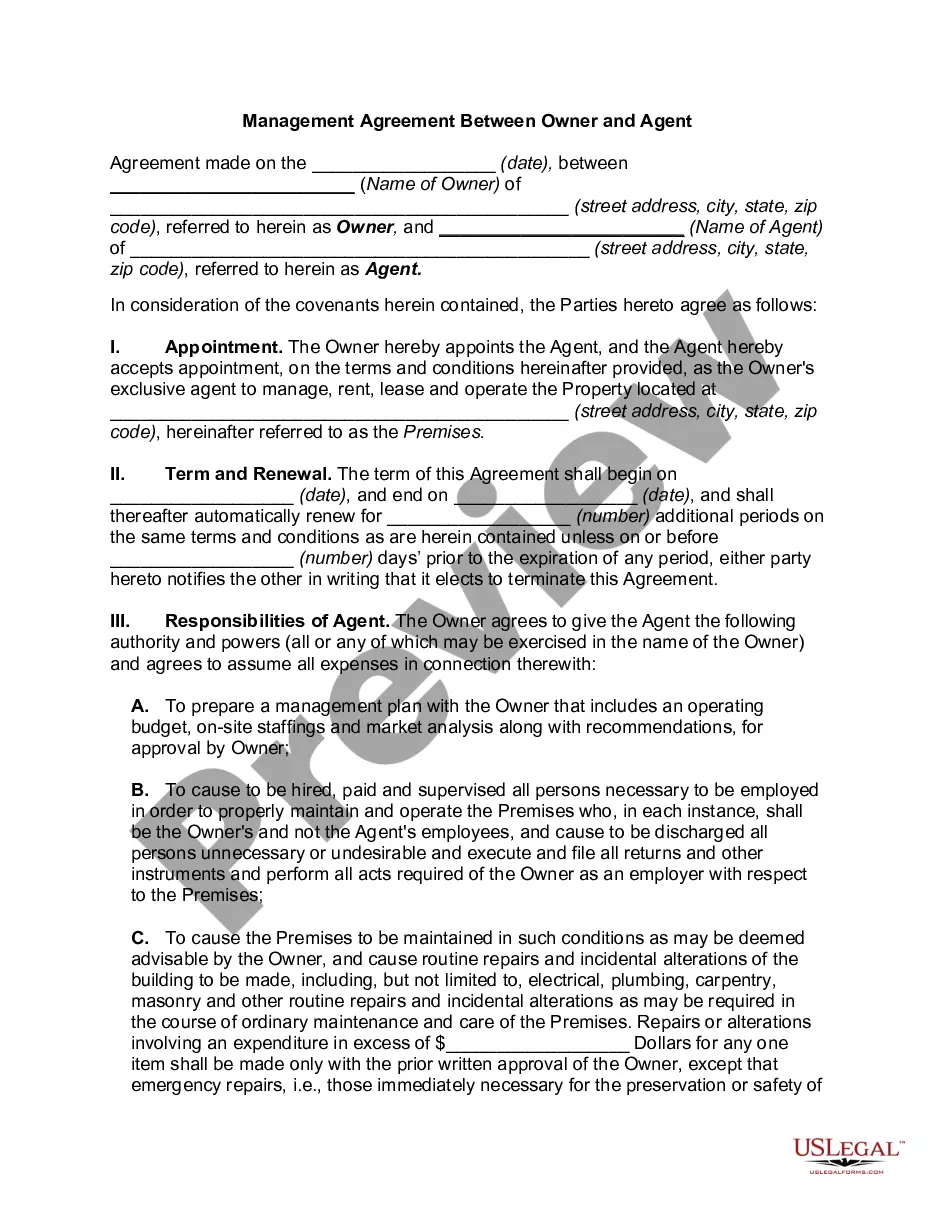
If available, use the Review button to look through the document template as well.
- If you already possess a US Legal Forms account, you may Log In and click the Obtain button.
- After that, you may complete, modify, generate, or sign the South Carolina Management Agreement for Condominium Between Owners' Association and Managing Agent.
- Each legal document template you acquire is yours indefinitely.
- To obtain another copy of a purchased document, navigate to the My documents tab and click the appropriate button.
- If you are using the US Legal Forms website for the first time, follow the simple instructions below.
- First, ensure you have selected the correct document template for the county/town of your choice.
- Review the document description to confirm you have chosen the correct template.
Form popularity
FAQ
Property regimes refer to the political, legal, and economic systems through which societies order their relationships between people with respect to valued things. Anthropologists and legal scholars have long been engaged in a dynamic dialogue about the organization and practice of property regimes.
Each co-owner, or owner of an apartment in a horizontal property regime, acquires condominium ownership, and owns his or her individual apartment, and has a common right to share, with other co-owners, in the common areas of the property.
A Horizontal Property Regime (HPR) is a zoning policy which essentially allows for two new houses to be built on a piece of land that was previously zoned for just one house.
Individuals must be 18 to be licensed as a property manager and 21 to be licensed as a property manager-in-charge.
Property management agencies in Texas are required to have an active real estate broker's license. This is because leasing and renting, which are critical components of property management, are considered real estate activities by current Texas real estate licensing laws.
A condo's management company is responsible for maintaining the property and ensuring that it is up to environmental standards, communicating with homeowners about CC&R violations, managing the condos' finances, handling questions and concerns from homeowners, obtaining and managing the condo's insurance policy and
A horizontal property regime is not the same as a planned urban development or PUD. A PUD is a large community that typically shares a common area and amenities. Typically a PUD will have 100+ individual properties and there will be a community pool, tennis court, outdoor entertainment space, and even a clubhouse.
Individuals must be 18 to be licensed as a property manager and 21 to be licensed as a property manager-in-charge.
A horizontal property regime allows units within one building to be sold and owned separately and owners of those units to own a common right in common areas of the building and property.
NO. South Carolina has a separate limited license for property managers. Real estate brokers and salespeople may also be involved in property management. Property managers must be licensed under a "property manager-in-charge" or a "broker-in-charge."