South Carolina Domestic Partnership Cohabitation Agreement
Description
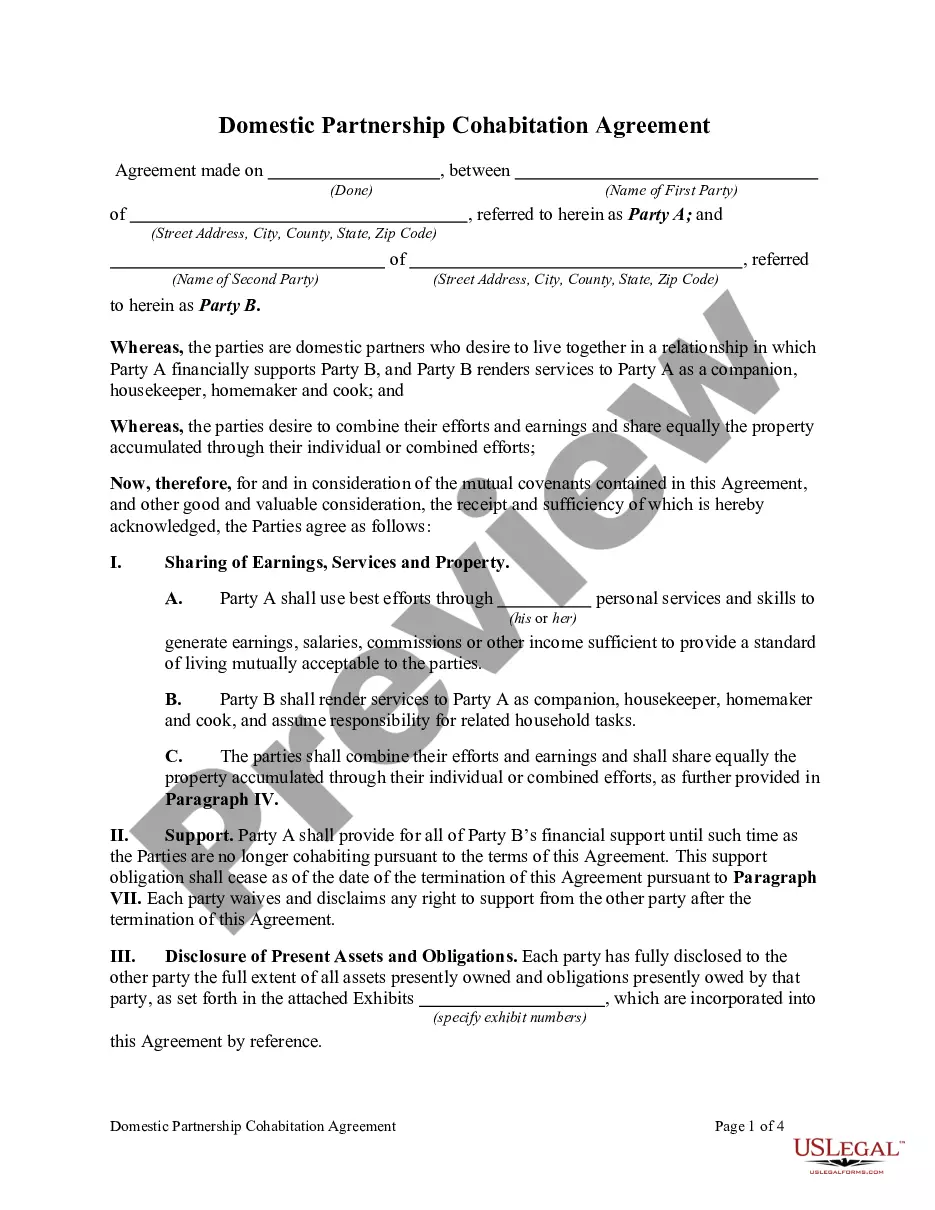
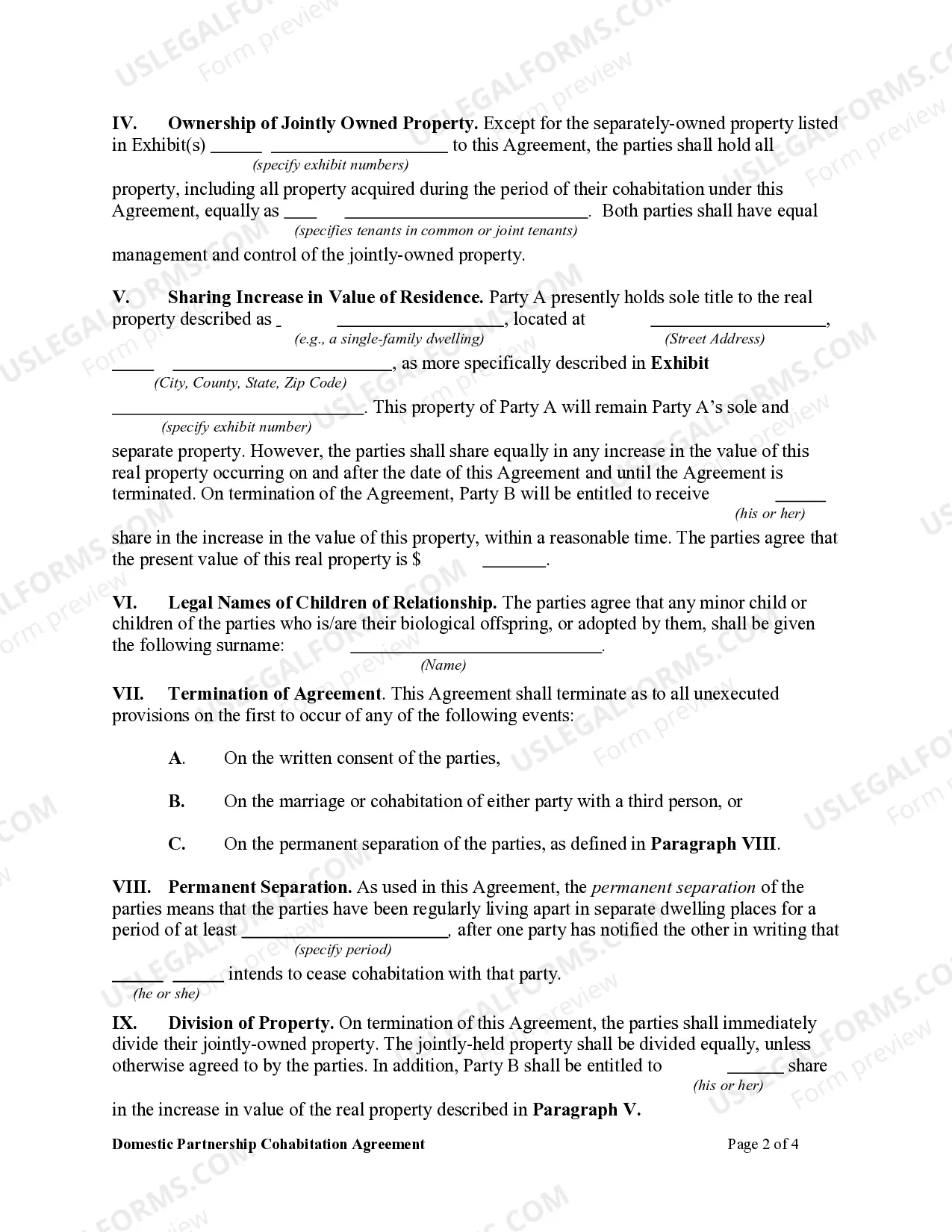
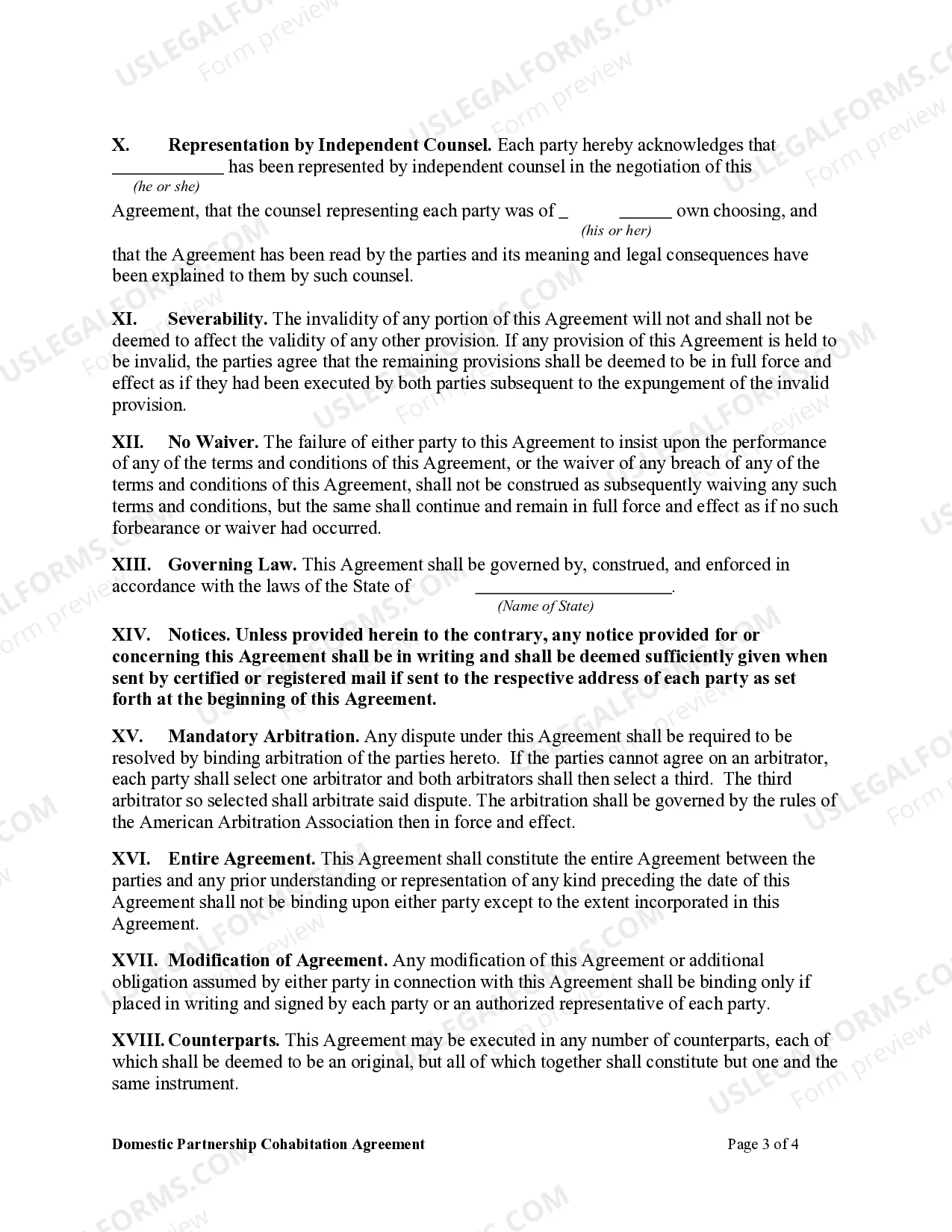
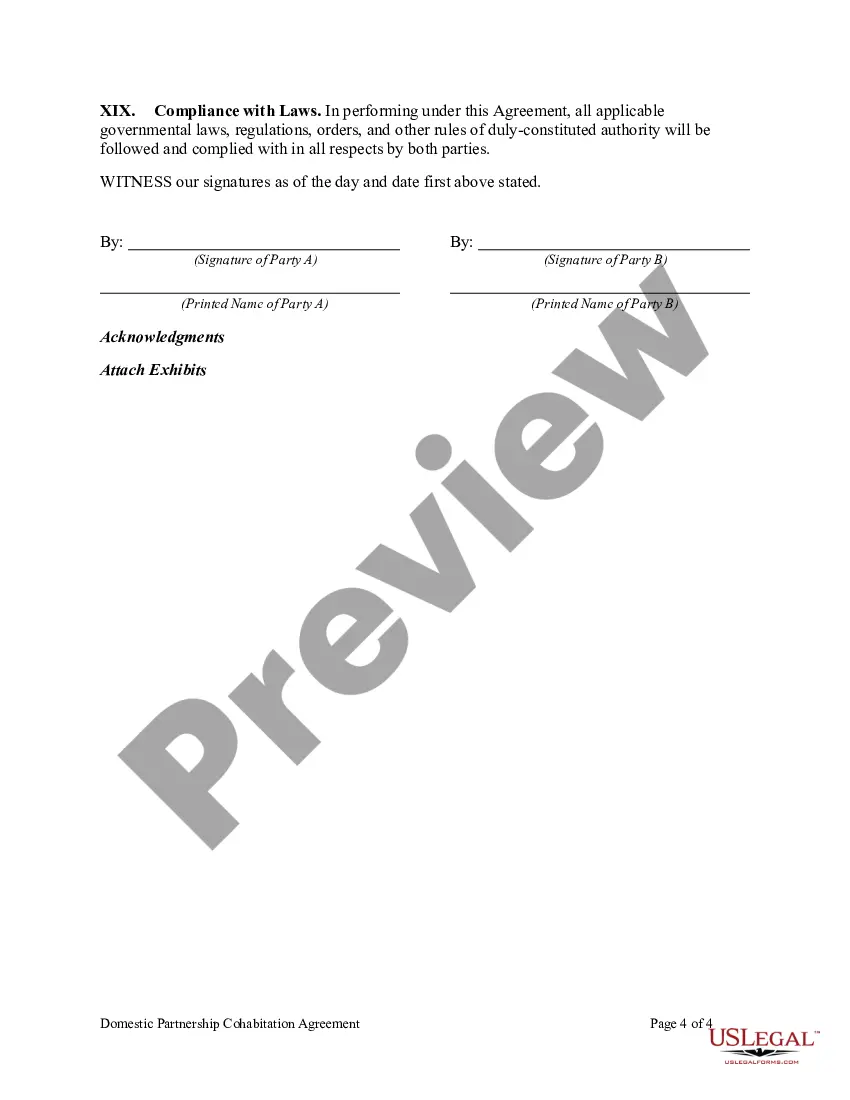
Get your form ready online
Our built-in tools help you complete, sign, share, and store your documents in one place.
Make edits, fill in missing information, and update formatting in US Legal Forms—just like you would in MS Word.
Download a copy, print it, send it by email, or mail it via USPS—whatever works best for your next step.
Sign and collect signatures with our SignNow integration. Send to multiple recipients, set reminders, and more. Go Premium to unlock E-Sign.
If this form requires notarization, complete it online through a secure video call—no need to meet a notary in person or wait for an appointment.
We protect your documents and personal data by following strict security and privacy standards.

Make edits, fill in missing information, and update formatting in US Legal Forms—just like you would in MS Word.

Download a copy, print it, send it by email, or mail it via USPS—whatever works best for your next step.

Sign and collect signatures with our SignNow integration. Send to multiple recipients, set reminders, and more. Go Premium to unlock E-Sign.

If this form requires notarization, complete it online through a secure video call—no need to meet a notary in person or wait for an appointment.

We protect your documents and personal data by following strict security and privacy standards.
Looking for another form?

How to fill out Domestic Partnership Cohabitation Agreement?
Are you currently in a circumstance where you require documents for either professional or personal purposes on a daily basis.
There is a wide range of legal document templates accessible online, but finding reliable ones isn’t easy.
US Legal Forms offers thousands of document templates, such as the South Carolina Domestic Partnership Cohabitation Agreement, which are designed to comply with federal and state regulations.
Select a preferred file format and download your copy.
Access all the document templates you have purchased in the My documents section. You can retrieve another version of the South Carolina Domestic Partnership Cohabitation Agreement at any time if needed. Just follow the necessary form to download or print the document template.
- If you are already familiar with the US Legal Forms website and have an account, simply Log In.
- Then, you can download the South Carolina Domestic Partnership Cohabitation Agreement template.
- If you do not have an account and wish to start using US Legal Forms, follow these steps.
- Select the document you need and ensure it is for the correct city/region.
- Use the Review button to examine the form.
- Check the information to confirm you have selected the right document.
- If the form isn’t what you are looking for, utilize the Lookup field to find the form that fits your needs.
- If you find the correct document, click on Purchase now.
- Choose the pricing plan you want, fill in the required information to create your account, and pay for your order using PayPal or a credit card.
Form popularity
FAQ
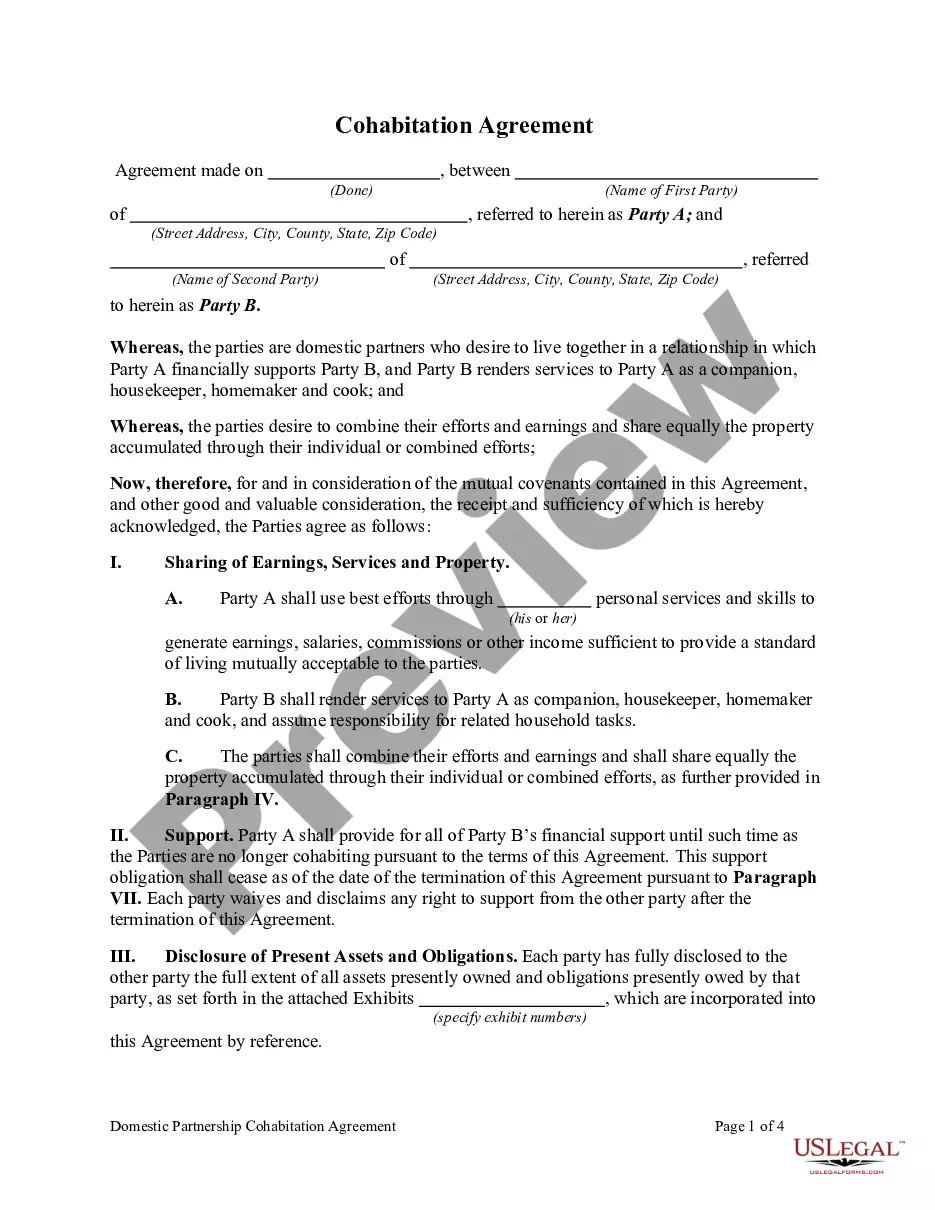
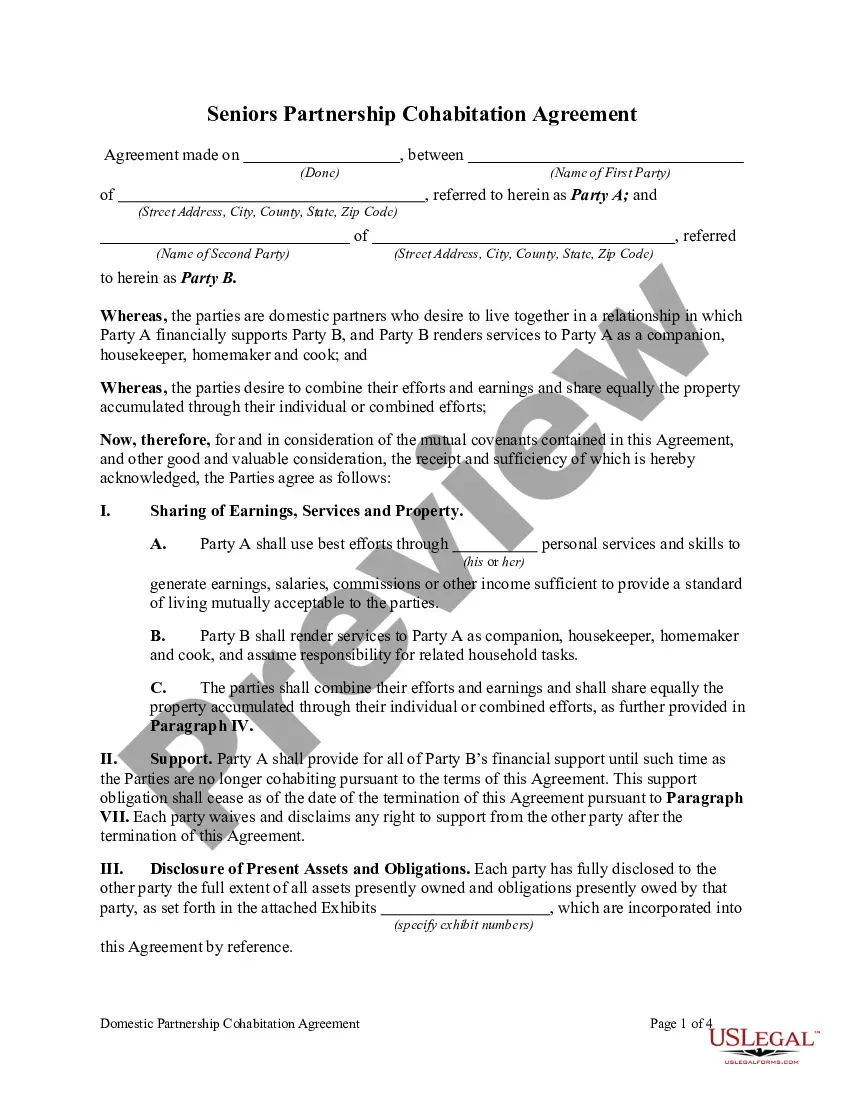
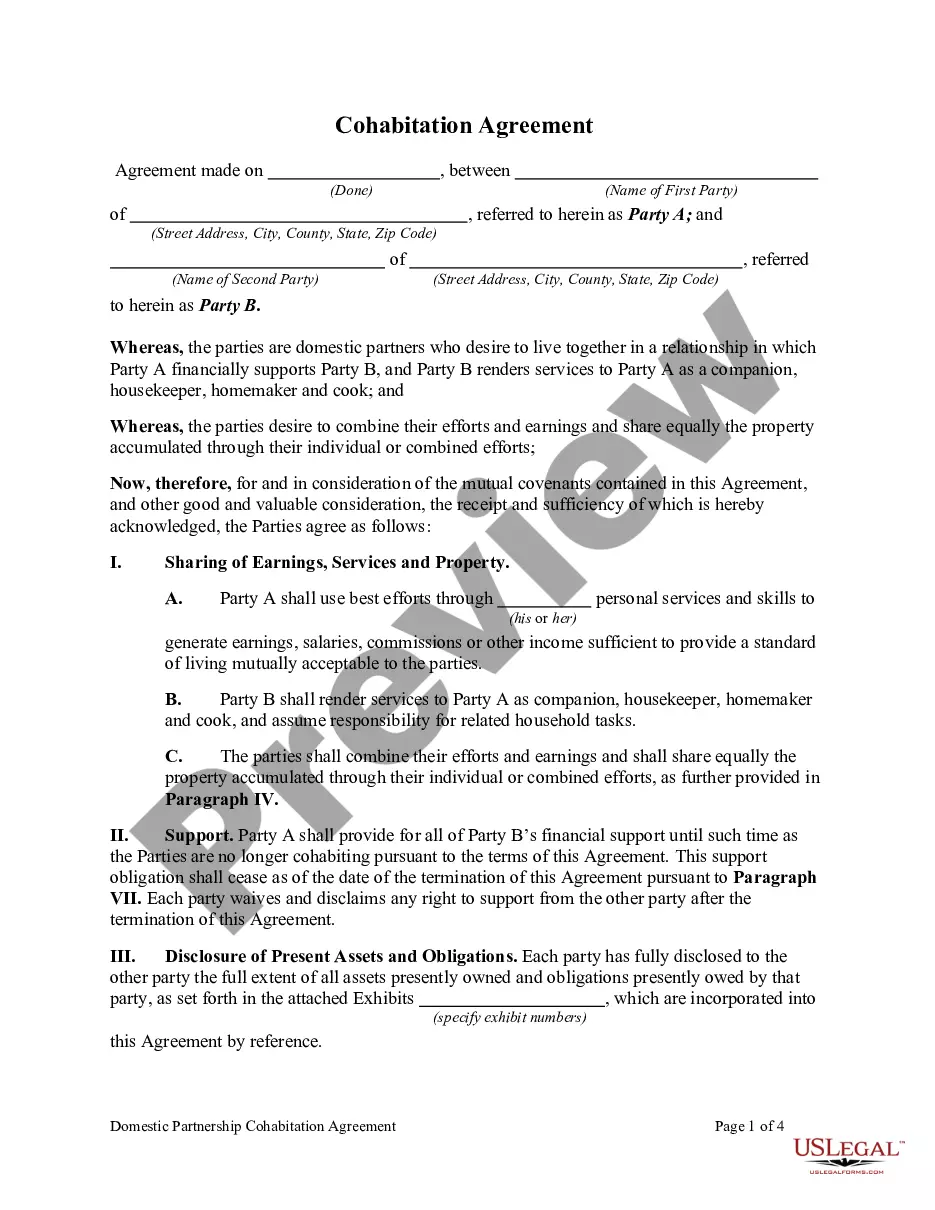
A cohabitation agreement is a contract between two people who are in relationship and live together but are not married. Good cohabitation agreements are (ideally) crafted early on, and deal with issues involving property, debts, inheritances, other estate planning considerations and health care decisions.
The state and the municipal government of South Carolina do not offer specific domestic partner rights to their residents.
According to South Carolina law, one must remain in constant contact with another person who has a romantic relationship with their supporting spouse for at least 90 consecutive days in order to establish a domestic partnership.
What Is A Domestic Partner In South Carolina? Generally available to straight couples as well as gays, the domestic partnership is an alternative to traditional marriage. two adults who live together without a legal separation or commitment, usually for several months or year.
A cohabitation agreement, like any other legal document, is legally enforceable as long as the agreement is signed by both partners and witnessed.
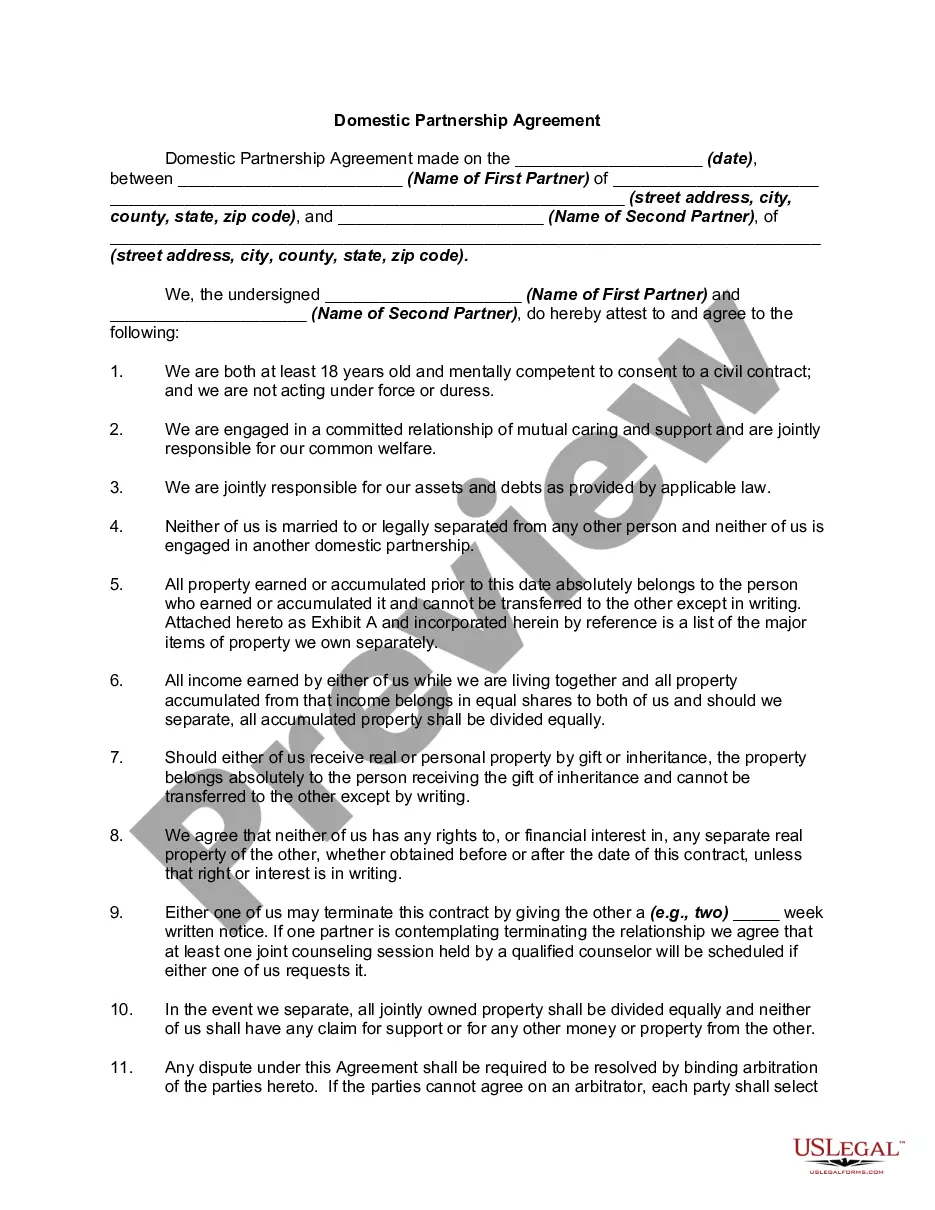
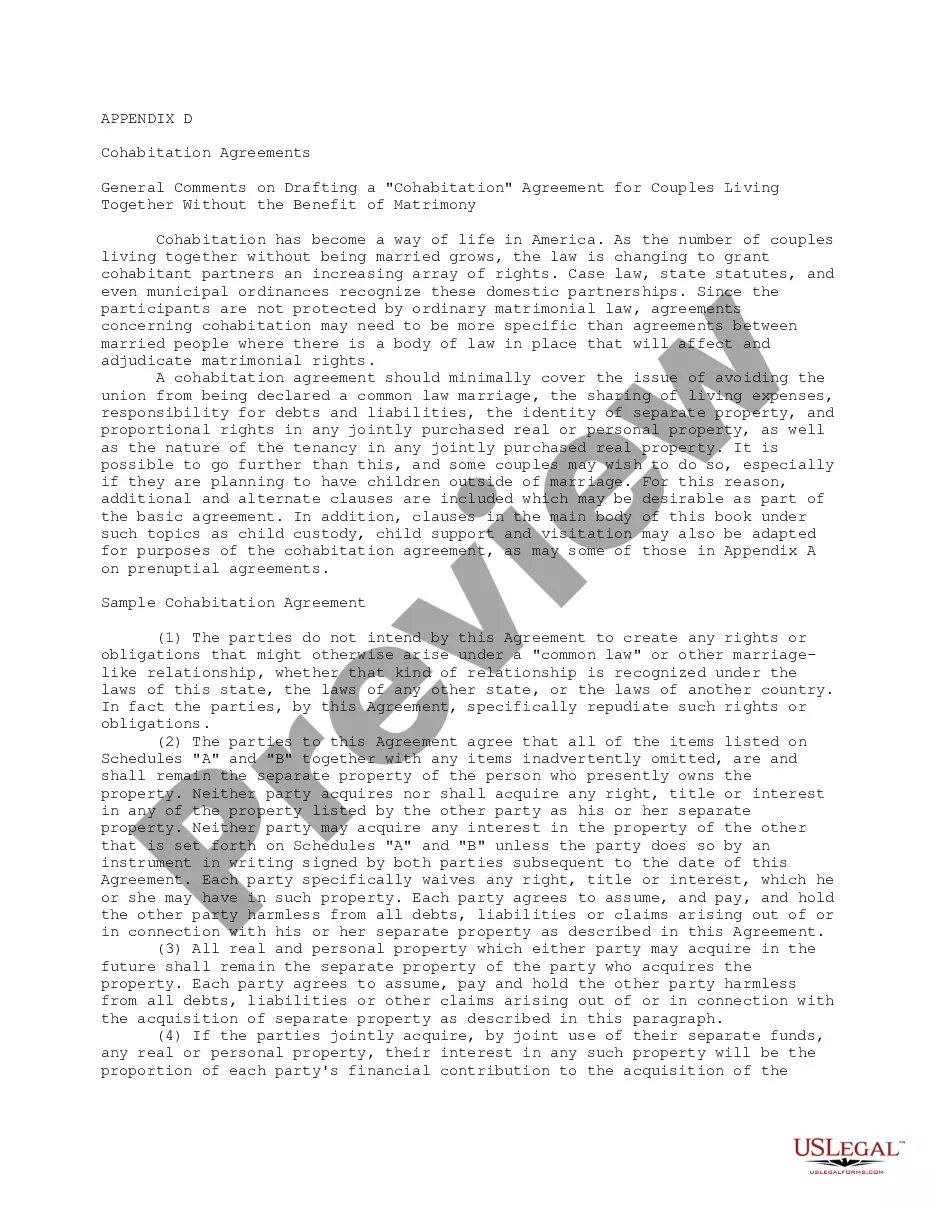
A domestic partnership agreement (also called a cohabitation agreement) is a legally binding contract that outlines the rights and obligations of two individuals who intend to live together but either do not wish to or are legally prohibited from marrying each other.
Cohabitation The parties must cohabitate (live together). Present Intent to Be Married There must be an agreement (formal or informal) and an intent to be married.
South CarolinaNeither the state nor any municipality in the state provides specific rights to domestic partners.
This present intent to be married is generally proven by evidence proving that the parties were cohabitating, and holding themselves out, publicly and privately, as married. The parties must cohabitate for some period of time; however, there is NO time requirement of 7 years, as often wrongly believed.
A domestic partnership agreement (also called a cohabitation agreement) is a legally binding contract that outlines the rights and obligations of two individuals who intend to live together but either do not wish to or are legally prohibited from marrying each other.