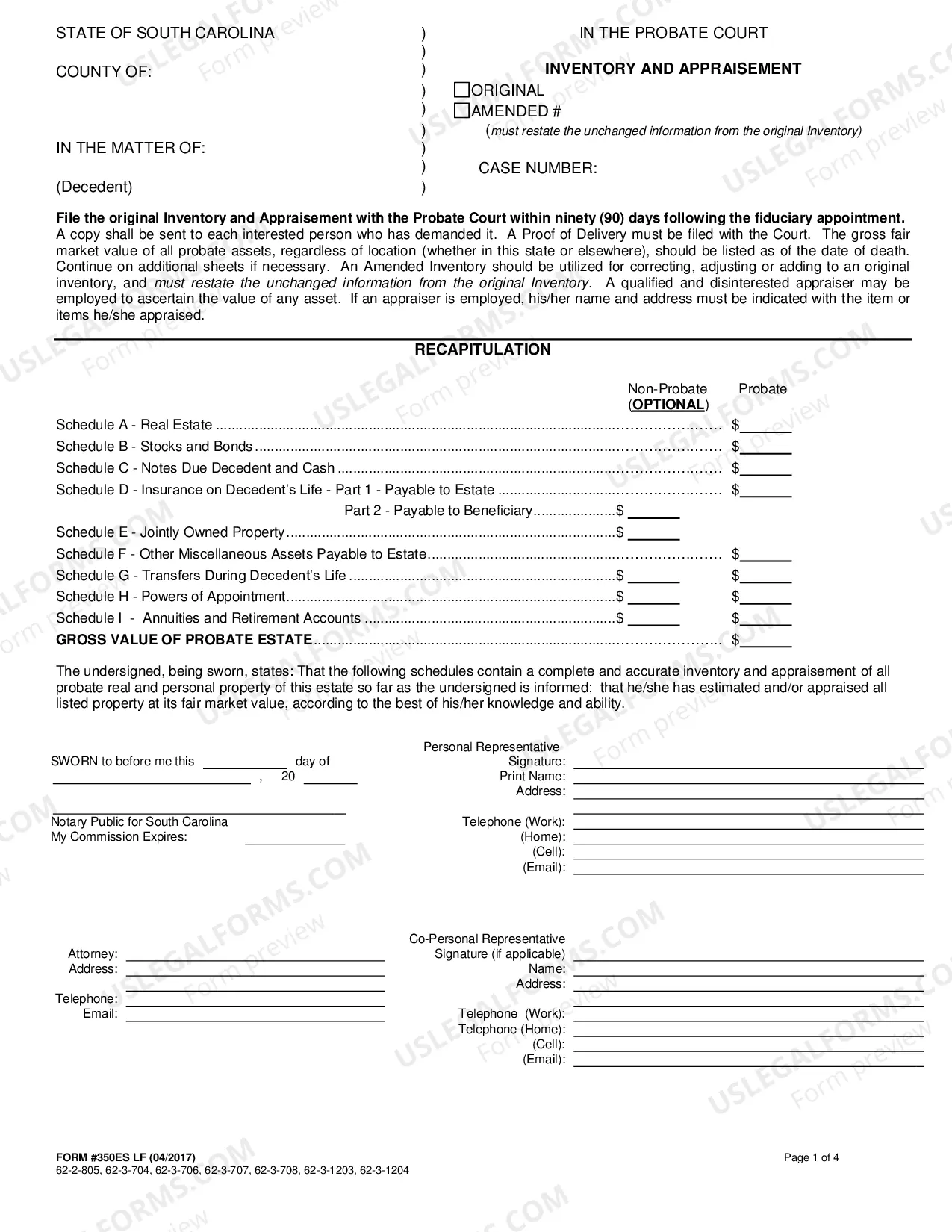
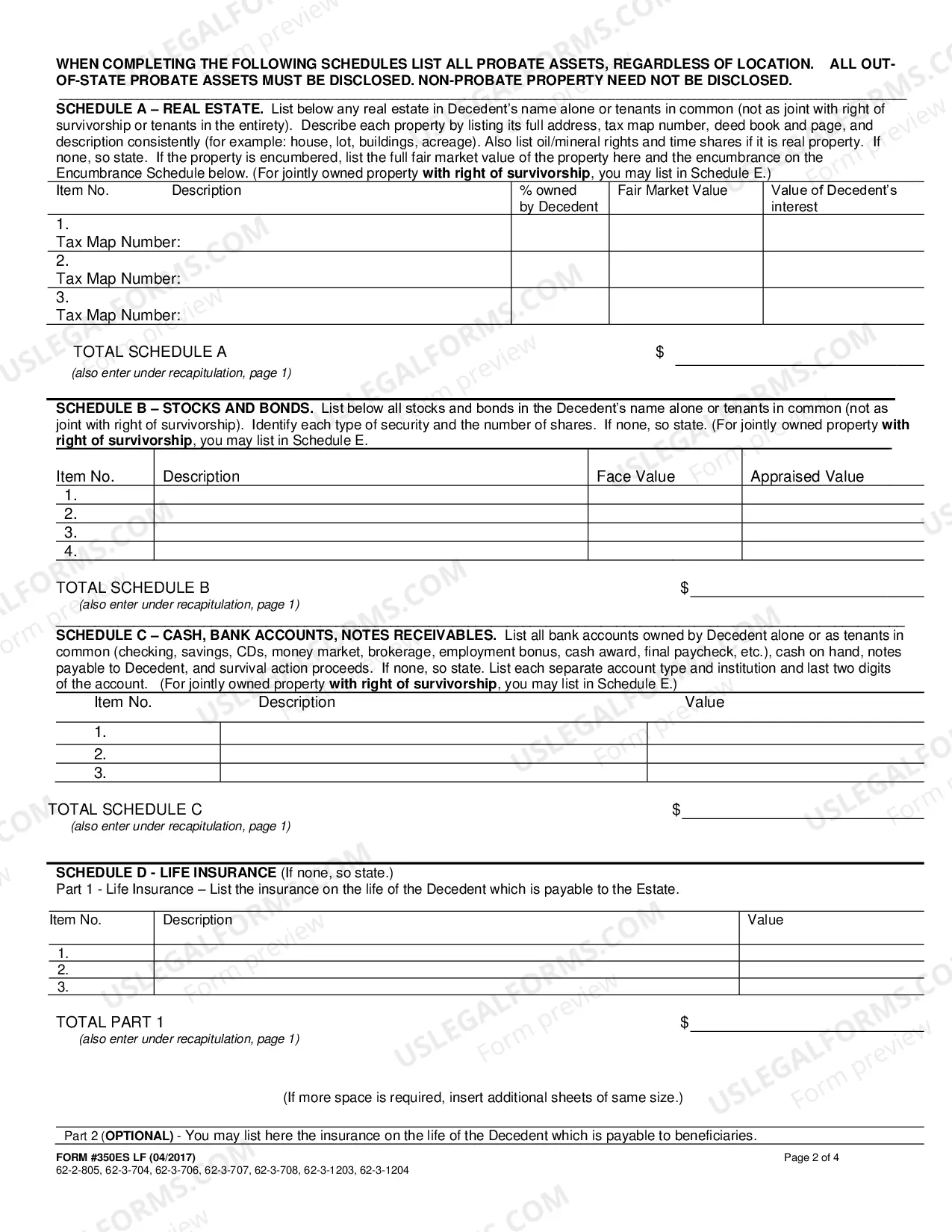
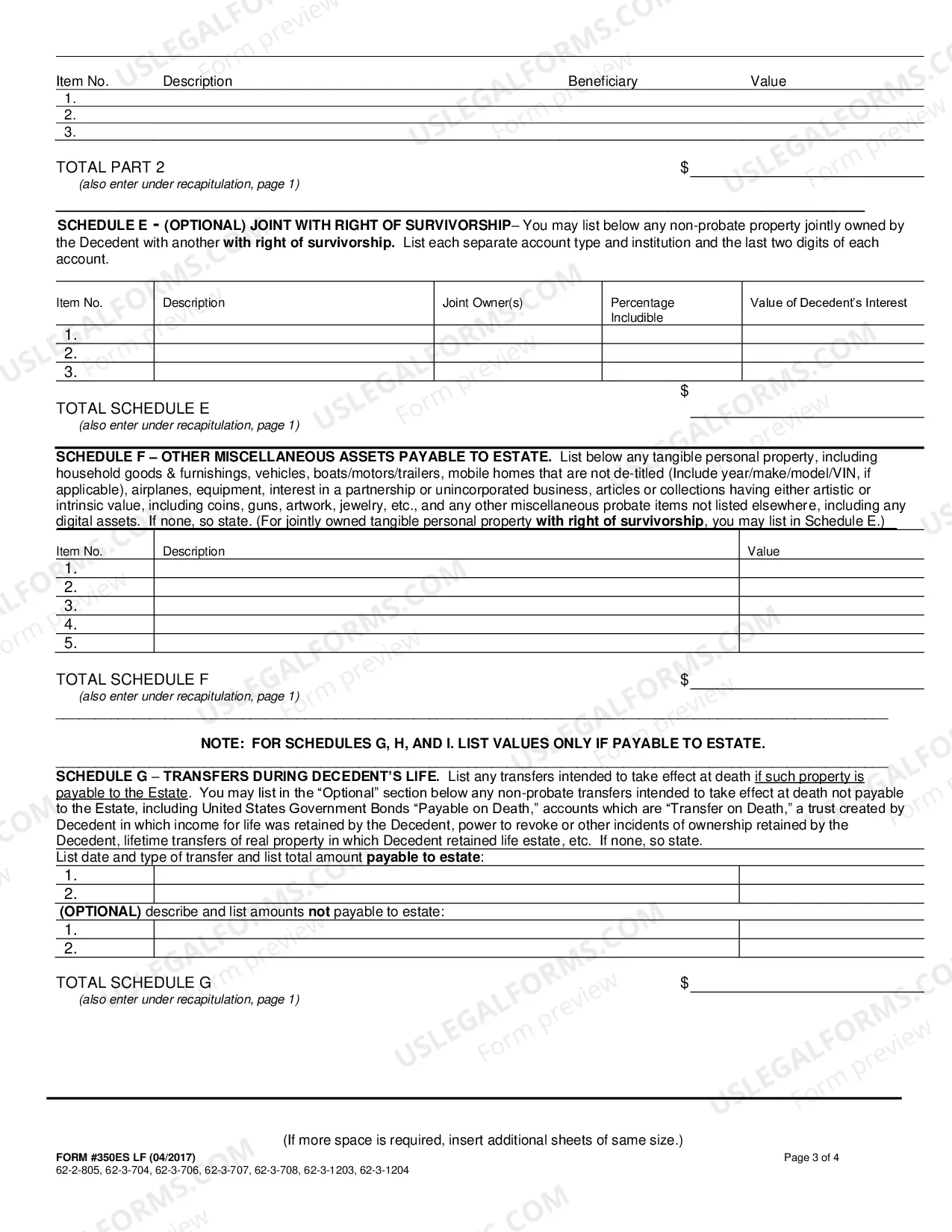
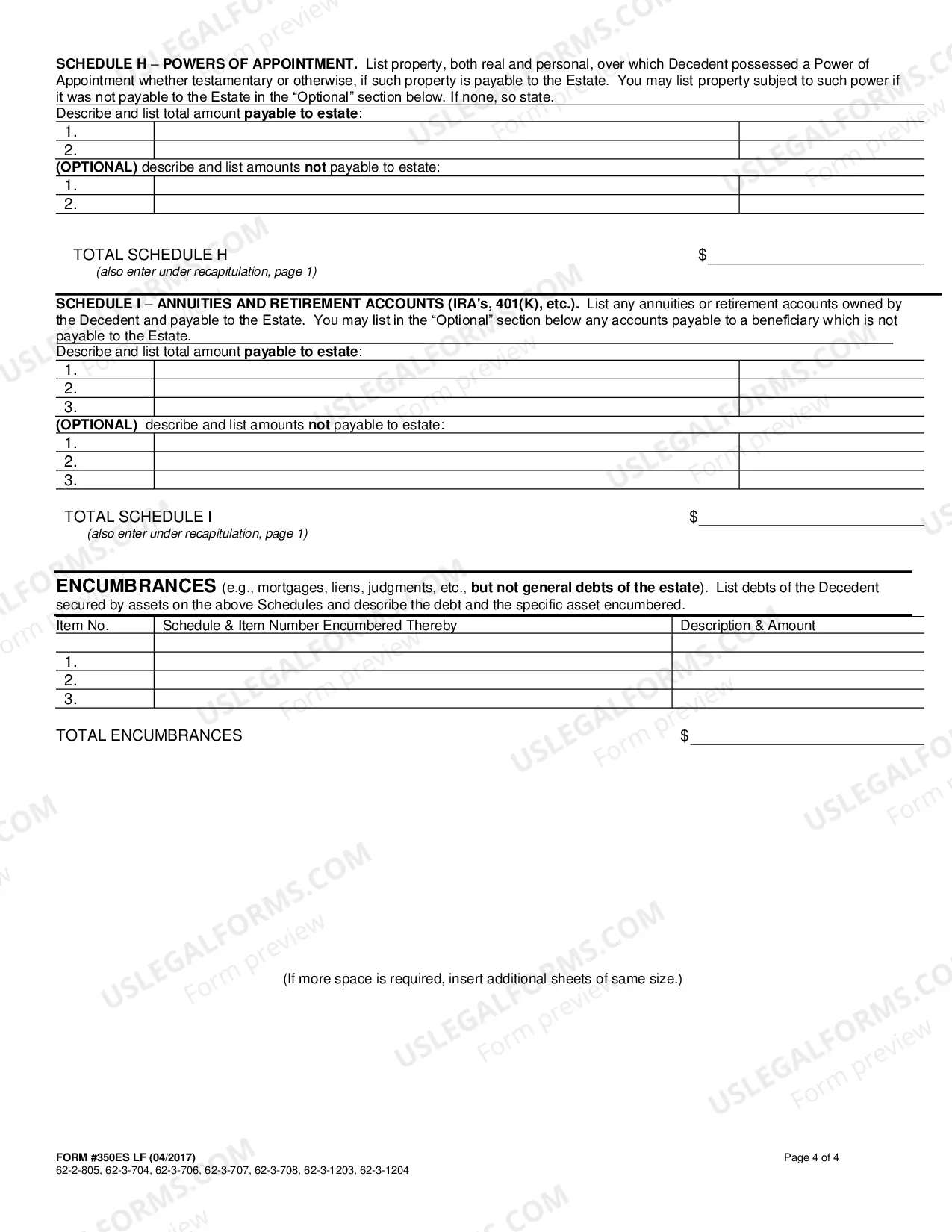
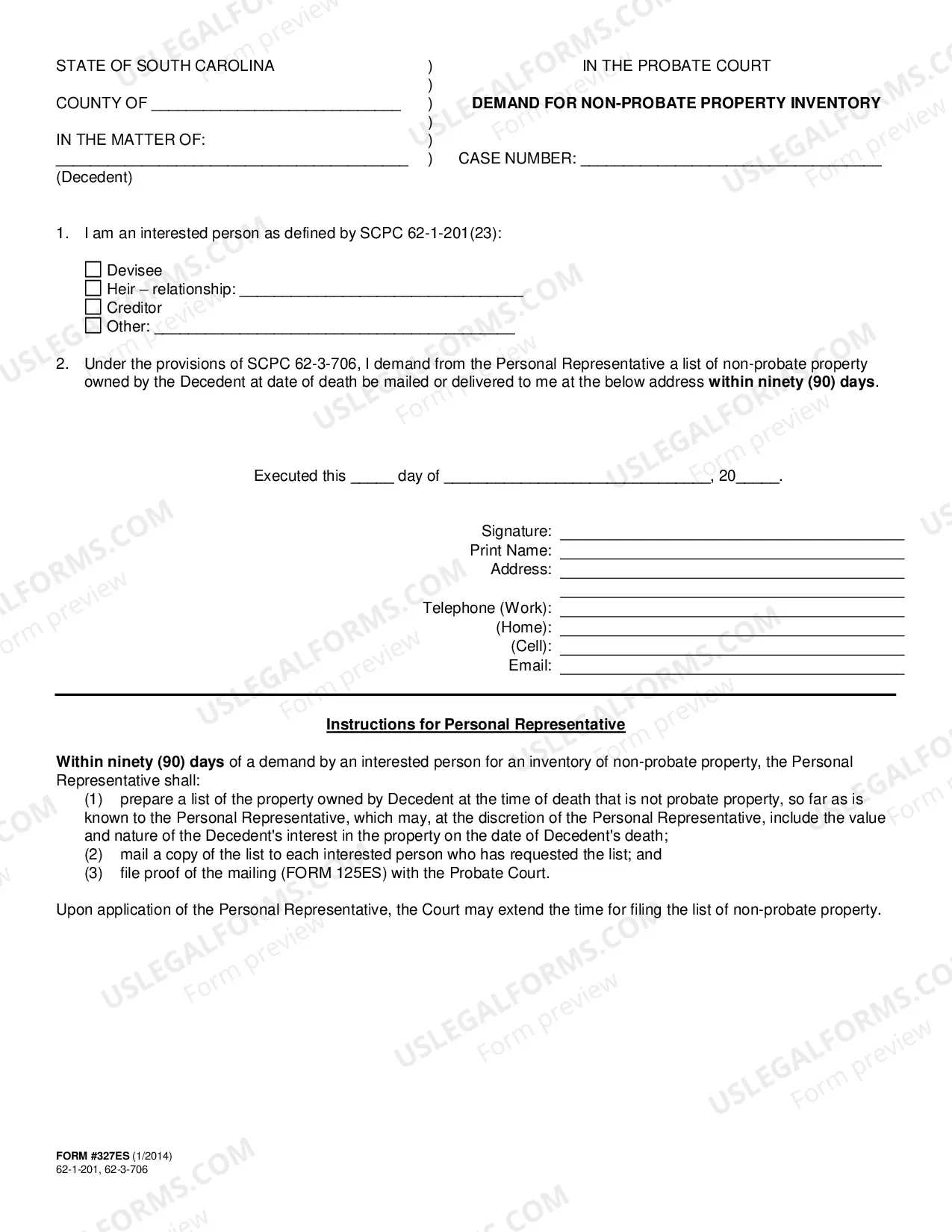
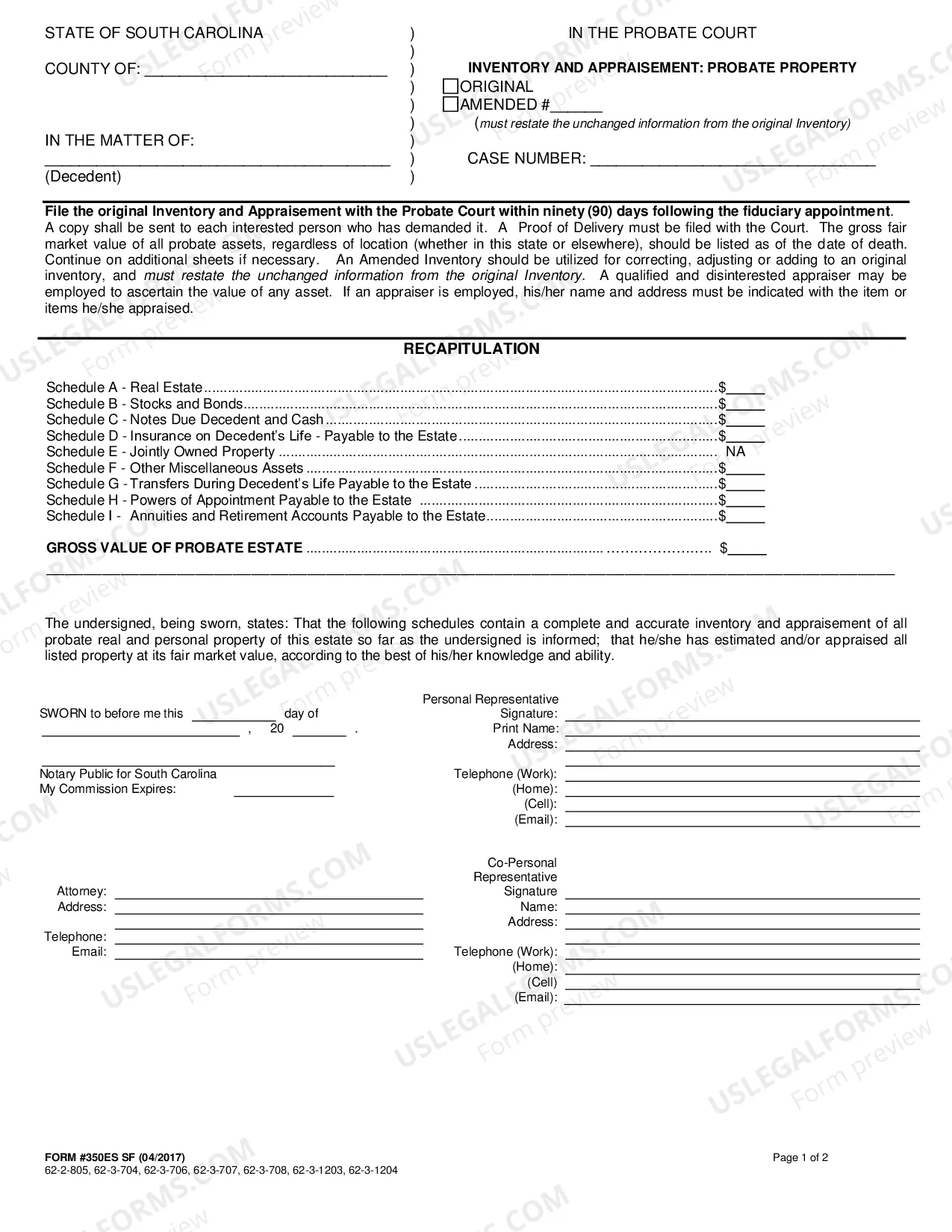
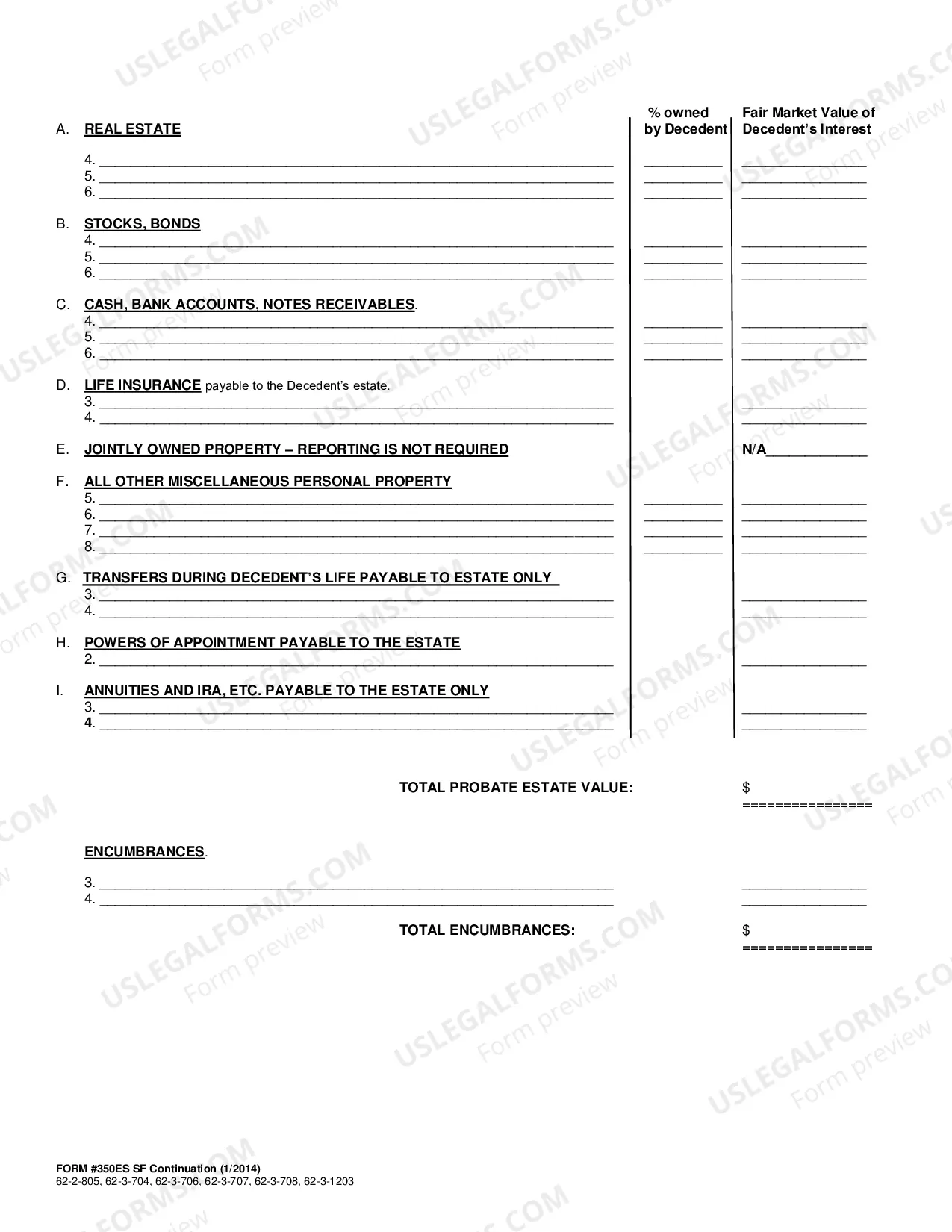
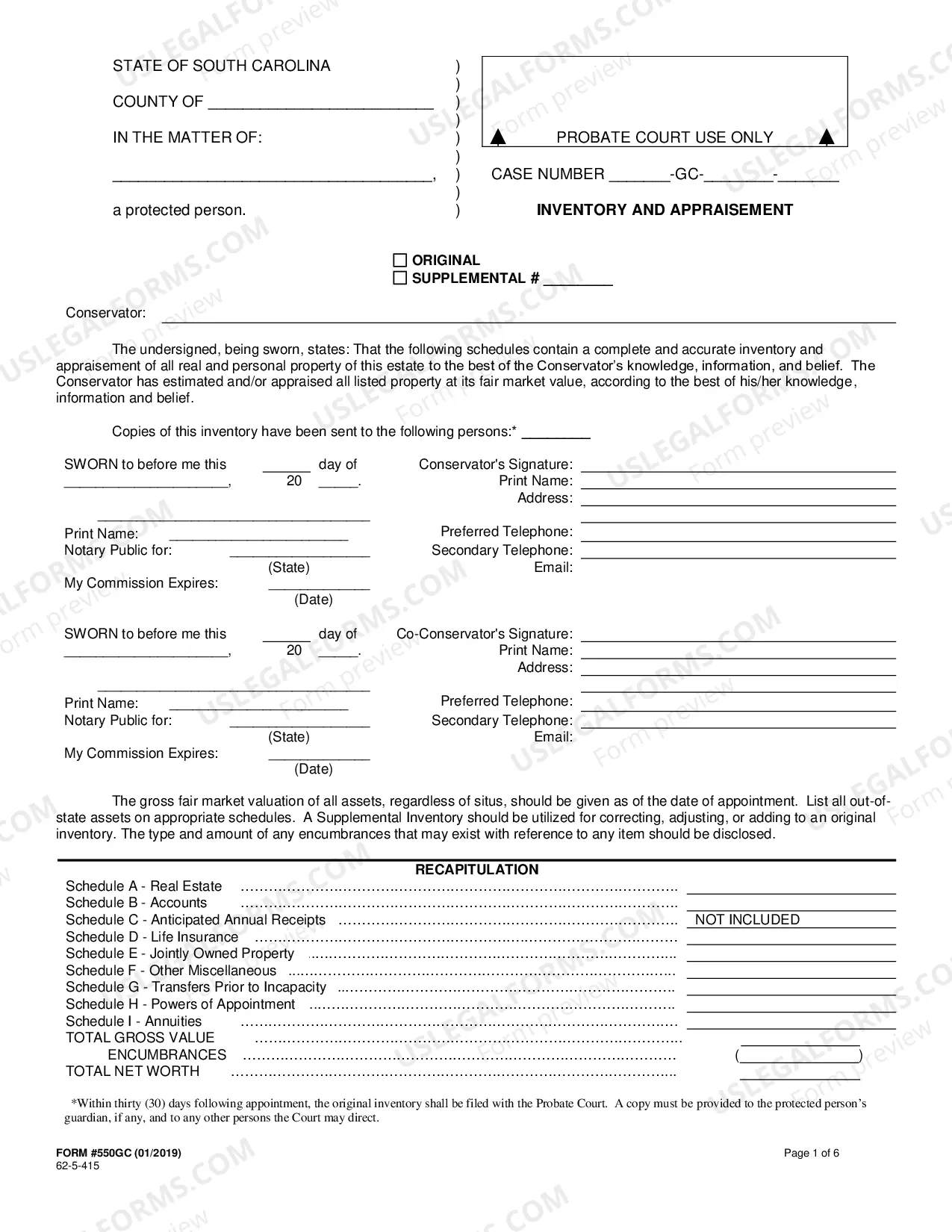
South Carolina Inventory and Appraisement LF (Mandatory)
Description
Get your form ready online
Our built-in tools help you complete, sign, share, and store your documents in one place.
Make edits, fill in missing information, and update formatting in US Legal Forms—just like you would in MS Word.
Download a copy, print it, send it by email, or mail it via USPS—whatever works best for your next step.
Sign and collect signatures with our SignNow integration. Send to multiple recipients, set reminders, and more. Go Premium to unlock E-Sign.
If this form requires notarization, complete it online through a secure video call—no need to meet a notary in person or wait for an appointment.
We protect your documents and personal data by following strict security and privacy standards.

Make edits, fill in missing information, and update formatting in US Legal Forms—just like you would in MS Word.

Download a copy, print it, send it by email, or mail it via USPS—whatever works best for your next step.

Sign and collect signatures with our SignNow integration. Send to multiple recipients, set reminders, and more. Go Premium to unlock E-Sign.

If this form requires notarization, complete it online through a secure video call—no need to meet a notary in person or wait for an appointment.

We protect your documents and personal data by following strict security and privacy standards.
Looking for another form?

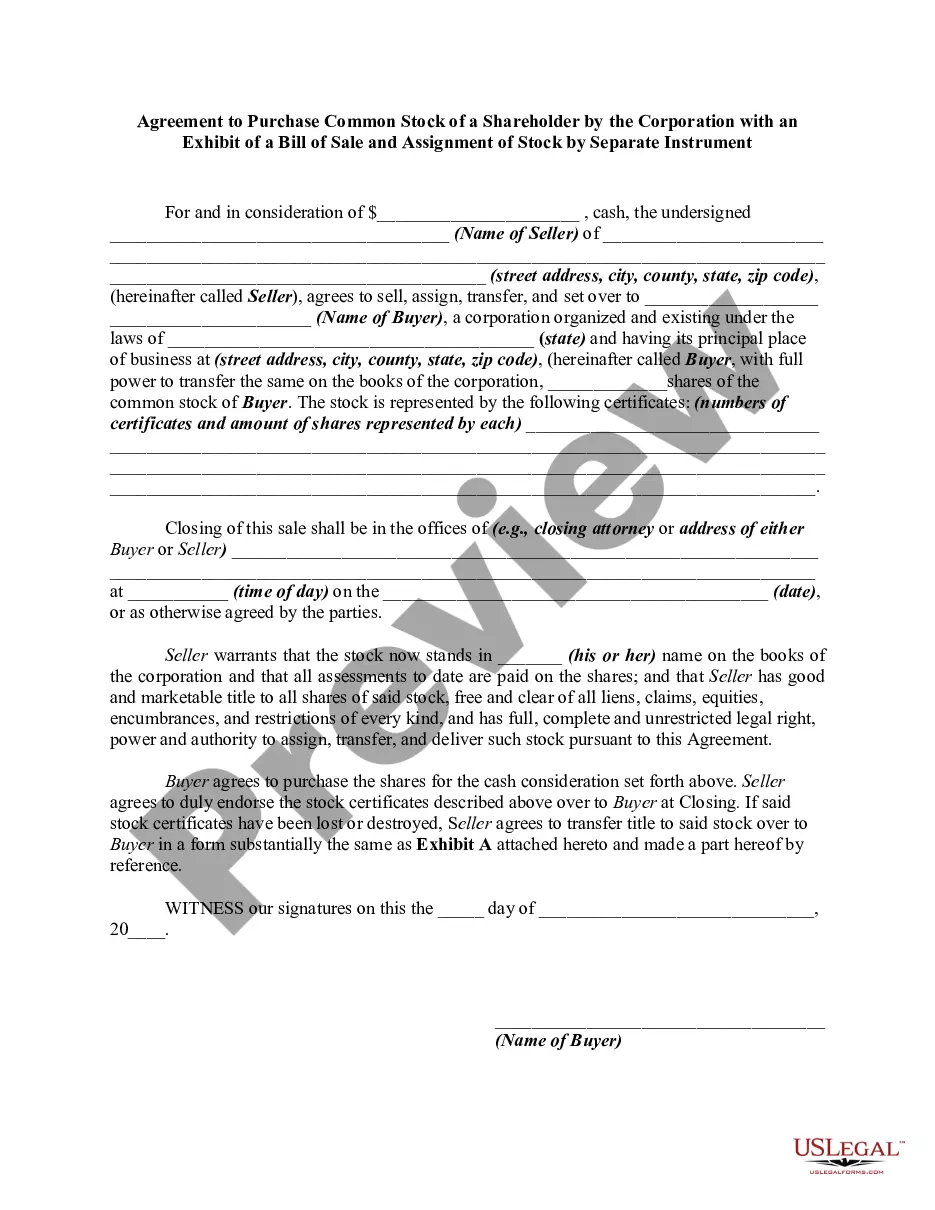
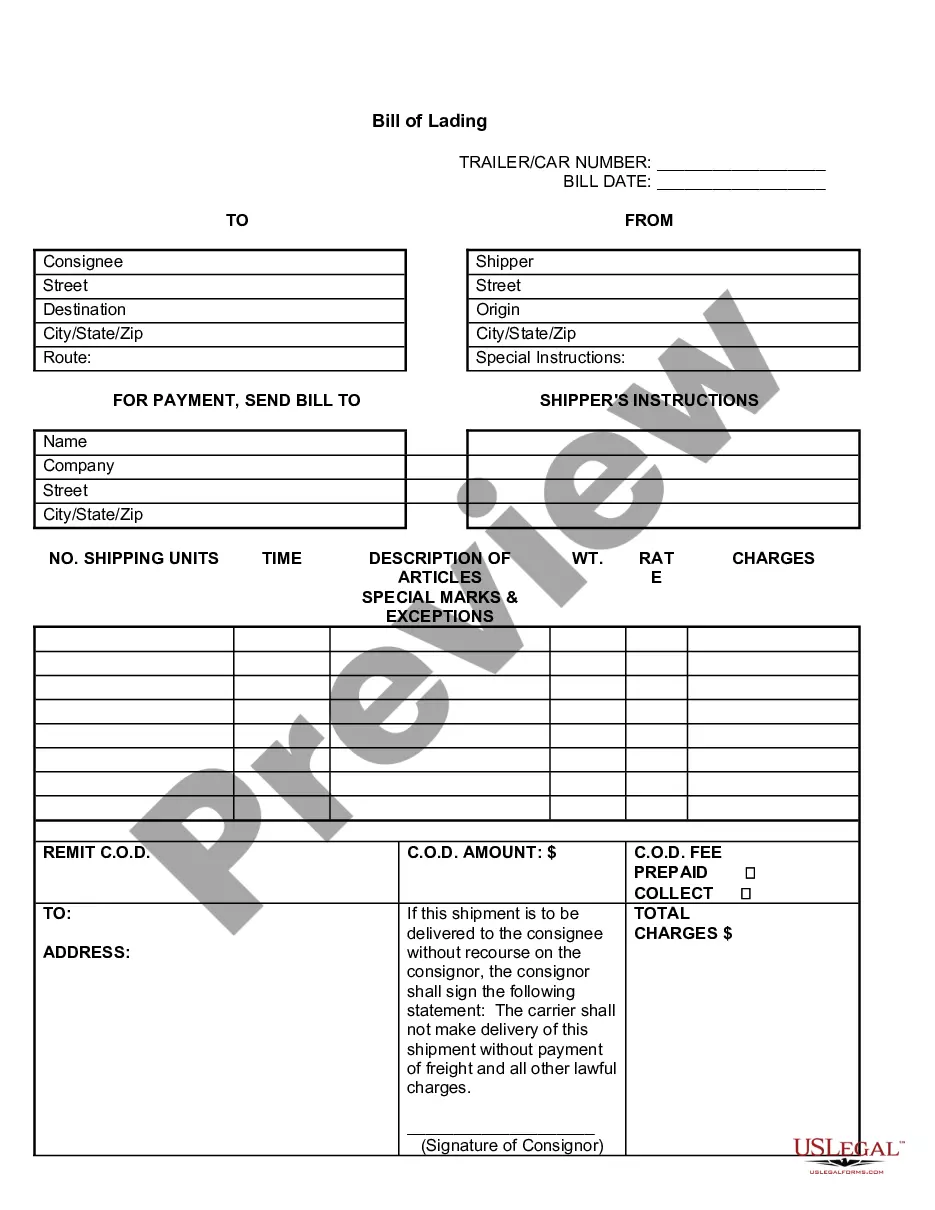
How to fill out South Carolina Inventory And Appraisement LF (Mandatory)?
Preparing legal paperwork can be a real stress unless you have ready-to-use fillable templates. With the US Legal Forms online library of formal documentation, you can be confident in the blanks you obtain, as all of them correspond with federal and state regulations and are checked by our specialists. So if you need to complete South Carolina Inventory and Appraisement LF (Mandatory), our service is the perfect place to download it.
Obtaining your South Carolina Inventory and Appraisement LF (Mandatory) from our catalog is as simple as ABC. Previously authorized users with a valid subscription need only sign in and click the Download button after they find the proper template. Afterwards, if they need to, users can pick the same document from the My Forms tab of their profile. However, even if you are unfamiliar with our service, signing up with a valid subscription will take only a few minutes. Here’s a quick guide for you:
- Document compliance verification. You should carefully review the content of the form you want and ensure whether it satisfies your needs and complies with your state law requirements. Previewing your document and reviewing its general description will help you do just that.
- Alternative search (optional). If you find any inconsistencies, browse the library using the Search tab above until you find an appropriate template, and click Buy Now once you see the one you want.
- Account registration and form purchase. Register for an account with US Legal Forms. After account verification, log in and select your preferred subscription plan. Make a payment to continue (PayPal and credit card options are available).
- Template download and further usage. Choose the file format for your South Carolina Inventory and Appraisement LF (Mandatory) and click Download to save it on your device. Print it to complete your paperwork manually, or use a multi-featured online editor to prepare an electronic copy faster and more efficiently.
Haven’t you tried US Legal Forms yet? Sign up for our service now to obtain any official document quickly and easily every time you need to, and keep your paperwork in order!
Form popularity
FAQ
Put simply, an Inventory lists the property owned by a decedent at the time of their death. The personal representative of an estate must file an Inventory with the court within three months after the date of their appointment.
The Inventory is basically a ?snapshot? of the decedent's probate assets at the time of death. The Inventory lists all assets and the value of each of those assets on the date of death: bank accounts not jointly owned, real estate, personal property, any investments, and other miscellaneous items.
In most cases, probate is a legal responsibility in South Carolina. However, probate can be avoided if the decedent's assets were placed in a living trust before they died with beneficiaries designated to inherit the estate.
Every Personal Representative (Executor) must file an Inventory and Appraisement with the Probate Court.
In most cases, probate will be a necessary step in distributing the assets of the estate. This process is necessary because the court must monitor this process to ensure the decedent's wishes are followed as indicated in the will. However, there are a few ways in which one can avoid going through probate.
In South Carolina, you can make a living trust to avoid probate for virtually any asset you own?real estate, bank accounts, vehicles, and so on. You need to create a trust document (it's similar to a will), naming someone to take over as trustee after your death (called a successor trustee).
In South Carolina, you can make a living trust to avoid probate for virtually any asset you own?real estate, bank accounts, vehicles, and so on. You need to create a trust document (it's similar to a will), naming someone to take over as trustee after your death (called a successor trustee).
You can absolutely prepare all of the probate forms yourself and do this on your own. Some states may require a lawyer for submitting them to probate court, but South Carolina doesn't.