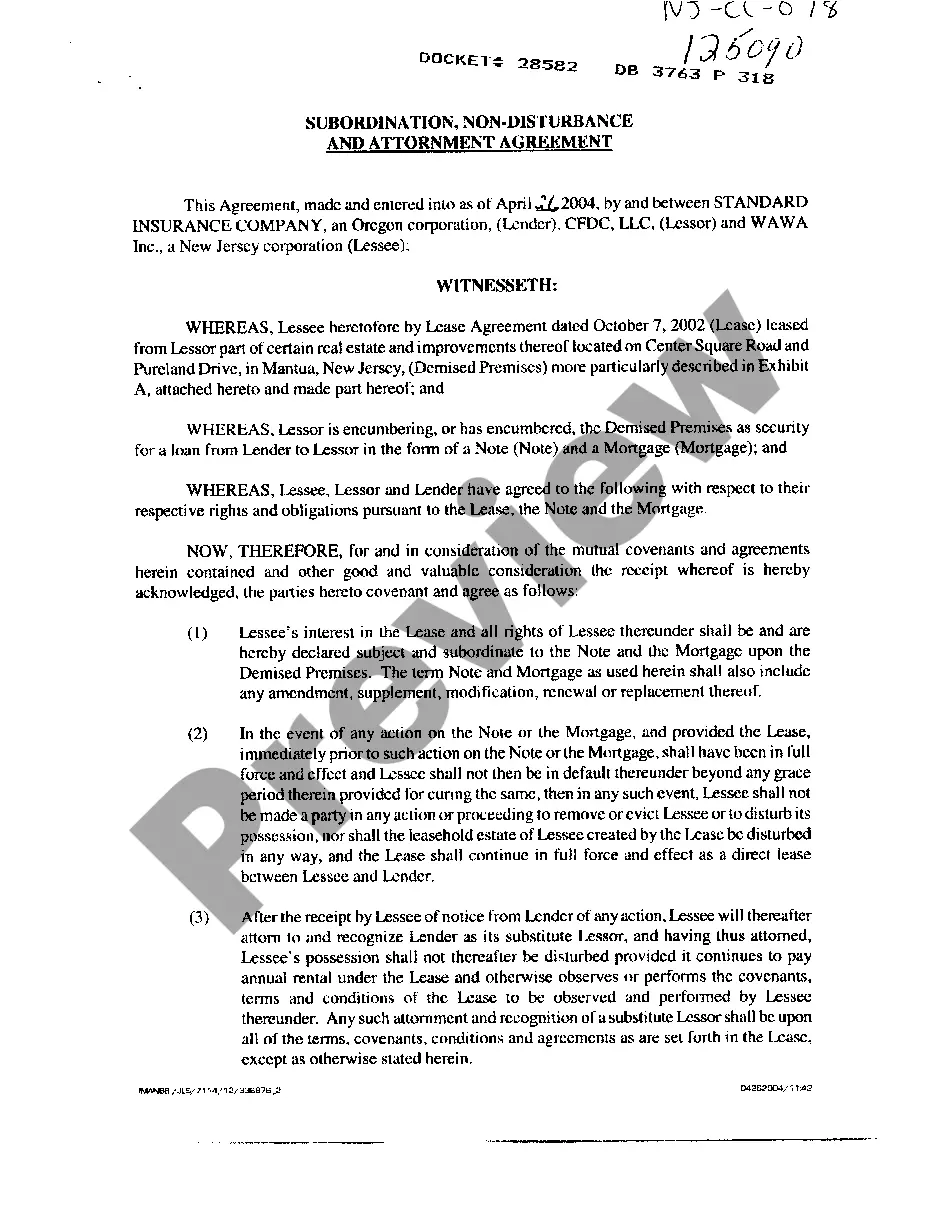
South Carolina Subordination, Non-disturbance and Attornment Agreement
Understanding this form
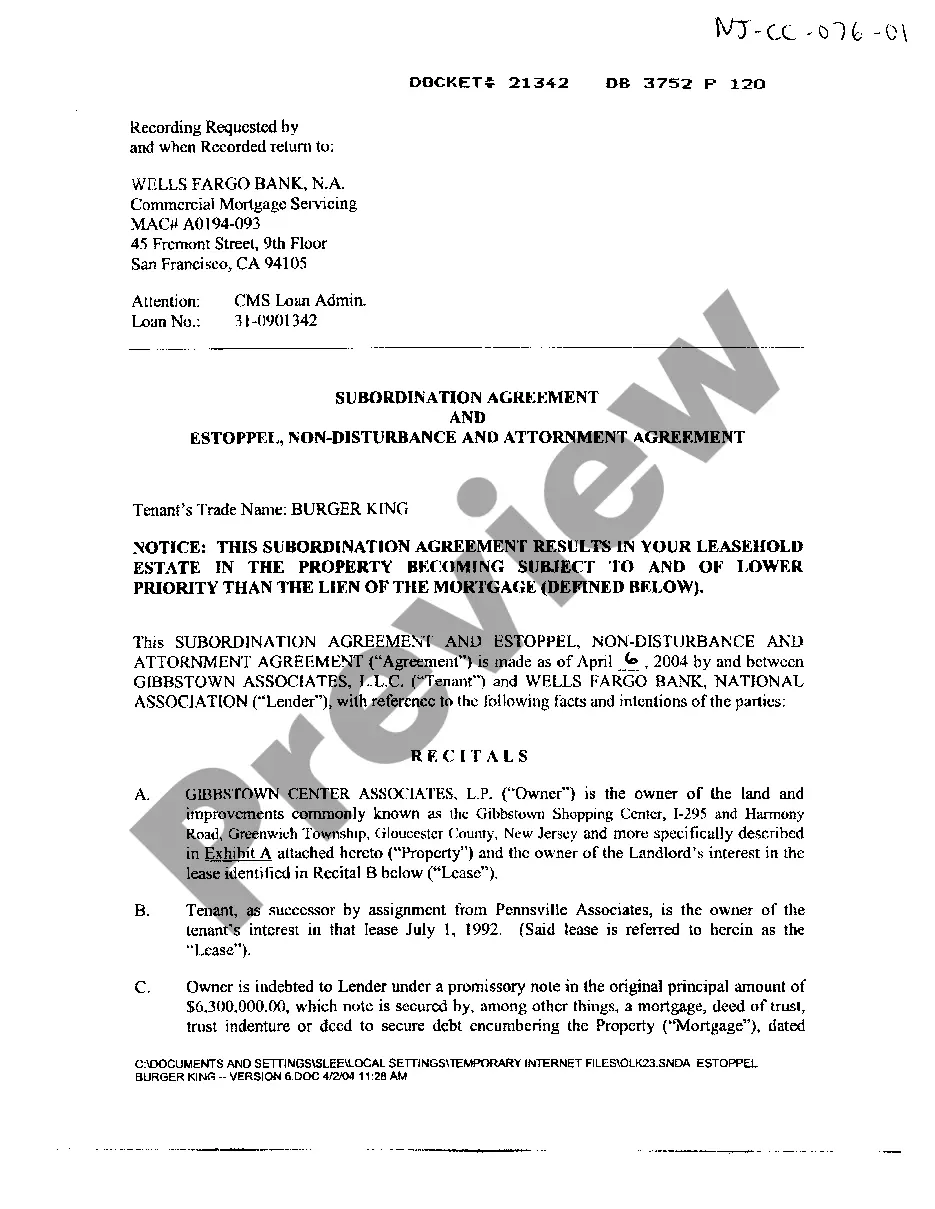
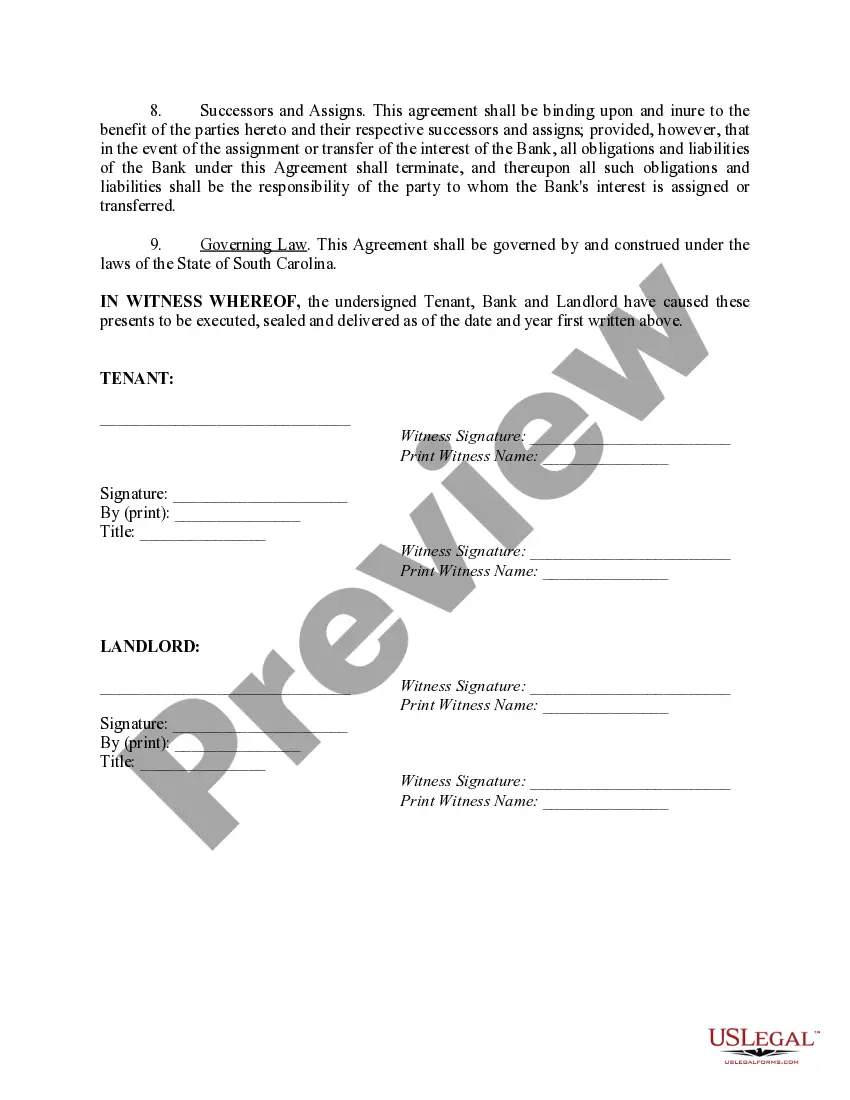
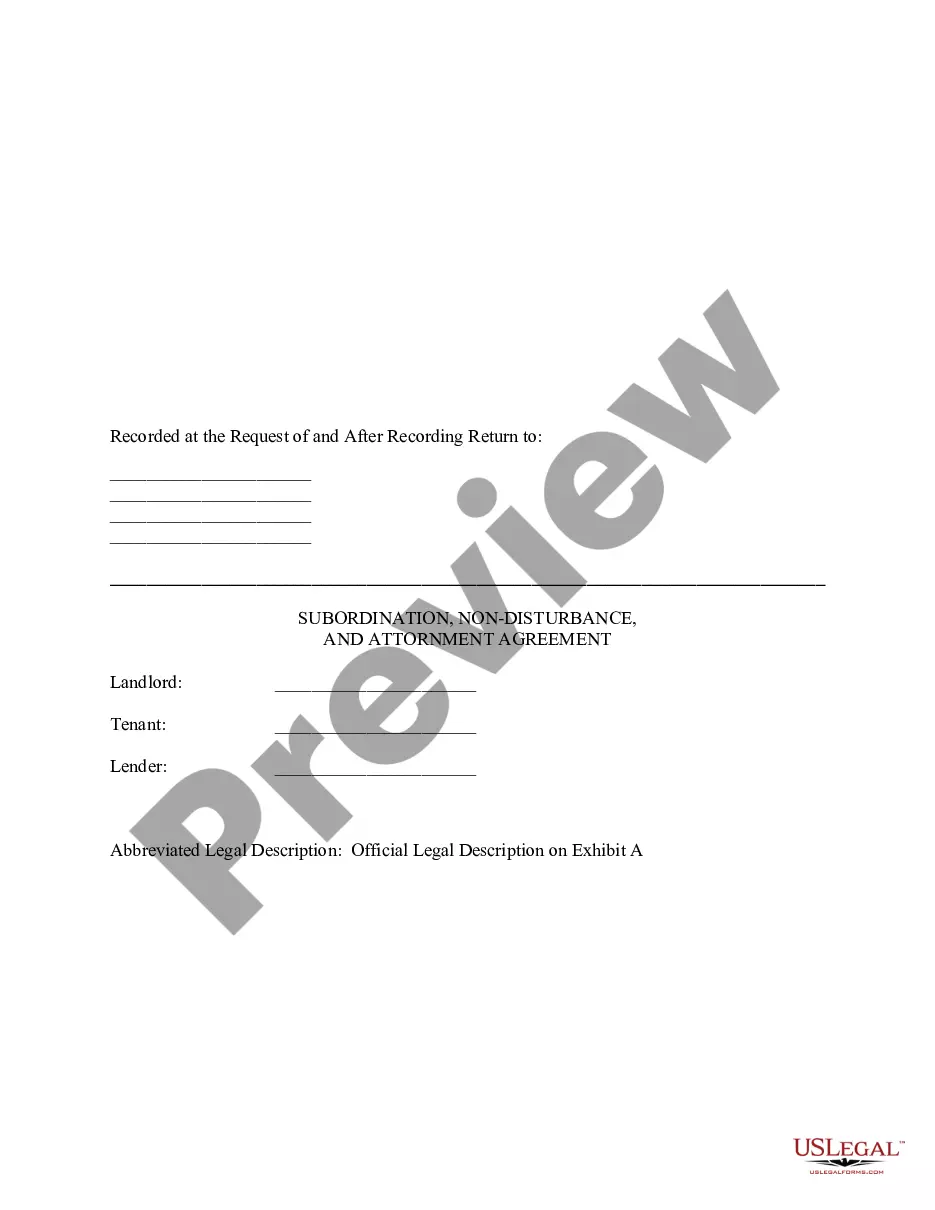
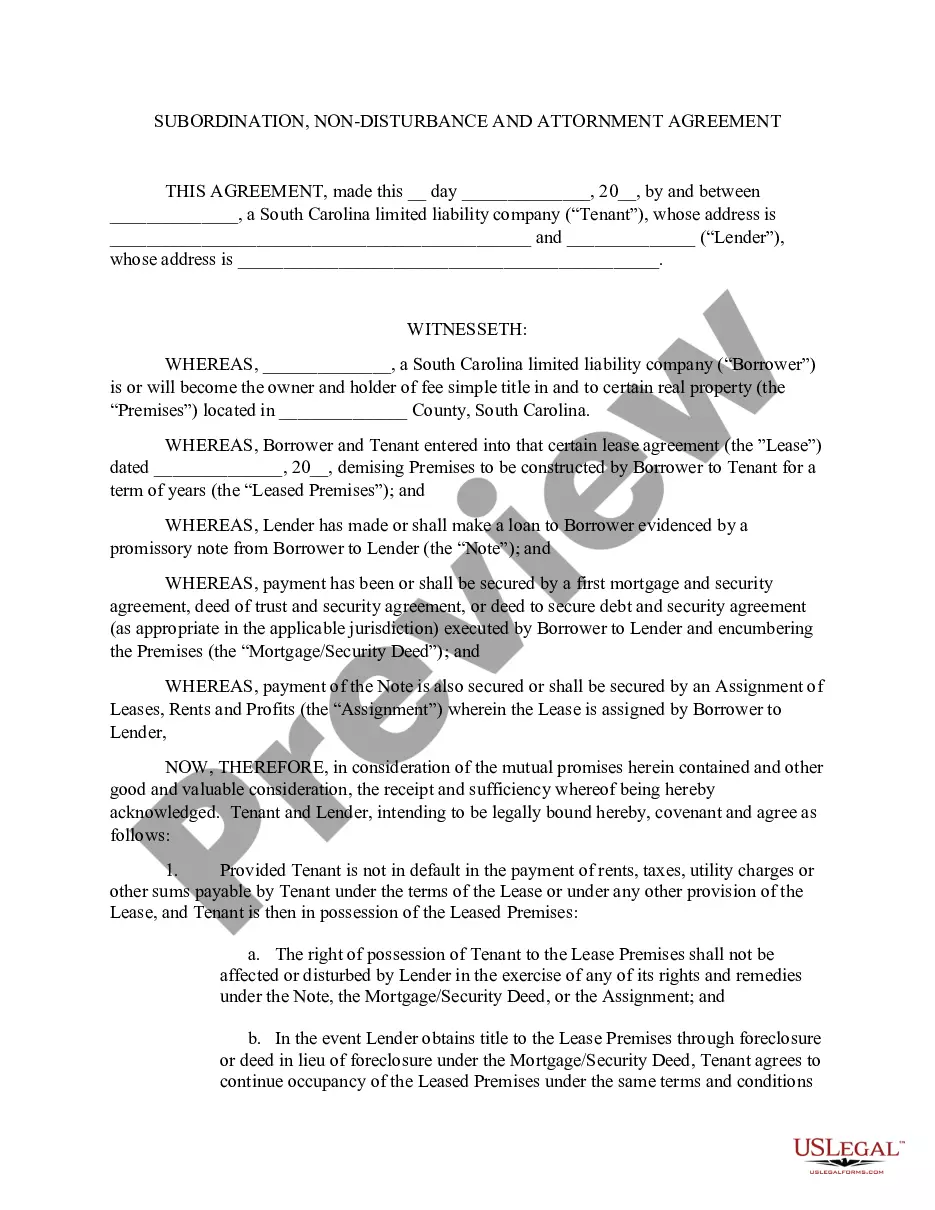
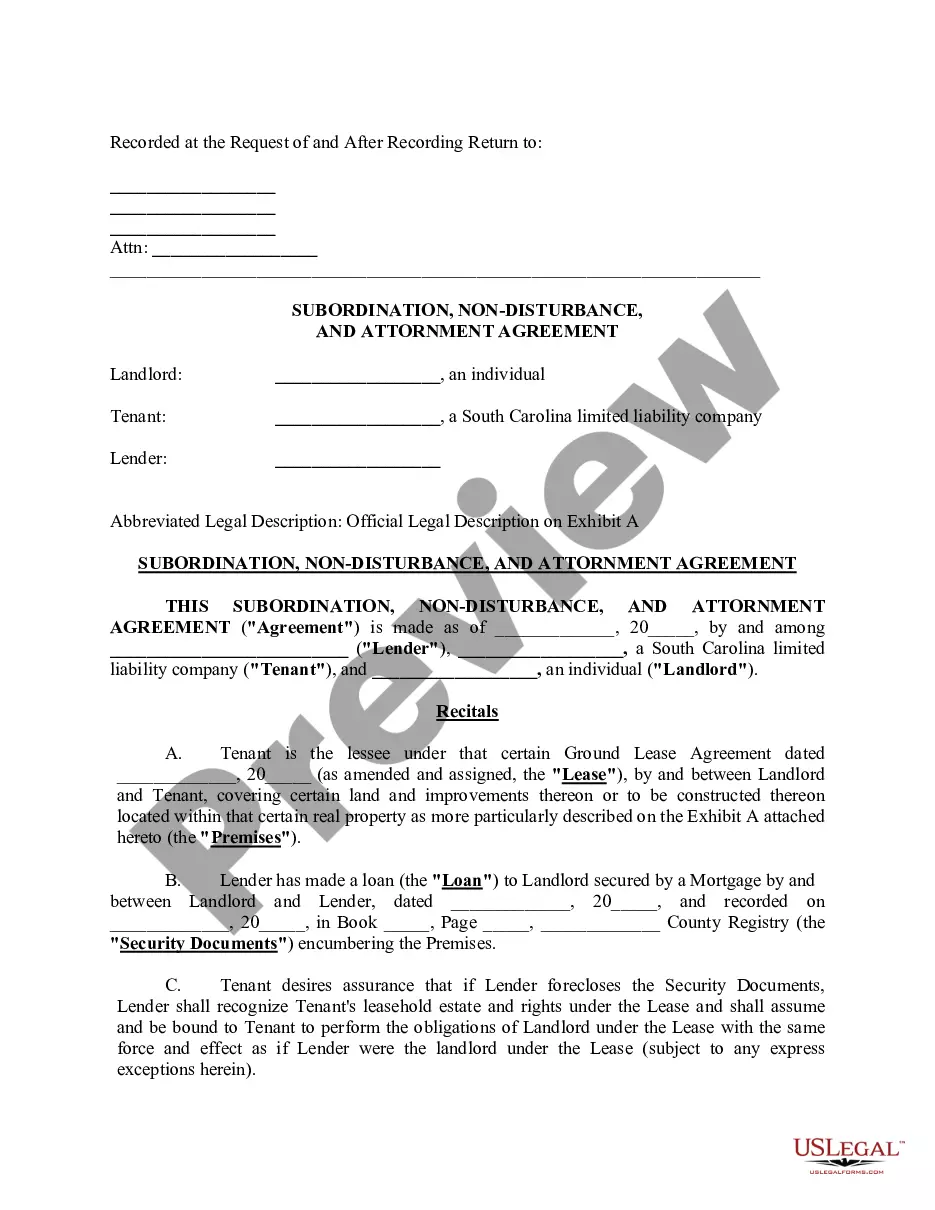
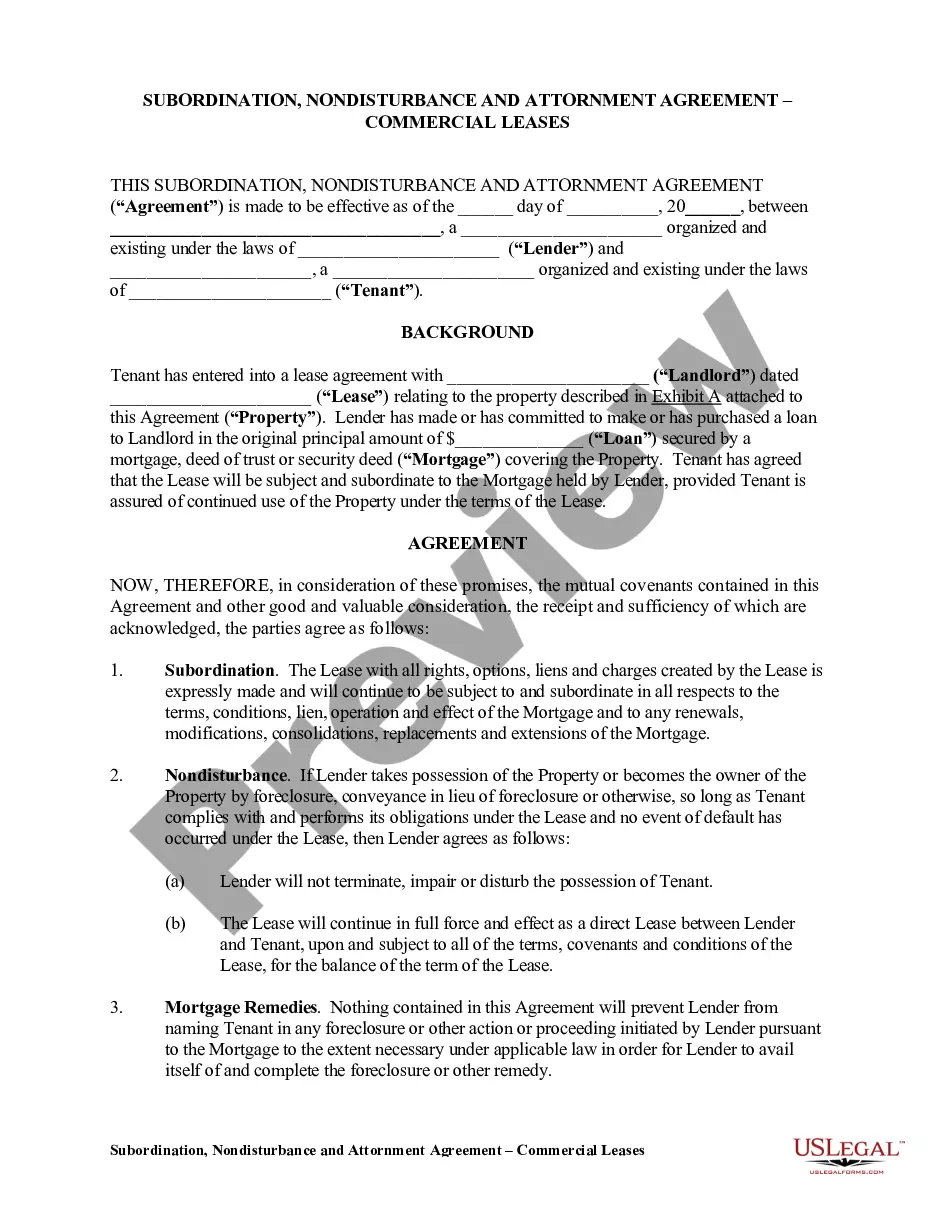
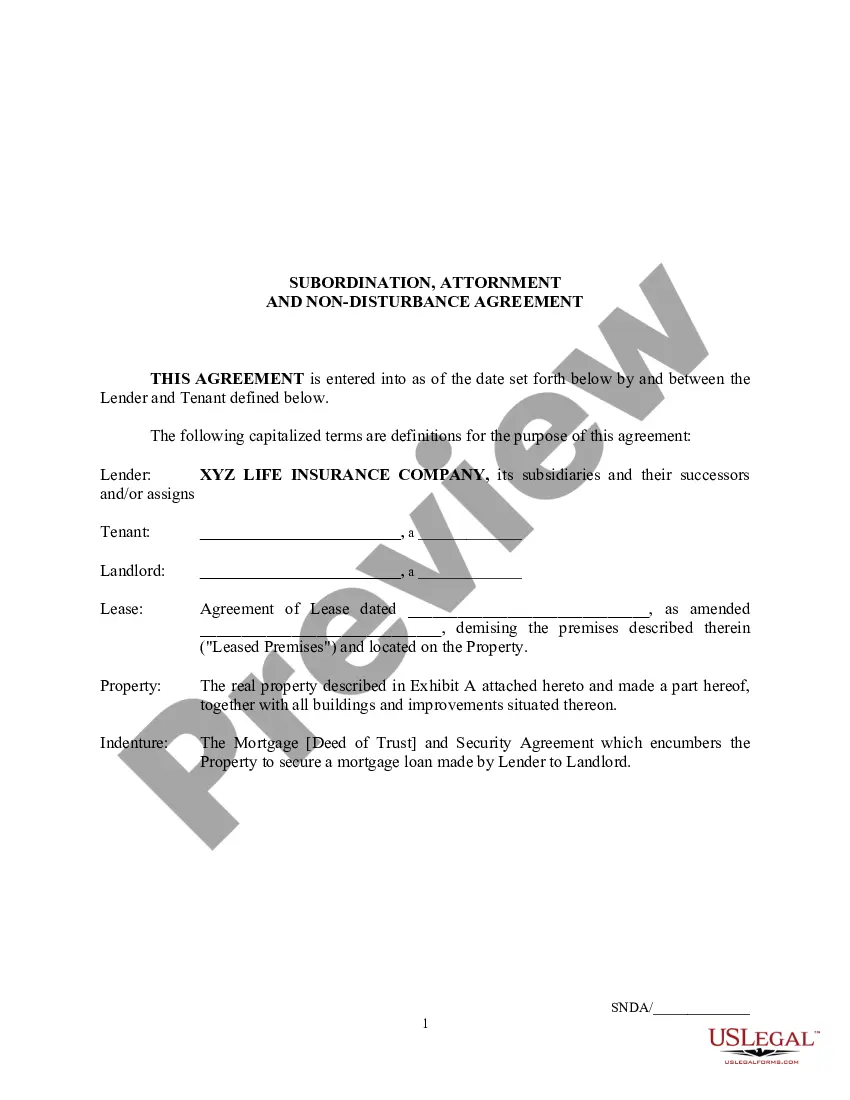
The Subordination, Non-disturbance and Attornment Agreement is a legal document used primarily in commercial real estate transactions. It outlines the relationship between tenants, landlords, and lenders, ensuring that the tenant's rights to occupy the property are protected from actions taken by the lender or in the event of foreclosure. This agreement allows tenants to remain in possession of the premises even if the property is sold due to the landlordâs default, which distinguishes it from standard lease agreements that do not provide this level of assurance.
Form components explained
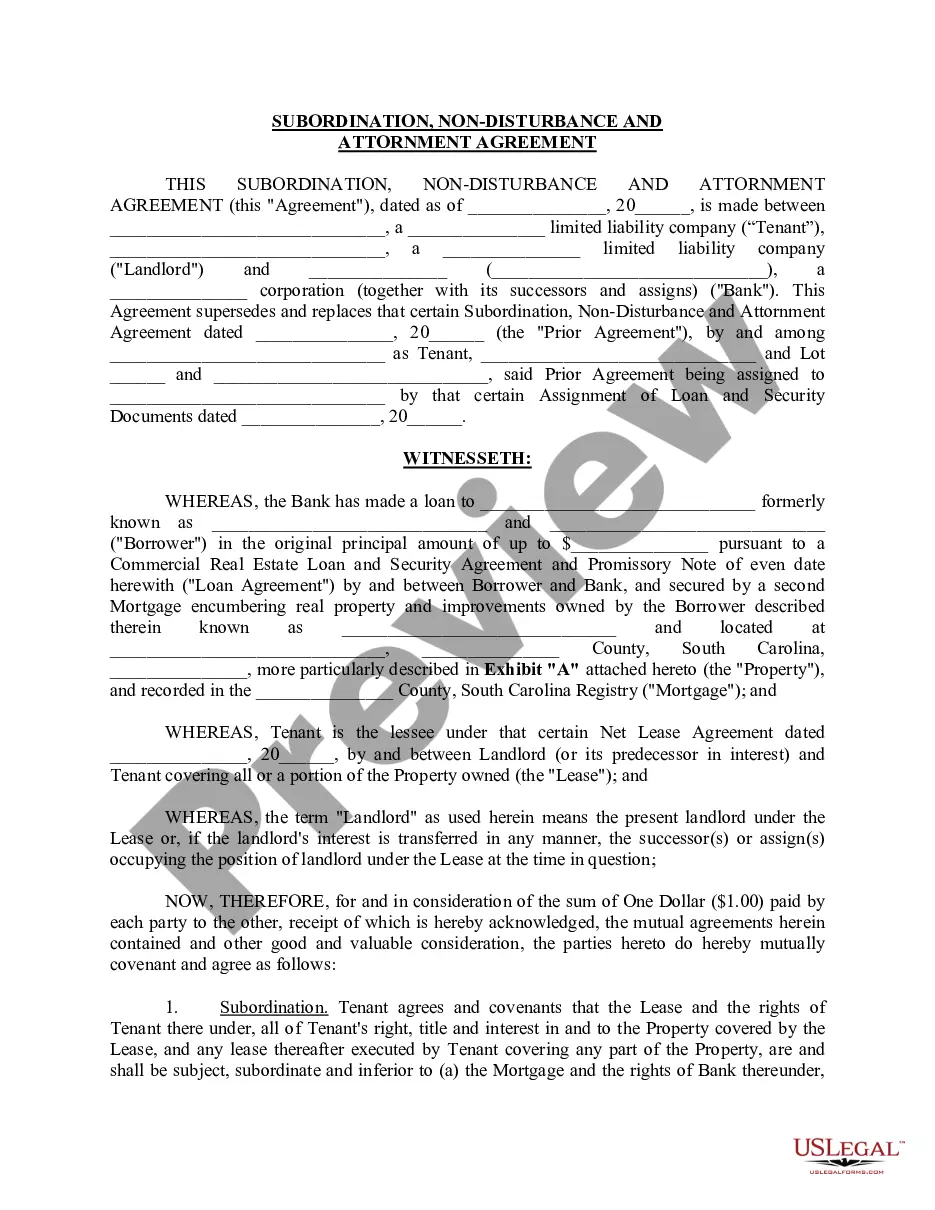
- Subordination clause: Establishes that the tenantâs lease rights are subordinate to the lenderâs mortgage rights.
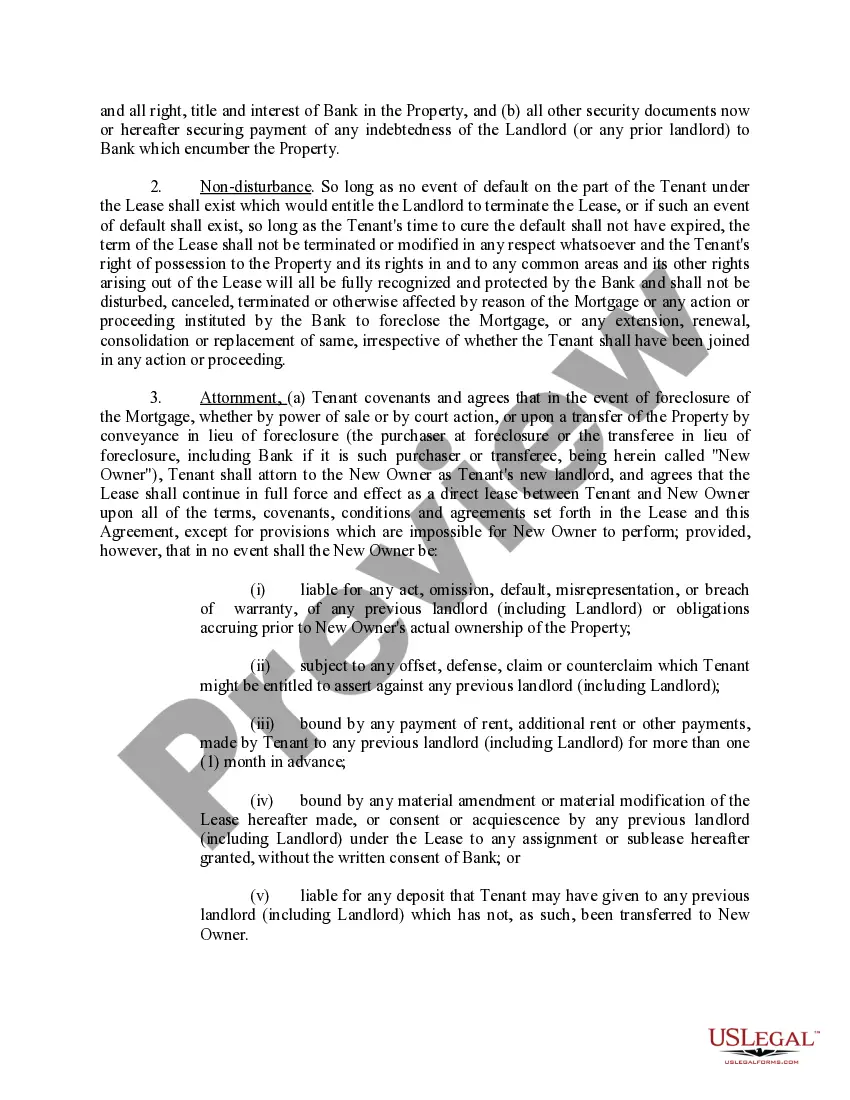
- Non-disturbance clause: Ensures the tenant's right to occupy the property is maintained despite foreclosure or other actions by the lender.
- Attornment clause: Requires the tenant to recognize the new owner of the property following a foreclosure.
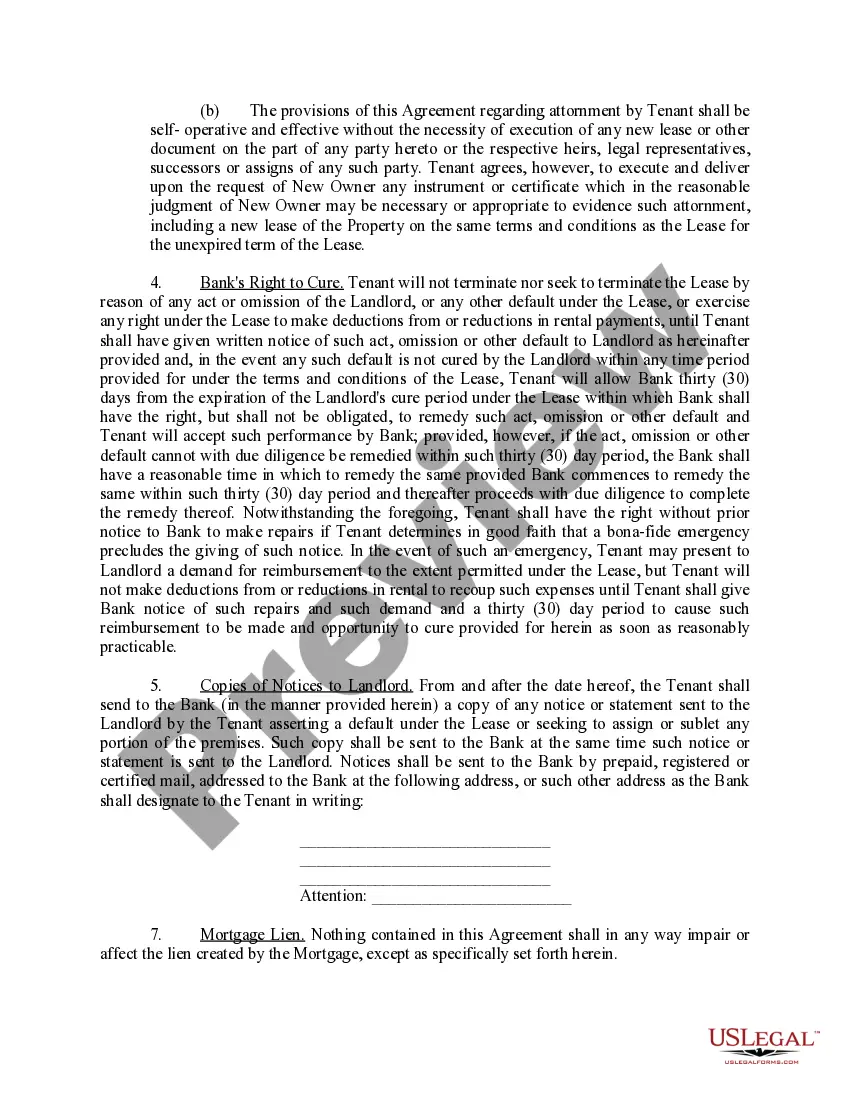
- Bank's right to cure: Allows the lender a specified time to correct any defaults by the landlord.
- Notices: Specifies how and when the tenant must provide copies of notices sent to the landlord to the bank.
Situations where this form applies
This form should be used when a commercial tenant, a landlord, and a lender are involved in a lease agreement secured by a mortgage. It is particularly important in scenarios where the tenant wants assurance that their lease rights will not be compromised in the event of the landlord defaulting on the mortgage. Scenarios may include discussions of potential lease assignments, subleases, or when the landlord is refinancing the property.
Intended users of this form
- Commercial tenants who want security regarding their lease in case of landlord default.
- Landlords seeking to clarify relationships with tenants and their lender.
- Lenders looking to establish their rights in relation to the tenant's lease and protect their investment.
Instructions for completing this form
- Identify the parties involved: Fill in the names of the tenant, landlord, and lender.
- Specify the property: Clearly describe the property covered by the lease, including location details.
- Enter essential dates: Fill in the date of the agreement and any previous agreements superseded by this one.
- Complete the subordination, non-disturbance, and attornment clauses: Ensure all terms accurately reflect the intentions of the involved parties.
- Sign and notarize: Have all parties sign the agreement and ensure it is notarized as required by South Carolina law.
Notarization guidance
Yes, this form must be notarized to be legally valid. This ensures that the signatures of all parties are verified and that the agreement can be upheld in a court of law. US Legal Forms offers integrated online notarization services that are available 24/7, allowing parties to complete and notarize documents securely through a video call.
Get your form ready online
Our built-in tools help you complete, sign, share, and store your documents in one place.
Make edits, fill in missing information, and update formatting in US Legal Forms—just like you would in MS Word.
Download a copy, print it, send it by email, or mail it via USPS—whatever works best for your next step.
Sign and collect signatures with our SignNow integration. Send to multiple recipients, set reminders, and more. Go Premium to unlock E-Sign.
If this form requires notarization, complete it online through a secure video call—no need to meet a notary in person or wait for an appointment.
We protect your documents and personal data by following strict security and privacy standards.

Make edits, fill in missing information, and update formatting in US Legal Forms—just like you would in MS Word.

Download a copy, print it, send it by email, or mail it via USPS—whatever works best for your next step.

Sign and collect signatures with our SignNow integration. Send to multiple recipients, set reminders, and more. Go Premium to unlock E-Sign.

If this form requires notarization, complete it online through a secure video call—no need to meet a notary in person or wait for an appointment.

We protect your documents and personal data by following strict security and privacy standards.
Common mistakes
- Failing to clearly identify all parties involved.
- Not describing the property accurately, which can lead to disputes.
- Not reviewing the terms fully, especially the subordination and attornment clauses.
- Neglecting to include all necessary signatures or notarization.
Advantages of online completion
- Easy access to professionally drafted legal templates, tailored to cover specific agreements.
- Convenience of completing forms online at your own pace.
- Editable fields allow customization to meet your specific legal needs.
- Instant download for immediate use once completed.
Quick recap
- The Subordination, Non-disturbance and Attornment Agreement protects tenant rights amid changes in ownership.
- It is essential for landlords, tenants, and lenders in commercial real estate transactions.
- Accurate completion and notarization of the form are critical for its enforcement.
Looking for another form?
Form popularity
FAQ
Subordination is the tenant's agreement that its interest under the lease will be subordinate to that of the lender.Attornment is the tenant's agreement to become the tenant of someone other than the original landlord and who has now taken title to the property.
In the case of commercial property changing hands, an attornment clause in a subordination, non-disturbance, and attornment (SNDA) agreement requires the tenant to acknowledge a new owner as their landlord and to continue paying rent regardless of whether the property changes hands through a normal sale or a
A nondisturbance clause is a provision in a mortgage contract that ensures that a rental agreement between the tenant and the landlord will continue under any circumstances.A nondisturbance clause ensures that a tenant will not be evicted in the event that the landlord goes bankrupt.
An SNDA is an agreement entered into between a tenant and the lender of the landlord (and, ideally, the landlord) to establish the relationship between the tenant and lender (who would not otherwise have a direct relationship) and provide relative priorities between them.