South Carolina Environmental Compliance and Indemnification Undertaking
What is this form?
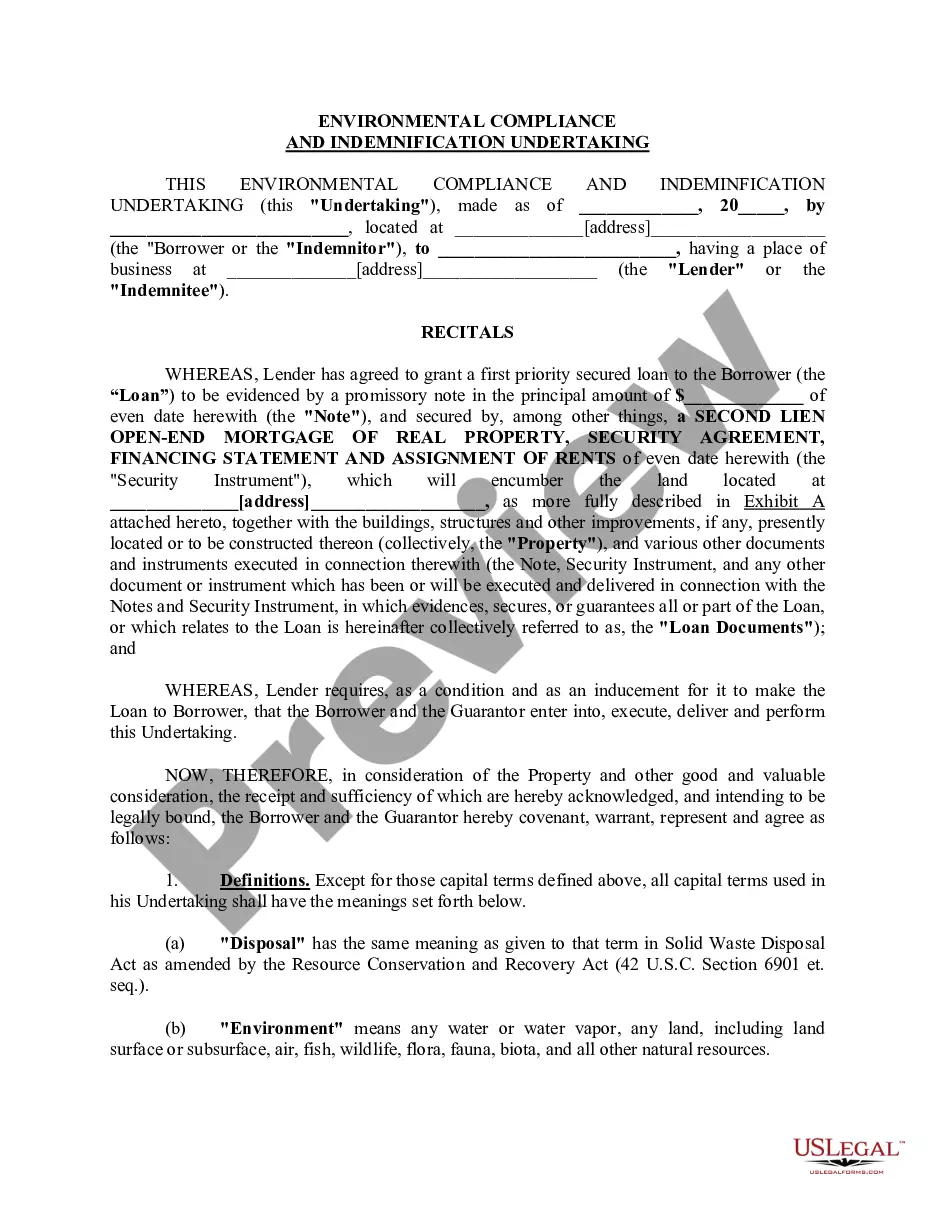
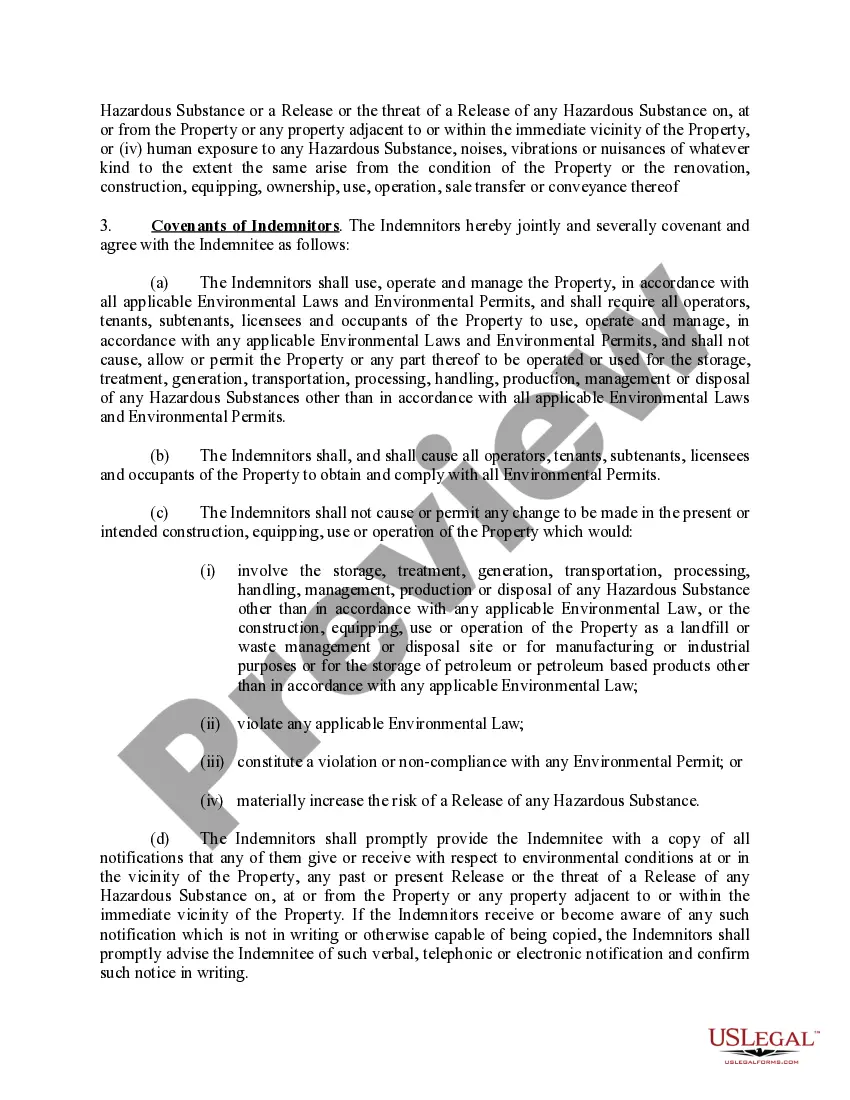
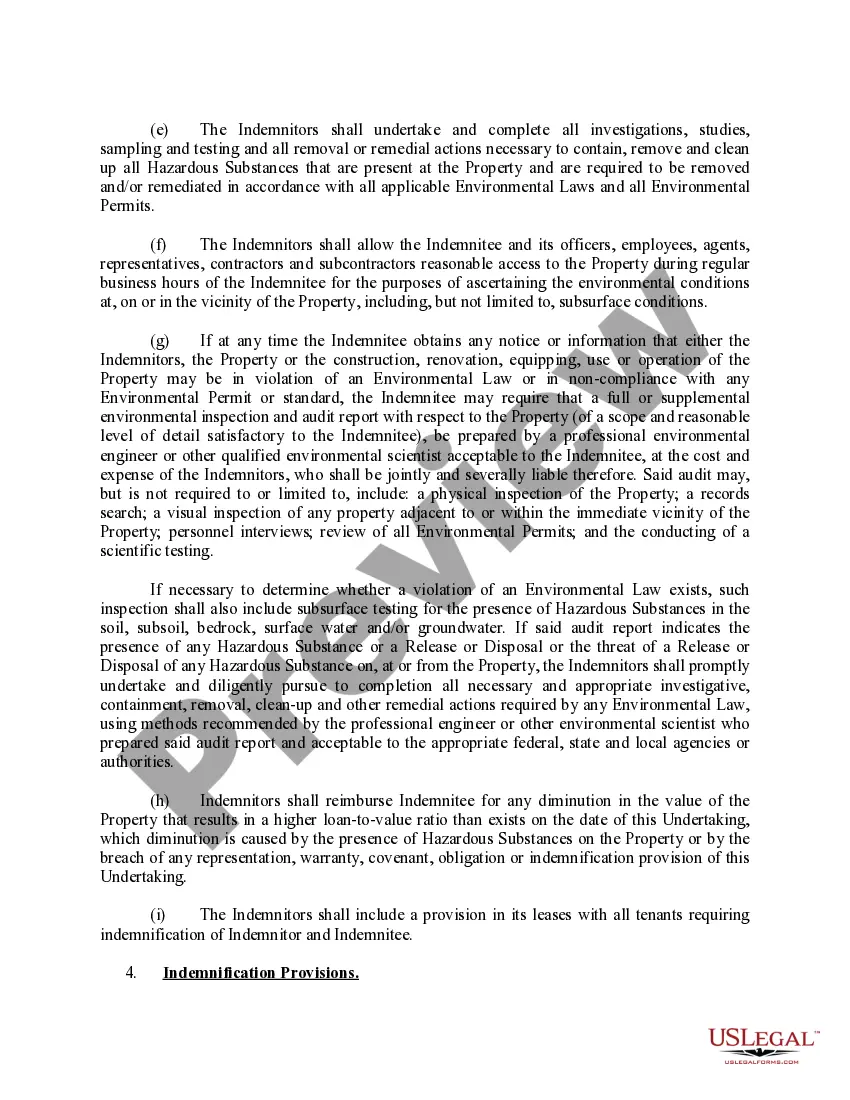
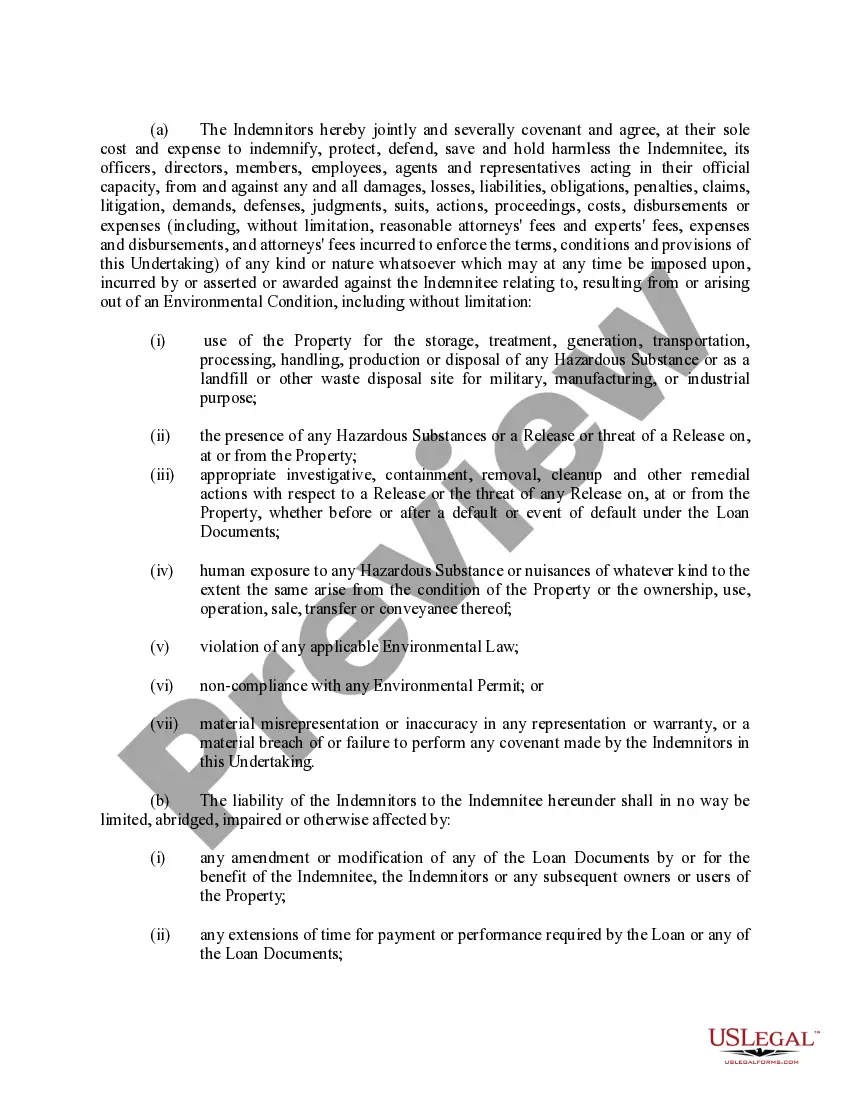
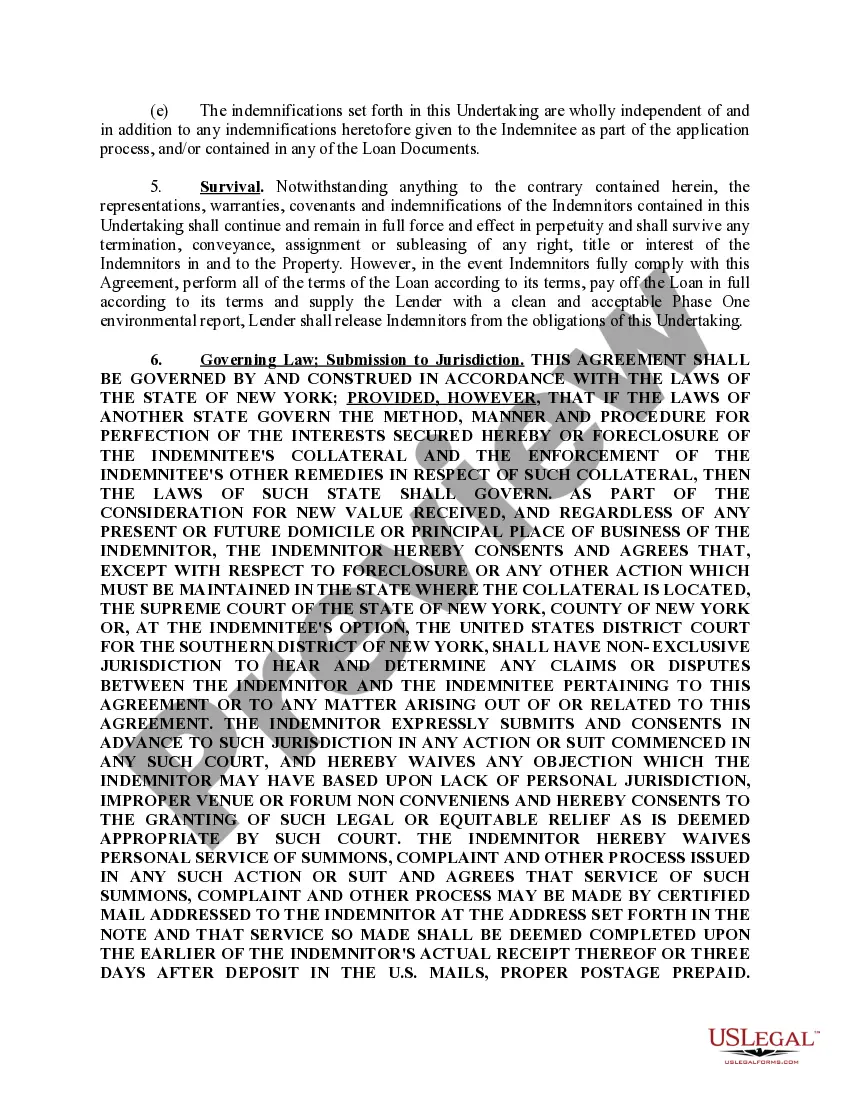
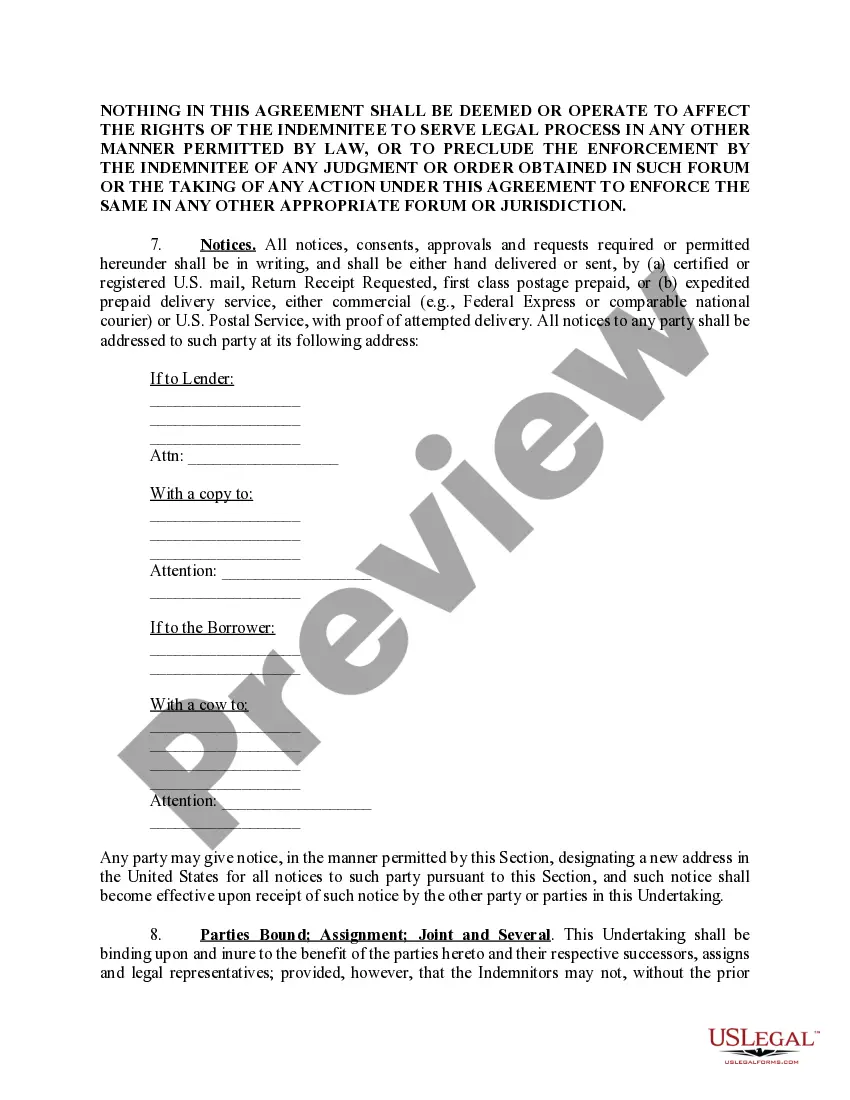
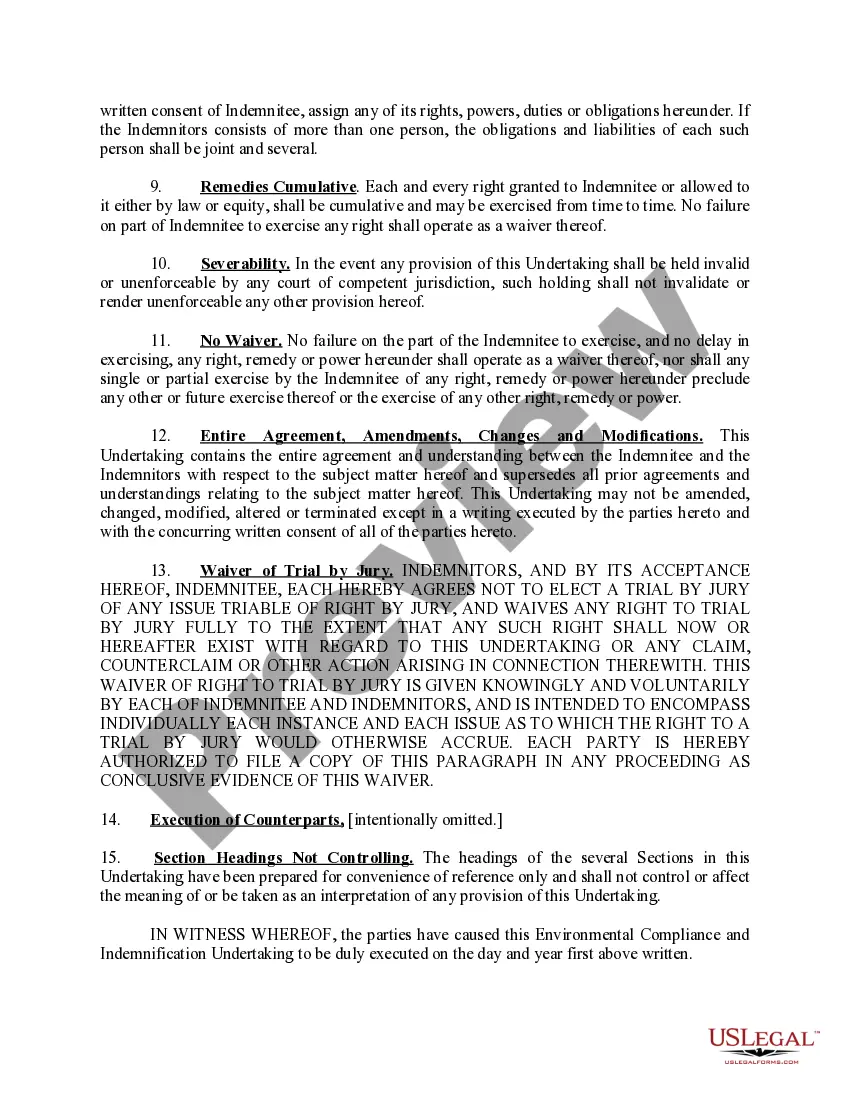
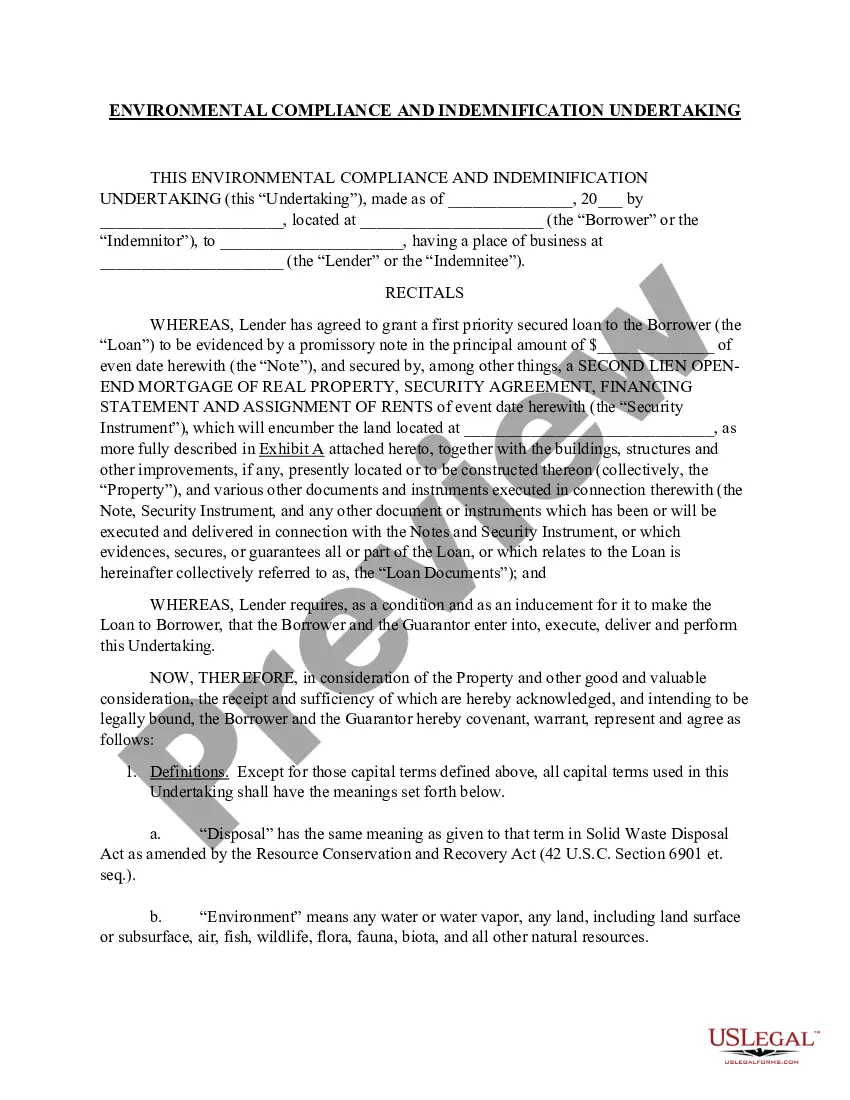
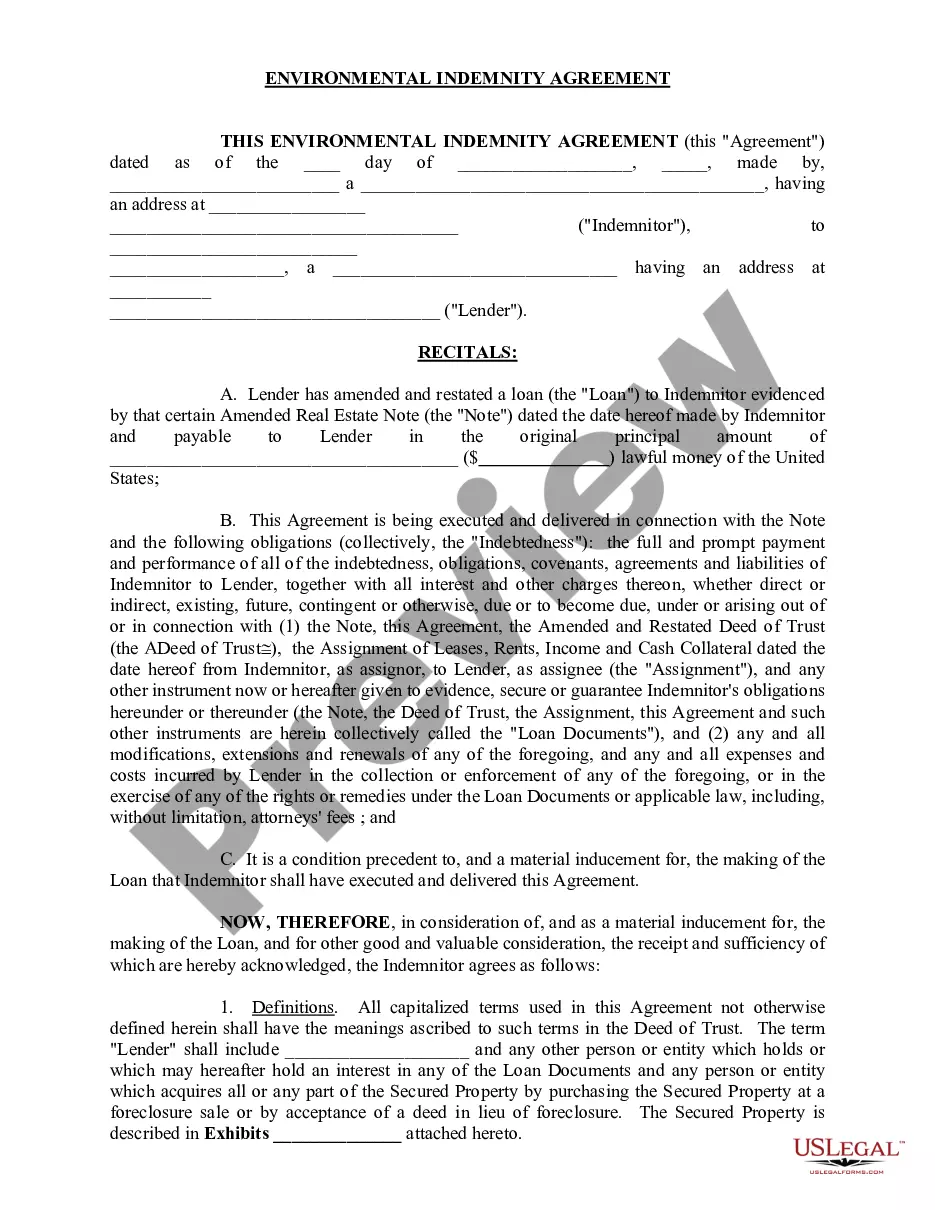
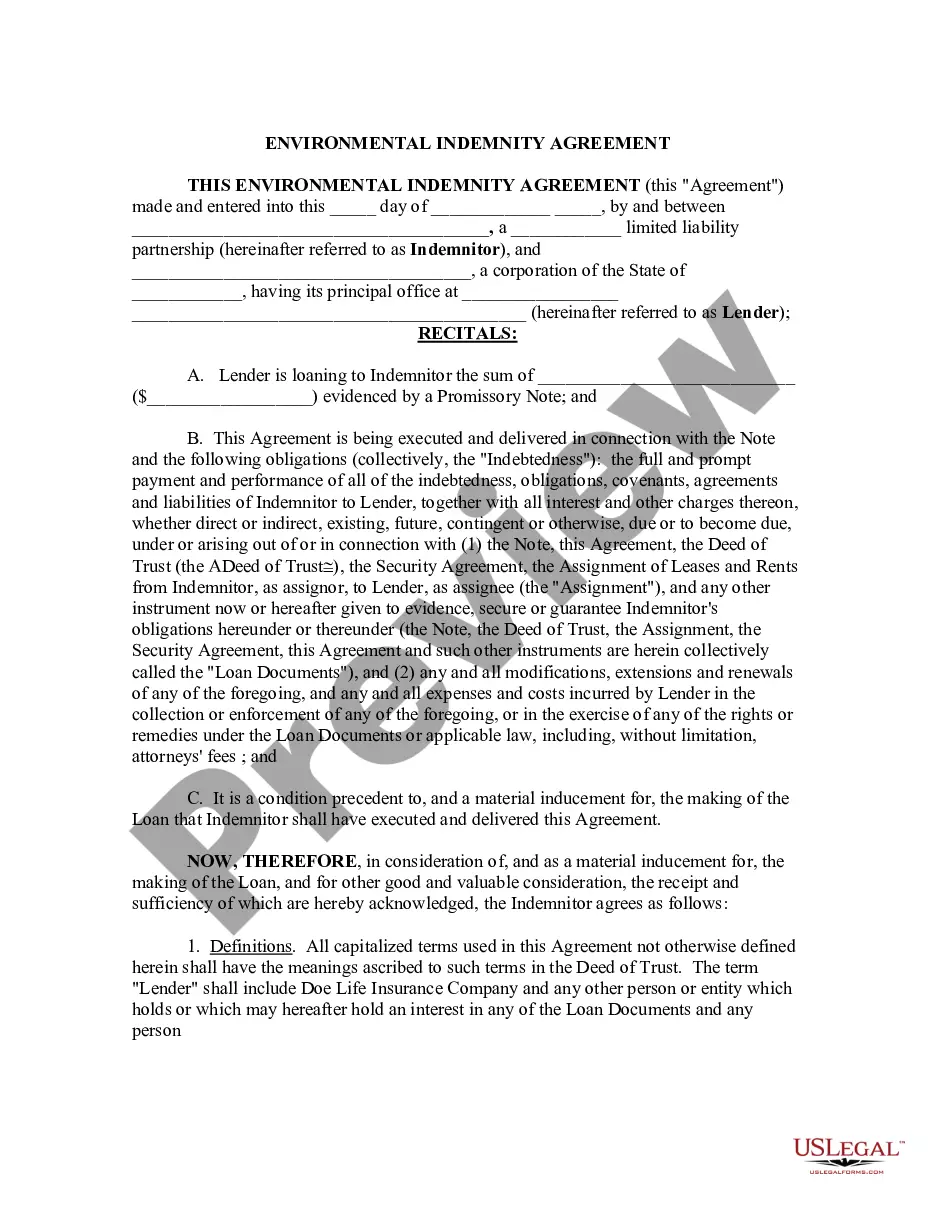
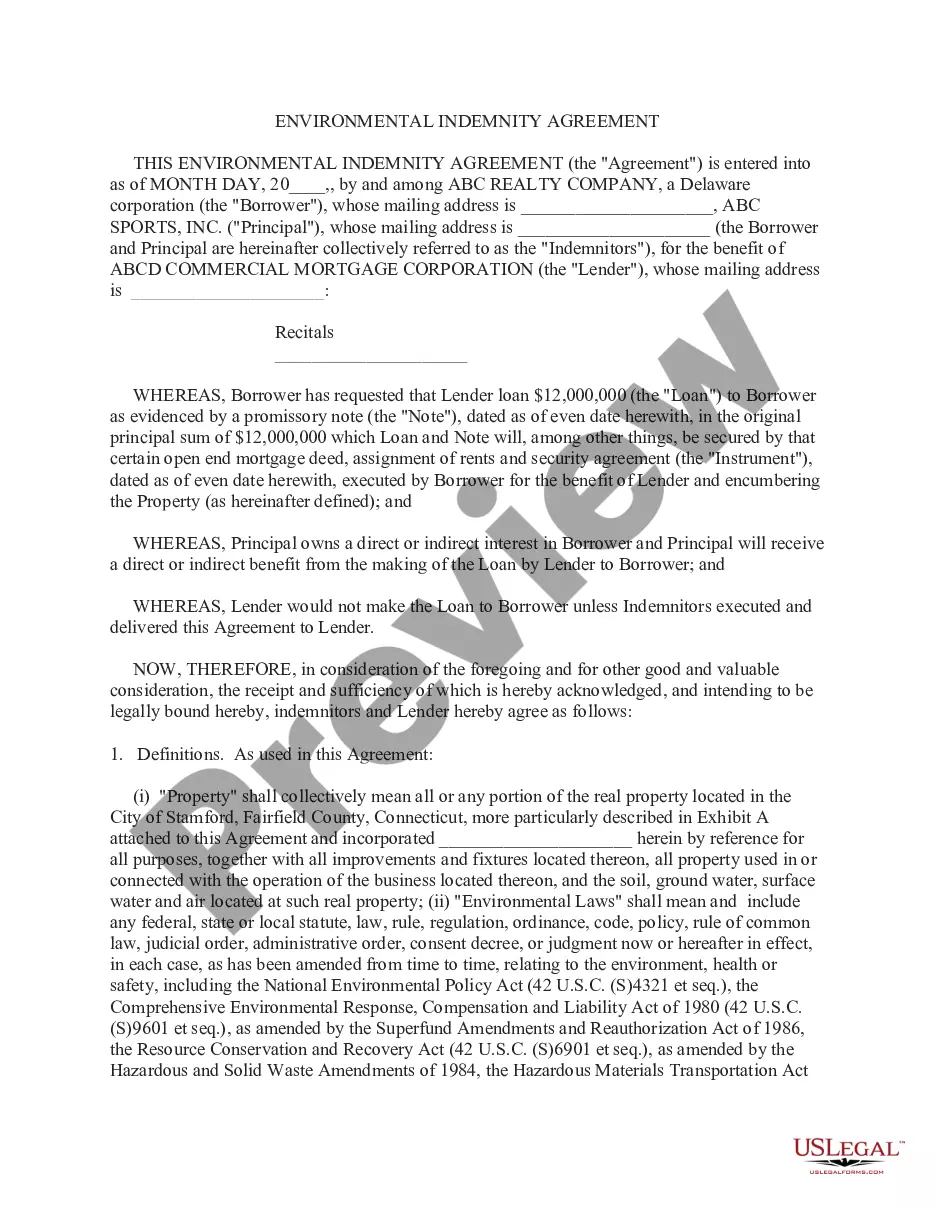
The Environmental Compliance and Indemnification Undertaking is a legal agreement between a borrower (the Indemnitor) and a lender (the Indemnitee) regarding environmental responsibilities related to a loan secured by real property. This form outlines the conditions under which the borrower and guarantor agree to manage and adhere to environmental regulations, thus protecting the lender from potential liabilities associated with hazardous substances on the property. Unlike other agreements, this form specifically addresses environmental compliance and indemnification, ensuring clarity about the parties' obligations in relation to environmental laws.
Form components explained
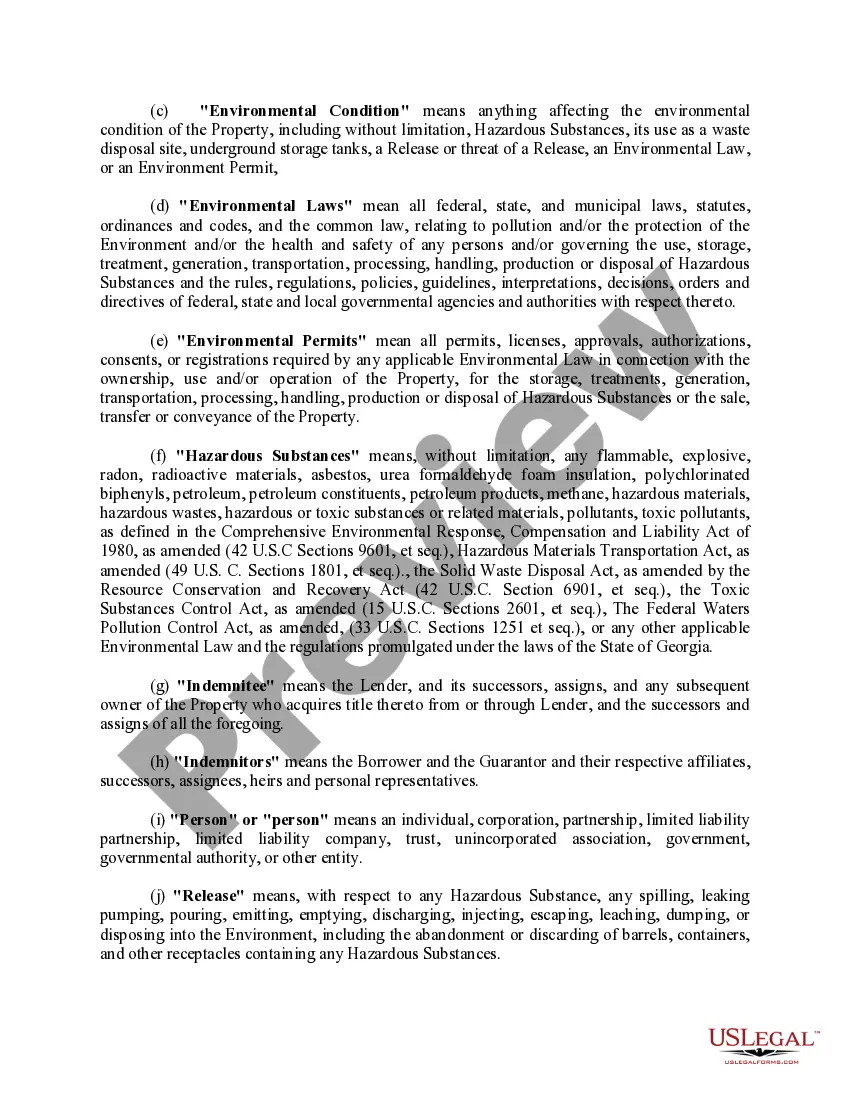
- Definitions: Key terms such as "Hazardous Substances" and "Environmental Laws" are clearly defined.
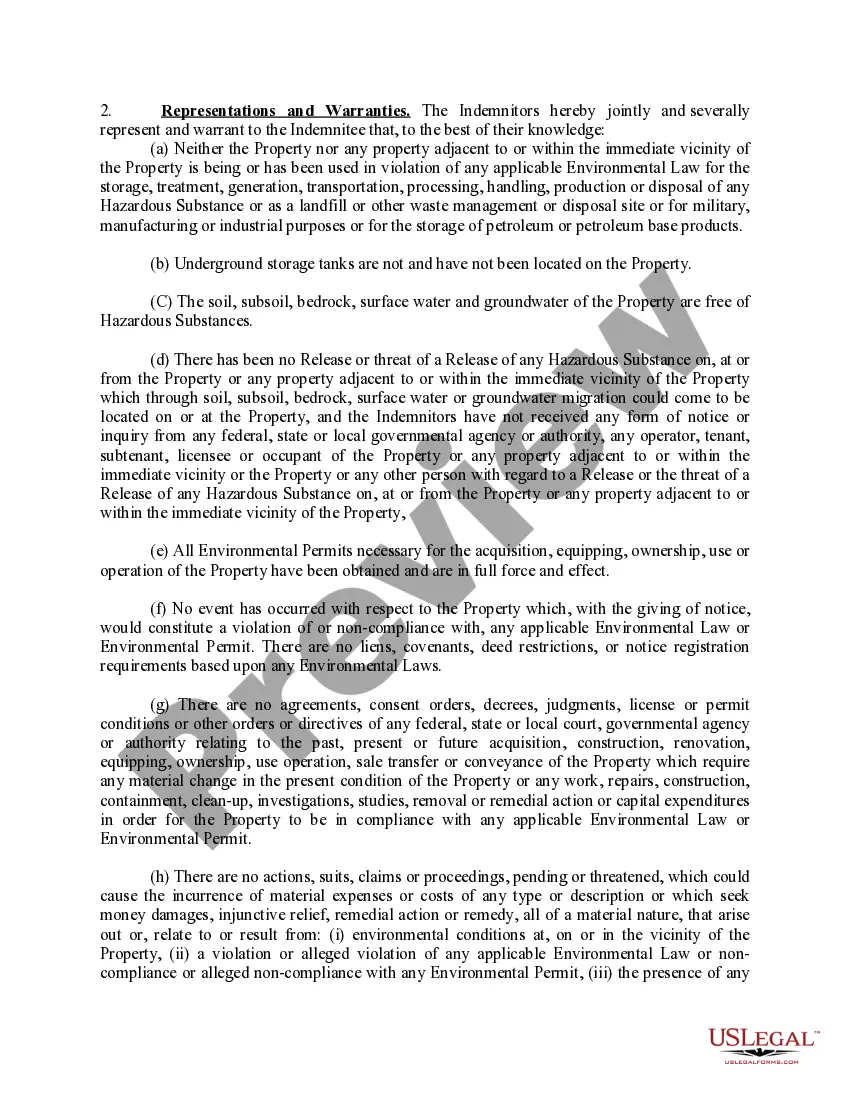
- Representations and Warranties: The Indemnitors confirm the environmental status of the property and their compliance with laws.
- Covenants: Obligations regarding the management of the property and necessary permits.
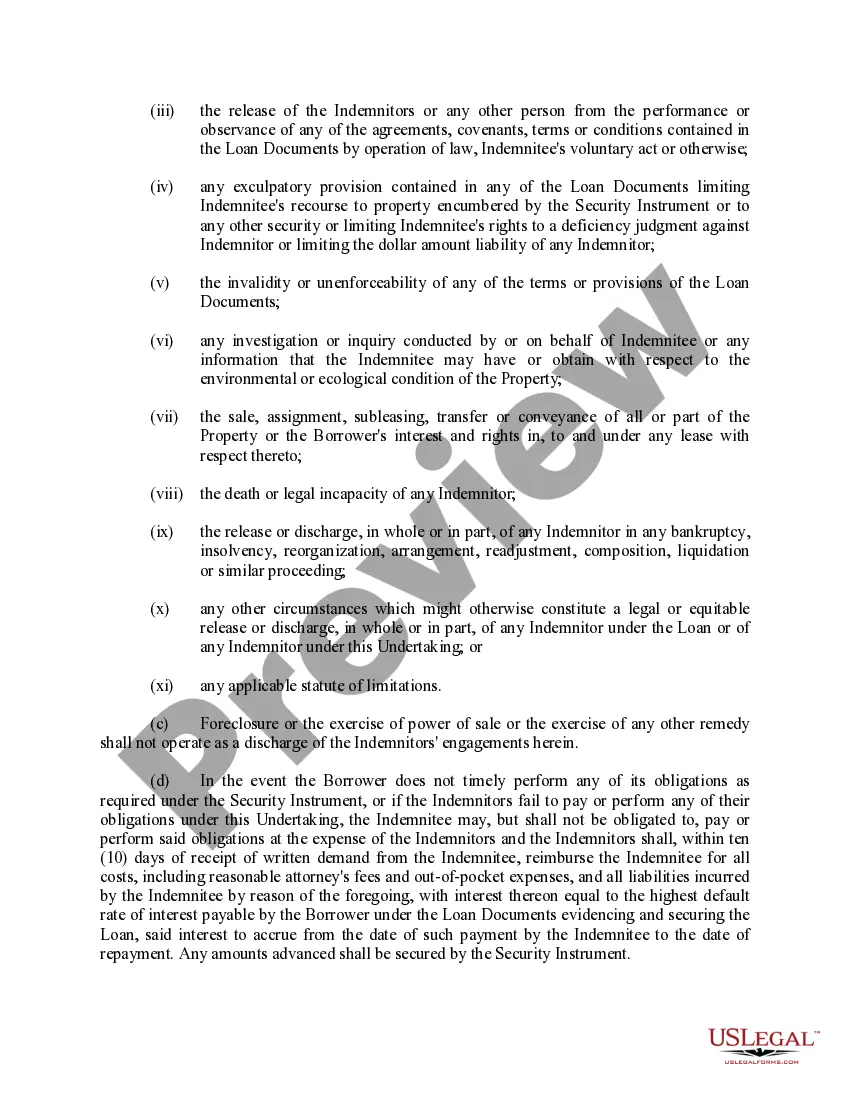
- Indemnification Provisions: Details the Indemnitors' promise to protect the Indemnitee from environmental claims and liabilities.
- Survival Clause: Specifies that the obligations under this agreement continue beyond termination or transfer of property rights.

When to use this form
This form should be used when a borrower is seeking a secured loan for real estate and the lender requires assurances regarding environmental compliance. It is especially relevant in transactions involving properties with potential environmental concerns, such as contaminated sites or properties previously used for industrial purposes. This undertaking helps ensure that the lender is protected from financial liabilities that may arise due to environmental issues associated with the property.
Who this form is for
- Borrowers or property owners seeking a loan secured by real estate.
- Guarantors involved in the loan agreement who will ensure compliance with environmental laws.
- Lenders wishing to protect themselves from liabilities related to environmental conditions of the property.
How to prepare this document
- Identify the parties involved: Fill in the names and addresses of the borrower (Indemnitor) and the lender (Indemnitee).
- Specify the property: Enter the address and details of the property being secured.
- Fill in loan details: Document the principal amount of the loan and any associated notes.
- Review definitions: Make sure all terms are understood and accurately reflect the agreement's intent.
- Sign and notarize the document: Ensure all parties sign the agreement and obtain notarization if required.
Notarization guidance
This form does not typically require notarization unless specified by local law. However, obtaining notarization can help ensure the validity and enforceability of the document.
Get your form ready online
Our built-in tools help you complete, sign, share, and store your documents in one place.
Make edits, fill in missing information, and update formatting in US Legal Forms—just like you would in MS Word.
Download a copy, print it, send it by email, or mail it via USPS—whatever works best for your next step.
Sign and collect signatures with our SignNow integration. Send to multiple recipients, set reminders, and more. Go Premium to unlock E-Sign.
If this form requires notarization, complete it online through a secure video call—no need to meet a notary in person or wait for an appointment.
We protect your documents and personal data by following strict security and privacy standards.

Make edits, fill in missing information, and update formatting in US Legal Forms—just like you would in MS Word.

Download a copy, print it, send it by email, or mail it via USPS—whatever works best for your next step.

Sign and collect signatures with our SignNow integration. Send to multiple recipients, set reminders, and more. Go Premium to unlock E-Sign.

If this form requires notarization, complete it online through a secure video call—no need to meet a notary in person or wait for an appointment.

We protect your documents and personal data by following strict security and privacy standards.
Common mistakes to avoid
- Failing to define key terms clearly, which can lead to misunderstandings.
- Not providing accurate property details, leading to potential legal complications.
- Overlooking the requirement for notarization when necessary.
- Neglecting to review the entire agreement for completeness before signing.
Benefits of using this form online
- Convenience: Download and complete the form from anywhere, anytime.
- Reliability: Utilize templates drafted by licensed attorneys to ensure compliance with legal standards.
- Editability: Easily fill out or update the information as needed before finalizing the document.
Looking for another form?

Form popularity
FAQ
Indemnity is compensation paid by one party to another to cover damages, injury or losses.An example of an indemnity would be an insurance contract, where the insurer agrees to compensate for any damages that the entity protected by the insurer experiences.
Company/Business/Individual Name shall fully indemnify, hold harmless and defend _______ and its directors, officers, employees, agents, stockholders and Affiliates from and against all claims, demands, actions, suits, damages, liabilities, losses, settlements, judgments, costs and expenses (including but not
Building Blocks of an Indemnification Clause. Typical indemnification provisions will be long sentences with many clauses, legal-sounding words, and long lists of specific details. Insurance Implications and Other Contractual Matters. Other Technical Elements of an Indemnification Provision. Takeaway.
It's still your business decision whether you sign them or not, but you should do so only where it is a critical contract that you have no way of modifying or negotiating changes. In contrast, the best kind of Indemnity Agreement is commonly called a Mutual Indemnity Agreement or a Mutual Hold Harmless Provision.