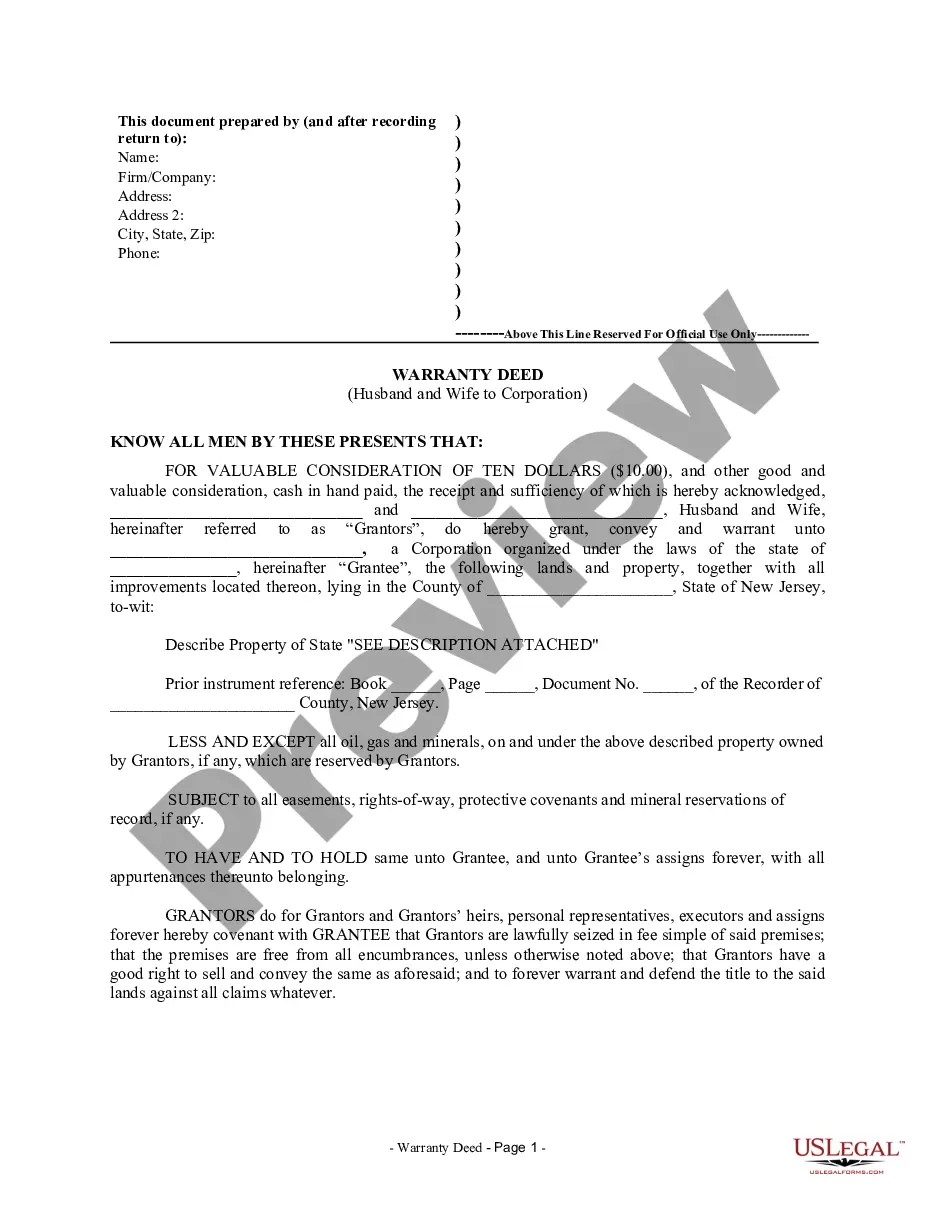
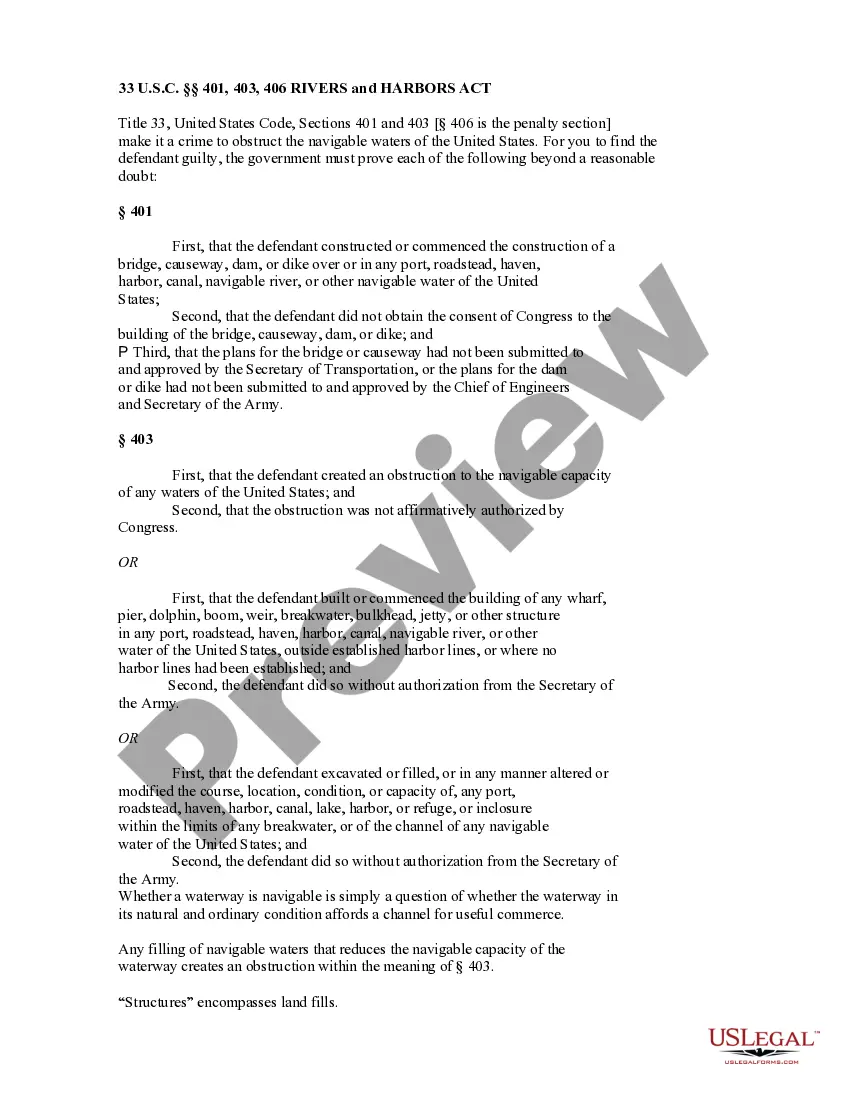
South Carolina RIVERS and HARBORS ACT

Notarization requirements for this form
Notarization is not commonly needed for this form. However, certain documents or local rules may make it necessary. Our notarization service, powered by Notarize, allows you to finalize it securely online anytime, day or night.
Get your form ready online
Our built-in tools help you complete, sign, share, and store your documents in one place.
Make edits, fill in missing information, and update formatting in US Legal Forms—just like you would in MS Word.
Download a copy, print it, send it by email, or mail it via USPS—whatever works best for your next step.
Sign and collect signatures with our SignNow integration. Send to multiple recipients, set reminders, and more. Go Premium to unlock E-Sign.
If this form requires notarization, complete it online through a secure video call—no need to meet a notary in person or wait for an appointment.
We protect your documents and personal data by following strict security and privacy standards.

Make edits, fill in missing information, and update formatting in US Legal Forms—just like you would in MS Word.

Download a copy, print it, send it by email, or mail it via USPS—whatever works best for your next step.

Sign and collect signatures with our SignNow integration. Send to multiple recipients, set reminders, and more. Go Premium to unlock E-Sign.

If this form requires notarization, complete it online through a secure video call—no need to meet a notary in person or wait for an appointment.

We protect your documents and personal data by following strict security and privacy standards.
Looking for another form?
Form popularity
FAQ
Description. Starting in 1870, there was a series of rivers and harbors acts passed by the U.S. Congress that provided funding for oversight of navigation, infrastructure, flooding, and other problems associated with the nation's waterways.
State laws: Some items can't be sold on Sundays.Horses can't be kept in bathtubs.If a man vows to marry a woman, he must see that promise through.Pinball machines are not to be played by everyone.Work is illegal on Sundays unless as a necessary or for charity.
The S.C. Dams and Reservoirs Safety Act is the basis of South Carolina's dams and reservoirs safety programs. The purpose of the act is protect citizens health, safety, and welfare by creating a regulatory program to reduce the risk of failure of dams.
The program purpose is to promote conservation of the state's river heritage and protect the "unique or outstanding scenic, recreational, geologic, botanical, fish, wildlife, historic, or cultural values" of selected rivers or river segments in the state.
No person shall be permitted or allowed to make or keep up any dam or bank to stop the course of any waters so as to overflow the lands of another person without the consent of such person first had and obtained nor shall any person be permitted or allowed to let off any reserved water to injure the crops upon the
50-1-137 Impeding or obstructing hunting, fishing, trapping, or harvesting marine species unlawful; penalties.
In South Carolina, water law follows what is known as the ?common enemy doctrine.? Under this legal theory, landowners can dispose of surface water (everyone's common enemy) any way they see fit, providing that it doesn't create a nuisance for a neighboring landowner, and that it isn't collected by an artificial means
Section 10 of the Rivers and Harbors Act of 1899 requires authorization from the Secretary of the Army, acting through the Corps of Engineers, for the construction of any structure in or over any navigable water of the United States.