South Carolina FORFEITURE
About this form
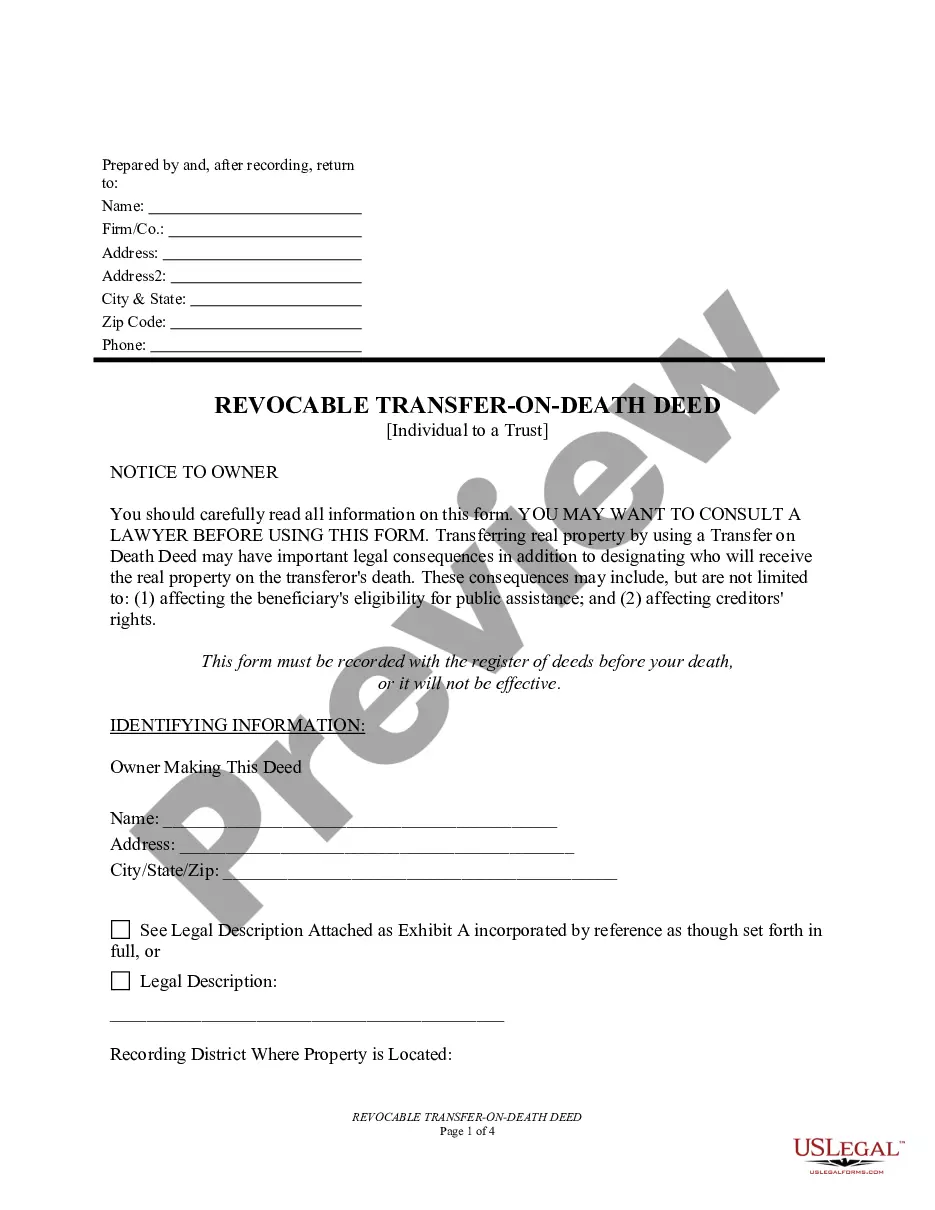
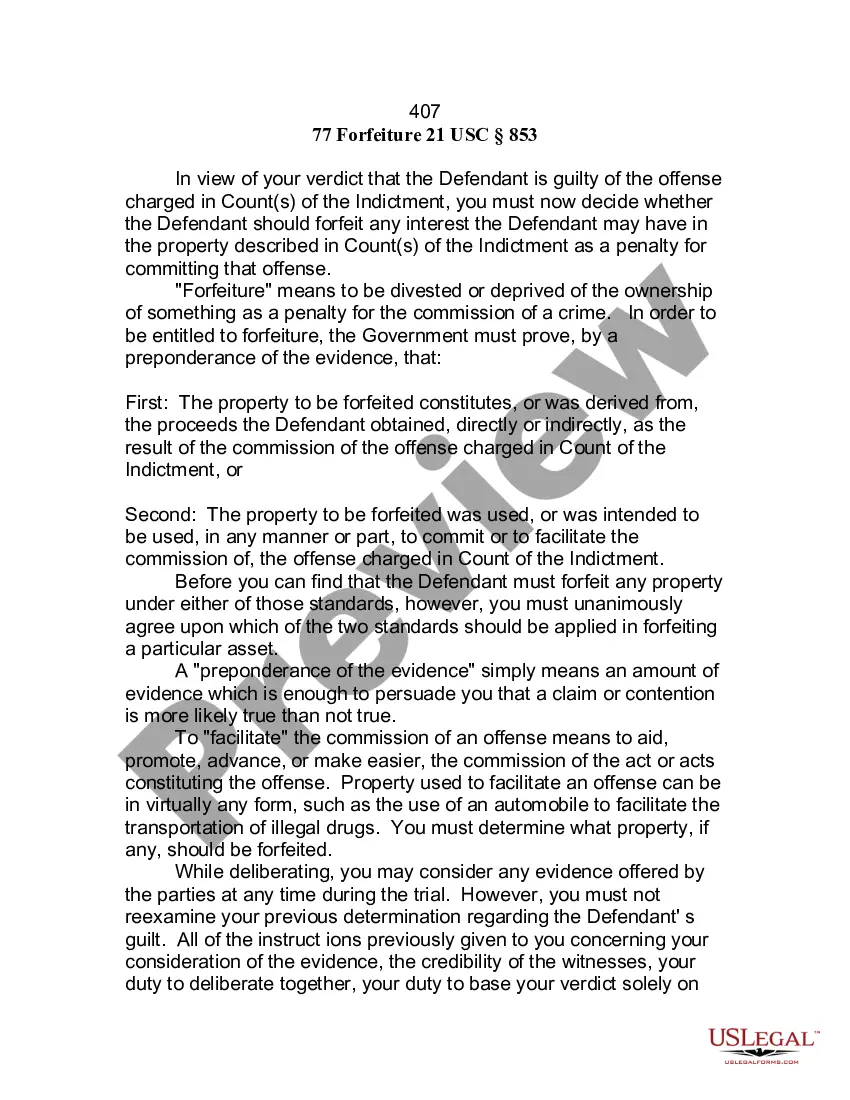
The forfeiture form is an official legal document used in federal criminal cases, particularly in South Carolina. This form outlines the legal process by which the government can seize property connected to specific criminal offenses. Unlike other legal documents, this form focuses on property forfeiture following a conviction for certain federal crimes, primarily related to financial crimes and healthcare offenses. It serves both as a guideline for courts and a basis for notifying involved parties of their rights and responsibilities regarding property that may be confiscated due to criminal activity.
Form components explained
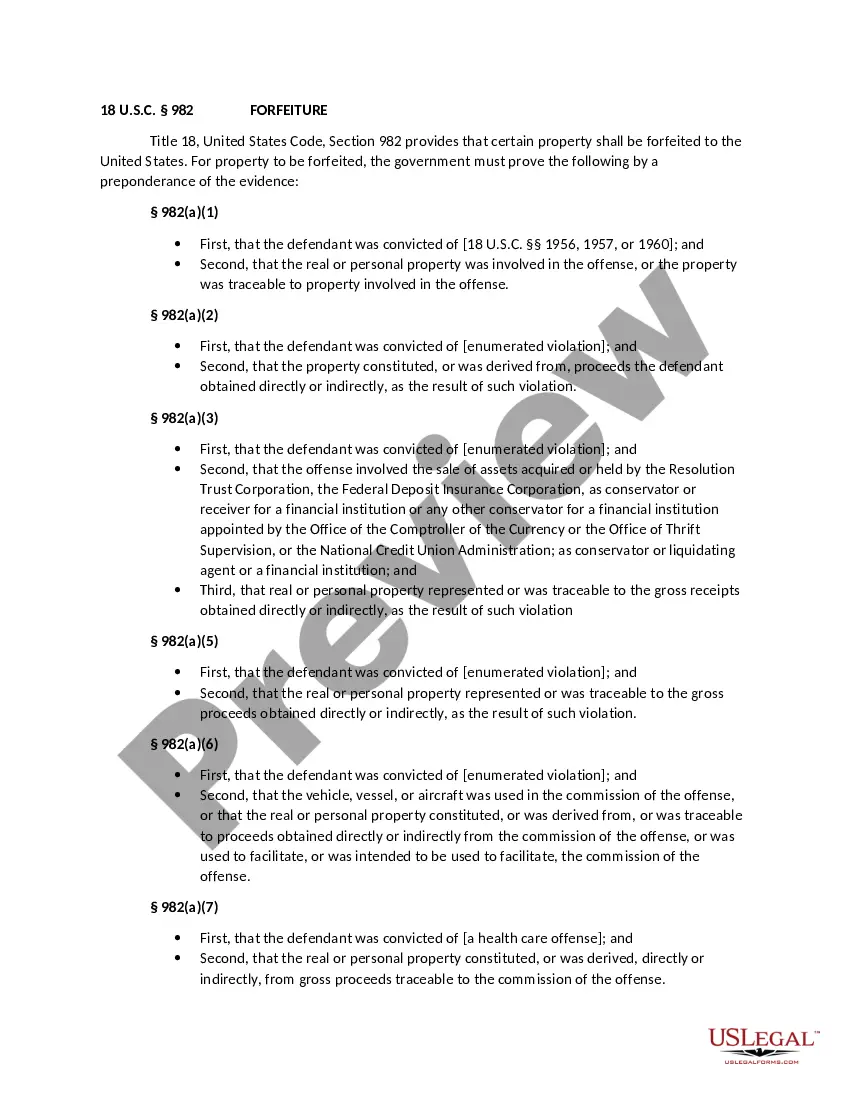
- Details the specific crimes that can lead to forfeiture under Title 18, United States Code, Section 982.
- Sets out the criteria for establishing a connection between the property and the criminal offense.
- Describes the government's burden of proof required to forfeit property.
- Includes procedures for challenging the forfeiture if the property owner believes it is unjust.
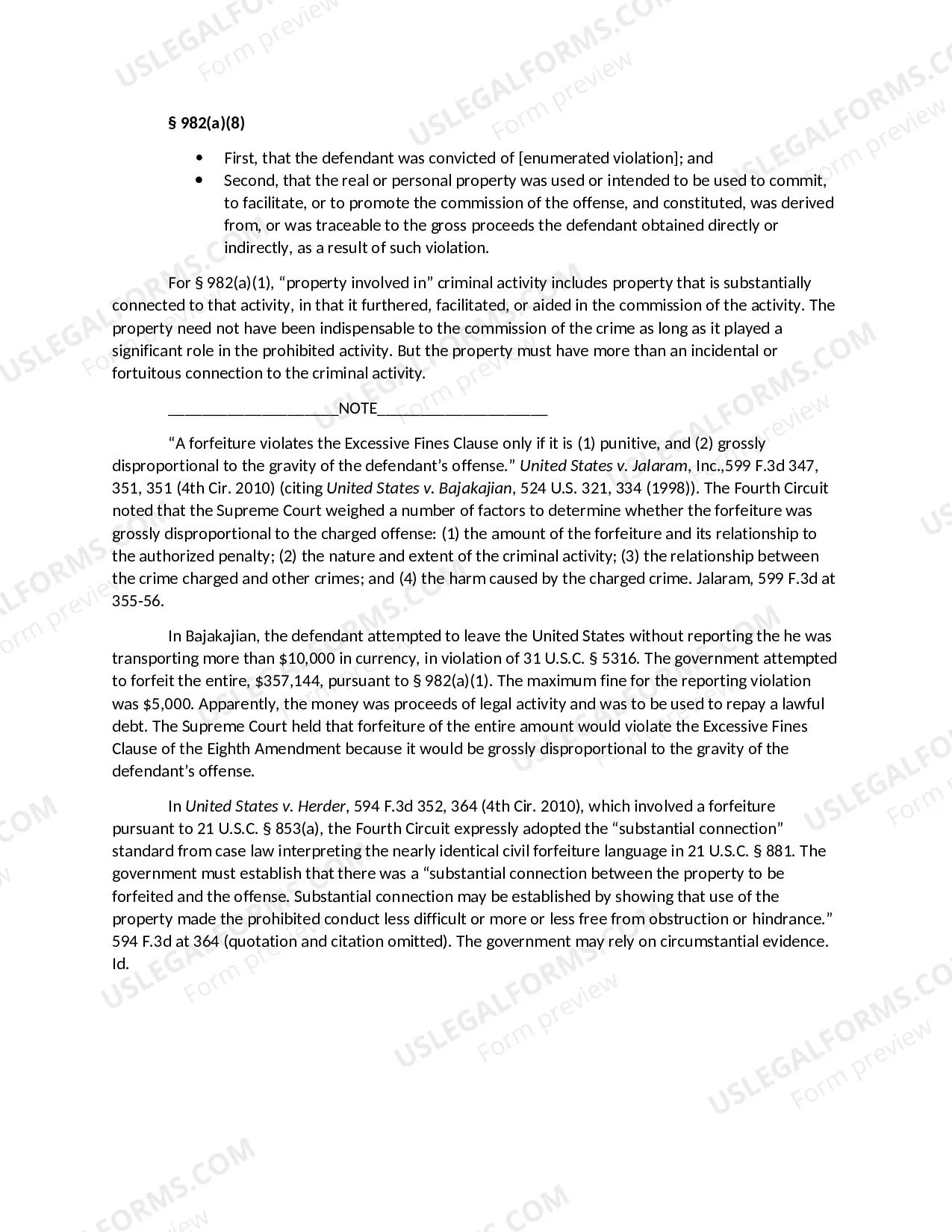
- Provides information on how forfeiture relates to the Excessive Fines Clause of the Eighth Amendment.
When to use this form
This form should be used in scenarios where a defendant has been convicted of specific crimes, such as money laundering or healthcare fraud, and property is implicated in the offense. If the defendant's property is believed to have been used in the criminal activity, or if it was derived from illegal proceeds, this form facilitates the legal process for forfeiture. It is also applicable in cases where a party wishes to contest the forfeiture of their assets due to alleged improper seizure.
Who can use this document
- Defendants convicted of crimes under Title 18 who may have assets that are subject to forfeiture.
- Property owners who wish to contest the state's claim to their property based on alleged connections to criminal activity.
- Legal representatives acting on behalf of individuals involved in forfeiture proceedings.
- Anyone needing to understand the legal obligations and rights related to potential or actual property forfeiture.
How to prepare this document
- Identify the individual or entity that has been convicted and record the conviction details.
- Clearly specify the property at risk of forfeiture, including all relevant descriptions and identifiers.
- Document how the property is related to the offense, ensuring to include any evidence of connection.
- Complete any applicable fields regarding the legal proceedings surrounding the conviction and forfeiture.
- Sign and date the form, ensuring it is served to the appropriate legal entities as required by law.
Notarization guidance
This form usually doesn’t need to be notarized. However, local laws or specific transactions may require it. Our online notarization service, powered by Notarize, lets you complete it remotely through a secure video session, available 24/7.
Get your form ready online
Our built-in tools help you complete, sign, share, and store your documents in one place.
Make edits, fill in missing information, and update formatting in US Legal Forms—just like you would in MS Word.
Download a copy, print it, send it by email, or mail it via USPS—whatever works best for your next step.
Sign and collect signatures with our SignNow integration. Send to multiple recipients, set reminders, and more. Go Premium to unlock E-Sign.
If this form requires notarization, complete it online through a secure video call—no need to meet a notary in person or wait for an appointment.
We protect your documents and personal data by following strict security and privacy standards.

Make edits, fill in missing information, and update formatting in US Legal Forms—just like you would in MS Word.

Download a copy, print it, send it by email, or mail it via USPS—whatever works best for your next step.

Sign and collect signatures with our SignNow integration. Send to multiple recipients, set reminders, and more. Go Premium to unlock E-Sign.

If this form requires notarization, complete it online through a secure video call—no need to meet a notary in person or wait for an appointment.

We protect your documents and personal data by following strict security and privacy standards.
Avoid these common issues
- Failing to adequately establish the connection between the property and the crime.
- Omitting key details about the conviction or the defendant.
- Not submitting the form within the required time frame post-conviction.
- Neglecting to seek legal counsel when contesting a forfeiture.
Why use this form online
- Access to easy-to-use templates that help ensure all required legal language is included.
- Convenience of completing and downloading forms from home.
- Editable fields simplify the customization necessary for specific cases.
- Access to legal advice and support as needed while preparing the form.
Looking for another form?
Form popularity
FAQ
The seizure of a bank account, for example, takes place when you lose the right to use the money in your account. Forfeiture occurs when your rights to the seized property are permanently lost through a court order or judgment. Forfeiture occurs after seizure, and seizure does not always end in forfeiture.
Civil forfeiture is one of the biggest threats to property rights in South Carolina. It allows law enforcement to take cash, cars, homes and other property from South Carolinians without so much as charging ?let alone convicting?the owner with a crime and then profit from the proceeds.
This defense is often known as the innocent owner defense. To avoid forfeiture under the innocent owner defense, the owner must show that he or she did not consent to the use of the property for any illegal activity and was not involved in any criminal activity related to the property.
While the government views civil forfeiture as a powerful tool against the drug trade, organized crime, and political corruption, it is often criticized as an unconstitutional exercise of government power, in violation of the Fourth, Fifth, and Eighth Amendments, and as against a fundamental element of due process.
Under Federal law, there are three (3) types of forfeiture: criminal forfeiture, civil judicial forfeiture, and administrative forfeiture.
The Asset Forfeiture Program's primary goals are: To punish and deter criminal activity by depriving criminals of property used in or acquired through illegal activities. To promote and enhance cooperation among federal, state, local, tribal, and foreign law enforcement agencies.
What are the types of Asset Forfeiture? Criminal forfeiture is an action brought as a part of the criminal prosecution of a defendant.Civil judicial forfeiture is an in rem (against the property) action brought in court against the property.
Examples of asset forfeiture include: police taking ownership of several kilos of cocaine in a drug possession case. the government keeping a hunting knife that was used in an assault with a deadly weapon case.