South Carolina POSSESSION OF MACHINEGUN
What is this form?
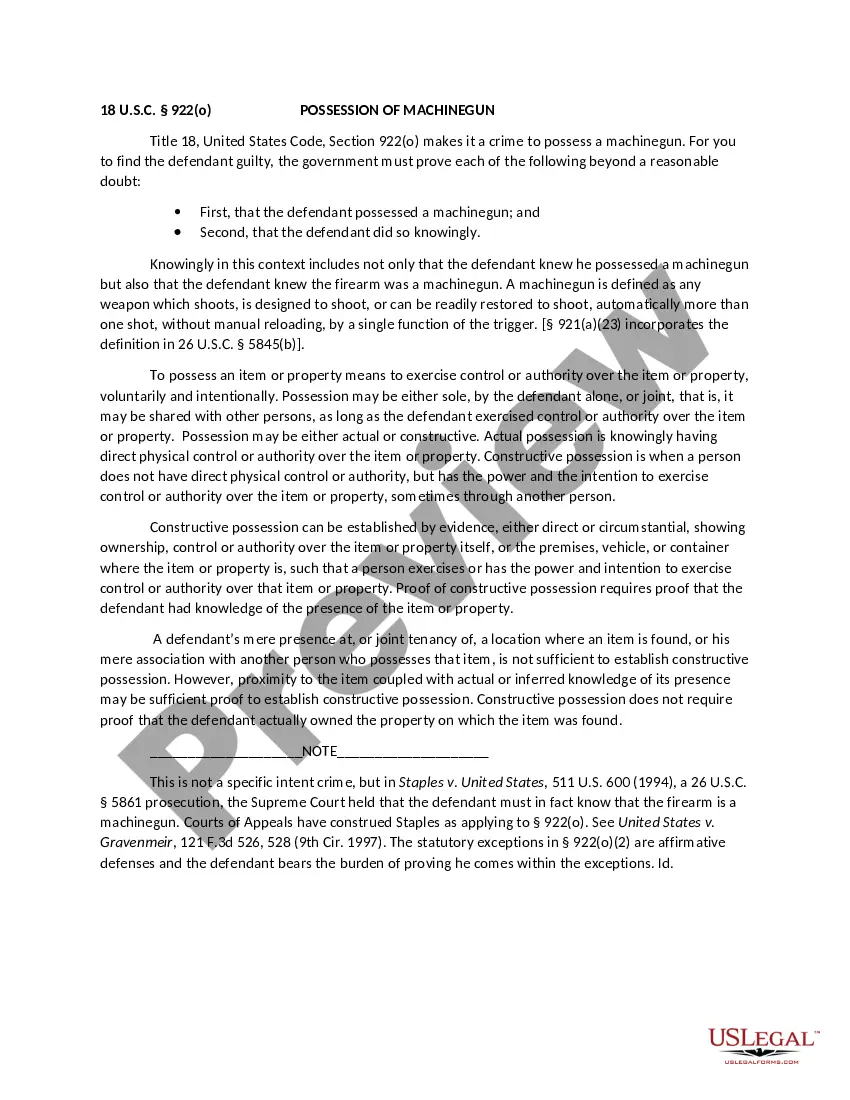
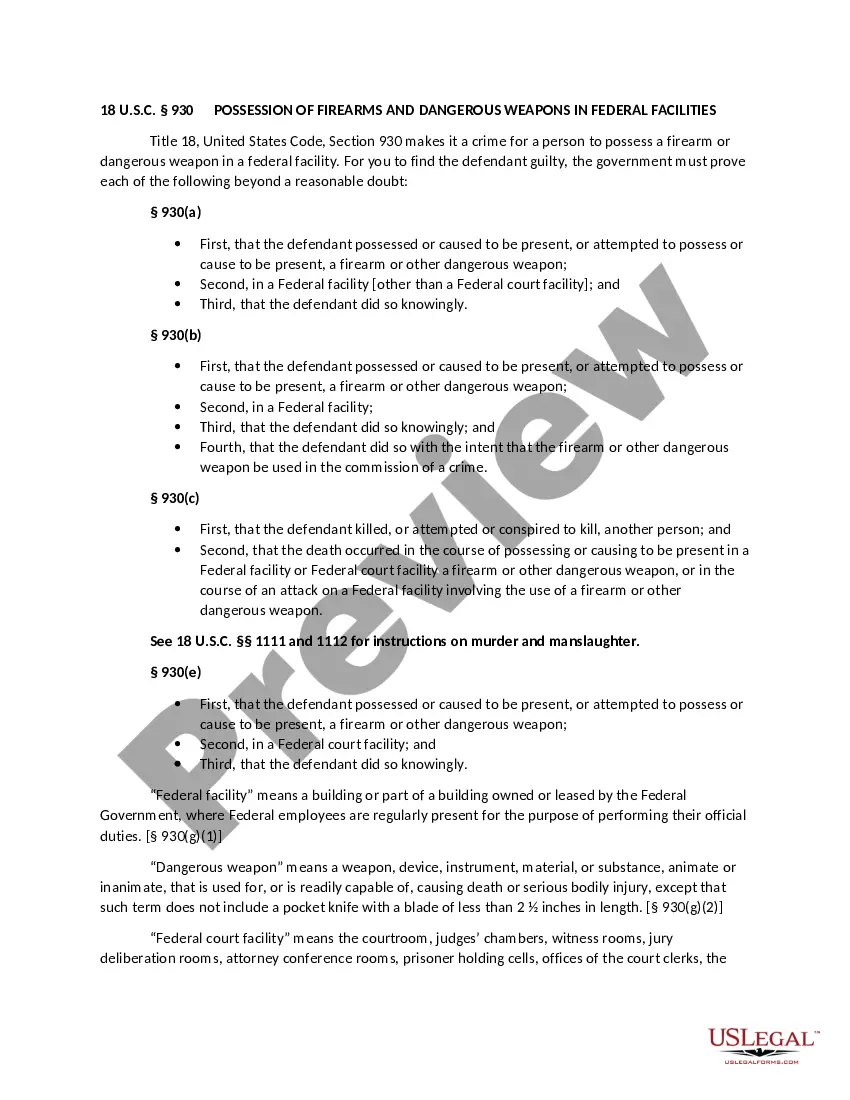
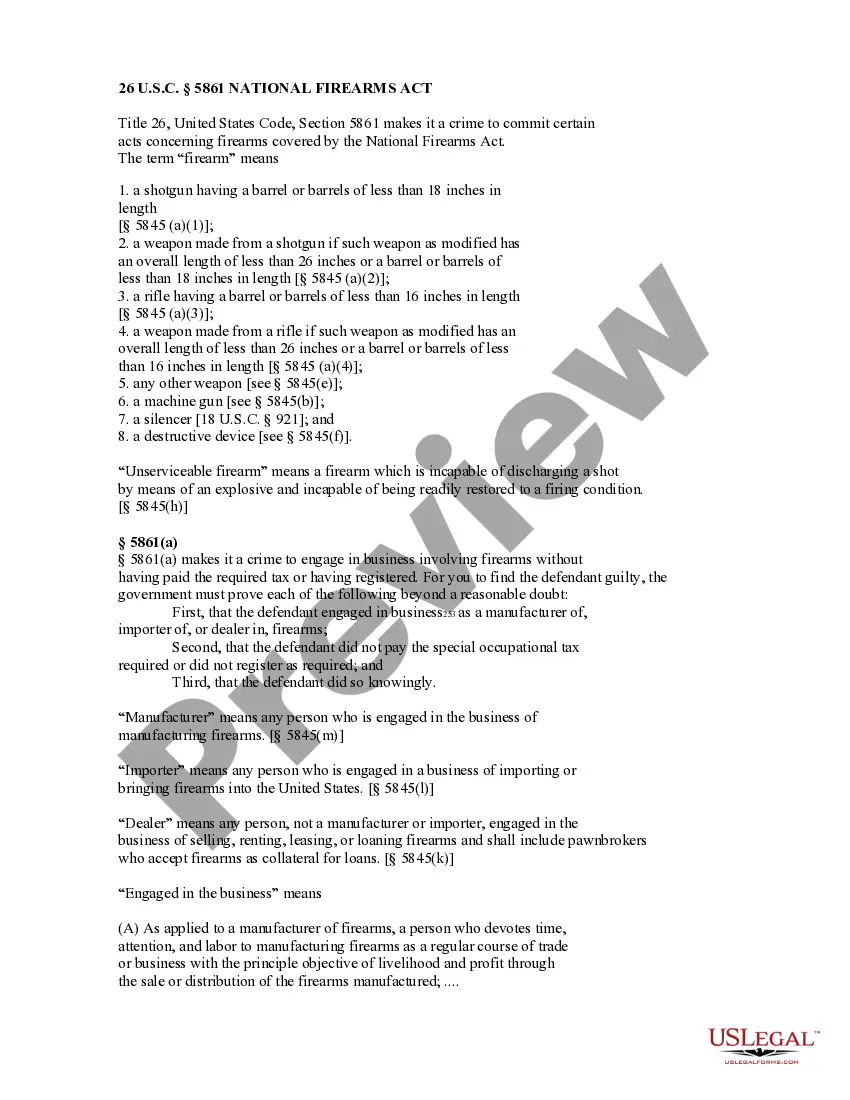
The Possession of Machinegun form is a legal document related to the criminal prosecution of individuals accused of illegally possessing a machinegun, as defined by Title 18, United States Code, Section 922(o). This form presents the official jury instructions for federal criminal cases in South Carolina, clearly explaining the elements required to prove possession of a machinegun in court. Unlike other forms, this document specifically addresses the legal definitions and standards necessary for prosecution under federal law.
Main sections of this form
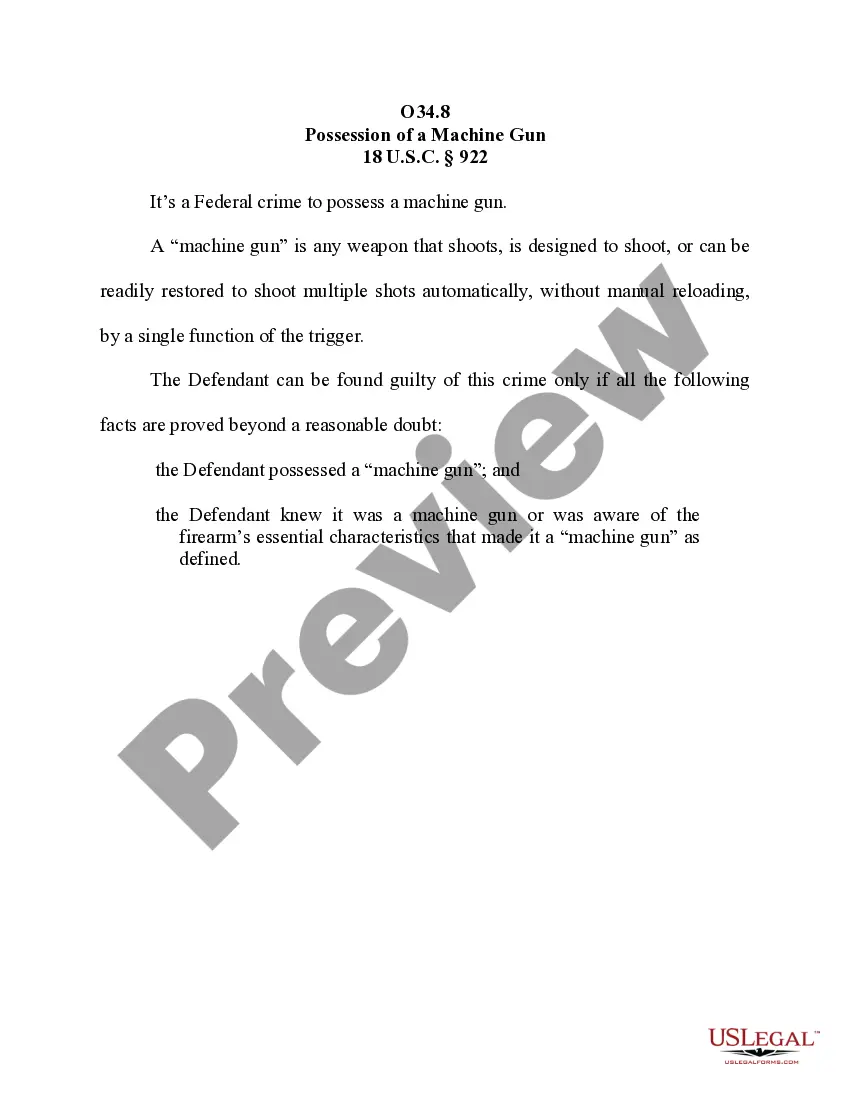
- Definition of a machinegun, including its functionality.
- The prosecution must establish that the defendant knowingly possessed a machinegun.
- Explanation of actual versus constructive possession.
- Criteria for establishing constructive possession including knowledge and proximity.
- Legal context around affirmative defenses and the defendant's burden of proof.
When this form is needed
This form is used in criminal cases where the defendant is charged with possession of a machinegun. It is particularly relevant in federal district courts when prosecution must establish beyond a reasonable doubt the defendant's knowledge and control over the machinegun. It serves as a guide for jurors to understand the legal standards involved in determining guilt.
Intended users of this form
- Judges presiding over criminal cases involving machinegun possession.
- Attorneys representing defendants in federal criminal cases.
- Legal professionals seeking to understand jury instructions related to firearm offenses.
Steps to complete this form
- Review the definition of possession and what constitutes a machinegun.
- Understand the requirements for proving possession, including both actual and constructive possession.
- Consider any statutory exceptions that may apply as affirmative defenses.
- Gather evidence to establish or refute knowledge of possession.
- Follow procedural guidelines set forth for jury instructions in court to ensure compliance with legal standards.
Does this document require notarization?
Notarization is generally not required for this form. However, certain states or situations might demand it. You can complete notarization online through US Legal Forms, powered by Notarize, using a verified video call available anytime.
Get your form ready online
Our built-in tools help you complete, sign, share, and store your documents in one place.
Make edits, fill in missing information, and update formatting in US Legal Forms—just like you would in MS Word.
Download a copy, print it, send it by email, or mail it via USPS—whatever works best for your next step.
Sign and collect signatures with our SignNow integration. Send to multiple recipients, set reminders, and more. Go Premium to unlock E-Sign.
If this form requires notarization, complete it online through a secure video call—no need to meet a notary in person or wait for an appointment.
We protect your documents and personal data by following strict security and privacy standards.
Make edits, fill in missing information, and update formatting in US Legal Forms—just like you would in MS Word.
Download a copy, print it, send it by email, or mail it via USPS—whatever works best for your next step.
Sign and collect signatures with our SignNow integration. Send to multiple recipients, set reminders, and more. Go Premium to unlock E-Sign.

If this form requires notarization, complete it online through a secure video call—no need to meet a notary in person or wait for an appointment.
We protect your documents and personal data by following strict security and privacy standards.
Common mistakes
- Failing to establish the defendant's knowledge of possession.
- Mixing up actual possession with constructive possession.
- Overlooking the importance of evidence that shows intent to control the machinegun.
- Ignoring statutory exceptions that may apply to the case.
Advantages of online completion
- Access to accurately drafted jury instructions from licensed attorneys.
- The convenience of downloading and editing the form as needed.
- Availability of a secure and reliable legal document that adheres to jurisdictional specifics.
- Easy access to legal information without the need for in-person consultations.
Legal use & context
- This form guides jurors in the federal criminal justice system on how to evaluate possession charges.
- It provides clarity on the legal definitions and standards relevant to machinegun possession under federal law.
- Understanding this form aids in identifying potential defenses available to the accused.
Looking for another form?
Form popularity
FAQ
Based on the Governor's signing of HB 3094, open carry as well as concealed carry is legal for residents with a South Carolina Concealed Weapons Permit (CWP) and for non-residents with a license/permit from a state that South Carolina honors as of August 15, 2021.
Unlawfully carrying of a handgun is a Misdemeanor offense defined by SC Code § 16-23-50(A)(2). If convicted, a defendant may face up to 1 year in prison, a fine up to $2,000.00, or both. Additionally, the handgun must be confiscated by Law Enforcement.
SECTION 16-23-230. Unlawful storing, keeping, or possessing of machine gun, military firearm, or sawed-off shotgun or rifle.
If you are found carrying your concealed weapon without a permit in South Carolina, you could receive a fine of up to $500 or up to 90 days in jail. Individuals who choose to carry a gun or firearm concealed should be cautious, even with a permit.
Unlawfully carrying of a handgun is a Misdemeanor offense defined by SC Code § 16-23-50(A)(2). If convicted, a defendant may face up to 1 year in prison, a fine up to $2,000.00, or both. Additionally, the handgun must be confiscated by Law Enforcement.
South Carolina considers some weapons offenses to be misdemeanors, but most cases of illegal firearm possession are considered to be felonies. For example, the ?usual? case of illegal handgun possession is treated as a felony that is punishable by up to five years in prison.
What is Unlawful Carry of a Weapon? Unlawful Carry of a Weapon, or UCW, refers to offenses involving the illegal possession of a handgun, illegal knife, or club in Texas. This is generally a Class A misdemeanor in Texas although as explained below, it can become a third degree felony under certain circumstances.
Fine of not more than $500 nor less than $200, or imprisonment for not more than 90 days nor less than 30 days. Also, the concealed weapon must be forfeited to the county (or city).