South Carolina THEFT OR BRIBERY CONCERNING PROGRAMS RECEIVING FEDERAL FUNDS
What this document covers
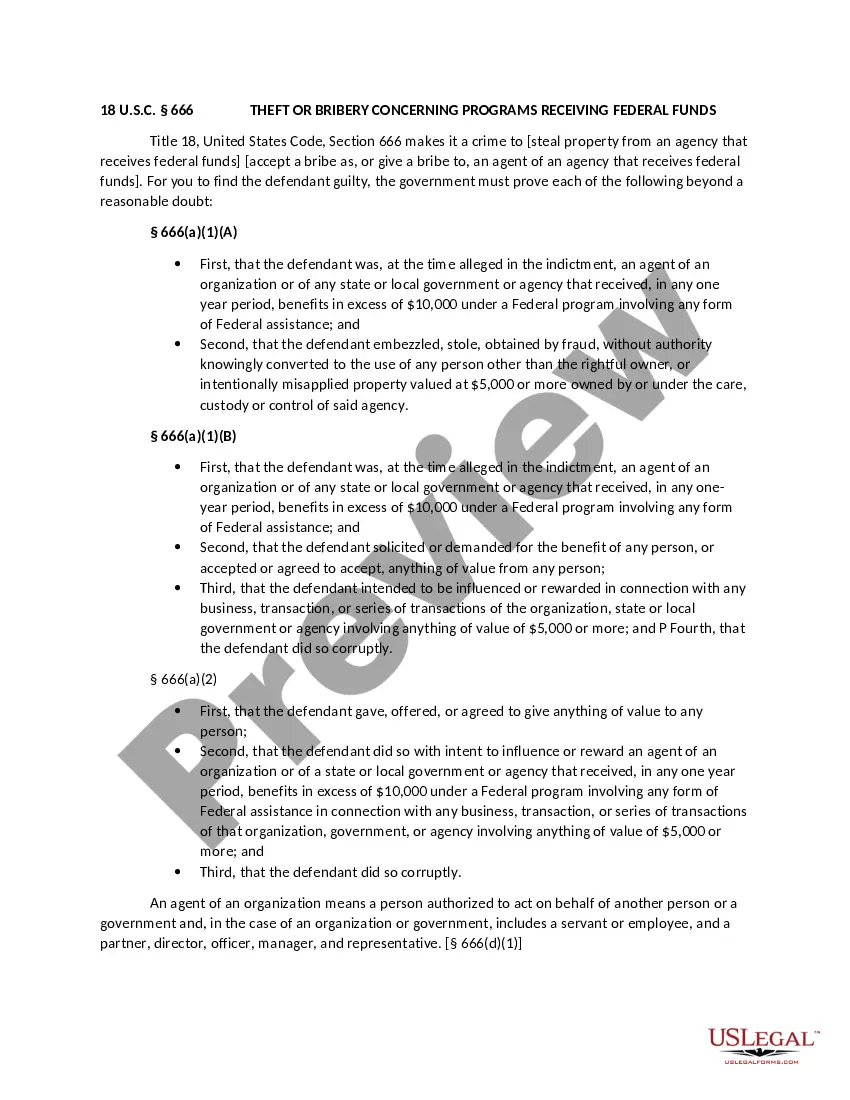
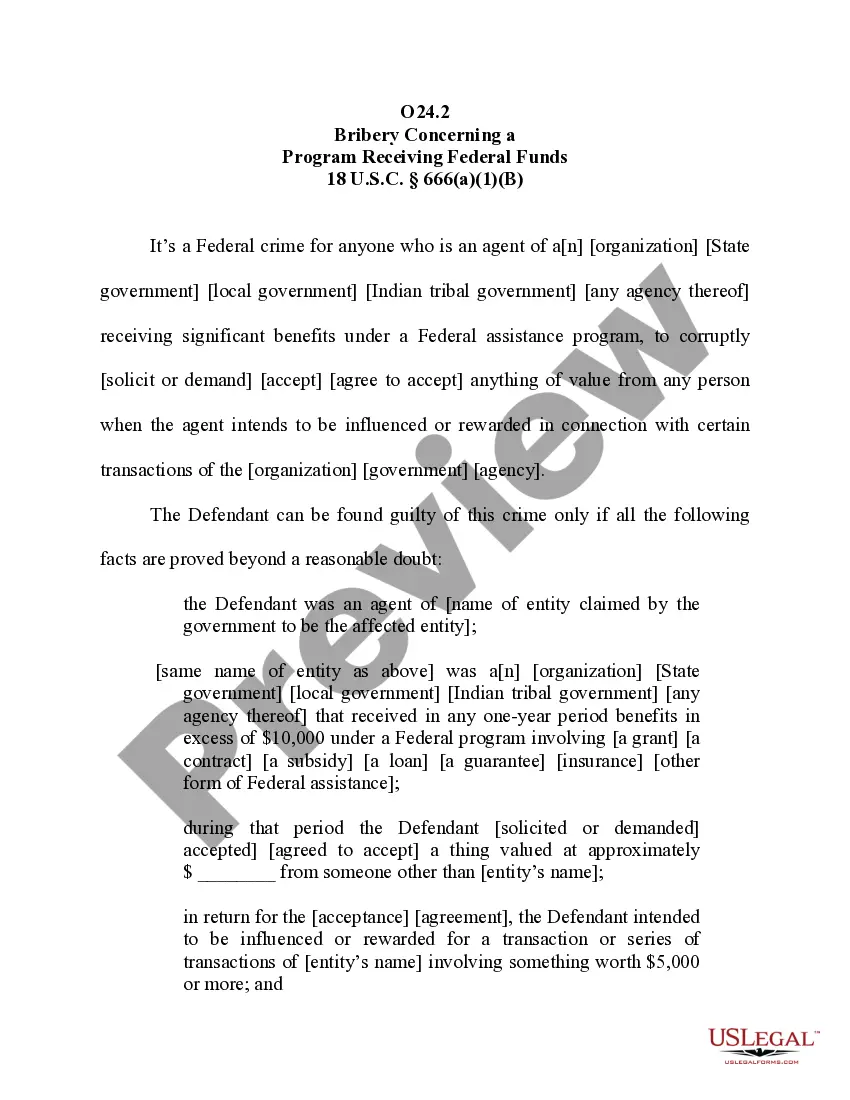
This form is designed to provide the jury instructions regarding theft or bribery involving programs that receive federal funds. It outlines the legal framework and necessary elements the government must prove to establish a defendant's guilt. This form is essential for understanding the specific charges and is tailored for use in the Federal District Court of South Carolina, ensuring accurate jurisdictional application. Unlike other legal templates, this form focuses specifically on criminal acts related to federal funding, offering clarity in such specialized scenarios.
Form components explained
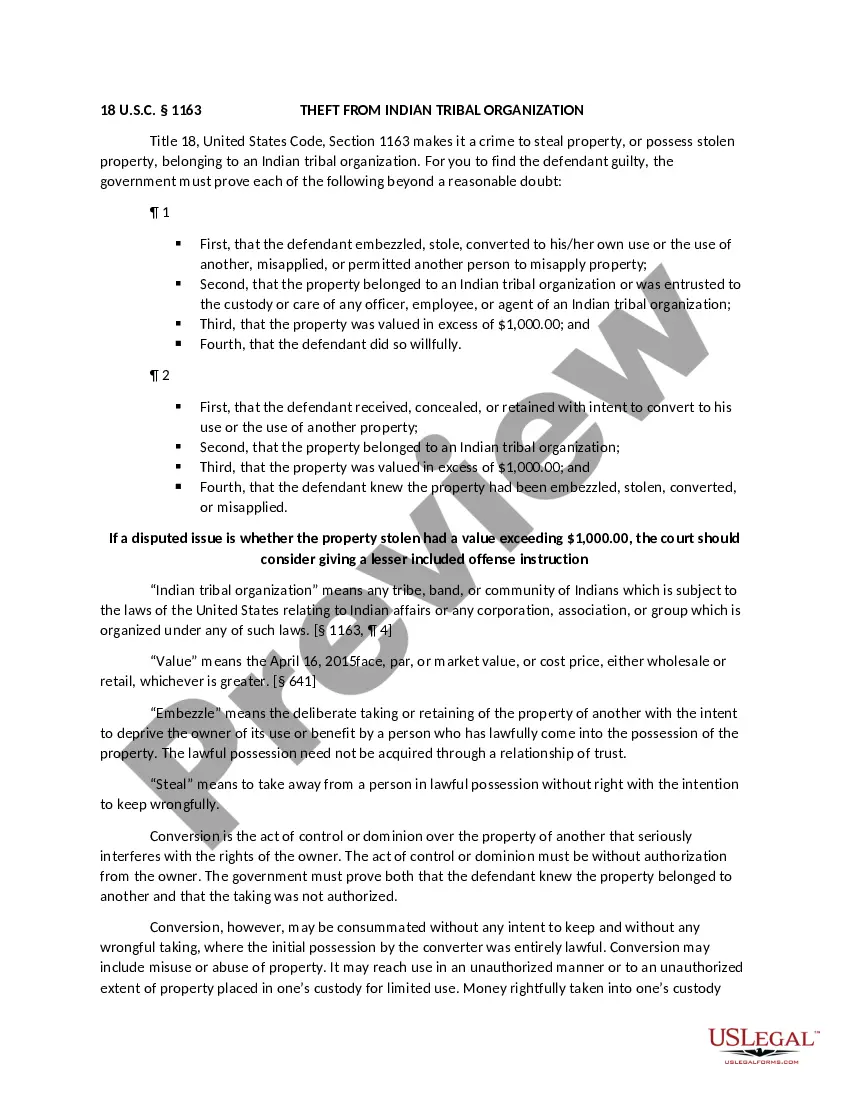
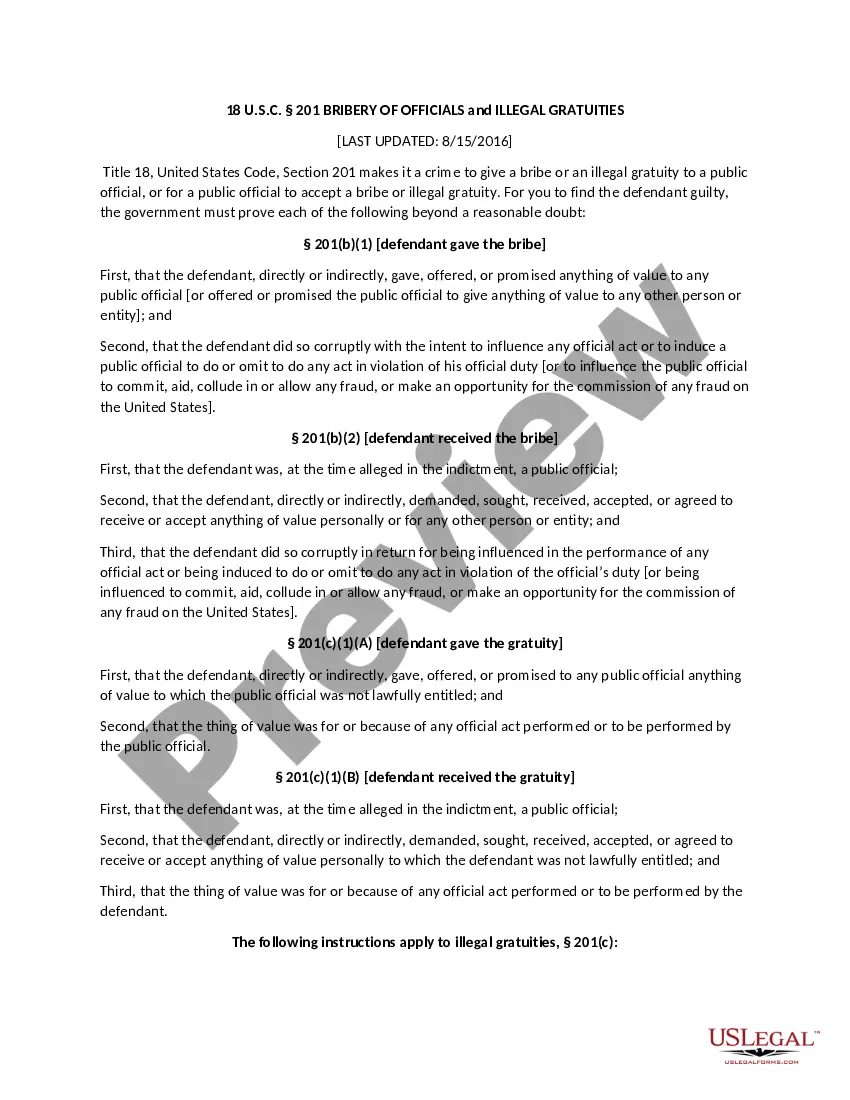
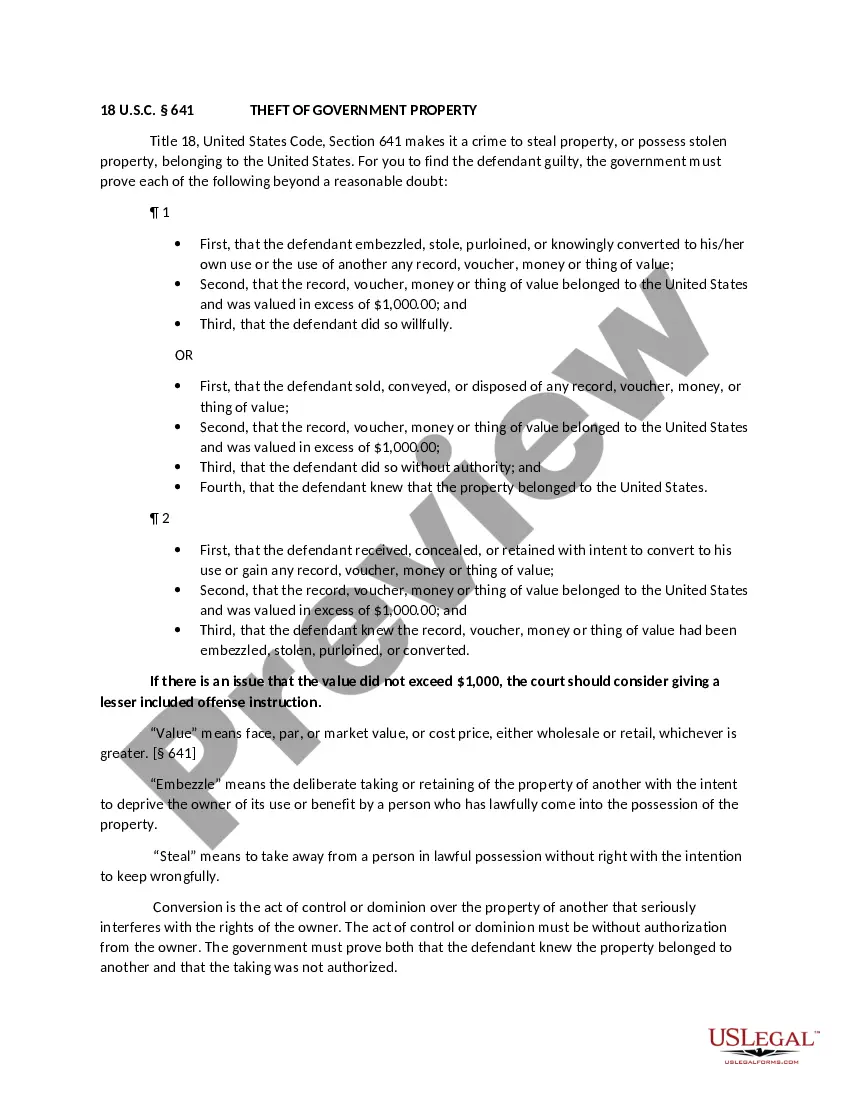
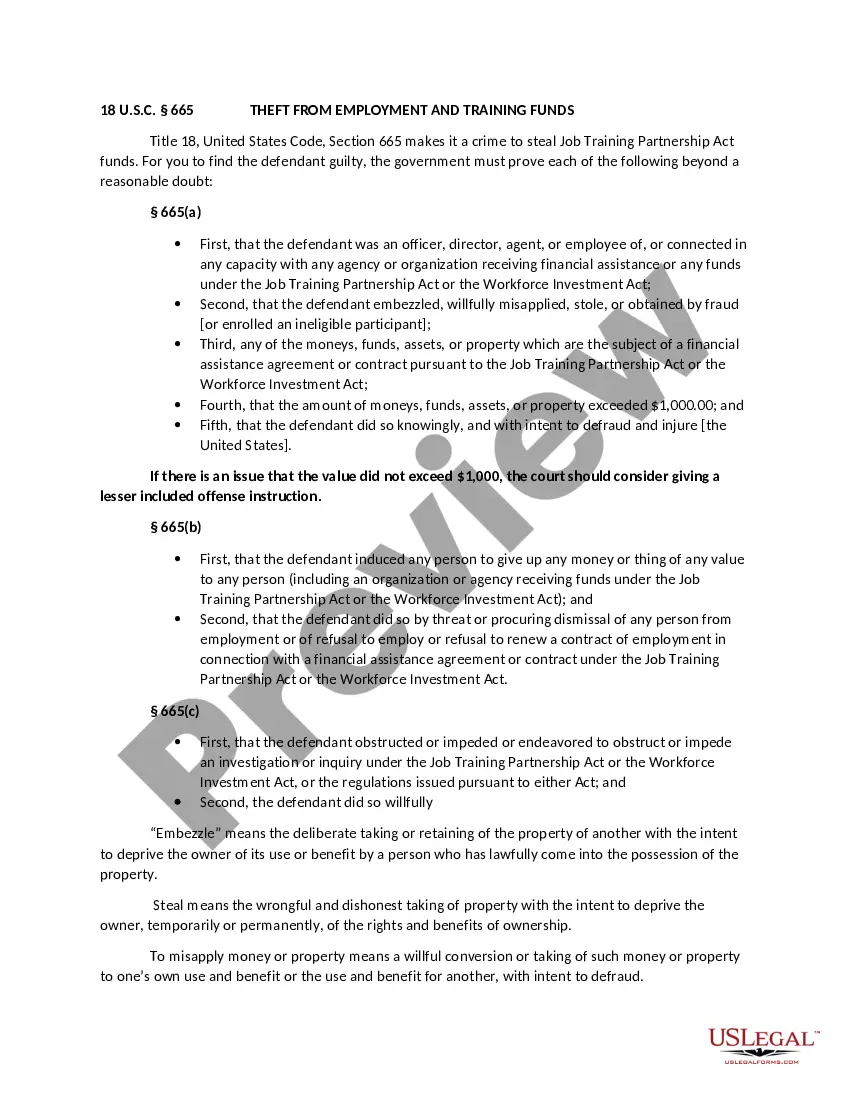
- Elements of the crime under Title 18, United States Code, Section 666.
- Definition of an agent and the roles related to federal assistance programs.
- Specific criteria for embezzlement, bribery, and corrupt intent.
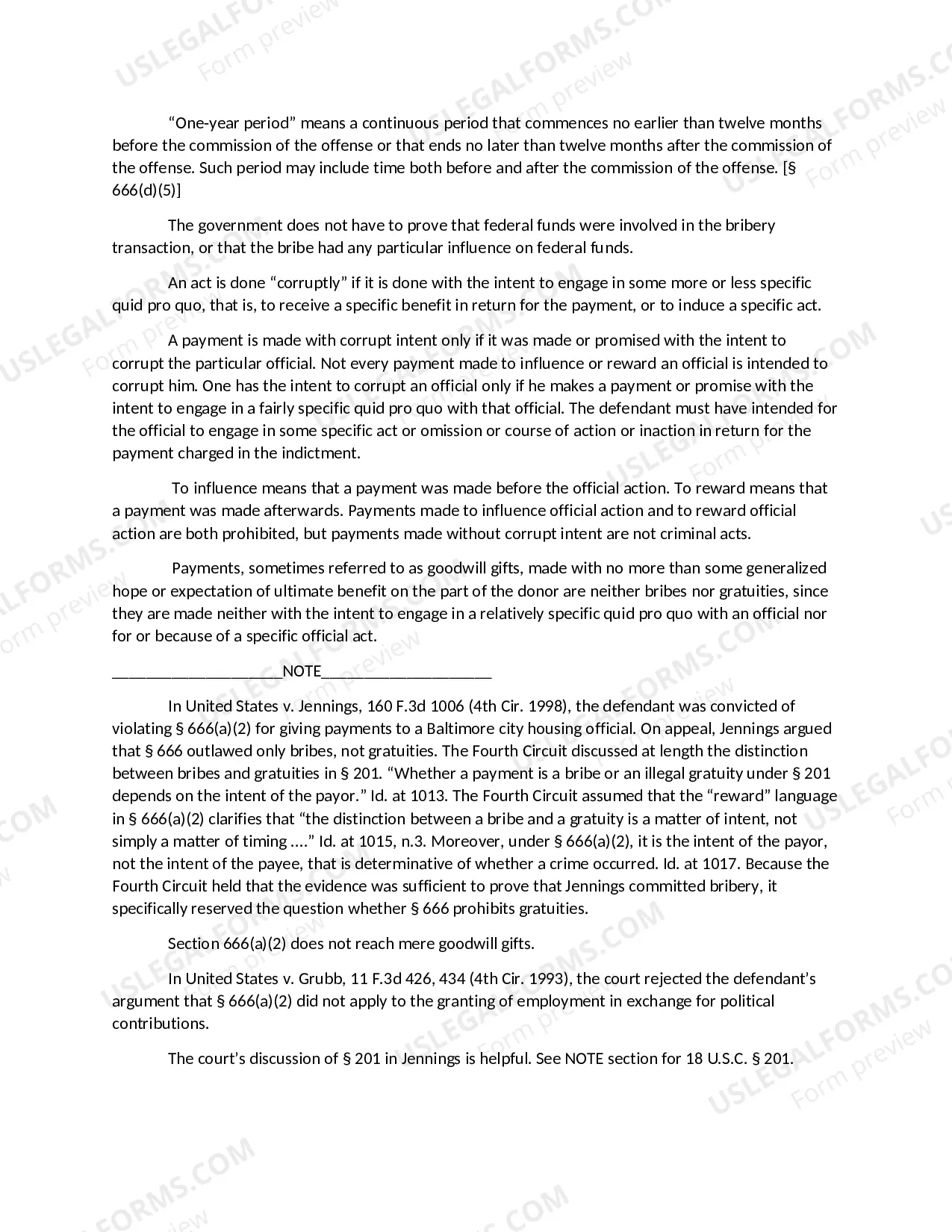
- Distinctions between bribery and gratuities based on intent.
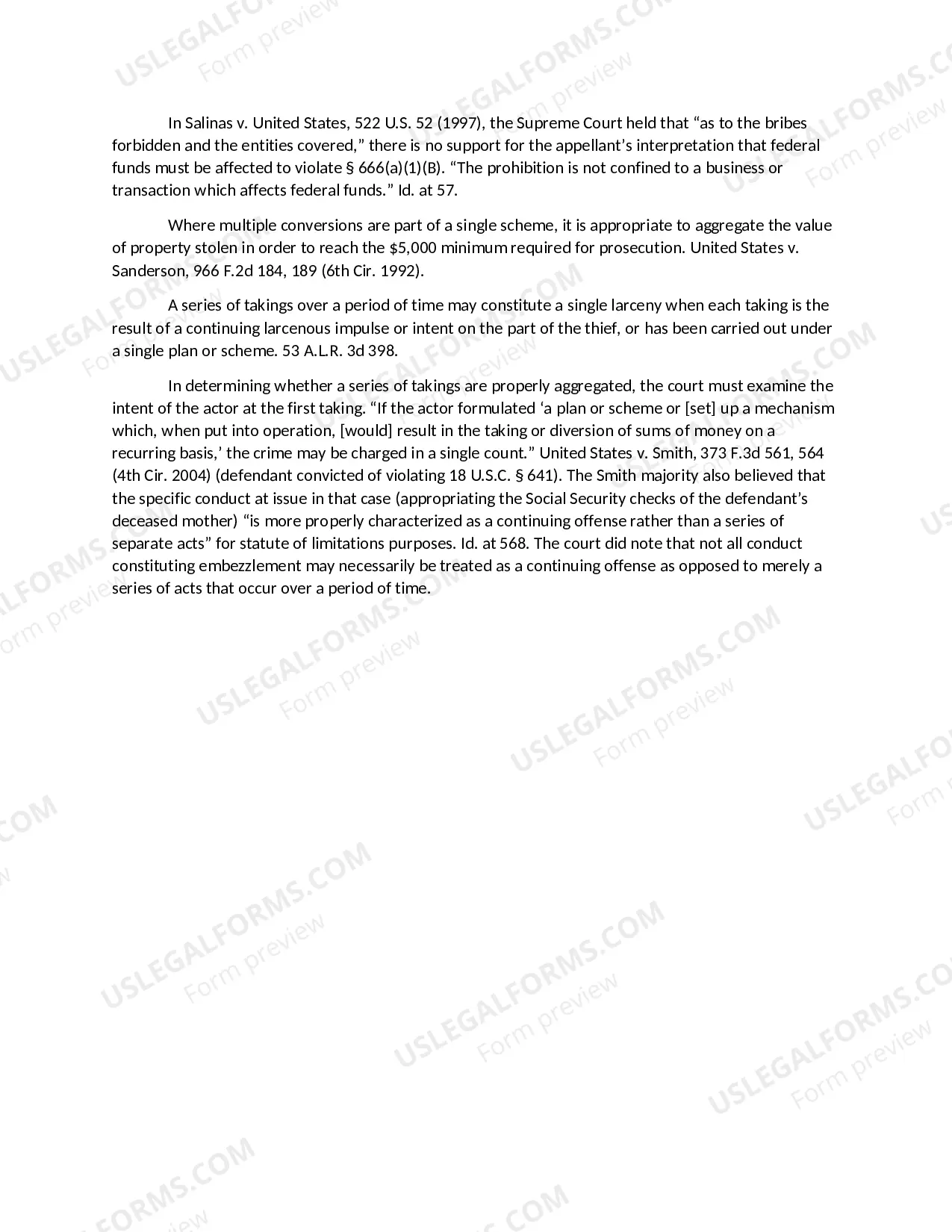
- Legal precedents that clarify the interpretation of the law.
When to use this document
This form should be used in cases where an individual is accused of theft or bribery connected to federal funding. Typical scenarios include situations where a government official may have accepted a bribe or misappropriated funds exceeding five thousand dollars from a federally funded program. It may also be applicable in trials related to wrongful solicitation or the exchange of valuable gifts intended to influence official actions.
Who should use this form
The following individuals should consider the usage of this form:
- Prosecutors seeking to charge an individual with theft or bribery involving federal funds.
- Defense attorneys representing clients facing such charges.
- Members of the jury being instructed on the legal definitions and requirements related to these crimes.
Instructions for completing this form
- Identify the defendant and relevant details about the case.
- Specify the allegations of theft, bribery, or corruption as they relate to federal funding.
- Outline the necessary elements required for conviction, as stated in Title 18, Section 666.
- Include any pertinent legal precedents or definitions that may support the jury's understanding.
- Ensure all information is accurate and reflects the specific circumstances of the charges.
Does this form need to be notarized?
This form usually doesn’t need to be notarized. However, local laws or specific transactions may require it. Our online notarization service, powered by Notarize, lets you complete it remotely through a secure video session, available 24/7.
Get your form ready online
Our built-in tools help you complete, sign, share, and store your documents in one place.
Make edits, fill in missing information, and update formatting in US Legal Forms—just like you would in MS Word.
Download a copy, print it, send it by email, or mail it via USPS—whatever works best for your next step.
Sign and collect signatures with our SignNow integration. Send to multiple recipients, set reminders, and more. Go Premium to unlock E-Sign.
If this form requires notarization, complete it online through a secure video call—no need to meet a notary in person or wait for an appointment.
We protect your documents and personal data by following strict security and privacy standards.

Make edits, fill in missing information, and update formatting in US Legal Forms—just like you would in MS Word.

Download a copy, print it, send it by email, or mail it via USPS—whatever works best for your next step.

Sign and collect signatures with our SignNow integration. Send to multiple recipients, set reminders, and more. Go Premium to unlock E-Sign.

If this form requires notarization, complete it online through a secure video call—no need to meet a notary in person or wait for an appointment.

We protect your documents and personal data by following strict security and privacy standards.
Common mistakes
- Failing to clearly outline the intent behind the alleged misconduct.
- Not specifying the federal program from which funds were allegedly misappropriated.
- Omitting necessary legal precedents that could clarify the distinction between bribes and gratuities.
Legal use & context
- This form serves to inform juries of the legal definitions and standards needed to establish guilt under theft or bribery statutes involving federal funds.
- Understanding these instructions is crucial for ensuring fair trial proceedings related to these serious offenses.
- Familiarity with related cases can help clarify the interpretation of corollary legal principles.
What to keep in mind
- The form is integral for jury instruction in theft and bribery cases involving federal funds.
- It clearly outlines the specific legal elements required for a guilty verdict.
- Understanding the distinction between bribery and gratuities can significantly impact case outcomes.
Looking for another form?

Form popularity
FAQ
§ 666. The section is designed to facilitate the prosecution of persons who steal money or otherwise divert property or services from state and local governments or private organizations--for example, universities, foundations and business corporations--that receive large amounts of Federal funds.
It is unlawful for a person to maliciously tamper with a human drug product or food item with the intent to do bodily harm to a person. A person who violates the provisions of this section is guilty of a felony and, upon conviction, must be imprisoned not more than twenty years.
As laid out in South Carolina General Code Section 16-13-240, it is a crime to obtain a signature, money, or property from someone under false pretenses or misrepresentation of a fact with ?intent to cheat and defraud a person of that property.? Simply put, if you obtain money, property, or the title to property from
SECTION 16-13-160. Breaking into motor vehicles or tanks, pumps and other containers where fuel or lubricants are stored. (2) break or attempt to break any tank, pump, or other vessel where kerosene, gasoline, or lubricating oil is stored or kept with intent to steal any such product.
Financial identity fraud or identity fraud; penalty. (A) It is unlawful for a person to commit the offense of financial identity fraud or identity fraud.
SECTION 16-15-130. Indecent exposure; breastfeeding. (A)(1) It is unlawful for a person to wilfully, maliciously, and indecently expose his person in a public place, on property of others, or to the view of any person on a street or highway.
The district court observed, and the government agrees, that the following elements comprise a violation of § 666(a)(1)(B): 1) corrupt solicitation; 2) of anything of value; 3) with the intention of being influenced in connection with any transaction of a local government or organization receiving at least $10,000 in
S.C. Code § 16-13-230 defines it this way: (A) A person committing a breach of trust with a fraudulent intention or a person who hires or counsels another person to commit a breach of trust with a fraudulent intention is guilty of larceny.