South Carolina CAUSING ANOTHER TO COMMIT A CRIME
Overview of this form
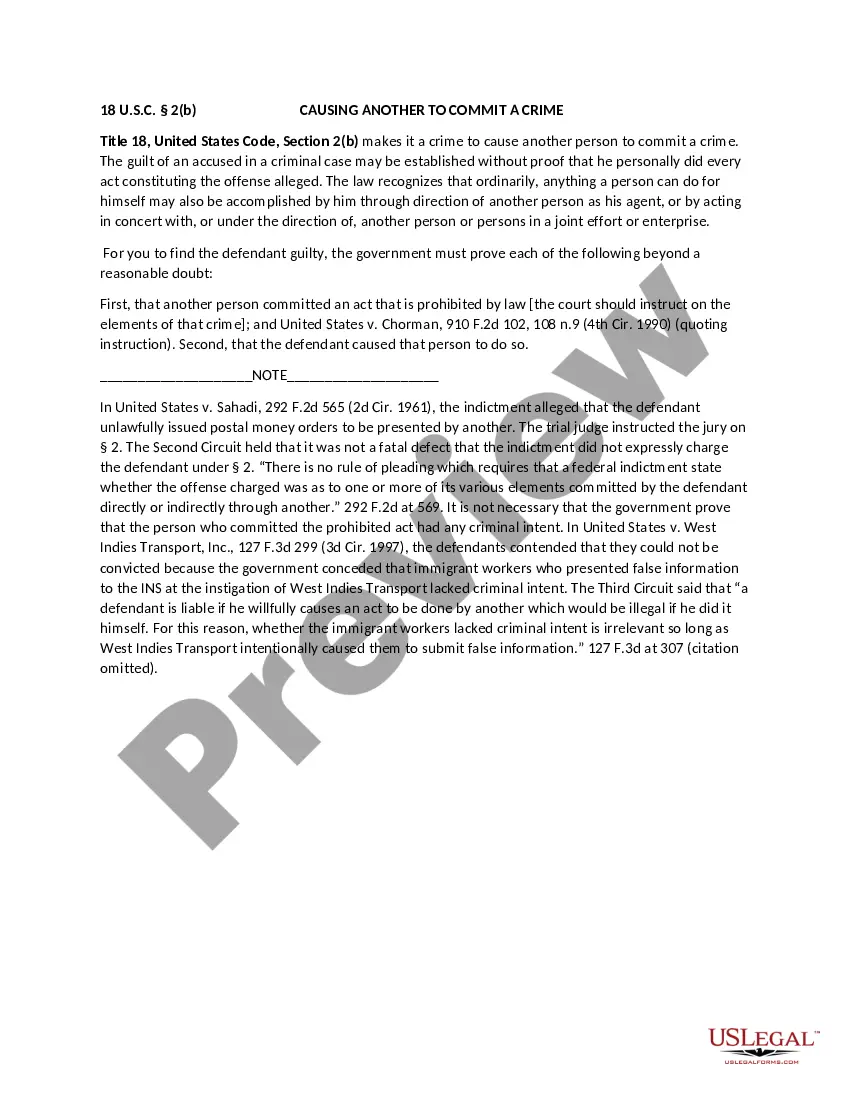
The "Causing Another to Commit a Crime" form is a legal document used in criminal cases to establish liability when a defendant causes someone else to commit a criminal act. Unlike forms focused solely on direct involvement in a crime, this form emphasizes the principle that one can be held accountable for directing or facilitating another person's criminal behavior. It is crucial for cases where evidence shows that a defendant did not directly commit the crime but played a role in orchestrating it.
What’s included in this form
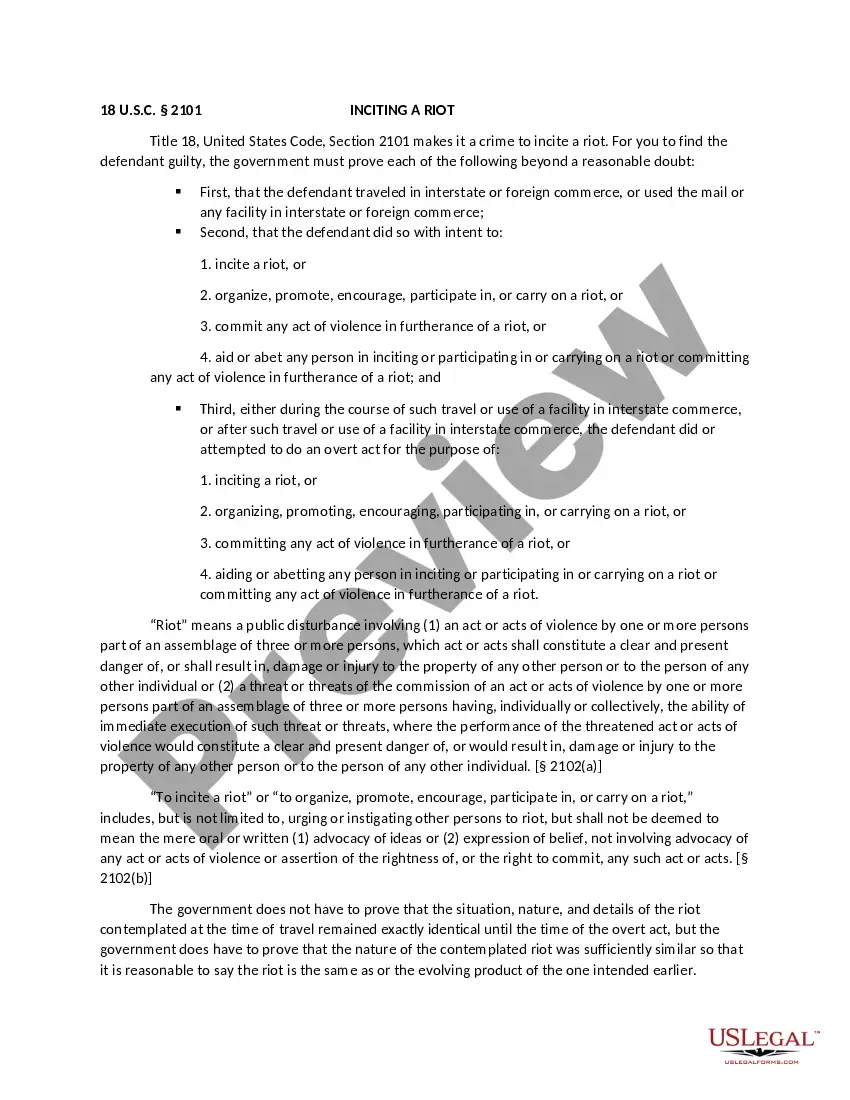
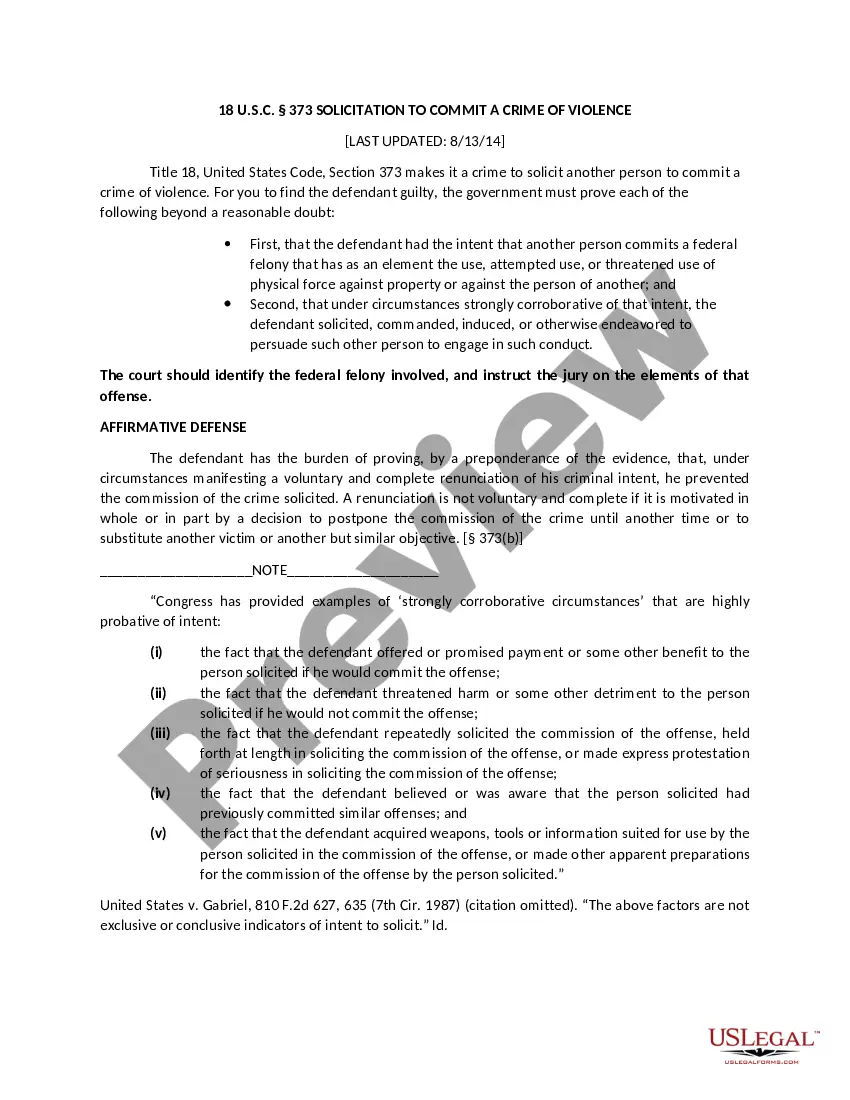
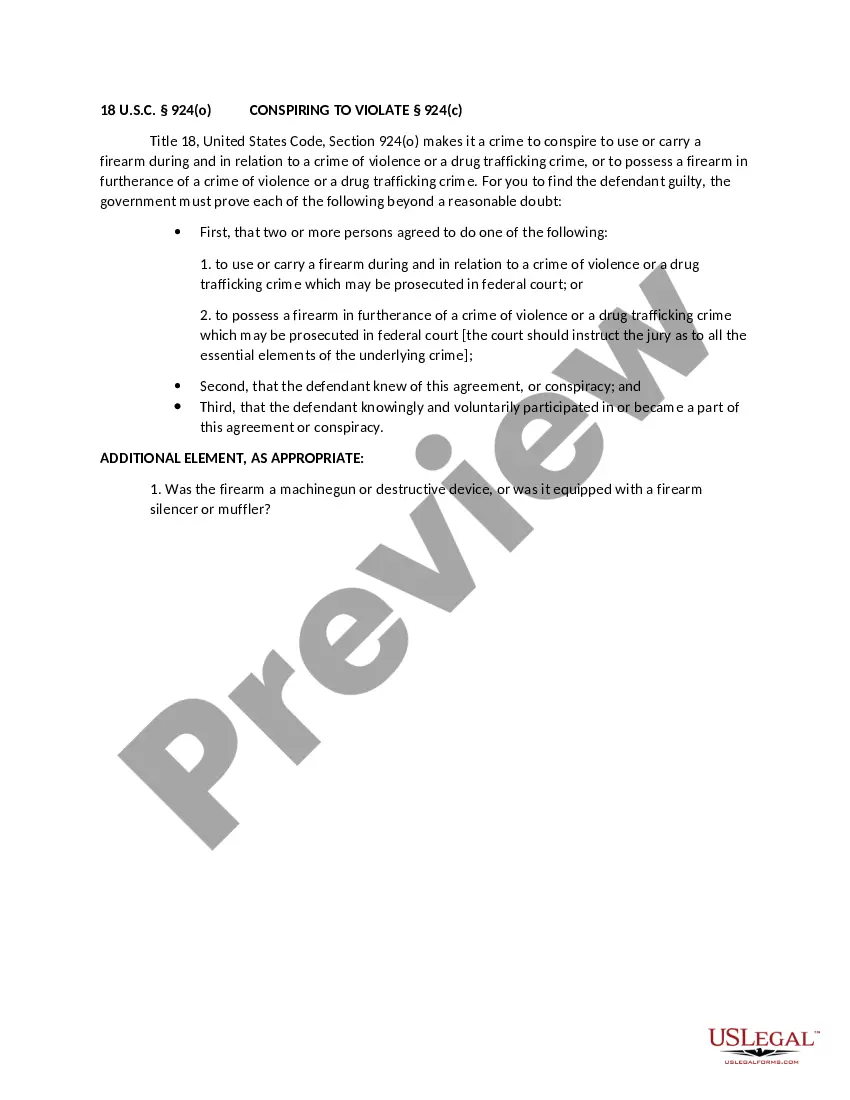
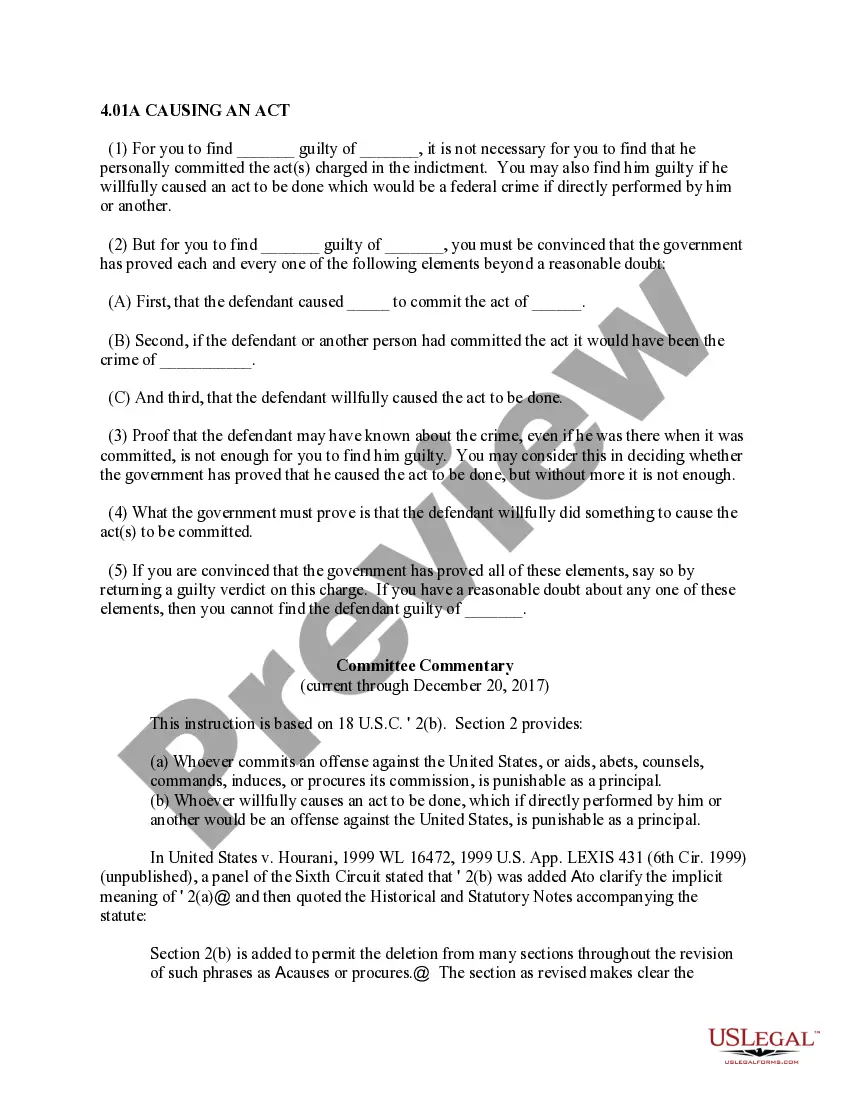
- An outline of the legal definition of causing another to commit a crime, based on Title 18, United States Code, Section 2(b).
- Criteria to establish the defendant's guilt, including proof that another person committed a criminal act.
- A requirement that the prosecution must demonstrate beyond reasonable doubt that the defendant caused the crime to occur.
- References to relevant case law that supports the principles involved, such as United States v. Chorman and United States v. Sahadi.
When this form is needed
This form is applicable in several real-world scenarios, including cases where an individual is charged with conspiracy or where evidence suggests they influenced or directed someone else to engage in unlawful activities. It may also be used when the direct perpetrator of the crime lacks the requisite mental state to be held criminally responsible, emphasizing how intent and causation are critical factors in establishing liability.
Who should use this form
- Criminal defense attorneys representing clients accused of causing another to commit a crime.
- Prosecutors who need to establish the legal basis for prosecuting someone based on their involvement in directing criminal actions.
- Individuals facing charges that could involve indirect involvement in crime and seeking to understand their legal standing.
- Legal professionals needing a comprehensive guide to the underlying legal principles connected to these types of charges.
Completing this form step by step
- Review the elements of the crime defined by law and identify the prohibited act committed by another person.
- Gather evidence to prove that the defendant caused that person to commit the crime.
- Ensure that the jury is instructed on the elements of the offense, referencing relevant case law as needed.
- Prepare a clear argument outlining how the defendant's actions fulfilled the necessary criteria for liability.
- Complete any required fields detailing the parties involved and the nature of the alleged crime.
Notarization requirements for this form
In most cases, this form does not require notarization. However, some jurisdictions or signing circumstances might. US Legal Forms offers online notarization powered by Notarize, accessible 24/7 for a quick, remote process.
Get your form ready online
Our built-in tools help you complete, sign, share, and store your documents in one place.
Make edits, fill in missing information, and update formatting in US Legal Forms—just like you would in MS Word.
Download a copy, print it, send it by email, or mail it via USPS—whatever works best for your next step.
Sign and collect signatures with our SignNow integration. Send to multiple recipients, set reminders, and more. Go Premium to unlock E-Sign.
If this form requires notarization, complete it online through a secure video call—no need to meet a notary in person or wait for an appointment.
We protect your documents and personal data by following strict security and privacy standards.

Make edits, fill in missing information, and update formatting in US Legal Forms—just like you would in MS Word.

Download a copy, print it, send it by email, or mail it via USPS—whatever works best for your next step.

Sign and collect signatures with our SignNow integration. Send to multiple recipients, set reminders, and more. Go Premium to unlock E-Sign.

If this form requires notarization, complete it online through a secure video call—no need to meet a notary in person or wait for an appointment.

We protect your documents and personal data by following strict security and privacy standards.
Typical mistakes to avoid
- Failing to fully understand the differences between direct involvement in a crime and inciting others to commit an offense.
- Neglecting to reference important case law that can support arguments related to causation.
- Insufficiently proving the necessary intent or direction involved in causing another to commit the crime.
Benefits of using this form online
- Access to professionally drafted content ensures compliance with legal standards.
- Downloadable Word format allows for easy editing and customization.
- Convenience of obtaining necessary legal documentation quickly without the need for in-person visits.
- Availability of additional resources and legal context to aid understanding and completion of the form.
Quick recap
- This form helps establish liability for causing another person to commit a crime.
- It is essential in both prosecution and defense strategies in criminal cases.
- Understanding applicable case law and statutory definitions is critical in using this form effectively.
Looking for another form?


Form popularity
FAQ
False pretenses involves an intent to obtain property or money by means of fraud or misrepresentation. For example: False pretenses occur in situations when a salesperson/contractor promises to provide specified goods or services, receives payment, but intentionally fails to deliver on the promise.
As laid out in South Carolina General Code Section 16-13-240, it is a crime to obtain a signature, money, or property from someone under false pretenses or misrepresentation of a fact with ?intent to cheat and defraud a person of that property.? Simply put, if you obtain money, property, or the title to property from
(1) "Physical abuse" means inflicting physical injury upon a child or encouraging or facilitating the infliction of physical injury upon a child by any person including, but not limited to, a person responsible for the child's welfare, as defined in Section 63-7-20.
Penal Code 532 PC prohibits theft by false pretenses ? which is defined as defrauding someone of money or property by way of false promises or representations. The offense may be prosecuted as a misdemeanor or a felony and carries a penalty of up to 3 years in jail or prison.
Chapter 11 - OFFENSES AGAINST PROPERTY. Section 16-11-620 - Entering premises after warning or refusing to leave on request; jurisdiction and enforcement.
What are False Pretenses? Under California Penal Code §532, anyone who provides false statements, withholds important information, or makes promises they don't intend to keep to another person in order to obtain property is guilty of theft by false pretense.
The crime of False Pretenses requires: a false representation. of a material fact (past or present) with the intent to defraud. that causes the victim to pass possession and title of his or her property.
Section 16-17-735 - Persons impersonating officials or law enforcement officers; persons falsely asserting authority of law; offenses; punishment. (2) denies or impedes another in the exercise or enjoyment of any right, privilege, power, or immunity.