South Carolina INTERFERENCE WITH COMMERCE BY THREATS OR VIOLENCE (HOBBS ACT)
What this document covers
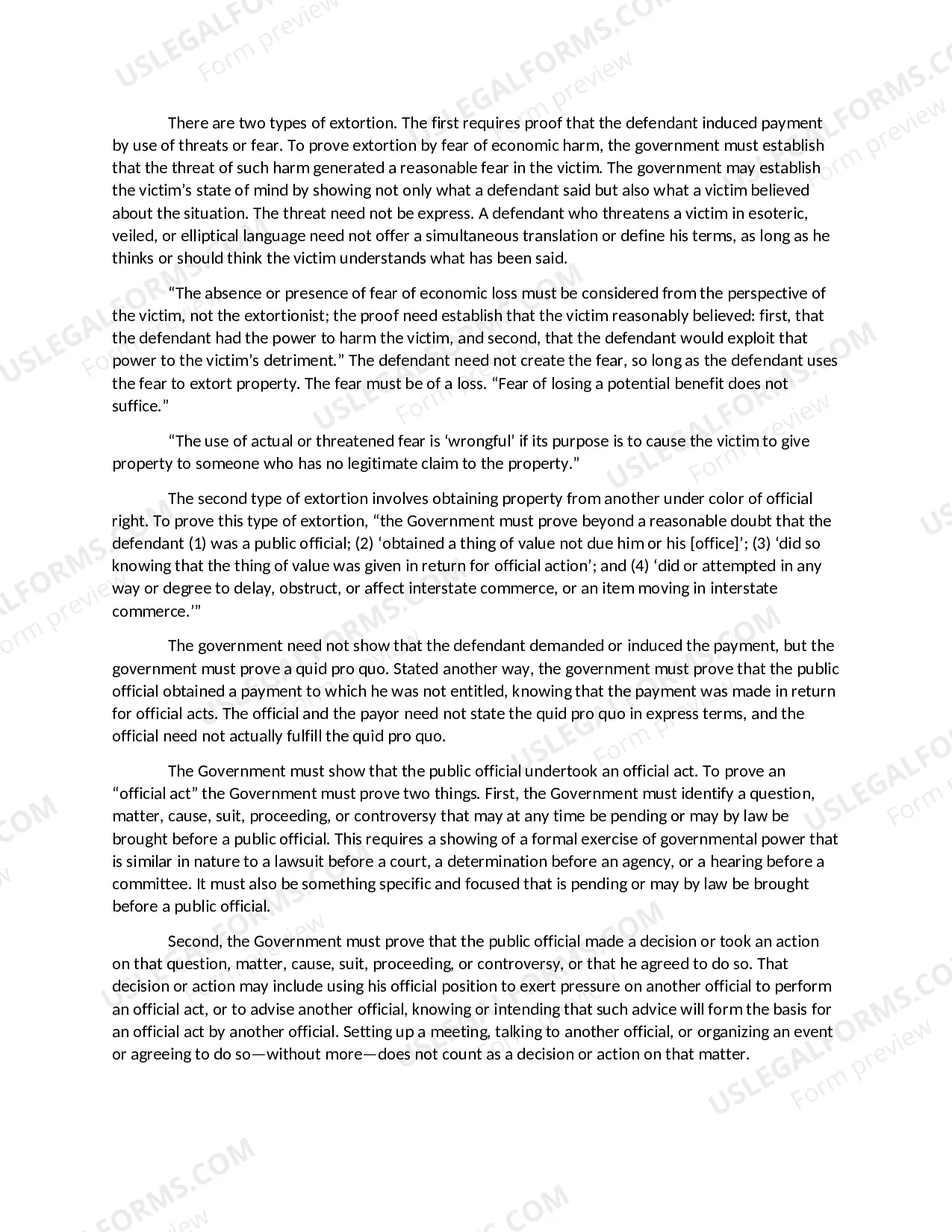
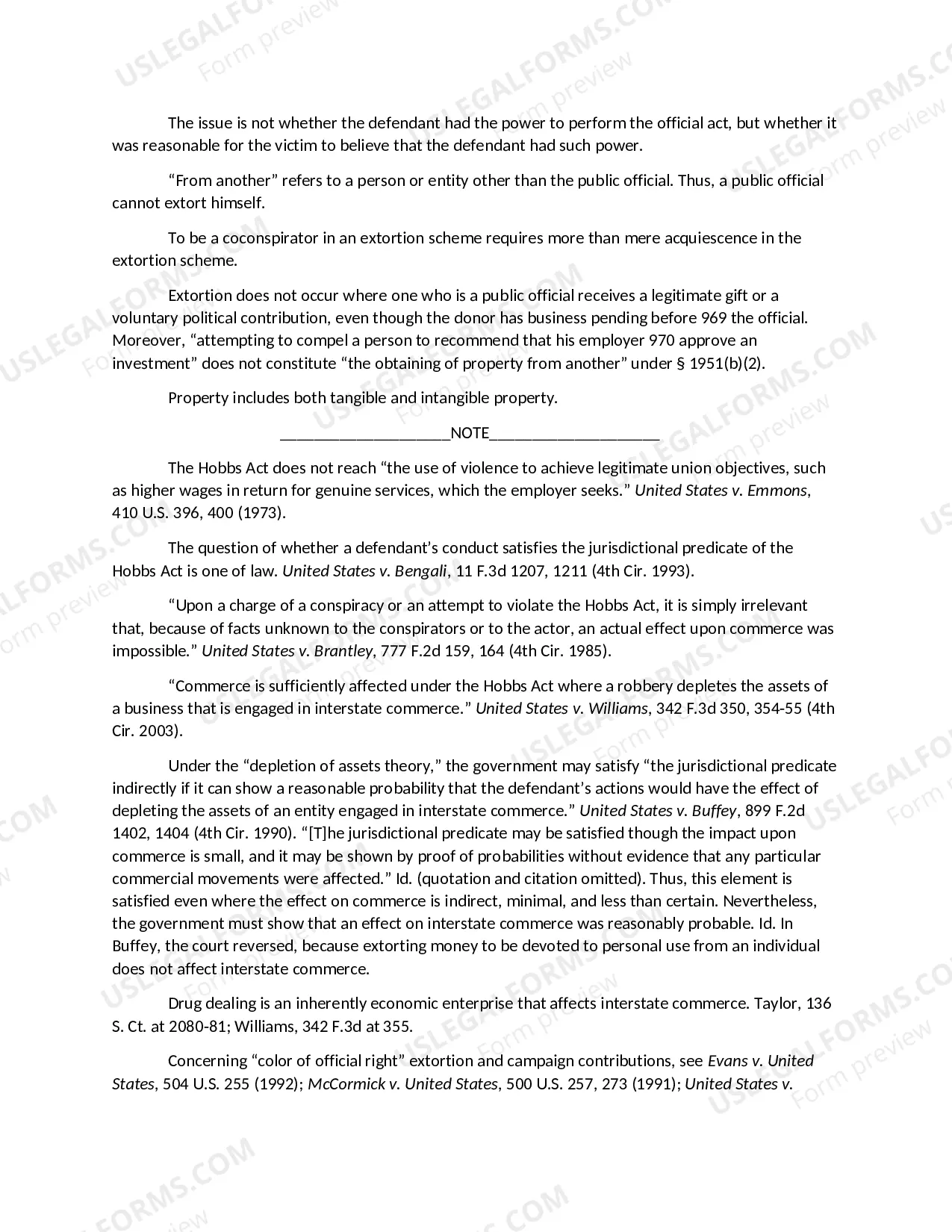
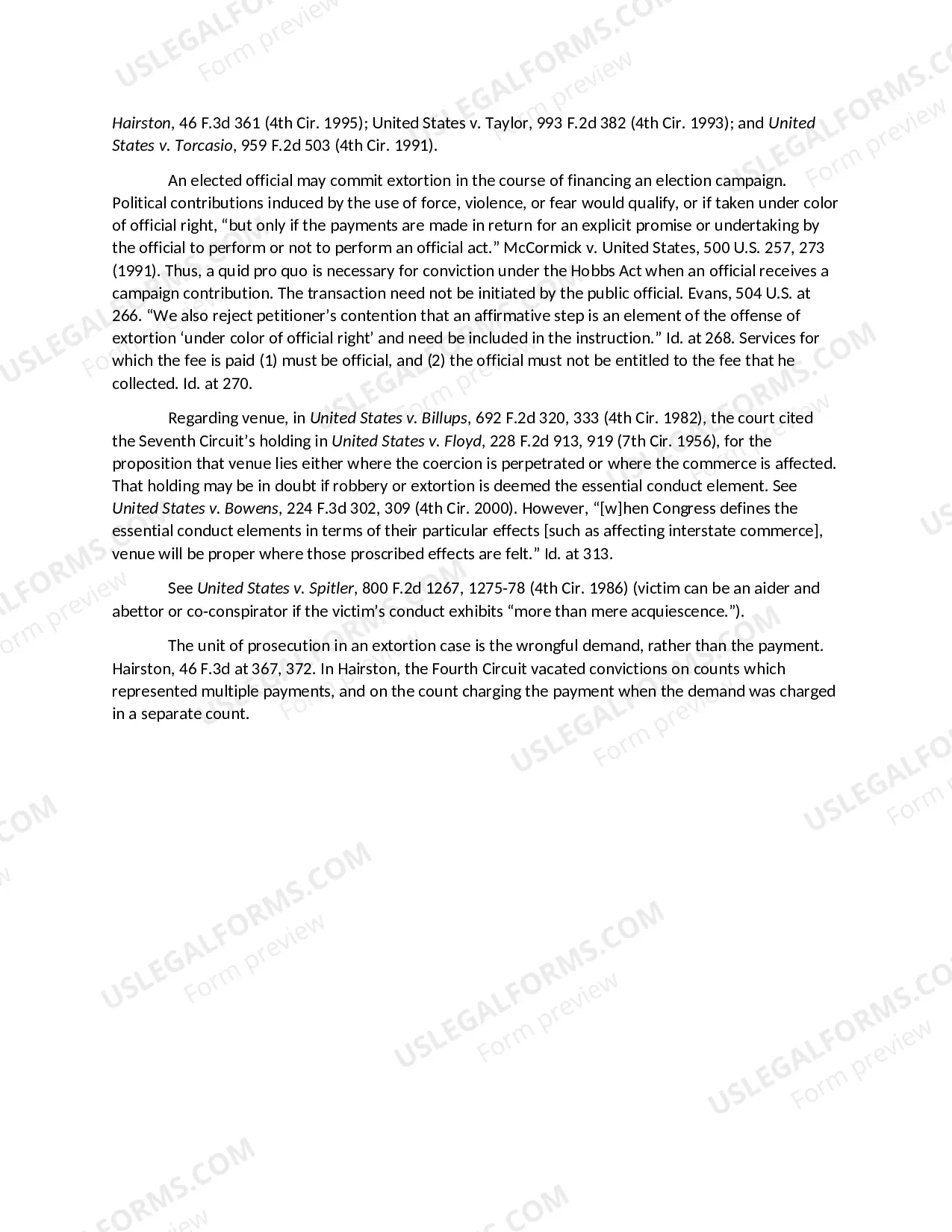
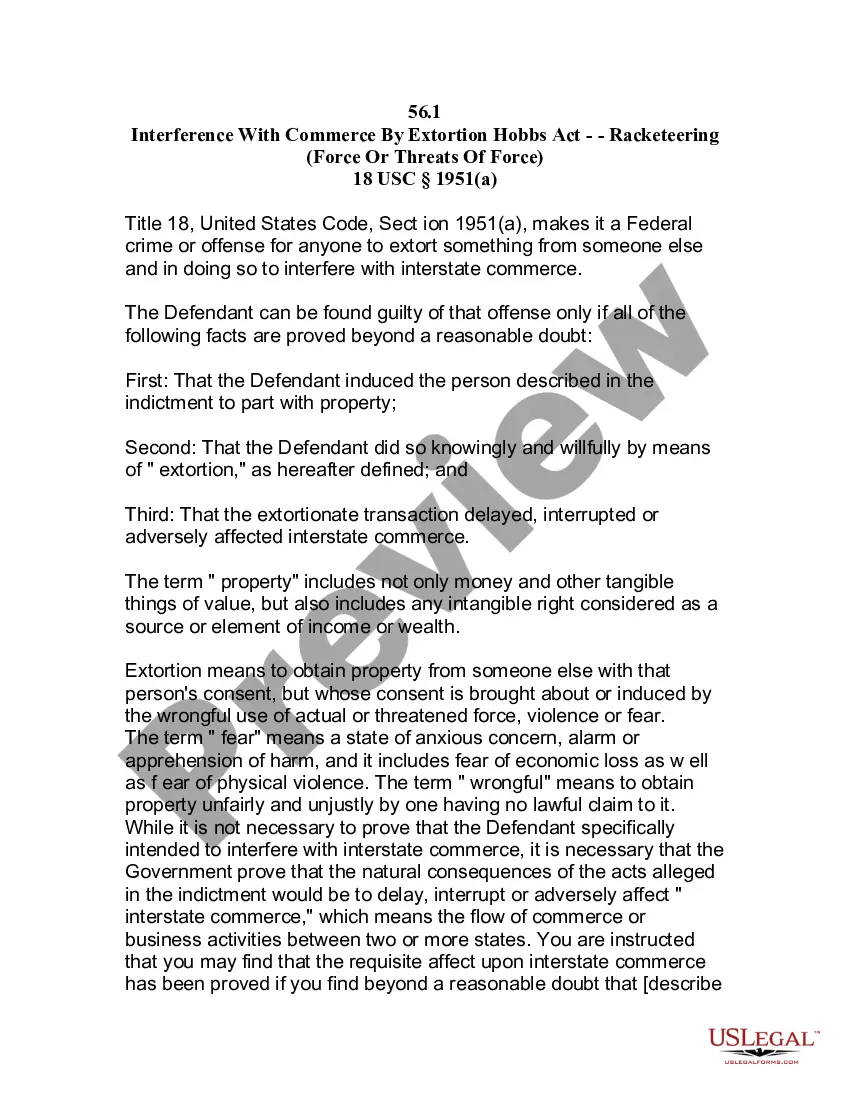
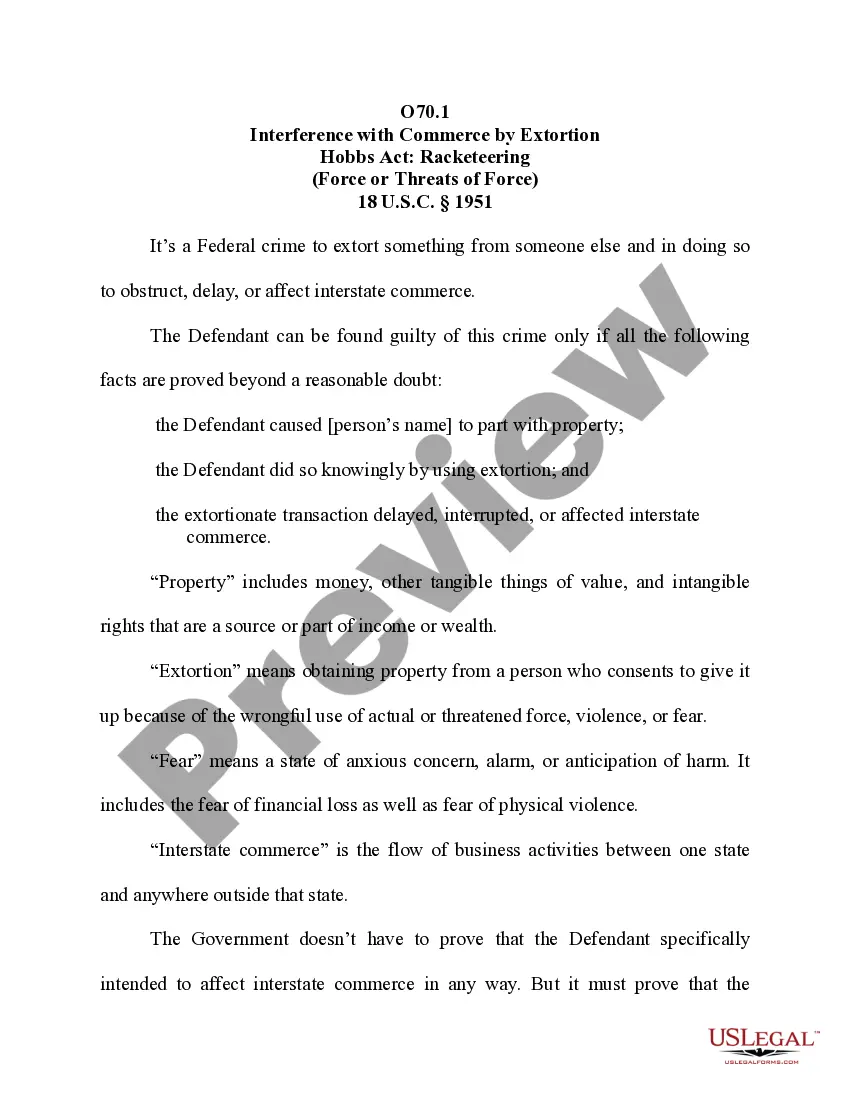
The Interference with Commerce by Threats or Violence form, also known as the Hobbs Act, is a legal document used in federal criminal proceedings. It outlines the criteria necessary for prosecuting a defendant accused of obstructing interstate commerce through robbery or extortion, including threats or violence. This form is distinct from other legal documents in that it is specifically tailored for cases involving federal jurisdiction and requires proof of an effect on commerce.
What’s included in this form
- Definition of robbery and extortion in the context of the Hobbs Act.
- Explanation of how commerce is affected by the defendant's actions.
- Criteria for proving threats or violence in relation to extortion.
- Requirements for establishing jurisdiction involving interstate commerce.
- Clarification of the roles of public officials in extortion cases under color of official right.
When to use this form
This form should be used during federal criminal prosecutions where a defendant is charged with obstructing commerce through threats or violence. It is applicable in cases involving robbery or extortion that affects interstate trade or commerce. Law enforcement, legal representatives, and prosecutors may find this form essential in establishing the legal basis for pursuing charges under the Hobbs Act.
Intended users of this form
- Federal prosecutors who need to establish charges under the Hobbs Act.
- Lawyers representing clients accused of violating the Hobbs Act.
- Law enforcement officials involved in the investigation of commerce-related crimes.
- Legal educators or students studying federal criminal law, particularly commerce-related offenses.
Steps to complete this form
- Identify the parties involved, including the defendant and the prosecuting authorities.
- Clearly outline the nature of the alleged robbery or extortion committed.
- Detail how the defendant's actions have obstructed, delayed, or affected interstate commerce.
- Include evidence supporting the claim that threats or violence were used to commit the crime.
- Ensure all relevant facts and circumstances are documented to support prosecution.
Is notarization required?
This form does not typically require notarization to be legally valid. However, some jurisdictions or document types may still require it. US Legal Forms provides secure online notarization powered by Notarize, available 24/7 for added convenience.
Get your form ready online
Our built-in tools help you complete, sign, share, and store your documents in one place.
Make edits, fill in missing information, and update formatting in US Legal Forms—just like you would in MS Word.
Download a copy, print it, send it by email, or mail it via USPS—whatever works best for your next step.
Sign and collect signatures with our SignNow integration. Send to multiple recipients, set reminders, and more. Go Premium to unlock E-Sign.
If this form requires notarization, complete it online through a secure video call—no need to meet a notary in person or wait for an appointment.
We protect your documents and personal data by following strict security and privacy standards.

Make edits, fill in missing information, and update formatting in US Legal Forms—just like you would in MS Word.

Download a copy, print it, send it by email, or mail it via USPS—whatever works best for your next step.

Sign and collect signatures with our SignNow integration. Send to multiple recipients, set reminders, and more. Go Premium to unlock E-Sign.

If this form requires notarization, complete it online through a secure video call—no need to meet a notary in person or wait for an appointment.

We protect your documents and personal data by following strict security and privacy standards.
Common mistakes
- Failing to adequately prove the effect on commerce, which is crucial for establishing jurisdiction.
- Not clearly differentiating between robbery and extortion, leading to confusion in legal arguments.
- Neglecting to gather sufficient evidence of threats or violence related to the alleged offense.
- Overlooking the necessary connections between the defendant's actions and interstate commerce.
Benefits of completing this form online
- Convenience: Access and download the form anytime from any device.
- Editability: Easily customize the document to suit the specifics of your case.
- Reliability: Obtain forms that comply with current legal standards set by licensed attorneys.
Legal use & context
- The Hobbs Act is enforced in federal courts and has specific legal standards for proving violations.
- Cases involving violence or threats that affect commerce are taken seriously and carry severe penalties.
- This form is instrumental in ensuring that the prosecution follows legal guidelines when charging a defendant.
Looking for another form?

Form popularity
FAQ
The Hobbs Act prohibits actual or attempted robbery or extortion affecting interstate or foreign commerce "in any way or degree." Section 1951 also proscribes conspiracy to commit robbery or extortion without reference to the conspiracy statute at 18 U.S.C. § 371.
The requisite elements of tortious interference with contract claim are: (1) the existence of a valid and enforceable contract between plaintiff and another; (2) defendant's awareness of the contractual relationship; (3) defendant's intentional and unjustified inducement of a breach of the contract; (4) a subsequent
Tortious interference occurs when one party interferes with an advantageous business relationship of another party, causing economic harm. It is important to remember that this must be an intentional act, and proving it can be challenging.
The Hobbs Act is a federal statute under 18 U.S.C § 1951 that makes it illegal for anyone to impede or affect interstate commerce ?in any way or degree? by committing robbery or extortion.
Whoever in any way or degree obstructs, delays, or affects commerce or the movement of any article or commodity in commerce, by robbery or extortion or attempts or conspires so to do, or commits or threatens physical violence to any person or property in furtherance of a plan or purpose to do anything in violation of
Bribery, fraud, misrepresentation, deceit, and duress are all examples of improper methods upon which a tortious interference claim may be based.
Tortious interference, also known as intentional interference with contractual relations, in the common law of torts, occurs when one person intentionally damages someone else's contractual or business relationships with a third party, causing economic harm.
Tortious interference is a common law tort allowing a claim for damages against a defendant who wrongfully interferes with the plaintiff's contractual or business relationships. See also intentional interference with contractual relations.