South Carolina COMPUTER CRIMES
About this form
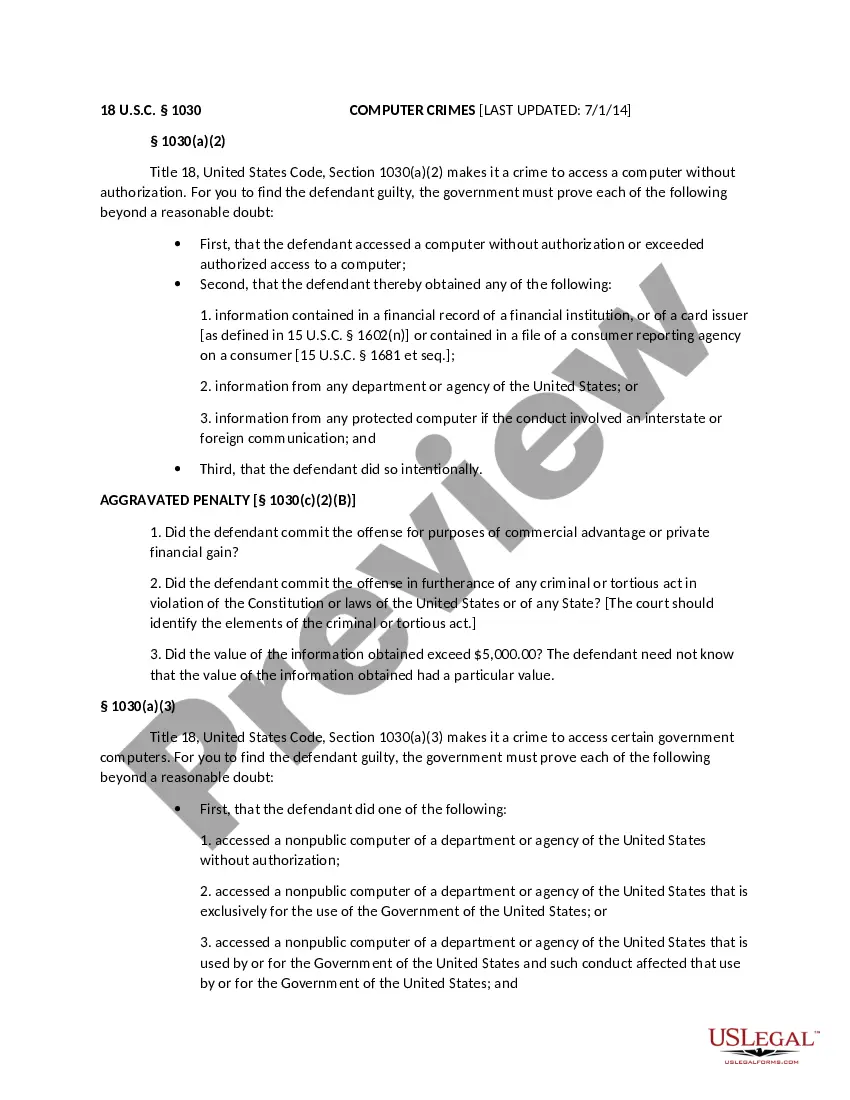
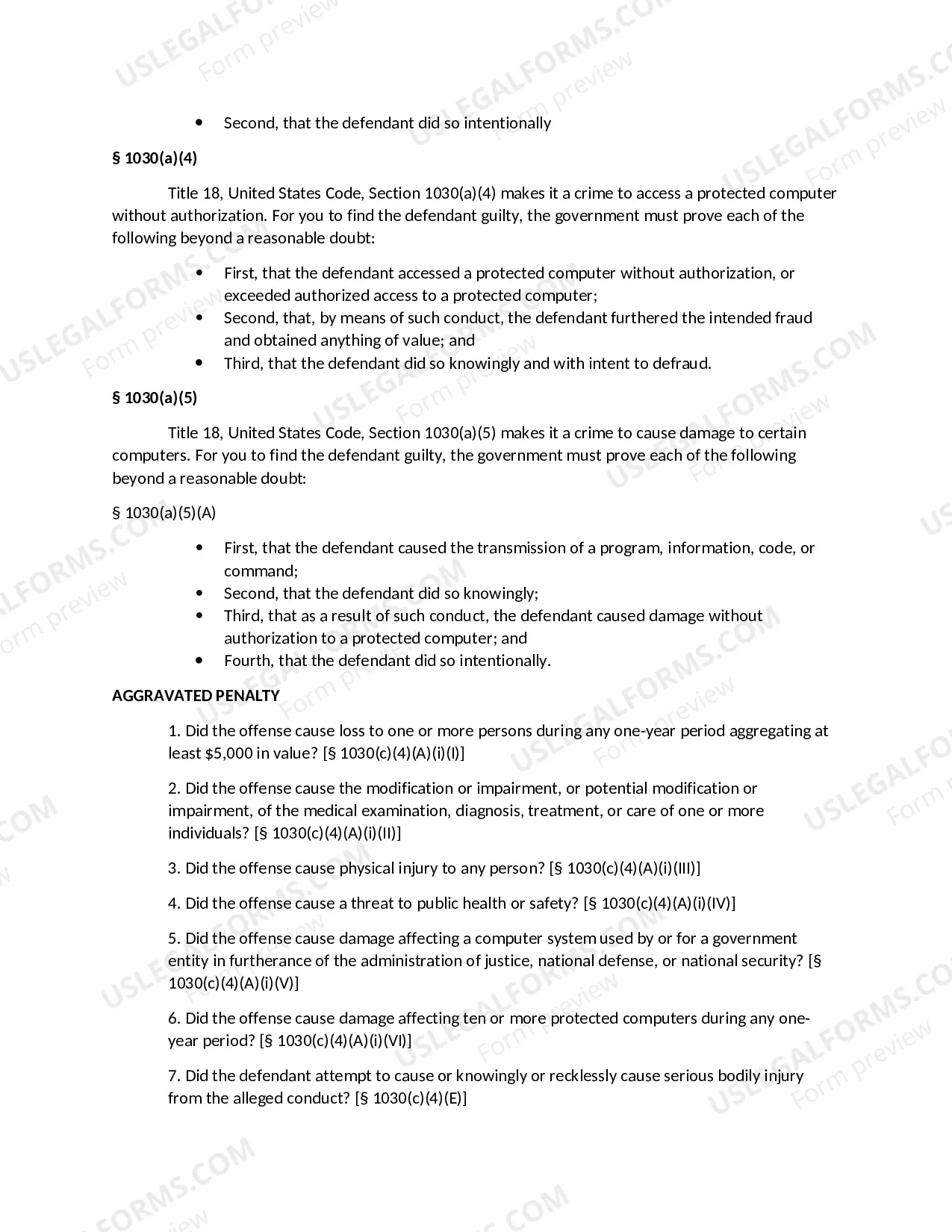
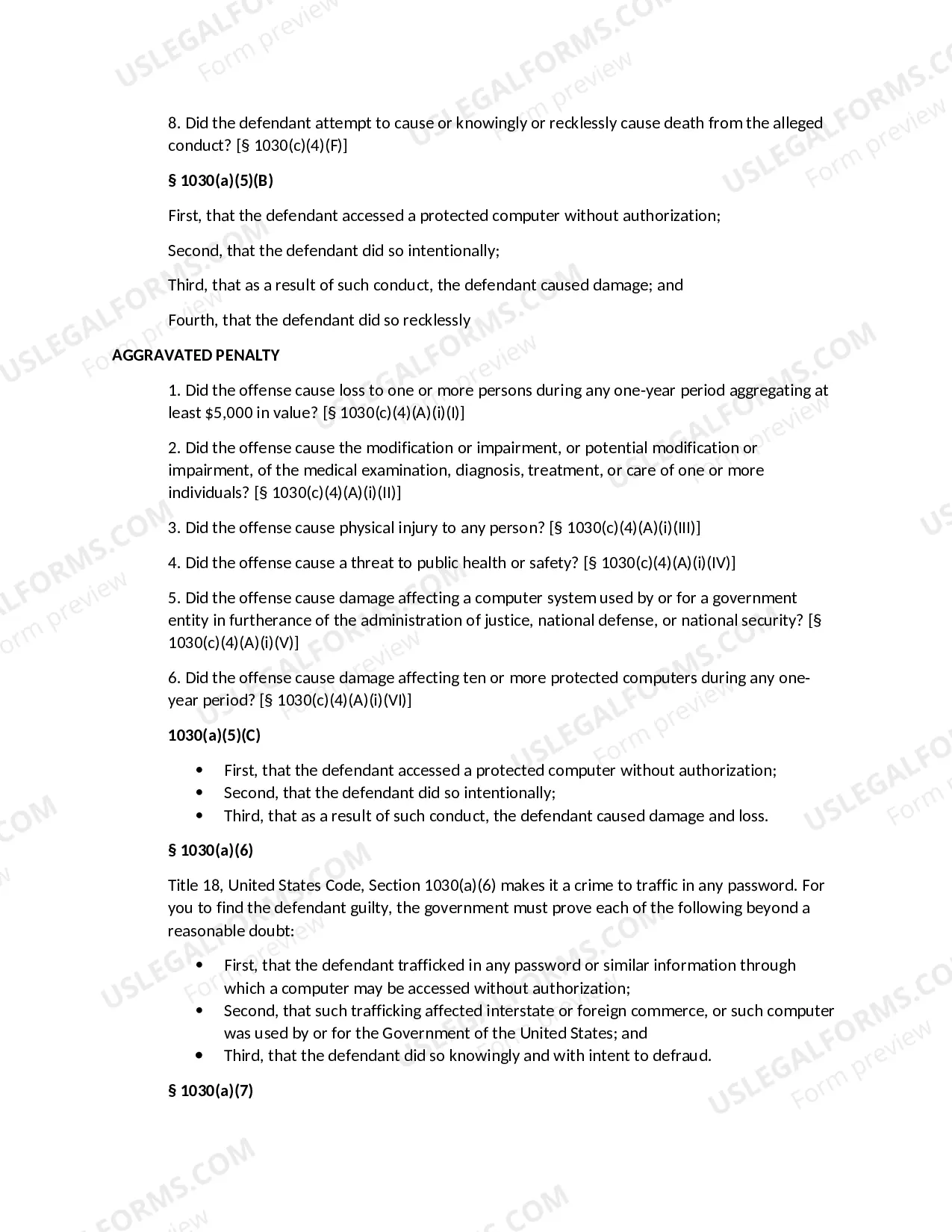
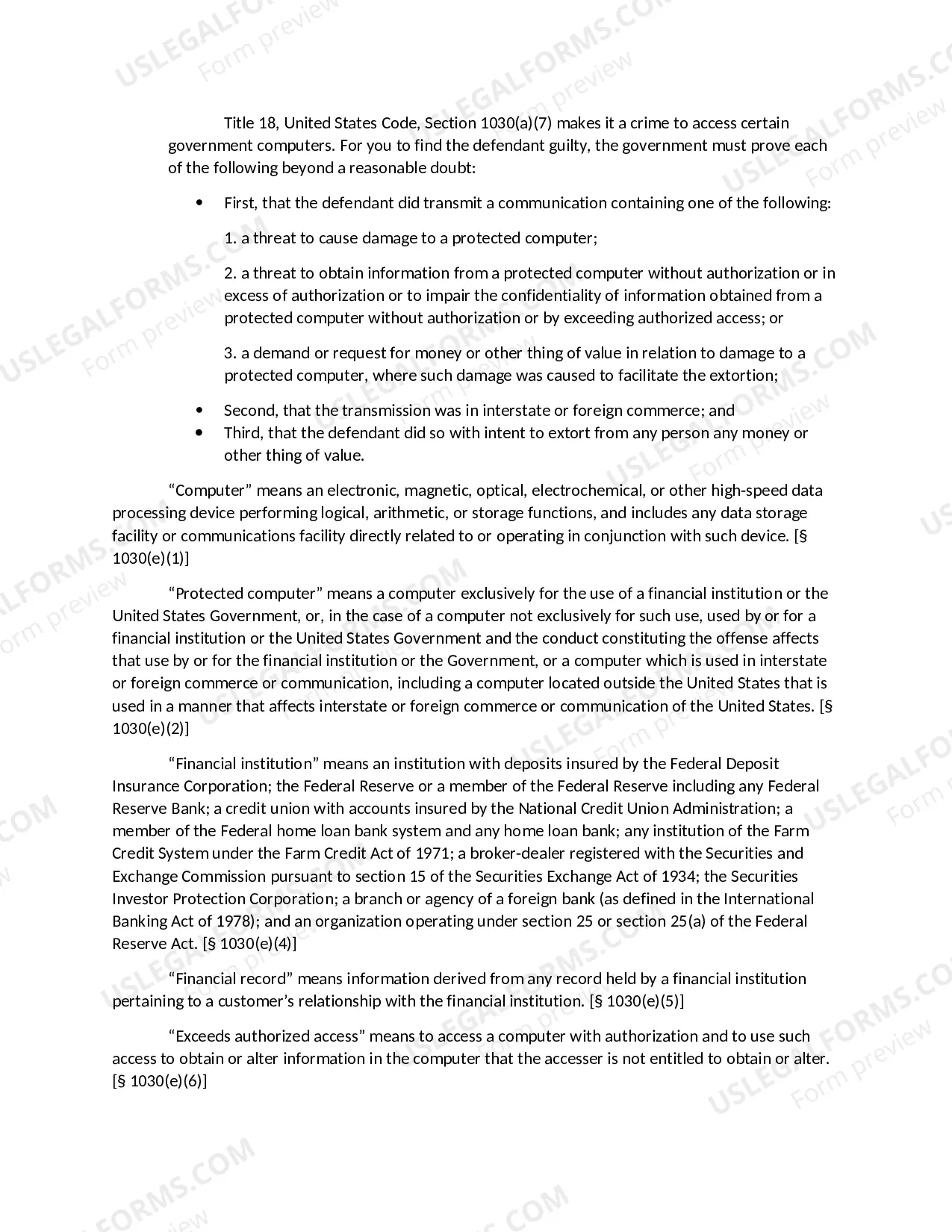
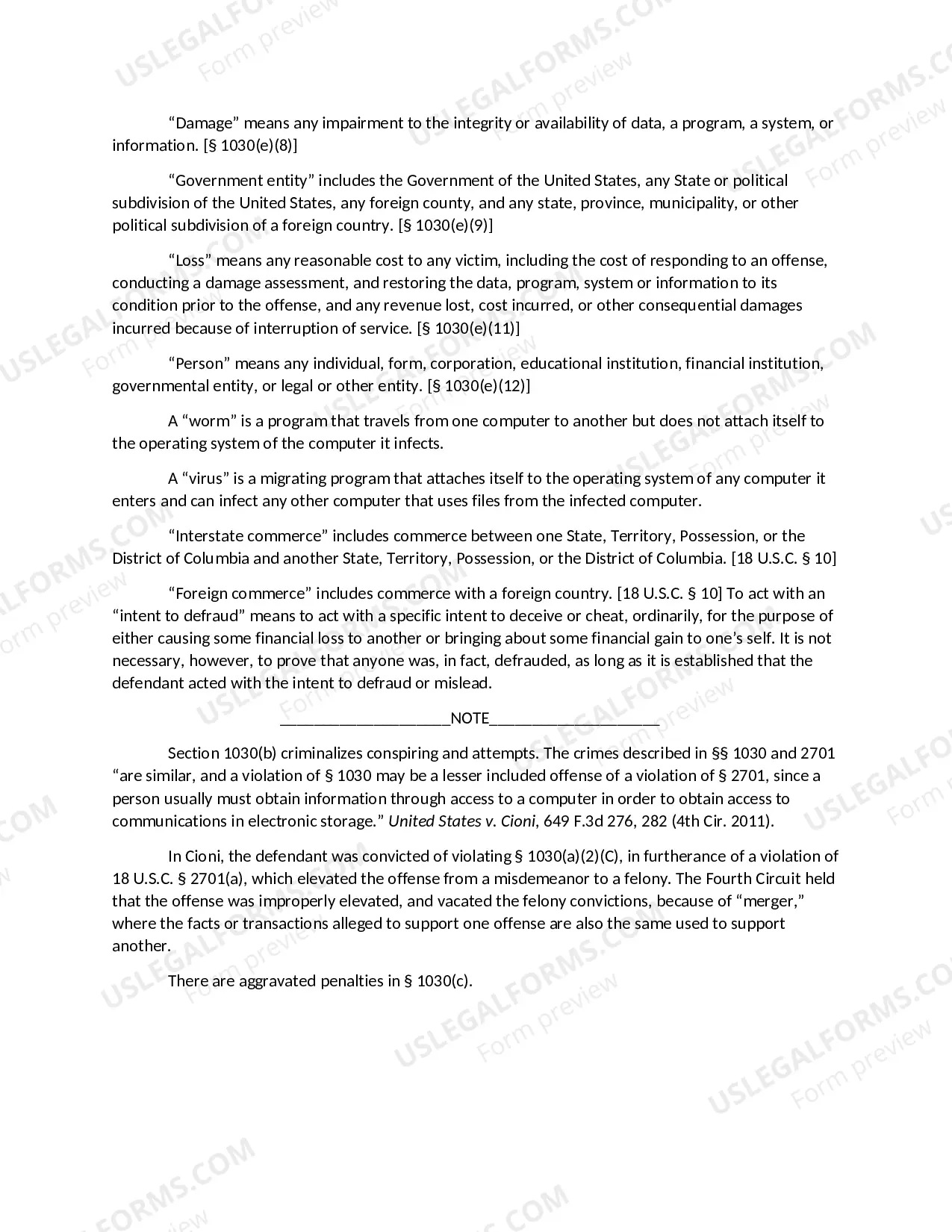
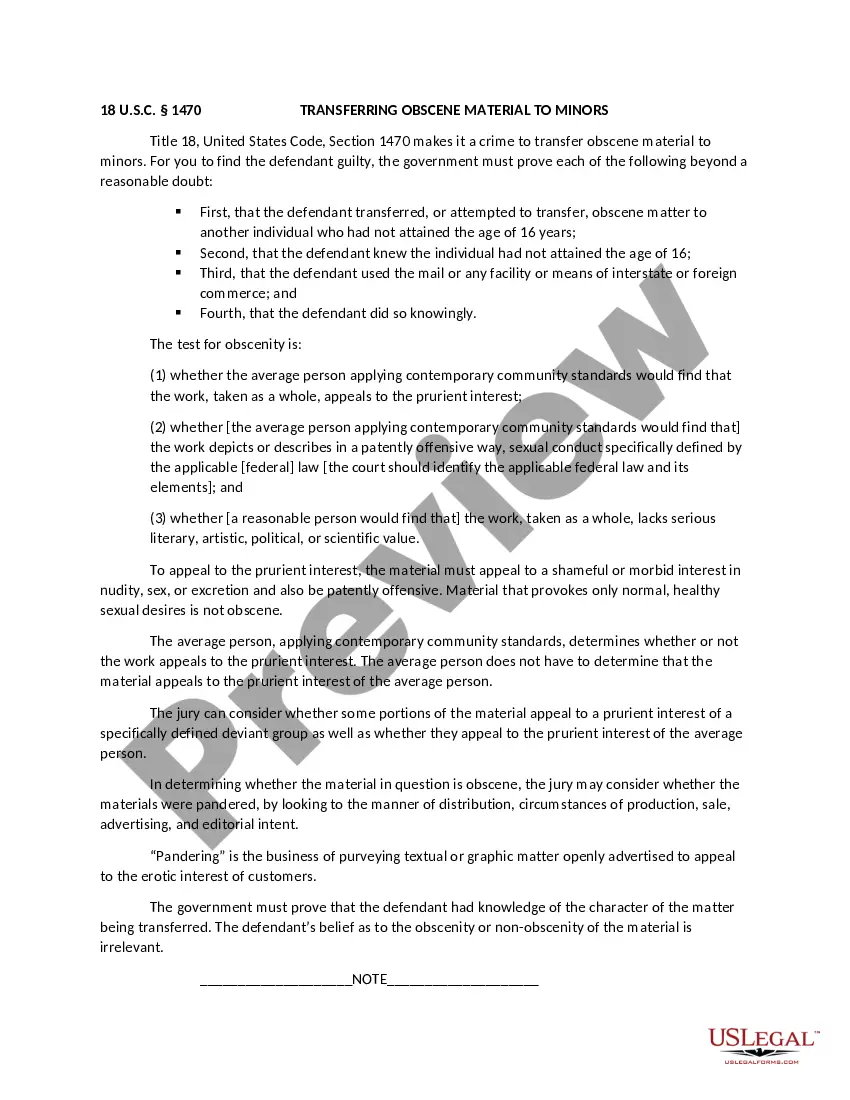
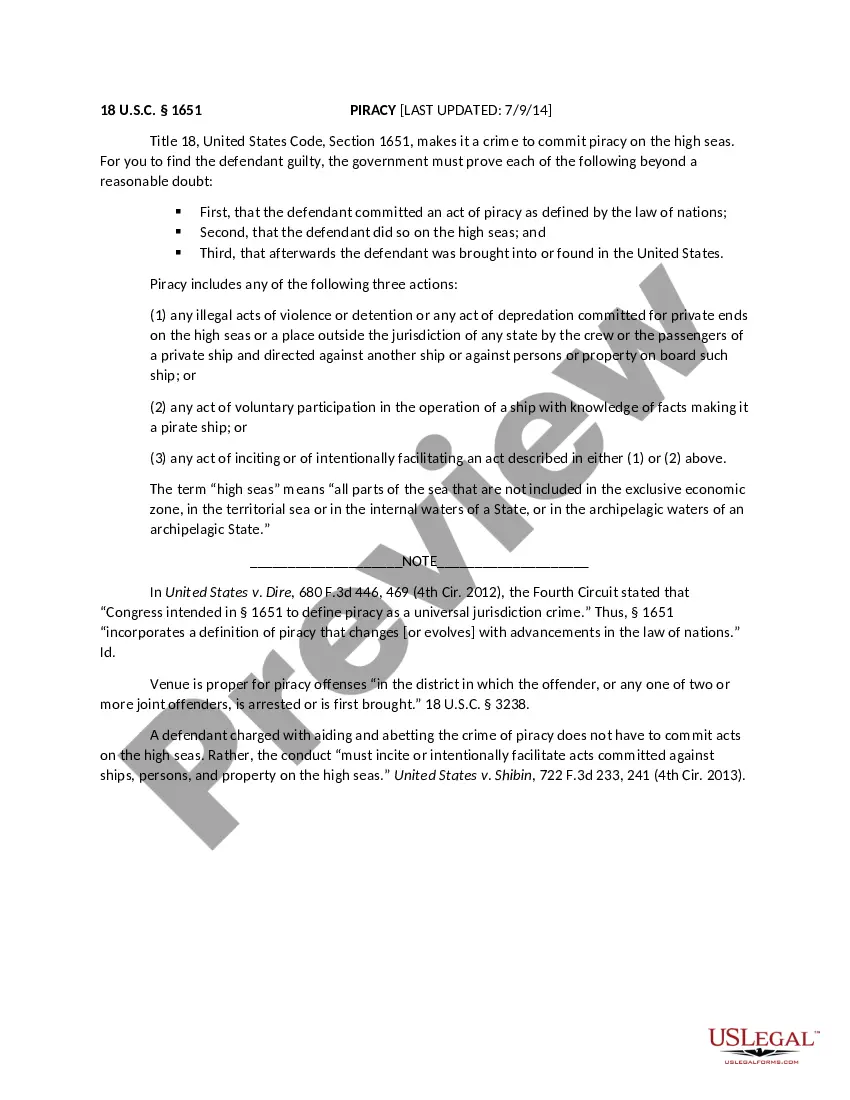
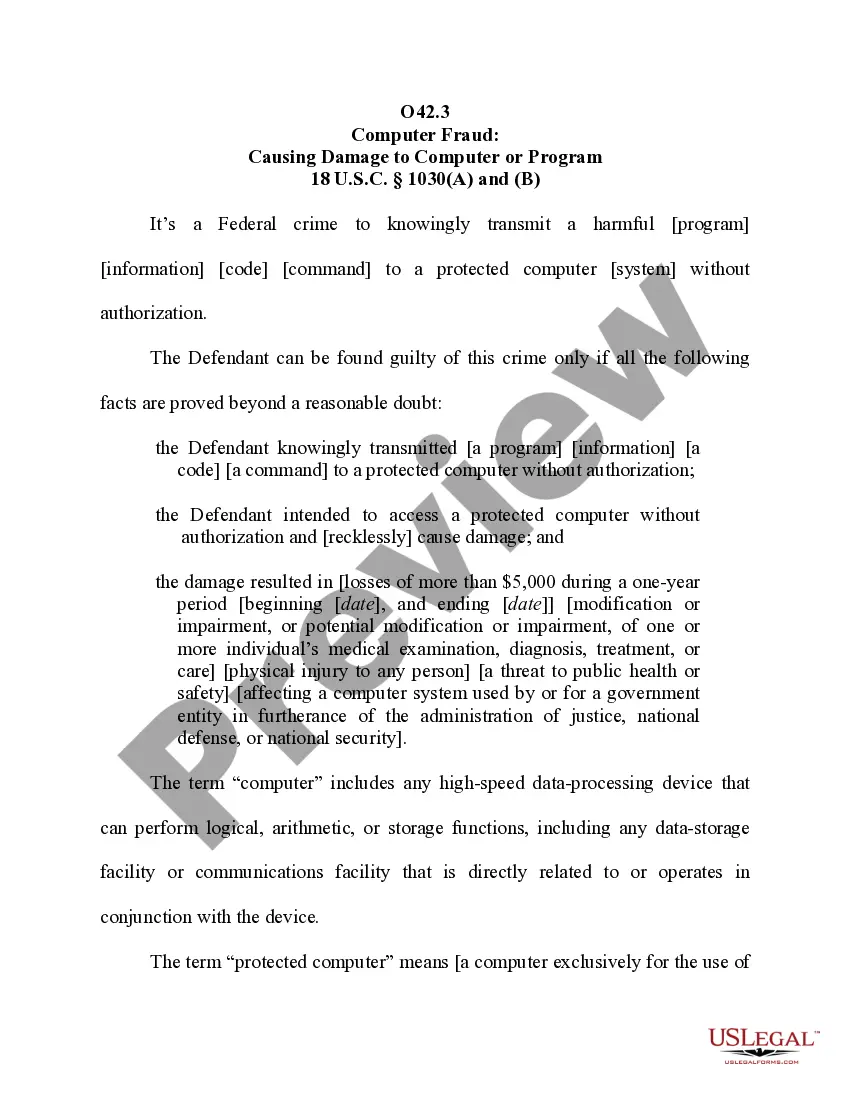
The Computer Crimes form provides official pattern jury instructions for criminal cases related to computer offenses as defined under Title 18 of the United States Code. This form is essential for understanding the legal standards required for prosecution in cases involving unauthorized access, fraud, and damage to protected computers. Unlike other legal forms, it specifically addresses the nuances of federal computer crime laws, providing clarity on the elements that must be proven for conviction.
Key parts of this document
- Definition of unauthorized access to computers and protected computers.
- Detailed elements that must be proven for various offenses, such as obtaining information from financial institutions.
- Clarification of aggravated penalties based on intent, value of information, and impact on victims.
- Specific provisions related to threats and extortion involving protected computers.
- Definitions of key terms such as "protected computer," "financial record," and "damage."
Situations where this form applies
This form should be used in federal criminal cases involving allegations of computer crimes, including unauthorized access to computers, fraud, or damage caused to protected computer systems. It serves as a guideline for jurors to understand the legal requirements necessary to determine guilt or innocence in such cases. Legal practitioners often reference this form when preparing for trials that involve complex digital evidence and cyber offenses.
Who should use this form
- Federal prosecutors seeking jury instructions for computer crime cases.
- Defense attorneys representing clients accused of violating computer crime laws.
- Legal professionals involved in cyber law and digital security cases.
- Law students or educators studying computer law and criminal procedure.
Steps to complete this form
- Review each element defined in the instructions to understand what must be proven beyond a reasonable doubt.
- Identify the specific charge related to unauthorized access or damage to a protected computer.
- Determine if aggravated penalties apply based on the circumstances of the case.
- Prepare evidence and arguments that align with the definitions and standards laid out in the instructions.
- Ensure clarity and accuracy when presenting the jury instructions to the court, reflecting the specifics of the case.
Does this document require notarization?
This form usually doesn’t need to be notarized. However, local laws or specific transactions may require it. Our online notarization service, powered by Notarize, lets you complete it remotely through a secure video session, available 24/7.
Get your form ready online
Our built-in tools help you complete, sign, share, and store your documents in one place.
Make edits, fill in missing information, and update formatting in US Legal Forms—just like you would in MS Word.
Download a copy, print it, send it by email, or mail it via USPS—whatever works best for your next step.
Sign and collect signatures with our SignNow integration. Send to multiple recipients, set reminders, and more. Go Premium to unlock E-Sign.
If this form requires notarization, complete it online through a secure video call—no need to meet a notary in person or wait for an appointment.
We protect your documents and personal data by following strict security and privacy standards.

Make edits, fill in missing information, and update formatting in US Legal Forms—just like you would in MS Word.

Download a copy, print it, send it by email, or mail it via USPS—whatever works best for your next step.

Sign and collect signatures with our SignNow integration. Send to multiple recipients, set reminders, and more. Go Premium to unlock E-Sign.

If this form requires notarization, complete it online through a secure video call—no need to meet a notary in person or wait for an appointment.

We protect your documents and personal data by following strict security and privacy standards.
Common mistakes to avoid
- Failing to provide adequate evidence for each element required for conviction.
- Overlooking the importance of intent when discussing aggravated penalties.
- Not differentiating between various types of unauthorized access and their legal implications.
Why complete this form online
- Immediate access to a reliable form drafted by licensed attorneys.
- Convenience of downloading and editing the form as needed.
- Ensures compliance with the latest federal regulations and standards.
Legal use & context
- The instructions outline how offenses under computer crime laws can be legally defined and prosecuted.
- Usage of this form aids in understanding the federal framework for handling computer-related crimes.
- This form is critical for ensuring that trials follow proper legal procedures in computer crime cases.
Looking for another form?



Form popularity
FAQ
Cybercrimes in general can be classified into four categories: Individual Cyber Crimes: This type is targeting individuals.Organisation Cyber Crimes: The main target here is organizations.Property Cybercrimes: This type targets property like credit cards or even intellectual property rights. Society Cybercrimes:
5 most common types of cybercrimes: Phishing scams:Internet fraud:Online intellectual property infringements:Identity theft:Online harassment and cyberstalking:
In South Carolina, the state's Code of Laws spells out exactly what constitutes criminal activity, with Section 16-16-20 covering the Computer Crime Act. This law focuses on individuals who knowingly commit crimes with a computer in willful fashion, with malicious intent and without authorization.
In most cases, someone commits a computer crime to obtain goods or money. Greed and desperation are powerful motivators for some people to try stealing through computer crimes. Some people may also commit a computer crime because they are pressured, or forced, to do so by another person.
9 Most Common Computer and Internet Cyber Crimes Phishing.Harassment.Ransomware.Prostitution.Child ography & Solicitation.Intellectual Property Theft.Account Hacking.Drug Trafficking.
With intent to extort money or any other thing of value from any person, or attempts or threatens to do any of such acts, with the intent to extort money or any other thing of value, shall be guilty of blackmail and, upon conviction, shall be fined not more than five thousand dollars or imprisoned for not more than ten
Examples of Basic Cyber Crimes Stolen credit card information.Hacking into a government website.Theft of user accounts.Compromised IoT devices.Loss of control and access to content.Phishing campaigns.Individual.Property.