South Carolina SECURITIES AND COMMODITIES FRAUD
What this document covers
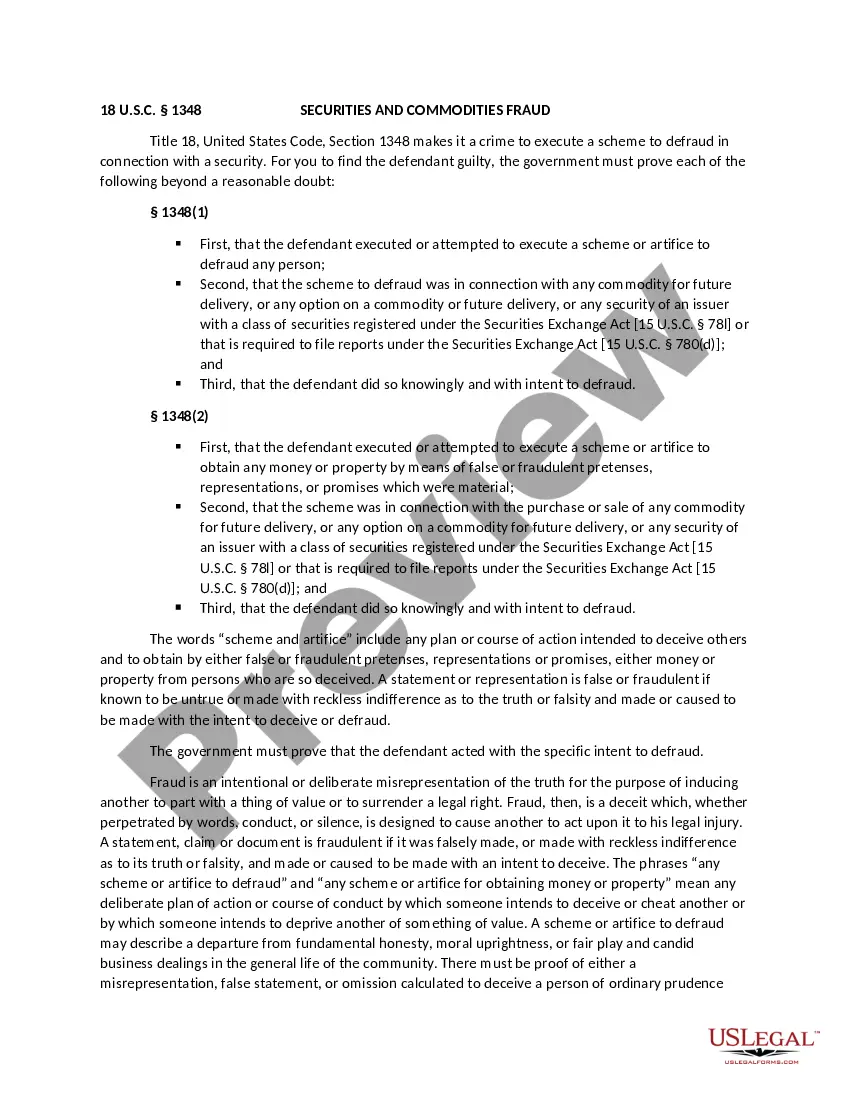
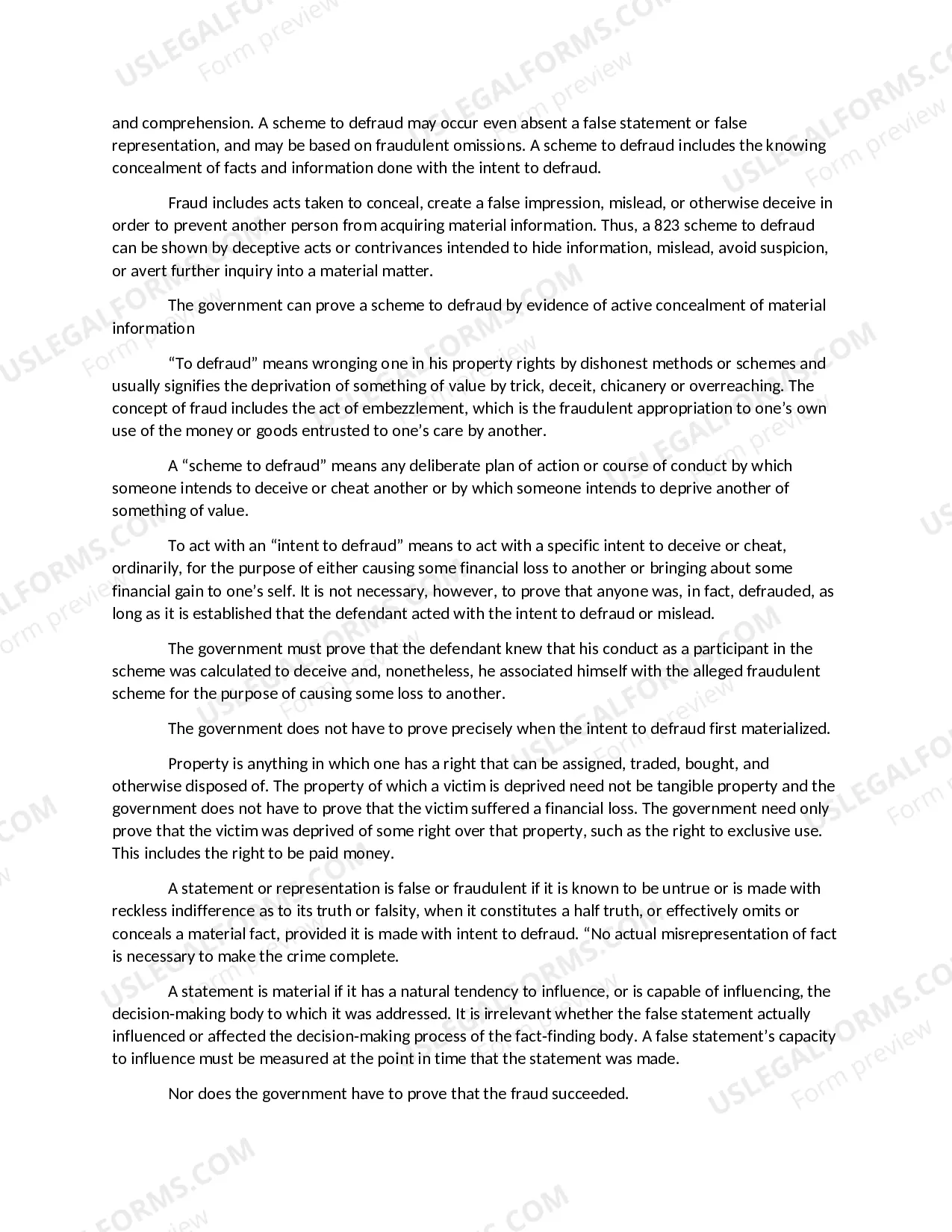
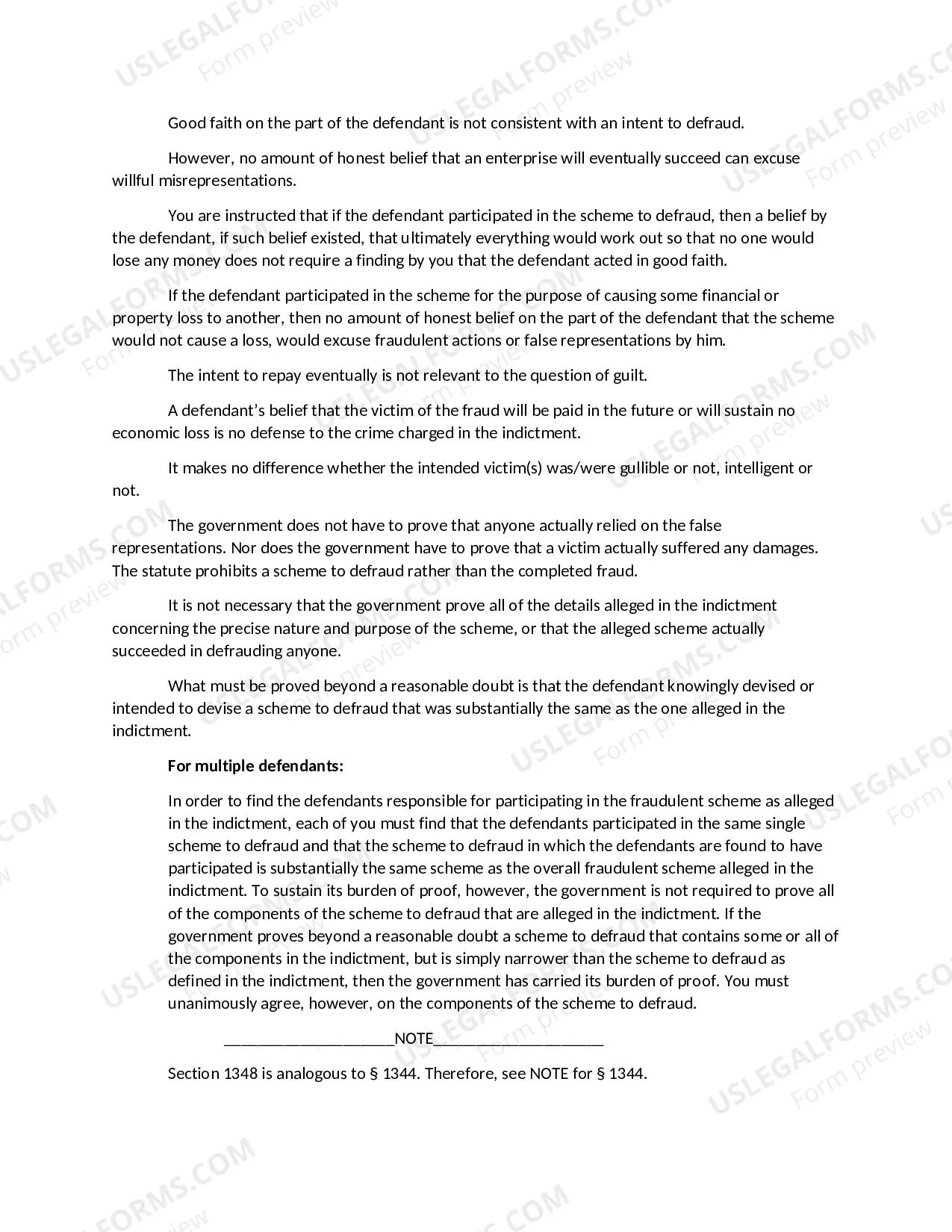
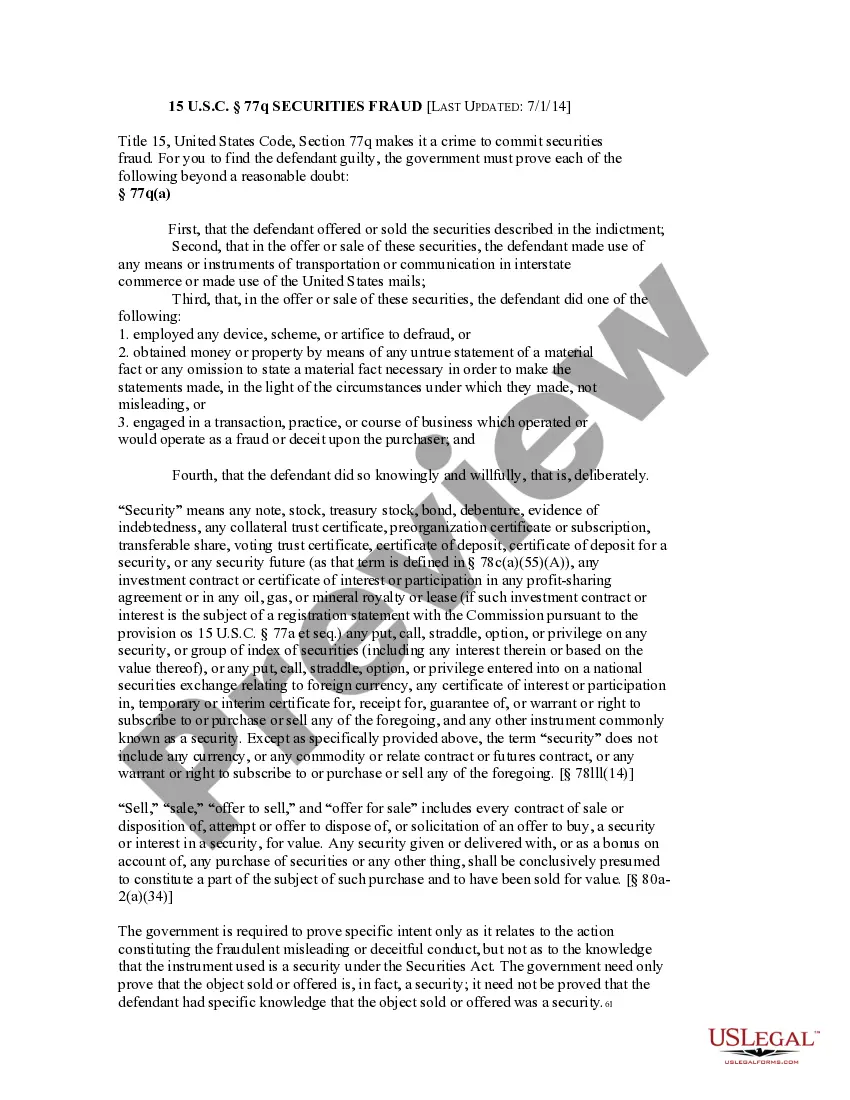
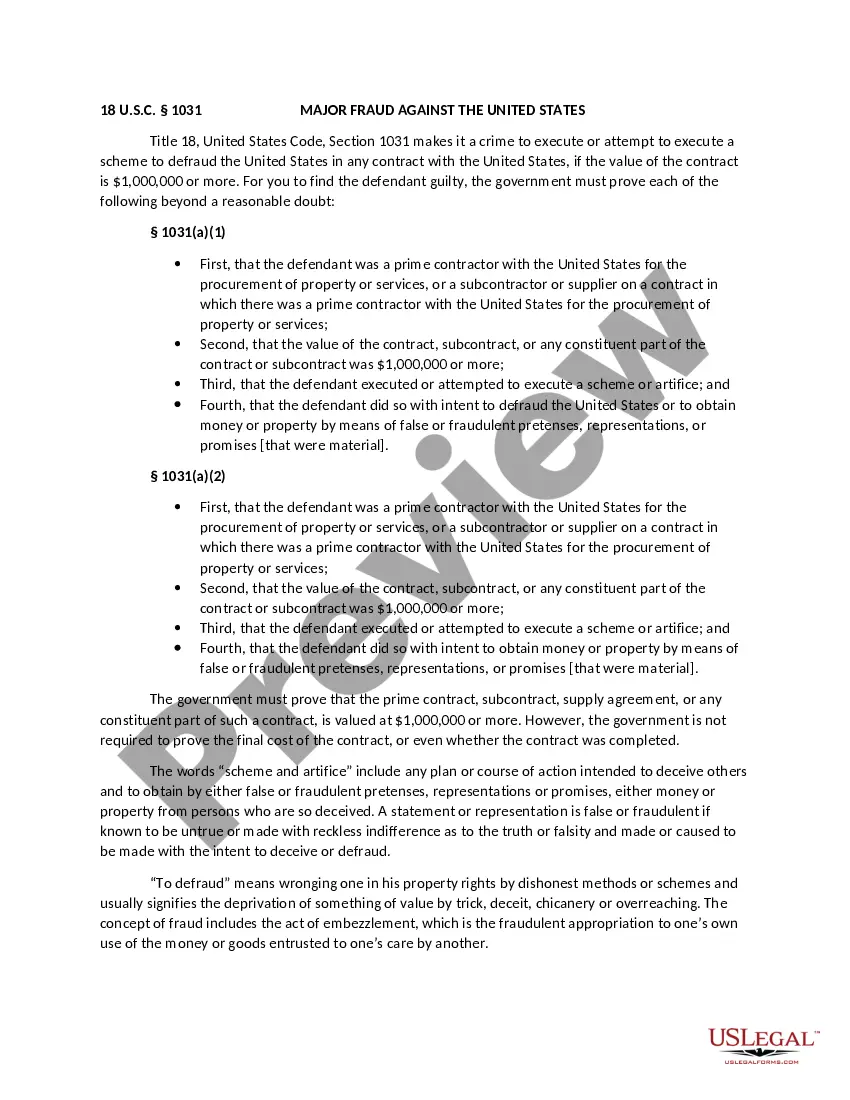
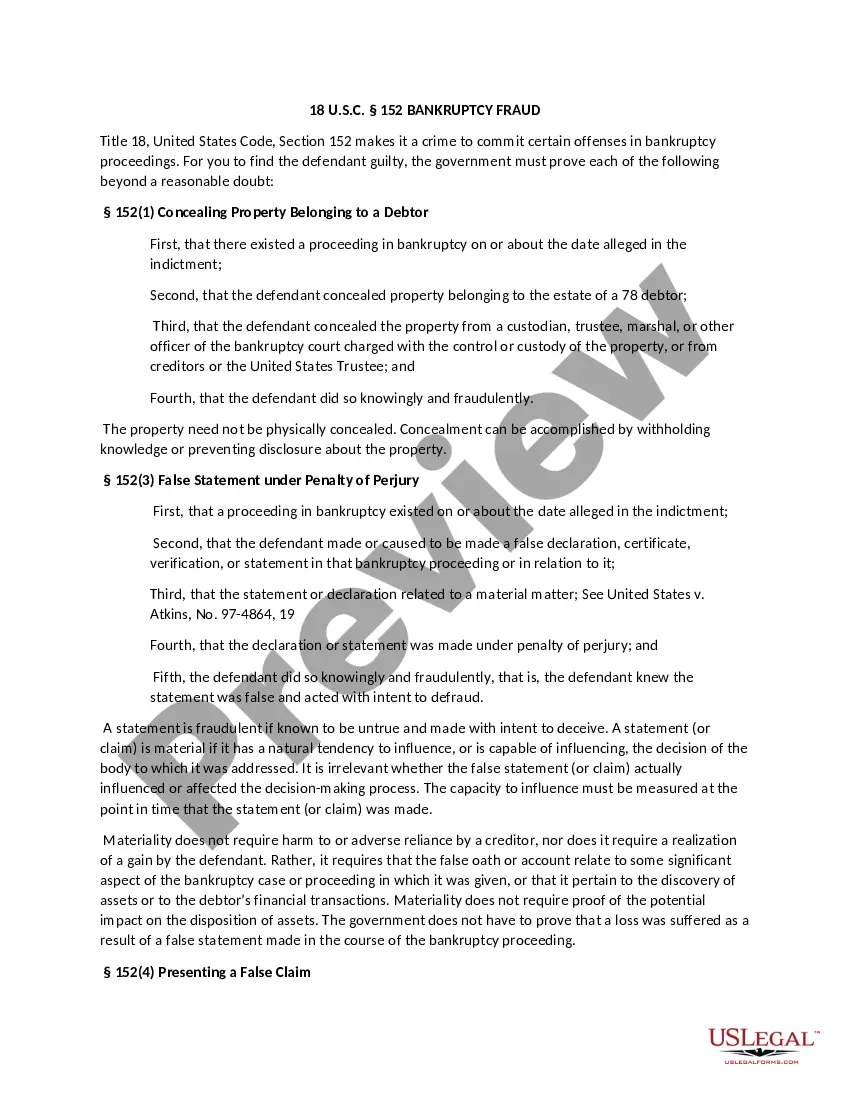
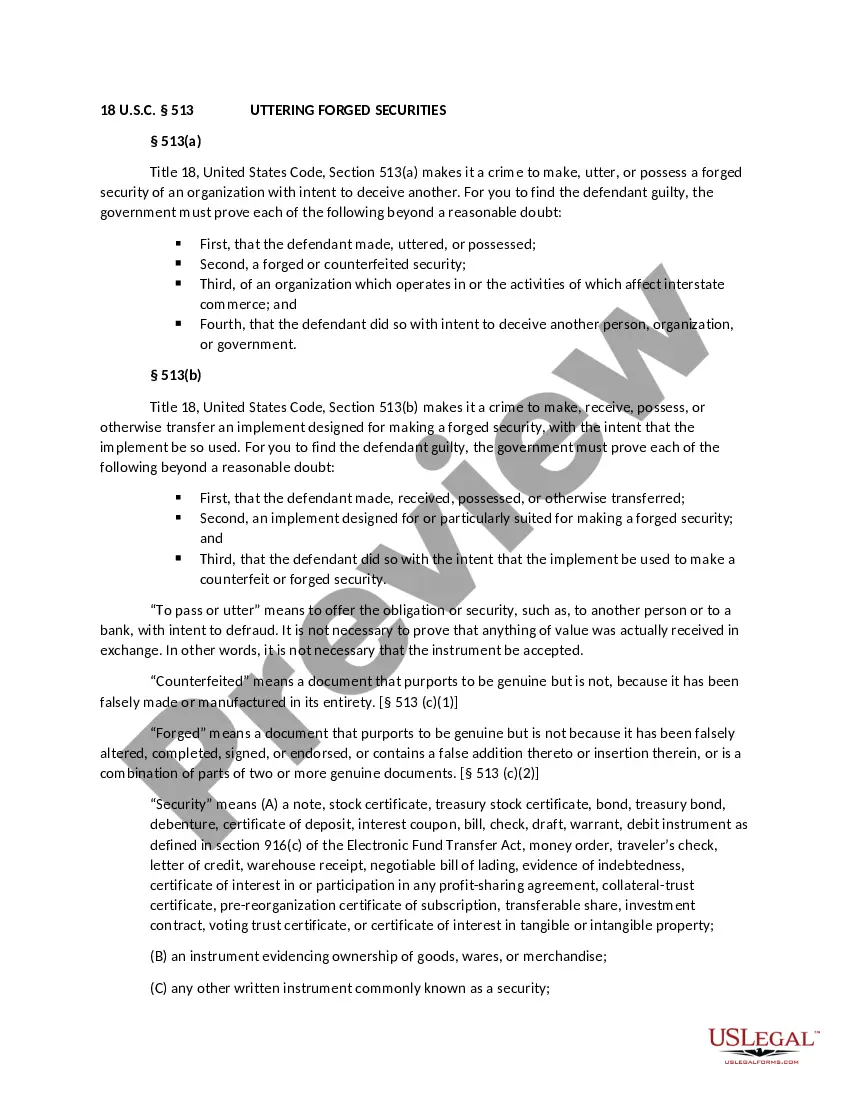
The Securities and Commodities Fraud form provides official jury instructions for federal criminal cases related to securities and commodities fraud under Title 18, United States Code, Section 1348. This form outlines the elements that must be proven to establish guilt in connection with schemes intended to deceive or defraud others in financial dealings. It is distinct from other legal forms in that it specifically addresses crimes involving fraud related to the sale or purchase of securities or commodities.
Key components of this form
- Definition of a scheme to defraud, including intent and knowledge requirements.
- Criteria for establishing guilt, including proving the existence of fraudulent actions and misrepresentations.
- Clarification of what constitutes a false statement or material misrepresentation.
- Requirements for proving intent to defraud, including the defendant's knowledge of their actions.
- Provisions for multiple defendants participating in the scheme.
Situations where this form applies
This form is used during federal criminal trials for cases involving allegations of securities and commodities fraud. It is relevant when the government seeks to prove that a defendant engaged in deceptive practices concerning financial securities or commodities, aiming to defraud investors or other parties. It serves as a guideline for jurors to understand the legal standards necessary to determine the defendant's guilt or innocence.
Intended users of this form
- Federal prosecutors handling cases of alleged securities and commodities fraud.
- Defense attorneys representing individuals accused of fraud in financial markets.
- Jurors selected for federal trials involving these types of fraud cases.
- Legal professionals seeking a clear understanding of the elements required to prove fraud under federal law.
Steps to complete this form
- Review the charges against the defendant to understand the scheme alleged.
- Confirm that the elements of fraud specified in the instructions are addressed in the case.
- Draft jury instructions using the outline provided in the form, ensuring clarity on the legal definitions of fraud.
- Clearly outline the burden of proof required for the government to establish guilt beyond a reasonable doubt.
- Provide appropriate guidance regarding the necessary decision-making procedures for jurors regarding intent and actions described.
Is notarization required?
In most cases, this form does not require notarization. However, some jurisdictions or signing circumstances might. US Legal Forms offers online notarization powered by Notarize, accessible 24/7 for a quick, remote process.
Get your form ready online
Our built-in tools help you complete, sign, share, and store your documents in one place.
Make edits, fill in missing information, and update formatting in US Legal Forms—just like you would in MS Word.
Download a copy, print it, send it by email, or mail it via USPS—whatever works best for your next step.
Sign and collect signatures with our SignNow integration. Send to multiple recipients, set reminders, and more. Go Premium to unlock E-Sign.
If this form requires notarization, complete it online through a secure video call—no need to meet a notary in person or wait for an appointment.
We protect your documents and personal data by following strict security and privacy standards.

Make edits, fill in missing information, and update formatting in US Legal Forms—just like you would in MS Word.

Download a copy, print it, send it by email, or mail it via USPS—whatever works best for your next step.

Sign and collect signatures with our SignNow integration. Send to multiple recipients, set reminders, and more. Go Premium to unlock E-Sign.

If this form requires notarization, complete it online through a secure video call—no need to meet a notary in person or wait for an appointment.

We protect your documents and personal data by following strict security and privacy standards.
Common mistakes to avoid
- Failing to clearly define what constitutes a fraudulent scheme, leading to juror confusion.
- Overlooking the necessity of intent in proving fraud, which undermines the prosecution's case.
- Assuming that evidence of financial loss is required to prove fraud, which is not a necessity under the law.
Why use this form online
- Accessible anytime, allowing for immediate use in ongoing cases.
- Easily downloadable format that can be edited as necessary for specific case requirements.
- Reliable content drafted by licensed attorneys, ensuring adherence to legal standards.
Looking for another form?
Form popularity
FAQ
The elements of a securities fraud claim include: A material misrepresentation or omission by the defendant. Allegations of securities fraud are usually based on the defendant misrepresenting or failing to provide financial information to the plaintiff who is seeking to buy or sell a security.
The term Securities Fraud covers a wide range of illegal activities, all of which involve the deception of investors or the manipulation of financial markets. High Yield Investment Fraud. Ponzi Schemes. Pyramid Schemes. Advanced Fee Schemes.
The elements of the cause of action are: 1) a material misrepresentation or omission by the defendant; (2) scienter; (3) a connection between the misrepresentation or omission and the purchase or sale of a security; (4) reliance upon the misrepresentation or omission; (5) economic loss; and (6) loss causation.
The Federal Bureau of Investigation (FBI) describes securities fraud as criminal activity that can include high-yield investment fraud, Ponzi schemes, pyramid schemes, advanced fee schemes, foreign currency fraud, broker embezzlement, hedge-fund-related fraud, and late-day trading.
Securities fraud defined The California Corporations Code states that it is illegal to buy, sell or offer to buy or sell, a security, through a statement that includes a false statement of material fact or omits material facts that make the statement misleading. The statement can be oral or written.
These cases include accounting fraud at publicly traded companies, insider trading, false statements, market manipulation, and other schemes. The Unit also has devoted particular attention to cases involving officers of publicly traded companies who deceived investors in connection with the COVID-19 crisis.
The elements of the cause of action are: 1) a material misrepresentation or omission by the defendant; (2) scienter; (3) a connection between the misrepresentation or omission and the purchase or sale of a security; (4) reliance upon the misrepresentation or omission; (5) economic loss; and (6) loss causation.
Whether it was committed by insider trading, misrepresentation or fraudulent accounting, securities fraud is a white-collar crime ? meaning a nonviolent, financially motivated crime.